
Activism
OP-ED: Faith Leaders Call for Accountability Over
A demonstration is planned for Tuesday May 24 at 11:30 a.m. at the Board of Supervisors on Oak and 12th streets in Oakland to protest a culture of death at the jail and this dysfunctional incarceration system. Join us in our call for accountability. The U.S. Justice Department recently found our county jail violates Constitutional rights and subjects the 40% of persons in custody who need mental health services to “unlawful harm.”

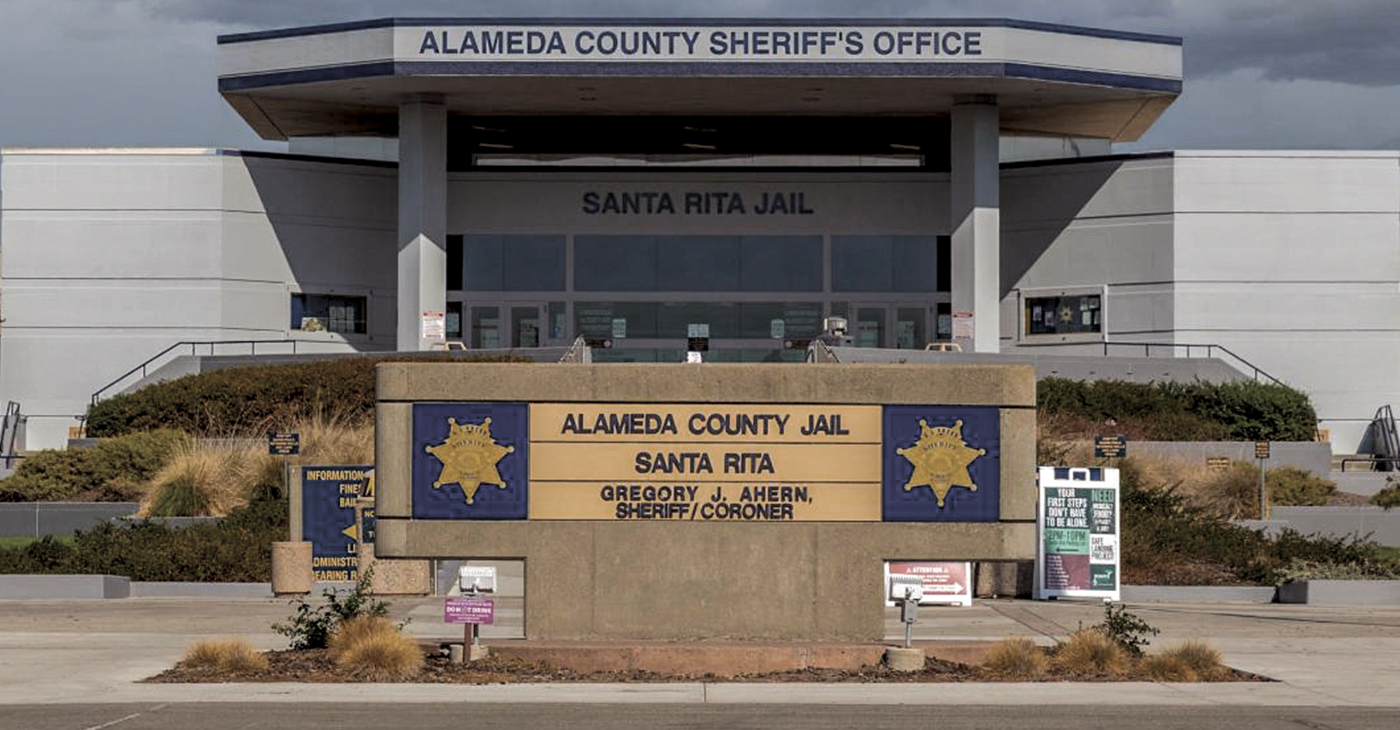
Negligence, Deaths at Santa Rita Jail
Alameda County’s Santa Rita jail, run by Sheriff Gregory Ahern, has been the target of multiple lawsuits over jail conditions and has had the most in-custody deaths in Northern California: at least 58 in-custody deaths since 2014, including 19 suicides.
We lift up the names of the two most recent to die in Santa Rita – Marcos Garibay and Larry Roberson. Their families are among many who have been given conflicting and incomplete information about their deaths by the sheriff.
A demonstration is planned for Tuesday May 24 at 11:30 a.m. at the Board of Supervisors on Oak and 12th streets in Oakland to protest a culture of death at the jail and this dysfunctional incarceration system. Join us in our call for accountability.
The U.S. Justice Department recently found our county jail violates Constitutional rights and subjects the 40% of persons in custody who need mental health services to “unlawful harm.”
The sheriff has also evaded a county ban on collaboration of local law enforcement with ICE.
The county continues to hemorrhage millions of taxpayer dollars on settlements and legal fees for this mismanagement – the most recent costing upwards of $300 million. The Alameda County Sheriff’s Department needs a major transformative intervention.
Assembly Bill 1185, recently enacted by the California state Legislature, authorizes civilian oversight boards and a full-time Inspector General with subpoena power to investigate sheriff’s departments and jails. Our communities can gain accountability for brutal practices by the sheriff and assist supervisors in exercising their legal and fiscal authority to oversee this county department.
Sopath Mey, speaking for her Cambodian immigrant family, told us of her cousin Soto’s medical crisis and death in Santa Rita in January 2020:
“To this day we don’t understand how he died in custody of the jail and the sheriff. Did he get medical care he needed? … Our family has no resources for an investigation … The sheriff is also the coroner, which raises serious questions. Independent oversight without conflict of interest could tell us learn what happened so we can have peace of mind.”
A sheriff’s oversight coalition initiated by Faith In Action East Bay and Oakland’s Coalition for Police accountability including dozens of organizations and clergy of diverse faiths – ACLU of Northern California, Alameda County Public Health Commission, SEIU Local 1021, Oakland Education Association, Brotherhood of Elders, National Institute for Criminal Justice Reform, and working closely with the League of Women Voters – researched essential principles for effective independent civilian oversight:
- A community selection panel process that is open and transparent to create a representative oversight board insulated from politics and the sheriff’s influence.
- Legal counsel for a civilian Oversight Board and Inspector General that is fully independent of the County Counsel’s conflicts of interest representing the sheriff in lawsuits against the county.
- A dedicated funding stream to ensure adequate staff of investigators working with an experienced, full-time Inspector General.
- Access to records and testimony, regular public meetings and reports to the community and the Board of Supervisors (BOS.)
- Elected officials – including the sheriff – must be held accountable. Civilian oversight with subpoena power can conduct independent investigations and recommend necessary change to the Board of Supervisors – who have the ultimate power of budgeting tax dollars.
Working with a full-time inspector general, they will investigate jail deaths, in-custody conditions, conduct of the sheriff’s deputies and can help identify alternatives to the county’s current cruel and costly mass incarceration of individuals with mental health challenges.
We must bring the sheriff’s operations into alignment with constitutional law enforcement, our community’s ethical values and the public trust.
Let Supervisors know you support the community coalition calling for strong oversight of the Sheriff – email the Board at cbs@acgov.org.
Rev. Dr. George Cummings, executive director, Faith In Action East Bay
Cathy Leonard for the Coalition for Police Accountability
Regina Jackson, Oakland Police Commission*
Rev. Dr. James Brenneman, president, Berkeley School of Theology*
Rev. Ken Chambers, West Side MBC & co-chair Interfaith Coalition of Alameda County*
Rev. Dr. James Hopkins, co-chair, Faith In Action East Bay; Lakeshore Avenue Baptist Church*
Rev. Derron Jenkins, associate minister, Allen Temple Baptist Church, Oakland*
Rev. Andrew Loban, rector, St. Bartholomew’s Episcopal Church, Livermore*
Fr. Aidan McAlaneen, pastor of St. Columba Catholic Church
Rabbi Dev Nolly, senior rabbi, Kehilla Community Synagogue, Oakland*
Rabbi Judith Seid, Tri-Valley Cultural Jews*
Rev. Jeffrey Spencer, senior pastor, Niles Discovery Church, Fremont*










Activism
Oakland Post: Week of September 23 – 29, 2026
The printed Weekly Edition of the Oakland Post: Week of September 23 – 29, 2026

To enlarge your view of this issue, use the slider, magnifying glass icon or full page icon in the lower right corner of the browser window.
Activism
Oakland Post: Week of September 16 – 22, 2026
The printed Weekly Edition of the Oakland Post: Week of September 16 – 22, 2026

To enlarge your view of this issue, use the slider, magnifying glass icon or full page icon in the lower right corner of the browser window.
Activism
Oakland Post: Week of September 9 – 15, 2026
The printed Weekly Edition of the Oakland Post: Week of September 9 – 15, 2026

To enlarge your view of this issue, use the slider, magnifying glass icon or full page icon in the lower right corner of the browser window.



Asm. Corey Jackson Announces Launch of 24-Hour Childcare in His District

IN MEMORIAM: The Rev. Leon “Sonny” Clark, Longtime Orange County Pastor and Community Leader, Dies at 72

Poll: Becerra Widens His Lead Over Hilton; Californians Split on Wealth Tax

From Historic Memories to New Possibilities: Oakland Celebrates Coliseum 60

County Office of Education Says OUSD Finances Are Getting Healthier, Materially Stronger

LIVE FREE Sunday Dinner Brings Faith, Fellowship and Civic Conversation to Oakland

Remembering Chauncey Bailey as Student Journalists Face Threats to Truth-Telling

BLACspace Cooperative Invites Bay Area to Experience Oakland’s Black Cultural Ecosystem Through a BLAC Map Tour + Party

In Wake of Death on Doorstep, Williams Chapel Baptist Church Calls for Better Care, Funding for Unhoused

Oakland Centenarian Nuna McKee Honored!

Caribbean Nations Produce Action Plan Calling for UK Reparations Over Slavery

Oakland Post: Week of September 23 – 29, 2026

Doulas Are Helping Black California Moms Navigate Pregnancy–Even as High Mortality Rates Persist

Newsom Signs Addictive Social Media Law to Protect Kids

On Your November Ballot: Prop 38 Would Allocate $8.4 Billion to Immunology and Immunotherapy Funding

Standoff for Justice: Our Homes Are Worth Fighting For

Oakland Post: Week of August 26 – September 1, 2026

Frontier Airlines’ Return to Oakland Airport Brings Flights, Jobs and Opportunity

Gubernatorial Candidate Steve Hilton Blasts California New Tire Rules; Newsom Hits Back

Chef Sharon Lee Blends Culinary Excellence, Education and Empowerment

Jackie Wright Champions Bay Area Stories, Filmmakers and Cultural Institutions

Big City Mayors Ask for “Yes” Vote on Housing Bond Measure; Conservatives Say “No”

Oakland Coliseum Project Opens Door for Small Businesses to Build Bigger

Gov. Newsom’s Latest Appointees Include Sacramento Advocate for Formerly Incarcerated Students; State’s New Tech Chief

Misnamed ‘Parent’ PAC Seeks to Influence Oakland School Board Elections

Longtime BWOPA Member Brendalyn Goodall Appointed to California Workforce Development Board

Gov. Newsom Signs Law Shielding Immigration Aid Workers From Doxing Threats

Secretary of State Shirley N. Weber Urges Californians to Vote Early as Voter ID Battle Intensifies

From Palestine to Oakland: Seeds for Liberation Examines Shared Struggles for Freedom

IN MEMORIAM: Dolly Parton Dead at 80 — How She Built a Legacy of Love and Earned Her Place in Black Culture

The Conversation With Al McFarlane 6/23/26

Media Monday 6/22/26

LIVE! ASK ALMA! — TUES. 6.23.26 7PM EST

Car Buying Secrets: 4 Hidden Checks Before You Sign!

Is This 550 HP Charger Worth YOUR Money? AutoNetwork Review

Celebrating Juneteenth – Frederick Douglass on education and resistance

LIVE! — ASK ALMA! — TUES. 6.19.26 7PM EST

Hyundai Ioniq 5 Parking, Safety, and 360 View #shorts

2025 Ioniq 5 New Wiper & Powerful Performance! #shorts

Electric SUV Range: Is 259 Miles Enough? #shorts

EV Charging: How Fast Can You Charge an Electric Vehicle? #shorts

Biometric Cooling… Messaging Seats…Come on! 2025 Infiniti QX80 Autograph 4WD

Charged Up: Witness the Magic of a Fully Electric Car! #shorts

Range Rover Sport PHEV Included…: See What’s Inside This Luxury SUV! #shorts

Invisible Hood View: Perfect Parking with X-Ray Vision! #shorts
-
 Community2 weeks ago
Misnamed ‘Parent’ PAC Seeks to Influence Oakland School Board Elections
-

 Activism3 weeks ago
Oakland Post: Week of September 2 – 8, 2026
-

 Community2 weeks ago
Richmond Tiny House Village Farm & Garden Set to Open Gates on Sept. 26
-

 Black History2 weeks ago
Latest Massacre in Haiti Reveals Cruelty U.S. Deportations
-

 Black History2 weeks ago
OPINION: Nolan Wells’ Death One of Several Signifying Racial Terror Lives on in U.S. South
-

 Activism2 weeks ago
Oakland Post: Week of September 9 – 15, 2026
-

 Community2 weeks ago
Democratic Clubs Interview Candidates for Oakland School Board
-
 Featured2 weeks ago
‘Ready to See These Bills Become Law’: Sen. Weber’s Package of 15 Bills Advance to Gov. Newsom’s Desk
