Connect with us

Education

The SixTripleEight: ‘No Mail, Low Morale’

Published

on

Many historical accounts of war exclude women. The word “soldier” brings to mind immediately a male figure in uniform. Yet by definition soldier refers to anyone, including women, serving in the military.

American women were allowed to serve in the army during World War I (1914–1918). Many were nurses or staff who cooked for and catered to, injured soldiers. Unfortunately, slavery’s shadow and racism prevented black women from giving their services to America, therefore the first women in the military were white.

Women were recruited and trained until May 1942. The Women’s Auxiliary Army Corps was formed, and women of all races were officially allowed to serve. In July of that same year, women were given full benefits in the military, and the word “auxiliary” was removed from their name. The Corps then became known as the Women’s Army Corps (WACs).

The military trained women of all races in all divisions and sections of the army in preparation for war, yet division among the races remained. Black women were encouraged to become WACs, but unfortunately, other divisions, such as the navy excluded Black women almost entirely. The Army Nurse Corps only allowed 500 black nurses to serve despite thousands who applied.

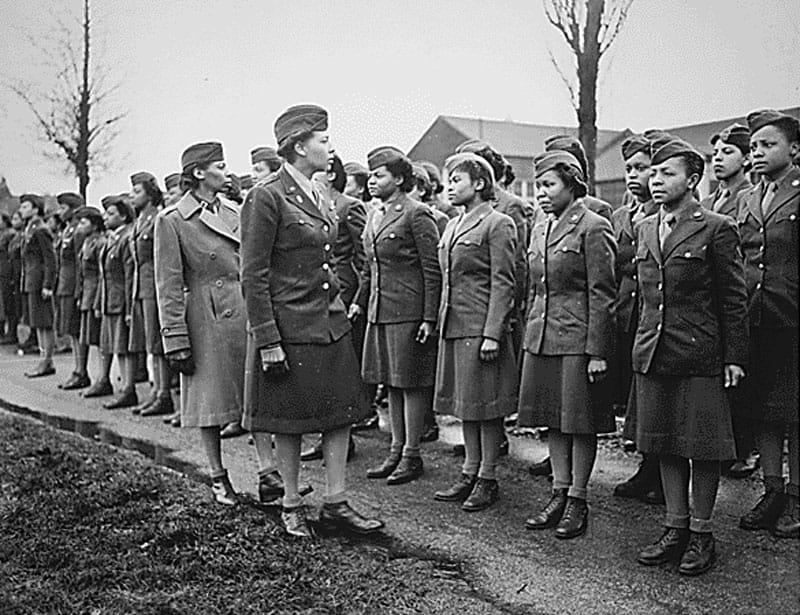
The tables were turned in 1945 when the world’s first all-black female battalion was sent from the United States to serve in parts of Europe during World War II (1939–1945). Many of the women were handpicked by civil rights activist and educator Mary McLeod Bethune.

Known as the 6888 Central Postal Directory Battalion, or “the SixTripleEight,” the battalion served in parts of France and England to clear the backlog of mail in the European Theater of Operations. The battalion boasted 855 black women, both enlisted and officers, and was led by Major Charity Adams Earley. It was the only all-black, all-female battalion overseas throughout the war.

Confronted with racism and sexism from their own leadership and troops, the battalion served with honor and distinction completing their mission in six months. By war’s end the SixTripleEight had cleared over 17 million pieces of backlogged mail ensuring troops stayed in touch with their loved ones back home.

The SixTripleEight had a motto, “No mail, low morale,” and accomplished more than distributing letters and packages. As the largest contingent of black women to ever serve overseas, they dispelled stereotypes and represented a change in racial and gender roles in the military.

Between 1945 and 1946, the majority worked under the mail service. Others served as cooks, mechanics, nurse assistants and in other roles when necessary. Working conditions were dangerous and risky, as women were placed in abandoned and infested aircraft and offices throughout the war.

Women of the SixTripleEight were later honored with the European African Middle Eastern Campaign Medal, the Good Conduct Medal, and the World War II Victory Medal while they were still in service.

The last battalion returned home in March 1946.

Tamara Shiloh

Tamara Shiloh


About Tamara Shiloh


Tamara Shiloh has published the first two books in her historical fiction chapter book series, Just Imagine…What If There Were No Black People in the World is about African American inventors, scientists and other notable Black people in history. The two books are Jaxon’s Magical Adventure with Black Inventors and Scientists and Jaxon and Kevin’s Black History Trip Downtown. Tamara Shiloh has also written a book a picture book for Scholastic, Cameron Teaches Black History, that will be available in June, 2022.

Tamara Shiloh’s other writing experiences include: writing the Black History column for the Post Newspaper in the Bay area, Creator and Instruction of the black History Class for Educators a professional development class for teachers and her non-profit offers a free Black History literacy/STEM/Podcast class for kids 3d – 8th grade which also includes the Let’s Go Learn Reading and Essence and tutorial program.   She is also the owner of the Multicultural Bookstore and Gifts, in Richmond, California,

Previously in her early life she was the /Editor-in-Chief of Desert Diamonds Magazine, highlighting the accomplishments of minority women in Nevada; assisting with the creation, design and writing of a Los Angeles-based, herbal magazine entitled Herbal Essence; editorial contribution to Homes of Color; Editor-in-Chief of Black Insight Magazine, the first digital, interactive magazine for African Americans; profile creations for sports figures on the now defunct PublicFigure.com; newsletters for various businesses and organizations; and her own Las Vegas community newsletter, Tween Time News, a monthly publication highlighting music entertainment in the various venues of Las Vegas.

She is a member of:

  • Society of Children’s Book Writers and Illustrators (SCBWI)

  • Richmond Chamber of Commerce

  • Point Richmond Business Association

  • National Association of Professional Women (NAPW)

  • Independent Book Publishers Association (IPBA)

  • California Writers Club-Berkeley & Marin

  • Richmond CA Kiwanis

  • Richmond CA Rotary

  • Bay Area Girls Club


Tamara Shiloh, a native of Northern California, has two adult children, one grandson and four great-grand sons. She resides in Point Richmond, CA with her husband, Ernest.

www.multiculturalbookstore.com

About Tamara Shiloh

Tamara Shiloh has published the first two books in her historical fiction chapter book series, Just Imagine…What If There Were No Black People in the World is about African American inventors, scientists and other notable Black people in history. The two books are Jaxon’s Magical Adventure with Black Inventors and Scientists and Jaxon and Kevin’s Black History Trip Downtown. Tamara Shiloh has also written a book a picture book for Scholastic, Cameron Teaches Black History, that will be available in June, 2022. Tamara Shiloh’s other writing experiences include: writing the Black History column for the Post Newspaper in the Bay area, Creator and Instruction of the black History Class for Educators a professional development class for teachers and her non-profit offers a free Black History literacy/STEM/Podcast class for kids 3d – 8th grade which also includes the Let’s Go Learn Reading and Essence and tutorial program.   She is also the owner of the Multicultural Bookstore and Gifts, in Richmond, California, Previously in her early life she was the /Editor-in-Chief of Desert Diamonds Magazine, highlighting the accomplishments of minority women in Nevada; assisting with the creation, design and writing of a Los Angeles-based, herbal magazine entitled Herbal Essence; editorial contribution to Homes of Color; Editor-in-Chief of Black Insight Magazine, the first digital, interactive magazine for African Americans; profile creations for sports figures on the now defunct PublicFigure.com; newsletters for various businesses and organizations; and her own Las Vegas community newsletter, Tween Time News, a monthly publication highlighting music entertainment in the various venues of Las Vegas. She is a member of:
  • Society of Children’s Book Writers and Illustrators (SCBWI)
  • Richmond Chamber of Commerce
  • Point Richmond Business Association
  • National Association of Professional Women (NAPW)
  • Independent Book Publishers Association (IPBA)
  • California Writers Club-Berkeley & Marin
  • Richmond CA Kiwanis
  • Richmond CA Rotary
  • Bay Area Girls Club
Tamara Shiloh, a native of Northern California, has two adult children, one grandson and four great-grand sons. She resides in Point Richmond, CA with her husband, Ernest. www.multiculturalbookstore.com

Continue Reading
Click to comment

Leave a Reply

Your email address will not be published. Required fields are marked *

Black History

COMMENTARY: Property Is Power! Why the Dream Booker T. Washington Preached in 1905 Still Matters Today

MICHIGAN CHRONICLE — Booker T. Washington’s philosophy on Black economic progress, articulated over a century ago, remains relevant today. He argued that true freedom for Black Americans, then only 40 years removed from emancipation, depended on economic ownership, not just political rights.

Published

on

COMMENTARY: Property Is Power! Why the Dream Booker T. Washington Preached in 1905 Still Matters Today

The national conversation about Black economic progress has long been defined by access. We measure advancement through educational attainment, professional achievement, political representation, and civic participation, and rightly so. Each represents a victory over barriers that once seemed permanent. Yet beneath those visible markers of progress lies a quieter question, one that has shaped the American economy since its founding. Who owns the assets that appreciate while everyone else is working? More than a century ago, Booker T. Washington believed he knew the answer; his insight was not merely about economics; it was about power, it was about permanence. And it remains strikingly relevant in an era when conversations about racial equity often emphasize representation while giving far less attention to ownership.

In 1905, America was only forty years removed from emancipation, but freedom remained profoundly incomplete for millions of Black Americans across the South; voting rights were being systematically stripped away. Jim Crow laws had become entrenched; lynching was used to terrorize Black communities, and economic opportunity was intentionally constrained through law, custom, and violence. Against that backdrop, Booker T. Washington traveled the country delivering a message that many found controversial not because he rejected political rights, but because he argued that political freedom, standing alone, could not secure lasting independence. Economic ownership, he believed, was the indispensable foundation upon which genuine freedom would rest.

George Washington’s philosophy is often misunderstood as accommodation or political retreat. It was neither. It was an argument about sequence. “It is at the bottom of life we must begin, and not at the top,” he told audiences, insisting that no people could sustain political influence without first establishing an economic foundation. He worried that Black Americans, understandably eager to secure civil and political rights after centuries of oppression, might overlook the enduring power of ownership. In one of his most remarkable observations, he lamented that “… a seat in Congress or the State Legislature was more sought than real estate or industrial skill.” More than 120 years later, that sentence still carries unusual force. America continues to debate representation with great intensity yet often pays comparatively little attention to the question Washington believed would ultimately determine whether that representation translated into lasting prosperity.

Washington was not dismissing politics; he understood the importance of the ballot box as well as anyone of his era. His point was subtler: political influence without an economic foundation is inherently fragile; laws can change, administrations come and go, courts reverse precedent, majorities shift. But families who own productive assets possess something that is less vulnerable to the changing winds of politics; they possess leverage.

By 1903, speaking before the Brooklyn Institute in New York, Washington expanded this argument even further. Reflecting on the American founding, he observed that one of the nation’s defining aspirations had been to secure “the most complete guarantee of the safety of life and property.” The pairing of those words was deliberate to Washington; liberty and property were inseparable. A society that protected freedom while leaving large segments of its population without meaningful opportunities to own productive assets had fulfilled only part of its democratic promise.

That observation speaks directly to the present moment.

Today’s conversations about racial inequality often focus on disparities in income, educational attainment or employment. Those discussions are essential, but they sometimes obscure a more fundamental distinction: the difference between earning and owning. Income provides stability and ownership creates permanence. Wages finance today’s expenses but appreciating assets finance tomorrow’s opportunities. The American economy has always rewarded ownership more generously than labor because assets compound while wages are spent. That is why the story of wealth in America is, at its core, a story about property.

Washington understood this intuitively long before economists could measure it. Throughout his speeches across Alabama, Georgia, Mississippi, Virginia, Tennessee, the Carolinas and major Northern cities including New York, Boston, Philadelphia and Chicago, he returned repeatedly to the same themes. He urged Black families to purchase homes rather than remain lifelong tenants. He encouraged Black farmers to own the land they cultivated rather than simply work it; he promoted saving capital, mastering trade, building businesses, and establishing institutions rooted in ownership rather than dependence. No race, he argued, could achieve lasting independence while remaining economically dependent on others.

To Washington, land was never simply acreage it represented security, leverage, education, citizenship and inheritance. A farm was not valuable merely because it produced crops. It could finance a child’s future, provide collateral for investment, create stability during economic hardships and become an asset passed from one generation to the next. Likewise, a home represented far more than shelter. It symbolized permanence, civic participation and confidence in the future of a community.

Modern research has largely confirmed what Washington understood through observation: for most American families, homeownership remains the single largest source of household wealth. Equity accumulated over decades finances higher education, entrepreneurship, retirement, and intergenerational transfers of wealth. Property becomes capital, and capital creates choices that wages alone rarely can.

This reality carries particular significance for Black America because the wealth gap has always been, in important respects, an ownership gap. The Black middle class has never been more educated or professionally accomplished than it is today. Black Americans lead major corporations, serve in Congress and on federal courts, teach at leading universities and build successful businesses across nearly every sector of the economy. These achievements deserve recognition; they represent extraordinary progress, yet the racial wealth gap remains considerably wider than the income gap, a reminder that educational success and professional advancement, while essential, do not automatically produce wealth.

The explanation is neither mysterious nor accidental: wealth accumulates primarily through appreciating assets. Families who own homes, businesses, commercial real estate, and investment portfolios generally experience compounding gains across generations. Families excluded from those opportunities often begin each generation from a similar starting point, regardless of improvements in income. Ownership changes the trajectory because ownership allows time to work on behalf of the owner.

This is why the next chapter of Black economic progress should not abandon the pursuit of equal opportunity but rather expand it. Access remains indispensable; strong schools, fair lending, civil rights protections, political participation, and equal treatment under the law remain foundational commitments of a democratic society, but access alone has never guaranteed wealth ownership has.

Perhaps that is Booker T. Washington’s most enduring lesson. He challenged a generation emerging from slavery to think beyond immediate survival and toward permanent economic citizenship. More than a century later, the challenge is different, but the principle remains remarkably similar. The question is no longer whether Black Americans can enter institutions that once excluded them. It is whether they are building ownership within the economy.

That is the philosophy behind Property is Power! It is not merely a slogan about real estate. It is a broader argument about how durable wealth is created, preserved and transferred. It recognizes that governments change, policies evolve and markets fluctuate, but families who own appreciating assets possess something that extends beyond a single election cycle or economic moment. They possess leverage, stability and the ability to transfer opportunities to the next generation.

Booker T. Washington understood that freedom without ownership remained incomplete more than a century later; his observation still challenges us. If the twentieth century expanded access, perhaps the defining work of the twenty-first century is to expand ownership. History suggests that while access may open the door, ownership builds the house and gives future generations the keys.

Property is Power! is a movement to promote home and community ownership. Studies indicate homeownership leads to higher graduation rates, family wealth, and community involvement.

Based on reporting by Michigan Chronicle.


Continue Reading

Black History

Saving Black Mothers Starts Outside the Hospital

SEATTLE MEDIUM — A recent panel discussion explored the disproportionately high rates of pregnancy-related deaths among Black American women, even as maternal mortality declines in other developed nations. Experts at the Word In Black event concluded that this disparity stems not from biology, but from systemic issues of access, opportunity, and unequal care.

Published

on

Saving Black Mothers Starts Outside the Hospital

For much of the developed world, childbirth has become safer with each passing generation. Medical advances, better prenatal care, and stronger public health systems have dramatically reduced the chances that bringing a child into the world would cost a woman her life.

Unless she’s Black American.

That stubborn contradiction framed a Word In Black panel discussion last week, where physicians, researchers, and community health leaders explored why members of the African diaspora still die from pregnancy-related complications at disproportionately high rates—even as maternal mortality falls in developed nations.

Their conclusion was unequivocal: the disparity is not about biology but about lack of access and opportunity–along with unequal systems. The issues that jeopardize Black women’s maternal health happen long before she goes into labor.

Moderated by Jennifer Porter Gore, Word In Black’s health correspondent, the livestreamed conversation brought together three panelists whose focus is confronting the maternal health crisis using community-based solutions.

‘I Knew It Wasn’t Biological’

Tamara Mason, director of Maternal and Child Health Collective Impact at the March of Dimes in Atlanta, discussed the policy and public health barriers that continue to drive disparities. Kay Matthews, founder and executive director of the Shades of Blue Project, spoke about the lived experiences of Black mothers’ mental health needs while navigating pregnancy, loss, and the postpartum period.

And Dr. Kaytura Felix, host of the Deep Care podcast and a distinguished scholar at the Johns Hopkins Bloomberg School of Public Health, explained why improving outcomes requires expanding the definition of maternal care to include entire communities in which Black families live.

When she decided to investigate the Black maternal health crisis, “I knew it was not genetics. I knew it wasn’t biological,” said Felix. She began researching the crisis after noticing that Black women in her native Dominica, a small island in the Caribbean, weren’t dying in childbirth as often as in the U.S.

That’s despite both groups sharing the “same genetic pool,” Felix said, noting that the ancestors of Black Dominicans also have endured the transatlantic slave trade.

The difference between the U.S. and Dominica was the system, Felix said.

“I knew that there had to be racism in the [American] medical establishment,” she said. “And so, the question I asked myself is, ‘What is the Black community doing about the black maternal health crisis?’”

Midwives a ‘Game-Changer’

Felix’s research uncovered the extensive role of midwives and led to the launch of the Black Birthing Future Study, through which she learned more about a model of care that differed greatly from one she’d seen as a medical doctor. The study is built on interviews with community midwives, doulas, mental health therapists, and their clients.

The solutions are already in the community. Collectively putting aside our egos, how can we do this bigger but address what’s happening in our community now? Because we can’t wait.

Tamara Mason, March of Dimes, Atlanta

Midwives, she said, treat childbirth as “a community and family event,” in which the pregnant woman is “the sun” and all care and support decisions revolve around her needs.

“Client after client after client told us, ‘My midwife loves me,’” Felix said. “And that is not just a ‘nice-to-have.’ That’s a game changer” that can drive better outcomes for Black women in the U.S.

‘Mental Health is Maternal Health’

Black midwives “are working really hard to make sure that the family is supported,” she said. They also connect their clients to doulas, lactation specialists, and neighbors who show up with diapers and food.

Matthews founded the Shades of Blue Project in Houston — and later, Black Maternal Mental Health Week — after her daughter was stillborn. Amid a devastating tragedy, she said, she experienced racism in the healthcare system first-hand.

“My mental health [struggle] is what had me out here saving myself,” she said. “That is no way to live.”

Yet the trauma she experienced, Matthews said, went unnamed for years: “There was no correlation being made to infant loss and postpartum depression, which I was clearly going through… I did have to save myself with no guidance.”

Today, she says, her organization argues that mental health is as important as prenatal care and care during childbirth: “Mental health is a part of maternal health.”

Pregnancy and Finances

While it may seem obvious that a pregnant person’s economic condition is important, panelists said there’s not enough understanding about how drastically financial stability can affect physical and emotional health.

Mason of the March of Dimes in Atlanta said data from her city illustrate the point.

Atlanta is “the number one income inequality city in the country,” she said, adding that the gap between the haves and have-nots is so great that a child born into a low-income family has only a 4% chance of escaping poverty in her lifetime.

“Who is in poverty?” she said. “Black women of reproductive age.”

Mason went on: “Pregnant women do not live in a vacuum. If we have a mom that is poor, if we have a mom who is food insecure, who’s housing insecure, all of these outcomes are going to impact her pregnancy journey.”

Matthews agreed, pointing out that financial insecurity often keeps women from seeking help in the first place — even help that’s free. Her organization began offering diapers and wipes at its emotional support groups because so many mothers otherwise couldn’t afford to attend.

“I’ll never have someone sit across my desk and need diapers, because diapers start right now at about $25 a case,” she said, recalling her own experience being told she “made 73 cents [per hour] too much” to qualify for temporary public assistance.

‘Poor People Know What to Do’

To address those root economic pressures, Mason’s organization piloted a guaranteed basic income program in two high-poverty Atlanta ZIP codes. The idea, she said. traces back to a quote attributed to Rev. Dr. Martin Luther King Jr.

“Give them money to start to pull themselves out of poverty. And poor people know what to do… they’re making it happen,” Mason quoted King as saying. The program gave 25 pregnant women $1,000 a month for a year, no strings attached.

“The premise is that we know we’re not going to be able to make a change in that indicator in one year,” she said. “But if we start there, right, that’s the gold standard — high rates of preterm birth — if we start to reduce the stress and strain of these moms, then eventually they will have better birthing outcomes.”

Still, the panelists agreed that even where community solutions exist, policies and institutional barriers often stand between pregnant women and the help they need.

For example, Felix said, most insurance still doesn’t cover midwifery care, and many states require midwives to practice only under a physician’s supervision. When midwives refer patients to hospitals for a higher level of care, as they are trained to do, they are often met with hostility rather than cooperation.

She described one case in which a midwife rushed a client to the hospital due to complications–only for hospital staff to throw shade on the client: “So that’s the girl that tried to have the baby at home.”

Reforming the System

Felix called for insurance reform, less restrictive licensing laws, and broader physician education about the different types of midwifery care.

“All states should allow midwifery and all paths to midwifery,” she said. “Not just nurse midwifery and certified community midwifery, but also traditional midwifery and apprenticeship.”

Ultimately, panelists agreed that no single organization can solve the crisis alone and that trying to do so only slows progress. “We should not all be doing ‘all the things,’” Matthews said. “We have to start leaning into accountability for the roles that we play.”

Mason, who is also a certified doula, echoed the point.

“The solutions are already in the community,” she said. “Collectively putting aside our egos, how can we do this bigger but address what’s happening in our community now? Because we can’t wait.”

For Felix, the path forward also means reconnecting with practices Black communities relied on for generations before they could access the modern medical system.

“We need to go back and reclaim some of the ancestral knowledge that we’ve had,” she said, describing midwifery as one way to restore what she called “mothering the mother” — the community support many new parents, including herself, have had to go without.

“I lost my mother four months before I had a baby, and I was a mother,” she said. “I did it by myself.”

By reviving that collective care, so prevalent in Black communities, it is possible to reverse the crisis: “We can address it in a collective way, and tap into the collectivist mindset that is part of African descended people. We are collectivist and communal, and we are really tapping into those superpowers that we have.”

Based on reporting by Seattle Medium.


Continue Reading

Commentary

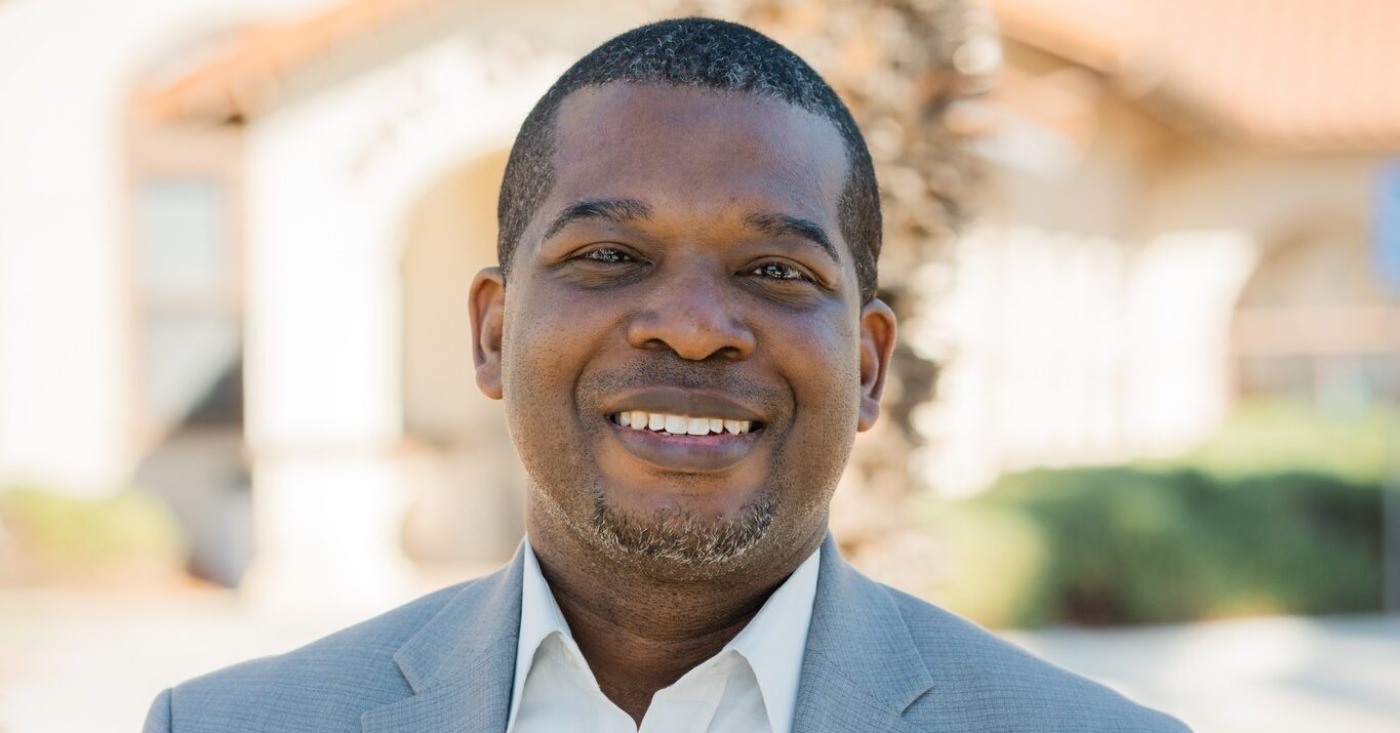
OPINION: Board VP Valarie Bachelor Says OUSD Is Moving Ahead Under Committed Leadership

As I reflect on this past year serving on the Oakland Unified School District (OUSD) Board, I’m incredibly proud of what we’ve accomplished together. While there is still important work ahead, this year demonstrated what is possible when we stay focused on students, collaborate t

Published

on

Valarie Bachelor, Vice President, Oakland Board of Education.

As I reflect on this past year serving on the Oakland Unified School District (OUSD) Board, I’m incredibly proud of what we’ve accomplished together. While there is still important work ahead, this year demonstrated what is possible when we stay focused on students, collaborate through difficult challenges, and refuse to lose sight of our goals.

We inherited one of the most difficult financial situations in OUSD’s history.

Together with Interim Superintendent Dr. Denise Saddler, the Senior Leadership Team, our fiscal consultants, and my Board colleagues, we made difficult decisions that put the district on a stronger path forward.

For the first time in 22 years, OUSD has adopted a balanced budget. We earned a Qualified Second Interim certification and submitted a Positive Third Interim report — major milestones that reflect disciplined leadership, sound fiscal management, and our commitment to preserving local control while avoiding both a state loan and school closures.

As Chair of the Facilities Committee, I’ve also had the privilege of seeing years of community advocacy become reality.

This month, I attended the groundbreaking for Coliseum College Preparatory Academy’s new high school building and gymnasium — an investment decades in the making that will provide East Oakland students with modern, climate-controlled, age-appropriate learning spaces.

I was also honored to celebrate the groundbreaking for the transformation of McClymonds High School alongside the Mac family. This project will bring modern classrooms, engineering labs, athletic facilities, accessibility improvements, updated building systems, a renovated cafeteria, and so much more to one of Oakland’s most historic campuses.

And we’re not stopping there. We’re looking ahead to the transformation of Melrose Leadership Academy while continuing to complete projects across the district, including improvements at Roosevelt and other school sites.

None of this would be possible without the persistence of parents, students, educators, school leaders, and the Oakland voters who invested in our schools by passing Measure Y.

Thank you for believing in our students.

This year also brought important progress for our employees. We reached tentative agreements with OEA, SEIU Local 1021, and our Building & Grounds staff, recognizing the essential role our employees play in serving Oakland’s children.

We’re also strengthening the district’s long-term financial outlook by expanding Transitional Kindergarten hubs, growing in-district non-public school programs, and continuing to identify new revenue opportunities that better serve students while keeping resources within OUSD.

None of these accomplishments happened overnight, and none happened because of one person. They are the result of dedicated staff, community advocates, labor partners, district leadership, and Board members working through disagreements, solving problems together, and keeping students at the center of every decision.

Thank you to everyone who has partnered with us this year. Serving Oakland’s 34,000 students is both an honor and a responsibility. I’m proud of the progress we’ve made, grateful for everyone who helped make it possible, and excited for the work ahead as we continue turning the corner and building the schools our students deserve.

About the Author

Valarie Bachelor is Vice President, Oakland Board of Education.

Continue Reading

Subscribe to receive news and updates from the Oakland Post

* indicates required

CHECK OUT THE LATEST ISSUE OF THE OAKLAND POST

ADVERTISEMENT

WORK FROM HOME

Home-based business with potential monthly income of $10K+ per month. A proven training system and website provided to maximize business effectiveness. Perfect job to earn side and primary income. Contact Lynne for more details: Lynne4npusa@gmail.com 800-334-0540

Facebook

Trending

Copyright ©2021 Post News Group, Inc. All Rights Reserved.