
Activism
The SixTripleEight: “No Mail, Low Morale”
Women were recruited and trained until May 1942. The Women’s Auxiliary Army Corps was formed, and women of all races were officially allowed to serve. In July of that same year, women were given full benefits in the military, and the word “auxiliary” was removed from their name. The Corps then became known as the Women’s Army Corps (WACs).


By Tamara Shiloh
Many historical accounts of wars do not include women. The word “soldier” often brings to mind a man in uniform. Yet by definition it refers to anyone, including women, serving in the military.
American women were allowed to serve in the army during World War I (1914–1918). Many were nurses and staff who cooked for, and catered to, injured soldiers. Because slavery and racism prevented Black women from giving their services to America, many of these women were White.
Women were recruited and trained until May 1942. The Women’s Auxiliary Army Corps was formed, and women of all races were officially allowed to serve. In July of that same year, women were given full benefits in the military, and the word “auxiliary” was removed from their name. The Corps then became known as the Women’s Army Corps (WACs).
Although the military trained women of all races in all divisions and sections of the army in preparation for war, division among the races remained. Black women were encouraged to become WACs. In other divisions, such as the Navy, Black women were excluded almost entirely. The Army Nurse Corps only allowed 500 Black nurses to serve despite thousands who applied.

But the tables were turned in 1945 when the world’s first all-Black female battalion was sent from the United States to serve in parts of Europe during World War II (1939–1945).
Known as the 6888 Central Postal Directory Battalion, or “the SixTripleEight,” the battalion served in parts of France and England to clear the backlog of mail in the European Theater of Operations. The battalion boasted 855 Black women, both enlisted and officers, and was led by Major Charity Adams Earley. It was the only all-Black, all-female battalion overseas throughout the war.
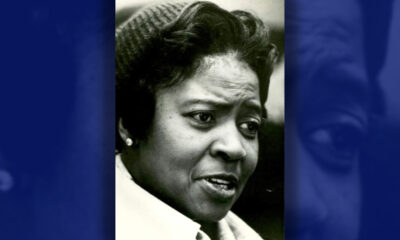
Many of the women serving were handpicked by civil rights activist and educator Mary McLeod Bethune.
Confronted with racism and sexism from their own leadership and troops, the battalion served with honor and distinction completing their mission in six months. By war’s end, the SixTripleEight had cleared over 17 million pieces of backlogged mail ensuring the troops stayed in touch with their loved ones back home.
Although the SixTripleEight had a motto, “No mail, low morale,” they accomplished more than distributing letters and packages. As the largest contingent of Black women to ever serve overseas, they dispelled stereotypes and represented a change in racial and gender roles in the military.
Between 1945 and 1946, the majority of the women worked under the mail service. Others served as cooks, mechanics, nurse assistants and in other roles when necessary. Working conditions were dangerous and risky, as the women were placed in abandoned and infested aircraft and offices throughout the war.
Women of the SixTripleEight were later honored with the European African Middle Eastern Campaign Medal, the Good Conduct Medal, and the World War II Victory Medal while they were still in service.
The last of the battalion returned home in March 1946.













To enlarge your view of this issue, use the slider, magnifying glass icon or full page icon in the lower right corner of the browser window.
To enlarge your view of this issue, use the slider, magnifying glass icon or full page icon in the lower right corner of the browser window.
Activism
Oakland Post: Week of September 30 – October 6, 2026
The printed Weekly Edition of the Oakland Post: Week of September 30 – October 6, 2026

To enlarge your view of this issue, use the slider, magnifying glass icon or full page icon in the lower right corner of the browser window.



Mayor Barbara Lee Holds Special State of the City Address in Deep East Oakland

Practitioners of African Traditional Spirituality Offer Ancestral Reverence Ritual Oct. 31

It’s Time to Lose Weight Before the Holidays

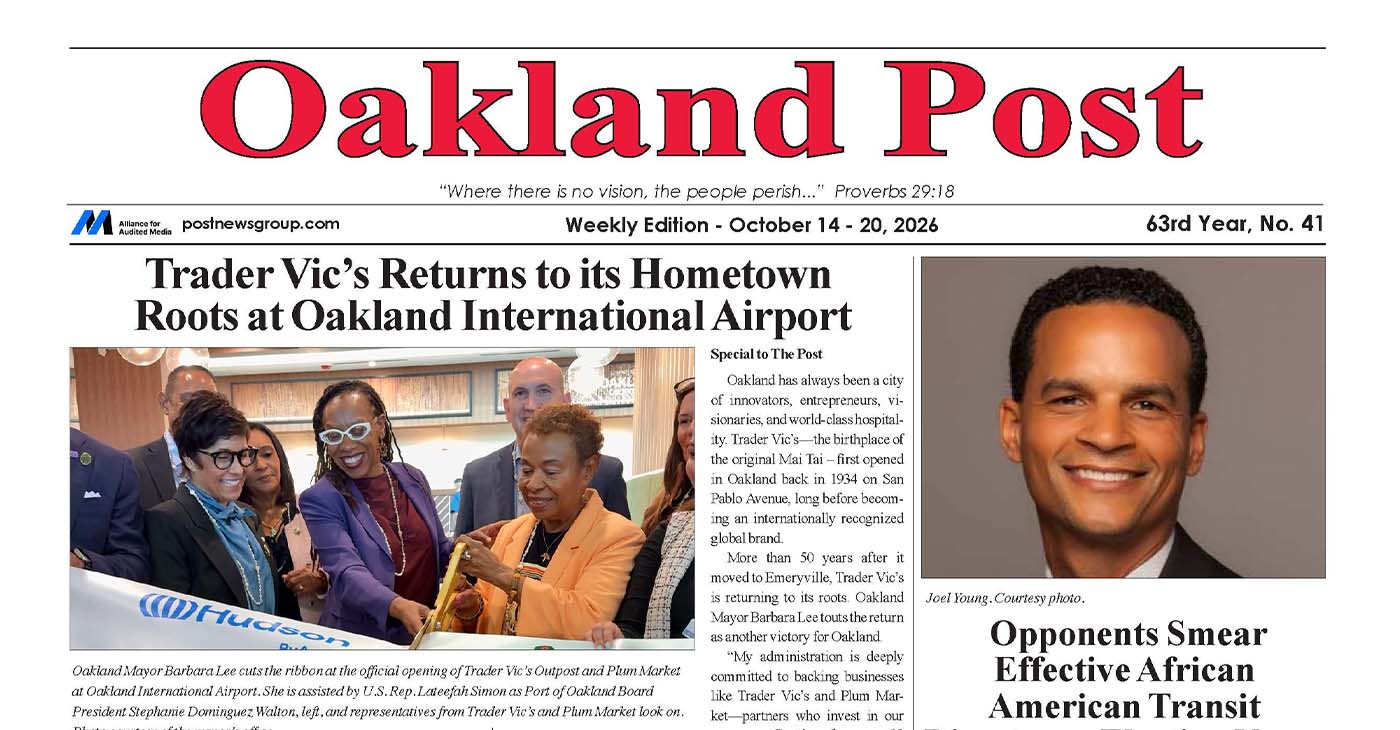
Trader Vic’s Returns to Its Oakland Roots

Oakland Coal Terminal Backed by Trump Would Be Bigger, Dirtier Than Promised, Says Report

Opponents Smear Effective African American Transit Director as Election Nears

Oakland Post: Week of October 14 – 20, 2026

OP-ED: The Black Church Writes AI’s Next Chapter

OP-ED: The Black Church Writes AI’s Next Chapter

WCCUSD Joins Statewide Organic School Food Purchasing Cooperative

Democrats, Community Groups Back Measure EE to Change How Oakland Is Governed

Four Tips to Help You Plan a Holiday “Staycation”

Veterans Housing Project Proposed for South Richmond
PRESS ROOM: Transformative Justice Coalition 2026 Voting Rights Champion Awards Reception ‘Yesterday Is Today: The Battle For Voting Rights

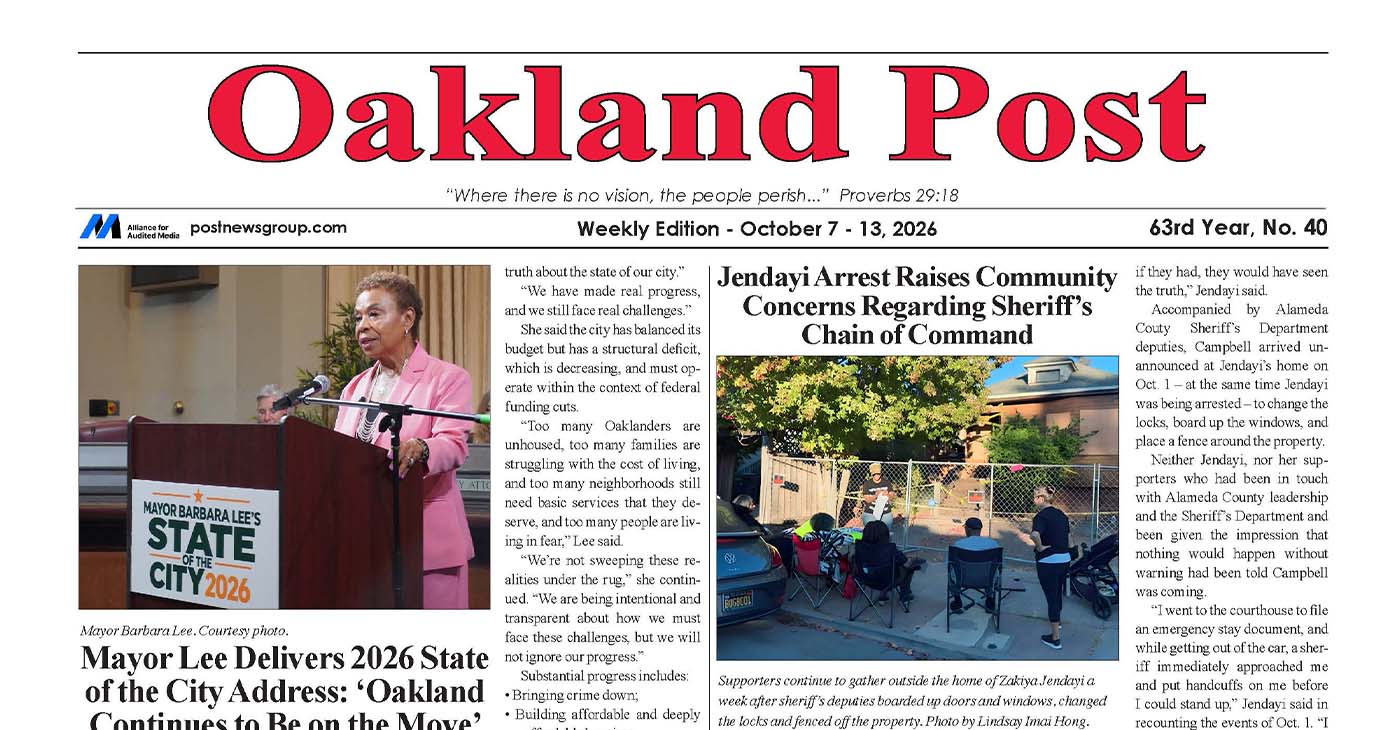
Mayor Lee Delivers 2026 State of the City Address: ‘Oakland Continues to Be on the Move’

Misnamed ‘Parent’ PAC Seeks to Influence Oakland School Board Elections

Listening as a Lifeline: A Doula’s Witness to Black Maternal Health

Poll: Becerra Widens His Lead Over Hilton; Californians Split on Wealth Tax

Oakland Post: Week of September 9 – 15, 2026

County Office of Education Says OUSD Finances Are Getting Healthier, Materially Stronger

Richmond Tiny House Village Farm & Garden Set to Open Gates on Sept. 26

Mayor Lee Announces $1 Million Kaiser Permanente Grant for Pilot Program to Address Homelessness, Clean Up Public Spaces throughout Oakland

Latest Massacre in Haiti Reveals Cruelty U.S. Deportations

OPINION: Nolan Wells’ Death One of Several Signifying Racial Terror Lives on in U.S. South

Doulas Are Helping Black California Moms Navigate Pregnancy–Even as High Mortality Rates Persist

Zakiya Jendayi Arrested, Locked Out of Home by Sheriff’s Deputies

BLACspace Cooperative Invites Bay Area to Experience Oakland’s Black Cultural Ecosystem Through a BLAC Map Tour + Party

Oakland Post: Week of September 16 – 22, 2026

Democratic Clubs Interview Candidates for Oakland School Board

Oakland People’s Arms Embargo Coalition Demands End to Military Shipments Thru Oakland

The Conversation With Al McFarlane 6/23/26

Media Monday 6/22/26

LIVE! ASK ALMA! — TUES. 6.23.26 7PM EST

Car Buying Secrets: 4 Hidden Checks Before You Sign!

Is This 550 HP Charger Worth YOUR Money? AutoNetwork Review

Celebrating Juneteenth – Frederick Douglass on education and resistance

LIVE! — ASK ALMA! — TUES. 6.19.26 7PM EST

Hyundai Ioniq 5 Parking, Safety, and 360 View #shorts

2025 Ioniq 5 New Wiper & Powerful Performance! #shorts

Electric SUV Range: Is 259 Miles Enough? #shorts

EV Charging: How Fast Can You Charge an Electric Vehicle? #shorts

Biometric Cooling… Messaging Seats…Come on! 2025 Infiniti QX80 Autograph 4WD

Charged Up: Witness the Magic of a Fully Electric Car! #shorts

Range Rover Sport PHEV Included…: See What’s Inside This Luxury SUV! #shorts

Invisible Hood View: Perfect Parking with X-Ray Vision! #shorts
-
 Black History3 weeks ago
Listening as a Lifeline: A Doula’s Witness to Black Maternal Health
-
 Economy4 weeks ago
Poll: Becerra Widens His Lead Over Hilton; Californians Split on Wealth Tax
-
 Business4 weeks ago
County Office of Education Says OUSD Finances Are Getting Healthier, Materially Stronger
-
 Lead Story3 weeks ago
Zakiya Jendayi Arrested, Locked Out of Home by Sheriff’s Deputies
-
 Art4 weeks ago
BLACspace Cooperative Invites Bay Area to Experience Oakland’s Black Cultural Ecosystem Through a BLAC Map Tour + Party
-

 Business4 weeks ago
From Historic Memories to New Possibilities: Oakland Celebrates Coliseum 60
-

 Community4 weeks ago
Asm. Corey Jackson Announces Launch of 24-Hour Childcare in His District
-

 Black History4 weeks ago
IN MEMORIAM: The Rev. Leon “Sonny” Clark, Longtime Orange County Pastor and Community Leader, Dies at 72
