
Business
County Office of Education Says OUSD Finances Are Getting Healthier, Materially Stronger
The Oakland Unified School District’s recent budget submission has been deemed “materially stronger” by the Alameda County Office of Education, reflecting deliberate work by the new board and superintendent. Despite needing further cuts in the coming years, the district is progressing toward financial health, according to ACOE Superintendent Alysse Castro. This assessment counters critics who suggest a dire financial outlook for Oakland schools, acknowledging the district has made significant reductions and adopted a plan to address structural challenges. The ACOE commended the district’s efforts to get its financial house in order. Read more to learn about the details of these financial improvements.


County’s letter counters critics who offer Doomsday scenarios for Oakland schools
The Oakland Unified School District, under the leadership of a new board majority and new superintendent, recently submitted a budget to the county “that is a materially stronger submission than the district has filed in recent years, (which) reflects difficult and deliberate work,” according to a letter to the district from Supt. Alysse Castro of the Alameda County Office of Education.
While OUSD still must make more budget cuts in the next two years, the district is on the road to financial health, according to a Sept. 15 letter from Castro to the district.
Under the California Education Code, Alameda County and other county offices of education (COEs) have the legal responsibility to review, approve, conditionally approve, or disapprove local school district annual budgets and interim financial reports.
“The Alameda County Office of Education wants to acknowledge that the district has submitted a budget that shows a positive fund balance, meets the state minimum reserve for economic uncertainty in each year of the multiyear project and is accompanied by a board-adopted commitment to close the remaining structural challenges,” the letter said.

“After two decades of state receivership and significant changes in OUSD’s budgeting practices,” it is understandable that there may be “considerable confusion” in the public about the district’s current financial condition, according to the letter.
However, the district’s current fiscal position and practices are “materially” better than prior years, though they “do not yet eliminate underlying structural challenges,” the letter continued.
Castro also commended the board and staff for working to get their financial house in order.
“There are three essential parts to addressing a structural deficit: staff must identify and bring
forward hard choices; the governing board must make those choices; and staff must follow
through and implement them,” she wrote.
“All three appear to be happening in OUSD, and that represents meaningful progress,” she wrote. “The district has made significant reductions to ongoing expenditures, increased its use of available restricted resources, and adopted a plan to address the remaining gap.”
According to the County, the district already has approved budget cuts of about $30 million in the current year. Additional reductions of about $30 million will be necessary next year, and another $11 million the following year.
These cuts are necessary, the county says, because “the district is still operating at a structural
deficit, meaning spending more every year than it brings in.”
In a statement released earlier this month, the district announced it had “finished the year with $170.1 million in its General Fund and an unrestricted reserve of $32.3 million, finishing $16.4 million ahead of what the district projected in March.”
The budget reflects progress toward putting the district in a stronger financial position to better serve students and families, said district leaders, while also acknowledging the need for significant reductions across the board.
“This turnaround happened because our board was willing to make difficult decisions rather than pass them along, and because our staff did the work,” said Supt. Dr. Denise Saddler. “None of this came easily, and there is more ahead of us. What these closed books show is that the direction is right.”
In October 2025, the board directed staff to prepare budget scenarios totaling $100 million in adjustments. In December, presented with a choice between borrowing to bridge the gap and making the reductions directly, the board chose the latter, the district statement said. As part of the reduction plan, the board approved cuts to more than 400 certificated and classified positions, along with a retirement incentive that converted some layoffs into voluntary departures.
“Closing our books is not the same as finishing the work, and we are not stopping here,” said Tara Gard,deputy superintendent of Business and Operations. “We will continue with the actions in our Financial Stabilization Plan because of where they lead.”
In a statement released on social media, Oakland Education Association (OEA) President
Kampala Taiz-Rancifer strongly criticized those who allege the district is collapsing and supported members of the school board majority who are working hard to stabilize the district’s finances while minimizing disruption for schools and employees.
Jennifer Brouhard (D2) and Valarie Bachelor (D6), who are running for reelection, “are moving the district toward a ‘materially stronger’ financial position than we’ve seen in recent years—all while investing in school sites and the employees who serve Oakland students,” she wrote.
“For years, we’ve heard billionaire-backed board members say they had to make ‘tough choices’ to balance the budget,” she continued. “Those choices almost always caused disruption and instability for our schools and communities. This is a different approach: financial stability alongside investments in students, schools, and workers. All in the effort to improve student outcomes.”
“The real hard work is tuning out the rage bait, the chaos agents, the attacks on unions and workers, and ignoring the loud corporate profiteers—and staying focused on what matters: improving outcomes for students while creating stable teaching and learning conditions,” said Taiz-Rancifer.
“Let’s not go backward into the days of manufactured panic.”










Black History
IN MEMORIAM: Marcia Ann Gillespie, Editor of Essence and Ms. Magazines, Dies at 82
Marcia Ann Gillespie, the trailblazing journalist who served as the first editor-in-chief of Essence magazine, has died at age 82. After joining the publication at its inception in 1970, Gillespie spent a decade elevating the beauty and voices of Black women during a pivotal era of self-love and cultural revolution. She later broke barriers as the first Black woman to lead Ms. magazine, further solidifying her status as a titan of the publishing industry. Her expansive career also included authorship and teaching, leaving a profound impact on American media. Read more.

Marcia Anna Gillespie, the first editor in chief of Essence magazine, has died. She was 82.
Born in Rockville Centre, New York, in 1944. The daughter of a church sexton/small business owner and domestic worker/caterer, Gillespie parlayed her degree in American studies from Illinois’s Lake Forest College into a research job at Time-Life Books, Inc. in New York.
There she advocated for fairness and inclusion of Black life in its publications. When the owners of the standard bearer of Black life, Ebony magazine, ventured into creating a special publication for young, Black women, Gillespie was hired as managing editor in 1970, and became editor-in-chief a year later at the young age of 26.
At the time, the venture by the Johnson family – the owners of Ebony magazine and Jet – into creating a publication for young Black women met the growing revolution of self-love in the Black community.
In other words, the battle cry of the late 1960s, “Black is Beautiful,” had a place to be seen and not just heard.
Thousands of young women who had already abandoned straightening combs and European aesthetics learned more ways to wear their natural hair from Afros to cornrows. Young Black designers got a place in the spotlight not just in clothing but jewelry that expressed neo-African ideals. But one of the most important impacts was the magazine’s unapologetic elevation of the beauty of the dark-skinned Black female to the status she deserved.
Under Gillepie’s tenure, Essence championed storytelling that celebrated Black women’s identities, experiences, and contributions at a time when their voices were often overlooked in mainstream media,” Essence wrote in a statement posted to Instagram
For 10 years she steered the fledgling publication before joining Ms. Magazine as a contributor in 1980 later becoming the first Black woman to edit a mainstream American magazine when she took charge in 1992.
In 1998, she helped secure the publication’s future through a women-led ownership group. She stayed at Ms. In various capacities until 2001, during which time the magazine had the most diverse readership in its history.
She also mentored future Essence editor Susan L. Taylor and taught young journalists at SUNY Old Westbury.
Emmy-winning actor Sheryl Lee Ralph took to social media to honor Gillespie’s life.
“Rest in peace, dear Marcia Gillespie,” she wrote on Threads. “Your voice, your brilliance, and your commitment to lifting up Black women leaves a legacy that will continue to inspire me and so many others.”
A professor at SUNY Old Westbury and Bennett College, she also co-authored the authorized biography “Maya Angelou: A Glorious Celebration” in 2008.
According to Wikipedia, she also served on various boards as a director or advisor, including: “…the Arthur Ashe Institute of Urban Health, the Black & Jewish Women of New York, the Violence Policy Center in Washington, D.C., Aspen Institute, …and the Studio Museum of Harlem. Gillespie is a member of the National Council of Negro Women and the American Association of Magazine Editors.”
She was the recipient of several awards, including: the Lake Forest College Outstanding Alumni Award (1973), the New York Women in Communications Matrix Award (1978); a Lifetime Achievement Award from the New York Association of Black Journalists for print journalism (1982); a ‘Top Ten Outstanding Women in Magazine Publishing’ recognition by the March of Dimes.
In later years she was inducted into the American Society of Magazine Editors’ Hall of Fame (2002); the NAACP President’s Award (2006) and the Barbara Graves Legacy Award at the Black Enterprise Women of Power Summit in 2017.
The conclusion for her online obituary reads: “She leaves behind a legacy written not just in the pages she edited, but in every editor, journalist, and reader who found themselves — finally — in the stories she chose to tell.”
Online sources for this report include “The History Makers,” The Washington Informer, Wikipedia, Essence magazine, Ms. Magazine and her obituary.
Business
Oakland Latino Chamber of Commerce Hosts Statewide Convention, Generating $3 Million in Economic Impact
The Oakland Latino Chamber of Commerce recently hosted the 47th Annual California Hispanic Chambers of Commerce Statewide Convention, drawing more than 1,000 attendees to the city. The event generated an estimated $3 million economic impact, benefiting local retailers, hotels, and small businesses throughout the region. Organized in partnership with Visit Oakland, the convention featured a marketplace for local entrepreneurs and focused on advancing economic prosperity for Latino-owned businesses. Several innovative features were introduced during the summit to provide lasting resources for the state’s business community, read more.
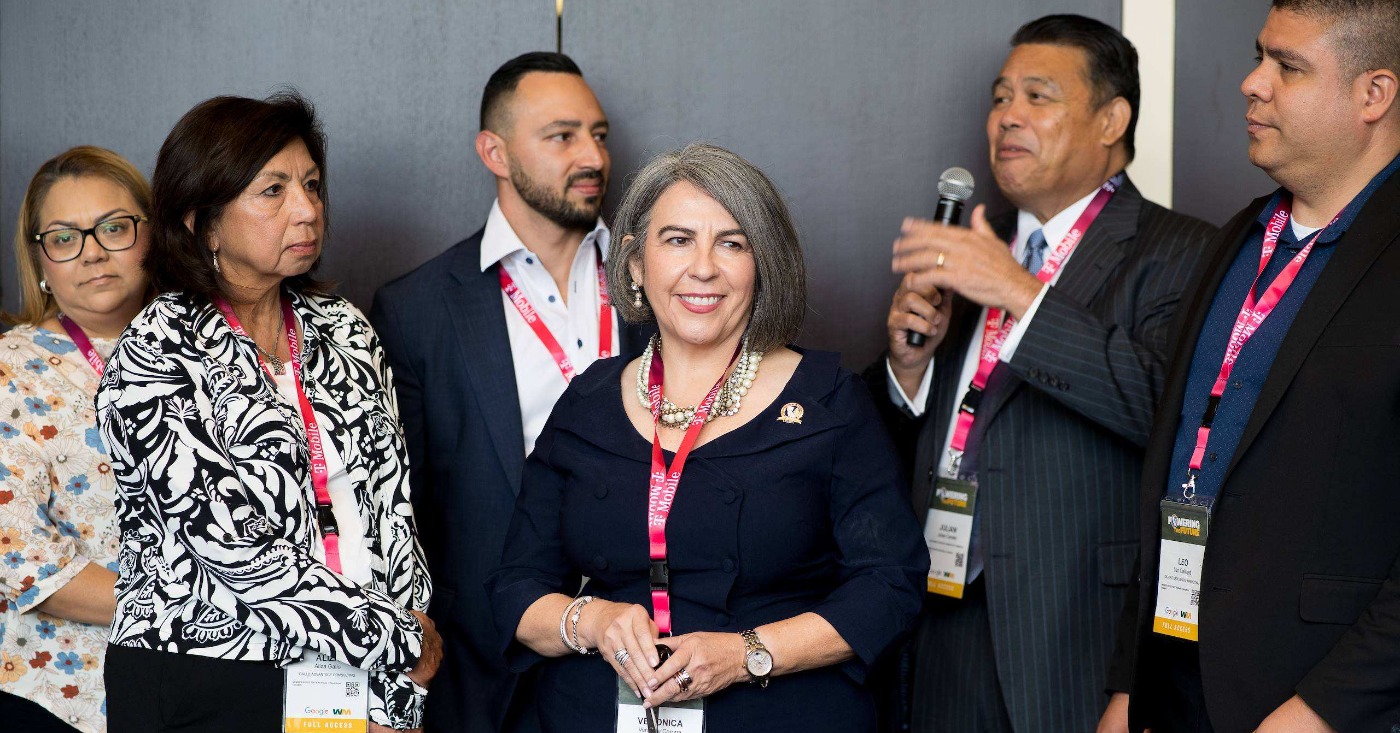
The Oakland Latino Chamber of Commerce (OLCC) recently served as the Host Chamber for the 47th Annual California Hispanic Chambers of Commerce (CHCC) Statewide Convention, held in Oakland in August 2026.
The Convention welcomed more than 1,000 attendees from throughout California and generated an estimated $3 million economic impact for the City of Oakland, providing significant support to local hotels, restaurants, transportation providers, retailers, and small businesses.
In conjunction with Visit Oakland, OLCC brought in various local sponsors and worked closely with the California Hispanic Chamber of Commerce, to make the Oakland Convention a success.
The success of the 47th Annual CHCC Statewide Convention demonstrates what is possible when business leaders, entrepreneurs, community organizations, and public partners work together with a shared vision, said Aliza Gallo, president of the OLCC.
“By welcoming more than 1,000 attendees and generating an estimated $3 million economic impact, we not only showcased Oakland as a premier destination for business and innovation but also created lasting opportunities for local businesses and entrepreneurs,” said Gallo, who also served as co-host of the event.
She adds that the “convention elevated Oakland’s visibility, strengthened statewide and local partnerships, and reinforced the Oakland Latino Chamber of Commerce’s commitment to advancing economic prosperity for our members and our community.”
As part of its leadership role, OLCC introduced two innovative features designed to extend the convention’s impact beyond the event itself. Conference workshops were recorded and made available for continued learning and professional development.
These recordings will be shared with OLCC members and made available for broader public access, expanding educational opportunities for businesses and entrepreneurs throughout California. The workshop content will also be distributed to the 85 Latino Chambers and Affiliate Members within the CHCC network, which collectively is 135 member organizations statewide.
In addition, OLCC created and managed the Oakland Mercadito, a vibrant marketplace showcasing local Latino and Latina entrepreneurs. The Mercadito provided small business owners with an opportunity to market their products and services, connect with new customers, and gain exposure to business and community leaders from across the state.
The initiative highlighted Oakland’s entrepreneurial talent and demonstrated OLCC’s commitment to supporting small business growth and economic opportunity.
“Oakland is one of the most diverse cities in the United States” commented Peter Gamez, president & CEO of Visit Oakland. “Our city’s celebration of culture makes everyone feel they belong here and allows for truly authentic experiences.
“Our diversity is a powerful draw for groups and individual visitors. We are extremely proud of this and continue to cultivate and grow this message as we welcome conferences and conventions to The Town,” Gamez said.
For more information, see the Visit Oakland video about the CHCC Convention In Oakland: https://lnkd.in/p/eRpe2sYD
The Oakland Latino Chamber of Commerce is the source of this story.
About The Oakland Latino Chamber of Commerce
Oakland Latino Chamber of Commerce (OLCC) www.oaklandlatinochamber.com is dedicated to advancing economic opportunity, strengthening business capacity, and elevating the visibility of Latino-owned businesses throughout Oakland and the East Bay. Through advocacy, partnerships, technical assistance, and community engagement, OLCC works to ensure that Latino entrepreneurs have the resources and support necessary to thrive.
Black History
Five Hospitals Said No! Who Will Help Annette Henry Recover?
Annette Henry, a 67-year-old Oakland woman, is struggling to access essential medical care after a devastating stroke left her with a rare neuropathic pain syndrome. Despite medical documentation confirming her need for inpatient rehabilitation, five different Bay Area hospitals have denied her admission, often citing her inability to meet rigid therapy thresholds. Her family’s efforts to seek intervention from state and federal lawmakers have yielded no results, leaving Henry at home without a clear path to recovery. To see how these systemic failures are impacting her health, read more.

A tangle of red tape and contradictions between health providers and Medicare rules have impeded an Oakland woman’s ability to recover from a stroke she had last year.
Her family – who are her caretakers – have reached out to various professionals and state and federal lawmakers for help to no avail.
At 67, Annette Henry needs inpatient stroke rehabilitation after a devastating stroke in May 2025. Since then, multiple Bay Area hospitals have denied it. She was accepted into a rehabilitation facility in June 2025 but discharged prematurely in July, in essentially the same condition.
Three hospitals where she was a patient pushed skilled nursing over inpatient rehabilitation. Two more declined referrals.
Now at home, Henry is caught in a system that measures her need for treatment against the limitations treatment should address.
Medical professionals have documented her need for a higher level of care.
In August 2025, a Medicare Quality Improvement Organization (QIO) overturned Henry’s discharge from an inpatient rehabilitation facility (IRF).

The QIO’s independent physician reviewer found she had not received the “intensive therapy program outlined on admission,” according to the Aug. 30, 2025, determination letter. Yet the decision did not secure her readmission or guarantee continued rehabilitation.
Henry has central post-stroke pain, a rare neuropathic pain syndrome that can make movement and touch intensely painful. Her pain specialist recommended inpatient rehabilitation alongside pain management.
Nevertheless, facilities have cited her inability to tolerate three hours of daily therapy as a reason to deny inpatient rehabilitation.
That practice raises questions about Medicare coverage policy. In Hooper v. Sullivan, No. H-80-99 (D. Conn. 1989), the court recorded the parties’ agreement that denials based on numerical utilization screens, diagnostic screens, treatment norms, the “three-hour rule,” or other “rules of thumb” were not appropriate.
CMS subsequently cited Hooper in its Aug. 7, 2009, final rule (74 Fed. Reg. 39762, 39794). The policy is also addressed in the Medicare Benefit Policy Manual, Chapter 1, Section 110, and CMS’s June 1 Review Choice Demonstration for IRF Services: Operational Guide.
These authorities underscore the need for individualized assessments rather than rigid numerical thresholds.
The central contradiction is stark: the pain and disability that make rehabilitation necessary have been cited as reasons to deny it. UCSF Stanyan’s April 7 discharge summary for Henry states that acute rehabilitation unit (ARU) placement was declined for “inability to tolerate three hours of therapy daily.” Without appropriate treatment, Henry risks further decline.
Her records document complications associated with prolonged immobility.
Orthopedics documented flexion contractures of the small and ring fingers on March 19.
Chest imaging on April 1 showed bibasilar dependent atelectasis, a condition involving reduced inflation of the lower portions of both lungs. These concerns can be examined through her medical records and photographs.
“What does a ‘not reasonable’ discharge look like?” her family asks. For them, it looks like an appeal decision recognizing a problem without ensuring a remedy: repeated referrals, denials and a patient still without the rehabilitation her treating professionals have recommended.
The family has sought help from the California Department of Public Health and the federal Office for Civil Rights to no avail. They contacted U.S. Rep. Lateefah Simon in June 2025, while Henry was in rehabilitation; Senator Alex Padilla in May 2026; and Senator Adam Schiff in September 2026.
DeCuir says the family received no meaningful assistance and was redirected to the QIO or advised working with a social worker after Henry had already been discharged.
The consequences extend beyond rehabilitation. The family reports that Henry has struggled to attend in-person specialist or any appointments and needs in-person evaluation and treatment for complications, recommended evaluations, health screenings and preventive care.
Her mobility limitations have become barriers to broader medical care. Every office tells her their office is not set up to accommodate her. This has happened with specialty care, out-patient services, screenings and physical therapy.
Henry is a Black woman on Medicare, and her family believes her experience raises concerns about unequal access to intensive rehabilitation. Research has documented disparities in discharge to inpatient rehabilitation rather than skilled nursing, underscoring the importance of individualized review.
CMS, state regulators and healthcare providers should examine Henry’s records, assess her needs on their clinical merits and explain how the applicable coverage standards were applied, and whether they are being enforced.
Rehabilitation is not a reward for patients who can already tolerate treatment. It is care intended to help people recover function. Henry’s case asks whether a system designed to support recovery can leave a patient without a path to it.



How the Sandwich Generation Can Help Protect Aging Parents’ Finances

As Progressive Democrats Celebrate ‘Blue Tsunami,’ Oakland Counts Victories

Golden State Valkyries Become Bay Area Legends Winning WNBA Championship on Halloween Night

IN MEMORIAM: Marcia Ann Gillespie, Editor of Essence and Ms. Magazines, Dies at 82

U.S. Rep. John Garamendi Honors local ‘Women of the Year’ at Annual Awards Ceremony

Richmond Neighbors Put Pantry Power on the Map

Oakland Latino Chamber of Commerce Hosts Statewide Convention, Generating $3 Million in Economic Impact

HISTORY MADE: Keisha Lance Bottoms Becomes First Black Woman Elected Governor in American History

HISTORY MADE: Keisha Lance Bottoms Becomes First Black Woman Elected Governor in American History

Five Hospitals Said No! Who Will Help Annette Henry Recover?

Oakland NAACP, BWOPA Speak Out Against Alleged Harassment of Black Women Political Leaders

COMMENTARY: Oakland’s Black Students Have Gained Ground: We Shouldn’t Stop Now

From Backyard Grilling to Jack London Square: Jamale Carlyle’s Chicken Wing Success Story

SEIU Local 1000 and State of California Will Continue to Negotiate New Labor Contract

OPINION: We Can Restore Checks and Balances on Trump

COMMENTARY: Valarie Bachelor and Jennifer Brouhard are Excellent School Board Members and Deserve to Be Reelected

Listening as a Lifeline: A Doula’s Witness to Black Maternal Health
HISTORY MADE: Keisha Lance Bottoms Becomes First Black Woman Elected Governor in American History

Zakiya Jendayi Arrested, Locked Out of Home by Sheriff’s Deputies

OUSD Receives State Review of District Finances; Outlines Progress Since January
SEIU Local 1000 and State of California Will Continue to Negotiate New Labor Contract

COMMENTARY: Your California Living Trust Could Be Next: When Evidence Isn’t Enough

It’s Time to Lose Weight Before the Holidays

Democrats, Community Groups Back Measure EE to Change How Oakland Is Governed

Oakland Post: Week of September 30 – October 6, 2026

Mayor Barbara Lee Holds Special State of the City Address in Deep East Oakland
Golden State Valkyries Become Bay Area Legends Winning WNBA Championship on Halloween Night

Fate of Bay Area Public Transit Hinges on Regional Transit Measure

Oakland Awarded More than $14 Million in State Funding

OP-ED: Proposition 44 Would Put a Price on Trust

The Conversation With Al McFarlane 6/23/26

Media Monday 6/22/26

LIVE! ASK ALMA! — TUES. 6.23.26 7PM EST

Car Buying Secrets: 4 Hidden Checks Before You Sign!

Is This 550 HP Charger Worth YOUR Money? AutoNetwork Review

Celebrating Juneteenth – Frederick Douglass on education and resistance

LIVE! — ASK ALMA! — TUES. 6.19.26 7PM EST

Hyundai Ioniq 5 Parking, Safety, and 360 View #shorts

2025 Ioniq 5 New Wiper & Powerful Performance! #shorts

Electric SUV Range: Is 259 Miles Enough? #shorts

EV Charging: How Fast Can You Charge an Electric Vehicle? #shorts

Biometric Cooling… Messaging Seats…Come on! 2025 Infiniti QX80 Autograph 4WD

Charged Up: Witness the Magic of a Fully Electric Car! #shorts

Range Rover Sport PHEV Included…: See What’s Inside This Luxury SUV! #shorts

Invisible Hood View: Perfect Parking with X-Ray Vision! #shorts
-
 Commentary1 week ago
COMMENTARY: Valarie Bachelor and Jennifer Brouhard are Excellent School Board Members and Deserve to Be Reelected
-
 Black History1 week ago
HISTORY MADE: Keisha Lance Bottoms Becomes First Black Woman Elected Governor in American History
-
 Education1 week ago
OUSD Receives State Review of District Finances; Outlines Progress Since January
-
 Business1 week ago
SEIU Local 1000 and State of California Will Continue to Negotiate New Labor Contract
-
 Business1 week ago
COMMENTARY: Your California Living Trust Could Be Next: When Evidence Isn’t Enough
-
 Community3 weeks ago
It’s Time to Lose Weight Before the Holidays
-
 Community4 weeks ago
Democrats, Community Groups Back Measure EE to Change How Oakland Is Governed
-
 Community3 weeks ago
Mayor Barbara Lee Holds Special State of the City Address in Deep East Oakland
