
Activism
Don’t Criminalize Domestic Violence Survivors, Advocates Say
Advocates say, domestic violence must be approached holistically. Every aspect of the issue must be considered. That not only helps to end the criminalization of people who survive it, they explain. It is also a better path to ending the cycle of trauma and dysfunction that triggers and sustains it.


Charlene Muhammad | The Oakland Post
Problems plaguing people affected by domestic violence are often compartmentalized when law enforcement officers – as well as criminal justice and social welfare authorities — try to solve them. That is a fragmented approach, advocates argue, that helps neither victims nor perpetrators, and it does not lead to lasting solutions to the problem.
Instead, those advocates say, domestic violence must be approached holistically. Every aspect of the issue must be considered. That not only helps to end the criminalization of people who survive it, they explain. It is also a better path to ending the cycle of trauma and dysfunction that triggers and sustains it.
Democratic state Sen. Sydney Kamlager (D-Los Angeles) is one of those advocates.
Kamlager, a former Assemblymember who was elected a state Senator earlier this year, introduced AB 118, or the “CRISES ACT,” in December 2020 when she was still serving in the Assembly. The acronym CRISES stands for “Community Response Initiative to Strengthen Emergency Systems.”
AB 118 seeks to implement a pilot program that would prepare and empower community-based organizations to serve as first responders instead of the police. That would place domestic violence advocates, mental and public health professionals on the frontlines, responding to calls when there are incidents of intimate partner abuse or other acts of violence in people’s homes.
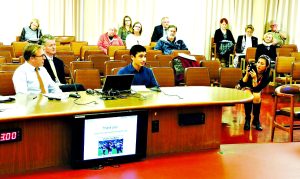
Kamlager initially introduced the CRISES Act as AB 2054 in February 2020.
AB 2054 passed in the Legislature unanimously, but Gov. Gavin Newsom vetoed it, saying the Office of Emergency Services was not the appropriate location for the pilot program as proposed in legislation.
However, its legislative successor AB 118 also passed unanimously in the Assembly and is currently being considered in the Senate Appropriations Committee.
Cat Brooks, co-founder of the Anti-Police Terror Project in Oakland thinks the bill will pass into law this time around. She owes her optimism to pressure elected officials may be feeling due to a growing movement in the streets of cities, and states across the country, that is pushing for alternatives to badges and guns responding to community crisis.
The Anti Police-Terror Project is a Black-led, multi-racial, intergenerational coalition that seeks to build a replicable and sustainable model to eradicate police terror in communities of color.
“This current political moment sort of creates the perfect storm for bills like the CRISES Act to make it through, so I’m hopeful,” said Brooks.
The organization created the Mental Health First Oakland program, a non-911 mobile crisis response to domestic violence, interpersonal violence, substance abuse, mental health and other community crisis, according to Brooks.
“I’m a survivor of domestic violence, and the police came. And following my husband having beat-the-you-know-what out of me, I’m the one who ended up going to jail,” she recalled.
She was 19, Black, and a woman in Las Vegas, she says. Under the city’s Primary Aggressor Law, police can decide who is responsible for the domestic violence.
“That’s how they took me to jail, even though my husband had not a scratch on him, and I was covered in scratches and bruises and bleeding,” said Brooks. “I was targeted as a Black woman by White law enforcement, and I was sent to jail, and that happens to women over and over and over again.”
Unfortunately, her story is not an exception to the rule, she said. She believes race had less to do with her arrest than gender. “We have to remember that we live in a patriarchy, and we also have to remember that the least believed human being walking America’s streets is the Black woman. The most stereotyped is the Black woman. The image that is portrayed of us is loud-mouthed, crazy, out-of-control, angry, violent,” said Brooks.
How those stereotypes factor into how law enforcement officers treat Black women is not discussed enough in public discourse. But far too often those interactions are deadly or violent, she argued.
Brooks’ personal ordeal, she says, led her to start disbelieving that police officers are her friends, and they would help her. In fact, quite the opposite, they could end up making things much worse, she said.
For the duration of that relationship, she had no one to call, so she said she just took the abuse, which, she says, is true for so many Black, Brown and Indigenous women.
“They don’t call anyone because they don’t want the police to kill them. They don’t want the police to kill their partners. They don’t want to go to jail,” said Brooks.
The tragedy helped propel her into activism and advocacy. Now, the Anti Police-Terror Project is on the verge of releasing its model for responding to interpersonal violence without police, she told California Black Media.
Members have worked closely with many organizations on the frontlines doing domestic violence work, because it must be a local solution, said Brooks.
The organization provides principles and structures, but ultimately, the community must come together, identify where the safe house is, who the trauma responders are going to be, who are going to deal with the perpetrator in a way that’s not violent, and force accountability, without involving law enforcement, she explained.
According to Brooks, the Anti Police-Terror Project does a lot of propaganda and talking to the community, and they have found it interesting that mainstream media’s portrayal of abusers is like the 1984 movie “The Burning Bed” starring Farrah Fawcett. In the movie, after nearly a decade of abuse, Fawcett’s character Francine Hughes douses gasoline over her sleeping husband and lights their bed on fire.
“They don’t think about that some families actually want to stay together, that some families actually want help for everybody. And for us, whether the family decides to stay together or not, we know that services and support and trauma work needs to be done with both the perpetrator and the survivors so those are the kinds of things that we’re advocating for,” said Brooks.




Activism
Oakland Post: Week of March 18 – 24, 2026
The printed Weekly Edition of the Oakland Post: Week of March 18 – 24, 2026

To enlarge your view of this issue, use the slider, magnifying glass icon or full page icon in the lower right corner of the browser window.
Activism
Oakland Post: Week of March 11 -17, 2026
The printed Weekly Edition of the Oakland Post: Week of March 11 – 17, 2026
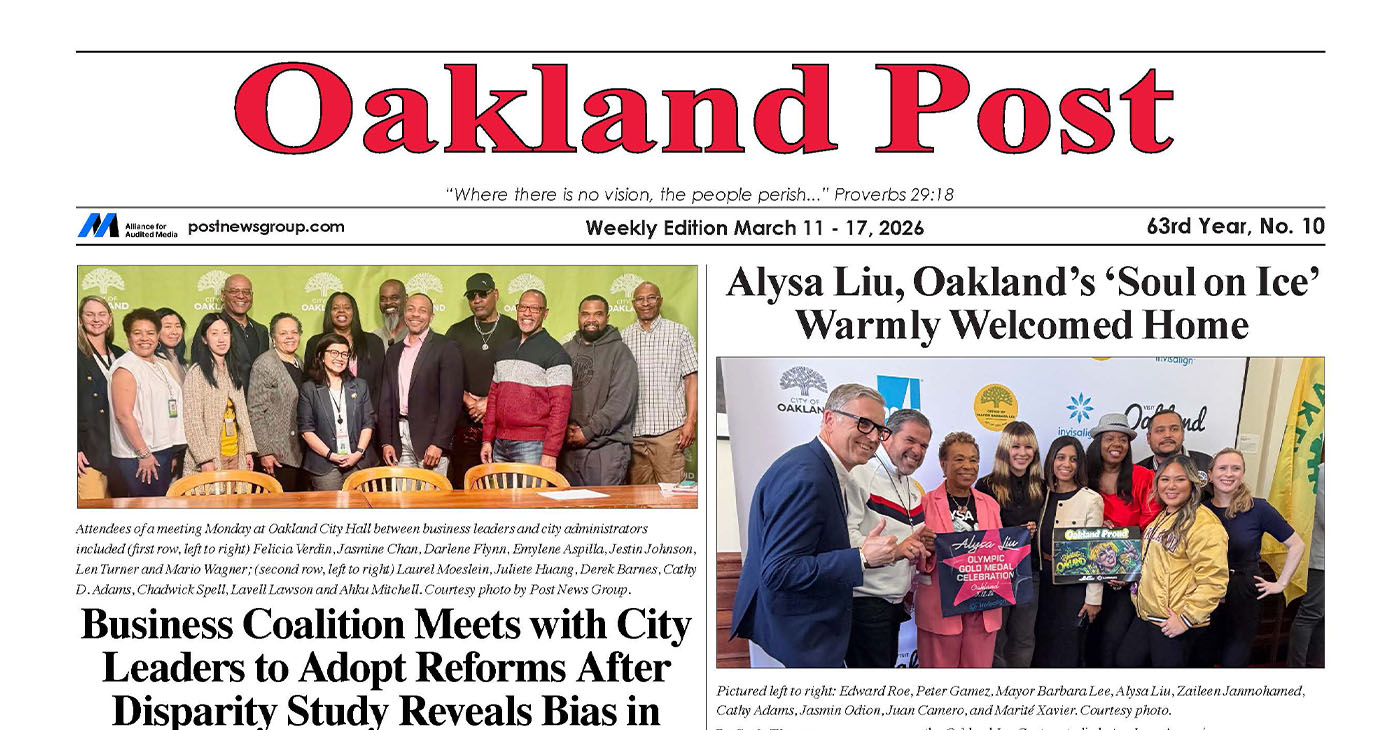
To enlarge your view of this issue, use the slider, magnifying glass icon or full page icon in the lower right corner of the browser window.
Activism
Oakland Post: Week of March 4 – 10, 2026
The printed Weekly Edition of the Oakland Post: Week of March 4 – 10, 2026

To enlarge your view of this issue, use the slider, magnifying glass icon or full page icon in the lower right corner of the browser window.


WORK FROM HOME
Home-based business with potential monthly income of $10K+ per month. A proven training system and website provided to maximize business effectiveness. Perfect job to earn side and primary income. Contact Lynne for more details: Lynne4npusa@gmail.com 800-334-0540


Black Artists in America, Installation Three Wraps at the Dixon Gallery and Gardens

Grief, Advocacy, and Education: A Counselor Reflects on Black Maternal Health

Future of Florida’s Black History Museum in Limbo

New Research Shows the Many Benefits of Early Learning

South Hampton K-8 Students Among Top 10 Finalists for Samsung’s ‘Solve for Tomorrow’ Competition

Cuba: No Negotiation with US on the President or Political System

Brooklyn Academy of Music Names Jamaican-Born Tamara McCaw as President

Trinidad & Tobego – U.S. Launches WhatsApp Channel for American Citizens in the Country

Oakland Post: Week of March 18 – 24, 2026

AI Innovation vs. Ethics and Environmental Impact

AI, Web3, and Digital Reparations

What If You Owned Your AI Agent?

Season 7, Episode 3 – January Reporter’s Roundtable 📱

Season 7, Episode 3 – January Reporter’s Roundtable

AI, Media, and Power | Part 2, Real-World Impacts and Tradeoffs

Reflecting on Black History Milestones in Birmingham AL

CITY OF SAN LEANDRO STATE OF CALIFORNIA PUBLIC WORKS DEPARTMENT ENGINEERING DIVISION NOTICE TO BIDDERS FOR ANNUAL STREET OVERLAY/REHABILITATION 2019-21 – PHASE III

Oakland Post: Week of February 18 – 24, 2026

Oakland Post: Week of February 25 – March 3, 2026

PRESS ROOM: NBA Hall of Fame Nominee Terry Cummings Joins 100 Black Men of DeKalb County to Launch Victory & Values Initiative

Trump’s MAGA Allies are Creating Executive Order Plan to Steal the 2026 Midterms

U.S. manufacturing rebounds – how foundry services are adapting to rising demand

Chase Oakland Community Center Hosts Alley-Oop Accelerator Building Community and Opportunity for Bay Area Entrepreneurs

Oakland Post: Week of March 4 – 10, 2026

OP-ED: One Hundred Years of Black Workers Telling the Truth

Poll Shows Support for Policies That Help Families Afford Child Care

Advancements in solar technology that are changing the way we power the world

Woman’s Search for Family’s Roots Leads to Ancestor John T. Ward – A Successful Entrepreneur and Conductor on the Underground Railroad

PRESS ROOM: Civil Rights TV Launches in Selma as the World’s First 24/7 Civil Rights Television Network

Ghana Mourns a Son of the African World

Hyundai Ioniq 5 Parking, Safety, and 360 View #shorts

2025 Ioniq 5 New Wiper & Powerful Performance! #shorts

Electric SUV Range: Is 259 Miles Enough? #shorts

EV Charging: How Fast Can You Charge an Electric Vehicle? #shorts

Biometric Cooling… Messaging Seats…Come on! 2025 Infiniti QX80 Autograph 4WD

Charged Up: Witness the Magic of a Fully Electric Car! #shorts

Range Rover Sport PHEV Included…: See What’s Inside This Luxury SUV! #shorts

Invisible Hood View: Perfect Parking with X-Ray Vision! #shorts

AI Is Reshaping Black Healthcare: Promise, Peril, and the Push for Improved Results in California

ESSAY: Technology and Medicine, a Primary Care Point of View

Sanctuary Cities

The RESISTANCE – FREEDOM NOW

STATE OF THE PEOPLE: Freddie

ECONOMIC BOYCOTT DAY!!!!!

I told You So
-
 Activism4 weeks ago
Oakland Post: Week of March 4 – 10, 2026
-
 #NNPA BlackPress3 weeks ago
Woman’s Search for Family’s Roots Leads to Ancestor John T. Ward – A Successful Entrepreneur and Conductor on the Underground Railroad
-

 #NNPA BlackPress4 weeks ago
OP-ED: NNPA Launches 2026 “Leadership Matters” Video Series
-

 #NNPA BlackPress3 weeks ago
Advocates Raise Alarm Over ICE Operation, MOU and Detention Risks in Baltimore County
-

 #NNPA BlackPress3 weeks ago
COMMENTARY: Women of Color Shape Our Past and Future
-

 #NNPA BlackPress3 weeks ago
Pete Buttigieg to Join Mayor Randall Woodfin for Community Town Hall in Birmingham
-
 Activism2 weeks ago
Oakland Post: Week of March 11 -17, 2026
-

 Advice2 weeks ago
Financial Wellness and Mental Health: Managing Money Stress in College
