
Community
Vance and Walz Begin Cordially but End in Heated Clashes Over Trump, Jan. 6, and National Policy Issues
NNPA NEWSWIRE — Ultimately, Walz positioned himself as a champion of middle-class families, touting healthcare and affordable housing policies. At the same time, Vance remained firmly aligned with Trump, repeatedly defending the former president’s record and platform.


By Stacy M. Brown, NNPA Newswire Senior National Correspondent
@StacyBrownMedia
Republican Senator JD Vance of Ohio and Democratic Governor Tim Walz of Minnesota, faced off in the only vice presidential debate of the 2024 election
on Tuesday night, which began with a measured tone but eventually escalated into a combative exchange. The debate, which CBS News hosted at their Broadcast Center in New York and Norah O’Donnell and Margaret Brennan moderated, covered a range of important national issues, with Vance’s connections to former President Donald Trump and the January 6 uprising emerging as key flashpoints.
The debate’s early moments were largely civil, as both candidates laid out their platforms and shared their visions on topics such as foreign policy and the economy. However, tensions flared when Vance was asked about Trump’s recent comment that childcare was “not very expensive” compared to the money the country would gain from his policies. Vance explained that Trump was referring to the nation’s ability to raise funds by “penalizing companies shipping jobs overseas” and those using “slave laborers.” But Vance sidestepped when pressed on whether Trump was committed to the child tax credit, redirecting the discussion to economic penalties for outsourcing, prompting frustration from Walz.
The debate took a sharper turn when Vance was questioned about the 2020 election and Trump’s role in the January 6 insurrection. Rather than directly answering whether Trump lost the 2020 election, Vance defended the former president’s actions that day, stating, “Remember, [Trump] said that on January the 6th, the protesters ought to protest peacefully, and on January the 20th, what happened? Joe Biden became the president. Donald Trump left the White House.”
Walz responded forcefully, calling Vance’s failure to answer directly “a damning non-answer.” He continued, “To deny what happened on January 6, the first time an American president or anyone tried to overturn an election, is unacceptable. This has got to stop. It’s tearing our country apart.”
Walz also drew attention to the broader implications of Vance’s remarks, reminding voters of the violence on January 6, including a march on the governor’s mansion in Minnesota. “What I’m concerned about is, where is the firewall with Donald Trump? Where is the firewall if he knows he could do anything, including taking an election, and his vice president’s not going to stand up to it? That’s what we’re asking you, America,” Walz said, clarifying that accountability for democracy was at stake in the 2024 election.
Vance avoided direct answers on election integrity and instead pivoted to discussions of censorship, blaming tech companies for “censoring their fellow citizens” and touting Trump’s endorsements by former Democratic Rep. Tulsi Gabbard and Robert F. Kennedy Jr. He continued to defend Trump’s policies, including tax cuts and immigration, while steering clear of addressing the core issue of Trump’s role in questioning the election results.
The debate further escalated as the two candidates clashed over climate change, healthcare, and gun violence. On climate change, Walz highlighted the Biden-Harris administration’s investments in clean energy and infrastructure, citing the Inflation Reduction Act as a crucial step in addressing the crisis. “We’ve made massive investments in electric vehicles, solar technology, and job creation because we know climate change is real,” Walz said.
Vance countered by downplaying the urgency, arguing that Democrats were not serious about the issue. “If they really believed climate change was serious, they’d be doing more manufacturing and energy production here in America. That’s not what they’re doing,” he said, accusing Democrats of using climate change as a political slogan rather than implementing real solutions.
Gun violence also sparked a heated back-and-forth. Vance proposed increased school security measures, suggesting, “We need to make sure the doors lock better, strengthen windows, and add school resource officers.” Walz quickly criticized the proposal, asking, “Do you want your schools hardened to look like a fort?” He pressed for more comprehensive gun control measures, emphasizing the need to address the root causes of violence.
Ultimately, Walz positioned himself as a champion of middle-class families, touting healthcare and affordable housing policies. At the same time, Vance remained firmly aligned with Trump, repeatedly defending the former president’s record and platform.
Walz appealed to voters to choose leaders who will protect democratic institutions, saying, “When Mike Pence made that decision to certify the election, that’s why Mike Pence isn’t on this stage.” Vance, meanwhile, reflected on his loyalty to Trump, asserting that “Donald Trump delivered for the American people.”














Commentary
Barbara Lee Mourns Gloria Steinem, Remembers a Friendship Rooted in Equality
Steinem became one of the country’s most recognizable advocates for women’s rights, reproductive alternatives and political representation. Lee said one of the most persistent inequities confronting Black women was inadequate access to reproductive healthcare, an issue Lee addressed throughout her years in the California Legislature and Congress.

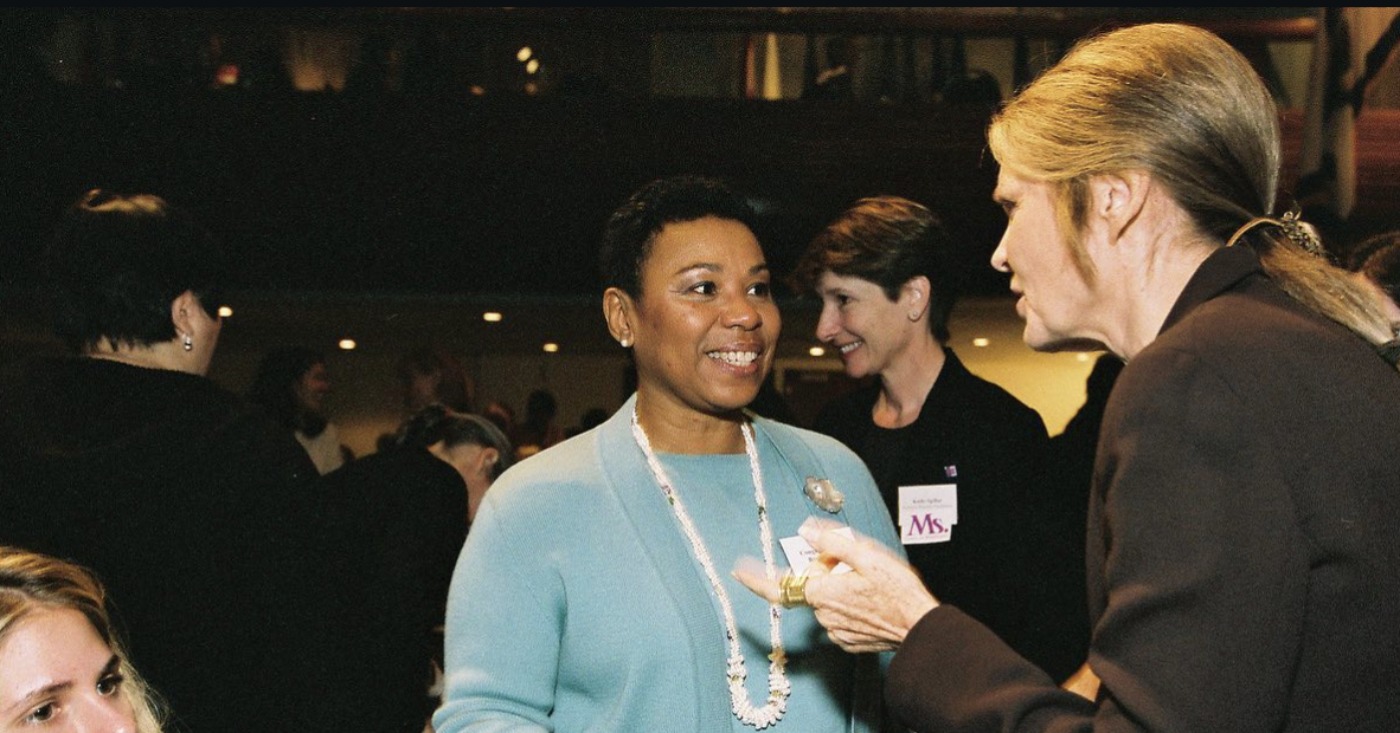
Oakland Mayor Barbara Lee is mourning the death of her longtime friend Gloria Steinem, remembering the feminist icon as a devoted ally who understood that the struggles for racial justice and gender equality were inseparable.
Steinem died Sept. 2 in New York City at the age of 92. A pioneering journalist, author and political activist, she spent more than six decades advocating for women’s equality and reproductive choices. She also co-founded Ms. magazine and the National Women’s Political Caucus.
“I called her recently and could hear the weakness in her voice,” Lee said. “She was also very fragile at my New York event, but she remained supportive.”
The friendship between Lee and Steinem grew from their connections to the late U.S. Rep. Shirley Chisholm, the first Black woman elected to Congress and the first Black candidate to seek a major political party’s presidential nomination.
Chisholm was Lee’s mentor and inspired her to enter politics. Lee worked on Chisholm’s historic 1972 presidential campaign and served as one of her delegates at the Democratic National Convention.
According to Lee, Chisholm helped Steinem deepen her understanding of racial inclusion and recognize that the women’s movement could not succeed without addressing the experiences of Black women and other women of color.
“Gloria really understood what racial equity was about as a white woman and knew the value of building coalitions,” Lee said.
Steinem became one of the country’s most recognizable advocates for women’s rights, reproductive alternatives and political representation. Lee said one of the most persistent inequities confronting Black women was inadequate access to reproductive healthcare, an issue Lee addressed throughout her years in the California Legislature and Congress.
Lee considered Steinem a genuine ally who recognized the intersections of race, gender, healthcare and economic opportunity. Steinem also understood the importance of elevating women into leadership positions and encouraging them to claim their rightful places at decision-making tables.
Their relationship extended beyond politics and public advocacy. Lee recalled joining Steinem and her husband for dinner in Manhattan Beach with Lee’s son, Tony.
“It was beautiful to see how she could be a wonderful wife, feminine and be a strong woman,” Lee said.
Tony Lee also had a professional connection to Steinem through the rerelease of “The Road to Galveston,” the 1996 television film he wrote about the life of his grandmother, Mildred Parish Massey. The film starred Cicely Tyson.
“My son’s tribute to Gloria on Facebook is very touching,” Lee said.
Lee expressed profound heartbreak over losing her friend and gratitude for Steinem’s support throughout her political career, including during reelection campaigns.
As Lee continues carrying forward the lessons of Chisholm and Steinem, she has also helped encourage a new generation of women leaders, including U.S. Reps. Lateefah Simon and Jasmine Crockett.

Art
Event Preview: ‘Fashion v. Fascism’ – A Runway Revolution Is Coming to the Bay Area
“Every piece on this runway translates what is happening under fascism into a feeling,” explains Erica Furlong, the FVF creative director. “One designer’s trench coat is covered in pockets stamped ‘TRUTH,’ ‘MEMORY,’ ‘HOPE,’ ‘VOTE,’ ‘FUTURE,’ because that’s literally what gets seized first, pocket by pocket, under fascist decline. Fashion can hold grief and hope in the same silhouette, and that tension is exactly what this moment needs.”

“Fashion vs. Fascism” (FVF) is a visually immersive evening of fashion, music and political theater exposing the rise of fascism in the U.S. and the need to resist. Democracy is under siege, and culture is one of our most potent defenses, organizers say.
Called a live “runway revolution,” FvF premieres Oct. 3 at The Rotunda, 300 Frank Ogawa Plaza in downtown Oakland.
A play that is part fashion show, part protest, part performance art, FvF stages five runway collections spotlighting the pillars of contemporary fascist politics and the urgent need to resist: the myth of a “glorious past,” the manufactured emergencies used to justify surveillance and crackdowns, and the oligarchs and grifters profiting from it all. Runway fashion shares the stage with political theater and live music, with a closing call to action.
“We need lawsuits, ballots and mass protests, but none of it lands if we’re not also fighting for people’s imagination,” says Linda Burnham, co-producer of the show. “People are exhausted and scared. FvF will expose the absurdities of fascist mythology and ideology in ways a news headline cannot and spark new ideas about how to resist.”

“Fascism doesn’t win by policy alone. It wins by telling a story. A myth about a ‘Golden Age.’ A permanent emergency that makes cruelty seem necessary. That’s not an accident, it’s a strategy, and it works on the same terrain as culture: image, spectacle, emotion,” says Aya De León, the show’s playwright.
“Every piece on this runway translates what is happening under fascism into a feeling,” explains Erica Furlong, the FVF creative director. “One designer’s trench coat is covered in pockets stamped ‘TRUTH,’ ‘MEMORY,’ ‘HOPE,’ ‘VOTE,’ ‘FUTURE,’ because that’s literally what gets seized first, pocket by pocket, under fascist decline. Fashion can hold grief and hope in the same silhouette, and that tension is exactly what this moment needs.”
At its best, fashion is about creativity, diversity, innovation, experimentation and the free exchange of ideas. Fascism, by contrast, demands conformity and control, while suppressing dissent.
FVF was created, organizers say, because democracy should always be in style.
Featured designers include Erica Varize, Rickie Lee, Tianna Charity, Julie Wong, and Maria Flores. The evening features a script by lead playwright Aya De León, musical performances by Mindeullae Project and DJ Emancipation, and other special guests.
FvF is designed to travel. Following the Oakland premiere, FvF will extend its reach through a documentary short, a curriculum on contemporary fascism in the U.S., and a full replication playbook — design templates, script, and curriculum — so organizers in other cities can stage their own version of the show.
Get more details at www.fashionvfascism.org.
Community
Two Looming Threats Every Alameda County Elder Should Know About
Federal changes enacted under H.R. 1 are bringing new eligibility, reporting, and coverage rules beginning in 2027. Although Californians age 65 and older and people with disabilities are exempt from the new 80-hour-per-month work requirement and will continue with annual rather than six-month renewals, that does not mean elders can ignore the coming changes.

Alameda County elders are urged to attend the Elder Justice Symposium at Oakland City Hall on Sept. 25, from 9 a.m. to 5 p.m., for information that could profoundly affect both their health care and the legacy they hope to leave their families.
For many older adults, a lifetime of hard work has produced two things they understandably want to protect: access to health care while they are living and the home, savings, and other assets they hope to pass to loved ones when they die.
Changes already underway in California make understanding how to protect both increasingly urgent.
The first threat involves Medi-Cal.
Federal changes enacted under H.R. 1 are bringing new eligibility, reporting, and coverage rules beginning in 2027. Although Californians age 65 and older and people with disabilities are exempt from the new 80-hour-per-month work requirement and will continue with annual rather than six-month renewals, that does not mean elders can ignore the coming changes.
California has already reinstated an asset test for certain Medi-Cal recipients age 65 and older, people with disabilities and those needing long-term care. Assets must be reported when applying or renewing coverage.
And another significant change is coming.
Beginning July 1, 2027, California says the Medi-Cal asset limit for affected beneficiaries will fall from $130,000 for one person to just $21,000, and to $31,000 for two people, with certain assets excluded and special rules applying in some circumstances.
There is more. Beginning Jan. 1, 2027, Medi-Cal’s retroactive coverage period will also shrink. For most beneficiaries outside the ACA expansion adult group, coverage of qualifying medical expenses incurred before application will be reduced from three months to two.
For an elder facing hospitalization, long-term care or an unexpected medical crisis, misunderstanding these rules could have enormous financial consequences.
The second threat concerns what happens to everything you worked so hard to acquire.
Many people believe, “I have a will and a living trust, so my family is protected.”
It may not be that simple.
An estate plan is only as effective as the way it has been structured, maintained and implemented. How assets are titled, whether a trust has actually been funded, beneficiary designations, Medi-Cal eligibility and long-term-care planning can all affect whether a person’s wishes are ultimately carried out.
A will by itself does not automatically avoid probate, and simply possessing trust documents does not mean every asset has been properly protected or positioned to pass as intended.
That is why elders should learn the rules before a medical crisis, incapacity or death makes planning far more difficult.
At the Elder Justice Symposium, experts will explain these changes in understandable language and discuss steps that elders and their families should consider now.
Attendees will have an opportunity to learn what questions to ask about Medi-Cal eligibility and renewals, asset limits, estate planning and protecting the legacy they intend for their families.
Do not assume the rules you learned years ago are still the rules governing you today.
Come to Oakland City Hall on Sept. 25, from 9 a.m. to 5 p.m.
Bring your questions. Bring your family. Most importantly, bring a willingness to prepare.
The decisions you make before these changes take full effect could profoundly affect your health care, your financial security, and what remains for the people you love.



Passing for White, Fighting for Black America: The Courage of Walter White

Oakland People’s Arms Embargo Coalition Demands End to Military Shipments Thru Oakland

Barbara Lee Mourns Gloria Steinem, Remembers a Friendship Rooted in Equality

Event Preview: ‘Fashion v. Fascism’ – A Runway Revolution Is Coming to the Bay Area

Two Looming Threats Every Alameda County Elder Should Know About

Oakland Mayor Reads to Children at Bookout Block Party at Marcus Books Store

Tradition Comes to the Streets in 11th Annual Black-Eyed Pea Festival at the Freedom Farmers Market

Attorney General Rob Bonta Continues Opposition to President Trump’s Tariff Regime

Neighborhood Empowerment Day in Deep East Oakland Brings Community Together After Recent Tragedy

Community Action Group ‘Friends of Zakiya’ Ask Sheriff for Time

Oakland Launches Aerbits Program to Identify, Report Abandoned Trash

Mayor Lee Announces $1 Million Kaiser Permanente Grant for Pilot Program to Address Homelessness, Clean Up Public Spaces throughout Oakland

Alameda County DA Ursula Jones Dickson Says Key to Optimal Use of DA’s Office Is Knowledge

Oakland Post: Week of September 16 – 22, 2026

NFL: Week Two Recap | Jalen Hurts did not fold; Caleb Williams exits game with injury

Department of Homeland Security Demands California Secretary of State Shirley N. Weber Scrub Voter Rolls

“The Power to See Threats Sooner”: Gov. Newsom, Safety Officials Showcase California’s Investments in Hi-Tech Wildfire Prevention

California Sen. Padilla Joins Colleagues to Introduce Bill Imposing Term Limits on Supreme Court Justices

Less Affluent School Districts, Including Sacramento City, Face Threat of State Takeover

Car Wash Workers Cope with Lingering Impacts of ICE Raids

ESSAY: California Can Close Its Colorectal Cancer Gap

As Part of Your Back-to- School Checklist, Vaccinate

Oakland ‘Port Serves as a Powerful Engine for Good Jobs and Economic Development

Gov. Newsom Announces $109.6 Million in Funding for 278 Supportive Homes in Bakersfield, Contra Costa, Sacramento and Fresno

California Hispanic Chambers of Commerce Unveils: ‘Powering the Future’ Theme for 47th Annual Statewide Convention

Congresswoman Simon Demands Investigation into Trump’s Abuse of Emergency Powers for Coal Export Terminal in West Oakland

Four Candidates, Including Incumbent Barbara Lee, Qualify for Oakland Mayor’s Race

Oakland Post: Week of August 12 – 18, 2026

From Blueprint to Breakthrough: Tackling Affordable Housing in Oakland

Oakland Observes Black August with Block Parties, Film Showings, Workshops

The Conversation With Al McFarlane 6/23/26

Media Monday 6/22/26

LIVE! ASK ALMA! — TUES. 6.23.26 7PM EST

Car Buying Secrets: 4 Hidden Checks Before You Sign!

Is This 550 HP Charger Worth YOUR Money? AutoNetwork Review

Celebrating Juneteenth – Frederick Douglass on education and resistance

LIVE! — ASK ALMA! — TUES. 6.19.26 7PM EST

Hyundai Ioniq 5 Parking, Safety, and 360 View #shorts

2025 Ioniq 5 New Wiper & Powerful Performance! #shorts

Electric SUV Range: Is 259 Miles Enough? #shorts

EV Charging: How Fast Can You Charge an Electric Vehicle? #shorts

Biometric Cooling… Messaging Seats…Come on! 2025 Infiniti QX80 Autograph 4WD

Charged Up: Witness the Magic of a Fully Electric Car! #shorts

Range Rover Sport PHEV Included…: See What’s Inside This Luxury SUV! #shorts

Invisible Hood View: Perfect Parking with X-Ray Vision! #shorts
-

 Commentary3 weeks ago
Standoff for Justice: Our Homes Are Worth Fighting For
-

 Activism3 weeks ago
Oakland Post: Week of August 26 – September 1, 2026
-

 Business3 weeks ago
Gubernatorial Candidate Steve Hilton Blasts California New Tire Rules; Newsom Hits Back
-

 Business3 weeks ago
Frontier Airlines’ Return to Oakland Airport Brings Flights, Jobs and Opportunity
-

 Business3 weeks ago
Chef Sharon Lee Blends Culinary Excellence, Education and Empowerment
-

 Education3 weeks ago
Gov. Newsom’s Latest Appointees Include Sacramento Advocate for Formerly Incarcerated Students; State’s New Tech Chief
-

 Business3 weeks ago
Oakland Coliseum Project Opens Door for Small Businesses to Build Bigger
-

 Community3 weeks ago
Big City Mayors Ask for “Yes” Vote on Housing Bond Measure; Conservatives Say “No”
