
News
Los comerciantes móviles se toman las calles en protesta contra la discriminación de la ciudad y el acoso policial

Más de 20 camiones de alimentos de propiedad de latinos llevaron una marcha móvil por el Boulevard Internacional en Oakland el Lunes – desde 46th Avenue y la Internacional hacia el Ayuntamiento – interrumpiendo el tráfico para presionar a la ciudad para que apruebe una ordenanza para permitir que se expandan sus operaciones expendedoras pasando el este de Oakland.
Actualmente, los comerciantes móviles no se les permite operar fuera de las zonas designadas, sobre todo en los distritos 5, 6 y 7. Los vendedores móviles dicen que se sienten cada vez más congestionados por el creciente número de camiones y relativamente pocos lugares para estacionar sus vehículos para los negocios en estas áreas.
Esto, como resultado, ha perjudicado sus negocios, muchos de los cuales son de propiedad familiar y emplean hasta 10 trabajadores que están apoyando a sus propias familias.
También dicen que la falta de voluntad de la ciudad para ampliar sus parámetros de venta y el uso de la policía detener a las personas que trabajan fuera de la zona permitida actualmente equivalen a discriminación.
“Está muy saturado aquí”, dijo Ezequías Ortiz de Tacos Acapulco. “La ciudad no nos dará permiso para trabajar en las afueras y ahora están multando a los negocios que han estado aquí durante años.”
La ordenanza comerciante móvil, que fue presentado al Ayuntamiento en 2009, ha tenido seis años para ir a través de la oficina del Abogado Municipal, el personal de la ciudad, la comisión de planificación y un sinnúmero de audiencias públicas.
La ley ampliaría las zonas de trabajo de los comerciantes a ciertos lugares dentro de toda la ciudad de Oakland.
Los vendedores móviles creen que este es el año en que el Ayuntamiento pasará la ordenanza.
El lunes, varios comisarios – cocinas comerciales establecidas donde los restaurantes móviles y otros proveedores de servicios alimenticios pueden ir a preparar y almacenar los alimentos en instalaciones limpias e inspeccionadas – se reunieron para la acción, también para pedir el fin a lo que consideran el acoso de la ciudad.
Según varios comerciantes, la ciudad recientemente ha estado sirviendo más cartas de cesar y desistir a los restaurantes móviles que están tan cerca como una cuadra del parámetro permitido y a menudo la policía aparece para cerrar sus restaurantes.
Debido a que la ordenanza comerciante móvil anularía estos cargos, los fabricantes están molestos por el rigor y la agresión que se ha vuelto más frecuentes de la ciudad.
Pati Liles, propietaria de Taquería La Bonita, un restaurante móvil de gestión familiar, dijo que la policía ha cerrado recientemente su negocio tres veces después de recibir quejas de los vecinos. Cada vez, la policía se presentó a los pocos minutos de ser llamada.
“Es injusto que la policía se está utilizando para detener a las personas que están haciendo nada malo y sólo están tratando de trabajar”, dijo Liles. “La policía no apareció cuando mi hijo fue atropellado por un coche. Los llamamos y nunca apareció”.
Por otra parte, Nancy Marcus, asistente administrativa de la ciudad de Oakland, ha estado negando las solicitudes de renovación de permisos de negocios especiales para algunos de los vendedores que han existido en Oakland durante más de 10 años, dicen los propietarios de negocios móviles.
Los restaurantes móviles que salieron a la calle el lunes por la tarde ven el comportamiento agresivo de la ciudad como una unidad para aplastar a los negocios de los vendedores móviles en favor de las tiendas que están alquilando espacio.
Los vendedores móviles se enfrentan a la oposición, principalmente de los vendedores de tienda que sienten que no pueden competir con los camiones y carretillas estacionados fuera de sus tiendas y por los vecinos que tienen miedo a las multitudes que seguirían a los camiones de comida en sus barrios.
Según el concejal Noel Gallo, que ha estado trabajando con los comerciantes móviles en la comunidad latina para conseguir que la ordenanza sea aprobada por el Ayuntamiento, la ciudad con frecuencia ha fallado en asegurar que los vendedores que operan tiendas móviles lo están haciendo de manera legal y con un permiso.
“Hay una gran cantidad de camiones ilegales que compiten con los restaurantes que están pagando sus impuestos y pasando sus inspecciones”, dijo Gallo en una entrevista con El Mundo. “Hace que todo el mundo pierda sus negocios porque no pueden competir con los vendedores sin permisos que venden en la esquina.”
La nueva ordenanza sólo se aplicaría a los comerciantes móviles que tengan un permiso para operar en ciertas zonas y de manera segura y legal.
El propietario de un restaurante móvil Antonio “Tony” Belayo dice que la ordenanza es simplemente una cuestión de mantener a flote los negocios en una ciudad que se está volviendo más y más popular para vivir y trabajar.
“No queremos interferir en restaurantes u otros proveedores. Sólo queremos que todos sean felices”, dijo Belayo. “Los comerciantes móviles son una fuente de empleo en Oakland y ayudan a muchos de nosotros a mantener a nuestras familias.”
“Los comerciantes móviles han sido siempre una parte vibrante de esta ciudad y forman una parte vital de la economía de Oakland”, dijo Araceli “Shelly” Garza, una defensora de los comerciantes móviles que ayudaron a organizar la caravana el lunes.
“Desde 2009, la ciudad nos ha estado diciendo que la ordenanza va a ser finalmente programada,” dijo Garza. “La gente está harta de ser puesta en un segundo plano”.
En el Ayuntamiento, el concejal Gallo prometió a la multitud que la ordenanza para comerciantes móvil sería aprobado por el Ayuntamiento a finales del verano.









Activism
Oakland Post: Week of September 30 – October 6, 2026
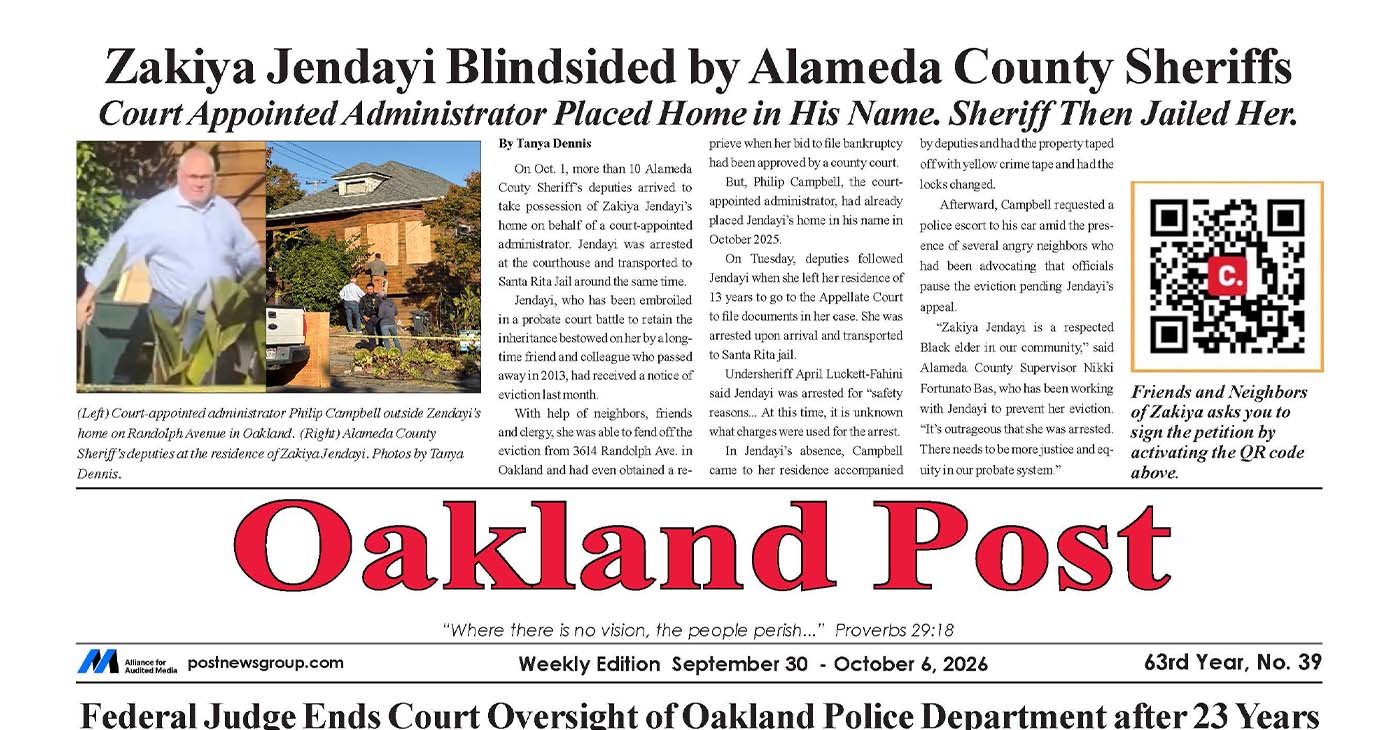
The printed Weekly Edition of the Oakland Post: Week of September 30 – October 6, 2026
To enlarge your view of this issue, use the slider, magnifying glass icon or full page icon in the lower right corner of the browser window.

Activism
Oakland Post: Week of September 23 – 29, 2026
The printed Weekly Edition of the Oakland Post: Week of September 23 – 29, 2026

To enlarge your view of this issue, use the slider, magnifying glass icon or full page icon in the lower right corner of the browser window.
Activism
Oakland Post: Week of September 16 – 22, 2026
The printed Weekly Edition of the Oakland Post: Week of September 16 – 22, 2026

To enlarge your view of this issue, use the slider, magnifying glass icon or full page icon in the lower right corner of the browser window.



OP-ED: Proposition 44 Would Put a Price on Trust

OP-ED: Proposition 40: It’s Time to Play Chess, Not Checkers

Listening as a Lifeline: A Doula’s Witness to Black Maternal Health

New Protections for Ticket Buyers: Gov. Newsom Signs Assemblymember Isaac Bryan’s Bill

‘We Don’t Talk Trash — We Pick Up Trash!’

Zakiya Jendayi Arrested, Locked Out of Home by Sheriff’s Deputies

Oakland Post: Week of September 30 – October 6, 2026

Asm. Corey Jackson Announces Launch of 24-Hour Childcare in His District

IN MEMORIAM: The Rev. Leon “Sonny” Clark, Longtime Orange County Pastor and Community Leader, Dies at 72

Poll: Becerra Widens His Lead Over Hilton; Californians Split on Wealth Tax

From Historic Memories to New Possibilities: Oakland Celebrates Coliseum 60

County Office of Education Says OUSD Finances Are Getting Healthier, Materially Stronger

LIVE FREE Sunday Dinner Brings Faith, Fellowship and Civic Conversation to Oakland

Remembering Chauncey Bailey as Student Journalists Face Threats to Truth-Telling

BLACspace Cooperative Invites Bay Area to Experience Oakland’s Black Cultural Ecosystem Through a BLAC Map Tour + Party

Standoff for Justice: Our Homes Are Worth Fighting For

Oakland Post: Week of August 26 – September 1, 2026

Frontier Airlines’ Return to Oakland Airport Brings Flights, Jobs and Opportunity

Gubernatorial Candidate Steve Hilton Blasts California New Tire Rules; Newsom Hits Back

Chef Sharon Lee Blends Culinary Excellence, Education and Empowerment

Jackie Wright Champions Bay Area Stories, Filmmakers and Cultural Institutions

Misnamed ‘Parent’ PAC Seeks to Influence Oakland School Board Elections

Oakland Coliseum Project Opens Door for Small Businesses to Build Bigger

Big City Mayors Ask for “Yes” Vote on Housing Bond Measure; Conservatives Say “No”

Gov. Newsom’s Latest Appointees Include Sacramento Advocate for Formerly Incarcerated Students; State’s New Tech Chief

Longtime BWOPA Member Brendalyn Goodall Appointed to California Workforce Development Board

Gov. Newsom Signs Law Shielding Immigration Aid Workers From Doxing Threats

Oakland Post: Week of September 2 – 8, 2026

Secretary of State Shirley N. Weber Urges Californians to Vote Early as Voter ID Battle Intensifies

IN MEMORIAM: Dolly Parton Dead at 80 — How She Built a Legacy of Love and Earned Her Place in Black Culture

The Conversation With Al McFarlane 6/23/26

Media Monday 6/22/26

LIVE! ASK ALMA! — TUES. 6.23.26 7PM EST

Car Buying Secrets: 4 Hidden Checks Before You Sign!

Is This 550 HP Charger Worth YOUR Money? AutoNetwork Review

Celebrating Juneteenth – Frederick Douglass on education and resistance

LIVE! — ASK ALMA! — TUES. 6.19.26 7PM EST

Hyundai Ioniq 5 Parking, Safety, and 360 View #shorts

2025 Ioniq 5 New Wiper & Powerful Performance! #shorts

Electric SUV Range: Is 259 Miles Enough? #shorts

EV Charging: How Fast Can You Charge an Electric Vehicle? #shorts

Biometric Cooling… Messaging Seats…Come on! 2025 Infiniti QX80 Autograph 4WD

Charged Up: Witness the Magic of a Fully Electric Car! #shorts

Range Rover Sport PHEV Included…: See What’s Inside This Luxury SUV! #shorts

Invisible Hood View: Perfect Parking with X-Ray Vision! #shorts
-
 Community3 weeks ago
Misnamed ‘Parent’ PAC Seeks to Influence Oakland School Board Elections
-

 Activism3 weeks ago
Oakland Post: Week of September 9 – 15, 2026
-

 Community3 weeks ago
Richmond Tiny House Village Farm & Garden Set to Open Gates on Sept. 26
-

 Black History3 weeks ago
Latest Massacre in Haiti Reveals Cruelty U.S. Deportations
-

 Black History3 weeks ago
OPINION: Nolan Wells’ Death One of Several Signifying Racial Terror Lives on in U.S. South
-

 Business2 weeks ago
Mayor Lee Announces $1 Million Kaiser Permanente Grant for Pilot Program to Address Homelessness, Clean Up Public Spaces throughout Oakland
-

 Community3 weeks ago
Democratic Clubs Interview Candidates for Oakland School Board
-
 Uncategorized3 weeks ago
NBA All-Star Damian Lillard Returns Home for 15th Annual Backpack Giveaway
