
Activism
Shelter-in-Place Order for COVID-19 Poses Danger to Domestic Violence Victims

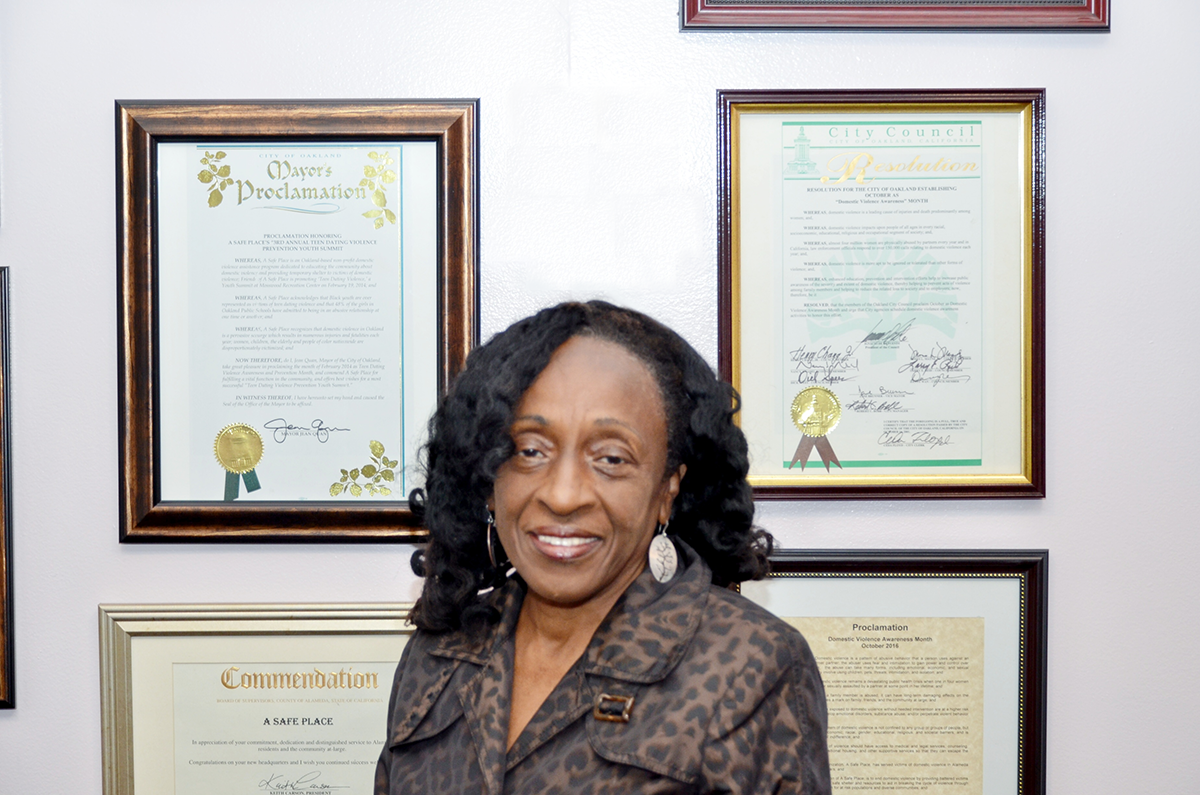
For several months, the most vulnerable have been suffering. COVID-19, in the form of shelter-in-place, has created another level of isolation, not only for adult victims but also for children. Unfortunately, there is evidence that during this imposed isolation domestic violence has been escalating. Most recently, the U.N. described the worldwide increase in domestic violence as a “shadow pandemic” alongside COVID-19.
Reports from women speak to their feelings of uncertainty. “Should they try and leave or stick it out.” Many feel trapped, while others are leaving due to the increased abuse. The consequences are horrific for all women living with a perpetrator. Many women fear the unknown. Trapped in the home during the pandemic, they are afraid to leave since the options to escape that existed before COVID-19 no longer exist. Family and friends are reluctant to welcome another family into their homes due to safety issues created by the virus. Many shelters have limited capacity for the same safety reasons. Some survivors are seeking support via texting or finding other creative means to communicate.
Another problem was the closure of the courts and, even though they are open now, are working at a significantly reduced level. Child custody orders, protective orders and other domestic violence-related matters are not getting the same attention due to restricted court schedules. Arrests for domestic violence are often disputed by survivors, making it difficult for law enforcement to intervene.

Finally, one of the greatest fears among those experiencing domestic violence, and those who are at risk of being abused, is that they might become homeless due to lack of income. In the economic crisis caused by COVID-19, many workers have been furloughed, and this loss of employment can result in families at risk being trapped in an unsafe home. They cannot afford to sustain the rent alone and will stay with the perpetrator since he “helps with the bills.” Women tell stories of perpetrators threatening to “put them out” on the streets since some survivors are facing unemployment.
Power and control are primary issues with perpetrators. Withholding financial and other kinds of support are the primary ways they perpetrate financial abuse. Threats and psychological abuse create a volatile and hostile environment for both the survivor and the children.
Children are living in homes each day with no outlet or escape; they cannot speak out or receive the daily support normally received through school and other extracurricular activities. The mental and psychological effects of this time in confinement for children will be long term.
Children who witness domestic violence are often traumatized. Due to the rising levels of tension and anger in abusers caused by the stresses of shelter-in-place and unemployment, children may also be physically abused. The long-term effects will become manifest as children return to school. Protective factors must be considered in supporting children who are living in homes where domestic violence is occurring.
Minority communities are often most affected during disasters, often forced to compromise their health to maintain employment and it is even worse for survivors of domestic violence. These life stressors, along with constant mental and physical abuse, will create a need for mental health support in reducing the trauma experienced during the pandemic.
Shelter-in-place is critical and is one of the most important methods to remain safe amid the COVID-19. However, it has had a tremendous negative impact on survivors of domestic violence and their children.
Carolyn Russell, executive director of A Safe Place Domestic Violence Assistance Program, holds a master’s degree in social work and a master’s degree in forensic psychology.






To enlarge your view of this issue, use the slider, magnifying glass icon or full page icon in the lower right corner of the browser window.


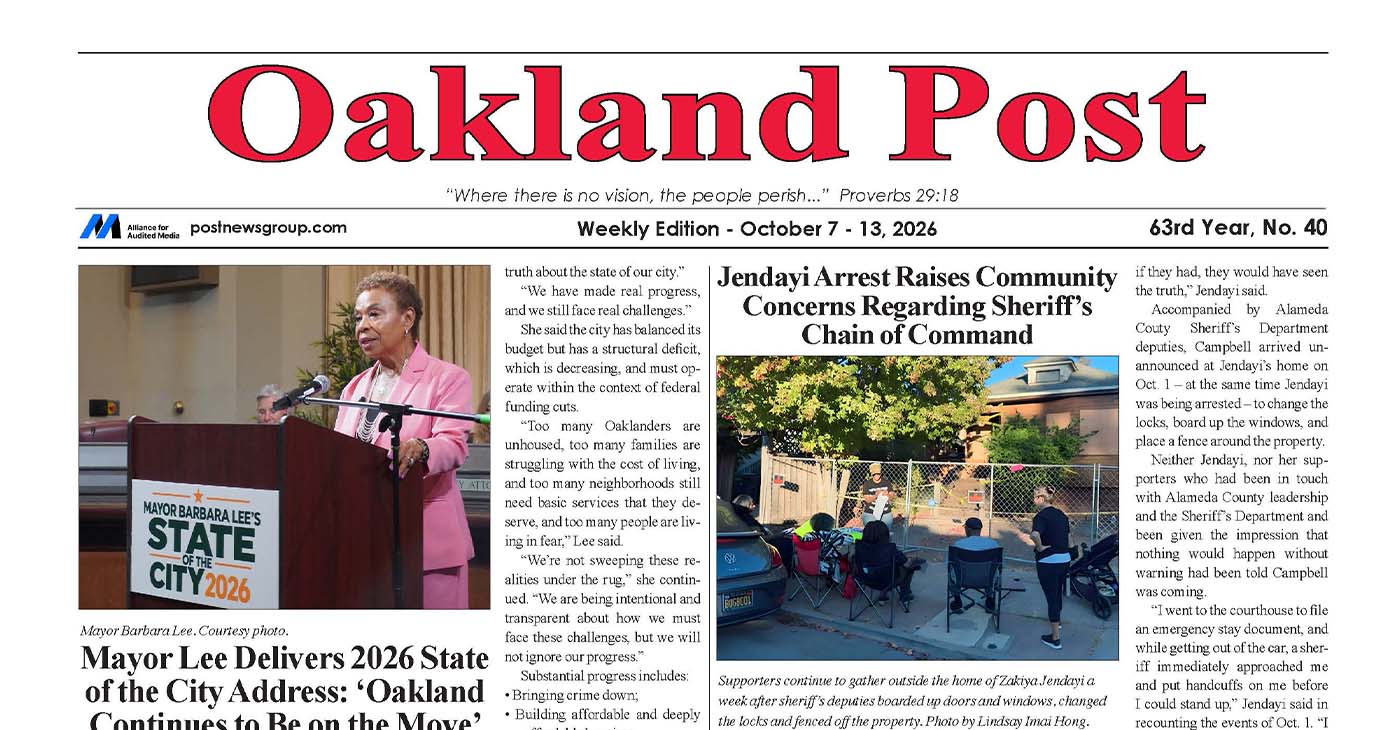
To enlarge your view of this issue, use the slider, magnifying glass icon or full page icon in the lower right corner of the browser window.
Activism
Oakland Post: Week of September 30 – October 6, 2026
The printed Weekly Edition of the Oakland Post: Week of September 30 – October 6, 2026


To enlarge your view of this issue, use the slider, magnifying glass icon or full page icon in the lower right corner of the browser window.


Mayor Barbara Lee Holds Special State of the City Address in Deep East Oakland

Practitioners of African Traditional Spirituality Offer Ancestral Reverence Ritual Oct. 31

It’s Time to Lose Weight Before the Holidays

Trader Vic’s Returns to Its Oakland Roots

Oakland Coal Terminal Backed by Trump Would Be Bigger, Dirtier Than Promised, Says Report

Opponents Smear Effective African American Transit Director as Election Nears

Oakland Post: Week of October 14 – 20, 2026

OP-ED: The Black Church Writes AI’s Next Chapter

OP-ED: The Black Church Writes AI’s Next Chapter

WCCUSD Joins Statewide Organic School Food Purchasing Cooperative

Democrats, Community Groups Back Measure EE to Change How Oakland Is Governed

Four Tips to Help You Plan a Holiday “Staycation”

Veterans Housing Project Proposed for South Richmond
PRESS ROOM: Transformative Justice Coalition 2026 Voting Rights Champion Awards Reception ‘Yesterday Is Today: The Battle For Voting Rights

Mayor Lee Delivers 2026 State of the City Address: ‘Oakland Continues to Be on the Move’

Misnamed ‘Parent’ PAC Seeks to Influence Oakland School Board Elections

Poll: Becerra Widens His Lead Over Hilton; Californians Split on Wealth Tax

Listening as a Lifeline: A Doula’s Witness to Black Maternal Health

Oakland Post: Week of September 9 – 15, 2026

County Office of Education Says OUSD Finances Are Getting Healthier, Materially Stronger

Richmond Tiny House Village Farm & Garden Set to Open Gates on Sept. 26

Mayor Lee Announces $1 Million Kaiser Permanente Grant for Pilot Program to Address Homelessness, Clean Up Public Spaces throughout Oakland

Latest Massacre in Haiti Reveals Cruelty U.S. Deportations

Zakiya Jendayi Arrested, Locked Out of Home by Sheriff’s Deputies

OPINION: Nolan Wells’ Death One of Several Signifying Racial Terror Lives on in U.S. South

Doulas Are Helping Black California Moms Navigate Pregnancy–Even as High Mortality Rates Persist

BLACspace Cooperative Invites Bay Area to Experience Oakland’s Black Cultural Ecosystem Through a BLAC Map Tour + Party

Oakland Post: Week of September 16 – 22, 2026

Oakland People’s Arms Embargo Coalition Demands End to Military Shipments Thru Oakland

Democratic Clubs Interview Candidates for Oakland School Board

The Conversation With Al McFarlane 6/23/26

Media Monday 6/22/26

LIVE! ASK ALMA! — TUES. 6.23.26 7PM EST

Car Buying Secrets: 4 Hidden Checks Before You Sign!

Is This 550 HP Charger Worth YOUR Money? AutoNetwork Review

Celebrating Juneteenth – Frederick Douglass on education and resistance

LIVE! — ASK ALMA! — TUES. 6.19.26 7PM EST

Hyundai Ioniq 5 Parking, Safety, and 360 View #shorts

2025 Ioniq 5 New Wiper & Powerful Performance! #shorts

Electric SUV Range: Is 259 Miles Enough? #shorts

EV Charging: How Fast Can You Charge an Electric Vehicle? #shorts

Biometric Cooling… Messaging Seats…Come on! 2025 Infiniti QX80 Autograph 4WD

Charged Up: Witness the Magic of a Fully Electric Car! #shorts

Range Rover Sport PHEV Included…: See What’s Inside This Luxury SUV! #shorts

Invisible Hood View: Perfect Parking with X-Ray Vision! #shorts
-
 Economy4 weeks ago
Poll: Becerra Widens His Lead Over Hilton; Californians Split on Wealth Tax
-
 Black History3 weeks ago
Listening as a Lifeline: A Doula’s Witness to Black Maternal Health
-
 Business4 weeks ago
County Office of Education Says OUSD Finances Are Getting Healthier, Materially Stronger
-
 Lead Story3 weeks ago
Zakiya Jendayi Arrested, Locked Out of Home by Sheriff’s Deputies
-
 Black History4 weeks ago
Doulas Are Helping Black California Moms Navigate Pregnancy–Even as High Mortality Rates Persist
-
 Art4 weeks ago
BLACspace Cooperative Invites Bay Area to Experience Oakland’s Black Cultural Ecosystem Through a BLAC Map Tour + Party
-

 Business4 weeks ago
From Historic Memories to New Possibilities: Oakland Celebrates Coliseum 60
-

 Community4 weeks ago
Asm. Corey Jackson Announces Launch of 24-Hour Childcare in His District
