
Activism
Say Their Names in the Streets, Online to Achieve Justice
Overall, our report found that the names Ahmaud Arbery, Breonna Taylor and George Floyd were shared online nearly 50 million times from last June to September — making it clear that saying the names of the victims of racial injustice was essential for political action.

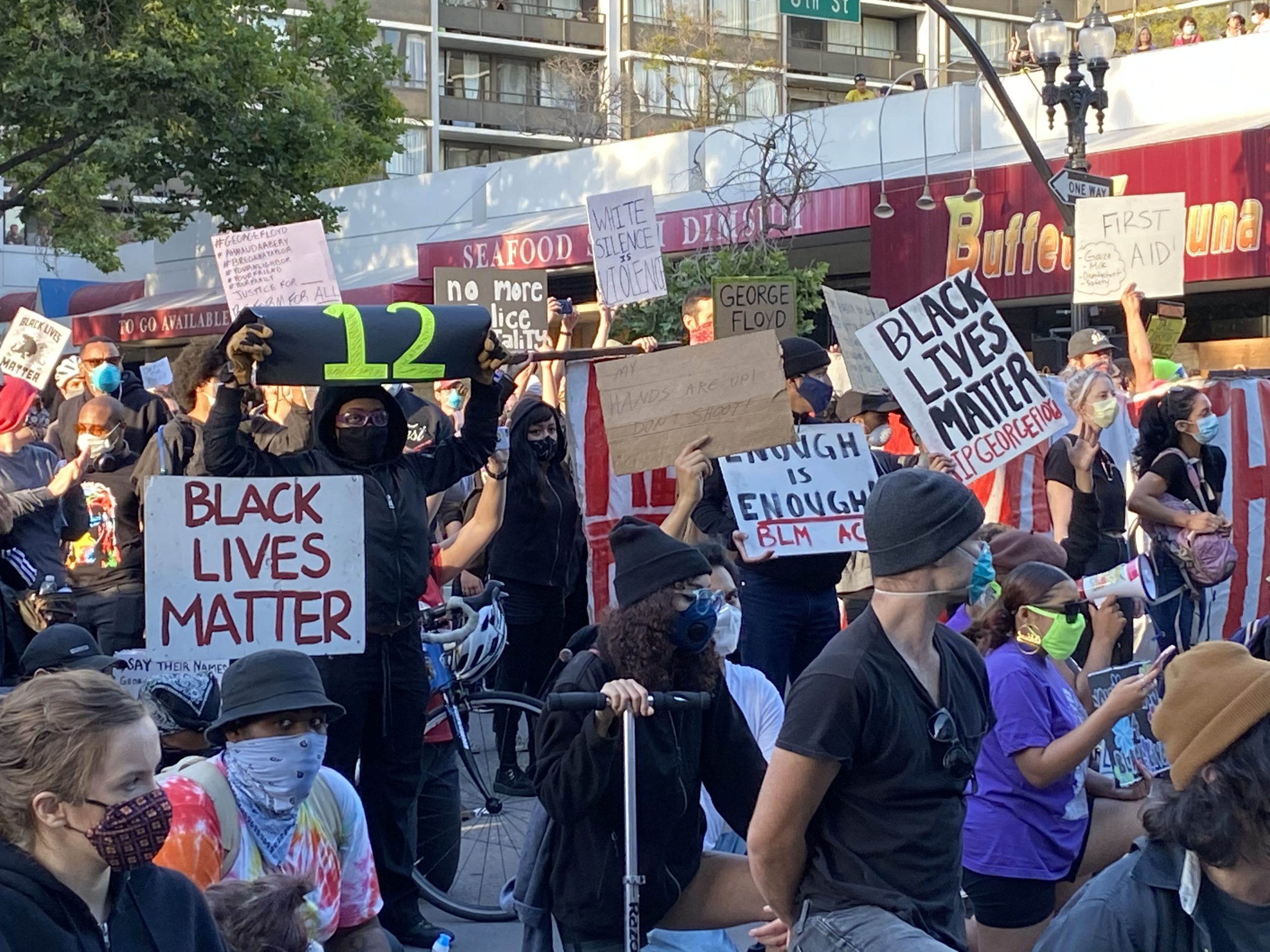
The Black experience in America has always been a story of struggle. From the plantation to the project block, from Emmett Till to Ahmaud Arbery, and from Tulsa, Okla., to Minneapolis, Minn., we have constantly fought for equality and fair treatment under the law, only to have those same laws be used against us.
The past year has been particularly challenging — with the names of George Floyd, Breonna Taylor and others becoming indelibly etched into our collective memory and millions of people taking to the streets to protest these crimes against the Black community. As we prepare to celebrate Juneteenth, we must look back on all the events of the past year with clear eyes to examine both the tragedies and triumphs our community has witnessed.
There have been moments of hope that the system is finally edging toward equality, like the recent conviction of former Minneapolis police officer Derek Chauvin for murdering George Floyd by kneeling on his neck for nine minutes while Floyd called out “I can’t breathe.” Chauvin’s conviction and sentencing marks one of the few times in the painful history of Black people in America when law enforcement was held accountable for the wanton acts of violence they perpetrate against our community.
But for every conviction like Chauvin’s, there is a long, tragic history of innocent Black men and women being murdered – their deaths generating little more than a passing mention on the local news and their killers going unpunished. From Medgar Evers to Breonna Taylor, our country’s history is filled with these injustices that the powers-at-be try to sweep under the rug.
Floyd’s death, which was captured in brutal clarity on a bystander’s cellphone, along with those of Arbery, Taylor and so many more challenged the status quo of racial injustice like never before. Millions of Americans of every race, color and creed stood up, spoke out and made Black Lives Matter the largest social movement in country’s history.
Starting last summer, “Say Their Names” became a rallying cry for millions of Americans across the country tired of police brutality and racial injustice. From Minneapolis to Manhattan, Atlanta to Los Angeles, we took to the streets of America’s biggest cities and smallest towns under a blazing summer sun to voice our anger. All races, colors, and creeds marched on Wash., D.C. to let leaders know that it was time to stop fanning the flames of racism and to declare that we would remember who was guilty.
We will continue to organize. We will continue to march. We will continue to “say their names” until their justice – not just for Breonna Taylor and Ahmaud Arbery, but for every Black and Brown person in America who has experienced systemic racism, police brutality and political indifference to these injustices.
While our voices were seen on television sets and computer screens across the world, and we applaud the tireless work on the ground of leaders like Rev. Al Sharpton and National Action Network, our voices were also heard through our online activism – which for many was the only way to speak out during the COVID-19 pandemic – as we demanded politicians take notice and take action at both the state and local level.
A new report released earlier this year by The 400 Foundation, The BLK+Cross and Marathon Strategies reveals how our new era of digital demonstrations and online organization is driving real change on social justice issues. The analysis found that states with the most online conversations about social justice in 2020 also saw the most legislative action on police reform. In fact, the four states most mentioned in social justice conversations — Minnesota, Georgia, New York, and Washington, D.C. — saw 110 police reform measures introduced.
Overall, our report found that the names Ahmaud Arbery, Breonna Taylor and George Floyd were shared online nearly 50 million times from last June to September — making it clear that saying the names of the victims of racial injustice was essential for political action.
In the coming weeks and months, we must say their names again as we remember their lives and the injustices they suffered. We must say their names during public demonstrations in city streets. We must say them on Twitter, Facebook, Instagram, and throughout the digital universe. And we must keep saying them until we achieve justice for them, their families, and the countless Black lives lost to racial violence.
Rev. Reginald Bachus is a former pastor at the Abyssinian Baptist Church in Harlem and the president of the 400 Foundation.










Activism
Oakland Post: Week of September 23 – 29, 2026
The printed Weekly Edition of the Oakland Post: Week of September 23 – 29, 2026


To enlarge your view of this issue, use the slider, magnifying glass icon or full page icon in the lower right corner of the browser window.

Activism
Oakland Post: Week of September 16 – 22, 2026
The printed Weekly Edition of the Oakland Post: Week of September 16 – 22, 2026

To enlarge your view of this issue, use the slider, magnifying glass icon or full page icon in the lower right corner of the browser window.
Activism
Oakland Post: Week of September 9 – 15, 2026
The printed Weekly Edition of the Oakland Post: Week of September 9 – 15, 2026
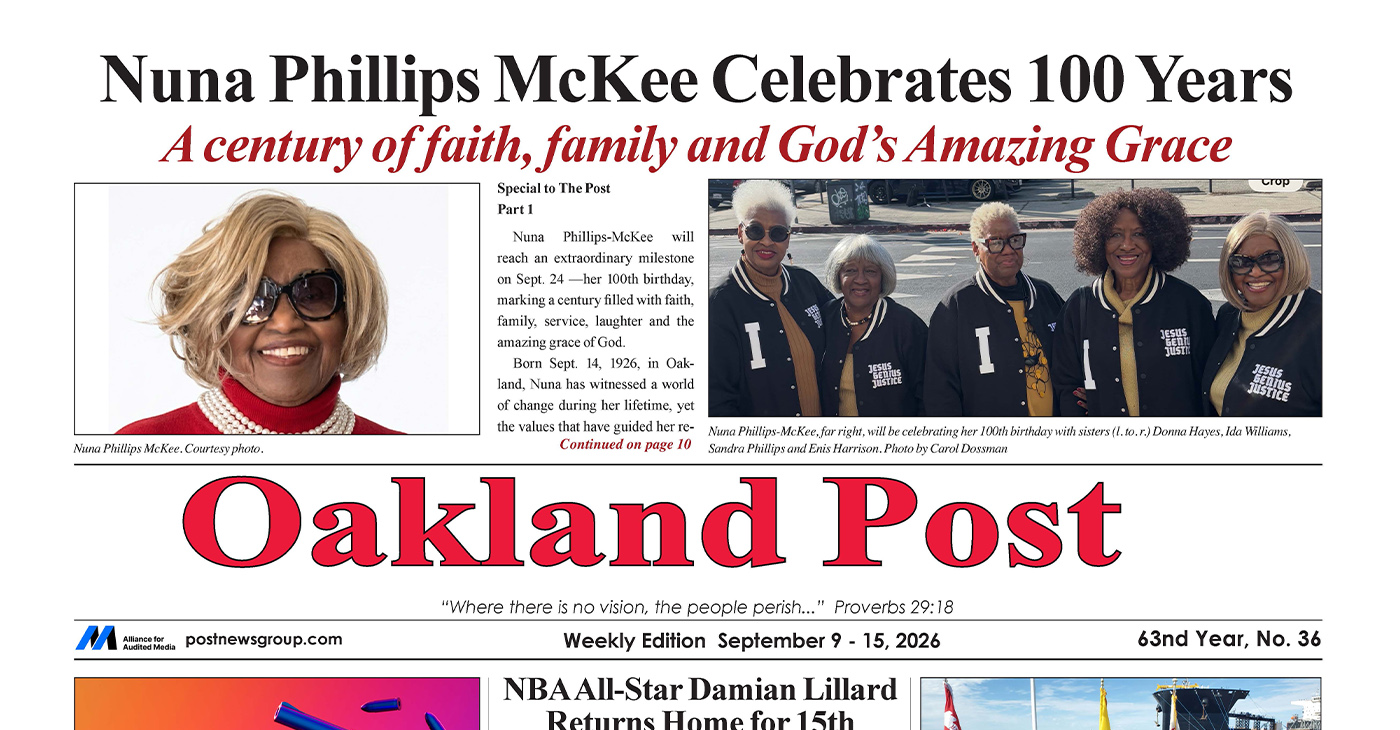
To enlarge your view of this issue, use the slider, magnifying glass icon or full page icon in the lower right corner of the browser window.



Asm. Corey Jackson Announces Launch of 24-Hour Childcare in His District

IN MEMORIAM: The Rev. Leon “Sonny” Clark, Longtime Orange County Pastor and Community Leader, Dies at 72

Poll: Becerra Widens His Lead Over Hilton; Californians Split on Wealth Tax

From Historic Memories to New Possibilities: Oakland Celebrates Coliseum 60

County Office of Education Says OUSD Finances Are Getting Healthier, Materially Stronger

LIVE FREE Sunday Dinner Brings Faith, Fellowship and Civic Conversation to Oakland

Remembering Chauncey Bailey as Student Journalists Face Threats to Truth-Telling

BLACspace Cooperative Invites Bay Area to Experience Oakland’s Black Cultural Ecosystem Through a BLAC Map Tour + Party

In Wake of Death on Doorstep, Williams Chapel Baptist Church Calls for Better Care, Funding for Unhoused

Oakland Centenarian Nuna McKee Honored!

Caribbean Nations Produce Action Plan Calling for UK Reparations Over Slavery

Oakland Post: Week of September 23 – 29, 2026

Doulas Are Helping Black California Moms Navigate Pregnancy–Even as High Mortality Rates Persist

Newsom Signs Addictive Social Media Law to Protect Kids

On Your November Ballot: Prop 38 Would Allocate $8.4 Billion to Immunology and Immunotherapy Funding

Standoff for Justice: Our Homes Are Worth Fighting For

Oakland Post: Week of August 26 – September 1, 2026

Frontier Airlines’ Return to Oakland Airport Brings Flights, Jobs and Opportunity

Gubernatorial Candidate Steve Hilton Blasts California New Tire Rules; Newsom Hits Back

Chef Sharon Lee Blends Culinary Excellence, Education and Empowerment

Jackie Wright Champions Bay Area Stories, Filmmakers and Cultural Institutions

Big City Mayors Ask for “Yes” Vote on Housing Bond Measure; Conservatives Say “No”

Gov. Newsom’s Latest Appointees Include Sacramento Advocate for Formerly Incarcerated Students; State’s New Tech Chief

Oakland Coliseum Project Opens Door for Small Businesses to Build Bigger

Misnamed ‘Parent’ PAC Seeks to Influence Oakland School Board Elections

Longtime BWOPA Member Brendalyn Goodall Appointed to California Workforce Development Board

Gov. Newsom Signs Law Shielding Immigration Aid Workers From Doxing Threats

Secretary of State Shirley N. Weber Urges Californians to Vote Early as Voter ID Battle Intensifies

From Palestine to Oakland: Seeds for Liberation Examines Shared Struggles for Freedom

IN MEMORIAM: Dolly Parton Dead at 80 — How She Built a Legacy of Love and Earned Her Place in Black Culture

The Conversation With Al McFarlane 6/23/26

Media Monday 6/22/26

LIVE! ASK ALMA! — TUES. 6.23.26 7PM EST

Car Buying Secrets: 4 Hidden Checks Before You Sign!

Is This 550 HP Charger Worth YOUR Money? AutoNetwork Review

Celebrating Juneteenth – Frederick Douglass on education and resistance

LIVE! — ASK ALMA! — TUES. 6.19.26 7PM EST

Hyundai Ioniq 5 Parking, Safety, and 360 View #shorts

2025 Ioniq 5 New Wiper & Powerful Performance! #shorts

Electric SUV Range: Is 259 Miles Enough? #shorts

EV Charging: How Fast Can You Charge an Electric Vehicle? #shorts

Biometric Cooling… Messaging Seats…Come on! 2025 Infiniti QX80 Autograph 4WD

Charged Up: Witness the Magic of a Fully Electric Car! #shorts

Range Rover Sport PHEV Included…: See What’s Inside This Luxury SUV! #shorts

Invisible Hood View: Perfect Parking with X-Ray Vision! #shorts
-
 Business4 weeks ago
Chef Sharon Lee Blends Culinary Excellence, Education and Empowerment
-
 Black History4 weeks ago
Jackie Wright Champions Bay Area Stories, Filmmakers and Cultural Institutions
-
 Community4 weeks ago
Big City Mayors Ask for “Yes” Vote on Housing Bond Measure; Conservatives Say “No”
-
 Community2 weeks ago
Misnamed ‘Parent’ PAC Seeks to Influence Oakland School Board Elections
-
 Business4 weeks ago
Longtime BWOPA Member Brendalyn Goodall Appointed to California Workforce Development Board
-
 Community4 weeks ago
Gov. Newsom Signs Law Shielding Immigration Aid Workers From Doxing Threats
-

 Activism3 weeks ago
Oakland Post: Week of September 2 – 8, 2026
-
 Featured4 weeks ago
‘Passing a Law Isn’t The Finish Line’: California Assembly Evaluates Implementation, Results
