
Activism
Building Bridges of Support: How AAPI Equity Alliance Is Strengthening California’s Anti-Hate Network
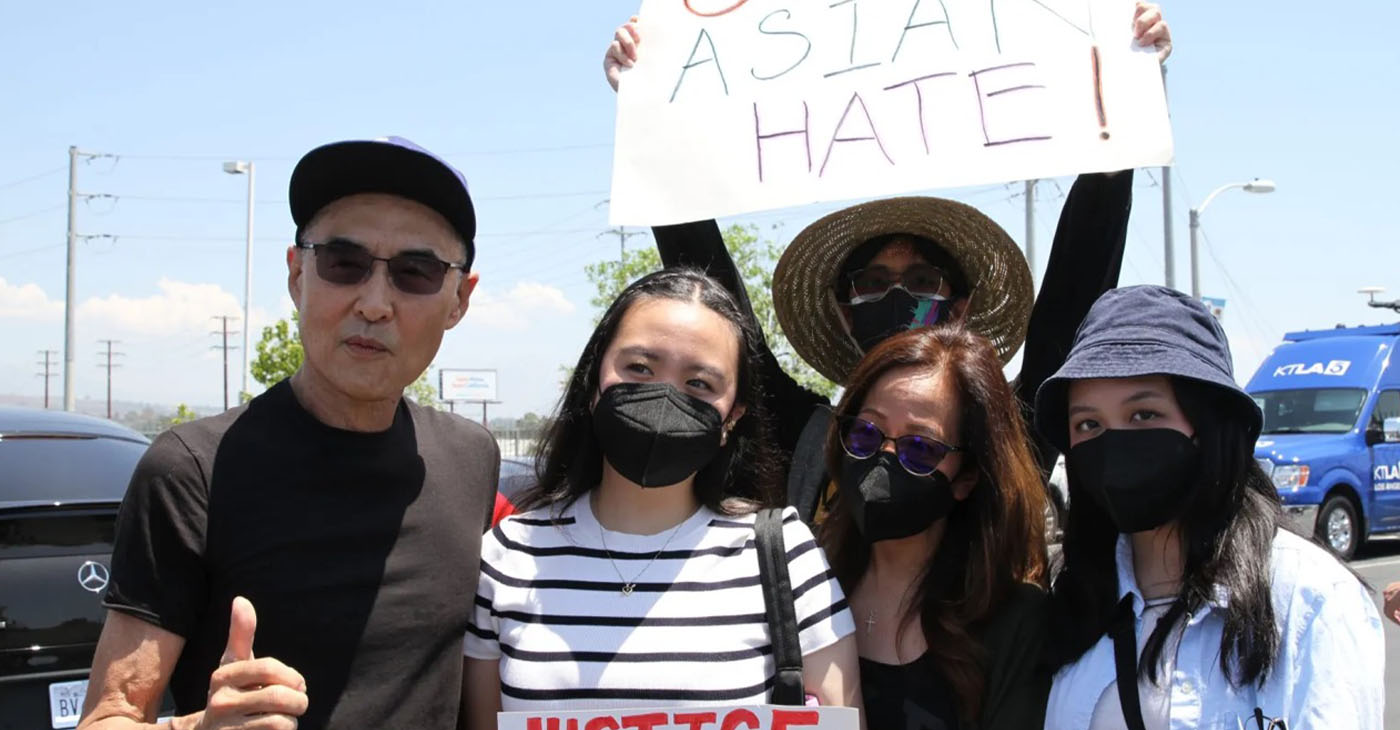
In May 2022, Patricia Roque said she and her parents were attacked after a late-night stop at a fast-food drive-thru in Southern California. After hitting their car, the other driver pulled alongside them and mocked them using a racist Asian accent. Then, he threatened to kill them. The situation escalated when the man returned while the family was waiting for police and assaulted Roque’s father, fracturing his rib and choking her mother before bystanders intervened.

By Edward Henderson
When Aurelle Garner stepped out of her car one summer evening and saw a group of youths marching down her street, her stomach dropped.
What had begun as slurs hurled at her and her transgender children at a local park had escalated to violent pounding on their front door. Garner said that, before that incident, local law enforcement had repeatedly minimized her reports of harassment.
It was not until she contacted the Legal Department at The LGBTQ Center Long Beach that her family finally found help.
“I don’t know where we’d be if it weren’t for their help,” Garner, who lives in Southern California, said. “They didn’t just give legal advice. They helped us navigate a system that had otherwise dismissed us.”
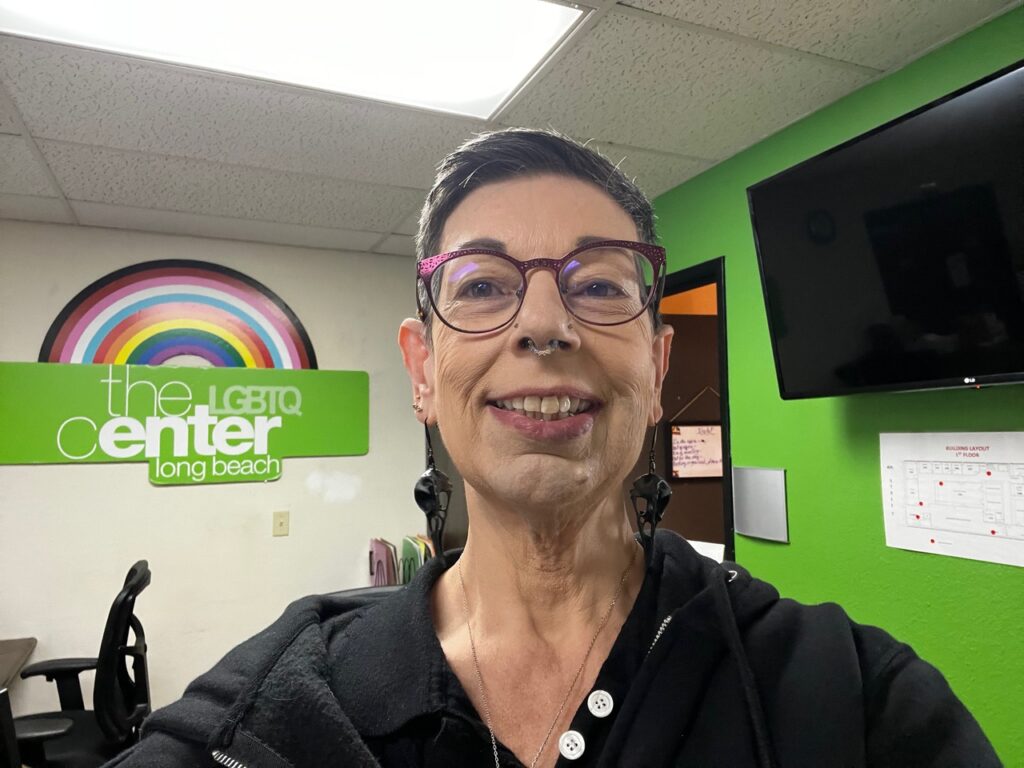
Aurelle Garner, who received services from The LGBTQ Center Long Beach (Sponsored by AAPI Equity Alliance) to aid her transgender children. (Courtesy of AAPI Equity Alliance)
That support exists because The LGBTQ Center Long Beach does not work in isolation.
The Center partners with the AAPI Equity Alliance under California’s Stop the Hate program, a statewide coalition aimed at preventing hate and supporting survivors.
As the Los Angeles County Regional Lead, AAPI Equity Alliance works with the Center and dozens of other community-based organizations to connect people to legal aid, mental health services, and support. The programs also work in tandem with CA vs Hate, the state’s anti-hate hotline and virtual reporting system that connects people across California with organizations like the LGBTQ Center Long Beach – that provide support services
Garner’s experience illustrates the kind of harm that often falls outside the narrow legal definition of a hate crime but still leaves families traumatized and unsafe. It also shows how AAPI Equity Alliance’s leadership in the Stop the Hate ecosystem translates state funding and policy into real, on-the-ground support.

Patricia Roque (Courtesy of AAPI Equity Alliance)
In May 2022, Patricia Roque said she and her parents were attacked after a late-night stop at a fast-food drive-thru in Southern California. After hitting their car, the other driver pulled alongside them and mocked them using a racist Asian accent. Then, he threatened to kill them. The situation escalated when the man returned while the family was waiting for police and assaulted Roque’s father, fracturing his rib and choking her mother before bystanders intervened.
“The police arrived long after it was over,” Roque told California Black Media (CBM). “By then, the damage was already done.”
The following day, Roque’s family was connected to the Filipino Migrant Center (FMC), a community-based organization that has received Stop the Hate funding and works within the broader AAPI Equity Alliance network. FMC provided immediate support — helping the family navigate legal options, organizing emergency financial assistance to cover medical bills and missed work, and offering emotional and community care while the criminal case unfolded.
“But the process is long and complicated. When you need help right away, that delay is a huge barrier. FMC was there immediately,”Rogue said.
The criminal case did not result in the accountability the family hoped for. But Roque said the support she received transformed her relationship to her community and to advocacy.
“Before this, I wasn’t involved in organizing at all,” she said. “Through this process, I realized my voice mattered. FMC helped turn something traumatic into a way to support others and push for change.”
Stories like Garner’s and Roque’s are part of a much larger reckoning that began at the onset of the COVID-19 pandemic, when Asian Americans and Pacific Islanders across the country experienced a surge in harassment, discrimination, and violence fueled by racist rhetoric.
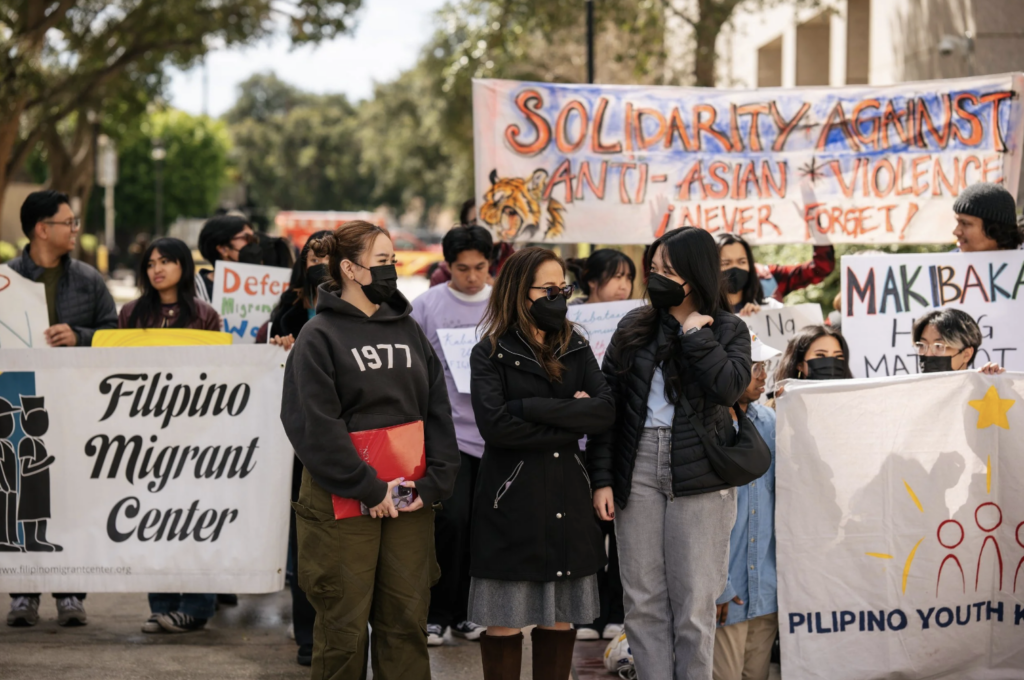
Filipino Migrant Center stands in solidarity against Anti-Asian Violence (Courtesy of AAPI Equity Alliance)
In response, AAPI Equity Alliance partnered with San Francisco’s Chinese for Affirmative Action and the Asian American Studies Department at San Francisco State University to launch Stop AAPI Hate in March 2020. Since then, the project has collected more than 9,000 reports nationwide documenting incidents ranging from verbal harassment and workplace discrimination to physical assault and child bullying.
“People tend to think about hate only when it turns violent,” said Kiran Bhalla of AAPI Equity Alliance. “But there are everyday acts of discrimination that people endure constantly. Without some kind of recourse, that harm just keeps going.”
The data helped spur unprecedented action in California. In 2021, the State Legislature passed the $165.5 million Asian Pacific Islander Equity Budget, signed by Gov. Gavin Newsom. Of that total, $110 million was dedicated to victim services, education, and outreach. In August 2023, California invested an additional $40 million to expand California’s Stop the Hate program to serve a broader range of communities affected by hate and discrimination.
Today, the program supports roughly 100 nonprofit organizations statewide. As Los Angeles County Regional Lead, AAPI Equity Alliance coordinates grantees, facilitates cross-community collaboration, and helps ensure services reach those most impacted.
A recently released survey estimated that approximately 3.1 million Californians directly experienced hate, with Native Hawaiian or Pacific Islanders, Black or African Americans, and other communities of color, including Asian Americans, among those most likely to experience hate.
Black Californians, however, remain the most targeted group when it comes to reported hate crimes.
Nearly 48% of Asian American and Pacific Islander adults in California reported experiencing a hate incident in 2024, according to Stop AAPI Hate research. Most incidents were not criminal, leaving survivors with little recourse through the legal system.
That gap is precisely where AAPI Equity Alliance and its partners focus their work. The Stop the Hate framework prioritizes non-carceral responses, recognizing that policing alone often fails survivors and can further harm Black, brown, and immigrant communities.
Instead, the work centers on data and research, policy advocacy, community care, and public education. Through school-based programs, legal advocacy, emergency assistance, and survivor-centered services, the network aims to interrupt cycles of harm before they escalate.
For survivors like Garner and Roque, that support has made the difference between enduring trauma in silence and finding a path toward healing and collective power.
“When people experience hate, there’s often a profound sense of isolation,” Bhalla said. “This work helps people get back to school, back to work, back to their lives. It reminds them they’re not alone.”
Get Support After Hate:
California vs Hate is a non-emergency, multilingual hotline and online portal offering confidential support for hate crimes and incidents. Victims and witnesses can get help anonymously by calling 833-8-NO-HATE (833-866-4283), Monday to Friday, 9 a.m.–6 p.m. PT, or online at any time. Anonymous. Confidential. No Police. No ICE.This story was produced in partnership with CA vs Hate. Join them for the first-ever CA Civil Rights Summit on May 11, 2026. More information at www.cavshate.org/summit.


Activism
Oakland Post: Week of September 23 – 29, 2026
The printed Weekly Edition of the Oakland Post: Week of September 23 – 29, 2026

To enlarge your view of this issue, use the slider, magnifying glass icon or full page icon in the lower right corner of the browser window.
Activism
Oakland Post: Week of September 16 – 22, 2026
The printed Weekly Edition of the Oakland Post: Week of September 16 – 22, 2026

To enlarge your view of this issue, use the slider, magnifying glass icon or full page icon in the lower right corner of the browser window.
Activism
Oakland Post: Week of September 9 – 15, 2026
The printed Weekly Edition of the Oakland Post: Week of September 9 – 15, 2026

To enlarge your view of this issue, use the slider, magnifying glass icon or full page icon in the lower right corner of the browser window.



Asm. Corey Jackson Announces Launch of 24-Hour Childcare in His District

IN MEMORIAM: The Rev. Leon “Sonny” Clark, Longtime Orange County Pastor and Community Leader, Dies at 72

Poll: Becerra Widens His Lead Over Hilton; Californians Split on Wealth Tax

From Historic Memories to New Possibilities: Oakland Celebrates Coliseum 60

County Office of Education Says OUSD Finances Are Getting Healthier, Materially Stronger

LIVE FREE Sunday Dinner Brings Faith, Fellowship and Civic Conversation to Oakland

Remembering Chauncey Bailey as Student Journalists Face Threats to Truth-Telling

BLACspace Cooperative Invites Bay Area to Experience Oakland’s Black Cultural Ecosystem Through a BLAC Map Tour + Party

In Wake of Death on Doorstep, Williams Chapel Baptist Church Calls for Better Care, Funding for Unhoused

Oakland Centenarian Nuna McKee Honored!

Caribbean Nations Produce Action Plan Calling for UK Reparations Over Slavery

Oakland Post: Week of September 23 – 29, 2026

Doulas Are Helping Black California Moms Navigate Pregnancy–Even as High Mortality Rates Persist

Newsom Signs Addictive Social Media Law to Protect Kids

On Your November Ballot: Prop 38 Would Allocate $8.4 Billion to Immunology and Immunotherapy Funding

Standoff for Justice: Our Homes Are Worth Fighting For

Oakland Post: Week of August 26 – September 1, 2026

Frontier Airlines’ Return to Oakland Airport Brings Flights, Jobs and Opportunity

Gubernatorial Candidate Steve Hilton Blasts California New Tire Rules; Newsom Hits Back

Chef Sharon Lee Blends Culinary Excellence, Education and Empowerment

Jackie Wright Champions Bay Area Stories, Filmmakers and Cultural Institutions

Big City Mayors Ask for “Yes” Vote on Housing Bond Measure; Conservatives Say “No”

Oakland Coliseum Project Opens Door for Small Businesses to Build Bigger

Gov. Newsom’s Latest Appointees Include Sacramento Advocate for Formerly Incarcerated Students; State’s New Tech Chief

Misnamed ‘Parent’ PAC Seeks to Influence Oakland School Board Elections

Longtime BWOPA Member Brendalyn Goodall Appointed to California Workforce Development Board

Gov. Newsom Signs Law Shielding Immigration Aid Workers From Doxing Threats

Secretary of State Shirley N. Weber Urges Californians to Vote Early as Voter ID Battle Intensifies

From Palestine to Oakland: Seeds for Liberation Examines Shared Struggles for Freedom

IN MEMORIAM: Dolly Parton Dead at 80 — How She Built a Legacy of Love and Earned Her Place in Black Culture

The Conversation With Al McFarlane 6/23/26

Media Monday 6/22/26

LIVE! ASK ALMA! — TUES. 6.23.26 7PM EST

Car Buying Secrets: 4 Hidden Checks Before You Sign!

Is This 550 HP Charger Worth YOUR Money? AutoNetwork Review

Celebrating Juneteenth – Frederick Douglass on education and resistance

LIVE! — ASK ALMA! — TUES. 6.19.26 7PM EST

Hyundai Ioniq 5 Parking, Safety, and 360 View #shorts

2025 Ioniq 5 New Wiper & Powerful Performance! #shorts

Electric SUV Range: Is 259 Miles Enough? #shorts

EV Charging: How Fast Can You Charge an Electric Vehicle? #shorts

Biometric Cooling… Messaging Seats…Come on! 2025 Infiniti QX80 Autograph 4WD

Charged Up: Witness the Magic of a Fully Electric Car! #shorts

Range Rover Sport PHEV Included…: See What’s Inside This Luxury SUV! #shorts

Invisible Hood View: Perfect Parking with X-Ray Vision! #shorts
-
 Community2 weeks ago
Misnamed ‘Parent’ PAC Seeks to Influence Oakland School Board Elections
-

 Activism3 weeks ago
Oakland Post: Week of September 2 – 8, 2026
-

 Community2 weeks ago
Richmond Tiny House Village Farm & Garden Set to Open Gates on Sept. 26
-

 Black History2 weeks ago
Latest Massacre in Haiti Reveals Cruelty U.S. Deportations
-

 Black History2 weeks ago
OPINION: Nolan Wells’ Death One of Several Signifying Racial Terror Lives on in U.S. South
-

 Activism2 weeks ago
Oakland Post: Week of September 9 – 15, 2026
-

 Community2 weeks ago
Democratic Clubs Interview Candidates for Oakland School Board
-

 Featured2 weeks ago
‘Ready to See These Bills Become Law’: Sen. Weber’s Package of 15 Bills Advance to Gov. Newsom’s Desk
