
Activism
Marin County and Nine Local Jurisdictions File Suit Against Monsanto to Recover Costs Related to Cleanup of Toxic PCBs
Monsanto produced nearly 99% of all PCBs used in the United States since the 1930s and continued until its manufacture was banned by the Toxic Substance Control Act of 1976. According to Monsanto’s own internal documents, company officials knew and were warned about the dangers to human health and the environment from PCBs, but Monsanto wrongfully promoted the product and failed to warn customers about its dangers.

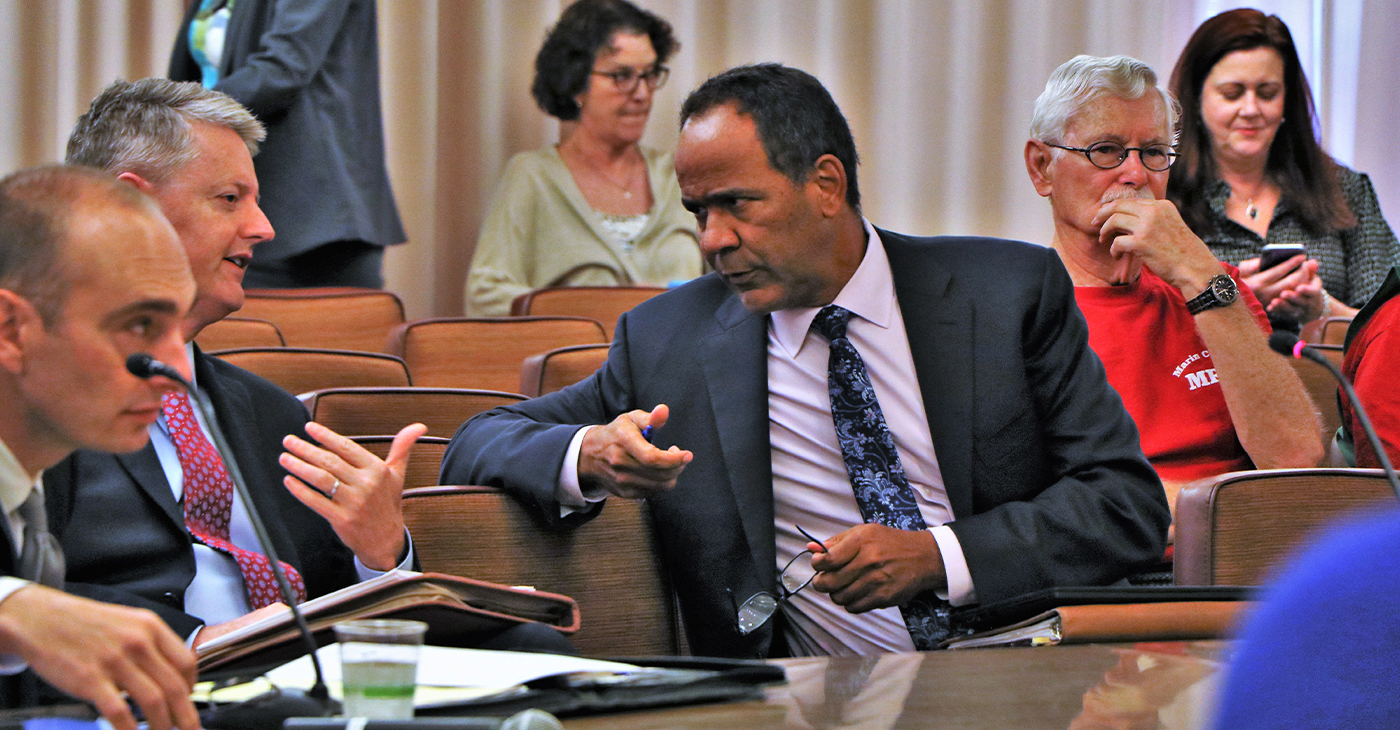
Courtesy of Marin County

The County of Marin, along with nine local jurisdictions, has filed a lawsuit against Monsanto and two other companies to hold them accountable for PCB (polychlorinated biphenyl) contamination in their communities and in San Francisco Bay, and for the enormous costs they will incur to remove those contaminants.
The suit was filed Sept. 8 in Marin County Superior Court with plaintiffs listed as the County of Marin, the cities of Belvedere, Mill Valley, Novato, San Rafael and Sausalito, and the towns of Corte Madera, Ross, San Anselmo and Tiburon. It also names Solutia, Inc., and Pharmacia LLC as defendants in the case.
Marin’s joint lawsuit adds to a growing list of similar lawsuits filed around the U.S. alleging that Monsanto has known about the public health and environmental threats caused by PCBs for more than 50 years. Similar suits have been filed nationwide, with plaintiff agencies alleging that Monsanto deliberately misled the public, environmental regulators, and its own customers so it could reap massive profits from PCB sales.
Brian Washington, Marin County Counsel, said Marin and the other participating jurisdictions opted out of a proposed national class-action settlement because it failed to sufficiently cover the anticipated costs to comply with regulations and prevent further damage.

“PCBs have left a long toxic legacy,” said Washington. “The companies responsible need to contribute to the solution so that the taxpayers do not have to carry the entire burden.”
PCBs, banned from production in the late 1970s, are known or suspected to cause a wide range of cancers including non-Hodgkin’s lymphoma, breast cancer, liver cancer, gallbladder cancer, gastrointestinal cancers, pancreatic cancer and skin cancer. They are implicated in non-cancer health problems such as cardiovascular, endocrine, gastrointestinal, hepatic (liver), immune, neonatal, neurological, ocular, and reproductive harm.
PCB contamination resulting from Defendants’ actions is already widespread across the Bay Area. The entire Bay is classified as “impaired” by PCBs under the federal Clean Water Act. This impairment endangers natural resources and human health. For example, the Bay’s PCB contamination has required state agencies to issue stringent consumption advisories for fish caught in the Bay.
Water and sediment containing PCBs end up in wastewater and stormwater systems, which eventually make their way to the Bay. PCB contamination has been so severe in the bay that the California Office of Environmental Health Hazard Assessment has advised some people not to eat certain types of fish caught in the bay. For example, children and women ages 18 to 49 are advised not to eat striped bass, sharks and white sturgeon caught in the bay. Everyone is also advised not to eat the skin and fatty tissue of any fish caught in the bay.
When regulations are in full effect, it is anticipated that communities will have to use significant taxpayer dollars to pay for testing and monitoring, develop infrastructure to capture PCBs in runoff, conduct more frequent street sweeping, and deploy other measures to comply with those regulations.
Monsanto produced nearly 99% of all PCBs used in the United States since the 1930s and continued until its manufacture was banned by the Toxic Substance Control Act of 1976. According to Monsanto’s own internal documents, company officials knew and were warned about the dangers to human health and the environment from PCBs, but Monsanto wrongfully promoted the product and failed to warn customers about its dangers. For example, in the 1950s, the U.S. Navy refused to buy one of Monsanto’s PCB products, Pydraul 150, for use in its submarines after the Navy conducted its own tests that showed that Pydraul 150 killed all 100 rabbits exposed to its vapors. Monsanto concealed that information from the public and its customers.
The County of Marin and other towns and cities involved in the suit are represented by their own staff with support from outside counsel Sher Edling LLP of San Francisco. The complaint includes claims of public nuisance, private nuisance and trespass.













To enlarge your view of this issue, use the slider, magnifying glass icon or full page icon in the lower right corner of the browser window.
To enlarge your view of this issue, use the slider, magnifying glass icon or full page icon in the lower right corner of the browser window.
To enlarge your view of this issue, use the slider, magnifying glass icon or full page icon in the lower right corner of the browser window.


Oakland Probate Dispute Raises Questions About Court-Ordered Property Transfer and Missing Notice

‘Raising a Child Shouldn’t Break the Bank’: California Is Helping Families Save on Childcare Costs

Secretary of State Shirley Weber Pushes Back Against DOJ Demands Over California Voter Rolls

Chase Launches Fraud & Scam Prevention Month

U.S. Rep. Simon Secures More Than $1 Million for Public Safety at Mills College at Northeastern University Oakland, Surrounding Neighborhood

COMMENTARY: Valarie Bachelor and Jennfier Brouhard are Excellent School Board Members and Deserve to Be Reelected

Oakland Faith Leaders Gather to Revitalize the Interdenominational Ministerial Alliance of Oakland

Statue of ‘La Catrina,’ a Beloved Symbol of Dia de Los Muertos, Visits Oakland

Oakland Honors 60 Years of the Black Panther Party at the All Power to the People Gala

Fate of Bay Area Public Transit Hinges on Regional Transit Measure

Why AC Transit Director Joel Young is My Choice for AC Transit Board Ward 3

Oakland Post: Week of October 21 – 27, 2026

Mayor Barbara Lee Holds Special State of the City Address in Deep East Oakland

Practitioners of African Traditional Spirituality Offer Ancestral Reverence Ritual Oct. 31

It’s Time to Lose Weight Before the Holidays

Misnamed ‘Parent’ PAC Seeks to Influence Oakland School Board Elections

Listening as a Lifeline: A Doula’s Witness to Black Maternal Health

Poll: Becerra Widens His Lead Over Hilton; Californians Split on Wealth Tax

Doulas Are Helping Black California Moms Navigate Pregnancy–Even as High Mortality Rates Persist

County Office of Education Says OUSD Finances Are Getting Healthier, Materially Stronger

Oakland Post: Week of September 9 – 15, 2026

Zakiya Jendayi Arrested, Locked Out of Home by Sheriff’s Deputies

Mayor Lee Announces $1 Million Kaiser Permanente Grant for Pilot Program to Address Homelessness, Clean Up Public Spaces throughout Oakland

Richmond Tiny House Village Farm & Garden Set to Open Gates on Sept. 26

BLACspace Cooperative Invites Bay Area to Experience Oakland’s Black Cultural Ecosystem Through a BLAC Map Tour + Party

Latest Massacre in Haiti Reveals Cruelty U.S. Deportations

OPINION: Nolan Wells’ Death One of Several Signifying Racial Terror Lives on in U.S. South

Oakland People’s Arms Embargo Coalition Demands End to Military Shipments Thru Oakland

Oakland Post: Week of September 16 – 22, 2026

Democratic Clubs Interview Candidates for Oakland School Board

The Conversation With Al McFarlane 6/23/26

Media Monday 6/22/26

LIVE! ASK ALMA! — TUES. 6.23.26 7PM EST

Car Buying Secrets: 4 Hidden Checks Before You Sign!

Is This 550 HP Charger Worth YOUR Money? AutoNetwork Review

Celebrating Juneteenth – Frederick Douglass on education and resistance

LIVE! — ASK ALMA! — TUES. 6.19.26 7PM EST

Hyundai Ioniq 5 Parking, Safety, and 360 View #shorts

2025 Ioniq 5 New Wiper & Powerful Performance! #shorts

Electric SUV Range: Is 259 Miles Enough? #shorts

EV Charging: How Fast Can You Charge an Electric Vehicle? #shorts

Biometric Cooling… Messaging Seats…Come on! 2025 Infiniti QX80 Autograph 4WD

Charged Up: Witness the Magic of a Fully Electric Car! #shorts

Range Rover Sport PHEV Included…: See What’s Inside This Luxury SUV! #shorts

Invisible Hood View: Perfect Parking with X-Ray Vision! #shorts
-
 Black History3 weeks ago
Listening as a Lifeline: A Doula’s Witness to Black Maternal Health
-
 Economy4 weeks ago
Poll: Becerra Widens His Lead Over Hilton; Californians Split on Wealth Tax
-
 Business4 weeks ago
County Office of Education Says OUSD Finances Are Getting Healthier, Materially Stronger
-
 Lead Story3 weeks ago
Zakiya Jendayi Arrested, Locked Out of Home by Sheriff’s Deputies
-
 Art4 weeks ago
BLACspace Cooperative Invites Bay Area to Experience Oakland’s Black Cultural Ecosystem Through a BLAC Map Tour + Party
-
 Business4 weeks ago
From Historic Memories to New Possibilities: Oakland Celebrates Coliseum 60
-

 Community4 weeks ago
Asm. Corey Jackson Announces Launch of 24-Hour Childcare in His District
-

 Black History4 weeks ago
IN MEMORIAM: The Rev. Leon “Sonny” Clark, Longtime Orange County Pastor and Community Leader, Dies at 72
