
#NNPA BlackPress
IN MEMORIAM: D’Angelo, A Neo-Soul Genius Who Reignited a Genre, Dies at 51 of Pancreatic Cancer
BLACKPRESSUSA NEWSWIRE — Today, it was learned that the singer died in New York after a quiet battle with pancreatic cancer. He was 51. Though he only had three studio albums, D’Angelo won four Grammys during his career.


By Lauren Burke
Michael Eugene Archer—known to the world as D’Angelo—was one of the most enigmatic and transformative figures in modern R&B. D’Angelo attended Huguenot High School in Richmond, Virginia. He dropped out in 1991 to move to New York City and pursue what would become an incredibly successful career in music. Today, it was learned that the singer died in New York after a quiet battle with pancreatic cancer. He was 51. Though he only had three studio albums, D’Angelo won four Grammys during his career. The singer was said to be working on what would have been his fourth studio album. “An architect, musically and spiritually. I’m stumped on this one. We haven’t just lost a person, we’ve lost a musician who put his all into the music,” said music critic Nicolas-Tyrell Scott on social media.
D’Angelo was born on February 11, 1974, in Richmond and raised in nearby Petersburg. He emerged in the 1990s as a singing phenom with his church-honed musicianship and husky falsetto. The singer had a deep reverence for the Black musical tradition, and he reshaped the landscape of soul music that would begin an era of what would be called “neo-soul.” D’Angelo was the son of a minister and grew up immersed in gospel music. He learned the piano at an early age and often played during his father’s services. The early blend of faith, rhythm, and improvisation became the foundation for his sound—a blend of spirituality, sensuality, and streetwise funk. As a teenager, he was deeply inspired by Prince, Marvin Gaye, Al Green, and Curtis Mayfield, as well as the jazz-infused textures of Miles Davis and Herbie Hancock. By his late teens, D’Angelo was already writing and producing his own material, displaying a rare ability to bridge old-school soul with contemporary rhythms. D’Angelo’s big breakthrough came in 1995 with the release of Brown Sugar, a debut album that felt both nostalgic and radical. Driven by hits like “Lady,” “Cruisin’,” and the title track “Brown Sugar,” the record was a warm, analog antidote to the digital R&B dominating radio at the time. Critics hailed D’Angelo as a savior of soul, comparing him to the greats of the 1970s. The album went platinum and established him as a leading voice of the emerging neo-soul wave alongside artists like Erykah Badu, Maxwell, and Lauryn Hill.

D’Angelo’s follow-up album, Voodoo (2000), cemented his status as a visionary singer. Recorded over several years at Electric Lady Studios in New York—a space once home to Jimi Hendrix—Voodoo was a sprawling, live-instrument masterpiece that blurred the lines between R&B, funk, hip-hop, and jazz. The album’s grooves, shaped with members of The Soulquarians collective (including Questlove, James Poyser, and Q-Tip), showcased D’Angelo’s mastery of nuance and groove. The latter, accompanied by a famously minimalist and sensual video, became an instant cultural moment—though it would also contribute to his eventual retreat from the spotlight. In the years following Voodoo, D’Angelo struggled under the weight of fame, artistic expectation, and personal demons. The intense sexualization of his image, coupled with his perfectionist tendencies and distrust of the music industry, led to a lengthy hiatus from the business. Legal troubles and personal struggles kept him largely out of the public eye for a decade. Fans and critics wondered whether one of soul’s brightest stars would be seen on stage again.
But in 2014, D’Angelo resurfaced unexpectedly with the album Black Messiah. The work was a politically charged, adventurous release amid the news of the justice reform protests in Ferguson, Missouri. The album, credited to D’Angelo and The Vanguard, was an urgent exploration of Black identity and resistance. D’Angelo had not lost his edge, and Black Messiah was hailed as a masterpiece and later won a Grammy Award for Best R&B Album in 2016. D’Angelo’s influence is seen across generations. Artists such as Frank Ocean, H.E.R., and SZA cite D’Angelo as an inspiration. His ability to channel vulnerability, sensuality, and social consciousness and blur musical boundaries was recognized by many in the industry.
Despite his limited output — only three studio albums in 30 years —D’Angelo’s impact on Black music is large. He stood as a bridge between musical eras: a torchbearer for the soul greats of the past and a north star for those carrying the sound forward. D’Angelo was reclusive but remained revered and well respected by many. In May, Billboard magazine reported that D’Angelo dropped out of the 2025 Roots Picnic in Philadelphia, citing medical complications related to a previous surgery. On Friday, May 23, the singer announced through social media that he would not be headlining the Roots Picnic event from May 31 to June 1 in Philadelphia.













#NNPA BlackPress
Smooth Ride! Car Suspension & Comfort Tested #shorts
Smooth suspension meets surprisingly spacious legroom. Experience true comfort on any road!

 Watch the full video: https://youtu.be/l9Z571za5Gc
#NNPA BlackPress
61 years since Selma, Houston leaders say the bridge remains to be crossed
61 years after Selma, Houston leaders say the fight for equality continues. The issues that sparked the marches still impact Black Americans today.
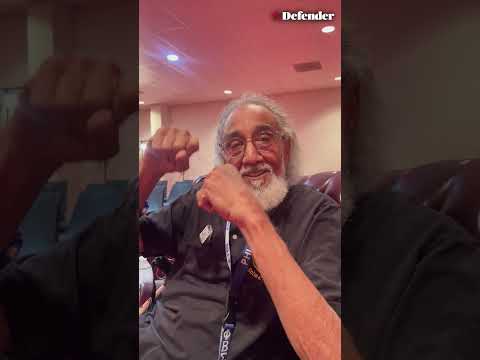
It has been 61 years since the Selma marches. But political leaders in Houston say that the issues protesters were marching for still plague the lives of Black Americans.
Visit Our Website
Read more stories by our team
https://defendernetwork.com/category/news/opinion/
Sign-up for the Top 5 newsletter
Donate/ Support Our Work
#NNPA BlackPress
Here is what you need to know about finding unique white elephant gift ideas that everyone wants to steal
The best white elephant gift ideas are funny enough to get a reaction but useful enough that people actually want to steal them. Look for gifts with a surprise factor, broad appeal, an inside joke, and just enough personality to spark some friendly competition. The wrapping paper comes off, the room goes quiet for half […]

The best white elephant gift ideas are funny enough to get a reaction but useful enough that people actually want to steal them. Look for gifts with a surprise factor, broad appeal, an inside joke, and just enough personality to spark some friendly competition.
The wrapping paper comes off, the room goes quiet for half a second, and suddenly everyone wants the same gift. That is the sweet spot. A great white elephant pick should make people laugh, lean in, and start plotting their next steal before the turn is even over.
Should a White Elephant Gift Be Funny or Useful?
A white elephant gift can be funny or useful, but the strongest choices usually give people a reason to laugh and a reason to keep the item. A practical gift with an odd design, unexpected feature, or playful theme can get a reaction without becoming something the recipient immediately wants to give away.
The right balance depends on the group. Close friends and family members may enjoy a ridiculous gag gift because they already understand one another’s sense of humor.
A workplace exchange, neighborhood party, or mixed-age gathering usually calls for something with broader appeal. In those settings, humor works better when it is built into an item people could still use afterward.
It also helps to think about how quickly the gift will make sense once it is opened. A strangely shaped kitchen tool, oversized mug, quirky desk accessory, or unexpectedly fancy everyday item can create an immediate reaction. Guests understand the joke right away, while the item still has enough practical value to attract a steal.
Pure gag gifts can be harder to pull off. Something that exists only for the punchline may get a big laugh during the reveal and then sit untouched for the rest of the game. If the goal is to bring one of the gifts everyone keeps fighting over, usefulness gives the joke staying power.
Memorable Present Ideas: Creating Inside Joke Gifts
Inside joke gifts can make a white elephant exchange feel much more personal, especially when most of the group shares the same stories. The trick is choosing a reference that people will recognize quickly instead of building the entire joke around something only two guests understand.
You can turn a memorable vacation mishap, office catchphrase, family story, or long-running group joke into the theme of the gift. A personalized comic book can work especially well when it turns familiar people or a ridiculous shared moment into part of the story.
Think carefully about who the joke involves before ordering anything permanent. The gift should make the person feel included in the fun, not singled out for the wrong reason.
Can You Bring Something You Already Own?
Holiday gift exchanges can be a good place to re-gift something you never used, especially if it is unopened and clean.
The following can all work if they still look presentable:
- A duplicate kitchen gadget
- An untouched game
- A decorative item
- A sealed gift set
- An unopened candle
- A new travel accessory
The goal is to give the item a second chance, not use the exchange as an excuse to clear out damaged or unwanted clutter.
Take a close look at the packaging before wrapping it. Faded boxes, missing pieces, visible wear, or anything that looks obviously used can make the gift feel careless.
Wrapping Budget-Friendly Gifts
Wrapping can make gifts more entertaining before anyone even knows what’s inside.
Misdirection works especially well for fun party games. Put a small gift inside a much larger box. Use packaging from an unrelated household item.
Add harmless weight so guests cannot guess what they are holding. The reveal becomes part of the joke without changing the gift itself.
You can also lean into the theme of the exchange. Bright paper, oversized bows, reusable bags, or deliberately over-the-top wrapping can make an ordinary item feel more memorable. If the gift itself is already funny, simple wrapping may work better so the surprise stays hidden until the last second.
Frequently Asked Questions
Is Picking Last an Advantage in White Elephant?
Picking last can be an advantage because you get to see almost every gift before making your move. Instead of choosing blindly from the remaining wrapped presents, you can steal something that has already caught your attention if the rules still allow it.
That advantage depends on the house rules. Some games limit how many times a gift can be stolen.
Others lock an item once it reaches a certain number of steals. If the most popular gifts are already unavailable, the final player may have fewer strong options than expected.
The first player can also get another turn at the end in some versions of the game. That rule can balance things out, since the person who started with the least information may get one final chance to steal.
How Do You Plan White Elephant for a Large Group?
For a large white elephant exchange, set a firm spending limit and establish the stealing rules in advance.
Create a clear turn order before the game begins. Drawing numbers as guests arrive can save time once everyone is ready to start.
Keep the number of steals per gift limited so the game does not drag on. It also helps to have one person track which creative holiday presents have been stolen and when they are locked, especially if dozens of people are participating.
Can You Play White Elephant Virtually?
A virtual white elephant exchange can work over a video call, with one person keeping track of the turn order and each steal. Guests can either mail physical gifts ahead of time or use digital gifts that can be delivered once the game ends.
Set the spending limit and stealing rules before everyone joins. It also helps to decide how gifts will be revealed and who is responsible for sending each one afterward so the exchange does not become confusing.
Choose a Perfect White Elephant Gift in a Snap
Look for a white elephant gift that fits some of these criteria, and everyone will be trying to grab it at your next celebration.
Do you need more gift-giving tips and tricks? Make sure you read some of our other posts.


Mayor Barbara Lee Holds Special State of the City Address in Deep East Oakland

Practitioners of African Traditional Spirituality Offer Ancestral Reverence Ritual Oct. 31

It’s Time to Lose Weight Before the Holidays

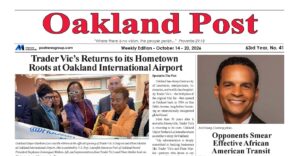
Trader Vic’s Returns to Its Oakland Roots

Oakland Coal Terminal Backed by Trump Would Be Bigger, Dirtier Than Promised, Says Report

Opponents Smear Effective African American Transit Director as Election Nears

Oakland Post: Week of October 14 – 20, 2026

OP-ED: The Black Church Writes AI’s Next Chapter

OP-ED: The Black Church Writes AI’s Next Chapter

WCCUSD Joins Statewide Organic School Food Purchasing Cooperative

Democrats, Community Groups Back Measure EE to Change How Oakland Is Governed

Four Tips to Help You Plan a Holiday “Staycation”

Veterans Housing Project Proposed for South Richmond
PRESS ROOM: Transformative Justice Coalition 2026 Voting Rights Champion Awards Reception ‘Yesterday Is Today: The Battle For Voting Rights

Mayor Lee Delivers 2026 State of the City Address: ‘Oakland Continues to Be on the Move’

Misnamed ‘Parent’ PAC Seeks to Influence Oakland School Board Elections

Oakland Post: Week of September 2 – 8, 2026

Oakland Post: Week of September 9 – 15, 2026

Poll: Becerra Widens His Lead Over Hilton; Californians Split on Wealth Tax

County Office of Education Says OUSD Finances Are Getting Healthier, Materially Stronger

Richmond Tiny House Village Farm & Garden Set to Open Gates on Sept. 26

Latest Massacre in Haiti Reveals Cruelty U.S. Deportations

Mayor Lee Announces $1 Million Kaiser Permanente Grant for Pilot Program to Address Homelessness, Clean Up Public Spaces throughout Oakland

OPINION: Nolan Wells’ Death One of Several Signifying Racial Terror Lives on in U.S. South

Listening as a Lifeline: A Doula’s Witness to Black Maternal Health

BLACspace Cooperative Invites Bay Area to Experience Oakland’s Black Cultural Ecosystem Through a BLAC Map Tour + Party

Zakiya Jendayi Arrested, Locked Out of Home by Sheriff’s Deputies

Democratic Clubs Interview Candidates for Oakland School Board

Oakland Post: Week of September 16 – 22, 2026

Oakland People’s Arms Embargo Coalition Demands End to Military Shipments Thru Oakland

The Conversation With Al McFarlane 6/23/26

Media Monday 6/22/26

LIVE! ASK ALMA! — TUES. 6.23.26 7PM EST

Car Buying Secrets: 4 Hidden Checks Before You Sign!

Is This 550 HP Charger Worth YOUR Money? AutoNetwork Review

Celebrating Juneteenth – Frederick Douglass on education and resistance

LIVE! — ASK ALMA! — TUES. 6.19.26 7PM EST

Hyundai Ioniq 5 Parking, Safety, and 360 View #shorts

2025 Ioniq 5 New Wiper & Powerful Performance! #shorts

Electric SUV Range: Is 259 Miles Enough? #shorts

EV Charging: How Fast Can You Charge an Electric Vehicle? #shorts

Biometric Cooling… Messaging Seats…Come on! 2025 Infiniti QX80 Autograph 4WD

Charged Up: Witness the Magic of a Fully Electric Car! #shorts

Range Rover Sport PHEV Included…: See What’s Inside This Luxury SUV! #shorts

Invisible Hood View: Perfect Parking with X-Ray Vision! #shorts
-
 Economy3 weeks ago
Poll: Becerra Widens His Lead Over Hilton; Californians Split on Wealth Tax
-
 Business3 weeks ago
County Office of Education Says OUSD Finances Are Getting Healthier, Materially Stronger
-
 Business4 weeks ago
Mayor Lee Announces $1 Million Kaiser Permanente Grant for Pilot Program to Address Homelessness, Clean Up Public Spaces throughout Oakland
-
 Black History2 weeks ago
Listening as a Lifeline: A Doula’s Witness to Black Maternal Health
-
 Art3 weeks ago
BLACspace Cooperative Invites Bay Area to Experience Oakland’s Black Cultural Ecosystem Through a BLAC Map Tour + Party
-
 Lead Story2 weeks ago
Zakiya Jendayi Arrested, Locked Out of Home by Sheriff’s Deputies
-
 Activism4 weeks ago
Oakland Post: Week of September 16 – 22, 2026
-
 Uncategorized4 weeks ago
Oakland People’s Arms Embargo Coalition Demands End to Military Shipments Thru Oakland
