
#NNPA BlackPress
Avoid Eviction This Season: Landlord Checklist for Stable Tenancies
The best way to avoid eviction is screening, excellent communication skills, and following through consistently. Landlords in Washington, D.C., who build their business around structure and documentation reduce their risk and increase their revenue. Crafting a compliant and wise approach to screening, managing relationships, and following protocol avoids the costly and time-consuming process of eviction. […]


The best way to avoid eviction is screening, excellent communication skills, and following through consistently. Landlords in Washington, D.C., who build their business around structure and documentation reduce their risk and increase their revenue. Crafting a compliant and wise approach to screening, managing relationships, and following protocol avoids the costly and time-consuming process of eviction.
Washington, D.C., remains one of the most heavily regulated tenancy markets in the U.S. Landlords must follow a strict process for providing notices and fulfilling procedures.
A disrupted rental income stream can quickly become a financial nightmare filled with legal fees, property concerns, and more. Avoiding evictions is easier than dealing with the consequences of tenant disruptions.
Good rental tenancies mean a steady income stream and no loss of property value. Tenant management systems minimize miscommunications that lead to missed payments. Building a formal landlord process with a checklist will yield long-term results.
What Is the Most Effective Way to Avoid Eviction as a Landlord?
The most effective strategy combines strong screening, written policies, and proactive communication. Prevention begins before a lease is signed. A thorough review of applications reduces exposure to nonpayment and conflict.

Property owners should:
- Verify income and employment
- Review rental history and references
- Evaluate credit behavior and debt patterns
- Confirm identity and background information
Careful evaluation supports better decision-making. Proper screening lowers the likelihood of tenant eviction later in the lease.
How Can Landlords Reduce the Risk of Tenant Eviction in Washington, DC?
Risk reduction depends on documentation and compliance. Washington, DC housing laws require precise procedures. Mistakes in notices or timelines delay enforcement and increase costs.
Landlords can reduce risk by:
- Using written lease agreements with clear payment terms
- Maintaining detailed records of communication
- Providing written notices that meet DC legal standards
- Addressing late payments immediately
Consistency protects both parties. Structured rental property management practices reduce misunderstandings and strengthen legal standing if disputes arise.
The Importance of a Strong Landlord Checklist
A detailed landlord checklist creates consistency. Systems prevent oversight. An organized strategy reduces emotional decision-making during disputes.
A comprehensive checklist should include:
- Pre-lease screening procedures
- Move-in documentation and inspections
- Payment tracking systems
- Maintenance response protocols
- Lease renewal timelines
Clear procedures support long-term eviction prevention. Landlords who operate with structure experience fewer disruptions and more stable tenancies.
Tenant Screening: The First Line of Defense
Screening remains the most critical phase of tenancy. Many eviction cases stem from inadequate pre-lease evaluation. Strong screening protects income and reduces legal exposure.
Income and Employment Verification
Reliable tenants demonstrate stable income. Industry best practice suggests income equal to at least three times the monthly rent. Employment confirmation reduces uncertainty.
Request:
- Recent pay stubs
- Employer contact verification
- Bank statements, when necessary
Consistent income reduces default risk. Financial capacity impacts the ability to avoid eviction.
Rental History and References
Past performance often predicts future behavior. Prior landlords can confirm payment consistency and lease compliance.
Ask about:
- Late payment patterns
- Property care habits
- Notice compliance
- Lease violations
Reliable references help identify red flags early.
Credit Evaluation and Background Review
Credit patterns reveal financial responsibility. Late accounts, collections, or high debt ratios may signal risk.
Professional services offering tenant credit screening provide structured review tools. Many landlords rely on services such as tenant credit screening to streamline evaluation and reduce bias. Objective criteria protect compliance and fairness.
Background checks should comply with Fair Housing guidelines. Neutral, consistent standards reduce discrimination risk while supporting property security.
Clear Lease Agreements Protect Stability
Ambiguity leads to disputes. Written leases must outline:
- Rent due dates
- Grace periods
- Late fees
- Maintenance responsibilities
- Rules regarding subleasing and guests
Specificity reduces conflict. DC landlords must ensure leases align with local housing regulations.
Proactive Communication Prevents Escalation
Early communication prevents small issues from becoming legal disputes. Missed payments should trigger immediate contact.
Professional communication should:
- Remain respectful and documented
- Provide written reminders
- Offer clear deadlines
- Outline the consequences of continued nonpayment
Open dialogue supports solutions. Payment plans may resolve temporary hardship while protecting income.
Maintenance and Property Security Reduce Conflict
Neglected maintenance often leads to disputes and rent withholding claims. Washington, DC law requires habitable conditions. Prompt repairs protect compliance.
Effective maintenance protocols include:
- Routine inspections
- Documented repair requests
- Timely vendor scheduling
- Written completion confirmations
Strong property security measures also reduce liability. Secure locks, lighting, and entry systems protect residents and limit claims. Well-maintained properties foster tenant satisfaction and long-term retention.
Payment Systems and Documentation
Reliable systems simplify rent collection. Digital payment platforms provide tracking and transparency. Automated reminders reduce missed deadlines.
Documentation should include:
- Payment history logs
- Late fee notices
- Written communication records
- Signed acknowledgments when possible
Frequently Asked Questions
What Documentation Should a DC Landlord Keep to Prevent Eviction Disputes?
Landlords should maintain detailed payment records, inspection reports, repair documentation, written notices, and signed lease agreements. Digital storage ensures easy retrieval during disputes. Maintaining organized files supports legal compliance and strengthens court presentation if required.
Clear documentation reduces ambiguity and supports structured eviction prevention efforts. Accurate records also demonstrate good-faith management practices. Well-maintained files improve response time when legal or regulatory questions arise.
Can Payment Plans Legally Help Avoid Tenant Eviction in Washington, DC?
Payment plans can provide structured solutions when tenants face temporary hardship. Written agreements outlining amounts, deadlines, and consequences protect both parties.
DC regulations permit negotiated arrangements if properly documented. Structured repayment plans often help landlords avoid eviction while preserving rental income and tenant relationships.
Clear terms reduce misunderstandings and prevent future disputes. Consistent monitoring ensures that agreements remain effective and enforceable.
How Does Strong Tenant Screening Improve Long-Term Rental Property Management?
Comprehensive screening identifies financial stability and responsible behavior before lease signing. Income verification, credit review, and rental references provide measurable criteria.
Objective screening reduces default risk and improves tenant retention. Structured evaluation strengthens overall rental property management performance and supports sustainable occupancy rates.
Take Action Now to Avoid Eviction and Strengthen Stability
Stable tenancies to avoid eviction protect income, reduce stress, and preserve property value. A disciplined system built around a strong landlord checklist, compliance, and communication improves outcomes in Washington, DC’s regulated housing market. Landlords who prioritize structure and prevention position themselves to avoid eviction and maintain consistent occupancy.
Explore our website more for helpful articles and the latest news story updates. Continued education supports better decisions and stronger long-term tenancy stability.












#NNPA BlackPress
Youth-Led Black August Event Brings Past to Present at East Oakland Boxing Association
The mission of Youth Alive! Is to “break the cycle of violence, heal trauma, and uplift a thriving community of leaders, to save lives in Oakland and beyond” by serving “as mentors, youth leaders, counselors, case managers, intervention specialists and violence interrupters,” working “to help violently wounded people heal themselves and their community.”
The post The mission of Youth Alive! Is to “break the cycle of violence, heal trauma, and uplift a thriving community of leaders, to save lives in Oakland and beyond” by serving “as mentors, youth leaders, counselors, case managers, intervention specialists and violence interrupters,” working “to help violently wounded people heal themselves and their community.” appeared first on BlackPressUSA.

Youth-Led Black August Event Brings Past to Present at East Oakland Boxing Association
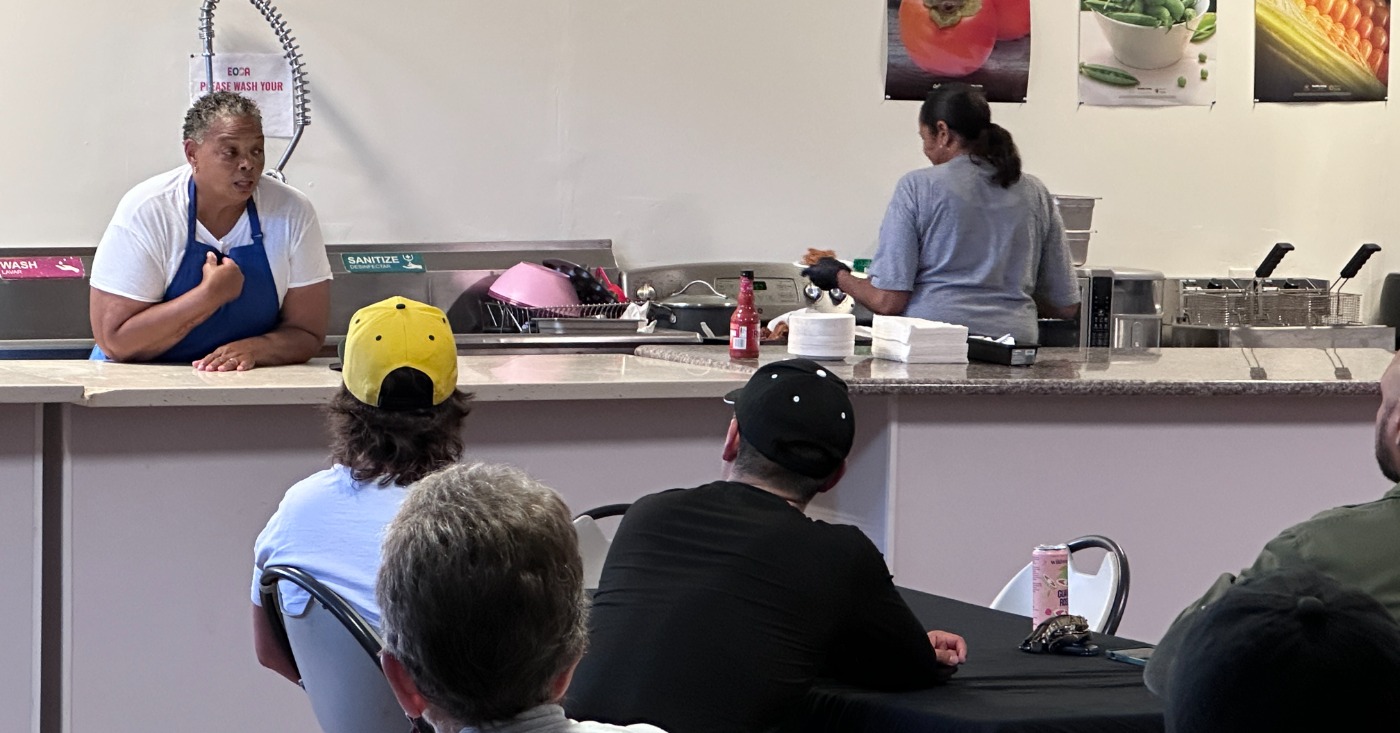
The East Oakland Boxing Association (EOBA) and Youth Alive! came together on Aug. 21 to share with their community all that Black August means to them.
Held on EOBA’s patio at 816 98th Ave. in Deep East Oakland, the two organizations hosted their second annual Black August Experience, featuring a food tasting, financial literacy and mindfulness workshops, and voter registration with the League of Women Voters Oakland (LWV).
Black August is known as a time to uphold the legacy of prisoners who protested their conditions by fasting, fighting, and educating themselves on the economic and political circumstances that contributed to their incarceration.
According to its website, “EOBA is a multi-service youth and community development hub that goes far beyond the ring. While rooted in the discipline of boxing, for nearly 40 years EOBA has also integrated robust programs in workforce development, food justice, afterschool enrichment, financial literacy, mentorship, and wellness.”.

The mission of Youth Alive! Is to “break the cycle of violence, heal trauma, and uplift a thriving community of leaders, to save lives in Oakland and beyond” by serving “as mentors, youth leaders, counselors, case managers, intervention specialists and violence interrupters,” working “to help violently wounded people heal themselves and their community.”
Through Coro California, another leadership organization serving young people across the state for 80 years, they gained a broader understanding of Black August.
EOBA Executive Director Dawna Williams spoke about how much she learned about Black August from the youth who created it. “I let them educate me,” she said. Instead of talking about prison reform and mass incarceration, Williams and youth interns found that Black August meant so much more. “We would have done a disservice if we had just focused on who the people were and what their situation was…We tried to take their message from back in the day and make it relevant to the young people today. What do they need to know?”
Youth interns created and placed posters around the patio to help participants understand how traditional Black foodways, civic engagement, financial literacy, and the power of education are relevant to Black resistance today.
An EOBA member described Black August with Youth ALIVE! as “a whole vibe. “This year we added the Fun Zone for the kids, because you really cannot go wrong with a Fun Zone. I also loved seeing everyone chillin’ in the outdoor lounge, catching some Vitamin D and just enjoying a Friday evening together.”
The food tasting, a popular event from last year, featured traditional Black foods such as black-eyed peas, johnny cakes, and fried chicken. Led by Williams, the tasting included a talk about how these traditional foods were made and why they are forms of Black resilience.
The “‘Plate of History’ was a favorite of the online writers. “Fun, educational, and did I mention delicious? Our Taste of History cook, Angela Southall, served up some good eats while connecting food to history and culture.”
The writer also commended the “League of Women Voters Oakland for their civic leadership and for getting our young people informed, ready, and registered to vote.”
Overall, it was a “good Friday event in East Oakland,” the writer said.
Upcoming Black August events: Building Opportunities for Self-Sufficiency (BOSS), will host “Black August: The Arc of Liberation” at Oakland City Hall on Sat. Aug. 29, from 11 a.m. to 3 p.m.
The websites for East Oakland Boxing Association, Youth Alive! and CORO are sources for this report.
Jana Lang is an Oakland resident, teacher, gardener and poet participating in the Propel News Initiative.
The post The mission of Youth Alive! Is to “break the cycle of violence, heal trauma, and uplift a thriving community of leaders, to save lives in Oakland and beyond” by serving “as mentors, youth leaders, counselors, case managers, intervention specialists and violence interrupters,” working “to help violently wounded people heal themselves and their community.” appeared first on BlackPressUSA.

#NNPA BlackPress
EV Home Charging Warning: What Dealerships Won’t Tell You! #shorts
Is your home EV charging setup ready? Dealerships may not warn you about critical outlet and circuit needs. Find out before you plug in!
The post EV Home Charging Warning: What Dealerships Won’t Tell You! #shorts appeared first on BlackPressUSA.

Dealerships won’t tell you: charging this big battery at home isn’t always simple. Verify your outlet capacity, circuit, and setup before assuming level one or basic outdoor outlets will suffice.
 Watch the full video: https://youtu.be/A9Cd2SspoaQ
#AutoNetwork
The post EV Home Charging Warning: What Dealerships Won’t Tell You! #shorts appeared first on BlackPressUSA.
#NNPA BlackPress
Car Buying Secrets: Dealership Traps & How to Avoid Them #shorts
Don’t get tricked at the dealership! Learn essential car buying secrets to secure the best deal and avoid hidden traps.
The post Car Buying Secrets: Dealership Traps & How to Avoid Them #shorts appeared first on BlackPressUSA.

Before stepping into a dealership, secure bank pre-approval for your financing rate. Then, get the out-the-door price in writing. Never discuss monthly payments until that number is fixed. Test road noise and rear visibility yourself. Decline add-ons with a simple ‘Not today’. Check backseat space with your tallest household member.
Watch the full video: https://youtu.be/maAOBjO1puY
#AutoNetwork
The post Car Buying Secrets: Dealership Traps & How to Avoid Them #shorts appeared first on BlackPressUSA.



Prostate Cancer is Twice as Likely to Kill Black Men. Talking to Your Doctor Could Help Save Your Life

Oakland Post: Week of September 2 – 8, 2026

Longtime BWOPA Member Brendalyn Goodall Appointed to California Workforce Development Board

Jackie Wright Champions Bay Area Stories, Filmmakers and Cultural Institutions

Chef Sharon Lee Blends Culinary Excellence, Education and Empowerment

‘Passing a Law Isn’t The Finish Line’: California Assembly Evaluates Implementation, Results

OPINION: Angie Nixon Will Turn You Into a Democratic Socialist If Donald Trump Hasn’t Already

Gov. Newsom Signs Law Shielding Immigration Aid Workers From Doxing Threats

BOOK REVIEW: Every Inch of a Lady

Big City Mayors Ask for “Yes” Vote on Housing Bond Measure; Conservatives Say “No”

Madeline M. Turner: The Inventor Who Made Juicing Easier

Gubernatorial Candidate Steve Hilton Blasts California New Tire Rules; Newsom Hits Back

Frontier Airlines’ Return to Oakland Airport Brings Flights, Jobs and Opportunity

Secretary of State Shirley N. Weber Urges Californians to Vote Early as Voter ID Battle Intensifies

Gov. Newsom’s Latest Appointees Include Sacramento Advocate for Formerly Incarcerated Students; State’s New Tech Chief

Department of Homeland Security Demands California Secretary of State Shirley N. Weber Scrub Voter Rolls

New Judge Could Decide if Karmelo Anthony Gets a New Trial

“The Power to See Threats Sooner”: Gov. Newsom, Safety Officials Showcase California’s Investments in Hi-Tech Wildfire Prevention

Alpha Kappa Alpha Sorority, Inc. Celebrates New North Atlantic Regional Director

California Sen. Padilla Joins Colleagues to Introduce Bill Imposing Term Limits on Supreme Court Justices

Less Affluent School Districts, Including Sacramento City, Face Threat of State Takeover

Car Wash Workers Cope with Lingering Impacts of ICE Raids

COMMENTARY: You Are Already Paying for the AI Boom

California Bill Would Let Abuse Victims Use Trauma as Legal Defense for Violent Crime

Oakland Post: Week of July 29 – August 4, 2026

OP-ED: ‘The Trusted Messenger’ and the Black Vote

How Oakland’s Courtsmith is Scaling its Business and Local Impact

ESSAY: California Can Close Its Colorectal Cancer Gap

As Part of Your Back-to- School Checklist, Vaccinate

Oakland Post: Week of August 5 – 11, 2026

The Conversation With Al McFarlane 6/23/26

Media Monday 6/22/26

LIVE! ASK ALMA! — TUES. 6.23.26 7PM EST

Car Buying Secrets: 4 Hidden Checks Before You Sign!

Is This 550 HP Charger Worth YOUR Money? AutoNetwork Review

Celebrating Juneteenth – Frederick Douglass on education and resistance

LIVE! — ASK ALMA! — TUES. 6.19.26 7PM EST

Hyundai Ioniq 5 Parking, Safety, and 360 View #shorts

2025 Ioniq 5 New Wiper & Powerful Performance! #shorts

Electric SUV Range: Is 259 Miles Enough? #shorts

EV Charging: How Fast Can You Charge an Electric Vehicle? #shorts

Biometric Cooling… Messaging Seats…Come on! 2025 Infiniti QX80 Autograph 4WD

Charged Up: Witness the Magic of a Fully Electric Car! #shorts

Range Rover Sport PHEV Included…: See What’s Inside This Luxury SUV! #shorts

Invisible Hood View: Perfect Parking with X-Ray Vision! #shorts
-
 Community4 weeks ago
Less Affluent School Districts, Including Sacramento City, Face Threat of State Takeover
-
 Commentary4 weeks ago
ESSAY: California Can Close Its Colorectal Cancer Gap
-

 Business4 weeks ago
California Hispanic Chambers of Commerce Unveils: ‘Powering the Future’ Theme for 47th Annual Statewide Convention
-

 Community4 weeks ago
Four Candidates, Including Incumbent Barbara Lee, Qualify for Oakland Mayor’s Race
-

 Business4 weeks ago
From Blueprint to Breakthrough: Tackling Affordable Housing in Oakland
-
 Black History4 weeks ago
Oakland Observes Black August with Block Parties, Film Showings, Workshops
-

 Activism4 weeks ago
Oakland Post: Week of August 12 – 18, 2026
-

 Commentary4 weeks ago
COMMENTARY: Why Local School Tax Measure G1 Will Not Be on the November Ballot
