
Activism
COMMENTARY: The Biases We Don’t See — Preventing AI-Driven Inequality in Health Care
For decades, medicine promoted false assumptions about Black bodies. Black patients were told they had lower lung capacity, and medical devices adjusted their results accordingly. That practice was not broadly reversed until 2021. Up until 2022, a common medical formula used to measure how well a person’s kidneys were working automatically gave Black patients a higher score simply because they were Black. On paper, this made their kidneys appear healthier than they truly were. As a result, kidney disease was sometimes detected later in Black patients, delaying critical treatment and referrals.

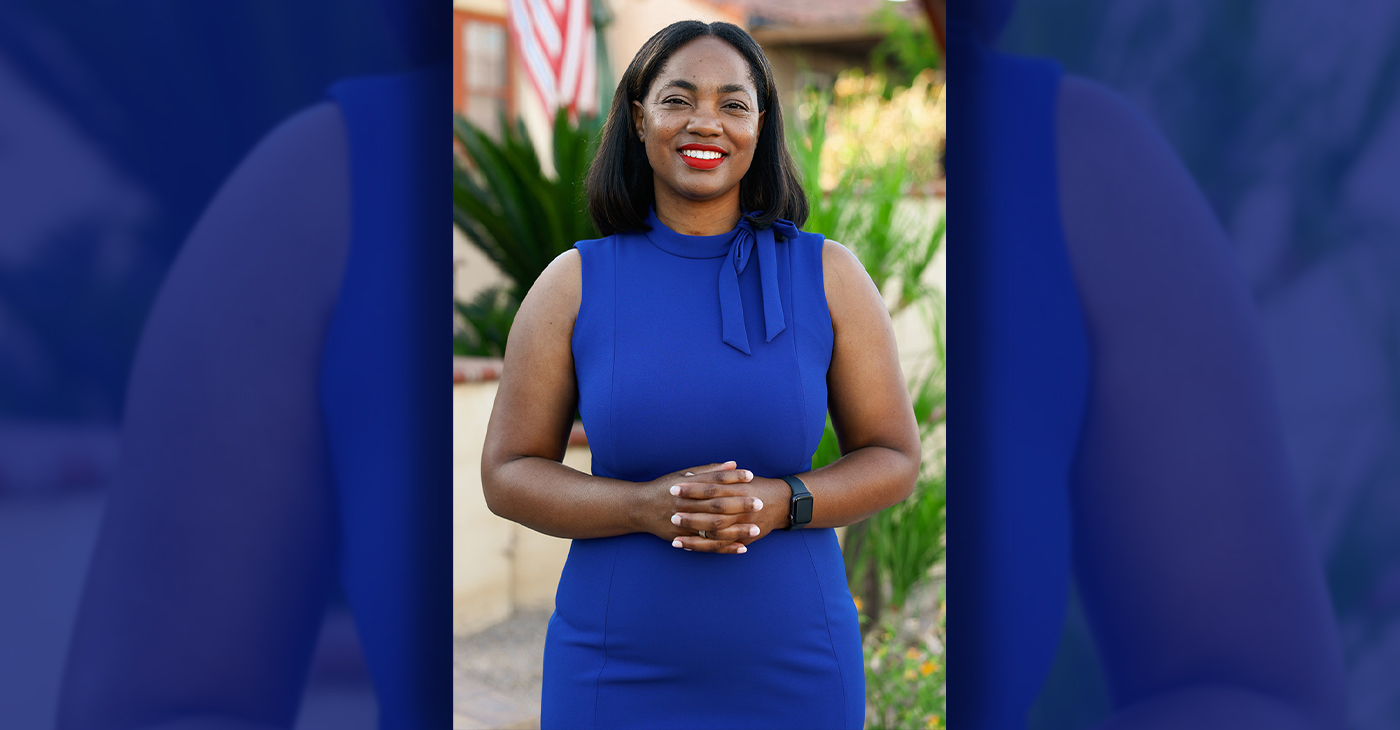
By Sen. Akilah Weber Pierson, M.D., Special to California Black Media Partners

Technology is sold to us as neutral, objective, and free of human flaws. We are told that computers remove emotion, bias, and error from decision-making. But for many Black families, lived experience tells a different story. When technology is trained on biased systems, it reflects those same biases and silently carries them forward.
We have seen this happen across multiple industries. Facial recognition software has misidentified Black faces at far higher rates than White faces, leading to wrongful police encounters and arrests. Automated hiring systems have filtered out applicants with traditionally Black names because past hiring data reflected discriminatory patterns. Financial algorithms have denied loans or offered worse terms to Black borrowers based on zip codes and historical inequities, rather than individual creditworthiness. These systems did not become biased on their own. They were trained on biased data.
Healthcare is not immune.
For decades, medicine promoted false assumptions about Black bodies. Black patients were told they had lower lung capacity, and medical devices adjusted their results accordingly. That practice was not broadly reversed until 2021. Up until 2022, a common medical formula used to measure how well a person’s kidneys were working automatically gave Black patients a higher score simply because they were Black. On paper, this made their kidneys appear healthier than they truly were. As a result, kidney disease was sometimes detected later in Black patients, delaying critical treatment and referrals.
These biases were not limited to software or medical devices. Dangerous myths persisted that Black people feel less pain, contributing to undertreatment and delayed care. These beliefs were embedded in modern training and practice, not distant history. Those assumptions shaped the data that now feeds medical technology. When biased clinical practices form the basis of algorithms, the risk is not hypothetical. The bias can be learned, automated, and scaled.
For us in the Black community, this creates understandable fear and mistrust. Many families already carry generational memories of medical discrimination, from higher maternal mortality to lower life expectancy to being dismissed or unheard in clinical settings. Adding AI biases could make our community even more apprehensive about the healthcare system.
As a physician, I know how much trust patients place in the healthcare system during their most vulnerable moments. As a Black woman, I understand how bias can shape experiences in ways that are often invisible to those who do not live them. As a mother of two Black children, I think constantly about the systems that will shape their health and well-being. As a legislator, I believe it is our responsibility to confront emerging risks before they become widespread harm.
That is why I am the author of Senate Bill (SB) 503. This bill aims to regulate the use of artificial intelligence in healthcare by requiring developers and users of AI systems to identify, mitigate, and monitor biased impacts in their outputs to reduce racial and other disparities in clinical decision-making and patient care.
Currently under consideration in the State Assembly, SB 503 was not written to slow innovation. In fact, I encourage it. But it is our duty must ensure that every tool we in the healthcare field helps patients rather than harms them.
The health of our families depends on it.
About the Author
Sen. Akilah Weber Pierson (D–San Diego) is a physician and public health advocate representing California’s 39th Senate District.


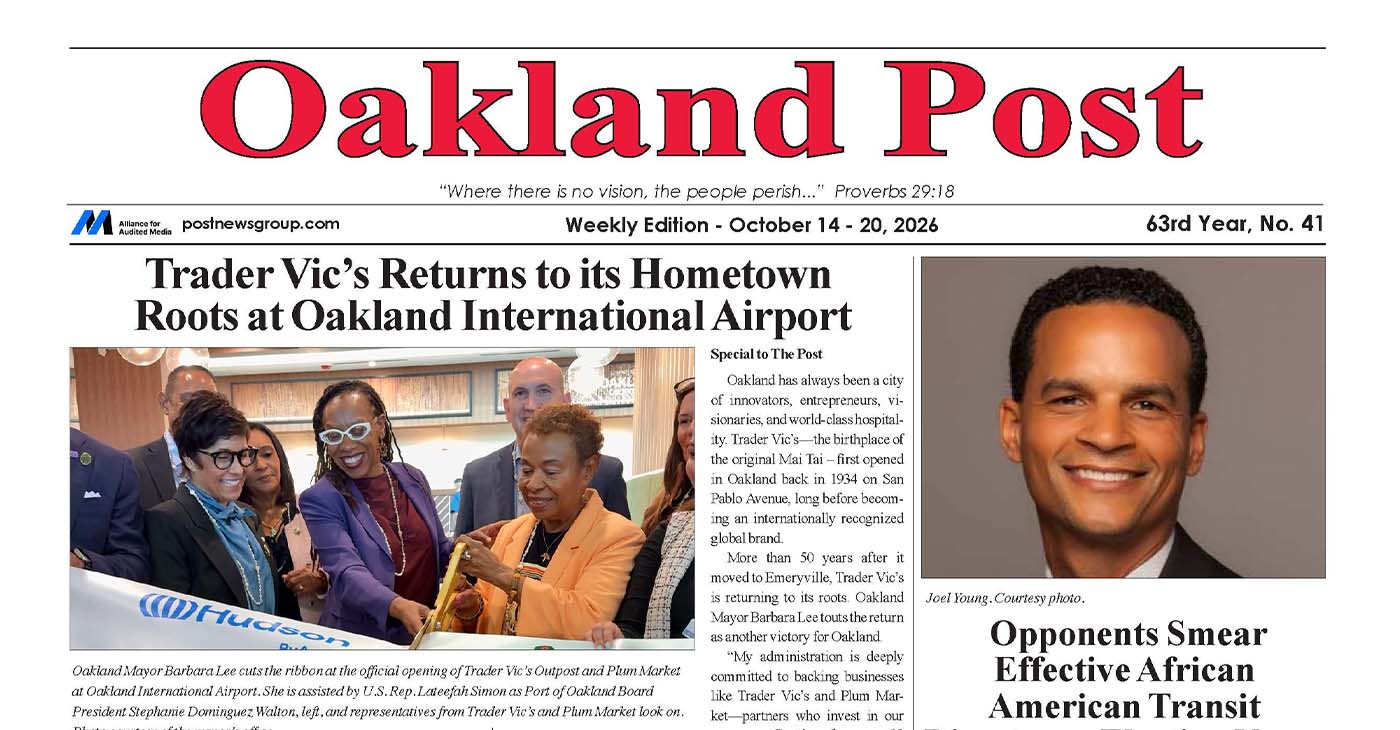
To enlarge your view of this issue, use the slider, magnifying glass icon or full page icon in the lower right corner of the browser window.
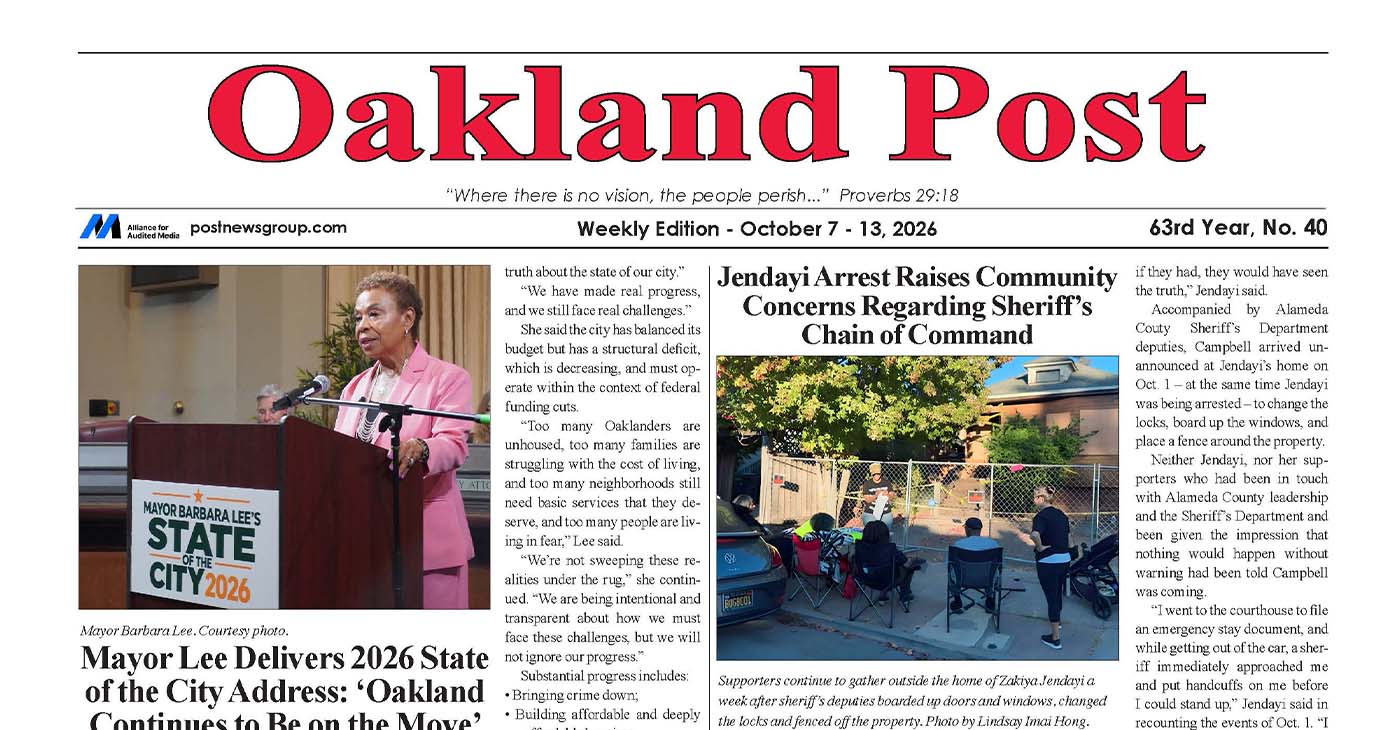
To enlarge your view of this issue, use the slider, magnifying glass icon or full page icon in the lower right corner of the browser window.
Activism
Oakland Post: Week of September 30 – October 6, 2026
The printed Weekly Edition of the Oakland Post: Week of September 30 – October 6, 2026
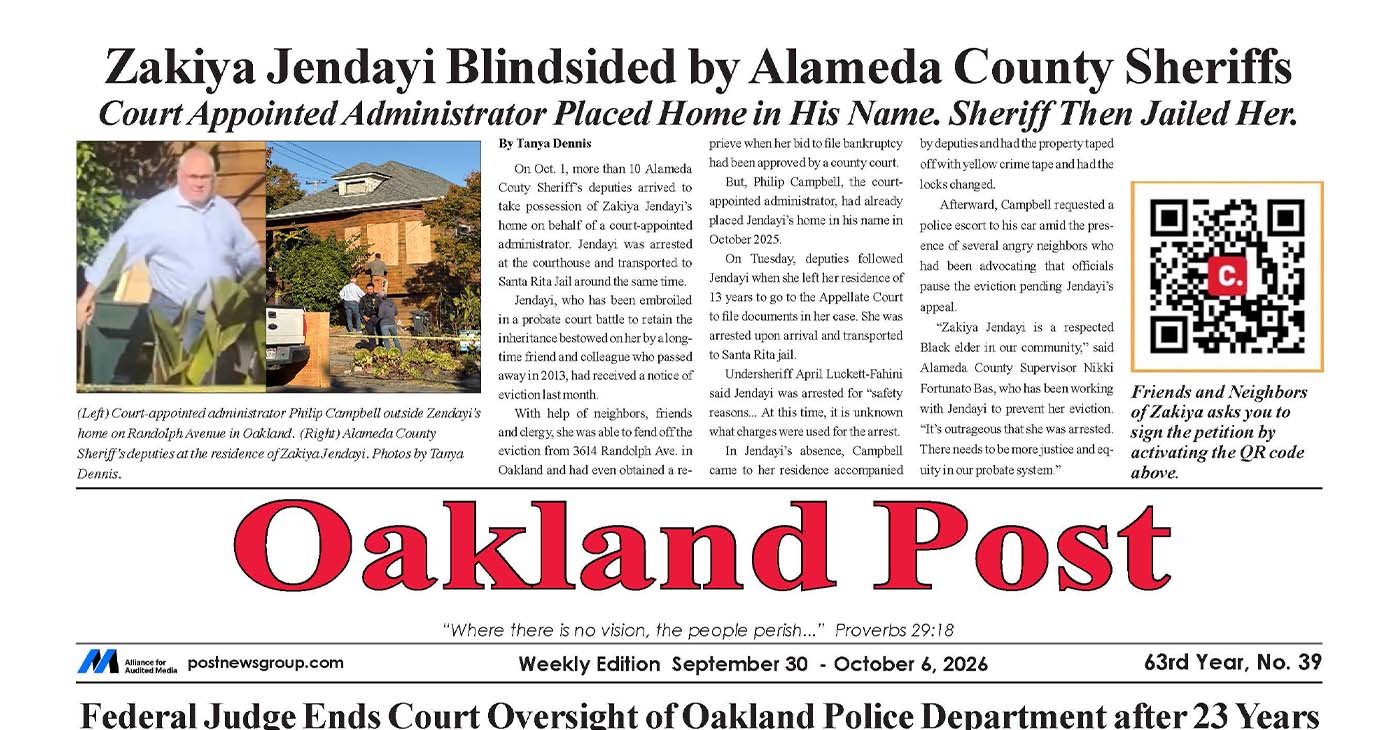
To enlarge your view of this issue, use the slider, magnifying glass icon or full page icon in the lower right corner of the browser window.
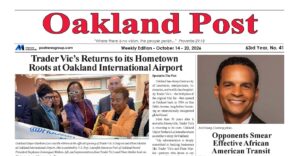


Mayor Barbara Lee Holds Special State of the City Address in Deep East Oakland

Practitioners of African Traditional Spirituality Offer Ancestral Reverence Ritual Oct. 31

It’s Time to Lose Weight Before the Holidays

Trader Vic’s Returns to Its Oakland Roots

Oakland Coal Terminal Backed by Trump Would Be Bigger, Dirtier Than Promised, Says Report

Opponents Smear Effective African American Transit Director as Election Nears

Oakland Post: Week of October 14 – 20, 2026

OP-ED: The Black Church Writes AI’s Next Chapter

OP-ED: The Black Church Writes AI’s Next Chapter

WCCUSD Joins Statewide Organic School Food Purchasing Cooperative

Democrats, Community Groups Back Measure EE to Change How Oakland Is Governed

Four Tips to Help You Plan a Holiday “Staycation”

Veterans Housing Project Proposed for South Richmond
PRESS ROOM: Transformative Justice Coalition 2026 Voting Rights Champion Awards Reception ‘Yesterday Is Today: The Battle For Voting Rights

Mayor Lee Delivers 2026 State of the City Address: ‘Oakland Continues to Be on the Move’

Misnamed ‘Parent’ PAC Seeks to Influence Oakland School Board Elections

Listening as a Lifeline: A Doula’s Witness to Black Maternal Health

Poll: Becerra Widens His Lead Over Hilton; Californians Split on Wealth Tax

Oakland Post: Week of September 9 – 15, 2026

County Office of Education Says OUSD Finances Are Getting Healthier, Materially Stronger

Richmond Tiny House Village Farm & Garden Set to Open Gates on Sept. 26

Mayor Lee Announces $1 Million Kaiser Permanente Grant for Pilot Program to Address Homelessness, Clean Up Public Spaces throughout Oakland

Doulas Are Helping Black California Moms Navigate Pregnancy–Even as High Mortality Rates Persist

Latest Massacre in Haiti Reveals Cruelty U.S. Deportations

OPINION: Nolan Wells’ Death One of Several Signifying Racial Terror Lives on in U.S. South

Zakiya Jendayi Arrested, Locked Out of Home by Sheriff’s Deputies

BLACspace Cooperative Invites Bay Area to Experience Oakland’s Black Cultural Ecosystem Through a BLAC Map Tour + Party

Oakland Post: Week of September 16 – 22, 2026

Democratic Clubs Interview Candidates for Oakland School Board

Oakland People’s Arms Embargo Coalition Demands End to Military Shipments Thru Oakland

The Conversation With Al McFarlane 6/23/26

Media Monday 6/22/26

LIVE! ASK ALMA! — TUES. 6.23.26 7PM EST

Car Buying Secrets: 4 Hidden Checks Before You Sign!

Is This 550 HP Charger Worth YOUR Money? AutoNetwork Review

Celebrating Juneteenth – Frederick Douglass on education and resistance

LIVE! — ASK ALMA! — TUES. 6.19.26 7PM EST

Hyundai Ioniq 5 Parking, Safety, and 360 View #shorts

2025 Ioniq 5 New Wiper & Powerful Performance! #shorts

Electric SUV Range: Is 259 Miles Enough? #shorts

EV Charging: How Fast Can You Charge an Electric Vehicle? #shorts

Biometric Cooling… Messaging Seats…Come on! 2025 Infiniti QX80 Autograph 4WD

Charged Up: Witness the Magic of a Fully Electric Car! #shorts

Range Rover Sport PHEV Included…: See What’s Inside This Luxury SUV! #shorts

Invisible Hood View: Perfect Parking with X-Ray Vision! #shorts
-
 Black History3 weeks ago
Listening as a Lifeline: A Doula’s Witness to Black Maternal Health
-
 Economy4 weeks ago
Poll: Becerra Widens His Lead Over Hilton; Californians Split on Wealth Tax
-
 Business4 weeks ago
County Office of Education Says OUSD Finances Are Getting Healthier, Materially Stronger
-
 Lead Story3 weeks ago
Zakiya Jendayi Arrested, Locked Out of Home by Sheriff’s Deputies
-
 Art4 weeks ago
BLACspace Cooperative Invites Bay Area to Experience Oakland’s Black Cultural Ecosystem Through a BLAC Map Tour + Party
-

 Business4 weeks ago
From Historic Memories to New Possibilities: Oakland Celebrates Coliseum 60
-
 Community4 weeks ago
Asm. Corey Jackson Announces Launch of 24-Hour Childcare in His District
-

 Black History4 weeks ago
IN MEMORIAM: The Rev. Leon “Sonny” Clark, Longtime Orange County Pastor and Community Leader, Dies at 72
