
Business
Collaboration Between Stanford and the Department of the Treasury: Black Taxpayers Are Targeted for Audit More Than Others
According to Stanford RegLab, Black taxpayers receive IRS audit notices at least 2.9 times more frequently than non-Black taxpayers and possibly as much as 4.7 times more often. The team’s research showed that a set of internal IRS algorithms causes racial differences in audit selection. Goldin compared them to the recipe for Coca-Cola: “It’s completely secret.”


By Stacy M. Brown
NNPA Newswire Senior
According to Stanford RegLab, Black taxpayers receive IRS audit notices at least 2.9 times more frequently than non-Black taxpayers and possibly as much as 4.7 times more often.
The new study included research by Daniel E. Ho, the William Benjamin Scott and Luna M. Scott Professor of Law at Stanford Law School, faculty director of the Stanford RegLab, a senior fellow at the Stanford Institute for Economic Policy Research, Hadi Elzayn, a researcher at the Stanford RegLab, Evelyn Smith, Ph.D. candidate at the University of Michigan, and Arun Ramesh, a pre-doctoral fellow at the University of Chicago; Jacob Goldin, a professor of tax law at the University of Chicago; and economists in the U.S. Department of Treasury’s Office of Tax Analysis.
The researchers concluded that the disparity “is unlikely to be intentional on the part of IRS staff.”
The team’s research showed that a set of internal IRS algorithms causes racial differences in audit selection. Goldin compared them to the recipe for Coca-Cola: “It’s completely secret.”
To better understand this audit selection bias, the research team modeled the racial impact that various alternative audit selection policies might have.
The result showed how the IRS could change its secret algorithm to make it less unfair to people of different races.
“The IRS should drill down to understand and modify its existing audit selection methods to mitigate the disparity we’ve documented,” Ho said.
“And we’ve shown they can do that without sacrificing tax revenue.”
Although there have been long-standing questions about whether the IRS uses its audit powers somewhat, Ho said it was challenging to study because tax returns are private.
The IRS’s approach to audit decisions was confidential.
That changed when, on his first day in office, President Joe Biden signed Executive Order 13985. This order requires all federal agencies to examine how their programs affect racial and ethnic equity.
To apply that order to the IRS tax return audit program, economists at the Treasury Department worked with the Stanford RegLab team to analyze more than 148 million tax returns and about 780,000 tax returns for 2014. The RegLab team used anonymous data to do the analysis.
Even with all that information, the research team found that tax returns do not ask for a person’s race or ethnicity.
So, the team adapted and improved on a state-of-the-art approach that uses first names, last names, and geography (U.S. Census block groups) to predict the probability that a person identifies as Black.
And they confirmed their racial identification results using a North Carolina sample of voter registration records. In that state, until recently, when people registered to vote, they had to check a box for race and ethnicity.
After finding that Black taxpayers were 2.9 to 4.7 times more likely to be audited than non-Black taxpayers, the team looked at why this might be the case.
They suspected that the problem lay with an IRS algorithm’s use of the Dependent Database, which flags a potential problem and generates an audit letter to the taxpayer.
That instinct proved correct in that most racial differences were found in so-called “correspondence” audits. These audits are done by mail rather than in person.
The team also found that the IRS audits people more often who claim the Earned Income Tax Credit (EITC). The EITC helps low- and moderate-income people.
But claiming the EITC only explains a small percentage of the observed racial disparity.
The largest source of disparity occurs among EITC claimants. Indeed, Black taxpayers accounted for 21% of EITC claims but were the focus of 43% of EITC audits.
The racial disparity in audit rates persists regardless of whether EITC claimants are male or female, married or unmarried, raising children, or childless.
But it is most extreme for single male taxpayers claiming dependents (7.73% for Black claimants; 3.46% for non-Black claimants) and for single male taxpayers who did not claim dependents (5.66% for Black; 2% for non-Black).
Perhaps the most striking statistic is this: A single Black man with dependents who claims the EITC is nearly 20 times as likely to be audited as a non-Black jointly filing (married) taxpayer claiming the EITC.
Although the team does not know precisely what algorithm the IRS uses to choose audits, they thought of several possible reasons for high audit rates.
First, they tried an “Oracle” approach. They used a dataset called the National Research Project (NRP).
Because each tax return in this dataset was subjected to a line-by-line audit, the amount of underreported tax liability is known.
So, the researchers looked at what would happen if the IRS selected taxpayers based on the known amount of underreported tax in the NRP dataset.
The result: The racial difference in audit selection flips.
The IRS would audit more non-Black taxpayers than Black taxpayers to catch the most underreported income tax.
The team also used the NRP dataset to train a model to predict the likelihood that a taxpayer has underreported income and the magnitude of a taxpayer’s underreporting for the entire 2014 dataset.
They found that an approach focused just on the likelihood that there’s underreporting of at least $100 would result in auditing more Black taxpayers (as was observed).
By contrast, focusing on the magnitude of underreporting (the amount of money unpaid by a taxpayer) would yield a result much closer to the oracle: More non-Black taxpayers would be audited than Black.
“The choice to focus on whether there is underreporting, as opposed to the magnitude of underreporting, is connected to broader structural sources of economic inequality and racial justice,” Smith said.
Because far more Black taxpayers have lower income, they have less opportunity to underreport substantial amounts of income, the researchers concluded.
By contrast, Smith said, “focusing audits on the amount of underreported income will disproportionately end up focusing on higher income individuals who are less likely to be Black taxpayers.”
Finally, the team wondered if the racial disparity in audits springs from IRS and congressional concerns about refundable tax credits, including the EITC and several others.
When someone claims one of these social security tax credits, they receive a refund even if they did not pay any taxes.
And some in government think it’s more important to avoid paying money to someone who claims it inappropriately than to collect all the tax dollars due from someone engaged in some other form of tax evasion.
To test the hypothesis that this approach would have a disparate impact on Black taxpayers, the team examined what would happen if the IRS focused audits specifically on the underreporting due to over-claiming of refundable tax credits (the EITC as well as two others) rather than total underreporting.
Their findings: This policy would result in Black taxpayers being audited at rates like what the team observed in the 2014 data.
Seventy percent of IRS audits happen through the mail, and 50% involve EITC claimants.
The team found that correspondence audits of EITC claimants are easy to trigger compared to labor-intensive field audits, cost very little, and require minimal effort by IRS personnel.
Unfortunately, the burden of correspondence audits on EITC claimants is more likely to fall on lower-income individuals, whose tax returns are less complex and less likely to lead to litigation, according to a recent study by the same research team.
In their new work, the team found that additional aspects of the IRS audit selection process have a racially disparate impact in the United States.
For example, even among correspondence audits of EITC claimants, the IRS devotes fewer resources to auditing EITC returns with business income.
The team concluded suggested that it’s because it would be more expensive to audit EITC returns with business income (about $385 per audit compared to $29 per audit for EITC claimants with no business income), Elzayn said.
And the team found this cost-saving measure has a disparate impact on Black taxpayers, who make up only 10% of EITC claimants reporting business income but 20% of EITC claimants who don’t report business income.
Yet even if IRS resource limits explain some of the racial disparities the team observed, they don’t explain all of them.
“Even holding fixed how many audits are devoted to EITC claimants who report business income, we still observe racial disparities,” Elzayn said.
The study’s authors have not made any formal recommendations for making the IRS audit selection algorithm more just.
Instead, they have written about the possible effects of alternative policies. This allows the IRS to reduce the racial impact of its system of choosing auditors.
These include predicting and focusing on the magnitude of taxpayers’ underreported income rather than just the likelihood of it; using IRS resources to audit more complex returns rather than focusing only on the simpler ones that are cheaper to audit; and viewing dollars as equal whether they are to be paid in refundable credits or received in taxes.
Before Biden signed the Racial Justice Executive Order that engendered this research project, the IRS needed more impetus and the ability to do that.
Now that they know the equity implications of how they select audits, Ho hopes they will tweak their confidential audit selection algorithm.
“Racial disparities in income are well known, and what the IRS chooses to focus on has big implications for whether audits complement, or undercut, a progressive tax system,” Ho said.













Books
Oakland Mayor Reads to Children at Bookout Block Party at Marcus Books Store
Booths lined the street with arts and crafts, and children participated in hands-on art projects. A large display of books was on display and each child chose his/her free book to take home. Food and snacks were available, and free water was encouraged to keep all hydrated.

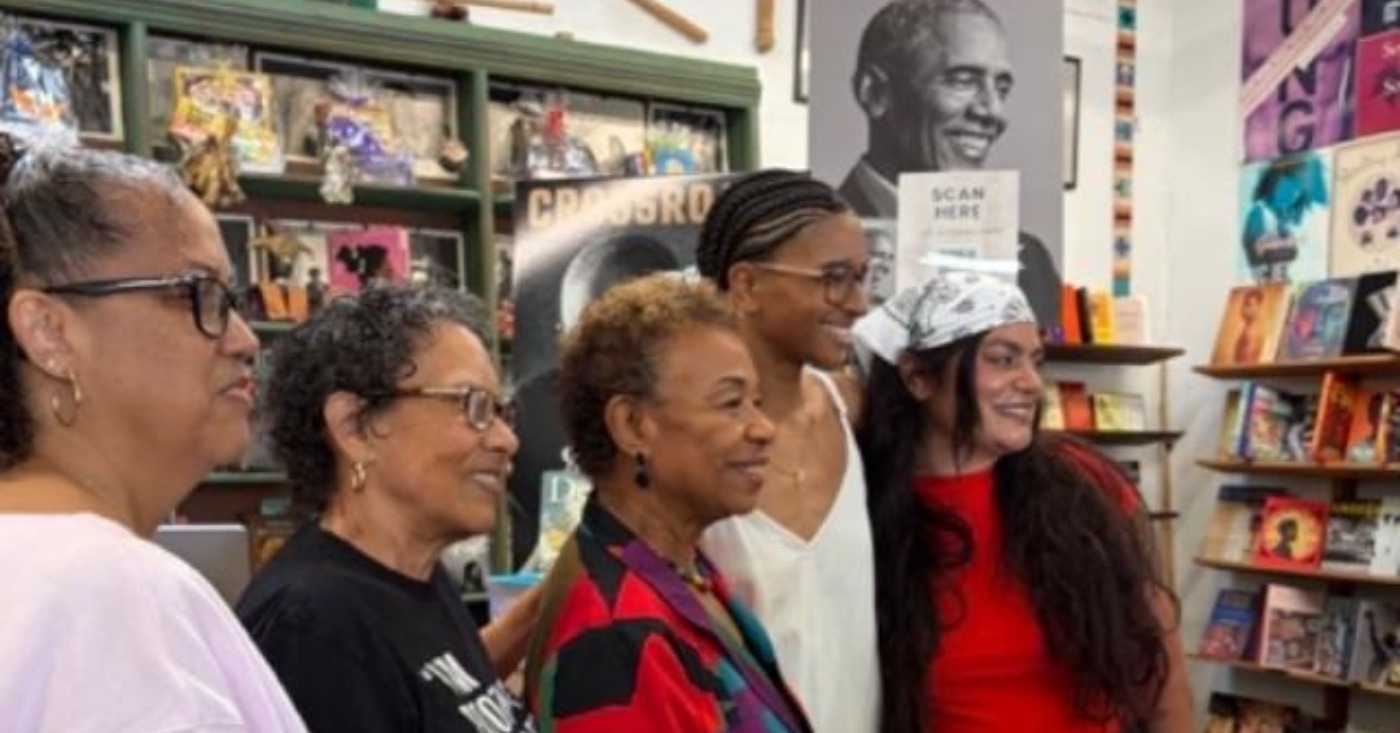
Floating bubbles greeted families on arrival at the Bookout Block Party held on Sat. Sept. 12 at 39th and MLK Blvd. in Oakland.
Sponsored by Marcus Books and Storyland Collective, a wonderland of activity for children stretched to Longfellow School while live music filled the air, courtesy of KWC Complex Jazz Group.
Booths lined the street with arts and crafts, and children participated in hands-on art projects. A large display of books was on display and each child chose his/her free book to take home. Food and snacks were available, and free water was encouraged to keep all hydrated.
A large area of turf was filled with huge bean bags for jumping, rolling, and sitting to listen as families crowded close to listen to Oakland Mayor Barbara Mayor Barbara Lee read a book out loud.
Of the numerous booths present were, “Claim Your Scholarship,” a program for Oakland Public School students and “VOLUNTEER NOW,” a program encouraging volunteers to help boost reading proficiency. Individuals sold their art and products. Free gifts were at many tables and a raffle was held.

The event with Marcus books culminated a summer-long program organized by Storyland Collective, a literacy arts organization bringing children’s ‘storytime,’ local authors, and art activities to Bay Area neighborhoods. Marcus Books is the oldest, independent Black-owned book store in the U.S., featuring books by and about Black people here and abroad.

Black History
Tradition Comes to the Streets in 11th Annual Black-Eyed Pea Festival at the Freedom Farmers Market
Mayor Barbara Lee stops by to support vendors, Winky Dinky Dogs owner Tyranny Allen A streamlined Oakland Black-Eyed Pea Festival took place on Sat. Sept. 12 in the lower Temescal neighborhood on the blocked off street that connect Shattuck and Telegraph avenues. An early start b
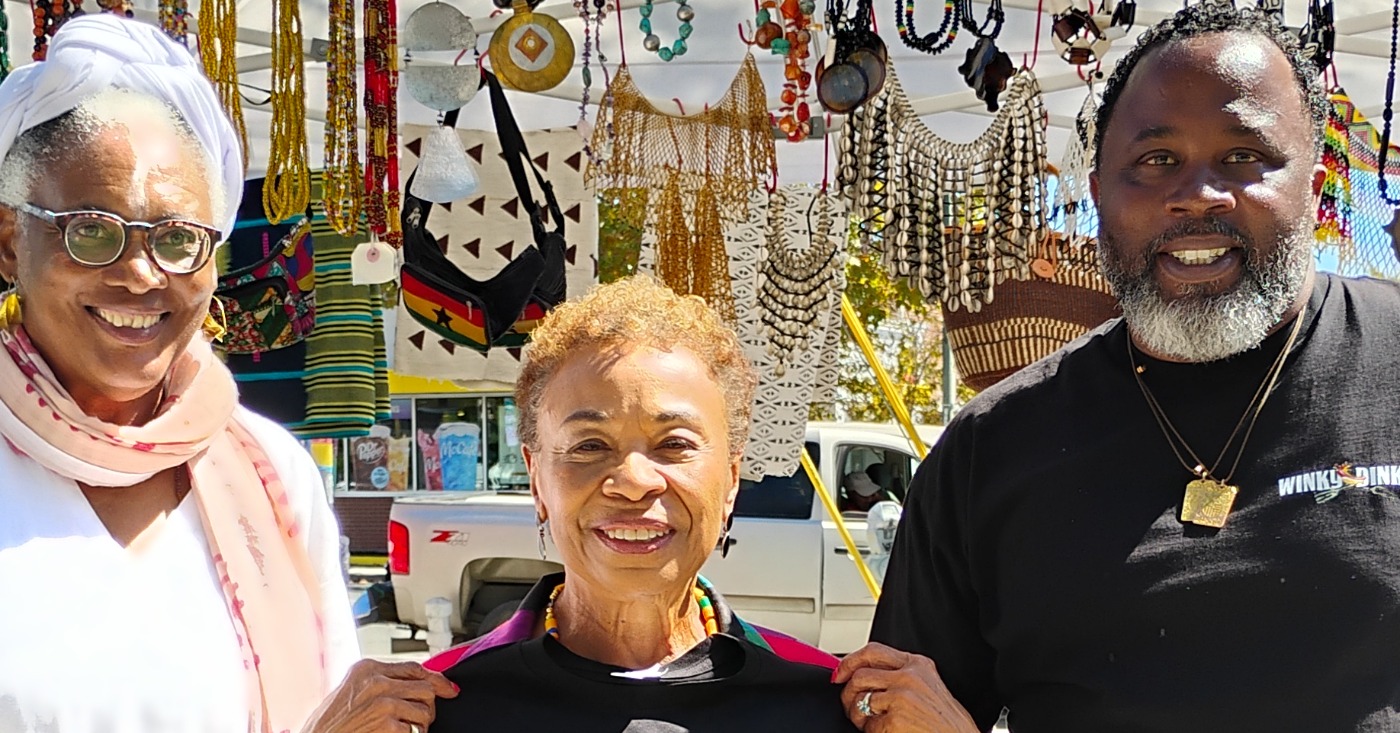
Mayor Barbara Lee stops by to support vendors, Winky Dinky Dogs owner Tyranny Allen
A streamlined Oakland Black-Eyed Pea Festival took place on Sat. Sept. 12 in the lower Temescal neighborhood on the blocked off street that connect Shattuck and Telegraph avenues.
An early start brought together vendor regulars from festival partner, the Freedom Farmers’ Market, and vendors who have supported the festival at its previous location at Marston Campbell Park.
Wanda Ravernell, the festival producer/director was on the verge of cancelling the festival because of funding limitations in May before reaching out to Elaine Smith, president of Farms to grow, Inc., which supervisors the market.
From its start in 2014, the festival has focused on the traditions of African American culture through music, food and art. That emphasis included fresh food vendors, particularly growers of African American legacy crops like black-eyed peas, yams, watermelon, collard greens and okra, which all originate in Africa.
To Fresno farmer Will Scott of Scott Family Farms, the Freedom Farmers’ Market allows him to bring those crops to the inner city – and support the nutrition of African Americans.
Shortly after the festival opened Saturday morning with prayers and salutes to the ancestors by Wakan Wiya Two-Spirit Drum and Awon Ohun Omnira, led M. Zamora and Otobaji Stewart respectively, 86-year-old Scott, the son of a sharecropper, announced that he will put other endeavors aside to dedicate the rest of his life to raise those foods.
Smith shared that Farms to Grow assists Black farmers in helping them overcome one of their main impediments to success – distribution – while creating alliances to help Black people maintain farmland and make it prosperous for younger generations to keep farming and farmland in the family.
As the morning progressed to afternoon, a steady stream of visitors drifted from booth to booth, chatting with vendors and each other.
Scott noted that a market day like this was what he was accustomed to in his youth, where the market was not just about buying things but also a place for valuable social exchange.
The social aspect became even pronounced shortly after midday when Oakland Mayor Barbara Lee stopped by to shop and visit with some of the vendors, including Ellen Bimpeh of Sankofa, and Ravernell who was selling T-shirts designed by Stewart.
Lee is also a fan of Winky Dinky Dogs, an eatery owned by Tyranny Allen whose second brick-and-mortar venture further anchors a hub of businesses at that corner.
As he has in previous years, Andre Thierry of Accordion Soul, closed the festival with a 90-minute set that brought young and the young-at-heart on their feet to dance in a line or as impromptu couples.
And, surprisingly, the man Allen refers to as the mayor of 45th Street, came out on cane and chair to sit by the curb in the sun and listen to music reminiscent of his Louisiana roots. His appearance seemed to echo Scott’s observance about the market: to bring people together.
The Freedom Farmers’ Market is located at 4521 Telegraph Avenue in Oakland and is open on the second and fourth Saturdays of each month until Nov. 14. For more information and to apply to be a vendor, go to https://www.farmstogrow.org/freedomfarmersmarket
Business
Attorney General Rob Bonta Continues Opposition to President Trump’s Tariff Regime
“President Trump is so intent on raising the cost of living for Americans that he is willing to break law after law to continue his tariff regime,” said Bonta.
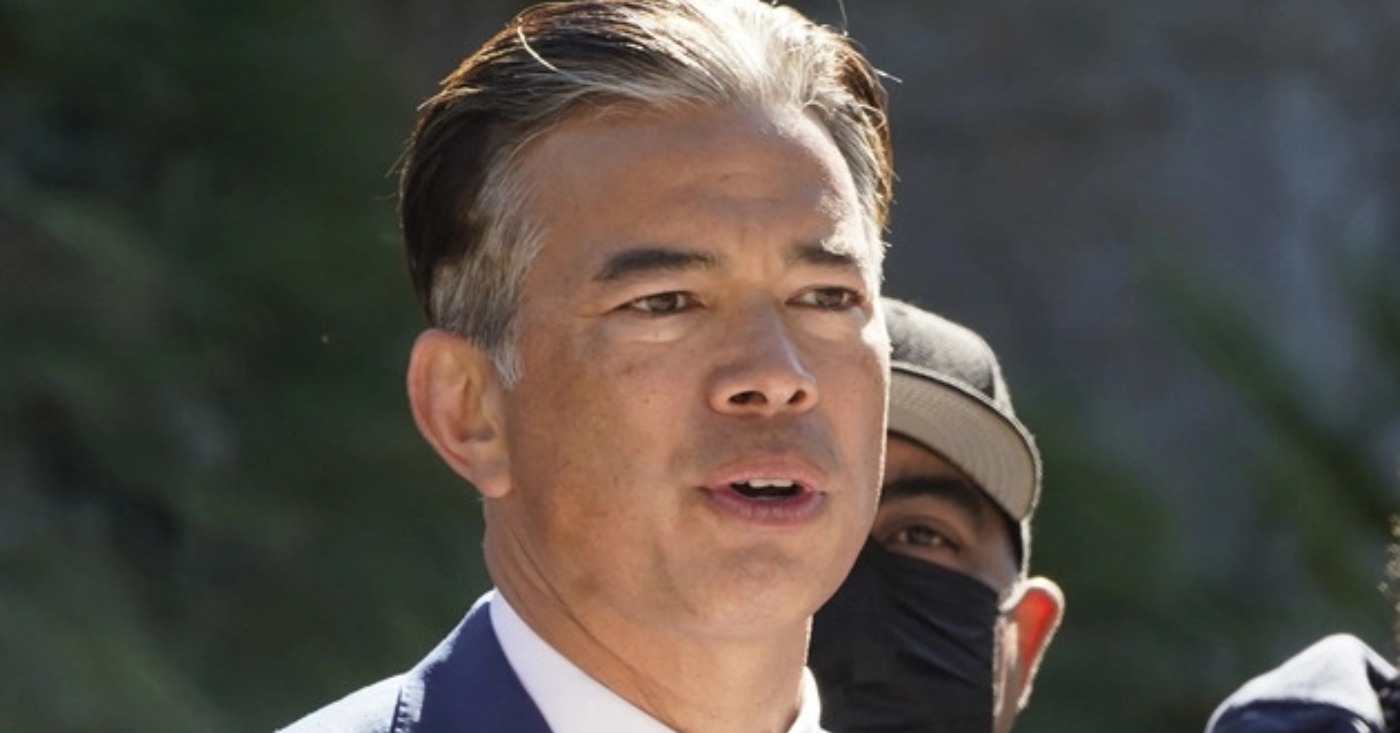
California Attorney General Rob Bonta, as part of a coalition of 25 states, filed an amicus brief in the Court of International Trade in Learning Resources v. Trump, a case challenging President Trump’s latest “unlawful” attempt to tax the states and American consumers through illegal tariffs, according to a media release issued by the California Department of Justice.
In the brief, Bonta argues the latest round of tariffs levied under Section 301 of the Trade Act of 1974 are pretextual and are not targeted to address the purported harms of forced labor, as that statute requires, but instead are designed to re-create the tariffs already declared illegal by various courts.
Last month, Bonta and the coalition filed a lawsuit challenging the administration’s decision to impose these tariffs on over 80 countries that together account for 99.4% of all U.S. imports — costs that will be passed along to Americans already struggling with affordability.
“President Trump is so intent on raising the cost of living for Americans that he is willing to break law after law to continue his tariff regime,” said Bonta.
“Imposing these tariffs under Section 301 has nothing to do with forced labor and everything to do with continuing the President’s failed economic policy and reimposing the global tariffs that the Supreme Court invalidated,” he continued.
“We urge the Court of International Trade to declare the president’s tariffs under Section 301 illegal. Tariffs are taxes, and the American people cannot and should not shoulder the extra costs that come from the president’s illegal tariffs.”



Oakland Mayor Reads to Children at Bookout Block Party at Marcus Books Store

Tradition Comes to the Streets in 11th Annual Black-Eyed Pea Festival at the Freedom Farmers Market

Attorney General Rob Bonta Continues Opposition to President Trump’s Tariff Regime

Neighborhood Empowerment Day in Deep East Oakland Brings Community Together After Recent Tragedy

Community Action Group ‘Friends of Zakiya’ Ask Sheriff for Time

Oakland Launches Aerbits Program to Identify, Report Abandoned Trash

Mayor Lee Announces $1 Million Kaiser Permanente Grant for Pilot Program to Address Homelessness, Clean Up Public Spaces throughout Oakland

Alameda County DA Ursula Jones Dickson Says Key to Optimal Use of DA’s Office Is Knowledge

Oakland Post: Week of September 16 – 22, 2026

NFL: Week Two Recap | Jalen Hurts did not fold; Caleb Williams exits game with injury

The Complete Negotiation Framework — Every Stage, Every Tactic, Every Win

Mazda CX-90 Luxury: Heated Seats & Premium Comfort! #shorts

Car Dashboard Glare: Avoid This Distraction! #shorts

Mazda CX-90 Safety: All Driver Assistance Features Explained #shorts

Subaru Outback: 19-Inch Wheels & 8.8″ Ground Clearance! #shorts

Department of Homeland Security Demands California Secretary of State Shirley N. Weber Scrub Voter Rolls

“The Power to See Threats Sooner”: Gov. Newsom, Safety Officials Showcase California’s Investments in Hi-Tech Wildfire Prevention

California Sen. Padilla Joins Colleagues to Introduce Bill Imposing Term Limits on Supreme Court Justices

Less Affluent School Districts, Including Sacramento City, Face Threat of State Takeover

Car Wash Workers Cope with Lingering Impacts of ICE Raids

ESSAY: California Can Close Its Colorectal Cancer Gap

As Part of Your Back-to- School Checklist, Vaccinate

Oakland ‘Port Serves as a Powerful Engine for Good Jobs and Economic Development

Gov. Newsom Announces $109.6 Million in Funding for 278 Supportive Homes in Bakersfield, Contra Costa, Sacramento and Fresno

California Hispanic Chambers of Commerce Unveils: ‘Powering the Future’ Theme for 47th Annual Statewide Convention

Congresswoman Simon Demands Investigation into Trump’s Abuse of Emergency Powers for Coal Export Terminal in West Oakland

Four Candidates, Including Incumbent Barbara Lee, Qualify for Oakland Mayor’s Race

Oakland Post: Week of August 12 – 18, 2026

From Blueprint to Breakthrough: Tackling Affordable Housing in Oakland

Oakland Observes Black August with Block Parties, Film Showings, Workshops

The Conversation With Al McFarlane 6/23/26

Media Monday 6/22/26

LIVE! ASK ALMA! — TUES. 6.23.26 7PM EST

Car Buying Secrets: 4 Hidden Checks Before You Sign!

Is This 550 HP Charger Worth YOUR Money? AutoNetwork Review

Celebrating Juneteenth – Frederick Douglass on education and resistance

LIVE! — ASK ALMA! — TUES. 6.19.26 7PM EST

Hyundai Ioniq 5 Parking, Safety, and 360 View #shorts

2025 Ioniq 5 New Wiper & Powerful Performance! #shorts

Electric SUV Range: Is 259 Miles Enough? #shorts

EV Charging: How Fast Can You Charge an Electric Vehicle? #shorts

Biometric Cooling… Messaging Seats…Come on! 2025 Infiniti QX80 Autograph 4WD

Charged Up: Witness the Magic of a Fully Electric Car! #shorts

Range Rover Sport PHEV Included…: See What’s Inside This Luxury SUV! #shorts

Invisible Hood View: Perfect Parking with X-Ray Vision! #shorts
-

 Commentary3 weeks ago
Standoff for Justice: Our Homes Are Worth Fighting For
-

 Activism3 weeks ago
Oakland Post: Week of August 26 – September 1, 2026
-

 Business3 weeks ago
Gubernatorial Candidate Steve Hilton Blasts California New Tire Rules; Newsom Hits Back
-

 Business3 weeks ago
Frontier Airlines’ Return to Oakland Airport Brings Flights, Jobs and Opportunity
-

 Business3 weeks ago
Chef Sharon Lee Blends Culinary Excellence, Education and Empowerment
-

 Education3 weeks ago
Gov. Newsom’s Latest Appointees Include Sacramento Advocate for Formerly Incarcerated Students; State’s New Tech Chief
-

 Business3 weeks ago
Oakland Coliseum Project Opens Door for Small Businesses to Build Bigger
-

 Community3 weeks ago
Big City Mayors Ask for “Yes” Vote on Housing Bond Measure; Conservatives Say “No”
