
Economics
San Francisco Releases Report on Local Construction Hiring

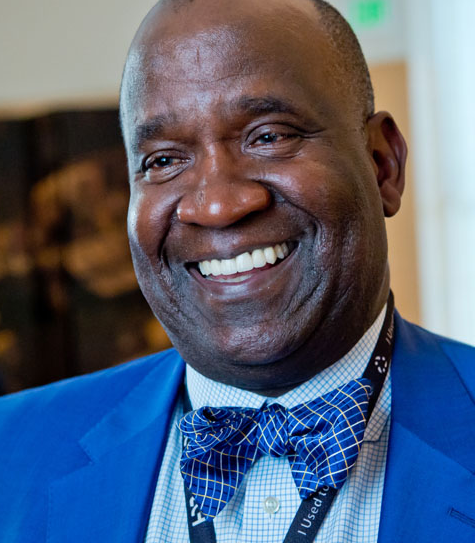
San Francisco´s Office of Economic and Workforce Development (OEWD) released its sixth annual report on the Mandatory Local Hiring Policy for Construction.
The annual report, submitted to the Board of Supervisors, shows the outcomes of the local workforce initiative since its signing into law in 2011. The Local Hiring Policy for Construction was established to ensure contractors are employing local residents on public works projects.
“Connecting San Franciscans with local construction jobs gives all our residents the chance to enjoy the prosperity of this city,” said Mayor Ed Lee. “We are proud that the individuals who built their lives and raised their families here in this city are now helping to build the future of San Francisco.”
“One of the priorities of the Office of Economic and Workforce Development is to create more opportunities in the private sector for San Franciscans. This policy allows the city to connect local residents to the construction market in partnerships with our local unions—helping to put our residents in good-paying, sustainable jobs,” said Michael Carr, director of Workforce with the Office of Economic and Workforce Development.
The 2016-17 Local Hire Report includes hours performed by construction workers on city construction and capital projects led by the Port of San Francisco, Public Works, San Francisco Municipal Transportation Agency (SFMTA), San Francisco Public Utilities Commission, San Francisco International Airport (SFO), and Recreation and Parks. Highlights include:
- 456 capital projects totaling more than 8.4 million hours were subject to the Local Hire Policy;
- 38 percent or more than 3.1 million hours of construction were contributed by local residents; and
- 57 percent apprenticeship participation
Local residents represent a range of trades in this report including: asbestos removal workers, carpenters, cement mason drywall installer/latherers, electricians, glaziers, iron workers, laborers, operating engineers, painters, pile drivers, plaster tenders, plasterers, plumbers, roofers, sheet metal workers, and many others.
“I grew up in San Francisco so I have seen a lot of changes in the city. Now I’m proud to say that I’m building things that others can also see. It means a lot that there are programs to help people who grew up in this city to stay working and living here,” said Meg-Ann Pryor, Operating Engineer with Local 3 and CityBuild Academy graduate.
The annual report includes demographic and other data indicates that the San Francisco construction workforce maintains high levels of diversity according to available data.
The hours performed by local residents represent capital improvements projects including the repair of water and sewer lines, renovation of parks and recreational centers, repaved streets, rehabilitation of the city’s infrastructure and buildings, and the construction of new housing citywide.
A six-year assessment of the policy’s impact and the availability of qualified workers led the Board of Supervisors to set a 30 percent local hire mandate within the San Francisco construction market. OEWD will continue to respond to the changing workforce needs of the construction industry and ensure that the Local Hiring Policy for Construction benefits local workers and the San Francisco economy as a whole.
The full report is available at: www.oewd.org/local-hi


Activism
Oakland Post: Week of April 1 – 7, 2026
The printed Weekly Edition of the Oakland Post: Week of April 1 – 7, 2026
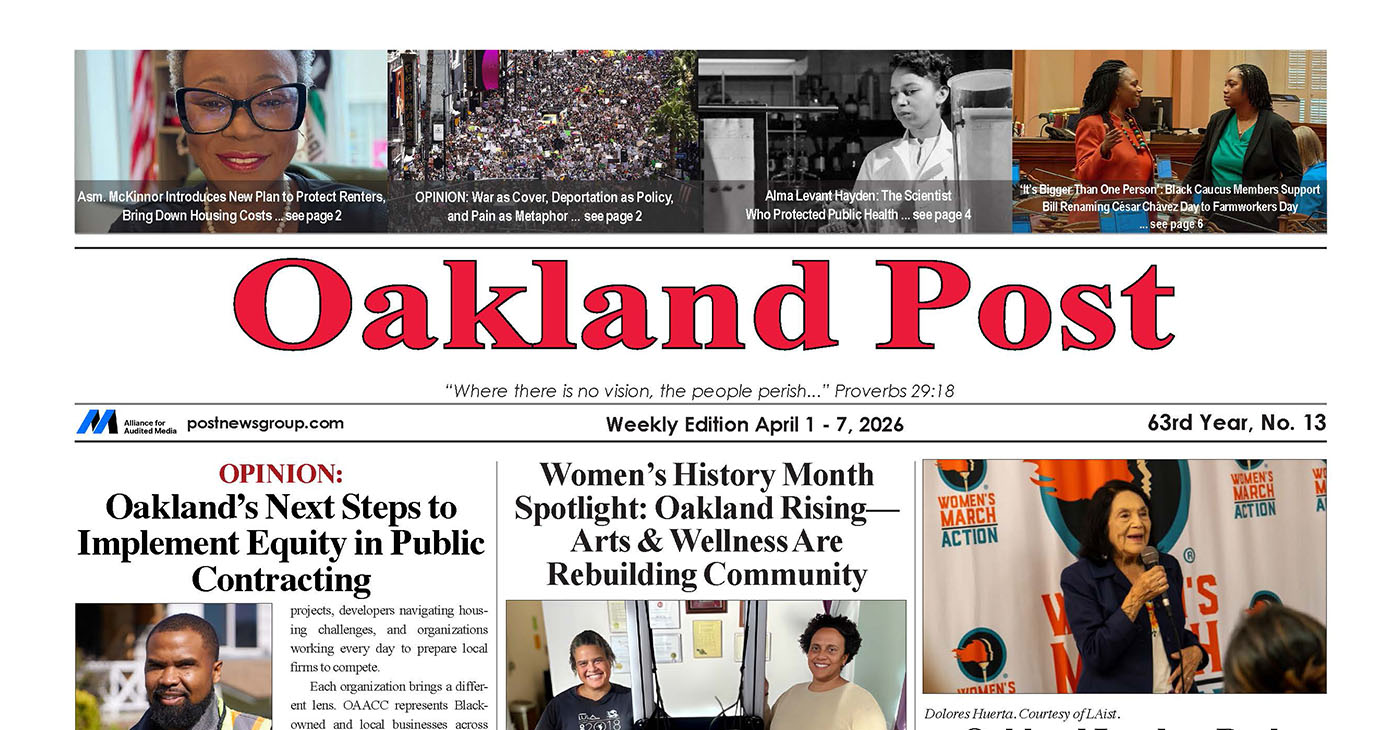
To enlarge your view of this issue, use the slider, magnifying glass icon or full page icon in the lower right corner of the browser window.
Activism
Oakland Post: Week of March 18 – 24, 2026
The printed Weekly Edition of the Oakland Post: Week of March 18 – 24, 2026
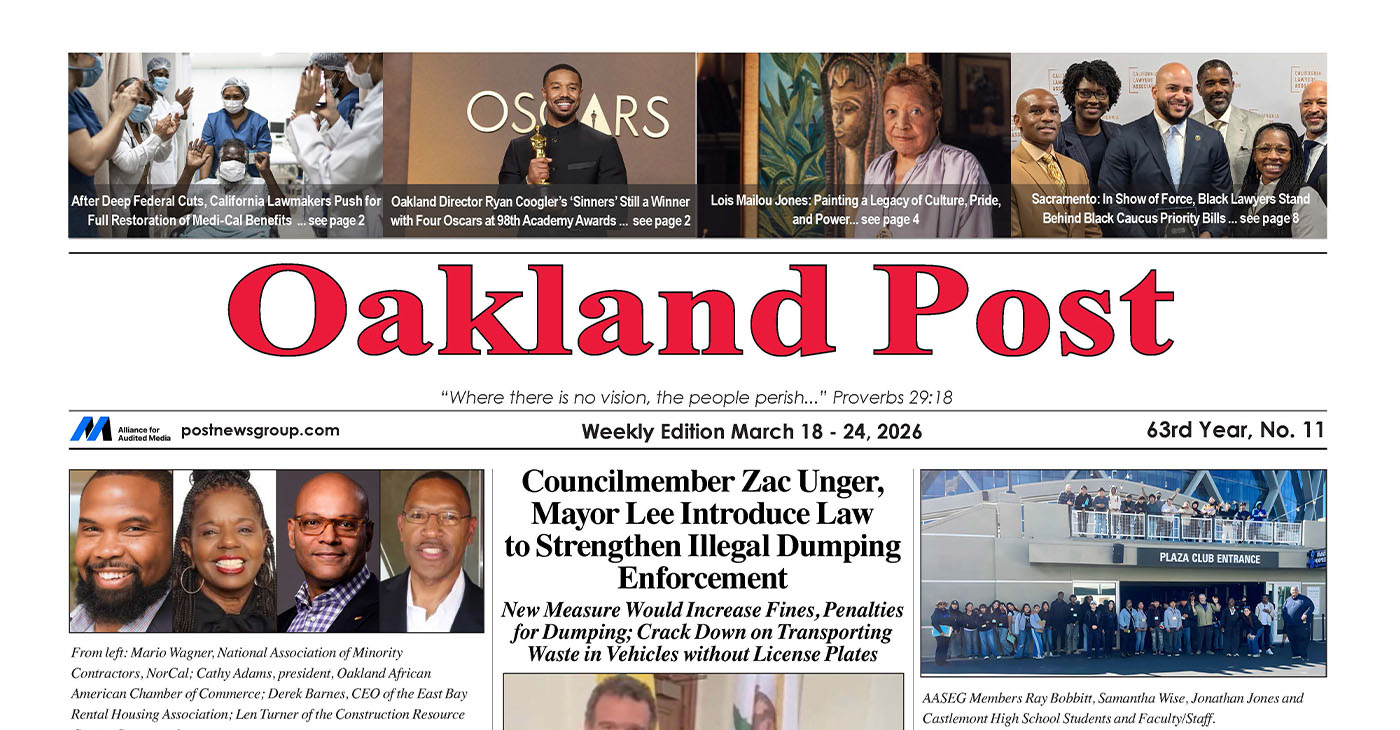
To enlarge your view of this issue, use the slider, magnifying glass icon or full page icon in the lower right corner of the browser window.
Activism
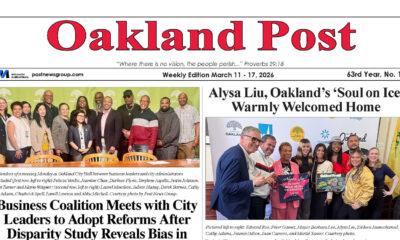
Oakland Post: Week of March 11 -17, 2026
The printed Weekly Edition of the Oakland Post: Week of March 11 – 17, 2026
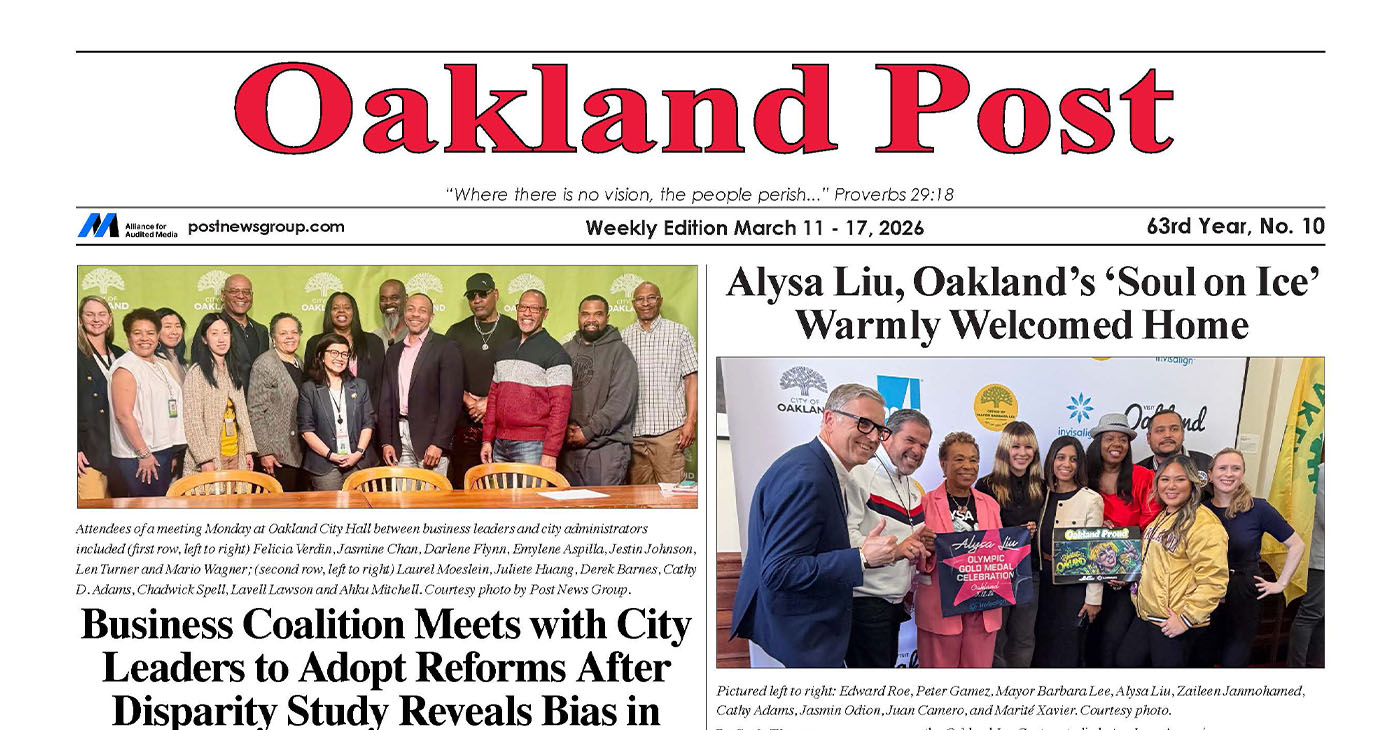
To enlarge your view of this issue, use the slider, magnifying glass icon or full page icon in the lower right corner of the browser window.


WORK FROM HOME
Home-based business with potential monthly income of $10K+ per month. A proven training system and website provided to maximize business effectiveness. Perfect job to earn side and primary income. Contact Lynne for more details: Lynne4npusa@gmail.com 800-334-0540


Oakland Post: Week of April 1 – 7, 2026

Black Artists in America, Installation Three Wraps at the Dixon Gallery and Gardens

Grief, Advocacy, and Education: A Counselor Reflects on Black Maternal Health

Future of Florida’s Black History Museum in Limbo

New Research Shows the Many Benefits of Early Learning

South Hampton K-8 Students Among Top 10 Finalists for Samsung’s ‘Solve for Tomorrow’ Competition

Cuba: No Negotiation with US on the President or Political System

Brooklyn Academy of Music Names Jamaican-Born Tamara McCaw as President

Trinidad & Tobego – U.S. Launches WhatsApp Channel for American Citizens in the Country

Oakland Post: Week of March 18 – 24, 2026

AI Innovation vs. Ethics and Environmental Impact

AI, Web3, and Digital Reparations

What If You Owned Your AI Agent?

Season 7, Episode 3 – January Reporter’s Roundtable 📱

Season 7, Episode 3 – January Reporter’s Roundtable

Reflecting on Black History Milestones in Birmingham AL

Oakland Post: Week of February 25 – March 3, 2026

PRESS ROOM: NBA Hall of Fame Nominee Terry Cummings Joins 100 Black Men of DeKalb County to Launch Victory & Values Initiative

Trump’s MAGA Allies are Creating Executive Order Plan to Steal the 2026 Midterms

Oakland Post: Week of March 4 – 10, 2026

Chase Oakland Community Center Hosts Alley-Oop Accelerator Building Community and Opportunity for Bay Area Entrepreneurs

U.S. manufacturing rebounds – how foundry services are adapting to rising demand

Poll Shows Support for Policies That Help Families Afford Child Care

OP-ED: One Hundred Years of Black Workers Telling the Truth

Advancements in solar technology that are changing the way we power the world

Oakland Post: Week of March 11 -17, 2026

Woman’s Search for Family’s Roots Leads to Ancestor John T. Ward – A Successful Entrepreneur and Conductor on the Underground Railroad

COMMENTARY: Women of Color Shape Our Past and Future

PRESS ROOM: Civil Rights TV Launches in Selma as the World’s First 24/7 Civil Rights Television Network
Oakland Post: Week of March 18 – 24, 2026

Hyundai Ioniq 5 Parking, Safety, and 360 View #shorts

2025 Ioniq 5 New Wiper & Powerful Performance! #shorts

Electric SUV Range: Is 259 Miles Enough? #shorts

EV Charging: How Fast Can You Charge an Electric Vehicle? #shorts

Biometric Cooling… Messaging Seats…Come on! 2025 Infiniti QX80 Autograph 4WD

Charged Up: Witness the Magic of a Fully Electric Car! #shorts

Range Rover Sport PHEV Included…: See What’s Inside This Luxury SUV! #shorts

Invisible Hood View: Perfect Parking with X-Ray Vision! #shorts

AI Is Reshaping Black Healthcare: Promise, Peril, and the Push for Improved Results in California

ESSAY: Technology and Medicine, a Primary Care Point of View

Sanctuary Cities

The RESISTANCE – FREEDOM NOW

STATE OF THE PEOPLE: Freddie

ECONOMIC BOYCOTT DAY!!!!!

I told You So
-
 Activism3 weeks ago
Oakland Post: Week of March 11 -17, 2026
-
 #NNPA BlackPress4 weeks ago
Woman’s Search for Family’s Roots Leads to Ancestor John T. Ward – A Successful Entrepreneur and Conductor on the Underground Railroad
-
 #NNPA BlackPress4 weeks ago
COMMENTARY: Women of Color Shape Our Past and Future
-
 Activism2 weeks ago
Oakland Post: Week of March 18 – 24, 2026
-

 Advice3 weeks ago
Financial Wellness and Mental Health: Managing Money Stress in College
-

 #NNPA BlackPress4 weeks ago
Advocates Raise Alarm Over ICE Operation, MOU and Detention Risks in Baltimore County
-

 #NNPA BlackPress4 weeks ago
Pete Buttigieg to Join Mayor Randall Woodfin for Community Town Hall in Birmingham
-
 #NNPA BlackPress2 weeks ago
Brooklyn Academy of Music Names Jamaican-Born Tamara McCaw as President
