
Bay Area
Where Do Negotiations Go Now After A’s “Howard Terminal” or Bust Ultimatum?
The A’s are seeking to develop 55 acres at the Port of Oakland. The proposal includes a 35,000-seat baseball stadium, which would cost $1 billion, or 8.3% of the total project.


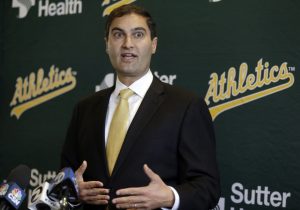
FILE – In this Nov. 17, 2016, file photo, Oakland Athletics President David Kaval gestures during a news conference in Oakland, Calif. TheAthletics will be phased out of revenue sharing in the coming years as part of baseball’s new labor deal, and that puts even more urgency on the small-budget franchise’s plan to find the right spot soon to build a new, privately funded ballpark. Kaval, named to his new A’s leadership position last month, is committed to making quick progress but also doing this right. That means strong communication with city and civic leaders as well as the community and fan base. (AP Photo/Ben Margot, File)

John Fisher

Nikki Fortunato
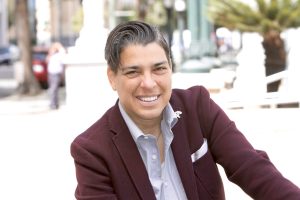
Rebecca Kaplan
Oakland’s City Council rejected the A’s proposed non-binding term sheet, which the team had presented to the City along with an ultimatum, “Howard Terminal or Bust.”
At a packed City Council meeting last week, attended by 1,000 people on Zoom, many residents were angry at what they viewed as the A’s real estate “land grab” at the Port of Oakland and either said that the team should leave or stay at the Oakland Coliseum in East Oakland.
Rejecting the A’s term sheet, councilmembers at the July 20th meeting voted 6-1 with one abstention to make a counteroffer, approving city staff’s and Council’s amendments to the A’s term sheet.
Council’s vote was to continue negotiating with the A’s, and the A’s gained substantial concessions, $352 million, enough to return for further negotiations, in Oakland. The Council’s vote didn’t derail A’s pursuit of Las Vegas.
Now, over a week since Council’s vote, neither A’s President Dave Kaval nor owner John Fisher have spoken publically on the A’s intent to continue bargaining with Oakland for their proposed $12 billion waterfront development at Howard Terminal.
The A’s are seeking to develop 55 acres at the Port of Oakland. The proposal includes a 35,000-seat baseball stadium, which would cost $1 billion, or 8.3% of the total project.
In addition to the stadium, the development features 3,000 condominium/housing units; over a million square feet of commercial space (office and retail); a 3,500-seat performance theater, 400 hotel rooms and approximately 18 acres of parks and open space.
The most fundamental sticking point, along with all the other complications, is whether a commercial/residential development, ‘a city within a city,” in the middle of a working seaport are compatible uses for the land. Many experts are saying that the existence of upscale residences and thousands of tourists strolling around will eventually destroy the Port of Oakland, which is the economic engine of the city and the region.
According to Kaval, who had pushed for the Council to approve the ultimatum, “We’re disappointed that the city did not vote on our proposal … we’re going to take some time and really dig in and understand and ‘vet’ what they did pass and what all the amendments mean.”
Although the A’s stated a willingness to be open to the amended terms Council approved, Kaval expressed uncertainty whether the Council’s amended term sheet offers “a path forward.”
“The current [amended] term sheet as its constructed is not a business partnership that works for us,” said Kaval, saying the team would have to examine the Council’s counter-offer before deciding to resume negotiations or return to Las Vegas or focus on finding a new home someplace else.
City Council President Bas and Mayor Libby Schaaf joined city and labor leaders to discuss the Council’s vote. Vice Mayor Rebecca Kaplan made it clear that the amended term sheet the Council approved should be considered a “road map for future negotiations … a baseline for further discussions.”
Upon Kaval’s dismissal of the Council’s stated positions, Fife said, “I don’t know where we go from here,” abstaining from the vote on the proposed term sheet.
Many find Kaval’s statement confusing because he used words like partnership but apparently ignored and/or disregarded the City of Oakland – the A’s major stakeholder and a business partnership since 1968, more than 53 years.
Some are asking if the A’s understand that Oakland’s 53-year relationship with the team is the basis for the meme “Rooted in Oakland?” Are the A’s willing to accept, as the Council has determined, that the terms of the business “partnership” must be equitable and mutually beneficial for all of “us”?
And the question remains after a 53-year relationship, is it reasonable to terminate that relationship or negotiate further for an equitable and mutually beneficial business partnership?













Activism
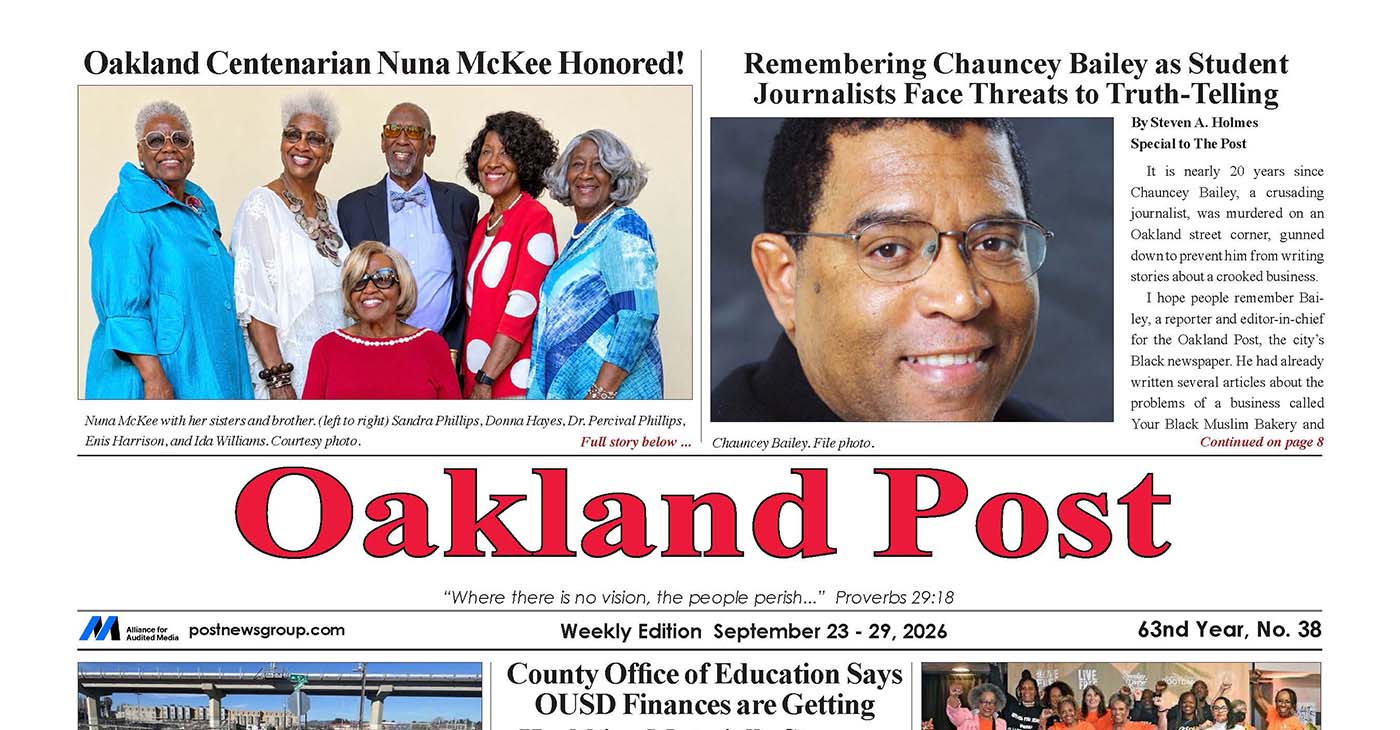
Oakland Post: Week of September 23 – 29, 2026
The printed Weekly Edition of the Oakland Post: Week of September 23 – 29, 2026

To enlarge your view of this issue, use the slider, magnifying glass icon or full page icon in the lower right corner of the browser window.

Activism
Oakland Post: Week of September 16 – 22, 2026
The printed Weekly Edition of the Oakland Post: Week of September 16 – 22, 2026

To enlarge your view of this issue, use the slider, magnifying glass icon or full page icon in the lower right corner of the browser window.
Activism
Oakland Post: Week of September 9 – 15, 2026
The printed Weekly Edition of the Oakland Post: Week of September 9 – 15, 2026

To enlarge your view of this issue, use the slider, magnifying glass icon or full page icon in the lower right corner of the browser window.



Asm. Corey Jackson Announces Launch of 24-Hour Childcare in His District

IN MEMORIAM: The Rev. Leon “Sonny” Clark, Longtime Orange County Pastor and Community Leader, Dies at 72

Poll: Becerra Widens His Lead Over Hilton; Californians Split on Wealth Tax

From Historic Memories to New Possibilities: Oakland Celebrates Coliseum 60

County Office of Education Says OUSD Finances Are Getting Healthier, Materially Stronger

LIVE FREE Sunday Dinner Brings Faith, Fellowship and Civic Conversation to Oakland

Remembering Chauncey Bailey as Student Journalists Face Threats to Truth-Telling

BLACspace Cooperative Invites Bay Area to Experience Oakland’s Black Cultural Ecosystem Through a BLAC Map Tour + Party

In Wake of Death on Doorstep, Williams Chapel Baptist Church Calls for Better Care, Funding for Unhoused

Oakland Centenarian Nuna McKee Honored!

Caribbean Nations Produce Action Plan Calling for UK Reparations Over Slavery

Oakland Post: Week of September 23 – 29, 2026

Doulas Are Helping Black California Moms Navigate Pregnancy–Even as High Mortality Rates Persist

Newsom Signs Addictive Social Media Law to Protect Kids

On Your November Ballot: Prop 38 Would Allocate $8.4 Billion to Immunology and Immunotherapy Funding

Less Affluent School Districts, Including Sacramento City, Face Threat of State Takeover

ESSAY: California Can Close Its Colorectal Cancer Gap

California Hispanic Chambers of Commerce Unveils: ‘Powering the Future’ Theme for 47th Annual Statewide Convention

Four Candidates, Including Incumbent Barbara Lee, Qualify for Oakland Mayor’s Race

Oakland Post: Week of August 12 – 18, 2026

From Blueprint to Breakthrough: Tackling Affordable Housing in Oakland

Oakland Observes Black August with Block Parties, Film Showings, Workshops

COMMENTARY: Why Local School Tax Measure G1 Will Not Be on the November Ballot

Standoff for Justice: Our Homes Are Worth Fighting For

Returning to Its Roots, the Oakland Black-Eyed Pea Festival Partners with the Freedom Farmers Market Sept. 12

Oakland Post: Week of August 26 – September 1, 2026

NPRC Scores First Advocacy Victory: David Shaw Finally Gets His Wish to ‘Go Home’

Frontier Airlines’ Return to Oakland Airport Brings Flights, Jobs and Opportunity

Gubernatorial Candidate Steve Hilton Blasts California New Tire Rules; Newsom Hits Back

Chef Sharon Lee Blends Culinary Excellence, Education and Empowerment

The Conversation With Al McFarlane 6/23/26

Media Monday 6/22/26

LIVE! ASK ALMA! — TUES. 6.23.26 7PM EST

Car Buying Secrets: 4 Hidden Checks Before You Sign!

Is This 550 HP Charger Worth YOUR Money? AutoNetwork Review

Celebrating Juneteenth – Frederick Douglass on education and resistance

LIVE! — ASK ALMA! — TUES. 6.19.26 7PM EST

Hyundai Ioniq 5 Parking, Safety, and 360 View #shorts

2025 Ioniq 5 New Wiper & Powerful Performance! #shorts

Electric SUV Range: Is 259 Miles Enough? #shorts

EV Charging: How Fast Can You Charge an Electric Vehicle? #shorts

Biometric Cooling… Messaging Seats…Come on! 2025 Infiniti QX80 Autograph 4WD

Charged Up: Witness the Magic of a Fully Electric Car! #shorts

Range Rover Sport PHEV Included…: See What’s Inside This Luxury SUV! #shorts

Invisible Hood View: Perfect Parking with X-Ray Vision! #shorts
-
 Commentary4 weeks ago
Standoff for Justice: Our Homes Are Worth Fighting For
-
 Activism4 weeks ago
Oakland Post: Week of August 26 – September 1, 2026
-
 Business4 weeks ago
Frontier Airlines’ Return to Oakland Airport Brings Flights, Jobs and Opportunity
-
 Business4 weeks ago
Gubernatorial Candidate Steve Hilton Blasts California New Tire Rules; Newsom Hits Back
-
 Business4 weeks ago
Chef Sharon Lee Blends Culinary Excellence, Education and Empowerment
-

 Community4 weeks ago
Big City Mayors Ask for “Yes” Vote on Housing Bond Measure; Conservatives Say “No”
-

 Black History4 weeks ago
Jackie Wright Champions Bay Area Stories, Filmmakers and Cultural Institutions
-

 Education4 weeks ago
Gov. Newsom’s Latest Appointees Include Sacramento Advocate for Formerly Incarcerated Students; State’s New Tech Chief
