
Advice
Tips to be Fit: Most germs won’t hurt us, but 1,400 can
THE PHILADELPHIA TRIBUNE — Did you know there are over 65,000 known germs, but only about 1,400 cause disease? The four major types of germs are bacteria, viruses, fungi and protozoa. They can infect our bodies and cause disease. There is a difference between infection and disease. We can be infected without being diseased.

Did you know there are over 65,000 known germs, but only about 1,400 cause disease?
The four major types of germs are bacteria, viruses, fungi and protozoa. They can infect our bodies and cause disease. There is a difference between infection and disease. We can be infected without being diseased.
An infection is the first step, which occurs when bacteria, viruses or other microbes that cause disease enter our body and begin to multiply. Disease is when the cells in our body are damaged as a result of the infection, and symptoms of an illness appear.
Most germs won’t hurt us. Our immune system protects us against infections. But germs may mutate and breach the immune system. Knowing how germs work will reduce your risk of infection.
Bacteria are one-celled organisms. They are visible only with a microscope. Not all bacteria are harmful. Some bacteria live in our body and are helpful, such as Lactobacillus acidophilus, which lives in our intestines and helps us digest food, destroys some disease-causing organisms and provides nutrients.
Disease-causing bacteria will produce toxins that can damage cells and make you ill. Some bacteria directly invade and damage cell tissues. Some infections caused by bacteria include strep throat, tuberculosis and urinary tract infections.
Viruses are much smaller than our cells. Viruses are organisms that contain only genetic material. To reproduce, viruses invade cells in our bodies and change how our cells work. Most host cells are eventually destroyed during this process, which can kill us.
Viruses are responsible for causing numerous diseases, including AIDS, the common cold, Ebola hemorrhagic fever, genital herpes, influenza, measles, chickenpox and shingles.
Antibiotics for bacteria have no effect on viruses.
There are many varieties of fungi. Fungi are organisms that are reproduced by spores. We eat a number of them, such as mushrooms. The mold that forms the blue or green veins in some types of cheese are also fungi. So is yeast, the ingredient that makes bread rise.
Some fungi can also cause illness. Fungi are also responsible for skin conditions such as athlete’s foot and ringworm.
Protozoans
A protozoan is a single-celled organism that acts like a tiny animal. Protozoans eat other microbes for food. A few types of protozoans are found in our intestinal tract and are harmless.
Protozoans spend part of their life cycle outside the host. Protozoans live in food, soil, water and insects. Some protozoans invade our bodies through food or water we consume.
Some cause diseases such as giardia, malaria and toxoplasmosis. The protozoan that causes malaria is transmitted by a mosquito.
Infectious diseases
An easy way to contract most infectious diseases is by coming in contact with a person, animal or object that has the infection. Three ways infectious diseases can be spread through direct contact are:
Person to person: This is the most common way for infectious diseases to spread is when a person infected with the bacterium or virus touches, kisses, coughs on or sneezes on someone who isn’t infected. The germs can also spread through the exchange of body fluids from sexual contact. People who pass germs may have no symptoms of their disease.
Animal to person: Getting bitten or scratched by an infected animal can make you sick. It can be fatal in extreme situations. Handling animal waste can make you sick. You can acquire a toxoplasmosis infection by scooping your cat’s litter.
Mother to unborn child: A pregnant woman can pass germs that cause infectious diseases to her unborn baby. The germs can pass through the placenta connecting mother and baby. Germs in the vagina can be transmitted to the baby during birth.
Bacteria, viruses, fungi and protozoa can enter our bodies through:
- Skin contact or injuries.
- Inhaling airborne germs.
- Consuming contaminated food or water.
- Tick or mosquito bites.
- Sexual contact.
You should get medical care if you suspect that you have an infection and you have experienced any of the following:
- An animal or human bite
- Difficulty breathing
- A cough lasting longer than a week.
- Periods of rapid heartbeat.
- A rash, especially if accompanied by a fever.
- Blurred vision or other difficulty seeing.
- Persistent vomiting.
- An unusual or severe headache.
- Reducing risk of infection
The CDC recommends the following to help reduce your risk of becoming infected:
Wash your hands. This is especially important before and after preparing food or drinks, before eating or drinking, after using the toilet, and after removing soiled clothes or shoes. Try not to touch your eyes, nose or mouth with your hands, as that’s a common way germs enter the body. Soap and water work well to kill germs. Wash for at least 20 seconds and rub your hands briskly. Disposable hand wipes or gel sanitizers also work well. Gel sanitizers and hand wipes should be 70% alcohol-based.
Get vaccinated. Immunization can drastically reduce your chances of contracting many diseases. Make sure to keep up to date on your recommended vaccinations, as well as your children’s.
Stay home when ill. Don’t go to work if you are vomiting, have diarrhea or have a fever. Don’t send your child to school if he or she has these signs and symptoms, either.
Prepare food safely. Keep counters and other kitchen surfaces clean when preparing meals. Cook foods to the proper temperature using a food thermometer to check for doneness. For ground meats, that means at least 160 degrees F (71 C); for poultry, 165 F (74 C); and for most other meat, at least 145 F (63 C). In addition, promptly refrigerate leftovers. Don’t let cooked foods remain at room temperature for extended periods of time.
Practice safe sex. Always use condoms if you or your partner has a history of sexually transmitted infections or high-risk behavior.
Don’t share personal items. Use your own toothbrush, comb and razor. Avoid sharing drinking glasses or dining utensils.
Travel wisely. If you’re traveling out of the country, talk to your doctor about any special vaccinations.
If you work out in a gym, be careful. You are exposed to a lot of people. You are using equipment that was just used. Clean the padding before you use it. More than 50% of healthy persons have Staphylococcus aureus living in or on their nasal passages, throats, hair and skin.
Swimming can be dangerous, too. The average swimmer contributes at least 0.14 grams of fecal material to the water within the first 15 minutes of entering the pool. Showering with soap before swimming helps stop the spread of germs by removing fecal material from the body.
You should also make sure your gym has good air circulation. We can’t wash the air in a gym, but the exchange of air should be good.
Pets and other animals
Got a pet? Be careful. To reduce the risk of getting sick from germs your pets may carry, always wash your hands after:
• Touching or playing with your pet.
• Feeding your pet or handling pet food.
• Handling pet habitats or equipment (cages, tanks, toys, food and water dishes, etc.)
• Cleaning up after pets.
• Leaving areas where animals live (coops, barns, stalls, etc.), even if you did not touch an animal.
Going to the zoo this season? Try to make it safe:
• Don’t walk and eat. Your hands will touch a lot of contaminated objects.
• Don’t let your little one use a pacifier. They touch that pacifier with everything. They may even share it with an animal.
• Wipe off any seating or table you use in the zoo.
• Don’t feed the animals from your hand.
• If you have an open wound, cover it completely.
• Try not to come into contact with any animal waste. It’s teaming with germs.
This article originally appeared in The Philadelphia Tribune.









Activism
Six Months in, Probate Reform Coalition Marks Progress in Protecting Elders From Financial Abuse
Despite the cited obstacles, NPRC has made some promising inroads towards their mission. NPRC has identified that nationwide the Attorneys General must be engaged and encouraged to implement oversight, protection and enforcement of the law; members find support from each other as they advocate for redress via “letters of compassion” sent to judges, nursing facilities and law enforcement agencies and members are instructed on their rights, how to take constructive action to protect those rights through access to resources that allow them to intelligently represent themselves in court.


By Tanya Dennis
The National Probate Reform Coalition, a loose-knit national coalition of advocates, victims, and families dedicated to protecting elder rights, especially within the probate court system, was formed by the Post Newspaper Group (PNG) after more than a decade of reporting on the mistreatment of elders and the plunder of their estates.
In response, PNG Publisher Paul Cobb set in motion a series of monthly town halls to address the problem and propose workable solutions, designating it a “year of action.”
At six months, the coalition has attracted families, advocates, and experts across the nation whose strategies have proven effective in their respective states, and who are moving forward collectively with the mission of engaging judicial, legislative, and enforcement agencies to ensure elders are not exploited or abused.
“The issue of elder abuse is multi-layered”, says NPRC planning committee member Venus Gist. “Elders are our most vulnerable population, next to children, and they are easily exploited by strangers, their own family members, and the judicial system designed to protect them.”
Since January, NPRC has, via monthly virtual meetings held on the first Thursday of each month, clearly defined the issues and formulated workable solutions that can be implemented nationwide.

“There are amazing laws on the books that protect elders and their assets,” said NPRC member Zakiya Jendayi. “The problem is they are ignored, and that lack of oversight has led to systemic abuse in the Probate Court system, not just in Alameda County, but nationwide.
“The scary part is the collusion and wall of silence NPRC has encountered when reaching out to the Judicial Council, legislators, and the State Bar for assistance. It’s so obvious that one hand is washing the other, that they’re protecting each other, that it’s difficult to initiate any type of meaningful reform much less dialogue.”
Despite the cited obstacles, NPRC has made some promising inroads towards their mission. NPRC has identified that nationwide the Attorneys General must be engaged and encouraged to implement oversight, protection and enforcement of the law; members find support from each other as they advocate for redress via “letters of compassion” sent to judges, nursing facilities and law enforcement agencies and members are instructed on their rights, how to take constructive action to protect those rights through access to resources that allow them to intelligently represent themselves in court.
Stacy Drake, a Texas member, says, “I’ve been looking for help for over 10 years with my situation, and I finally found it within the NPRC coalition. God answered my prayers.”
Broadening its reach within Alameda County, NPRC has invited Oakland Mayor Barbara Lee to assist with outreach, education, and resolution.
“We hope to host an elder abuse/elder protection symposium annually, if not twice a year, to let our elders know that Alameda County and the City of Oakland are a safe place, a place where in their golden years they have no worries regarding exploitation and abuse,” said Cobb. “Society is defined by how the care for its children and elders.”

Advice
Book Review: Books for College-Bound Students
The kind of workday your Grandpa had is probably over, and you can’t count on toiling at the same place for 40 years for a pension and a gold watch. You already know that, and these books will help you decide your next step. You’ll learn what kind of worker you are, what’s stopping you from finding a job or occupation you’ll love, how to determine the purpose you envision for your future, and how to get where you need to be.

By Terri Schlichenmeyer
Authors: Various, Copyright: c.2026, Publishers: Various, SRP: $21.00 – $29.00, Page Counts: Various
The videos and news reports were inspiring.
In them, a hesitant prospective college student became a happy, new college-bound student with the click of a key. They were accepted into the college of their dreams – so how can you get the same feeling next spring, when you’re the one with the highest of hopes?
You can start by reading these great books and sharing them with your family…
You probably already know that getting into the college of your choice is not something you do last-minute. In “The People’s Guide to College Applications: A Week-by-Week Approach to Writing, Connecting, and Getting in” (Prometheus Books, $ 21.95), Jill Constantino takes you through each step, but not in a frantic way. There’s no pressure here, just easy-to-grasp, makes-sense methods to apply for the college you want. There are reminders here, things you can’t forget and things you can, hints on asking for referrals and writing essays, and plenty of reminders to take a deep breath. Bonus: it’s also a book for parents, who may feel just as much pressure as their child does.

Okay, but let’s say that you’re an adult, a parent who’s sweating those college applications, classes, and the FAFSA for yourself, ugh! Then you’ll want to read “Student Parent: The Fight for Families, the Cost of Poverty, and the Power of College” by Nicole Lynn Lewis (Beacon Press, $26.97). an urgent call meant for nontraditional students who are also Black, Latinx, gay, Moms, or Dads.
Inside this book, you’ll find stats and stories that may already sound familiar, tales of not enough money, not enough support, not enough arms or sleep or resources. If you’re looking for a book of advice, this isn’t it, though. It’s more of a resource that you’ll want to take to your guidance counselor or any local politician.
Alright, but what if you’ve decided that college can wait? Is that okay? Look for “The Mission Generation: Reclaim Your Purpose, Rewrite Success, Rebuild Our Future” by Arun Gupta and Thomas J. Fewer (Wiley, $29.00) because – guess what? – you have many options for your future.
The kind of workday your Grandpa had is probably over, and you can’t count on toiling at the same place for 40 years for a pension and a gold watch. You already know that, and this book will help you decide your next step. You’ll learn what kind of worker you are, what’s stopping you from finding a job or occupation you’ll love, how to determine the purpose you envision for your future, and how to get where you need to be. This book isn’t just for high schoolers, but for anyone ages 16 and beyond who’s feeling restless, ready for change, or who’s thinking about some kind of purposeful retirement.
And if these aren’t the college-based or not-college-bound books you need, then be sure to ask your favorite bookseller or librarian for help on ideas, how-to’s, test prep books, or study guides. They’ll have books for you, and maybe a little inspiration, too.
Activism
‘Hire Oakland’ Job Fair Draws 2,000, Connecting Residents to Immediate Job Opportunities
Oakland’s Hire Oakland job fair, hosted by Mayor Barbara Lee’s office, connected over 2,000 job seekers with employers, highlighting a strong demand for quality jobs and career pathways in the city.
By Post Staff
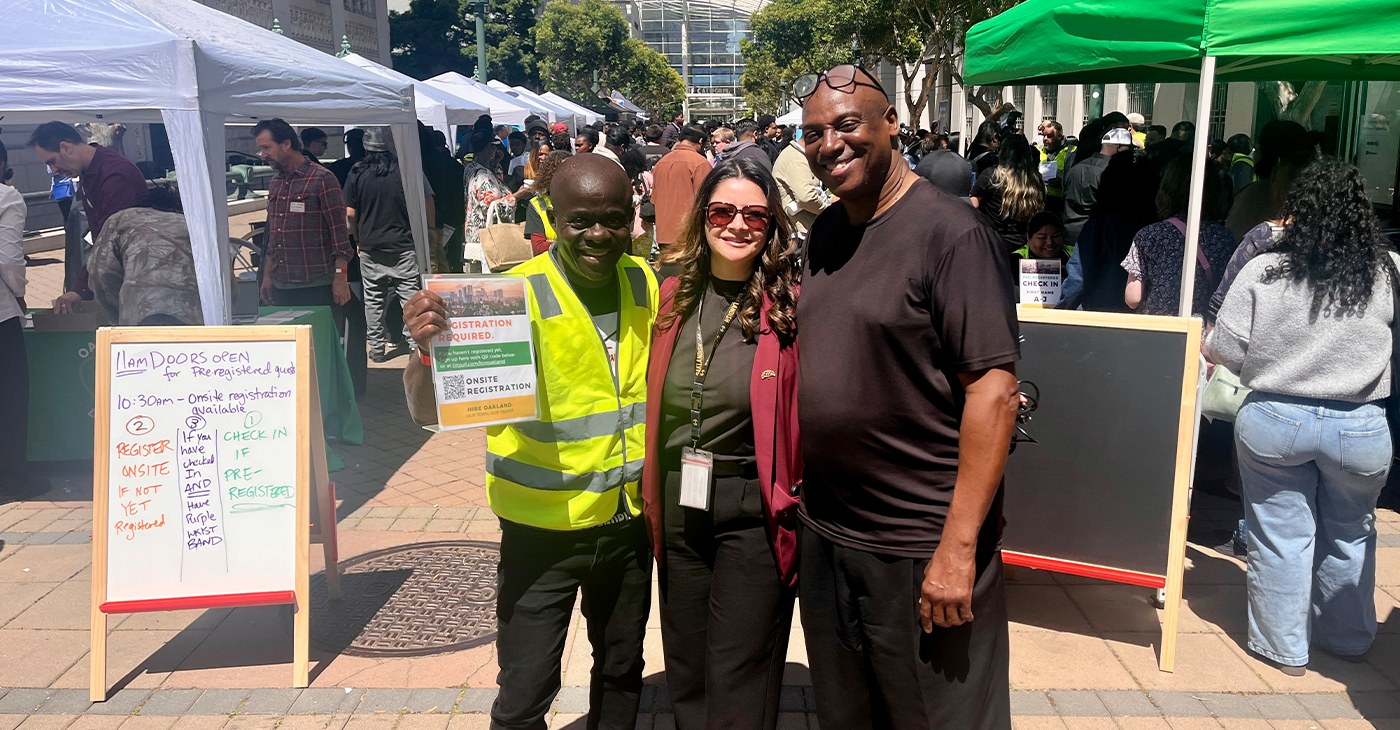
The Office of Mayor Barbara Lee, in partnership with the City of Oakland and regional employers, hosted a successful Hire Oakland job fair this week at Frank H. Ogawa Plaza, bringing together job seekers and employers for a day focused on opportunity, connection, and economic mobility.
With more than 2,000 RSVPs, the event on Wednesday reflected strong demand across Oakland for access to quality jobs and career pathways. Attendees participated in on-site recruitment, application support, and hands-on workshops designed to help job seekers navigate hiring processes and prepare for interviews.
Over the course of the day, employers and community partners engaged directly with residents in a welcoming, high-energy environment centered on opportunity and hope. Participating employers included EBMUD, Samuel Merritt University, the City of Oakland, BART, PG&E, AC Transit, East Bay Regional Parks District, Southwest Airlines, FedEx, and many others offering immediate openings and career pathways across sectors.
Workforce development partners Oakland Private Industry Council (OPIC) and Lao Family Community Development provided connections to résumé support, interview coaching, and individualized job search assistance throughout the event.
The strong turnout underscores a clear reality: Oakland residents are eager for pathways into meaningful work, and sustained investment in youth and workforce programs is essential.
That is why Mayor Lee has prioritized relaunching the Oakland Police Cadet Program and the Mayor’s Youth Employment and Education Program (MYEEP)—ensuring young people have early access to paid work experience, mentorship, and long-term career pathways, according to a City press statement.
“The turnout shows what we already know—Oaklanders are ready to work, ready to grow, and ready to build their futures here at home,” said Lee. “When we connect people directly to employers and invest in young people early, we are not just filling jobs—we are changing lives and strengthening our city’s future.”
The Hire Oakland job fair is part of the City’s broader effort to strengthen workforce pipelines, expand access to good-paying jobs, and ensure Oakland residents are first in line for local opportunity.
About Hire OaklandHire Oakland is a citywide workforce initiative led by the Office of Mayor Barbara Lee in partnership with City departments, workforce development organizations, and regional employers. The program connects Oakland job seekers to real-time hiring opportunities, training resources, and career pathways.



Asm. Corey Jackson Announces Launch of 24-Hour Childcare in His District

IN MEMORIAM: The Rev. Leon “Sonny” Clark, Longtime Orange County Pastor and Community Leader, Dies at 72

Poll: Becerra Widens His Lead Over Hilton; Californians Split on Wealth Tax

From Historic Memories to New Possibilities: Oakland Celebrates Coliseum 60

County Office of Education Says OUSD Finances Are Getting Healthier, Materially Stronger

LIVE FREE Sunday Dinner Brings Faith, Fellowship and Civic Conversation to Oakland

Remembering Chauncey Bailey as Student Journalists Face Threats to Truth-Telling

BLACspace Cooperative Invites Bay Area to Experience Oakland’s Black Cultural Ecosystem Through a BLAC Map Tour + Party

In Wake of Death on Doorstep, Williams Chapel Baptist Church Calls for Better Care, Funding for Unhoused

Oakland Centenarian Nuna McKee Honored!

Caribbean Nations Produce Action Plan Calling for UK Reparations Over Slavery

Oakland Post: Week of September 23 – 29, 2026

Doulas Are Helping Black California Moms Navigate Pregnancy–Even as High Mortality Rates Persist

Newsom Signs Addictive Social Media Law to Protect Kids

On Your November Ballot: Prop 38 Would Allocate $8.4 Billion to Immunology and Immunotherapy Funding

Less Affluent School Districts, Including Sacramento City, Face Threat of State Takeover

ESSAY: California Can Close Its Colorectal Cancer Gap

California Hispanic Chambers of Commerce Unveils: ‘Powering the Future’ Theme for 47th Annual Statewide Convention

Four Candidates, Including Incumbent Barbara Lee, Qualify for Oakland Mayor’s Race

Oakland Post: Week of August 12 – 18, 2026

From Blueprint to Breakthrough: Tackling Affordable Housing in Oakland

Oakland Observes Black August with Block Parties, Film Showings, Workshops

COMMENTARY: Why Local School Tax Measure G1 Will Not Be on the November Ballot

Standoff for Justice: Our Homes Are Worth Fighting For

Returning to Its Roots, the Oakland Black-Eyed Pea Festival Partners with the Freedom Farmers Market Sept. 12

Oakland Post: Week of August 26 – September 1, 2026

NPRC Scores First Advocacy Victory: David Shaw Finally Gets His Wish to ‘Go Home’

Frontier Airlines’ Return to Oakland Airport Brings Flights, Jobs and Opportunity

Gubernatorial Candidate Steve Hilton Blasts California New Tire Rules; Newsom Hits Back

Chef Sharon Lee Blends Culinary Excellence, Education and Empowerment

The Conversation With Al McFarlane 6/23/26

Media Monday 6/22/26

LIVE! ASK ALMA! — TUES. 6.23.26 7PM EST

Car Buying Secrets: 4 Hidden Checks Before You Sign!

Is This 550 HP Charger Worth YOUR Money? AutoNetwork Review

Celebrating Juneteenth – Frederick Douglass on education and resistance

LIVE! — ASK ALMA! — TUES. 6.19.26 7PM EST

Hyundai Ioniq 5 Parking, Safety, and 360 View #shorts

2025 Ioniq 5 New Wiper & Powerful Performance! #shorts

Electric SUV Range: Is 259 Miles Enough? #shorts

EV Charging: How Fast Can You Charge an Electric Vehicle? #shorts

Biometric Cooling… Messaging Seats…Come on! 2025 Infiniti QX80 Autograph 4WD

Charged Up: Witness the Magic of a Fully Electric Car! #shorts

Range Rover Sport PHEV Included…: See What’s Inside This Luxury SUV! #shorts

Invisible Hood View: Perfect Parking with X-Ray Vision! #shorts
-
 Commentary4 weeks ago
Standoff for Justice: Our Homes Are Worth Fighting For
-
 Activism4 weeks ago
Oakland Post: Week of August 26 – September 1, 2026
-
 Business4 weeks ago
Frontier Airlines’ Return to Oakland Airport Brings Flights, Jobs and Opportunity
-
 Business4 weeks ago
Gubernatorial Candidate Steve Hilton Blasts California New Tire Rules; Newsom Hits Back
-
 Business4 weeks ago
Chef Sharon Lee Blends Culinary Excellence, Education and Empowerment
-

 Community4 weeks ago
Big City Mayors Ask for “Yes” Vote on Housing Bond Measure; Conservatives Say “No”
-

 Black History4 weeks ago
Jackie Wright Champions Bay Area Stories, Filmmakers and Cultural Institutions
-

 Education4 weeks ago
Gov. Newsom’s Latest Appointees Include Sacramento Advocate for Formerly Incarcerated Students; State’s New Tech Chief
