
#NNPA BlackPress
The Black struggle in 2019: Staying aware, facing injustice and fighting for the future
THE FINAL CALL — There was a mass shooting in this country every single day in 2019 and 29 of those 385 mass shootings were also mass murders. Some of the most devastating tragedies included the Aug. 4 mass shooting in Dayton, Ohio, that killed nine people, an Aug. 13 mass shooting at a Walmart in El Paso, Texas, where 22 people were killed, and three Dec. 1 shootings in New Orleans that left 11 people injured. The Gun Violence Archives re-ported the highest number of mass shootings since 2014.

By Brian 18X Crawford | J.S. Adams and Toure Muhammad |The Final Call@TheFinalCall
2019 saw challenges and signs of a continual awakening of the Black community, even as racism and police killings remained a problem in the United States. Alongside the insults was a strong spirit of resistance and growing frustration with the lack of respect for and deprivation of Black lives.
Heroes continued to emerge in sports and entertainment as Black stars refused to bow to the desires of powerful figures in those industries.
Colin Kaepernick continued to be a lightning rod for discussion, even though the former NFL quarterback played his last game in 2016. He continued to challenge the NFL for essentially blackballing him and keeping him off the field. Mr. Kaepernick was openly critical of what was billed as an NFL workout in November for team scouts, but in actuality, was an attempt to get him to sign a non-standard waiver that included language that would have limited his ability to pursue legal claims against the NFL. Mr. Kaepernick held his own, private workout instead, and his representatives sent that tape to all 32 NFL teams.
Hip hop guru Jay-Z received criticism for entering into a business relationship with the NFL. His Roc Nation imprint was named the league’s “live music entertainment strategist,” putting the rapper’s company in charge of the Super Bowl halftime show. The rapper took heavy criticism from NFL players and many in the Black community, but others urged caution, saying time will tell what happens.

On the field, it was the year of the Black quarterback in the NFL. Players like Patrick Mahomes (Kansas City Chiefs), Deshaun Watson (Houston Texans), Kyler Murray (Arizona Cardinals) and Lamar Jackson (Baltimore Ravens) busted up the stereotype that Black athletes aren’t smart enough to play quarterback at the pro level. Both the Chiefs and Ravens are legitimate NFL contenders. And with top notch collegiate prospects like Jalen Hurts (Oklahoma), Justin Fields (Ohio State), Khalil Tate (Arizona), and Deondre Francois (Hampton), the Black quarterback talent pool was deep.
America and Black people continued to suffer from violence in 2019.
According to the Gun Violence Archive, as of December 1, 2019, there were more mass shootings in America (385) than days in a calendar year.
There was a mass shooting in this country every single day in 2019 and 29 of those 385 mass shootings were also mass murders. Some of the most devastating tragedies included the Aug. 4 mass shooting in Dayton, Ohio, that killed nine people, an Aug. 13 mass shooting at a Walmart in El Paso, Texas, where 22 people were killed, and three Dec. 1 shootings in New Orleans that left 11 people injured. The Gun Violence Archives reported the highest number of mass shootings since 2014.
There were more than 35,000 gun-related deaths in 2019, over 27,000 gun-related accidents, and still no meaningful, federally mandated gun legislation.
Elijah Al-Amin, a 17-year old from Peoria, Arizona, was shot and killed by a White man at a convenience store because he didn’t like the rap music the teen was playing. In Louisiana, Sean Barrette fatally shot and killed three people at random in New Orleans; one of his victims was Black.
Violence at the hands of police continued in 2019. According to a study by the Proceedings of the National Academy of Sciences, Black men’s risk of being shot and killed by police is 2.5 times higher than that of White men, and 1 in every 1,000 Black men will be shot and killed by a police officer. Black women were also victims of police violence in 2019.
In October, Atatiana Jefferson was shot and killed by a police officer in Ft. Worth, Texas, while at home playing video games with her 8-year-old nephew. An officer began peering through Ms. Jefferson’s window after a neighbor called a non-emergency number to ask for a well-being check. Her front door was open. Officer Andrew Dean shot through a window killing Ms. Jefferson. The 35-year-old had only been on the force 18 months, and resigned before he could be fired. He’s been charged with murder.
The trial of Amber Guyger, a Dallas police officer who shot and killed Botham Jean in his own apartment, saying she mistook it for her own, was probably one of the most talked about stories of 2019. Ms. Guyger was convicted of murder and sentenced to 10 years in prison for the killing the young Black man who was a native of St. Lucia. Both the judge, who is Black, and Mr. Jean’s brother hugged Ms. Guyger after the verdict was read. The judge even gave Ms. Guyger a Bible.
These perceived acts of kindness and forgiveness enraged many in the Black community. Lee Merritt, the attorney representing the Jean family, understood the outrage. But, he said, key elements in the Jean story as well as the case of Atatiana Jefferson were overlooked.
Some of these elements have often been used to justify police killings of Black people, said the Dallas-based attorney.
“For a long time, the conversation was about compliance. In other words, it was said the Black community wasn’t properly complying with law enforcement and giving them the respect that they deserve; and Black men, women and children were causing the brutality to happen to them,” said Atty. Merritt.
“But 2019 kind of dispelled that myth,” he told The Final Call. “You have Atatiana Jefferson who was playing video games in her home, get shot and killed by police. Botham Jean was eating a bowl of ice cream after a long day of work, being shot and killed by police in his home. These weren’t even legitimate police encounters. This was just people going through the mundane activities of their daily lives, and police brutality came to visit them at their home.”
“The problem in the Botham Jean case is that it actually represented an advancement in police brutality,” Mr. Merritt continued. “This case should be textbook in how we deal with police brutality, because a lot of things had to come together to convict a White woman, a police officer, of murdering a Black man. There was a whole new bench of primarily Black women elected in Dallas County, and one of them served on that trial—Judge Tammy Kemp. Even though she later became a problematic figure, there would have been no conviction without her.”
Judge Kemp barred the testimony of the Texas Rangers, a respected law enforcement agency, because they were set to testify that Ms. Guyger did nothing wrong and didn’t deserve to go to jail, he said.
Mr. Merritt also credits the district attorney’s office for being aggressive in pursuing the case, and Dallas residents who showed up in droves for jury duty. The jury that found Ms. Guyger guilty was one of the most diverse ever to hear a murder trial in the city, according to Mr. Merritt. It was comprised of six Black jurors, 5 Hispanic jurors and only one White juror.
“The response to the jury summons was record-breaking. There were hundreds of people lined up for jury duty around the corner on the heels of Bothan Jeans’ trial,” Mr. Merritt said. “This is something that needs to be replicated. It was a lot of work for one conviction, but this is something that can be replicated throughout the country.”
Social activism and art
One of the most heartbreaking events this year was when Nipsey Hussle, an up and coming rapper from Los Angeles, Calif., was gunned down March 31.
“It’s unfortunate that it has happened, because I would say he’s an artist that was gaining steam. I have a friend of mine who I discovered was a huge Nipsey Hussle fan and was devastated when he passed away,” said Clayton Gutzmore, a 30-year-old freelance journalist who often covers Black culture and entertainment. “In terms of his impact, I just want to say that Nipsey has been known as a giver. He invested in his community by opening up a tech space where people could learn about coding, and also a space where he could employ people, because there’s the Marathon store, and other things like that that he planted in California where people can actually benefit from him and his influence.”
Mr. Hussle died outside of his Marathon store. His work and catchphrase “The Marathon Continues” now often refers to furthering the community work he dedicated himself to. That hashtag, along with portraits of him, have circulated throughout social media. He left behind his longtime girlfriend, actress Lauren London, and two children.
His death also brought together gangs in the area for a peace walk and effort to broker peace. It also brought Nation of Islam Minister Louis Farrakhan to speak to those who convened near Nipsey’s store, and speak to attendees at his funeral service at the Staples Center.
The Netflix docuseries “When They See Us” dove deeply into the true story of the Central Park 5, which younger viewers may not have been exposed to.
Ava DuVernay, an acclaimed director, told the story of five young Black and Hispanic youths who were wrongfully accused and convicted of raping a young White woman in Central Park.
“It was traumatizing at the moment because you see these young boys who are being told certain things, and these are back in the days where it wasn’t so tech savvy or whatnot,” Mr. Gutzmore said. “Also, more people just being more conscious of the whole judicial system and letting people be more aware of how the cops and young Black teenagers interchange.”
Melissa Hunter Davis, founder and publisher of Sugarcane Magazine, a Black arts publication, said the series brought out both the good and the bad.
“I think it was far wider than we thought,” Ms. Davis said. “I don’t think it was necessarily positive by some people. I’m not saying the film wasn’t positive. I think there were people who this touched a wrong nerve for them. They were probably supportive for these young men of being thrown in jail for the rest of their lives.”
Recently, there have been complaints of notable Black artists, including Ms. DuVernay, being “snubbed” at the Golden Globes nominations.
“We saw her being snubbed at the Golden Globes and plenty of films that depict Black people not just positively, but that are politically charged,” Ms. Davis continued. “I think Beyonce’s ‘Homecoming’ was hard for people to take. I think any time we start to speak politically and quite loudly, I think that frightens people and keeps us from getting what we deserve.”
Many people have taken to Twitter and other social media platforms to express their dissatisfaction with Black artists not getting their proper due.
Ms. Davis said one artist who has made strides this year is Tyler Perry, with the opening of his grand, new studio.
“I’m really proud of him,” she said. “I think that the idea of anybody Black owning their own collection of sound stages is phenomenal, especially in Georgia. The state of Georgia made it really easy for him to do that with all the tax incentives they give to people, and he took advantage of it and ran with it.”
November’s Democratic presidential debate was held at Tyler Perry’s studio in Atlanta, soon after its opening in October.
“Clearly he’s done well off the bat,” she said. “It was used very quickly and it gave people a place to shoot different types of films with different locales.”
Many activists have helped to shape up this year for Blacks, through arts and social justice.
“[It shows] the changes in making sure there’s positive representation of Black people in this country to commemorate the fact that we are here,” Ms. Davis said.
Both Mr. Gutzmore and Ms. Davis see a brighter future in 2020 for Black people in terms of moving the culture forward.
“Hopefully sharper and better material in both music and movies,” Mr. Gutzmore said. “Hopefully we will want to raise our stakes. Hopefully we will want to deliver better material … that can say, okay, this is actually different from the 2010s.”
Project Separation moves across America
The year 2019 also brought a national separation tour by Dr. Ava Muhammad, national spokesperson for the Honorable Minister Louis Farrakhan of the Nation of Islam.
The attorney and student minister went across the country lecturing and convening discussions about “the best and only solution” to the race problem in America—separation.
“Separation is not the goal. The goal is the spiritual, mental and moral resurrection of God’s people. Separation is just the process. It is a means to an end and not the end,” said Min. Ava Muhammad, during a successful visit to Los Angeles. She visited 18 cities, including Birmingham, Memphis, St. Petersburg, Fla., Tampa, Fla., Detroit, Mich., St. Louis, Harlem, N.Y., Phoenix, Prince George’s County, Md., Chicago, Orlando, Milwaukee, Raleigh-Durham, N.C., Richmond, Philadelphia, Atlanta, and Coldwater, Miss.
Student Minister Abdul Malik Sayyid Muhammad, Nation of Islam Western Region representative, hosted the town hall, which featured Dr. Melina Abdullah of Black Lives Matter Los Angeles; Hector Perez Pachecho, a Quechua from the Confederation of Tawantisuyu in South America and member of the intertribal Harmony Keepers which protects the indigenous ways and traditions of their people; Tino Phoenix, an Indigenous gang interventionist, and Rizza Islam, author of “A Message to the Millennials,” and social media influencer.
In her presentation, Min. Ava Muhammad quoted Minister Farrakhan’s warning: “As long as we live with White people, we will be under White people, because they have manufactured a false reality that is built on a doctrine of White superiority and Black inferiority.”
“We can’t even get an idea across until that idea is filtered through the White man’s damaged perception of reality, so by the time any plan we had comes to fruition, it is no longer the original thought. It is a grafted thought that is no longer from the Creator because it has to be made palatable to White people,” said Min. Ava Muhammad.
Separation is to purge Blacks of a self-defeating inferiority and rebellion against the will of Allah (God) that produced these destructive conditions, she continued.
Reparations is land, it’s not money, she added.
Mr. Perez-Pacheco felt it was important to bring separation to the people’s consciousness. It can be achieved, just like the Indigenous people’s eradication of so-called Columbus Day in Los Angeles, he said. Native peoples now celebrate their accomplishments and are moving to get rid of Columbus Day across the state, he added.
Dr. Abdullah underscored the many ways Blacks have been fighting for freedom from the moment they were stolen from Africa and fighting problems inside a system built to produce devastating outcomes.
“It’s not accidental that Black children have targets on their backs. It’s not accidental that in the County of Los Angeles, 540 people have been killed by police in the last six years. It’s not accidental that our children are searched and dehumanized and decriminalized in our schools,” she said.
She answered the question of separation through the lens of her 13-year-old daughter Amara, who said of course Blacks should separate, but the question is, “Will we?”
Reparations became a hot topic in 2019 as Democratic presidential hopefuls seeking to run against Donald Trump in 2020 largely backed reparations or a federal bill studying reparations, promising to sign bill H.R. 40 into law if passed into law by Congress. The year ended with the small city of Evanston, Ill., announcing a plan to spend $10 million over 10 years to provide reparations to its Black population.
But money alone will never solve the problems of Black people, said Nation of Islam student ministers. “We’re not looking for a one-time check from this government,” said Min. Abdul Malik Muhammad. “We want to be treated even better than how Israel is being treated. … Every year since 1948, right off the top, before they even balance the budget, $6 billion of the American taxpayers’ money goes to the state of Israel, not talking about the other $30-40 billion in military aid, in airplanes, in high technology that this government gives to that nation that it had nothing to do with destroying,” he said.
Building Black economics
Black entrepreneurs and businesses got a boost in 2019 with more campaigns and efforts to buy Black through festivals, pop-up shops, cash mobs that flooded Black businesses with customers on predetermined days, increased advocacy for stronger Black economics and online product and services sales.
There are 3,000 new businesses started daily in the U.S. and 70 percent are owned by Black women, said Black business proponants.
“I tell my children to go to school and get a good education and then create a job. Create a job for yourself, create a job for your children, and if God gives you the power and the glory, create jobs for our people and if you have to get a job, get a job working for a Black company,” said Dr. George C. Fraser, chairman and CEO of FraserNet, Inc; a company he founded roughly 32 years ago that leads a global networking movement that brings together diverse human resources to increase opportunities for people of African descent.
Of the nearly eight million businesses classified as minority-owned that year, 2.5 million were owned by Blacks, and 109,137 of these were employer firms with a total of 975,052 workers, according to the U.S. Census Bureau.
In 2019, the top 100 Black-owned companies in the U.S. accounted for more than $25 billion in revenue and employed more than 70,000 people, according to Black Enterprise.
While there are many new businesses popping up, there remains much opportunity for Black businesses in health care and technology. “With artificial intelligence, virtual reality and augmented reality still improving and changing, you can’t even imagine what the internet will look like in 50 years,” explained Mr. Fraser.
One business owner that has made good use of both health care trends and technology is Wendy Muhammad, co-founder and president and director of business affairs and development of Minimally Invasive Vascular Center, a $20 million, three story, 27,000 square foot micro-hospital. Located in Laurel, Md., the hospital encourages early diagnosis and offers minimally invasive treatment.
“I decided to build a hospital after I saw how my father didn’t like going to the doctor because he didn’t like how he was treated,” she said.
Another huge opportunity for Black business exists across the Atlantic Ocean, explained Dr. Fraser, who recently launched FraserNation, a globally focused website that seeks to connect Black people throughout the Diaspora to encourage the sharing of business knowledge, resources and opportunities.
“Africa is 20 years behind and we (Black Americans) have the skills and experience they need,” said Dr. Fraser. “We must learn, earn and return. That’s what FraserNation is about. That’s what the Nation is about. That’s why I love the Minister and the Nation.”
Final Call staff contributed to this report.










#NNPA BlackPress
Black Artists in America, Installation Three Wraps at the Dixon Gallery and Gardens
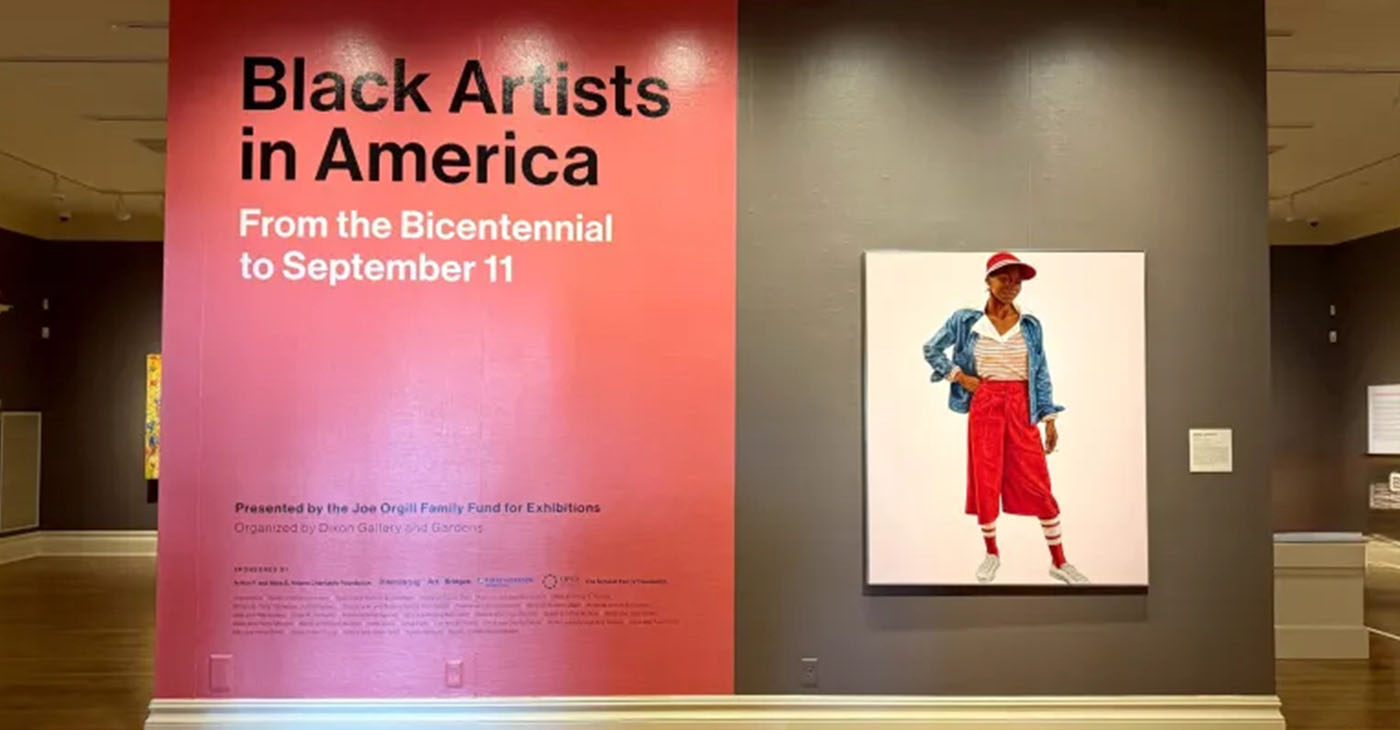
TRI-STATE DEFENDER — With 50+ paintings, sculptures and assemblages, the exhibit features artists like Varnette Honeywood from Los Angeles, whose pieces appeared in Bill Coby’s private collection (before they were auctioned off) and on “The Cosby Show.” Also included are works by Alonzo Davis, another Los Angeles artist who opened one of the first galleries there where Black Artists could exhibit.

By Candace A. Gray | Tri-State Defender
The tulips gleefully greet those who enter the gates at the Dixon Gallery & Gardens on an almost spring day. More than 650,000 bulbs of various hues are currently on display. And they are truly breathtaking.
Inside the gallery, and equally as breathtaking, is the “Black Artists in America, From the Bicentennial to September 11” exhibit, which runs through Sunday, March 29. This is the third installment of a three-part series that started years ago and illustrates part of the Black experience through visual arts in the 20th century.
“This story picks up where part two left off,’’ said Kevin Sharp, the Linda W. and S. Herbert Rhea director for the Dixon. “This era is when we really start to see the emergence of these important Black artists’ agency and freedom shine through. They start to say and express what they want to, and it was a really beautiful time.”
With 50+ paintings, sculptures and assemblages, the exhibit features artists like Varnette Honeywood from Los Angeles, whose pieces appeared in Bill Coby’s private collection (before they were auctioned off) and on “The Cosby Show.” Also included are works by Alonzo Davis, another Los Angeles artist who opened one of the first galleries there where Black Artists could exhibit.
“Though [Davis] was from LA, he actually lived in Memphis for a decade,” said Sharp. “He was a dean at Memphis College of Art, and later opened the first gallery in New York owned and operated by black curators.”
Another featured artist is former NFL player, Ernie Barnes. His work is distinctive. Where have you seen one of his most popular paintings, Sugar Shack? On the end scene and credits of the hit show “Good Times.” His piece Saturday Night, Durham, North Carolina, 1974 is in this collection.
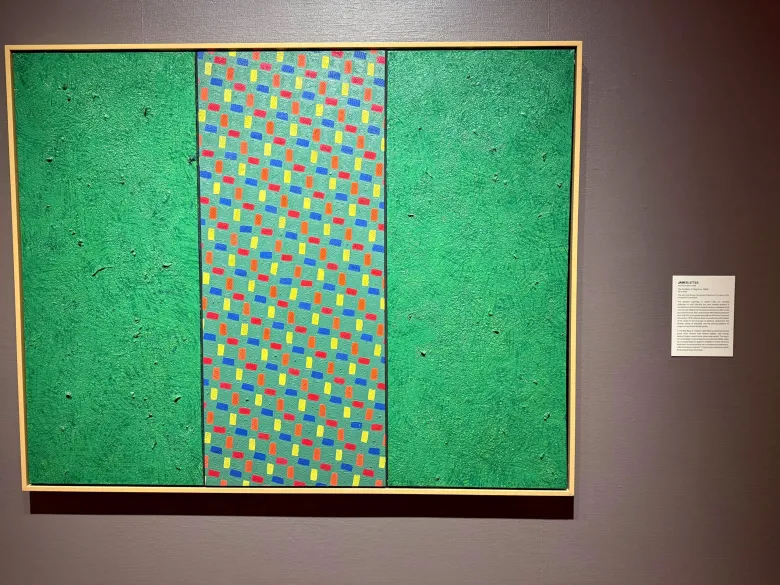
Memphis native James Little’s “The War Baby: The Triptych” is among more than 50 works featured in “Black Artists in America, From the Bicentennial to September 11” at the Dixon Gallery & Gardens, the final installment of a three-part series highlighting the impact and evolution of Black artists through 2011.
The exhibit features other artists with Memphis ties, including abstract painter James Little, who was raised in a segregated Memphis and attended Memphis Academy of Art (before it was Memphis College of Art). He later moved to New York, became a teacher and an internationally acclaimed fixture in the art world in 2022 when he was named a Whitney Biennial selected artist at the Whitney Museum of American Art in New York.
Other artists like Romare Bearden, who had a Southern experience but lived up North, were featured in all three installments.
“During this period of time, he was a major figure,” said Sharp. “He wrote one of the first books on the history of African American art during a time when there were more Black academics, art teachers, more Black everything!”
Speaking of Black educators, Sharp said the head curator behind this tri-part series and Dixon’s partner in the arts is Earnestine Jenkins, Ph.D., an art history professor at the University of Memphis, who also earned a Master of Arts degree from Memphis State University (now UofM). “We began working with Dr. Jenkins in 2018,” he said.
Sharp explained that it takes a team of curators, registrars, counterparts at other museums, and more, about three years to assemble an exhibit like this. It came together quite seamlessly, he added. Each room conjured up more jaw-dropping “wows” than the one before it. Each piece worked with the others to tell the story of Black people and their collective experience during this time period.
One of the last artists about whom Sharp shared information was Bettye Saar, who will turn 100 years old this year. She’s been working in Los Angeles for 80 years and is finally getting her due. Her medium is collages or assemblages, and an incredible work of hers is on display. She’s married to an artist and has two daughters, also artists.
The exhibit catalogue bears some of these artists’ stories, among other scholarly information.
The exhibit, presented by the Joe Orgill Family Fund for Exhibitions, is culturally and colorfully rich. It is a must see and admission to the Dixon is free.
Visit https://www.dixon.org/ to learn more.
Fun Facts: An original James Little design lives in the flooring of the basketball court at Tom Lee Park, and he makes and mixes his own paint colors.

#NNPA BlackPress
Grief, Advocacy, and Education: A Counselor Reflects on Black Maternal Health
SAN DIEGO VOICE & VIEWPOINT — Last month healthcare leaders, birth workers, and community members gathered to honor the legacy of Charleston native Dr. Janell Green Smith, a nurse-midwife and doctor of nursing practice who died in January from childbirth complications. She had participated in more than 300 births and specialized in helping Black women give birth safely.
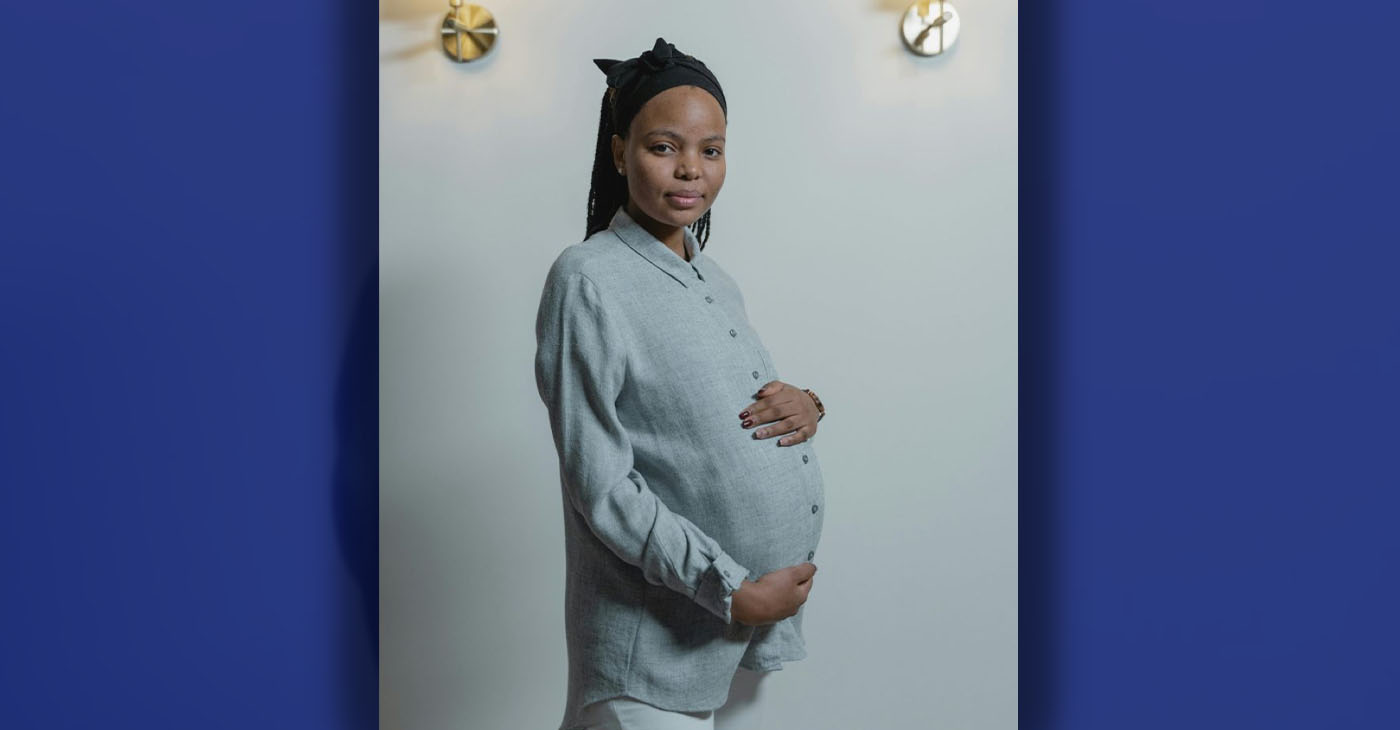
By Jennifer Porter Gore | Word-In-Black | San Diego Voice and Viewpoint
In 2024, the number of U.S. mothers who died as a result of pregnancy or childbirth dropped compared to 2023. But while slightly fewer Black mothers died that year, they still had three times the mortality rate of white women.
South Carolina’s rates of maternal deaths outpaced even the national rates. In fact, the state’s overall rate of maternal deaths between 2019 and 2023 was higher than all but eight states and the District of Columbia.
Last month healthcare leaders, birth workers, and community members gathered to honor the legacy of Charleston native Dr. Janell Green Smith, a nurse-midwife and doctor of nursing practice who died in January from childbirth complications. She had participated in more than 300 births and specialized in helping Black women give birth safely.
Her death shocked the community and her colleagues who are determined to address concerns about Black maternal health. The event also covered the importance of protecting mental health during grief and of men’s role in solving the maternal health crisis.
As both a therapist and a father, Lawrence Lovell, a licensed professional counselor and founder of Breakthrough Solutions, discussed ways the event’s attendees could process their grief over Green Smith’s death. He also shared ways male partners can advocate for women’s maternal health during pregnancy and childbirth.
Lovell spoke not just as a therapist but also as a father whose own family had briefly crossed paths with Green Smith. The event, he said, emerged organically from a moment of collective mourning.
Despite the grief, “it was still, like, a really beautiful event, a much-needed event, and it almost felt like we were all giving each other a collective family hug,” says Lovell.
His connection to Green Smith, Lovell says, was brief but meaningful during his wife’s pregnancy with their second child. Green Smith was practicing at the same birthing center where they had their child. She began practicing in Greenville a short time later.Even that short connection carried significance for Lovell, given the small number of Black maternal health professionals.
Lovell did not initially plan to become a mental health practitioner; he chose the career path after graduating from college, when someone suggested he consider psychology. His interest deepened when he noticed how few Black men work in mental health.
“Being Black man and playing football in college, there weren’t a lot of people that look like me talking about mental health,” says Lovell. “[I wanted] to give people that look like me an opportunity to work with someone that looks like them.”
Working with Expectant and New Parents
Lovell often counsels couples preparing for parenthood by, helping partners understand what a successful pregnancy, childbirth, and postpartum recovery look like. That often means helping women manage postpartum depression.
As a man, Lovell says, it’s “humbling” that a woman “just trusts me enough to work with me through their pregnancy or their postpartum recovery.”
In his work, Lovell has noticed how few men understand pregnancy before they experience it with their partner. Because early pregnancy symptoms are often invisible, he says, men may underestimate how much support a mom-to-be actually needs.
“Sometimes they may not realize they don’t know much about pregnancy and what to expect in those three trimesters,” Lovell says. “I tell a lot of the men that just because you can’t see [she’s pregnant] doesn’t mean that she won’t appreciate your intense support in that first trimester.”
Education about pregnancy and postpartum recovery, he says, can change how men support their partners.
Teaching Advocacy in the Delivery Room
Another major focus of Lovell’s counseling is preparing men to advocate for mothers during labor.
“Helping men understand what pregnancy looks like: what delivery is going to look like, and what are the realistic expectations that I should have of myself in postpartum,” he says.
Lovell encourages partners to be honest about their expectations for what will happen during delivery. He helps them prepare for the big day by discussing the birth plan and knowing how to quickly recognize problems. Clear communication, he says, prevents misunderstandings.
He regularly trains men to ask their partners detailed questions about their expectations during and after pregnancy. Advocacy in medical settings can be especially important and requires attention to details the mother may not be able to address.
“It’s always important to fine-tune things and truly understand what helps your partner feel most supported,” Lovell says. “Instead of guessing, you should ask.”
Lovell recalls a moment during the birth of his first child when he had to take that role.
During the delivery, “I felt like something wasn’t as sanitary as I’d like it to be,” he says. “I asked, ‘Hey, can you switch those out? Can you change your gloves?’”
Lovell has a succinct but powerful message he regularly shares with clients’ families, and he shared it with attendees at last month’s event.
“Just to believe women,” he says. “I’ve worked with different couples, and sometimes I’m not really sure that there’s enough empathy from the men.”
That includes how women express pain.
“If a woman says, ‘my pain is at a nine,’ just because how you would express yourself at a nine is different than how she’s expressing herself at [that level] doesn’t mean you shouldn’t believe her,” he says.
Empathy, he says, can change outcomes far beyond the delivery room.
“We’ve got to believe women when they’re talking about their experiences and their feelings and their pain,” he says. “I think there’s a lot that we can prevent if we empathize better.”
#NNPA BlackPress
Future of Florida’s Black History Museum in Limbo
JACKSONVILLE FREE PRESS — A proposal sponsored by Tom Leek, a Republican from Ormond Beach, has now passed the Senate in back-to-back legislative sessions. But the House version, filed by Kiyan Michael, a Jacksonville Republican, did not receive final approval in either year, effectively stalling the effort.
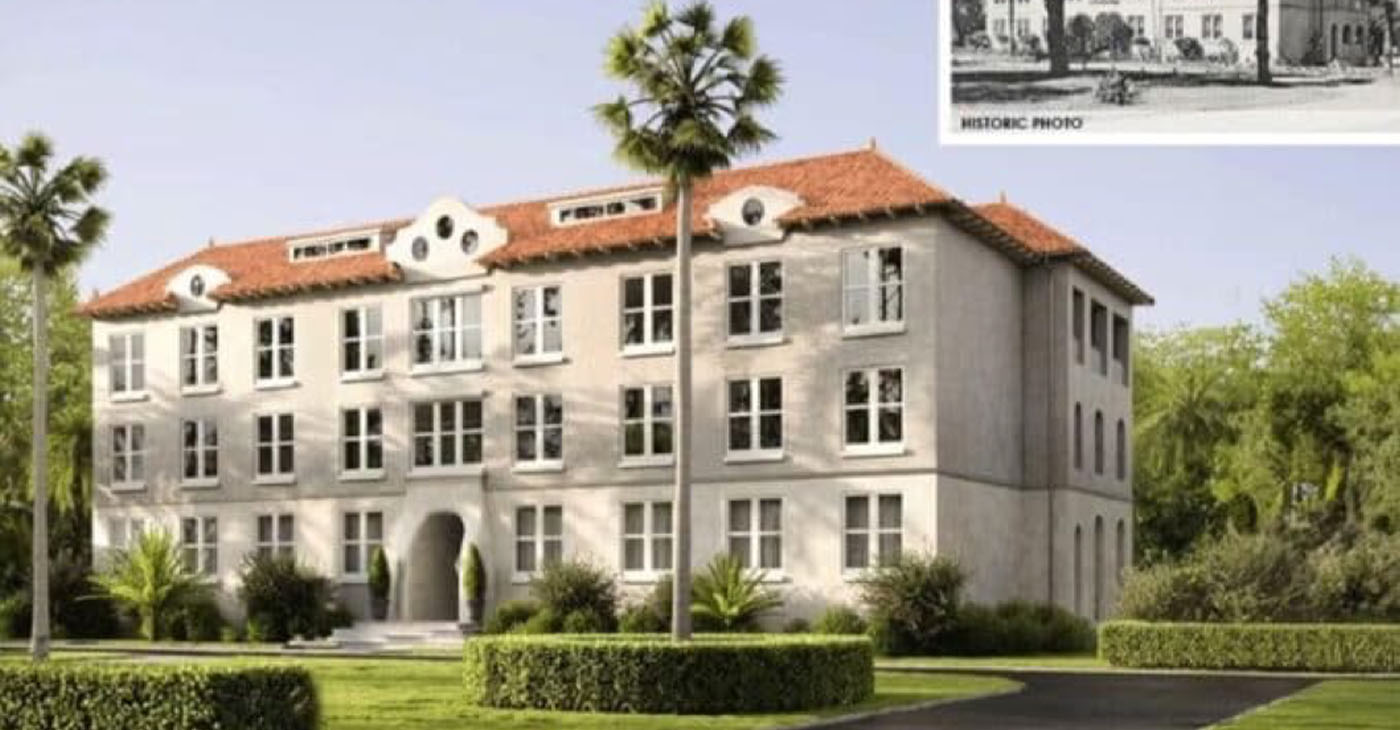
Jacksonville Free Press
Plans to establish a long-awaited Black history museum in Florida are once again on hold after legislation needed to advance the project failed to clear the state House for a second consecutive year, despite repeated approval in the Senate.
A proposal sponsored by Tom Leek, a Republican from Ormond Beach, has now passed the Senate in back-to-back legislative sessions. But the House version, filed by Kiyan Michael, a Jacksonville Republican, did not receive final approval in either year, effectively stalling the effort.
Under Florida law, identical or similar bills must pass both chambers before heading to the governor’s desk. Without House approval, the legislation has been unable to move forward, leaving the project in limbo. Long journey, contested location.
The proposed museum, formally known as the Florida Museum of Black History, has been years in the making, with lawmakers and community leaders framing it as a long-overdue institution to preserve and showcase the state’s African American heritage .A central point of contention has been the museum’s location. St. Augustine — widely recognized as the nation’s oldest city and a site deeply tied to both slavery and early Black history — emerged as the leading contender. Supporters argue the city’s historical significance makes it a natural home for the museum. However, competing interests and regional considerations have fueled debate, slowing consensus among lawmakers.

While the Senate-backed measure has consistently advanced, the lack of alignment in the House has underscored ongoing divisions about how and where the project should take shape.
The holdup in the Florida House appears to be less about opposition to the museum itself and more about a combination of procedural bottlenecks, unresolved structural issues, and lingering disagreements over how the project should be formalized and governed.
Despite the legislative setbacks, Republican Gov. Ron DeSantis has publicly voiced support for the museum. Speaking last month during the unveiling of a statue of abolitionist Frederick Douglass in St. Augustine, DeSantis said the project would move forward “one way or another,” signaling an intent to see the museum built regardless of legislative hurdles.
The anticipated museum has already cleared several hurdles. St. Johns County signed an agreement last year with Florida Memorial University to use the land that once housed its campus last year’s legislative session netted $1 million in funding for St. Johns County to work on planning and design for the museum. However, its anticipated that a million $3 million is needed.
Still, without statutory approval to finalize key components — including governance, funding mechanisms and site selection — the project remains largely conceptual.
With the House bill failing again, the timeline for the museum’s development is unclear. Lawmakers could revisit the proposal in the next legislative session, but any further delays risk pushing the project back several more years. Advocates warn that continued inaction could stall momentum for a museum many see as critical to telling a fuller, more accurate story of Florida’s past. For now, the effort remains paused — caught between political support at the top and legislative gridlock within the Capitol.
WORK FROM HOME
Home-based business with potential monthly income of $10K+ per month. A proven training system and website provided to maximize business effectiveness. Perfect job to earn side and primary income. Contact Lynne for more details: Lynne4npusa@gmail.com 800-334-0540


Black Artists in America, Installation Three Wraps at the Dixon Gallery and Gardens

Grief, Advocacy, and Education: A Counselor Reflects on Black Maternal Health

Future of Florida’s Black History Museum in Limbo

New Research Shows the Many Benefits of Early Learning

South Hampton K-8 Students Among Top 10 Finalists for Samsung’s ‘Solve for Tomorrow’ Competition

Cuba: No Negotiation with US on the President or Political System

Brooklyn Academy of Music Names Jamaican-Born Tamara McCaw as President

Trinidad & Tobego – U.S. Launches WhatsApp Channel for American Citizens in the Country

Oakland Post: Week of March 18 – 24, 2026

AI Innovation vs. Ethics and Environmental Impact

AI, Web3, and Digital Reparations

What If You Owned Your AI Agent?

Season 7, Episode 3 – January Reporter’s Roundtable 📱

Season 7, Episode 3 – January Reporter’s Roundtable

AI, Media, and Power | Part 2, Real-World Impacts and Tradeoffs

Discrimination in City Contracts

Oakland Post: Week of February 11 – 17, 2026

Reflecting on Black History Milestones in Birmingham AL

Rising Optimism Among Small And Middle Market Business Leaders Suggests Growth for California

CITY OF SAN LEANDRO STATE OF CALIFORNIA PUBLIC WORKS DEPARTMENT ENGINEERING DIVISION NOTICE TO BIDDERS FOR ANNUAL STREET OVERLAY/REHABILITATION 2019-21 – PHASE III

Oakland Post: Week of February 18 – 24, 2026

PRESS ROOM: NBA Hall of Fame Nominee Terry Cummings Joins 100 Black Men of DeKalb County to Launch Victory & Values Initiative

Oakland Post: Week of February 25 – March 3, 2026

U.S. manufacturing rebounds – how foundry services are adapting to rising demand

Trump’s MAGA Allies are Creating Executive Order Plan to Steal the 2026 Midterms

OP-ED: One Hundred Years of Black Workers Telling the Truth

Advancements in solar technology that are changing the way we power the world

Chase Oakland Community Center Hosts Alley-Oop Accelerator Building Community and Opportunity for Bay Area Entrepreneurs

PRESS ROOM: Civil Rights TV Launches in Selma as the World’s First 24/7 Civil Rights Television Network

Poll Shows Support for Policies That Help Families Afford Child Care

Hyundai Ioniq 5 Parking, Safety, and 360 View #shorts

2025 Ioniq 5 New Wiper & Powerful Performance! #shorts

Electric SUV Range: Is 259 Miles Enough? #shorts

EV Charging: How Fast Can You Charge an Electric Vehicle? #shorts

Biometric Cooling… Messaging Seats…Come on! 2025 Infiniti QX80 Autograph 4WD

Charged Up: Witness the Magic of a Fully Electric Car! #shorts

Range Rover Sport PHEV Included…: See What’s Inside This Luxury SUV! #shorts

Invisible Hood View: Perfect Parking with X-Ray Vision! #shorts

AI Is Reshaping Black Healthcare: Promise, Peril, and the Push for Improved Results in California

ESSAY: Technology and Medicine, a Primary Care Point of View

Sanctuary Cities

The RESISTANCE – FREEDOM NOW

STATE OF THE PEOPLE: Freddie

ECONOMIC BOYCOTT DAY!!!!!

I told You So
-
 #NNPA BlackPress4 weeks ago
Reflecting on Black History Milestones in Birmingham AL
-
 #NNPA BlackPress4 weeks ago
PRESS ROOM: NBA Hall of Fame Nominee Terry Cummings Joins 100 Black Men of DeKalb County to Launch Victory & Values Initiative
-
 Activism4 weeks ago
Oakland Post: Week of February 25 – March 3, 2026
-
 #NNPA BlackPress4 weeks ago
Trump’s MAGA Allies are Creating Executive Order Plan to Steal the 2026 Midterms
-
 #NNPA BlackPress4 weeks ago
OP-ED: One Hundred Years of Black Workers Telling the Truth
-
 #NNPA BlackPress4 weeks ago
Poll Shows Support for Policies That Help Families Afford Child Care
-
 Activism3 weeks ago
Oakland Post: Week of March 4 – 10, 2026
-

 #NNPA BlackPress3 weeks ago
Woman’s Search for Family’s Roots Leads to Ancestor John T. Ward – A Successful Entrepreneur and Conductor on the Underground Railroad
