
#NNPA BlackPress
Remembering Tina: The Legendary “Queen of Rock ‘n Roll” Passes Away at 83
Tributes are pouring in for legendary singer, songwriter and actress Tina Turner, who died last Wednesday. She was 83. “Tina Turner, the ‘Queen of Rock’n Roll’ has died peacefully today at the age of 83 after a long illness in her home in Küsnacht near Zurich, Switzerland,” her publicist said on last Wednesday. “There will […]
The post Remembering Tina: The Legendary “Queen of Rock ‘n Roll” Passes Away at 83 first appeared on BlackPressUSA.

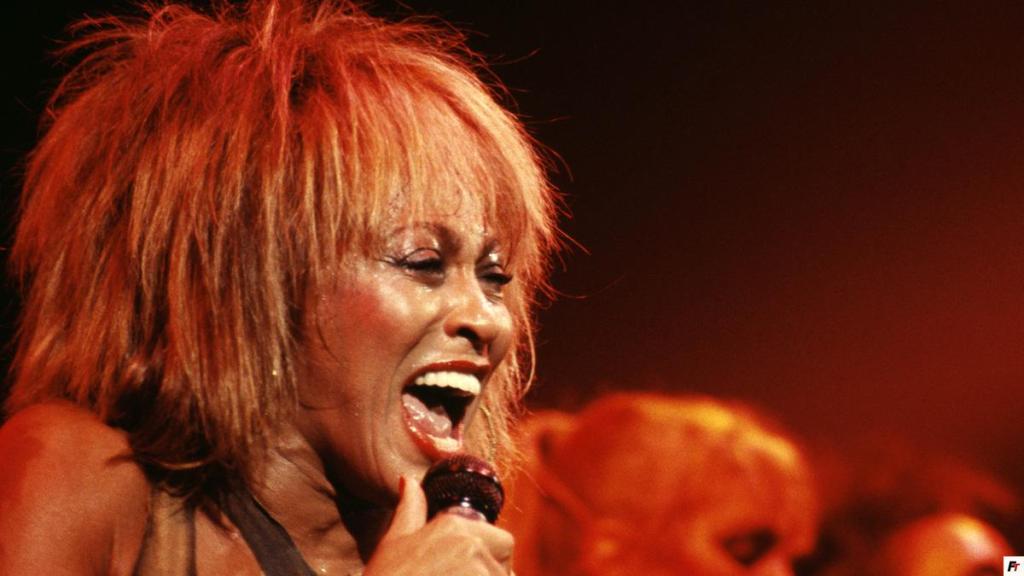
Tributes are pouring in for legendary singer, songwriter and actress Tina Turner, who died last Wednesday. She was 83.
“Tina Turner, the ‘Queen of Rock’n Roll’ has died peacefully today at the age of 83 after a long illness in her home in Küsnacht near Zurich, Switzerland,” her publicist said on last Wednesday. “There will be a private funeral ceremony attended by close friends and family. Please respect the privacy of her family at this difficult time.”
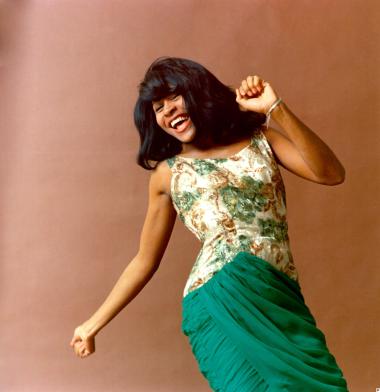
1964: Tina Turner of the husband-and-wife R&B duo Ike & Tina Turner poses for a portrait in 1964. (Photo by Michael Ochs Archives/Getty Images)
She was born Anna Mae Bullock on November 26, 1939, in Brownsville, Tennessee. She grew up in Nutbush, a tiny unincorporated community with a population of 259. Her parents, Floyd and Zelma Bullock were sharecroppers; Floyd supervised the harvests on the white-owned Poindexter farm. And the farm produced plenty. “Daddy’s garden must’ve covered an acre: Cabbages, onions, tomatoes and turnips, sweet potatoes, watermelons — we planted it all, and that garden fed us during the summer,” she wrote in her autobiography, I, Tina. “We had fresh eggs from our chickens and fresh milk from our cows.”
Anna Mae and her older sister Alline grew up in relative comfort. “Were we poor? I don’t remember being poor. My father was the top man on the farm; all the sharecroppers answered to him, and he answered to the owner. Daddy was in charge,” she later recalled. “We always had nice furniture in our house, and Alline and I always had our own separate bedroom.”
What they did not have was much in the way of closeness or affection. “I had no love from my mother or my father from the beginning, from birth,” she says in I, Tina. Her parents were often at odds and didn’t love each other: “Apparently, my mother had taken my father away from another girl — just out of spite […] they never really loved each other. They fought from the beginning,” she recalled. Those fights often turned physical.
When America entered World War II in 1941, Floyd and Zelma got jobs in the war effort. He worked as a laborer for a secret project; Zelma worked as a domestic in Knoxville, where the two stayed for over two years. The children stayed back home with grandparents. After the war, the Bullocks reunited with their children in Knoxville, then returned to Nutbush. Anna Mae attended Flagg Grove Elementary School from grades one through eight. That one-room schoolhouse is now the Tina Turner Museum.
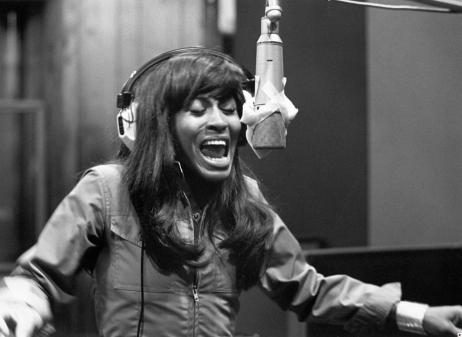
CIRCA 1969: Tina Turner of the husband-and-wife R&B duo Ike & Tina Turner sings during a recording session in circa 1969. (Photo by Michael Ochs Archives/Getty Images)
When Anna Mae was 11, her mother abruptly moved to St. Louis. Zelma had finally left Floyd — and her kids. Shortly afterward, her father remarried and moved to Detroit, leaving Anna Mae and Alline behind. Anna Mae started working as a housekeeper and babysitter for the Hendersons, a young white family.
She and Alline moved to stay with their maternal grandmother for a time before Anna Mae moved back to the family farm with her paternal grandmother (whom she called “Mama Georgie”). But when Mama Georgie died, Anna Mae moved to St. Louis with her mother and sister. It was in St. Louis where Ike Turner and the Kings of Rhythm came to play.
Ike (born Izear Luster Turner in 1931) had a band: saxophonists, a guitarist, a drummer, and his nephew on bass. Ike played piano and guitar. The band played at clubs in east St. Louis. At that time, 17-year-old Anna Mae and 20-year-old Alline had started going out to local clubs. One night they went to the Club Manhattan, where the band was playing.
Transfixed by Ike’s guitar playing, Anna Mae returned over the next several weeks. People would get up and sing with the band at times during their shows, and Anna Mae longed to do the same. One night, she got her chance. While Ike was playing on the organ between sets, Anna Mae started singing along as Ike played the B.B. King song “You Know I Love You.” Ike was so blown away by her voice that he jumped offstage and asked if she knew any more songs. Anna Mae started singing with the band.
Zelma Bullock found out — and hit the roof. “She hit me a backhand lick to the side of my face,” Tina wrote later, “and when I saw it had given me a nosebleed, I nearly hit her back.” Zelma did not want her daughter out with Ike Turner. But he charmed her when he visited the house, promising that he’d take care of Anna Mae. Zelma agreed. Anna Mae resumed performing.
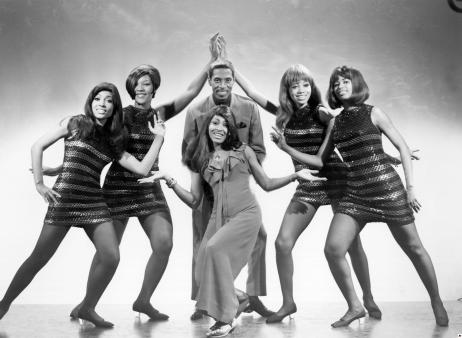
Husband-and-wife R&B duo Ike & Tina Turner pose for a portrait with their back up dancers “The Ikettes”, 1968. (Photo by Michael Ochs Archives/Getty Images)
“From then on, Ike and I were like brother and sister,” she wrote. He bought Anna Mae stage clothes and taught her about voice control and performance. They were strictly platonic at this point: Ike was living with a woman named Lorraine Taylor, and Anna Mae was falling for Ike’s saxophonist Raymond Hill. “I moved in with Raymond for a while,” she said years later. “We talked about marriage or whatever, but it didn’t happen. Soon he was gone.”
Soon she was pregnant. Anna Mae gave birth to their son Raymond Craig on Aug. 20, 1958. Zelma was displeased by her daughter being a teenage mother, so Anna Mae moved out into her own apartment and took a day job as a nurse’s assistant at Barnes-Jewish Hospital, the largest hospital in Missouri. But she would still sing with the band on dates. She even recorded with them; on the 1958 song “Boxtop,” she earned her first recording credit (billed as “Little Ann”).
Shortly thereafter, her relationship with Ike changed. They had been close friends: sometimes Anna Mae would even sleep over at Ike and Lorraine’s place. But while Ike was broken up with Lorraine, one of the musicians threatened to come into Anna Mae’s room (there were no locks). Instead, she shared a bed with Ike — who had more than just sleeping on his mind.
As their personal relationship turned romantic, their working relationship also changed. In 1959, Ike wrote “A Fool in Love” for Art Lassiter, whom he’d chosen as the band’s lead singer. But Art never showed up for the recording session. So Ike had Anna Mae sing on the demo. The demo tape found its way to Juggy Murray, head of Sue Records. He told Ike the song worked better with a girl singer and signed Ike to a record contract. Ike changed Anna’s name (Tina rhymed with Sheena, Queen of the Jungle, one of his favorite TV shows) and the name of the band: to the Ike and Tina Turner Revue.
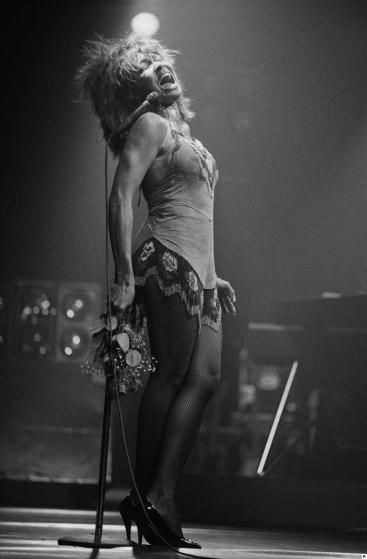
American singer, songwriter, and actress Tina Turner performs at the Brighton Centre, Brighton, UK, 11th March 1985. (Photo by John Rogers/Daily Express/Hulton Archive/Getty Images)
Anna Mae had reservations about the name change — and their relationship. “I didn’t want our relationship to go any farther,” she later wrote. I knew it could never work out between us.” She told Ike how she felt; he grabbed a shoe stretcher and beat her with it.
Tina felt trapped: “As horrible as he treated me, I still felt responsible for letting him down,” she told Rolling Stone in 1986. “And I was afraid to leave. I knew I had no place to hide, because he knew where my people were. My mother was actually living in Ike’s house in St. Louis. My sister was living in an apartment basically rented by Ike.”
So she stayed — and became Tina Turner.
“A Fool in Love”
By January 1960, Tina was pregnant — this time by Ike (who had gotten back together with Lorraine). Tina developed hepatitis and then jaundice; she spent six weeks in the hospital. Meanwhile, the record that would make her a star was gaining traction. Ike decided to go on tour. He snuck Tina out of the hospital and onto the road.
“A Fool in Love” was released in July 1960. In August, it hit No. 2 on the R&B charts, and in October it peaked at No. 27 on the pop charts — just as Ike and Tina were appearing on “American Bandstand.” Despite being eight months pregnant, Tina was doing shows in Vegas, dancing and singing with her background singers (whom Ike named the Ikettes). Only in Vegas did Ike realize Tina might need to visit a hospital.
They hightailed it to L.A., where Tina gave birth to their son Ronald Renelle on Oct. 27, 1960. A fed-up Lorraine left Ike for good. Once Tina was out of the hospital, she did a show in Oakland before taking two weeks to recover. But recovery was difficult. She was already unhappy by 1961, writing later that Ike was “totally unpredictable.” “Out of nowhere, he would leap up from a couch and walk right up to you and —pow! And you’d go, ‘What did I do? What’s wrong?’ Pow! again,” she wrote. “It was insane. It got to be that I always had a black eye and a busted lip — that was the standard beat-up.”
But she still accepted his proposal. One night, during a moment of tenderness, Ike asked Tina to marry him. She said yes “because if you said no to Ike, you were going to get beat up a few days later.” They rode to Tijuana, found a justice of the peace and married in 1962. Ike bought a house in L.A.; he and Tina brought their son Ronald, Tina’s son Raymond Craig, and Ike’s sons Michael and Ike, Jr. from St. Louis to live with them. But they were rarely home. Ike & Tina had several more hit singles, including “I Think It’s Gonna Work Out Fine” (No. 2 R&B, No. 14 pop) in 1961. But most of their income came from constant touring.
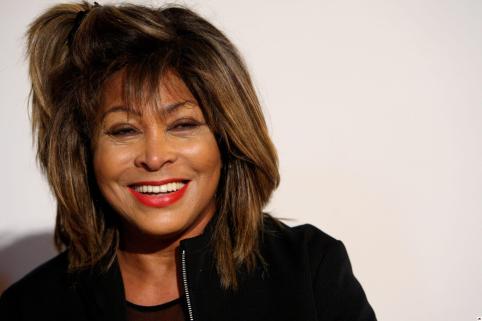
ZURICH, SWITZERLAND – MAY 14: Tina Turner smiles during the presentation of the music project ‘Beyond – Three Voices For Peace’ on May 14, 2009 in Zurich, Switzerland. The CD contains a spiritual message by Tina Turner. (Photo by Miguel Villagran/Getty Images)
“River Deep, Mountain High”
In 1966, record producer Phil Spector negotiated a contract with Ike to record with Tina. His song: “River Deep, Mountain High.” “I loved that song,” Tina said in her autobiography. “Because for the first time in my life, it wasn’t just R&B — it had structure, it had a melody.” The song failed in the United States but was a smash overseas, peaking at No. 3 on the UK charts. Within months, Ike and Tina were touring with the Rolling Stones. Band members Mick Jagger and Keith Richards became Tina’s lifelong friends.
But Tina’s depression deepened after she and Ike returned to America. Ike’s violence and philandering continued; he got Ann Thomas, one of the Ikettes, pregnant. “When I found out that Ann was pregnant by Ike, I lost all feeling for him as my husband,” she later wrote. That was it.” Worse yet, Ike started using cocaine, which made him even more violent and unpredictable: “Ike was beating me with phones, with shoes, with the hangers, choking me, punching me—it wasn’t just slapping anymore.”
In 1968, Tina attempted suicide by swallowing 50 Valium; she had to have her stomach pumped. But when she got out of the hospital, Ike made her go right back to work. And when Tina developed bronchitis a year later, he was unrelenting. Tina kept working, and it turned into tuberculosis. But after a couple weeks in the hospital, she was back on the road.
In 1970, at Tina’s encouragement, they shifted musically, from R&B to rock & roll. The move paid off with the 1970 albums Come Together and Workin’ Together. The first album featured a cover of Sly Stone’s “I Want to Take You Higher.” The second became their highest-charting album. It contained their cover of a song by rock band Credence Clearwater Revival: “Proud Mary.” Ike and Tina remade the song, with Tina’s famous “nice and easy” opening. Their version became their biggest hit ever, soaring to No. 4 on the Billboard charts and selling over a million copies. It won them a Grammy for Best R&B Performance.
Tina wrote the group’s last major hit, a song about her hometown: “Nutbush City Limits” (1973). But the hits soon dried up. Ike became more volatile as his cocaine addiction worsened, while Tina discovered Buddhism and used chanting as a form of solace. In 1974 she landed a role in Tommy (1975), playing the Acid Queen in the filmed version of the Who’s rock opera. “It was a small part,” she wrote later, “but it was my part. It gave me strength. I could feel myself growing.”
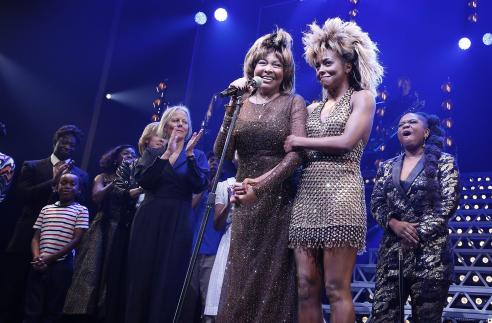
NEW YORK, NEW YORK – NOVEMBER 07: Tina Turner and Adrienne Warren speak during “Tina – The Tina Turner Musical” opening night at Lunt-Fontanne Theatre on November 07, 2019 in New York City. (Photo by John Lamparski/Getty Images)
That growth annoyed Ike, who resented Tina succeeding without him. Things got worse: he once threw a pot of boiling hot coffee in her face, causing third-degree burns. As the boys neared adulthood and the abuse continued, Tina found fewer reasons to stay. Gradually, she started leaving: once for three days, then for two weeks. Upon returning, she told Ike: “I really cannot stay with you any longer.”
Ike didn’t listen. He lined up gigs around the time of America’s bicentennial; they’d play in Dallas during 4th of July weekend. On July 3, 1976, they flew to Dallas, where they were scheduled to perform at a Hilton hotel. On the way to the airport, signs of trouble were already brewing: Tina had on a white Yves St. Laurent suit, Ike had a box of chocolates that was melting in the Texas sun. He offered them to Tina; she said no. He backhanded her.
After their flight, they arrived at the DFW airport and rode to the hotel. Inside the limo, Ike backhanded Tina again. This time, she fought back. He kept hitting, and so did she. “By the time we got to the Hilton, the left side of my face was swollen out past my ear and blood was everywhere,” Tina wrote. They went up to their room, where Ike fell asleep. Tina grabbed her toiletry bag and left. She ran out of the back of the hotel, down an alley, and across a freeway. She arrived at the Ramada Inn with just 36 cents and a Mobil gas card, promising the owner that she’d pay him back. He agreed. When she woke up the next morning, it was July 4, 1976 — Independence Day.
Tina filed for divorce later that month; the divorce was finally settled in 1978. (She walked away with just her two Jaguars — and her name.) She started staying at friends’ houses, cleaning them as payment. Then she started working on a new act. When Roger Davies became her manager in 1979, Tina was performing cabaret at nightclubs; he steered her back towards rock. Tina opened for the Stones in 1981.
In 1982, Heaven 17, the British synth-pop band, recruited her to sing a remake of the Temptations’ “Ball of Confusion.” The song led to a new record deal for Turner with Capitol Records. Roger Davies then suggested that she and Heaven 17’s Martyn Ware cut a remake of Al Green’s “Let’s Stay Together.” Tina’s version hit the Top 30 in the U.S. With that, and the support of her friend David Bowie, Turner began recording her Capitol debut, Private Dancer.
Released in June 1984, Private Dancer was critically acclaimed and hit No. 3 on the Billboard album chart, where it stayed for three months. (Blocking it from number one were Purple Rain and Born in the USA.) The album went multiplatinum, selling over five million copies in the U.S. and over 10 million worldwide. The title track hit the Top 10 on both the R&B and pop charts; so did “Show Some Respect.”
The lead single, “What’s Love Got to Do with It?” hit No. 1 in September. It was Tina’s first (and only) number-one hit. At 45, she became the oldest female singer ever to top the Billboard singles chart. And at the 1985 Grammy Awards, “What’s Love” won for Best Female Pop Vocal performance, Song of the Year, and Record of the Year. (“Better Be Good to Me” won for Best Rock Performance.)
That year, Tina played the villain Aunty Entity in Mad Max: Beyond Thunderdome. The film was a box-office hit, and Tina won an NAACP Image Award for best actress. She recorded two songs for the soundtrack: “We Don’t Need Another Hero” (which hit No. 2 on Billboard) and “One of the Living” (which won her another Grammy for Best Rock Performance).
In 1986, Turner released her next album, Break Every Rule. The lead single “Typical Male” also peaked at No. 2, and “Back Where You Started” earned Turner her third straight Grammy for Best Rock Performance. She also published her best-selling autobiography I, Tina. And she found love again, this time with German record executive Erwin Bach.
Bach was assigned to pick her up from the airport in 1985; sparks flew immediately. “It was love at first sight,” Turner told Oprah Winfrey in an interview. “He had the prettiest face. You could not miss it. It was like saying, ‘Where did he come from?’ He was really that good looking.” Despite the age difference (he was 30; she was 46), she and Bach connected. In her 2020 book Happiness Becomes You: A Guide to Changing Your Life for Good, she credited him with teaching her how “to love without giving up who I am.”
“We grant each other freedom and space to be individuals at the same time we are a couple,” Turner wrote. “Erwin, who is a force of nature in his own right, has never been the least bit intimidated by my career, my talents, or my fame. He shows me that true love doesn’t require the dimming of my light so that he can shine. On the contrary, we are the light of each other’s lives, and we want to shine as bright as we can, together.”
And shine she did. In 1987, Turner embarked on her “Break Every Rule” tour, one of the year’s highest-grossing. In Brazil in 1988, she fulfilled a long-held dream by selling out a massive stadium. 180,000 people came to see Tina Turner at the Maracana Stadium in Rio, setting a record for the largest paid concert by a female artist.
The next year, Turner released the album Foreign Affair, which produced one of her most timeless singles, “The Best.” The album title reflected its production in London and Paris. But it also described Tina’s personal life: when she turned 50 in 1989, Bach asked her to marry him. She refused, but the two continued to live together.
In 1993, Tina re-recorded some of her hits for the soundtrack of What’s Love Got To Do With It? (1993), based on her book. She also recorded a new single: “I Don’t Wanna Fight,” her last top 10 hit. Both Angela Bassett and Laurence Fishburne earned Oscar nominations for their portrayals of Ike and Tina Turner.
In 1995, Tina and Bach moved to Switzerland. She toured to support her albums Wildest Dreams (1996) and Twenty Four Seven (1999). Even when she wasn’t performing, she could still sell records: her 2004 greatest-hits album All the Best went platinum, becoming her highest-charting record. In 2008, she embarked on her final tour: a six-month farewell journey around the world. She officially retired in 2009.
In 2013, Turner and Bach finally married, cementing what she called “a long, beautiful relationship — and my one true marriage.” But according to Closer Weekly, Turner suffered a stroke just three months after marrying Erwin. She spent 10 days in the hospital and had to relearn how to walk. She was diagnosed with colon cancer in January 2016. A month later, she underwent surgery to remove the cancerous part of her intestine. But high blood pressure damaged her kidneys.
“By December 2016, my kidneys were at a new low of 20 percent and plunging rapidly. And I faced two choices: either regular dialysis or a kidney transplant,” she wrote in her 2018 memoir, Tina Turner, My Love Story. “Only the transplant would give me a very good chance of leading a near-normal life. But the chances of getting a donor kidney were remote.” Thankfully, Bach donated one of his. “I’m happy to say that, thanks to my beloved husband, Erwin, giving me one of his kidneys, the gift of life, I’m in good health and loving life every day,” she wrote in the book. “I’m also thankful that I’ve not only survived, but thrived, so that I can pass on to you this book containing precious gifts that were given to me — the greatest gifts I can offer.”
She had one last gift for her fans. Tina, a musical based on her life, premiered in London in 2018 and on Broadway the following year. Adrienne Warren, who played the title role, won a Tony in 2020 for Best Performance by a Leading Actress in a Musical. Upon learning of Turner’s passing, Warren paid tribute to the woman she played: “Today I lost a teacher and a mentor,” Warren captioned her post. “Rest, my friend. I love you, Anna Mae Bullock. Thank you.”
“My beloved queen, I love you endlessly,” Beyoncé wrote on her website. “I’m so grateful for your inspiration, and all the ways you have paved the way […] You are the epitome of power and passion. We are all so fortunate to have witnessed your kindness and beautiful spirit that will forever remain. Thank you for all you have done.”
Lizzo paid tribute to Turner with a performance of “Proud Mary” during her tour stop. “Today we lost an icon,” a visibly emotional Lizzo told the crowd at Footprint Center in Phoenix. “I haven’t allowed myself to be sad, I haven’t allowed myself to cry. I don’t want to right now, because I’d much rather celebrate.” She added: “As a Black girl with a rock band, I wouldn’t exist were it not for the queen of rock & roll.”
The post Remembering Tina: The Legendary “Queen of Rock ‘n Roll” Passes Away at 83 appeared first on Houston Forward Times.
The post Remembering Tina: The Legendary “Queen of Rock ‘n Roll” Passes Away at 83 first appeared on BlackPressUSA.














#NNPA BlackPress
NFL: Week Two Recap | Jalen Hurts did not fold; Caleb Williams exits game with injury
Philadelphia Eagles quarterback Jalen Hurts found Darius Cooper with nine seconds left for the game winning touchdown as his team beat the Tennessee Titans 24-20 in Nashville. Hurts finished the day 26/37 for 264 yards. He threw for two touchdowns and two interceptions. Prior to the final drive, the Eagles ran 25 plays for 45 […]
The post NFL: Week Two Recap | Jalen Hurts did not fold; Caleb Williams exits game with injury appeared first on BlackPressUSA.

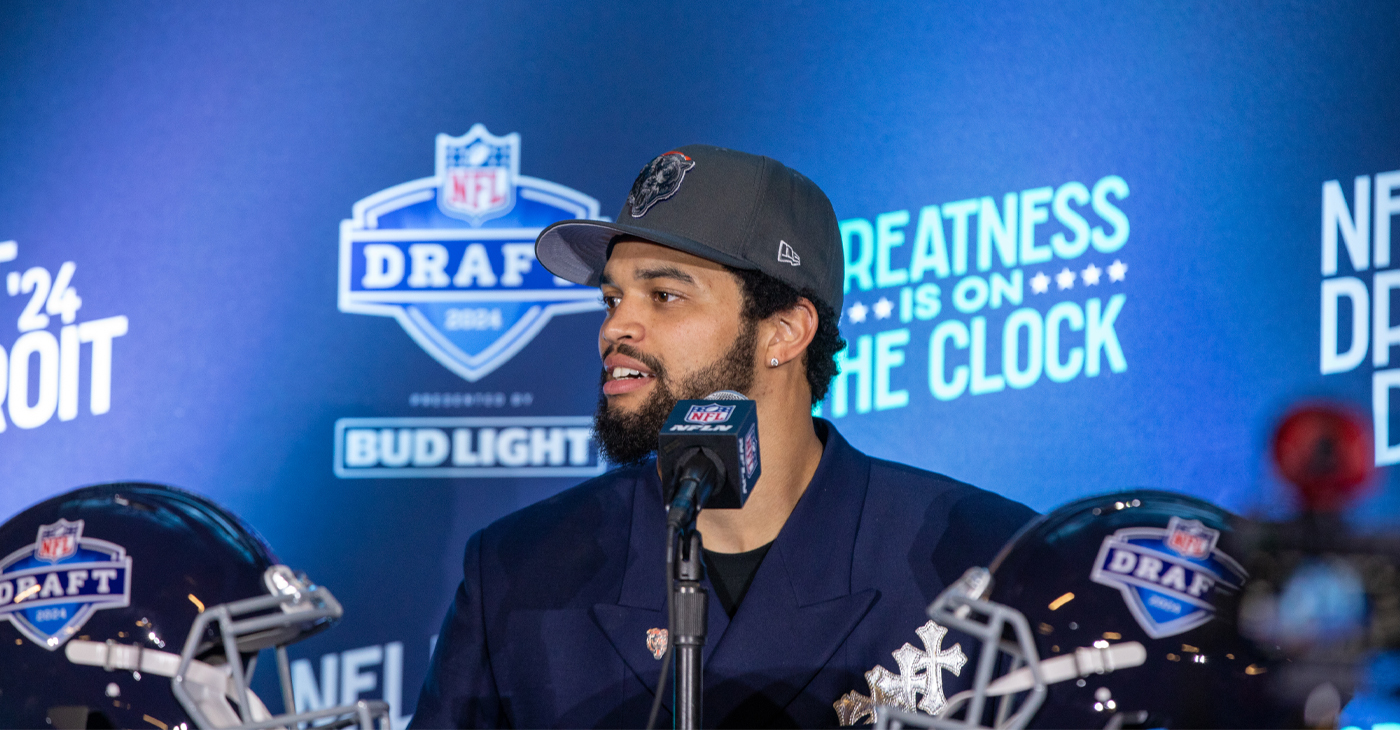
Philadelphia Eagles quarterback Jalen Hurts found Darius Cooper with nine seconds left for the game winning touchdown as his team beat the Tennessee Titans 24-20 in Nashville. Hurts finished the day 26/37 for 264 yards. He threw for two touchdowns and two interceptions.
Prior to the final drive, the Eagles ran 25 plays for 45 yards. During the final drive Hurts went 6-8 with 61 passing yards and the touchdown. Titans defensive tackle — and team captain — Jeffery Simmons said this week that the way to defend Jalen Hurts is to make him “play quarterback.”
Hurts said to Simmons after today’s game: “You started that sh**. I had to finish it.”
Running back Saquon Barkley suffered a stinger in the first half but he ultimately finished the game. He had four carries and nine yards and one catch for eleven yards. He will get an MRI for his injury, but admitted to Cameron Wolfe of the NFL Network he was fine.
Caleb Williams leaves game against Vikings with apparent lower-body injury
Chicago Bears quarterback Caleb Williams was helped off the field with a right leg injury with 7:42 remaining in the fourth quarter. Williams was down, writhing in pain after scrambling to his left. After departing the injury tent, Williams raised his right fist, acknowledging the crowd while expressing his frustration. Testing will commence on Monday to find out more details about his injury.

“We’ll know tomorrow,” Johnson admitted regarding Williams’ injury. “He’s in good spirits. He’s a team player.”
Williams finished the day with 138 passing yards and one interception.
“I’m actually happy it’s nothing with the knee — that was my first inclination,” Johnson said. “But, a hamstring could be pretty damaging as well. So, we’ll see. We’ll see how bad it is tomorrow and we’ll go from there.”
Bryce Young once again dominated the Falcons
Carolina Panthers quarterback Bryce Young is 5-1 against the Atlanta Falcons and is undefeated at Mercedes-Benz Stadium. Today, Young threw for 287 yards and three touchdowns as he led the Panthers to a 34-3 dismembering of the Atlanta Falcons. Georgia Tech alumnus Darren Waller caught two touchdowns and linebacker Devin Lloyd returned one of his two interceptions for a touchdown.
Cooper Rush started his second straight game for the Falcons and it did not go well. The partisan crowd voiced their displeasure after Rush completed 10/17 passes for 86 yards and two interceptions. Jack Strand entered the game for Rush prompting cheers from the Falcons fans. The rookie threw a pick-six on his first career pass attempt. Strand was the first QB to accomplish that feat since Sam Darnold in 2018 and is the first Falcons player to do that since Brett Favre in 1991. Strand finished the day with 59 passing yards and 16 rushing yards.
According to reports, quarterback Michael Penix, Jr. is expected to make his season debut this Thursday at the Green Bay Packers. His return should help the Falcons. They are the first team since the 2008 Rams to not run any plays in the red zone after the first two games to open a season.
The bright spots for the Falcons today were the Spelman College Jaguarettes performing with the Falcons cheerleaders and Florida A&M’s marching band, The Marching 100, also performed during halftime!
Jayden Daniels gets carted off after apparent arm injury
Washington Commanders quarterback Jayden Daniels appeared to injure his left elbow on the final play of the first half in his game against the Dallas Cowboys. During the play, Daniels got stepped on, braced himself for the fall, and his elbow bent the wrong way. Daniels draped a towel over his head as he exited the field on the cart.
He was later ruled out.
Daniels suffered a dislocated elbow to the same arm during week nine of last season against the Washington Commanders, which led to him being shut down for the remainder of the season.
The post NFL: Week Two Recap | Jalen Hurts did not fold; Caleb Williams exits game with injury appeared first on BlackPressUSA.

#NNPA BlackPress
The Complete Negotiation Framework — Every Stage, Every Tactic, Every Win
Master the complete vehicle-purchase negotiation framework with Roosevelt Gist and Roosevelt. Learn every stage, tactic, and win!
The post The Complete Negotiation Framework — Every Stage, Every Tactic, Every Win appeared first on BlackPressUSA.

Roosevelt Gist and Roosevelt deliver the complete vehicle-purchase negotiation framework in Episode 8 of The Color of Our Money Is Green. This episode covers the three foundations of every effective negotiation, the full seven-stage negotiation sequence with exact language for every stage, and five of the most common dealership tactics with the specific response each one requires.
What You Learn in This Episode:
The three foundations that make every negotiation tactic work
The complete seven-stage car-buying negotiation sequence
Exact language for every stage of the dealership conversation
Five common dealership tactics — the turnover, the four-square, the packed payment, spot delivery, and forced add-ons — and how to counter each one
Why signing preliminary paperwork isn’t the same as signing the final contract
___________________________________________________________________
“The Color of Our Money Is Green: A Buyer’s Guide to What Cars Actually Cost” — stan.store/RGist
____________________________________________________________________
AutoNetwork helps serious car shoppers inspect any new vehicle online before walking into a dealership. I’m Roosevelt — I’ve been reviewing cars and shaping digital car buying and credit union auto leasing since before YouTube car reviews existed.
You’ll find detailed walkaround reviews, POV test drives, and buyer-focused breakdowns covering comfort, space, features, and real-world value.

How to use the channel:
Watch the walkaround of the car you’re considering
Visit AutoNetwork.com for the full review
Check CouponsOffersAndDeals.com for current dealer specials
Walk in already knowing what you want — and what it should cost
 AutoNetwork.com
 CouponsOffersAndDeals.com
Affiliate disclosure: some links earn a small commission at no cost to you and help support the channel. Insta360 is one of those partners.
The post The Complete Negotiation Framework — Every Stage, Every Tactic, Every Win appeared first on BlackPressUSA.
#NNPA BlackPress
Mazda CX-90 Luxury: Heated Seats & Premium Comfort! #shorts
Stay toasty in the CX-90! Plush Nappa leather, heated/ventilated seats, and a memory-equipped heated steering wheel deliver ultimate luxury.
The post Mazda CX-90 Luxury: Heated Seats & Premium Comfort! #shorts appeared first on BlackPressUSA.

Experience ultimate comfort in the CX-90. Nappa leather, heated/ventilated seats, 8-way power adjustments, and memory settings for both front passengers. The heated steering wheel with memory tilt/telescope adds premium convenience.
 Watch the full video: https://youtu.be/EH5A4eQ4ipY
#AutoNetwork
The post Mazda CX-90 Luxury: Heated Seats & Premium Comfort! #shorts appeared first on BlackPressUSA.



Asm. Corey Jackson Announces Launch of 24-Hour Childcare in His District

IN MEMORIAM: The Rev. Leon “Sonny” Clark, Longtime Orange County Pastor and Community Leader, Dies at 72

Poll: Becerra Widens His Lead Over Hilton; Californians Split on Wealth Tax

From Historic Memories to New Possibilities: Oakland Celebrates Coliseum 60

County Office of Education Says OUSD Finances Are Getting Healthier, Materially Stronger

LIVE FREE Sunday Dinner Brings Faith, Fellowship and Civic Conversation to Oakland

Remembering Chauncey Bailey as Student Journalists Face Threats to Truth-Telling

BLACspace Cooperative Invites Bay Area to Experience Oakland’s Black Cultural Ecosystem Through a BLAC Map Tour + Party

In Wake of Death on Doorstep, Williams Chapel Baptist Church Calls for Better Care, Funding for Unhoused

Oakland Centenarian Nuna McKee Honored!

Caribbean Nations Produce Action Plan Calling for UK Reparations Over Slavery

Oakland Post: Week of September 23 – 29, 2026

Doulas Are Helping Black California Moms Navigate Pregnancy–Even as High Mortality Rates Persist

Newsom Signs Addictive Social Media Law to Protect Kids

On Your November Ballot: Prop 38 Would Allocate $8.4 Billion to Immunology and Immunotherapy Funding

Less Affluent School Districts, Including Sacramento City, Face Threat of State Takeover

ESSAY: California Can Close Its Colorectal Cancer Gap

California Hispanic Chambers of Commerce Unveils: ‘Powering the Future’ Theme for 47th Annual Statewide Convention

Four Candidates, Including Incumbent Barbara Lee, Qualify for Oakland Mayor’s Race

Oakland Post: Week of August 12 – 18, 2026

From Blueprint to Breakthrough: Tackling Affordable Housing in Oakland

Oakland Observes Black August with Block Parties, Film Showings, Workshops

COMMENTARY: Why Local School Tax Measure G1 Will Not Be on the November Ballot

Standoff for Justice: Our Homes Are Worth Fighting For

Returning to Its Roots, the Oakland Black-Eyed Pea Festival Partners with the Freedom Farmers Market Sept. 12

Oakland Post: Week of August 26 – September 1, 2026

NPRC Scores First Advocacy Victory: David Shaw Finally Gets His Wish to ‘Go Home’

Frontier Airlines’ Return to Oakland Airport Brings Flights, Jobs and Opportunity

Gubernatorial Candidate Steve Hilton Blasts California New Tire Rules; Newsom Hits Back

Chef Sharon Lee Blends Culinary Excellence, Education and Empowerment

The Conversation With Al McFarlane 6/23/26

Media Monday 6/22/26

LIVE! ASK ALMA! — TUES. 6.23.26 7PM EST

Car Buying Secrets: 4 Hidden Checks Before You Sign!

Is This 550 HP Charger Worth YOUR Money? AutoNetwork Review

Celebrating Juneteenth – Frederick Douglass on education and resistance

LIVE! — ASK ALMA! — TUES. 6.19.26 7PM EST

Hyundai Ioniq 5 Parking, Safety, and 360 View #shorts

2025 Ioniq 5 New Wiper & Powerful Performance! #shorts

Electric SUV Range: Is 259 Miles Enough? #shorts

EV Charging: How Fast Can You Charge an Electric Vehicle? #shorts

Biometric Cooling… Messaging Seats…Come on! 2025 Infiniti QX80 Autograph 4WD

Charged Up: Witness the Magic of a Fully Electric Car! #shorts

Range Rover Sport PHEV Included…: See What’s Inside This Luxury SUV! #shorts

Invisible Hood View: Perfect Parking with X-Ray Vision! #shorts
-
 Business4 weeks ago
Frontier Airlines’ Return to Oakland Airport Brings Flights, Jobs and Opportunity
-
 Business4 weeks ago
Gubernatorial Candidate Steve Hilton Blasts California New Tire Rules; Newsom Hits Back
-
 Business4 weeks ago
Chef Sharon Lee Blends Culinary Excellence, Education and Empowerment
-

 Black History4 weeks ago
Jackie Wright Champions Bay Area Stories, Filmmakers and Cultural Institutions
-

 Community4 weeks ago
Big City Mayors Ask for “Yes” Vote on Housing Bond Measure; Conservatives Say “No”
-

 Education4 weeks ago
Gov. Newsom’s Latest Appointees Include Sacramento Advocate for Formerly Incarcerated Students; State’s New Tech Chief
-

 Business4 weeks ago
Oakland Coliseum Project Opens Door for Small Businesses to Build Bigger
-

 Community2 weeks ago
Misnamed ‘Parent’ PAC Seeks to Influence Oakland School Board Elections
