
Uncategorized
Organizations Ask Oakland Rent Board to Strengthen Tenant Protection Regulations


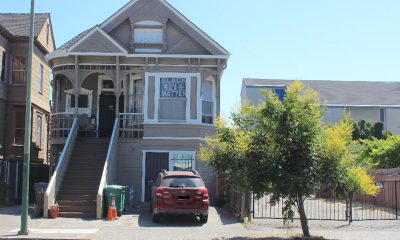
A coalition of 10 different organizations have asked Oakland’s Rent Adjustment Program (RAP) to amend proposed regulations to the Tenant Protection Ordinance (TPO) in an effort to make replacing vacating roommates and filling extra space in rental units easier for tenants.
“In Oakland, tenants already have one-to-one replacement rights,” said Jackie Zaneri, a tenant attorney with ACCE Action, a grassroots organization that is leading the push to amend current proposed TPO regulations. “So if you have three roommates, and one of them moves out, you already have the right to bring in someone else. In practice, this right was difficult to enforce because there were not very good rules about when your landlord could just reject a new person.” But City Council has amended the TPO recently. On July 14, 2020, they approved additional language in the Just Cause for Eviction Ordinance that made it easier for tenants to accept new housemates or roommates.
The new language states that “a landlord shall not endeavor to recover possession of a rental unit if the landlord has unreasonably refused a written request by the tenant to add such occupant(s) to the unit.”
Other language the Council added specified that landlords cannot reject the written request to add occupants based on “the proposed additional occupant’s lack of creditworthiness, if that person will not be legally obligated to pay some or all of the rent to the landlord.”

The language helps most tenants in their ability to take in new roommates without those roommates having to prove creditworthiness to their landlord. It protects tenants
who want to pool money together and have one tenant pay rent as well as people who want to take in family members or friends who are unemployed.
There are some exceptions, such as units not covered under Just Cause and tenants who have already signed on to lease terms that prevent adding new roommates.
For many Oakland tenants, newly added language also allows them to add tenants beyond just replacing roommates, allowing for adding roommates to the total already living in a rental unit as long as that total does not exceed capacity limits set by the Council. These capacity limits are: “two persons in a studio unit, three persons in a one-bedroom unit, four persons in a two-bedroom unit, six persons in a three-bedroom unit, eight persons in a four-bedroom unit; or, the maximum number permitted under state law and/or local codes.” Oakland’s Rent Adjustment Program has created proposed regulations to determine how the newly added language will be enforced, but ACCE, along with tenant unions and organizations that advocate for tenant rights, are calling for the proposed regulations to be changed to protect tenants more.
“We believe that the current proposed criteria still leave ample legal room for landlords to retaliate against tenants by refusing to accept new roommates,” states a letter written by ACCE wrote, signed by Oakland Tenants Union, SMC Tenants Council, Bay Area Legal Aid and six other organizations and then sent to RAP on November 12. The letter also included proposed changes to RAP’s regulations.
The coalition’s proposed changes call for more specific reasons that a landlord would be barred from denying a tenant space, including inability to pay rent during the local emergency related to the pandemic, refusing to provide information that is outside the reasonable scope of an application process, participation in a lawsuit as plaintiff, past participation in tenant organizing, contesting rent increases or filing complaints against landlords.
In situations where a new tenant would be signing onto a lease and agreeing to pay the landlord directly in a rental unit already being rented by others, a credit check could be allowed. But the coalition has suggested a provision where a new tenant could not be subject to stricter credit requirements than other tenants living in the unit.
The coalition is also requesting that additional language be added to a section that gives landlords the right to deny a unit or evict a tenant if it can be proven they have misrepresented significant facts on a housing application.
Their new language would prevent landlords from denying space to tenants who have used other names in the past or had minor discrepancies on credit reports.
In addition to protecting tenants who unintentionally make mistakes when filling out forms, Zaneri said the additional language protects trans and Latinx tenants.
“Tenant screenings can come back with different last names, but there’s a number of reasons why different names could come up,” she said. “They could be transitioning or gender non-conforming. They could be from a [culture] that uses multiple last names, and maybe only one of them comes up.”
The coalition has also asked RAP to eliminate a petition process in new proposed regulations that they say eases landlords’ ability to raise rents if landlords can prove that an original occupant no longer resides in a rental unit.
“We don’t believe that the Rent Adjustment Program should add a new process to allow landlords to raise rent where not required by state law,” reads the letter the coalition sent to RAP on November 12. “We also object to a new petition process that encourages landlords to spy on tenants. We have seen tenants whose landlords catalogued everyone who went into and out of their units or used security cameras to track their movements.”
If a petition process exists that allows landlords to evict tenants if they can prove original tenants no longer reside in a rental unit, the coalition worries such behavior could become more prevalent among landlords who act in bad faith but claim “that they are only collecting evidence for their petition.”
RAP heard public comments from the coalition and their supporters about the proposed amendments to proposed TPO regulations during their last meeting and is also considering the issue during their next meeting on December 10, at 5:00 p.m., when public comments can again be heard.
No regulations to the TPO have yet been codified and the RAP is still considering proposed amendments. Tenants can contact RAP for free help navigating tenant protections that have already been approved. Please call, (510) 238-3721, or on the web at: www.oaklandca.gov/topics/rent-adjustment-program








Uncategorized
Not Just a Southern Issue: Advocates Say SCOTUS Voting Rights Decision Has Already Started to Reshape Black Political Power
OAKLAND POST — Following the Civil War and Reconstruction, constitutional amendments expanded Black citizenship and voting rights across the South, leading to dramatic increases in Black political representation. But those gains were quickly met with violent backlash and the rise of Jim Crow laws designed to suppress Black voting through poll taxes, literacy tests, and other “race-neutral” restrictions.


By Edward Henderson, California Black Media
U.S. Rep. Sydney Kamlager-Dove (D-CA-37), a member of the Congressional Black Caucus (CBC) whose district spans parts of Los Angeles County, joined fellow CBC member U.S. Rep. Troy Carter (D-LA-2) for a May 21 briefing with Black media outlets in California.
The lawmakers highlighted what they describe as a mounting threat to Black political representation resulting from an April 29 U.S. Supreme Court ruling that weakened key protections under the federal Voting Rights Act.
Kamlager-Dove and Carter warned that the decision, which narrowed the role of race in redistricting, is already reshaping congressional districts across the South and undermining Black voters’ ability to elect candidates of their choice.
“While we are a super blue state, we have far to go when it comes to Black representation; we tend to take that for granted,” Kamlager-Dove said of California, noting that the Golden State has the fifth largest Black population in the country and only has three Black members of Congress.
“While I support building coalitions, we have to make sure that as a Black community we are not yielding our power,” she added.
Calling the fight “not unique to the South,” Carter urged Black communities nationwide to recognize the broader implications of the legal and political battles unfolding in Southern legislatures and courtrooms.
The Supreme Court ruling centers on Section 2 of the Voting Rights Act of 1965, the portion of the law that prohibits voting systems or district maps that dilute the voting strength of racial minorities. For decades, Section 2 allowed civil rights groups to challenge district maps that weakened Black political representation even when lawmakers did not openly state discriminatory intent.
Now, advocates fear that standard has fundamentally changed.
“You have to have smoking gun evidence,” said Mitchell Brown, senior voting rights counsel at the Southern Coalition for Social Justice, during a recent media briefing hosted by American Community Media on May 15. “Legislators are not going to say the quiet part out loud.”
The implications could stretch far beyond congressional elections, Brown said.
Section 2 protections have historically applied not only to U.S. House districts, but also to state legislatures, school boards, county commissions, judgeships, and local governing bodies. Voting rights advocates warn that weakening those protections could reshape political representation throughout the South, particularly in states with large Black populations.
“This is not just a Southern issue,” said Amir Badat, manager of Black Voters on the Rise and voting special counsel at the NAACP Legal Defense and Educational Fund.
Badat described the current moment as part of a much longer historical pattern.
Following the Civil War and Reconstruction, constitutional amendments expanded Black citizenship and voting rights across the South, leading to dramatic increases in Black political representation. But those gains were quickly met with violent backlash and the rise of Jim Crow laws designed to suppress Black voting through poll taxes, literacy tests, and other “race-neutral” restrictions.
“This is the same move,” Badat said.
Advocates also emphasized that the consequences of weakened voting protections extend into everyday life.
Local elected offices such as school boards, city councils, county commissions, and judgeships often determine funding priorities, public safety policy, education standards, and infrastructure investments.
“These are not abstract numbers,” Badat said. “These have real political consequences and policy consequences on people’s day-to-day lives.”

Uncategorized
Rest in Peace: A.M.E. Pastor and L.A Civil Rights Icon Cecil “Chip” Murray Passes
The Rev. Dr. Cecil L. “Chip” Murray, former pastor of First African Methodist Episcopal Church (FAME) in Los Angeles, died of natural causes April 6 at his Windsor Hills Home. He was 94. “Today, we lost a giant. Reverend Dr. Cecil Murray dedicated his life to service, community, and putting God first in all things. I had the absolute honor of working with him, worshiping with him, and seeking his counsel,” said Los Angeles Mayor Karen Bass of the dynamic religious leader whose ministry inspired and attracted millionaires as well as former gang bangers and people dealing with substance use disorder (SUD).

The Rev. Dr. Cecil L. “Chip” Murray, former pastor of First African Methodist Episcopal Church (FAME) in Los Angeles, died of natural causes April 6 at his Windsor Hills Home. He was 94.
“Today, we lost a giant. Reverend Dr. Cecil Murray dedicated his life to service, community, and putting God first in all things. I had the absolute honor of working with him, worshiping with him, and seeking his counsel,” said Los Angeles Mayor Karen Bass of the dynamic religious leader whose ministry inspired and attracted millionaires as well as former gang bangers and people dealing with substance use disorder (SUD).
Murray oversaw the growth of FAME’s congregation from 250 members to 18,000.
“My heart is with the First AME congregation and community today as we reflect on a legacy that changed this city forever,” Bass continued.
Murray served as Senior Minister at FAME, the oldest Black congregation in the city, for 27 years. During that time, various dignitaries visited and he built strong relationships with political and civic leaders in the city and across the state, as well as a number of Hollywood figures. Several national political leaders also visited with Murray and his congregation at FAME, including Presidents George W. Bush and Bill Clinton.
Murray, a Florida native and U.S. Air Force vet, attended Florida A&M University, where he majored in history, worked on the school newspaper and pledged Alpha Phi Alpha Fraternity. He later attended Claremont School of Theology in Los Angeles County, where he earned his doctorate in Divinity.
Murray is survived by his son Drew. His wife Bernadine, who was a committed member of the A.M.E. church and the daughter of his childhood pastor, died in 2013.

Uncategorized
Court Throws Out Law That Allowed Californians to Build Duplexes, Triplexes and RDUs on Their Properties
Charter cities in California won a lawsuit last week against the state that declared Senate Bill (SB) 9, a pro-housing bill, unconstitutional. Passed in 2021, SB 9 is also known as the California Housing Opportunity and More Efficiency Act (HOME). That law permits up to four residential units — counting individual units of duplexes, triplexes and residential dwelling units (RDUs) – to be built on properties in neighborhoods that were previously zoned for only single-family homes.
Charter cities in California won a lawsuit last week against the state that declared Senate Bill (SB) 9, a pro-housing bill, unconstitutional.
Passed in 2021, SB 9 is also known as the California Housing Opportunity and More Efficiency Act (HOME). That law permits up to four residential units — counting individual units of duplexes, triplexes and residential dwelling units (RDUs) – to be built on properties in neighborhoods that were previously zoned for only single-family homes.
A Los Angeles Superior Court Judge ruled in favor of the cities, pointing out that SB 9 discredited charter cities that were granted jurisdiction to create new governance systems and enact policy reforms. The court ruling affects 121 charter cities that have local constitutions.
Attorney Pam Lee represented five Southern California cities in the lawsuit against the state and Attorney General Rob Bonta.
“This is a monumental victory for all charter cities in California,” Lee said.
However, general law cities are excluded from the court ruling as state housing laws still apply in residential areas.
Attorney General Bonta and his team are working to review the decision and consider all options that will protect SB 9 as a state law. Bonta said the law has helped provide affordable housing for residents in California.
“Our statewide housing shortage and affordability crisis requires collaboration, innovation, and a good faith effort by local governments to increase the housing supply,” Bonta said.
“SB9 is an important tool in this effort, and we’re going to make sure homeowners have the opportunity to utilize it,” he said.
Charter cities remain adamant that the state should refrain from making land-use decisions on their behalf. In the lawsuit, city representatives argued that SB 9 eliminates local authority to create single-family zoning districts and approve housing developments.

WORK FROM HOME
Home-based business with potential monthly income of $10K+ per month. A proven training system and website provided to maximize business effectiveness. Perfect job to earn side and primary income. Contact Lynne for more details: Lynne4npusa@gmail.com 800-334-0540


How Oakland’s Courtsmith is Scaling its Business and Local Impact

Oakland Post: Week of July 29 – August 4, 2026

OP-ED: ‘The Trusted Messenger’ and the Black Vote

Oakland Post: Week of July 22 – 28, 2026

Fed Court to Decide Landmark First Amendment Case

Jordan Walker Leads Call for More Black Youth in Baseball

How Black WNBA Players Became Collateral Damage in the Caitlin Clark Culture War

NAACP Announces $20m Voter Registration Drive at National Convention in Chicago

Starting This Summer, California Car Buyers Can Get an Instant $3500 Off the Cost of Electric Vehicles

Surveillance Pricing Fight: State Senate Debates Bill Banning Retailers from Using AI to Set Prices Based on a Buyer’s Profile

Oakland Children’s Hospital Workers and Patients Rally for Pediatric Medical Care

Opinion: When Politicians Start Sanitizing One Chapter of History, They’re Coming After The Whole Book

Beyond Politics: California Legislators Across Party Lines Celebrate Lori Wilson at 50

NPRC to Meet with California Attorney General’s Office on to Urge Guardianship Reform

Mount Zion MBC, Church of Jesus Christ of Latter-day Saints Partner to Bring 29,000 Meals to Alameda County
Oakland Children’s Hospital Workers and Patients Rally for Pediatric Medical Care
Mount Zion MBC, Church of Jesus Christ of Latter-day Saints Partner to Bring 29,000 Meals to Alameda County
Surveillance Pricing Fight: State Senate Debates Bill Banning Retailers from Using AI to Set Prices Based on a Buyer’s Profile
Starting This Summer, California Car Buyers Can Get an Instant $3500 Off the Cost of Electric Vehicles

Gov. Gavin Newsom Signs Law Streamlining Affordable Housing Rules

NPRC Heads to Washington to Elevate Adult Guardianship Reform at National Whistleblower Summit

Saving Black Mothers Starts Outside the Hospital
Fed Court to Decide Landmark First Amendment Case

Oakland Celebrates $125 Million Coliseum Sale

IN MEMORIAM: Oakland Dance Legend Reginald Ray-Savage, 67

Agricultural Engineer Effie Gant Plans Bay Area Farmers Market Initiative


The Part of Buying a Home That No Real Estate Show Ever Prepares You For
OP-ED: ‘The Trusted Messenger’ and the Black Vote

Council Gives Approval for $125 Million Oakland Coliseum Sale to AASEG

The Conversation With Al McFarlane 6/23/26

Media Monday 6/22/26

LIVE! ASK ALMA! — TUES. 6.23.26 7PM EST

Car Buying Secrets: 4 Hidden Checks Before You Sign!

Is This 550 HP Charger Worth YOUR Money? AutoNetwork Review

Celebrating Juneteenth – Frederick Douglass on education and resistance

LIVE! — ASK ALMA! — TUES. 6.19.26 7PM EST

Hyundai Ioniq 5 Parking, Safety, and 360 View #shorts

2025 Ioniq 5 New Wiper & Powerful Performance! #shorts

Electric SUV Range: Is 259 Miles Enough? #shorts

EV Charging: How Fast Can You Charge an Electric Vehicle? #shorts

Biometric Cooling… Messaging Seats…Come on! 2025 Infiniti QX80 Autograph 4WD

Charged Up: Witness the Magic of a Fully Electric Car! #shorts

Range Rover Sport PHEV Included…: See What’s Inside This Luxury SUV! #shorts

Invisible Hood View: Perfect Parking with X-Ray Vision! #shorts
-
 Business6 days ago
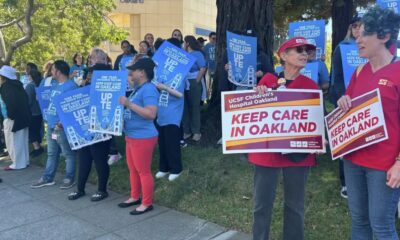
Oakland Children’s Hospital Workers and Patients Rally for Pediatric Medical Care
-
 Business6 days ago
Mount Zion MBC, Church of Jesus Christ of Latter-day Saints Partner to Bring 29,000 Meals to Alameda County
-
 Business6 days ago
Surveillance Pricing Fight: State Senate Debates Bill Banning Retailers from Using AI to Set Prices Based on a Buyer’s Profile
-
 Business6 days ago
Starting This Summer, California Car Buyers Can Get an Instant $3500 Off the Cost of Electric Vehicles
-
 Business1 week ago
Gov. Gavin Newsom Signs Law Streamlining Affordable Housing Rules
-
 Community2 weeks ago
NPRC Heads to Washington to Elevate Adult Guardianship Reform at National Whistleblower Summit
-
 Black History1 week ago
Saving Black Mothers Starts Outside the Hospital
-
 Black History6 days ago
Fed Court to Decide Landmark First Amendment Case
