
Black History
Fed Court to Decide Landmark First Amendment Case
CHICAGO DEFENDER — Three federal judges in Atlanta heard oral arguments in July regarding the appeal of the 2024 conspiracy conviction of the Uhuru 3. This appeal challenges the conviction of Chairman Omali Yeshitela, Penny Hess, and Jesse Nevel, who were found guilty of conspiracy to be secret agents of Russia. This verdict followed their acquittal on charges of serving as secret Russian agents.

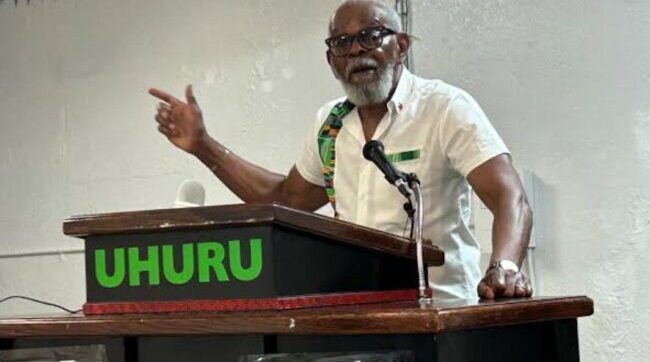
On July 22, 2026 three federal judges in the 11th Circuit Court of Appeals in Atlanta – Chief Judge William Pryor, Judge Jill Pryor and Judge Andrew Brasher – heard oral arguments in the appeal of the 2024 unconstitutional conspiracy conviction of the Uhuru 3.

A Tampa jury had acquitted 84-year-old veteran African liberation fighter Chairman Omali Yeshitela and two white reparations organizers Penny Hess and Jesse Nevel of serving as secret agents of Russia, but contradictorily convicted them on the secondary false charge of conspiracy to be secret agents of Russia – all because they had expressed opinions opposing the U.S. support for Ukraine along with advocating for reparations to African people and charging the U.S. with genocide in its treatment of Black people.
This precedent-setting anti-colonial free speech fightback has won international and national support from First Amendment defenders and social justice activists from across the political spectrum, including the National Lawyers Guild, the Civil Liberties Defense Center, the National Conference of Black Lawyers, the Center for Political Innovation, the U.S. Peace Council, U.S. Hands Off Cuba Committee, former NYC Councilman Charles Barron, Dr. Cornel West, Jimmy Dore, Max Blumenthal, Dr. Gerald Horne and Tucker Carlson.
During the 2024 trial, the Uhuru 3’s legal team convinced the jury that the opinions expressed by Yeshitela were his own and not directed by the Russian government by showing print and video evidence of Yeshitela’s activism spanning decades.
Chairman Omali’s published writings, showing a consistent worldview of African Internationalism and anti-colonialism, can be read in 58 years of The Burning Spear newspaper, freely available in the University of Florida’s digital newspaper collection.
In the past five decades he has traveled to seventeen countries to speak to audiences, including in 2019 as the winning presenter at the Oxford Union’s “Africa Debate”. He has been interviewed and featured on platforms such as CNN, Democracy Now, Al Mayadeen, Press TV and countless national and international radio stations, podcasts and newspapers.
The DOJ had argued that the Uhuru 3 are engaged in spreading disinformation “even if the information is true but it makes the government look bad.”
In their earlier Motion to Dismiss, attorneys for the Uhuru 3 argued, “The government here is using a federal criminal statute to prosecute members of an activist group for political speech and activism in opposition to U.S. foreign policy. In so doing, this prosecution strikes at the heart of the First Amendment.”
“This is the first case in which the government has used the statute that criminalizes unregistered foreign agents (18 USC §951) to target political or dissenting speech. In short, if this case is allowed to go forward, it will reverse more than eight decades of Supreme Court precedent that prohibits the government from targeting dissenting political speech and dissent.”
The appeal of the Uhuru 3’s false conviction on the lesser charge of conspiracy was filed a year ago on June 16, 2025. It argues three points, that:
- The lower court’s finding that lawful political speech loses its First Amendment protections when the speaker is alleged to be a Russian agent, should be reversed.
- The government presented insufficient evidence of a conspiracy as it presented no evidence, as conceded by the government’s own case agents, that the APSP defendants 1) acted or agreed to act under the direction or control of Ioniv or the AGMR, or 2) knew of the registration requirement, essential elements of a conspiracy.
- The jury was misled to believe that it could convict the defendants on the conspiracy charge despite the absence of evidence as to the underlying crime.
More than 80 Uhuru 3 supporters packed the Atlanta courtroom again on July 22, spilling into an overflow room where attendees watched the proceedings on closed circuit TV.
Notable figures attending the hearing included Attorney Mawuli Davis, National Co-Chair of the National Coalition of Black Lawyers; Belinda Parker Brown of Louisiana United International; Efia Nwangaza, veteran of the Student Nonviolent Coordinating Committee (SNCC) and Malcolm X Center for Self-Determination; John McCarthy of the Center for Political Innovation; Mark Friedman of the U.S. Hands off Cuba Committee and Paulette Dauteuil of the Jericho Movement and Leonard Peltier Ad Hoc Defense Committee.
Not a “content neutral” prosecution
The oral argument hearing took less than thirty minutes. Uhuru 3 Attorney Leonard Goodman began: “This is a novel case. It’s the first time that Section 951 has been used to directly target speech. The indictment does not allege that any of these defendants conspired to commit espionage or destroy property. Rather the indictment charges a conspiracy to disseminate pro-Russian political speech, which is described in the indictment as Russian “propaganda and disinformation”.
Chief Judge Pryor interjected, “This indictment seems to be necessarily to implicate speech, but the real question is whether the offense, that is, the failure to register for acting as an agent of a foreign government, is content neutral? It seems to me that it is. It may be that the speech activities on behalf of that foreign state would be evidence that you are an agent that hasn’t registered.
He went on to ask, “imagine for me a hypothetical where the individual was acting as an agent on behalf of the state of Israel and was advocating the attack on Iran, which the United States government was involved in as well and was supportive of the United States activities as well. It seems to me that would be an offense under this statute in that situation just as much as in this situation.”
Attorney Goodman tried to expose the fallacy of “content neutrality” by citing the think tanks in Washington D.C. that receive millions of dollars from U.S. allies who are not indicted as unregistered foreign agents, but he was cut off by the judges.
Some court observers were concerned that the judges’ comments appeared to favor the prosecution. But speaking to reporters as the Uhuru 3 and supporters emerged from the Atlanta Federal Courthouse, Chairman Omali said, “The court recognized there are some issues that need resolution. Attorney Leonard Goodman did an extraordinary job. The prosecution did not have a reasonable explanation about why we were facing conspiracy charges when the jury had found us not guilty on the foundational charge.”
He went on to say, “Nobody in this country has a connection to the struggle for free speech more than Black people. When the Bill of Rights was adopted in 1791, African people were property. We had no rights. There was no assumption it was for us. This is what I’m hoping that, particularly white people, would come to understand. When they came for us around free speech issues that we never had, it’s not us they’re coming for, they’re coming for you. They’re coming for everyone.”
Chairman Yeshitela’s lawyer, Attorney Ade Griffin declared, “We’re here today to change the law for generations to come. And that’s an extremely hard thing to do.”
At the Debrief
Uhuru 3 supporters then walked to the nearby Georgia State University College of Law for a debrief discussion forum and lunch co-sponsored by the Black Law Students Association and the Davis Bozeman Johnson Law group.
Attorney Leonard Goodman shared his reflections on the hearing. “When federal prosecutors want to prosecute some poor old lady for a drug conspiracy because her son was selling drugs in the house and she was ignoring the signs, they ask for what’s called an ‘ostrich instruction’ which is you can’t put your head in the sand and not see what’s going on around you.
“Well, it should have been applied to the judges as well because it was a little shocking to hear them suggest that we are going to find that this was a content-neutral prosecution. ‘We weren’t going after these people because they are pro-Russia and it just so happens that we raided their home three months after Russia invaded Ukraine and Omali started giving speeches saying we shouldn’t be fueling this war by sending bombs to Ukraine. It’s just a coincidence.’”
“President Trump took how many millions from Miriam Adelson, a dual citizen, who was born in Israel and a direct quid pro quo. And I say this as an American Jew, bar mitzvah’d in Chicago. If the decision goes against us, we’ll be filing a petition for rehearing and if that’s denied we will go to the Supreme Court.”
Angela Reaney agreed, “If we lose today, it just means that we have an opportunity to make a bigger impact in the Supreme Court.”
Attorney Mutaqee Akbar, legal counsel for Uhuru 3 member Jesse Nevel, is the son of legendary African psychologist Na’im Akbar. He agreed that, “It’s clear that you all were targeted because of what you were saying. But the same doesn’t apply when people advocate on behalf of Israel. Think about AIPAC. They don’t say the same thing when people advocate for other European nations that go along with what the United States says, that go along with colonialism. It’s only when you speak against what this government says you shouldn’t speak against. The fact that it’s not right just means we need to keep fighting. The struggle continues.”
Chairman Omali discussed the vanguard role of the African anti-colonial struggle in keeping democratic space open for everyone. “It was not the struggle against facism that destroyed McCarthyism or kept society open. It was the struggle of Black people against colonialism that kept the society open.”
Some supporters who attended the court hearing expressed frustration and asked why the judges were allowed to interrupt and take up the time that was supposed to be allotted to the defense lawyers.
Attorney Goodman replied, “They have the power. We don’t.”
Chairman Yeshitela added, “Yet.”
More info at www.handsoffuhuru.org
The post Fed court to decide landmark First Amendment case appeared first on Chicago Defender.
Based on reporting by Chicago Defender.









Black History
Practitioners of African Traditional Spirituality Offer Ancestral Reverence Ritual Oct. 31
The Council for Global Ancestral Reverence will host “Ancestral Souls Rising” from Oct. 31 to Nov. 2, featuring a three-day gathering of prayer and discussion. Led by elders and priests across the African diaspora, the seventh annual ritual honors those lost without traditional rites while addressing current social challenges. This year’s event connects ancestral wisdom with contemporary issues, including a two-day conversation inspired by Afro-Beat music focused on Black community solidarity and the sacred importance of voting. Read more for details on the ritual schedule and participants.
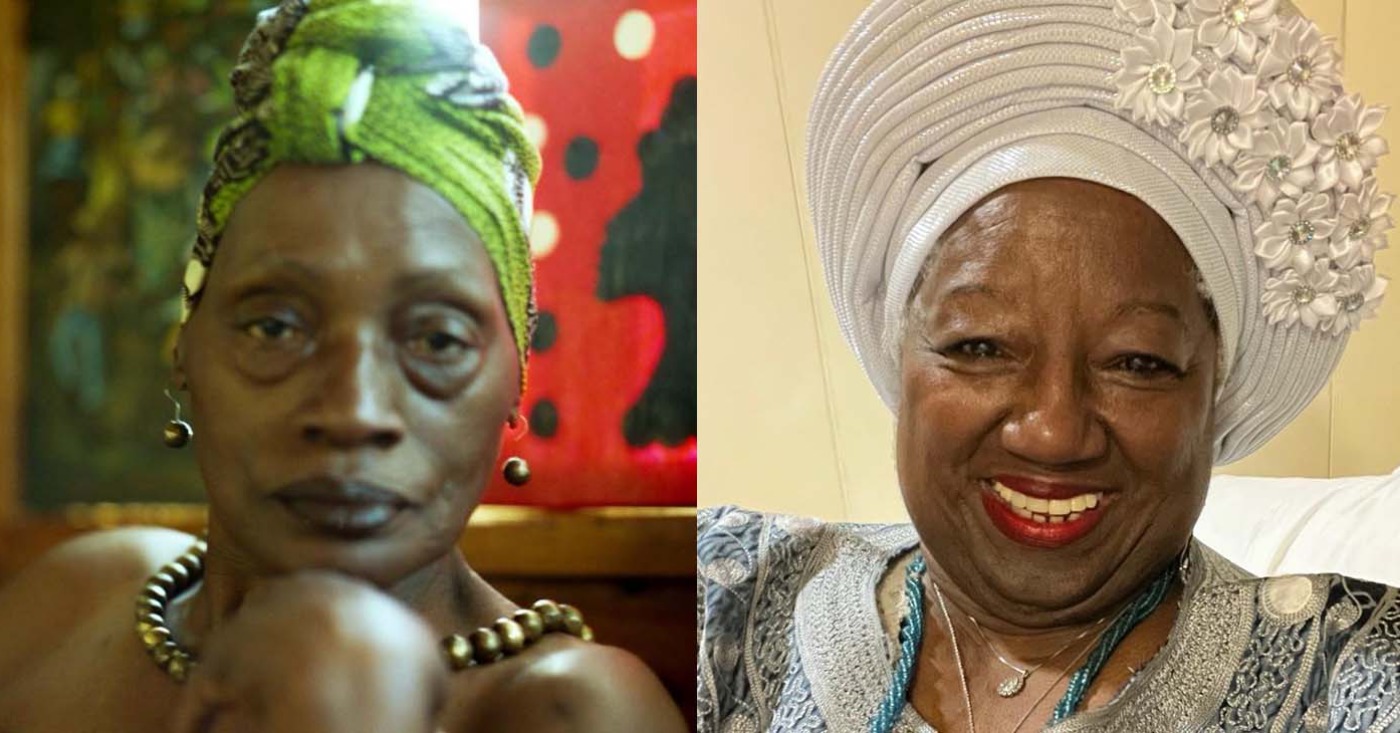
The Council for Global Ancestral Reverence (C4GAR), a group of elders who practice African traditional spirituality, will lead a three-day gathering of prayer and discussion from Oct. 31-Nov. 2.
Called ‘Ancestral Souls Rising,’ the council members and 21 priests will lead the prayers from many parts of the African diaspora: Africa, Portugal, and across the U.S. from Maryland to the Bay Area.
Now in its seventh year, the annual ritual began during the 2020 pandemic when hundreds of thousands of people died alone and were buried in mass graves without rites and rituals according to loved ones’ traditions.
This prayer event was and is intended to give peace to the departed and comfort for the living who still mourn. Each year, we gather names of new ancestors from living elders to elevate them into the “Great Hall of the Titans.”
In ensuing years, C4GAR added themes to the prayer gathering that referenced current events. In 2024, before the consequential presidential election, C4GAR called on people to vote, invoking the memory of Civil Rights Movement heroes and heroines like John Lewis, who urged “Good Trouble,” and Fannie Lou Hamer, who famously declared that she was “sick and tired of being sick and tired.”
The day of global Prayer on Oct. 31 will be followed by a two-day conversation inspired by “The Blueprint,” an Afro-Beat song by UyiosaEl, to write our new blueprint that supports solidarity and action in the Black community.
“Our elders have, for many generations, known the power of prayer, ritual and breath,” the council said in a statement.
It was and is their intention, then, to use the cultural wisdom, the gift of prayer “and the most sacred thing we have, our breath, to send energy into the world that invokes and honors our ancestors,” the council statement continued.
“Doing this creates a vibration that protects us and employs their ancient wisdom for the well-being of our communities,” the elders said.
The councilmembers, all over the age of 60, recognize that what is now history for so many was once their lived experience. And that history, those joys and sorrows, are now in their bodies.
To them, the uttered prayer and the sacred breath are oaths to an unfolding future that people can still shape.
The council members are Dr. Iyabeji Cathy Royal, Iyalocha Jennifer Dillard, Manbo Charlene Desir (Florida), Nana Sula Spirit (Louisiana), Baba Obafemi Feyemi, Ohen Nedra T. Williams, and Iyalocha Wanda Ravernell-Stewart Emeritus (Oakland).
This year, they also encourage everyone within their reach to VOTE because it is not only a secular and political act, but a sacred one. Remember, the ancestors were denied that right and died for it.
For tickets, go to:

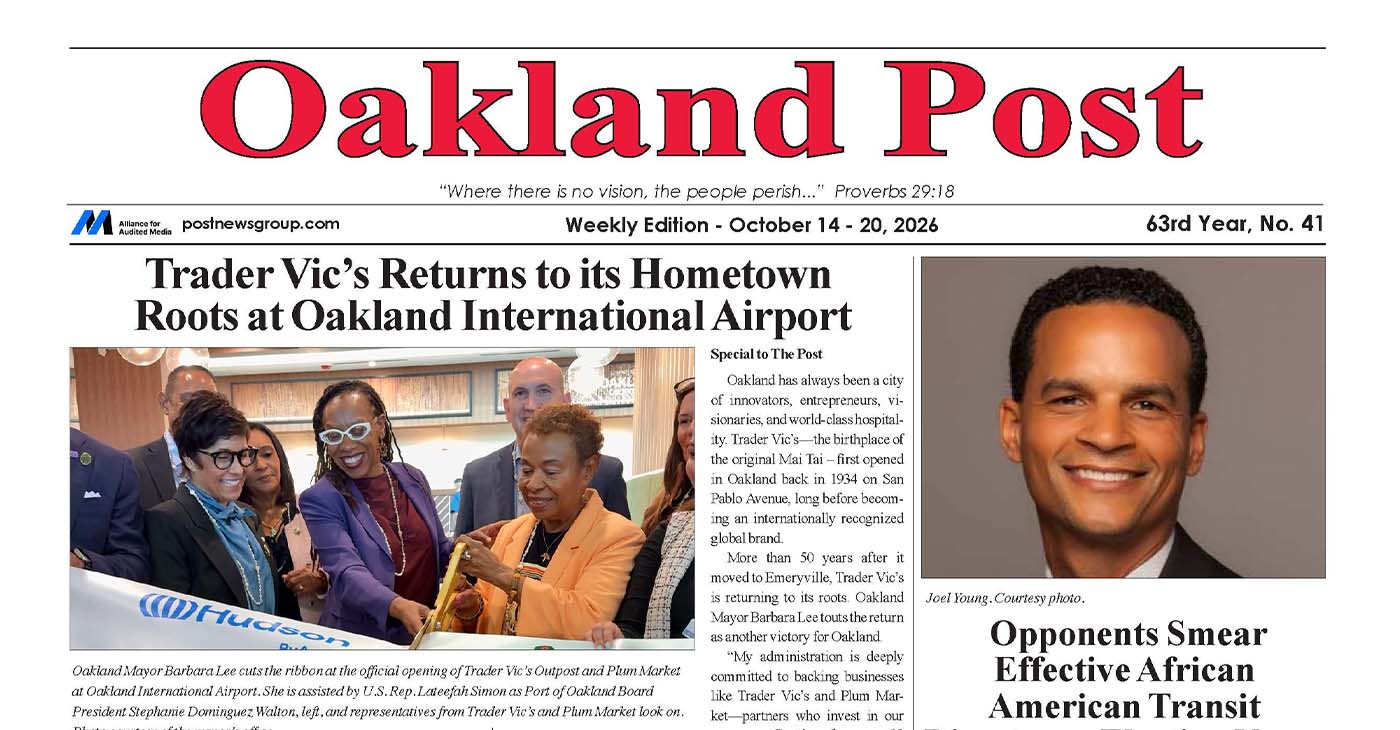
To enlarge your view of this issue, use the slider, magnifying glass icon or full page icon in the lower right corner of the browser window.

Black History
OP-ED: The Black Church Writes AI’s Next Chapter
BLACKPRESSUSA NEWSWIRE — I implore my fellow faith leaders to use these tools. Start now and use them with wisdom. We count on each and every one of you to make sure our communities help write the next chapter of this story. This rapid change is not as unfamiliar as it may sound. My first understanding of AI came from using a calculator for the first time in grade school. We did not call it AI, but it was a tool that helped me work through mathematical equations hours more efficiently.

For generations, the Black church has stood strong in our communities through every historical change this country has experienced. During the civil rights movement and in recent times, faith leaders have helped uplift Black sanctuaries to register voters, keep food pantries open for people in need, and sit with families in hospital rooms in their most desperate moments. When our people faced new trials, they could always look to our faith leaders and the church to lean in to help us be included in these transformative changes.
Artificial intelligence is the latest revolutionary change to impact our society, and much like other transformations before us, underserved communities often get left behind.
I was recently featured in a report entitled “Faith, Community & AI” and it found that people send ChatGPT more than 70 million messages a week about religion. Nearly 22 million involve studying sacred texts, and 16 million ask about religious practices and holy days. Our members make up part of those numbers. They bring questions of faith to these tools every day.
Pastors have noticed, and according to a September 2025 Lifeway Research survey of 1,003 Protestant pastors, 42 percent said they use or experiment with AI in ministry. I count myself among them.
I write my sermons by hand, through prayer and study. When I finish a draft, I ask ChatGPT this question: “Where might this sermon become unclear or difficult to follow for someone early in their walk of faith?” It shows me gaps in my preparation, like where I incorrectly assumed everyone would know the context of who the Pharisees were. Then, change comes from my own pen, not the robot. The tool helps me reach the person in the back pew while the message still comes from me.
If I could have my wish, our whole community would take a similar posture. We must use these tools, understand them, and most importantly be present to help shape them if we want to be included in the coming change.
I implore my fellow faith leaders to use these tools. Start now and use them with wisdom. We count on each and every one of you to make sure our communities help write the next chapter of this story. This rapid change is not as unfamiliar as it may sound. My first understanding of AI came from using a calculator for the first time in grade school. We did not call it AI, but it was a tool that helped me work through mathematical equations hours more efficiently.
It starts with training; there is no involvement without understanding. Free AI trainings have begun in our churches and community centers across the nation. Every faith leader should sign up and, when possible, encourage members of your congregations to join you. By learning how to use AI, we can better understand what it can do, make up our own minds about its impact, and have a say in how it shapes our communities.”
Next, we must be at the tables where the builders of these tools make decisions. Presence is the first step toward understanding, and that gap is only bridged through a coordinated effort. How can any tool serve a community well if that community is not part of the conversation? Our traditions, needs, and concerns must be accounted for, and Black faith leaders are already making that happen. OpenAI’s recent Faith report states plainly that AI should never become an arbiter of religious truth. I fully intend to hold the company to its word, and the most effective way I can do that is from inside.
I will close with this––we must diligently protect what only the church can give. A believer in Seoul, Korea quoted in the report warned, “if you pour every struggle into a private chat, your pastor and your friends may never learn you need help.” A chatbot will not sit with a grieving family or pray with you at two in the morning. As we adopt this technology, it is up to us to ensure it keeps people connected to each other and to their church.
Rev. Dr. Adolphus Lacey is senior pastor of Bethany Baptist Church in Brooklyn, New York.


Mayor Barbara Lee Holds Special State of the City Address in Deep East Oakland

Practitioners of African Traditional Spirituality Offer Ancestral Reverence Ritual Oct. 31

It’s Time to Lose Weight Before the Holidays

Trader Vic’s Returns to Its Oakland Roots

Oakland Coal Terminal Backed by Trump Would Be Bigger, Dirtier Than Promised, Says Report

Opponents Smear Effective African American Transit Director as Election Nears

Oakland Post: Week of October 14 – 20, 2026

OP-ED: The Black Church Writes AI’s Next Chapter

OP-ED: The Black Church Writes AI’s Next Chapter

WCCUSD Joins Statewide Organic School Food Purchasing Cooperative

Democrats, Community Groups Back Measure EE to Change How Oakland Is Governed

Four Tips to Help You Plan a Holiday “Staycation”

Veterans Housing Project Proposed for South Richmond
PRESS ROOM: Transformative Justice Coalition 2026 Voting Rights Champion Awards Reception ‘Yesterday Is Today: The Battle For Voting Rights

Mayor Lee Delivers 2026 State of the City Address: ‘Oakland Continues to Be on the Move’

Misnamed ‘Parent’ PAC Seeks to Influence Oakland School Board Elections

Listening as a Lifeline: A Doula’s Witness to Black Maternal Health

Poll: Becerra Widens His Lead Over Hilton; Californians Split on Wealth Tax

County Office of Education Says OUSD Finances Are Getting Healthier, Materially Stronger

Oakland Post: Week of September 9 – 15, 2026

Doulas Are Helping Black California Moms Navigate Pregnancy–Even as High Mortality Rates Persist

Mayor Lee Announces $1 Million Kaiser Permanente Grant for Pilot Program to Address Homelessness, Clean Up Public Spaces throughout Oakland

Richmond Tiny House Village Farm & Garden Set to Open Gates on Sept. 26

Zakiya Jendayi Arrested, Locked Out of Home by Sheriff’s Deputies

OPINION: Nolan Wells’ Death One of Several Signifying Racial Terror Lives on in U.S. South

Latest Massacre in Haiti Reveals Cruelty U.S. Deportations

BLACspace Cooperative Invites Bay Area to Experience Oakland’s Black Cultural Ecosystem Through a BLAC Map Tour + Party

Oakland Post: Week of September 16 – 22, 2026

Democratic Clubs Interview Candidates for Oakland School Board

Oakland People’s Arms Embargo Coalition Demands End to Military Shipments Thru Oakland

The Conversation With Al McFarlane 6/23/26

Media Monday 6/22/26

LIVE! ASK ALMA! — TUES. 6.23.26 7PM EST

Car Buying Secrets: 4 Hidden Checks Before You Sign!

Is This 550 HP Charger Worth YOUR Money? AutoNetwork Review

Celebrating Juneteenth – Frederick Douglass on education and resistance

LIVE! — ASK ALMA! — TUES. 6.19.26 7PM EST

Hyundai Ioniq 5 Parking, Safety, and 360 View #shorts

2025 Ioniq 5 New Wiper & Powerful Performance! #shorts

Electric SUV Range: Is 259 Miles Enough? #shorts

EV Charging: How Fast Can You Charge an Electric Vehicle? #shorts

Biometric Cooling… Messaging Seats…Come on! 2025 Infiniti QX80 Autograph 4WD

Charged Up: Witness the Magic of a Fully Electric Car! #shorts

Range Rover Sport PHEV Included…: See What’s Inside This Luxury SUV! #shorts

Invisible Hood View: Perfect Parking with X-Ray Vision! #shorts
-
 Black History3 weeks ago
Listening as a Lifeline: A Doula’s Witness to Black Maternal Health
-
 Economy4 weeks ago
Poll: Becerra Widens His Lead Over Hilton; Californians Split on Wealth Tax
-
 Business4 weeks ago
County Office of Education Says OUSD Finances Are Getting Healthier, Materially Stronger
-
 Lead Story3 weeks ago
Zakiya Jendayi Arrested, Locked Out of Home by Sheriff’s Deputies
-
 Art4 weeks ago
BLACspace Cooperative Invites Bay Area to Experience Oakland’s Black Cultural Ecosystem Through a BLAC Map Tour + Party
-
 Business4 weeks ago
From Historic Memories to New Possibilities: Oakland Celebrates Coliseum 60
-
 Community4 weeks ago
Asm. Corey Jackson Announces Launch of 24-Hour Childcare in His District
-
 Black History4 weeks ago
IN MEMORIAM: The Rev. Leon “Sonny” Clark, Longtime Orange County Pastor and Community Leader, Dies at 72
