
Activism
Blunt Trauma: Cop Beats Black Teen Over Cigar, Sparking Outrage and Familiar Swisher Sweet Debate

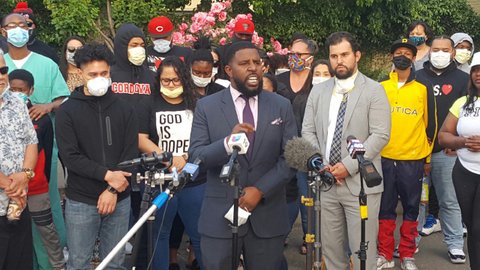
A shocking video of a police officer beating a 14-year-old African American boy over a Swisher tobacco cigarette is being shared across social media platforms around the world.
In the clip that has been re-posted tens of thousands of times, a Rancho Cordova deputy is captured pummeling the youth in his chest as he presses him to the ground in an incident that happened April 27.
Now, the family of the teen is calling for the firing of the officer, although stating that they understand the case involves a minor in possession of a cigarillo.
“There is no valid reason for Brian Fowell, an officer of the law, to punch a child in the face and chest. There is no valid reason for an officer to push a child’s face into the ground against a curb by their neck,” said Tanya Faison, founder of Black Lives Matter Sacramento in a written statement to California Black Media. “This 14-year-old boy posed no threat to this officer and the actions officer Brian Fowell took are dangerous for our community.”
The incident happened near a 7-Eleven store where the Rancho Cordova Police Department (RCPD) reports that the youth received the tobacco cigarette from an adult.
“The video of the Rancho Cordova deputy repeatedly hitting and slapping a much smaller unarmed 14-year-old boy is disturbing to us as parents and frustrating to us as lawmakers,” reads a statement the California Legislative Black Caucus (CLBC) released to California Black Media.
“Over the last few years, the legislature has made clear their expectations about the appropriate use of force and the need to find alternatives, especially when it comes to unarmed minors,” the statement continued.
Race, Police Use of Force, Black Teens and Nicotine Addiction
For decades now, activists have targeted tobacco products in the state of California, partially to deter young people from smoking or chewing the cured and dried leaves, which contain nicotine and can lead to addiction.
Carol McGruder, co-chair of the African American Tobacco Control Leadership Council, has been a major force in the anti-tobacco crusade in California. One of the main arguments she makes to lawmakers is her view that tobacco manufacturers target Black people with their products.
McGruder has been working hard to put the brakes on menthol cigarettes, cigarillos like Swishers, and e-cigarettes, which are used for vaping, a favorite way to consume tobacco among teens. Vaping has led to severe respiratory illnesses among first-time smokers, according to the Centers for Disease Control and Prevention.
“Anger, disgust, rage, these are the feelings we felt as we watched the video,” said McGruder. “Rage that another Black boy was traumatized by police brutality. As horrific as this video is, what is more horrific is that the biggest invisible killer and profiler of Black boys, the tobacco industry, will be able to latch onto it and use the legitimate concerns of our community to block public health policies that would stop the industry from profiling and addicting our children.”
Some Black leaders, including the Rev. Al Sharpton, president of National Action Network agree that tobacco is harmful to Black teens. But they also believe that over-taxing or outlawing the substance – particularly menthol cigarettes which Blacks smoke the most — creates an illicit underground market that puts young Black people under the scrutiny of law enforcement officers. He cites the case of Eric Garner in New York City. Garner was illegally selling “loosies,” unlicensed retail cigarette sticks, before police officers subdued, suffocated and killed him. Police surveillance, they say, increases the odds of dangerous, often times deadly, run-ins with the law like the one involving the cops and Garner — or the teen in Rancho Cordova.
“Often, tobacco and marijuana are used as smoke screens for racism and abuse in policing in Black and Brown communities,” says the Rev. Tecoy Porter, President, Sacramento branch of the National Action Network. “We must condemn those practices.”
Anti-Tobacco Laws in California and Around the U.S.
The California legislature has passed several laws aimed at curbing the use of tobacco. But neither lawmakers, nor the state’s health – nor its law enforcement – authorities have enacted explicit policy safeguards to prevent what happened in the Rancho Cordova incident, critics say.
San Francisco County was the first county in California to ban menthol cigarettes in the summer of 2017. In California, no state-wide ban has been put in place against the sale of flavored tobacco products. However, certain cities and counties in the state have instituted local ordinances prohibiting purchases.
The county of Sacramento banned the sale of menthol cigarettes as of January 1 of this year.
In September 2009, cigarettes with specific characterizing flavors were prohibited in the U.S., as part of the Family Smoking Prevention and Tobacco Control Act (TCA) that gave the U.S. Food and Drug Administration (FDA) authority over tobacco products.
Despite the FDA’s ban on flavored cigarettes, the overall market for flavored tobacco products continues to prosper. Tobacco companies significantly stepped up the introduction and marketing of flavored and other tobacco products (OTPs), particularly e-cigarettes and cigars, as well as smokeless tobacco and hookah tobacco.
“Black Boys Aren’t Born With a Newport or a Swisher Sweets in Their Mouths”
The Campaign for Tobacco-Free Kids says that tobacco companies claim to be responding to “adult tobacco” users’ demands for variety, but flavored tobacco products still have a key role in luring new users, they say, particularly kids, to a lifetime of addiction.
“Black boys aren’t born with a Newport or a Swisher Sweet in their mouths,” says McGruder. “Our community must understand that there is a highly organized and efficient system that does that.”
McGruder and other anti-Tobacco lobbyists say the police-use-of-excessive-force case in Rancho Cordova may have blown the lid off a problem that has been simmering for years. It has also put a focus on the Rancho Cordova Police Department and past allegations of police brutality.
Black Lawmakers, Rancho Cordova PD Release Sparring Statements
Sacramento County Sheriff’s Department spokesperson Sgt. Tess Deterding said in a written statement that the deputy was in the area responding to citizens’ complaints about sales of alcohol, tobacco and drugs to minors.
“It’s important to put the video footage into context, especially in relation to a use-of-force incident. In this case, the deputy saw what he believed to be a hand-to-hand exchange between an adult and juvenile,” Deterding stated.
The RCPD account stated that the officer had reasonable suspicion that criminal activity was occurring and the deputy attempted to detain the juvenile so he could continue the investigation. The juvenile became physically resistive, the RCDP continued in their written statement, causing the deputy to lose control of his handcuffs.
The deputy attempted to maintain control of the juvenile without his handcuffs while alone waiting for his partners to arrive and assist him, the report said. Ultimately, the deputy recovered tobacco products from the 14-year-old, which the RCDP presumes is the reason for his resistance.
“These are the facts as we understand them at this time. This investigation is in its infancy and the facts as we understand them now are subject to change as we conduct a more thorough and complete examination of the circumstances surrounding this incident,” Derterding stated.
But Black lawmakers responded to the RCPD official statement, countering that “this use of force is in no way proportional to the suspected crime or justified by the actions of the child. We will monitor this situation closely and expect that the officer will be held accountable for the abusive actions taken in the name of public safety.”
African Americans in Rancho Cordova
Rancho Cordova is approximately 14 miles east of downtown Sacramento. It was incorporated as a city in 2003, and has its own municipalities, including a mayor, city council, fire department and the Rancho Cordova Police department that is contracted through the Sacramento County Sheriff’s Department.
The city — whose history stretches back to the Gold Rush days of the mid-19th century and the era of the Pony Express — has a population of over 74,000, the World Population Review reported, a number based on a 2017 U.S. Census Bureau estimate.
The city, once home to Mather Air Force Base, is 60% White, 13% Asian, 21.6% Latino and 8.9% African American.
Out of 6,347 Black people who live in Rancho Cordova, 23% have household incomes below the poverty line, the highest number of all ethnic groups in the city, according to the World Population Review. Most African Americans live in some of the most underserved and hard-to-count census tracts in the state, according to California Black Media’s “Counting Black California: Roadmap to The Hardest-to-Count Census Tracts” report.
Past Allegations of Police Misconduct
Last week’s incident was not a first. The RCPD has been accused of aggression before and it has been hit by police misconduct lawsuits involving the Black community in the past.
In March 2019, African American twins, Carlos and Thomas Williams, say the officers of RCPD allegedly choked and beat them before taking them into custody.
The brothers filed a civil rights violation lawsuit, which claims they were arrested on a trumped up charge at Carlos Williams’ home.
Adanté Pointer, an attorney at the John L. Burris law firm in Oakland, who was speaking on behalf of the family of the 14-year-old Rancho Cordova teen, said this is too often the case.
“We’re talking about a kid buying tobacco and an officer with an opportunity to actually build community relationships in dealing with a young man,” said Pointer. “Instead, I’m certain, he’s left a mark on this young man’s spirit, soul and brain that will live with him for the rest of his life.”









Activism
Chase Oakland Community Center Hosts Alley-Oop Accelerator Building Community and Opportunity for Bay Area Entrepreneurs
Over the past three years, the Alley-Oop Accelerator has helped more than 20 Bay Area businesses grow, connect, and gain meaningful exposure. The program combines hands-on training, mentorship, and community-building to help participants navigate the legal, financial, and marketing challenges of small business ownership.

By Carla Thomas

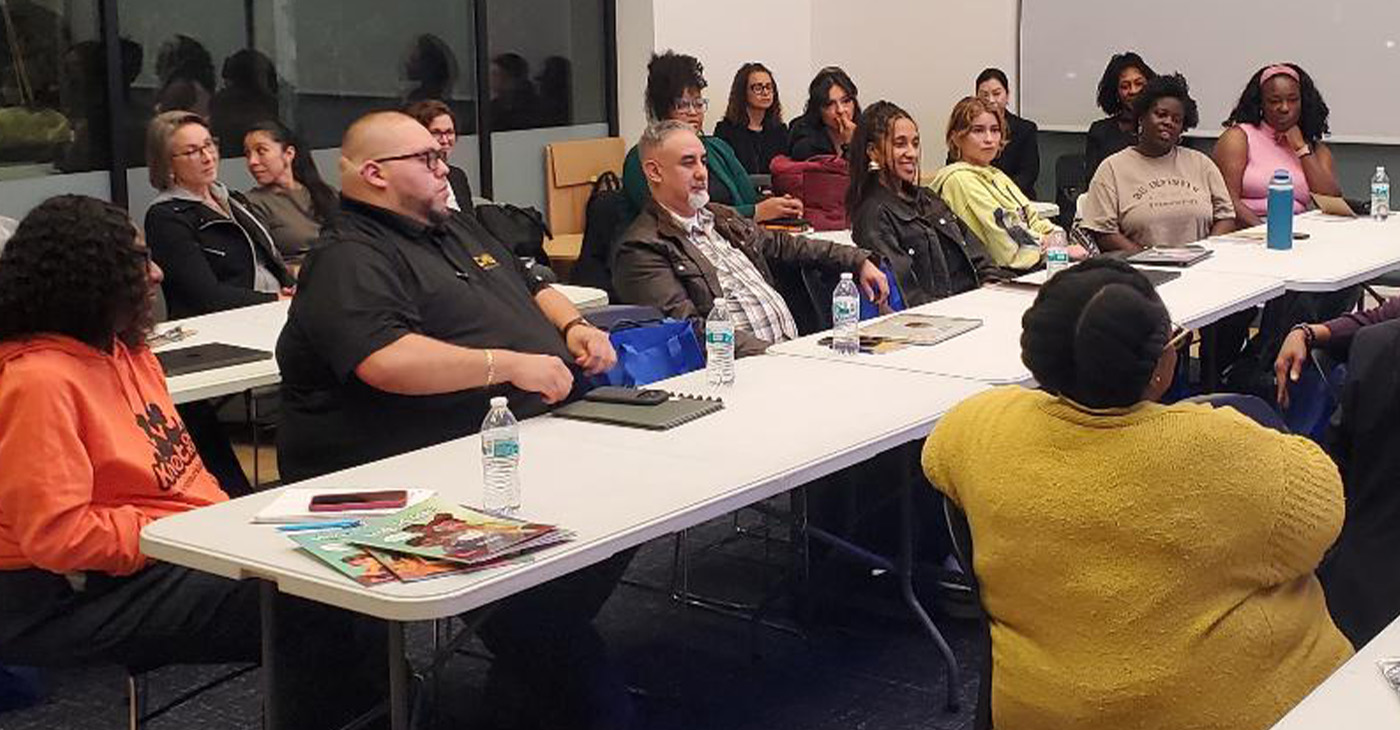
The Golden State Warriors and Chase bank hosted the third annual Alley-Oop Accelerator this month, an empowering eight-week program designed to help Bay Area entrepreneurs bring their visions for business to life.
The initiative kicked off on Feb. 12 at Chase’s Oakland Community Center on Broadway Street, welcoming 15 small business owners who joined a growing network of local innovators working to strengthen the region’s entrepreneurial ecosystem.
Over the past three years, the Alley-Oop Accelerator has helped more than 20 Bay Area businesses grow, connect, and gain meaningful exposure. The program combines hands-on training, mentorship, and community-building to help participants navigate the legal, financial, and marketing challenges of small business ownership.
At its core, the accelerator is designed to create an ecosystem of collaboration, where local entrepreneurs can learn from one another while accessing the resources of a global financial institution.
“This is our third year in a row working with the Golden State Warriors on the Alley-Oop Accelerator,” said Jaime Garcia, executive director of Chase’s Coaching for Impact team for the West Division. “We’ve already had 20-plus businesses graduate from the program, and we have 15 enrolled this year. The biggest thing about the program is really the community that’s built amongst the business owners — plus the exposure they’re able to get through Chase and the Golden State Warriors.”

According to Garcia, several graduates have gone on to receive vendor contracts with the Warriors and have gained broader recognition through collaborations with JPMorgan Chase.
“A lot of what Chase is trying to do,” Garcia added, “is bring businesses together because what they’ve asked for is an ecosystem, a network where they can connect, grow, and thrive organically.”
This year’s Alley-Oop Accelerator reflects that vision through its comprehensive curriculum and emphasis on practical learning. Participants explore the full spectrum of business essentials including financial management, marketing strategy, and legal compliance, while also preparing for real-world experiences such as pop-up market events.
Each entrepreneur benefits from one-on-one mentoring sessions through Chase’s Coaching for Impact program, which provides complimentary, personalized business consulting.
Garcia described the impact this hands-on approach has had on local small business owners. He recalled one candlemaker, who, after participating in the program, was invited to provide candles as gifts at Chase events.
“We were able to help give that business exposure,” he explained. “But then our team also worked with them on how to access capital to buy inventory and manage operations once those orders started coming in. It’s about preparation. When a hiccup happens, are you ready to handle it?”
The Coaching for Impact initiative, which launched in 2020 in just four cities, has since expanded to 46 nationwide.
“Every business is different,” Garcia said. “That’s why personal coaching matters so much. It’s life-changing.”
Participants in the 2026 program will each receive a $2,500 stipend, funding that Garcia said can make an outsized difference. “It’s amazing what some people can do with just $2,500,” he noted. “It sounds small, but it goes a long way when you have a plan for how to use it.”
For Chase and the Warriors, the Alley-Oop Accelerator represents more than an educational initiative, it’s a pathway to empowerment and economic inclusion. The program continues to foster lasting relationships among the entrepreneurs who, as Garcia put it, “build each other up” through shared growth and opportunity.
“Starting a business is never easy, but with the right support, it becomes possible, and even exhilarating,” said Oscar Lopez, the senior business consultant for Chase in Oakland.

Activism
Oakland Post: Week of February 18 – 24, 2026
The printed Weekly Edition of the Oakland Post: Week of – February 18 – 24, 2026
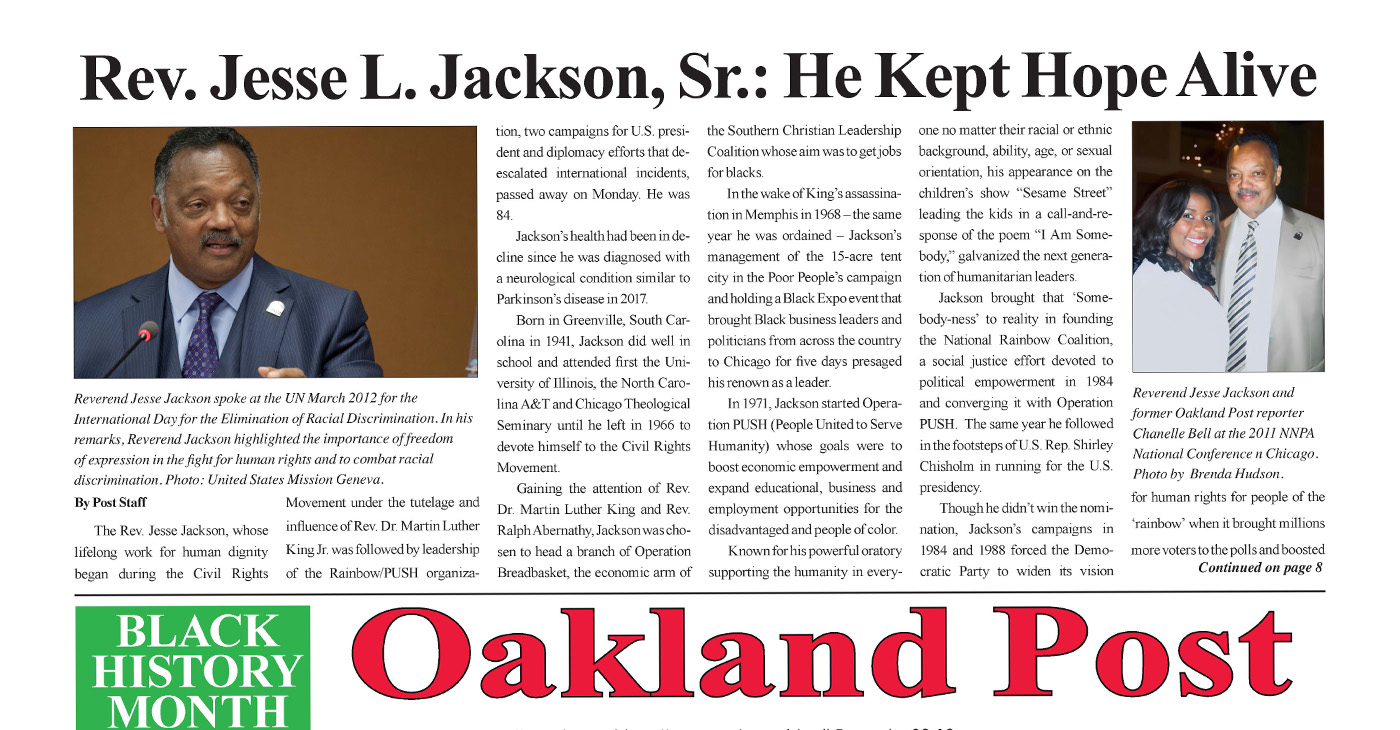
To enlarge your view of this issue, use the slider, magnifying glass icon or full page icon in the lower right corner of the browser window.
Activism
Oakland Post: Week of February 11 – 17, 2026
The printed Weekly Edition of the Oakland Post: Week of – February 11 – 17, 2026

To enlarge your view of this issue, use the slider, magnifying glass icon or full page icon in the lower right corner of the browser window.

WORK FROM HOME
Home-based business with potential monthly income of $10K+ per month. A proven training system and website provided to maximize business effectiveness. Perfect job to earn side and primary income. Contact Lynne for more details: Lynne4npusa@gmail.com 800-334-0540


PRESS ROOM: NBA Hall of Fame Nominee Terry Cummings Joins 100 Black Men of DeKalb County to Launch Victory & Values Initiative

Reflecting on Black History Milestones in Birmingham AL

OP-ED: One Hundred Years of Black Workers Telling the Truth

PRESS ROOM: Civil Rights TV Launches in Selma as the World’s First 24/7 Civil Rights Television Network

Advancements in solar technology that are changing the way we power the world

U.S. manufacturing rebounds – how foundry services are adapting to rising demand

Why has blood testing become so popular in today’s world?

Ghana Mourns a Son of the African World

OP-ED: Trump’s Policies Hurt Black America—and Everyone Else

OP-ED: Meta Deleted Me. I Still Don’t Know Why. And neither will you.

More than a Mission: Paying It Forward for the Future of Education

Avoid Eviction This Season: Landlord Checklist for Stable Tenancies

How chronic back problems affect Black communities differently

How cancer care is evolving with modern medicine

Diabetes disparity: Understanding Type 2 risks for Black Americans

Life Expectancy in Marin City, a Black Community, Is 15-17 Years Less than the Rest of Marin County

Oakland Post: Week of January 28, 2025 – February 3, 2026

Community Celebrates Turner Group Construction Company as Collins Drive Becomes Turner Group Drive

California Launches Study on Mileage Tax to Potentially Replace Gas Tax as Republicans Push Back

Discrimination in City Contracts

Oakland Post: Week of January 21 – 27, 2026

Book Review: Books on Black History and Black Life for Kids

Medi-Cal Cares for You and Your Baby Every Step of the Way

COMMENTARY: The Biases We Don’t See — Preventing AI-Driven Inequality in Health Care

Post Newspaper Invites NNPA to Join Nationwide Probate Reform Initiative

After Don Lemon’s Arrest, Black Officials Raise Concerns About Independent Black Media

OP-ED: The Dream Cannot be Realized Without Financial Freedom

COMMENTARY: The National Protest Must Be Accompanied with Our Votes

Black History Events in the East Bay

Art of the African Diaspora Celebrates Legacy and Community at Richmond Art Center

Hyundai Ioniq 5 Parking, Safety, and 360 View #shorts

2025 Ioniq 5 New Wiper & Powerful Performance! #shorts

Electric SUV Range: Is 259 Miles Enough? #shorts

EV Charging: How Fast Can You Charge an Electric Vehicle? #shorts

Biometric Cooling… Messaging Seats…Come on! 2025 Infiniti QX80 Autograph 4WD

Charged Up: Witness the Magic of a Fully Electric Car! #shorts

Range Rover Sport PHEV Included…: See What’s Inside This Luxury SUV! #shorts

Invisible Hood View: Perfect Parking with X-Ray Vision! #shorts

AI Is Reshaping Black Healthcare: Promise, Peril, and the Push for Improved Results in California

ESSAY: Technology and Medicine, a Primary Care Point of View

Sanctuary Cities

The RESISTANCE – FREEDOM NOW

STATE OF THE PEOPLE: Freddie

ECONOMIC BOYCOTT DAY!!!!!

I told You So
-
 Activism4 weeks ago
Life Expectancy in Marin City, a Black Community, Is 15-17 Years Less than the Rest of Marin County
-
 Activism4 weeks ago
Oakland Post: Week of January 28, 2025 – February 3, 2026
-
 Activism3 weeks ago
Community Celebrates Turner Group Construction Company as Collins Drive Becomes Turner Group Drive
-
 Business3 weeks ago
California Launches Study on Mileage Tax to Potentially Replace Gas Tax as Republicans Push Back
-
 Activism3 weeks ago
Discrimination in City Contracts
-
 Arts and Culture3 weeks ago
Book Review: Books on Black History and Black Life for Kids
-
 Activism4 weeks ago
Medi-Cal Cares for You and Your Baby Every Step of the Way
-
 Activism3 weeks ago
COMMENTARY: The Biases We Don’t See — Preventing AI-Driven Inequality in Health Care
