
Politics
Black Republican Opponent Expected to Defeat Stockton’s Popular Democratic Mayor Michael Tubbs


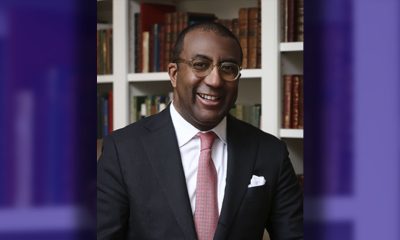
In 2012, Stockton, California, elected 22-year-old Michael Tubbs to his hometown’s city council.
From that celebrated victory to his 2017 rise to mayor of the Central Valley city, media pundits and Democratic Party insiders have hailed Tubbs, calling him one of the Democratic Party’s rising stars.
Tubbs’s future as a force in the Democratic party still remains almost certain, but on Nov. 3, the 30-year-old Stanford grad suffered an unexpected blow. As of Friday, Nov. 13, Tubbs was trailing Republican challenger Kevin Lincoln in his reelection bid.
Lincoln, who has never held political office, was leading Tubbs by almost 4,000 votes. Lincoln currently has 43,751 votes (55.05%) to Tubbs’s 35,724 votes (44.95%), with more ballots to be counted.
With this loss, Tubbs, the 79th mayor of the seat of San Joaquin County, joins a club of one-term Stockton mayors who couldn’t pull off a run for a second term.
Edward Chavez (2005 – 2008), Ann Johnston (2009 – 2012), and Anthony Silva (2013 – 2016) were all one-term mayors of the San Joaquin River port city.
“Over the last four years we have built a solid foundation towards a better future,” Tubbs said in a written statement. “It is my hope to continue this work as (Stockton’s) mayor. However, before anyone can declare a victory, each and every vote must be counted.”
When he was elected in 2016, Tubbs, then 26, became the youngest mayor in Stockton’s history and the first Black person to claim the seat.
Tubbs’s opponent is also Black. Lincoln’s grandfather, an immigrant from Mexico who came to California and settled in South Stockton, raised his family there and became a United States citizen.
Lincoln, who was born in Stockton, grew up in a U.S. Army family. As a youth, he volunteered at the California Youth Authority where he spoke to and encouraged youth in the juvenile justice system.
For now, Lincoln is excited about his lead, but cautious.
“There are definitely more votes to be counted and we’re definitely not counting our chickens before they hatch,” Lincoln said. “We still feel really good.”
Stockton has a population of 312,697 residents, according to the 2019 U.S. Census. An estimated 35,548 residents (12.2%) of Stockton are African American.
Even as he faces a career-derailing loss, Tubbs can look back on a record full 0f accomplishments and a personal
contact list of heavy hitters. He made both national and California history as the youngest mayor who has led a city with a population of over 100,000 residents.
Fortune magazine honored Tubbs among its 2018 Top “40 under 40,” and he made Forbes’ 2018 list of the “30 Under 30.” He was also celebrated that year among the “Root 100,” that publication’s annual list of influential African American achievers.
The Sacramento Observer, California capital city’s oldest African American-owned newspaper, has also celebrated Tubbs among its own “30 Under 30” award recipients.
Tubbs also has close and longstanding relationships with former U.S. President Barack Obama and entertainment mogul Oprah Winfrey. He also served as one of billionaire Michael Bloomberg’s surrogates when the New York businessman was running for president.
HBO released a documentary, “Stockton On My Mind,” featuring Tubbs, then a millennial, who was born to a teenage mother and father who spent some time in prison.
Some political observers say that Tubbs’s perceived star status on the national scene may have distracted him from paying close attention to political priorities at home.
“The mayor may have too much star power and may or may not be sufficiently focused on doing the work in Stockton,” Brian Clark, associate professor of political science at Stockton’s University of Pacific.
Other Stockton residents say Tubbs ran afoul of the will of local voters when he recommended selling one of the city’s 70-year-old golf course to a private operator.
Meanwhile, the national media praised Tubbs for launching the Economic Security Project, the nation’s first municipal-level basic income pilot. About 125 people in high-poverty areas were randomly picked to receive $500 monthly in cash to help with unaffordable expenses.
The program is expected to end in January 2021. Billionaire and Twitter Chief Executive Officer Jack Dorsey donated $3 million to Tubbs’ “universal basic income” program.
As a council member, Tubbs created the Reinvent South Stockton Coalition, championed the creation of the City’s Office of Violence Prevention, and was part of the council that led the city out of bankruptcy as Chair of the Audit and Legislative Committee.
“I tell people from the beginning, whenever you make a change, whenever you push another system, whenever you talk about equity or justice and opportunity for the people, there’s going to be some pushback. I didn’t expect to get 70% of the votes like I did four years ago because I’ve done some things,” Tubbs said on Nov. 3 at BellaVista Rooftop in Stockton.
As for Little, he says, he has always had a desire to serve his country. He joined the United States Marine Corps (USMC) in 2001. He was later recruited by the White House Military Office and assigned to Marine One, where he served President George W. Bush.
Following his service in the military, Lincoln worked for one of the nation’s top private security companies for eight years in Silicon Valley.
In 2013, Lincoln resigned from his corporate position to serve his community in Stockton through full-time ministry at a local church.
Both Tubbs and Lincoln said homelessness, public safety, affordable housing, and the city’s economic future were their top priorities.
“I think Stockton is ready for change. I’ve seen that time and time again during this campaign,” Lincoln said. “Stockton is ready for leadership.”





Activism
Oakland Post: Week of February 18 – 24, 2026
The printed Weekly Edition of the Oakland Post: Week of – February 18 – 24, 2026

To enlarge your view of this issue, use the slider, magnifying glass icon or full page icon in the lower right corner of the browser window.


Activism
Oakland Post: Week of February 11 – 17, 2026
The printed Weekly Edition of the Oakland Post: Week of – February 11 – 17, 2026

To enlarge your view of this issue, use the slider, magnifying glass icon or full page icon in the lower right corner of the browser window.
Activism
Discrimination in City Contracts
The report was made public by Councilmember Carroll Fife, who brought it this week to the Council’s Life Enrichment Committee, which she chairs. Councilmembers, angry at the conditions revealed, unanimously approved the informational report, which is scheduled to go to an upcoming council meeting for discussion and action. The current study covers five years, 2016-2021, roughly overlapping the two tenures of Libby Schaaf, who served as mayor from January 2015 to January 2023.

Disparity Study Exposes Oakland’s Lack of Race and Equity Inclusion
Part 1
By Ken Epstein
A long-awaited disparity study funded by the City of Oakland shows dramatic evidence that city government is practicing a deeply embedded pattern of systemic discrimination in the spending of public money on outside contracts that excludes minority- and woman-owned businesses, especially African Americans.
Instead, a majority of public money goes to a disproportionate handful of white male-owned companies that are based outside of Oakland, according to the 369-page report produced for the city by Mason Tillman Associates, an Oakland-based firm that performs statistical, legal and economic analyses of contracting and hiring.
The report was made public by Councilmember Carroll Fife, who brought it this week to the Council’s Life Enrichment Committee, which she chairs. Councilmembers, angry at the conditions revealed, unanimously approved the informational report, which is scheduled to go to an upcoming council meeting for discussion and action.
The current study covers five years, 2016-2021, roughly overlapping the two tenures of Libby Schaaf, who served as mayor from January 2015 to January 2023.
The amount of dollars at stake in these contracts was significant in the four areas that were studied, a total of $486.7 million including $214.6 million on construction, $28.6 million on architecture, and engineering, $78.9 million on professional services, and $164.6 million on goods and services.

While the city’s policies are good, “the practices are not consistent with policy,” said Dr. Eleanor Ramsey, founder and CEO of Mason Tillman Associates.
There have been four disparity studies during the last 20 years, all showing a pattern of discrimination against women and minorities, especially African Americans, she said. “You have good procurement policy but poor enforcement.”
“Most minority- and women-owned businesses did not receive their fair share of city-funded contracts,” she continued. “Over 50% of the city’s prime contract dollars were awarded to white-owned male businesses that controlled most subcontracting awards. And nearly 65% of the city’s prime contracts were awarded to non-Oakland businesses.”
As a result, she said, “there is a direct loss of revenue to Oakland businesses and to business tax in the city… There is also an indirect loss of sales and property taxes (and) increased commercial office vacancies and empty retail space.”
Much of the discrimination occurs in the methods used by individual city departments when issuing outside contracts. Many departments have found “creative” ways to circumvent policies, including issuing “emergency” contracts for emergencies that do not exist and providing waivers to requirements to contract with women- and minority-owned businesses, Ramsey said.
Many of the smaller contracts – 59% of total contracts issued – never go to the City Council for approval.
Some people argue that the contracts go to a few big companies because small businesses either do not exist or cannot do the work. But the reality is that a majority of city contracts are small, under $100,000, and there are many Black-, woman- and minority-owned companies available in Oakland, said Ramsey.
“Until we address the disparities that we are seeing, not just in this report but with our own eyes, we will be consistently challenged to create safety, to create equity, and to create the city that we all deserve,” said Fife.
A special issue highlighted in the disparity report was the way city departments handled spending of federal money issued in grants through a state agency, Caltrans. Under federal guidelines, 17.06%. of the dollars should go to Disadvantaged Business Enterprises (DBEs).
“The fact is that only 2.16% of all the dollars awarded on contracts (went to) DBEs,” Ramsey said.
Speaking at the committee meeting, City Councilmember Ken Houston said, “It’s not fair, it’s not right. If we had implemented (city policies) 24 years ago, we wouldn’t be sitting here (now) waiving (policies).”
“What about us? We want vacations. We want to have savings for our children. We’re dying out here,” he said.
Councilmember Charlene Wang said that she noticed when reading the report that “two types of business owners that are consistently experiencing the most appalling discrimination” are African Americans and minority females.
“It’s gotten worse” over the past 20 years, she said. “It’s notable that businesses have survived despite the fact that they have not been able to do business with their own city.”
Also speaking at the meeting, Brenda Harbin-Forte, a retired Alameda County Superior Court judge, and chair of the Legal Redress Committee for the Oakland NAACP, said, “I am so glad this disparity study finally was made public. These findings … are not just troubling, they are appalling, that we have let these things go on in our city.”
“We need action, we need activity,” she said. “We need for the City Council and others to recognize that you must immediately do something to rectify the situation that has been allowed to go on. The report says that the city was an active or inactive or unintentional or whatever participant in what has been going on in the city. We need fairness.”
Cathy Adams, president of the Oakland African American Chamber of Commerce, said, “The report in my opinion was very clear. It gave directions, and I feel that we should accept the consultant Dr. Ramsey’s recommendations.
“We understand what the disparities are; it’s going to be upon the city, our councilmembers, and our department heads to just get in alignment,” she said.
Said West Oakland activist Carol Wyatt, “For a diverse city to produce these results is a disgrace. The study shows that roughly 83% of the city contracting dollars went to non-minority white male-owned firms under so-called race neutral policies
These conditions are not “a reflection of a lack of qualified local firms,” she continued. “Oakland does not have a workforce shortage; it has a training, local hire, and capacity-building problem.”
“That failure must be examined and corrected,” she said. “The length of time the study sat without action, only further heightens the need for accountability.”

WORK FROM HOME
Home-based business with potential monthly income of $10K+ per month. A proven training system and website provided to maximize business effectiveness. Perfect job to earn side and primary income. Contact Lynne for more details: Lynne4npusa@gmail.com 800-334-0540


PRESS ROOM: NBA Hall of Fame Nominee Terry Cummings Joins 100 Black Men of DeKalb County to Launch Victory & Values Initiative

Reflecting on Black History Milestones in Birmingham AL

OP-ED: One Hundred Years of Black Workers Telling the Truth

PRESS ROOM: Civil Rights TV Launches in Selma as the World’s First 24/7 Civil Rights Television Network

Advancements in solar technology that are changing the way we power the world

U.S. manufacturing rebounds – how foundry services are adapting to rising demand

Why has blood testing become so popular in today’s world?

Ghana Mourns a Son of the African World

OP-ED: Trump’s Policies Hurt Black America—and Everyone Else

OP-ED: Meta Deleted Me. I Still Don’t Know Why. And neither will you.

More than a Mission: Paying It Forward for the Future of Education

Avoid Eviction This Season: Landlord Checklist for Stable Tenancies

How chronic back problems affect Black communities differently

How cancer care is evolving with modern medicine

Diabetes disparity: Understanding Type 2 risks for Black Americans

Life Expectancy in Marin City, a Black Community, Is 15-17 Years Less than the Rest of Marin County

Oakland Post: Week of January 28, 2025 – February 3, 2026

Community Celebrates Turner Group Construction Company as Collins Drive Becomes Turner Group Drive

California Launches Study on Mileage Tax to Potentially Replace Gas Tax as Republicans Push Back

Discrimination in City Contracts

Oakland Post: Week of January 21 – 27, 2026

Book Review: Books on Black History and Black Life for Kids

Medi-Cal Cares for You and Your Baby Every Step of the Way

COMMENTARY: The Biases We Don’t See — Preventing AI-Driven Inequality in Health Care

Post Newspaper Invites NNPA to Join Nationwide Probate Reform Initiative

After Don Lemon’s Arrest, Black Officials Raise Concerns About Independent Black Media

OP-ED: The Dream Cannot be Realized Without Financial Freedom

COMMENTARY: The National Protest Must Be Accompanied with Our Votes

Black History Events in the East Bay

Art of the African Diaspora Celebrates Legacy and Community at Richmond Art Center

Hyundai Ioniq 5 Parking, Safety, and 360 View #shorts

2025 Ioniq 5 New Wiper & Powerful Performance! #shorts

Electric SUV Range: Is 259 Miles Enough? #shorts

EV Charging: How Fast Can You Charge an Electric Vehicle? #shorts

Biometric Cooling… Messaging Seats…Come on! 2025 Infiniti QX80 Autograph 4WD

Charged Up: Witness the Magic of a Fully Electric Car! #shorts

Range Rover Sport PHEV Included…: See What’s Inside This Luxury SUV! #shorts

Invisible Hood View: Perfect Parking with X-Ray Vision! #shorts

AI Is Reshaping Black Healthcare: Promise, Peril, and the Push for Improved Results in California

ESSAY: Technology and Medicine, a Primary Care Point of View

Sanctuary Cities

The RESISTANCE – FREEDOM NOW

STATE OF THE PEOPLE: Freddie

ECONOMIC BOYCOTT DAY!!!!!

I told You So

-
 Activism4 weeks ago
Life Expectancy in Marin City, a Black Community, Is 15-17 Years Less than the Rest of Marin County
-
 Activism4 weeks ago
Oakland Post: Week of January 28, 2025 – February 3, 2026
-
 Activism3 weeks ago
Community Celebrates Turner Group Construction Company as Collins Drive Becomes Turner Group Drive
-
 Business3 weeks ago
California Launches Study on Mileage Tax to Potentially Replace Gas Tax as Republicans Push Back
-
 Activism3 weeks ago
Discrimination in City Contracts
-
 Arts and Culture3 weeks ago
Book Review: Books on Black History and Black Life for Kids
-
 Activism4 weeks ago
Medi-Cal Cares for You and Your Baby Every Step of the Way
-
 Activism3 weeks ago
COMMENTARY: The Biases We Don’t See — Preventing AI-Driven Inequality in Health Care
