
Bay Area
Assemblymember Buffy Wicks Holds Public Hearing on Impact of Gun Violence on Youth Mental Health

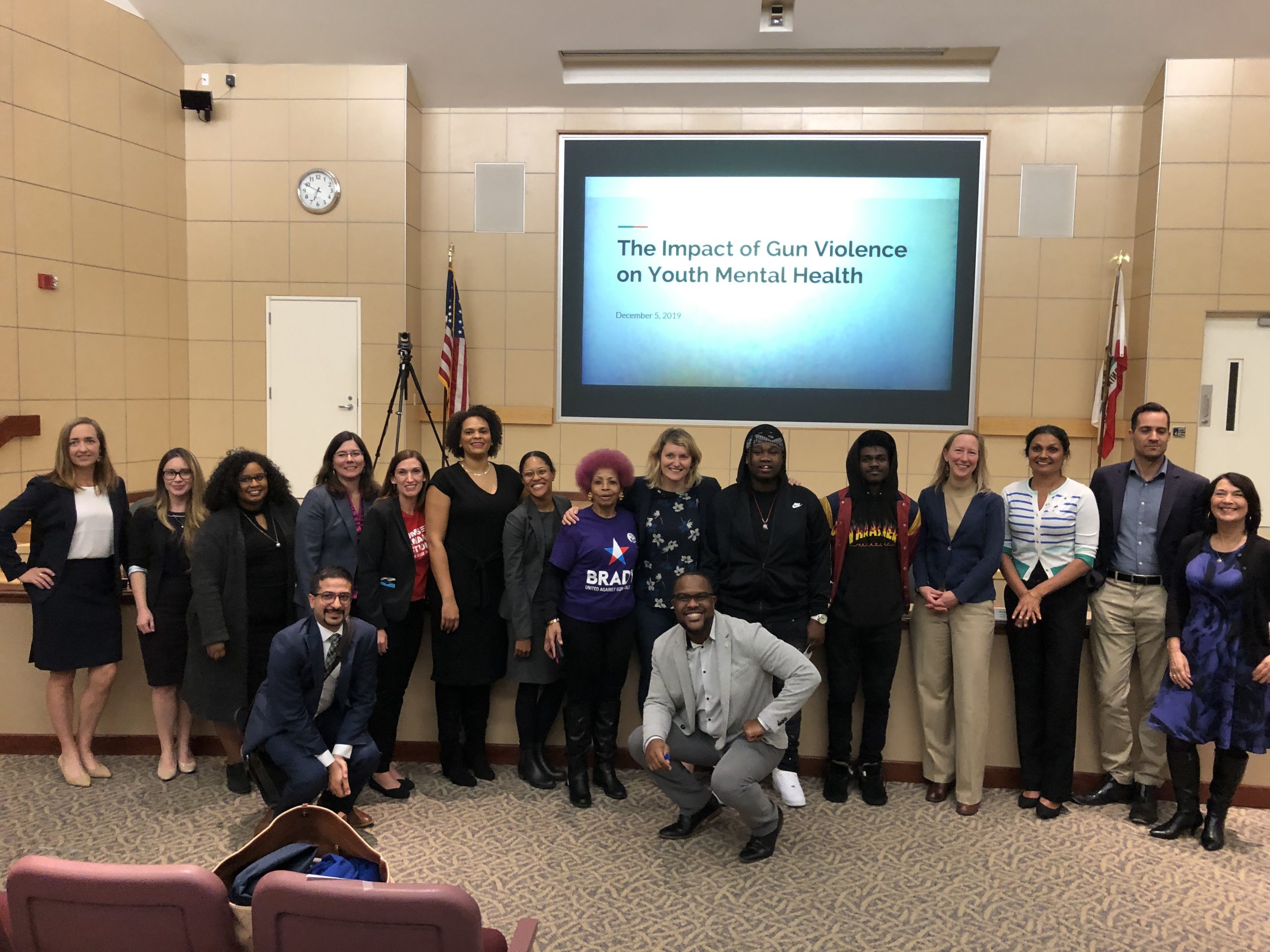
More than two dozen community leaders, advocates, academics and medical health experts recently convened a public hearing to discuss the issue of gun violence and how it affects youth’s mental health, during a meeting facilitated by California Assemblymember (AD 15) Buffy Wicks.
“The purpose of the hearing was to explore the rise in mental health issues in youth across the county, and the role gun violence play in this troubling epidemic,” said Wicks, chair of the Assembly’s Select Committee on Youth Mental Health. “If a child grows up in a community plagued by gun violence, the likelihood they’ll suffer from mental health issues skyrockets.
“The research on this is both troubling and extensive with more than 34 million U.S. children suffering from this kind of toxic stress nationwide,” added Wicks. “We’ve identified gun violence as an underlying cause. Now is the time to start identifying solutions that will provide more resources and counseling to confront these issues.”
Wicks has a personal interest in eradicating gun violence. Her husband, Peter Ambler, was the legislative director for former U.S. Rep. Gabrielle Giffords when she was shot in the head on Jan. 8, 2011. The gunman shot 24 people, killing six and wounding 18 during a constituent meeting held in a supermarket parking lot in Casas Adobes, Ariz., in the Tucson metropolitan area.

During Giffords’ recovery, Ambler helped manage Giffords’ office while she was in the hospital. He later co-founded and became Executive Director of Giffords Law Center to Prevent Gun Violence, a gun-control advocacy organization.
Each speaker at the hearing talked about gun violence and how it affects victims and families, noting that whenever there’s a shooting, it is not only tragic, but the aftermath also impacts the community as a whole. Panel members echoed each other’s remarks discussing how Black and Brown communities across the nation, who are mostly affected and experience these issues on a regular basis, don’t get the attention they deserve.
“Looking at the equity rate of gun violence in our communities, it reveals that this problem is 10 times higher in minority neighborhoods than in white communities,” said Wicks. “This is unacceptable. There is no reason why children in urban communities should have to deal with these issues.
“We cannot let this be the case going forward. I will remain on the forefront of this issue and will push for more funding for programs to help alleviate the existing problems of gun violence and its effect on youth’s mental health.”
Currently, there are 3 million children and teens who witness shootings across the country,” said Wicks. “Fortunately, those numbers have slightly subsided, which is attributed to prevention and intervention programs. In Oakland alone, there has been a 66 percent reduction of gun violence in the past year. However, we still need to continue to provide more mental health services for those adversely affected by gun violence.”
Wicks noted that the Assembly Select Committee on Youth Mental Health will continue to work closely with community-based programs that know the community well, as those programs are demonstrating successes.
Speakers on the panel included local and national representatives from Gifford’s Law Center to Prevent Gun Violence, Moms Demand Action for Gun Sense, Brady United Against Gun Violence and March for Our Lives.
Medical experts included representatives from the UC Firearm Violence Research Center, UCLA David Geffen School of Medicine, The Permanente Medical Group and UCSF Benioff Children’s Hospital Oakland.
Local advocates included representatives from the Children’s Defense Fund, CA, RYSE Youth Center, California Children’s Trust, Youth ALIVE!, Public Health Advocates, Californians for Safety and Justice.
Assemblymember Wicks represents California’s 15th District which includes all or portions of the cities of Oakland, Richmond, Berkeley, Emeryville, Albany, El Cerrito, San Pablo, Pinole, El Sobrante, Hercules, Kensington and Piedmont. To learn more about Assemblymember Wicks and her work, visit a15.asmde.org.





Activism
Oakland Post: Week of March 18 – 24, 2026
The printed Weekly Edition of the Oakland Post: Week of March 18 – 24, 2026


To enlarge your view of this issue, use the slider, magnifying glass icon or full page icon in the lower right corner of the browser window.

Activism
Oakland Post: Week of March 11 -17, 2026
The printed Weekly Edition of the Oakland Post: Week of March 11 – 17, 2026
To enlarge your view of this issue, use the slider, magnifying glass icon or full page icon in the lower right corner of the browser window.
Activism
Oakland Post: Week of March 4 – 10, 2026
The printed Weekly Edition of the Oakland Post: Week of March 4 – 10, 2026

To enlarge your view of this issue, use the slider, magnifying glass icon or full page icon in the lower right corner of the browser window.

WORK FROM HOME
Home-based business with potential monthly income of $10K+ per month. A proven training system and website provided to maximize business effectiveness. Perfect job to earn side and primary income. Contact Lynne for more details: Lynne4npusa@gmail.com 800-334-0540


Black Artists in America, Installation Three Wraps at the Dixon Gallery and Gardens

Grief, Advocacy, and Education: A Counselor Reflects on Black Maternal Health

Future of Florida’s Black History Museum in Limbo

New Research Shows the Many Benefits of Early Learning

South Hampton K-8 Students Among Top 10 Finalists for Samsung’s ‘Solve for Tomorrow’ Competition

Cuba: No Negotiation with US on the President or Political System

Brooklyn Academy of Music Names Jamaican-Born Tamara McCaw as President

Trinidad & Tobego – U.S. Launches WhatsApp Channel for American Citizens in the Country

Oakland Post: Week of March 18 – 24, 2026

AI Innovation vs. Ethics and Environmental Impact

AI, Web3, and Digital Reparations

What If You Owned Your AI Agent?

Season 7, Episode 3 – January Reporter’s Roundtable 📱

Season 7, Episode 3 – January Reporter’s Roundtable

AI, Media, and Power | Part 2, Real-World Impacts and Tradeoffs

Oakland Post: Week of February 11 – 17, 2026

Reflecting on Black History Milestones in Birmingham AL

CITY OF SAN LEANDRO STATE OF CALIFORNIA PUBLIC WORKS DEPARTMENT ENGINEERING DIVISION NOTICE TO BIDDERS FOR ANNUAL STREET OVERLAY/REHABILITATION 2019-21 – PHASE III

Oakland Post: Week of February 18 – 24, 2026

PRESS ROOM: NBA Hall of Fame Nominee Terry Cummings Joins 100 Black Men of DeKalb County to Launch Victory & Values Initiative

Oakland Post: Week of February 25 – March 3, 2026

Trump’s MAGA Allies are Creating Executive Order Plan to Steal the 2026 Midterms

U.S. manufacturing rebounds – how foundry services are adapting to rising demand

OP-ED: One Hundred Years of Black Workers Telling the Truth

Chase Oakland Community Center Hosts Alley-Oop Accelerator Building Community and Opportunity for Bay Area Entrepreneurs

Advancements in solar technology that are changing the way we power the world

Poll Shows Support for Policies That Help Families Afford Child Care

Oakland Post: Week of March 4 – 10, 2026

PRESS ROOM: Civil Rights TV Launches in Selma as the World’s First 24/7 Civil Rights Television Network

Woman’s Search for Family’s Roots Leads to Ancestor John T. Ward – A Successful Entrepreneur and Conductor on the Underground Railroad

Hyundai Ioniq 5 Parking, Safety, and 360 View #shorts

2025 Ioniq 5 New Wiper & Powerful Performance! #shorts

Electric SUV Range: Is 259 Miles Enough? #shorts

EV Charging: How Fast Can You Charge an Electric Vehicle? #shorts

Biometric Cooling… Messaging Seats…Come on! 2025 Infiniti QX80 Autograph 4WD

Charged Up: Witness the Magic of a Fully Electric Car! #shorts

Range Rover Sport PHEV Included…: See What’s Inside This Luxury SUV! #shorts

Invisible Hood View: Perfect Parking with X-Ray Vision! #shorts

AI Is Reshaping Black Healthcare: Promise, Peril, and the Push for Improved Results in California

ESSAY: Technology and Medicine, a Primary Care Point of View

Sanctuary Cities

The RESISTANCE – FREEDOM NOW

STATE OF THE PEOPLE: Freddie

ECONOMIC BOYCOTT DAY!!!!!

I told You So
-
 Activism4 weeks ago
Oakland Post: Week of March 4 – 10, 2026
-
 #NNPA BlackPress3 weeks ago
Woman’s Search for Family’s Roots Leads to Ancestor John T. Ward – A Successful Entrepreneur and Conductor on the Underground Railroad
-

 #NNPA BlackPress4 weeks ago
OP-ED: NNPA Launches 2026 “Leadership Matters” Video Series
-

 #NNPA BlackPress3 weeks ago
Advocates Raise Alarm Over ICE Operation, MOU and Detention Risks in Baltimore County
-

 #NNPA BlackPress3 weeks ago
COMMENTARY: Women of Color Shape Our Past and Future
-

 #NNPA BlackPress3 weeks ago
Pete Buttigieg to Join Mayor Randall Woodfin for Community Town Hall in Birmingham
-

 Activism2 weeks ago
Oakland Post: Week of March 11 -17, 2026
-

 #NNPA BlackPress4 weeks ago
PRESS ROOM: PMG and Cranbrook Horizons-Upward Bound Launch Journey Fellowship Cohort 2
