
Bay Area
Assemblymember Buffy Wicks Holds Public Hearing on Impact of Gun Violence on Youth Mental Health

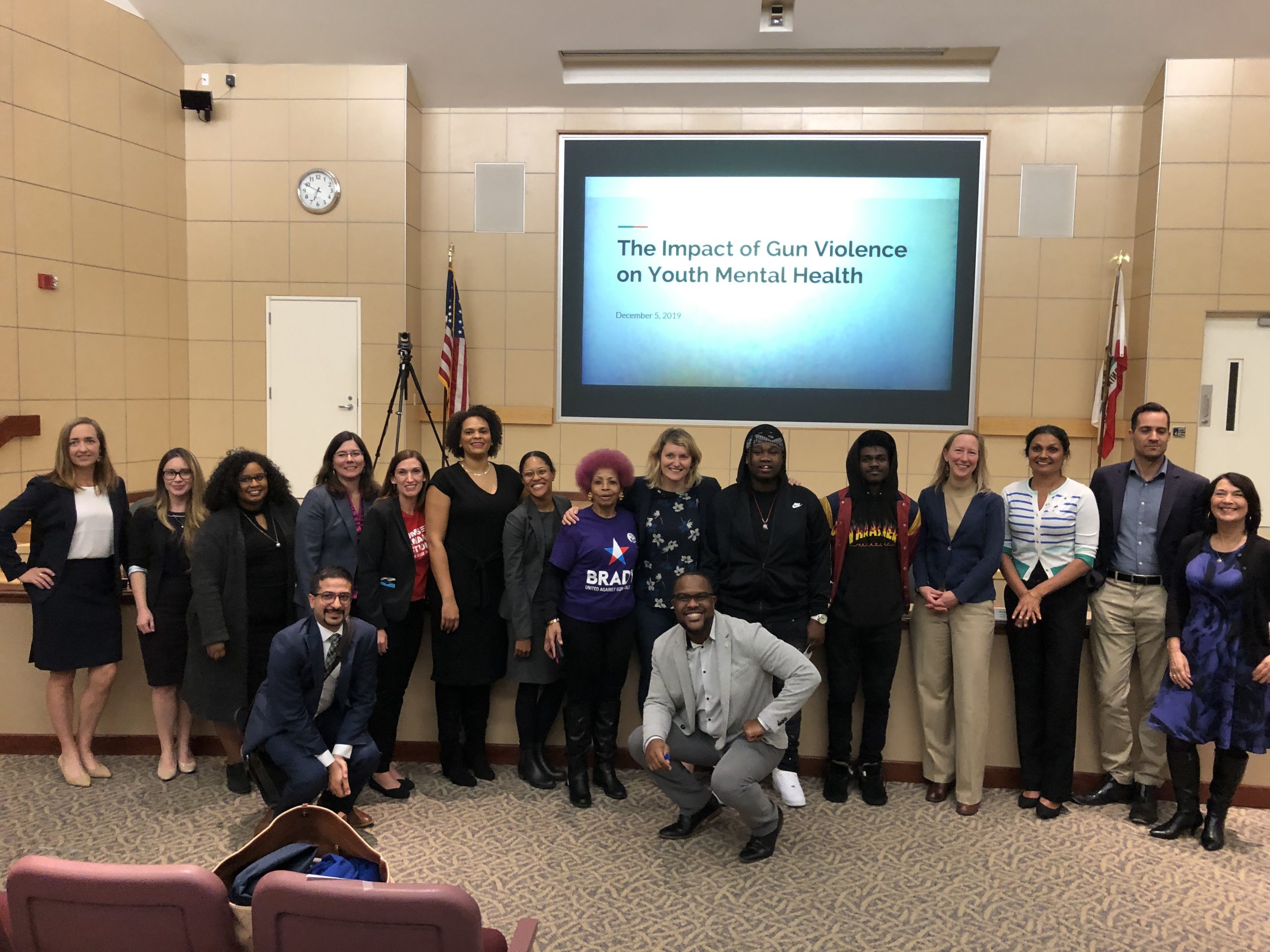
More than two dozen community leaders, advocates, academics and medical health experts recently convened a public hearing to discuss the issue of gun violence and how it affects youth’s mental health, during a meeting facilitated by California Assemblymember (AD 15) Buffy Wicks.
“The purpose of the hearing was to explore the rise in mental health issues in youth across the county, and the role gun violence play in this troubling epidemic,” said Wicks, chair of the Assembly’s Select Committee on Youth Mental Health. “If a child grows up in a community plagued by gun violence, the likelihood they’ll suffer from mental health issues skyrockets.
“The research on this is both troubling and extensive with more than 34 million U.S. children suffering from this kind of toxic stress nationwide,” added Wicks. “We’ve identified gun violence as an underlying cause. Now is the time to start identifying solutions that will provide more resources and counseling to confront these issues.”
Wicks has a personal interest in eradicating gun violence. Her husband, Peter Ambler, was the legislative director for former U.S. Rep. Gabrielle Giffords when she was shot in the head on Jan. 8, 2011. The gunman shot 24 people, killing six and wounding 18 during a constituent meeting held in a supermarket parking lot in Casas Adobes, Ariz., in the Tucson metropolitan area.
During Giffords’ recovery, Ambler helped manage Giffords’ office while she was in the hospital. He later co-founded and became Executive Director of Giffords Law Center to Prevent Gun Violence, a gun-control advocacy organization.
Each speaker at the hearing talked about gun violence and how it affects victims and families, noting that whenever there’s a shooting, it is not only tragic, but the aftermath also impacts the community as a whole. Panel members echoed each other’s remarks discussing how Black and Brown communities across the nation, who are mostly affected and experience these issues on a regular basis, don’t get the attention they deserve.
“Looking at the equity rate of gun violence in our communities, it reveals that this problem is 10 times higher in minority neighborhoods than in white communities,” said Wicks. “This is unacceptable. There is no reason why children in urban communities should have to deal with these issues.
“We cannot let this be the case going forward. I will remain on the forefront of this issue and will push for more funding for programs to help alleviate the existing problems of gun violence and its effect on youth’s mental health.”
Currently, there are 3 million children and teens who witness shootings across the country,” said Wicks. “Fortunately, those numbers have slightly subsided, which is attributed to prevention and intervention programs. In Oakland alone, there has been a 66 percent reduction of gun violence in the past year. However, we still need to continue to provide more mental health services for those adversely affected by gun violence.”
Wicks noted that the Assembly Select Committee on Youth Mental Health will continue to work closely with community-based programs that know the community well, as those programs are demonstrating successes.
Speakers on the panel included local and national representatives from Gifford’s Law Center to Prevent Gun Violence, Moms Demand Action for Gun Sense, Brady United Against Gun Violence and March for Our Lives.
Medical experts included representatives from the UC Firearm Violence Research Center, UCLA David Geffen School of Medicine, The Permanente Medical Group and UCSF Benioff Children’s Hospital Oakland.
Local advocates included representatives from the Children’s Defense Fund, CA, RYSE Youth Center, California Children’s Trust, Youth ALIVE!, Public Health Advocates, Californians for Safety and Justice.
Assemblymember Wicks represents California’s 15th District which includes all or portions of the cities of Oakland, Richmond, Berkeley, Emeryville, Albany, El Cerrito, San Pablo, Pinole, El Sobrante, Hercules, Kensington and Piedmont. To learn more about Assemblymember Wicks and her work, visit a15.asmde.org.








Activism
Oakland Post: Week of September 23 – 29, 2026
The printed Weekly Edition of the Oakland Post: Week of September 23 – 29, 2026


To enlarge your view of this issue, use the slider, magnifying glass icon or full page icon in the lower right corner of the browser window.

Activism
Oakland Post: Week of September 16 – 22, 2026
The printed Weekly Edition of the Oakland Post: Week of September 16 – 22, 2026

To enlarge your view of this issue, use the slider, magnifying glass icon or full page icon in the lower right corner of the browser window.
Activism
Oakland Post: Week of September 9 – 15, 2026
The printed Weekly Edition of the Oakland Post: Week of September 9 – 15, 2026

To enlarge your view of this issue, use the slider, magnifying glass icon or full page icon in the lower right corner of the browser window.



Asm. Corey Jackson Announces Launch of 24-Hour Childcare in His District

IN MEMORIAM: The Rev. Leon “Sonny” Clark, Longtime Orange County Pastor and Community Leader, Dies at 72

Poll: Becerra Widens His Lead Over Hilton; Californians Split on Wealth Tax

From Historic Memories to New Possibilities: Oakland Celebrates Coliseum 60

County Office of Education Says OUSD Finances Are Getting Healthier, Materially Stronger

LIVE FREE Sunday Dinner Brings Faith, Fellowship and Civic Conversation to Oakland

Remembering Chauncey Bailey as Student Journalists Face Threats to Truth-Telling

BLACspace Cooperative Invites Bay Area to Experience Oakland’s Black Cultural Ecosystem Through a BLAC Map Tour + Party

In Wake of Death on Doorstep, Williams Chapel Baptist Church Calls for Better Care, Funding for Unhoused

Oakland Centenarian Nuna McKee Honored!

Caribbean Nations Produce Action Plan Calling for UK Reparations Over Slavery

Oakland Post: Week of September 23 – 29, 2026

Doulas Are Helping Black California Moms Navigate Pregnancy–Even as High Mortality Rates Persist

Newsom Signs Addictive Social Media Law to Protect Kids

On Your November Ballot: Prop 38 Would Allocate $8.4 Billion to Immunology and Immunotherapy Funding

Four Candidates, Including Incumbent Barbara Lee, Qualify for Oakland Mayor’s Race

Standoff for Justice: Our Homes Are Worth Fighting For

Oakland Post: Week of August 26 – September 1, 2026

Frontier Airlines’ Return to Oakland Airport Brings Flights, Jobs and Opportunity

Gubernatorial Candidate Steve Hilton Blasts California New Tire Rules; Newsom Hits Back

Chef Sharon Lee Blends Culinary Excellence, Education and Empowerment

Jackie Wright Champions Bay Area Stories, Filmmakers and Cultural Institutions

Big City Mayors Ask for “Yes” Vote on Housing Bond Measure; Conservatives Say “No”

Gov. Newsom’s Latest Appointees Include Sacramento Advocate for Formerly Incarcerated Students; State’s New Tech Chief

Oakland Coliseum Project Opens Door for Small Businesses to Build Bigger

Misnamed ‘Parent’ PAC Seeks to Influence Oakland School Board Elections

Longtime BWOPA Member Brendalyn Goodall Appointed to California Workforce Development Board

Gov. Newsom Signs Law Shielding Immigration Aid Workers From Doxing Threats

Secretary of State Shirley N. Weber Urges Californians to Vote Early as Voter ID Battle Intensifies

From Palestine to Oakland: Seeds for Liberation Examines Shared Struggles for Freedom

The Conversation With Al McFarlane 6/23/26

Media Monday 6/22/26

LIVE! ASK ALMA! — TUES. 6.23.26 7PM EST

Car Buying Secrets: 4 Hidden Checks Before You Sign!

Is This 550 HP Charger Worth YOUR Money? AutoNetwork Review

Celebrating Juneteenth – Frederick Douglass on education and resistance

LIVE! — ASK ALMA! — TUES. 6.19.26 7PM EST

Hyundai Ioniq 5 Parking, Safety, and 360 View #shorts

2025 Ioniq 5 New Wiper & Powerful Performance! #shorts

Electric SUV Range: Is 259 Miles Enough? #shorts

EV Charging: How Fast Can You Charge an Electric Vehicle? #shorts

Biometric Cooling… Messaging Seats…Come on! 2025 Infiniti QX80 Autograph 4WD

Charged Up: Witness the Magic of a Fully Electric Car! #shorts

Range Rover Sport PHEV Included…: See What’s Inside This Luxury SUV! #shorts

Invisible Hood View: Perfect Parking with X-Ray Vision! #shorts
-
 Business4 weeks ago
Chef Sharon Lee Blends Culinary Excellence, Education and Empowerment
-
 Black History4 weeks ago
Jackie Wright Champions Bay Area Stories, Filmmakers and Cultural Institutions
-
 Community4 weeks ago
Big City Mayors Ask for “Yes” Vote on Housing Bond Measure; Conservatives Say “No”
-
 Community2 weeks ago
Misnamed ‘Parent’ PAC Seeks to Influence Oakland School Board Elections
-
 Business4 weeks ago
Longtime BWOPA Member Brendalyn Goodall Appointed to California Workforce Development Board
-
 Community4 weeks ago
Gov. Newsom Signs Law Shielding Immigration Aid Workers From Doxing Threats
-

 Activism3 weeks ago
Oakland Post: Week of September 2 – 8, 2026
-

 Featured4 weeks ago
‘Passing a Law Isn’t The Finish Line’: California Assembly Evaluates Implementation, Results
