
#NNPA BlackPress
AfroComicCon offers a platform for diversity in pop culture
NNPA NEWSWIRE — One relatively unsung product of Oakland’s liberal sway is the founder of the annual AfroComicCon, Michael James. Now in its third iteration, AfroComicCon is a three-day event showcasing comic books and pop culture related to (but assuredly not limited to) the African Diaspora.

By Gregg Reese, Our Weekly Contributor, with additional reporting by Stacy M. Brown, NNPA Newswire Senior Correspondent
The Bay Area is the most progressive bastion of the historically liberal state of California (although the sweep towards gentrification may soon turn the political tide in the opposite direction) and none of the cities and towns within it upholds the standard of progressiveness higher than the East Bay municipality of Berkeley.
One relatively unsung product of its liberal sway is the founder of the annual AfroComicCon, Oakland’s Michael James. Now in its third iteration, AfroComicCon is a three-day event showcasing comic books and pop culture related to (but assuredly not limited to) the African Diaspora.
The event is held in the cities of Oakland and neighboring Emeryville, California and aims to be an inclusive entity as opposed to other, similar conventions geared towards special groups and demographics. It is a 501(c)(3) non-profit organization affiliated with the Oakland Technology and Education Center.
Comic book conventions showcase comic books and related areas of entertainment, and feature exhibits, panels, and features of interest.
Initially, low-brow affairs concentrating solely on comics and special interest groups (the first San Diego Comic-Con was held in a hotel basement with perhaps 300 people in 1970), these “cons” have mushroomed to multi-genre affairs drawing tens of thousands of participants and showcasing gaming, sci-fi, horror, and other facets of pop culture.
Film and television companies use these venues to showcase their wares and gauge public response to shows prior to general release.
Monetarily, they are a financial windfall, generating millions in revenue and contributing significantly to the surrounding community’s economy. A major component of these events is the practice of cosplay, in which fans dress up as their favorite superheroes and animated characters.
Growing Pains
The story behind AfroComicCon can be traced back to the roots of its founder. James came up under the sway of Oakland’s Allen Temple Baptist Church and its progressive pastor, the Rev. J. Alfred Smith, Sr. Among the luminaries passing through its portals were former Congressman and Oakland Mayor Ron Dellums, and civil rights activists the Rev. Jesse Jackson and the Rev. Al Sharpton.
The seeds of social liberalism firmly planted, young James graduated from UC Davis, with a bachelor’s in Environmental Planning to begin his tenure in corporate America, a period he found stifling and restrictive.
The millennium era found him politicized through work with various non-profit concerns and travels overseas where he participated in the 2007 release of South African dissident Nelson Mandela. These events were intertwined by his work to promote computer literacy among the Bay Area’s disadvantaged during a period where he became disenchanted with the educational system’s methodology in distributing state and federal funding to the community. During this time, he had been involved in a successful literacy program under the umbrella of UC Berkeley.
The experience soured him, however, as he saw how the non-profit apparatus worked. He did quite well with the $850,000 allotted to his program until he found out it was just part of the $7 million the university was receiving over a seven-year period.
A series of discussions he had with like-minded people, and a chance visit to the San Diego Comi-con (the benchmark for all such gatherings), spawned the nucleus of what would become the AfroComicCon, a platform in which to promote reading through graphic novels, comic books, and other paraphernalia.
Supporting him and co-founding AfroComicCon with him since the beginning has been a kindred spirit and fellow Berkeley High School alum, Hally Bellah-Guther.
A career professional dancer in the United States and in Europe, Bellah-Guther, who has taught ballet and fitness locally for 20 years, was a passionate volunteer and board member of D.U.S.T.Y. (Oakland Technology & Education Center) and had been Michael’s partner working on literacy and arts programs since 2012. She caught the bug and became completely devoted to the project. She has been overseeing every aspect of AfroComicCon since prepping for the first year because it combined two passions of hers: the arts and the fight against injustice and inequity.
By 2017, they’d secured enough funding to compile a shoestring budget, and they were ready to mount the first tentative steps towards realizing the vision.
The Chance for Inclusion
They had no intention of replicating the success of the decades-old Comic-con (convention-goers this past summer for that event reached in excess of 130,000), but in their inaugural staging, they attracted some 400 to 500 attendees, a more than respectable gathering, considering their resources and financial limitations.
Among the notables on hand to greet visitors were special effects wizard Christa Burton (“Iron Man,” “The Lone Ranger,” and “Transformers”); movie producer and Vice President of Programming at BOUNCE TV Ri-Karlo Handy; Sifu Kisu martial arts choreographer for Avatar: The Last Air Bender; Power Rangers, and other major motion pictures; and television writer Ty Scott (“CSI: Miami” and “Saints and Sinners”).
“Everyone has a story and we can all be superheroes in our own right,” says James, as an explanation for the interest in this new and novel venue for popular culture.
Attendance for the next calendar year 2018 increased to 1000 plus. Among those appearing for the 2019 AfroComicCon were writer/producer Rodney Barnes (“American Gods,” “The Boondocks,” “Everybody Hates Chris, “ and the upcoming “Wu-Tang: An American Saga”); spoken word poet, street lit author and UC Berkeley professor Aya de Leon; and actress Onika Day (“Orange is the New Black,” “Wu-Tang: An American Saga”).
In keeping with AfroComicCon’s pledge of inclusion, guests consisted of Lebanese director of photography Jean-Claude Kalache of Pixar, and Vietnamese American filmmaker and theater director Khai Thu Nguyen (who helped judge the film competition).
As in past years, the convention sought to provide a wide variety of educational and interactive experiences meant to engage the whole family. These included a fashion show mounted by Jasline Berry (fashionista and Afro-renaissance woman) and James Head (costume designer for rapper M.C. Hammer), promotion by and about the gaming industry, and other venues to prompt event-goers to, in James’ words, “move away from commercialism that doesn’t support us.”
FLASH- Fit Like A Super Hero- which was spearheaded by Bellah-Guther since 2018, includes multi-disciplines to encourage the public to engage in healthier lifestyles through physical activity and healthy diets. A notable component in this is a demonstration of Brazilian martial arts, Malandro Mandingo: The Body Magic of Capoeira. There has also been Hip Hop and Turf Dance, Worldbeat/Salsa and Kung fu demos and classes and performances.
An attendee who has transitioned from volunteer to active participation, comic book creator and graphic artist “Sketch” Smith now serves as AfroComicCon’s art director, web designer, and all-around gadfly.
“I try to help out in any capacity that I can,” she says.
An attendee of similar events prior to joining AfroComicCon, she notes that they were generally slanted towards a heterosexual White male demographic, to the exclusion of minorities and women.
A Bay Area transplant who is opening up her own brick and mortar book store (“Hella Novella” at 2301 Mission Street in San Francisco), Smith sees this undertaking as a sanctuary for “geeks” like herself who have never fit in at any of the other conventions she’s attended as the “odd person out.” It is a relief from the overwhelming xenophobia she’s experienced as a Black woman, and she cherishes the shared cultural experience that AfroComicCon offers (for more on Sketch, visit http://www.sketchsmith.com/).
Inclusion for Everyone
“(Convention-goers can) come away with a sense of ownership and collaboration.”
—AfroComicCon founder Michael James.
While AfroComicCon takes place within the confines of the Bay Area and is primarily meant, in the words on its Facebook page, “…to empower artists who have been denied access to equal opportunity,” everyone cordially received an invite.
For more information, visit the website at www.afrocomiccon.org or call (510) 333-9653.










#NNPA BlackPress
NFL: Week Two Recap | Jalen Hurts did not fold; Caleb Williams exits game with injury
Philadelphia Eagles quarterback Jalen Hurts found Darius Cooper with nine seconds left for the game winning touchdown as his team beat the Tennessee Titans 24-20 in Nashville. Hurts finished the day 26/37 for 264 yards. He threw for two touchdowns and two interceptions. Prior to the final drive, the Eagles ran 25 plays for 45 […]
The post NFL: Week Two Recap | Jalen Hurts did not fold; Caleb Williams exits game with injury appeared first on BlackPressUSA.
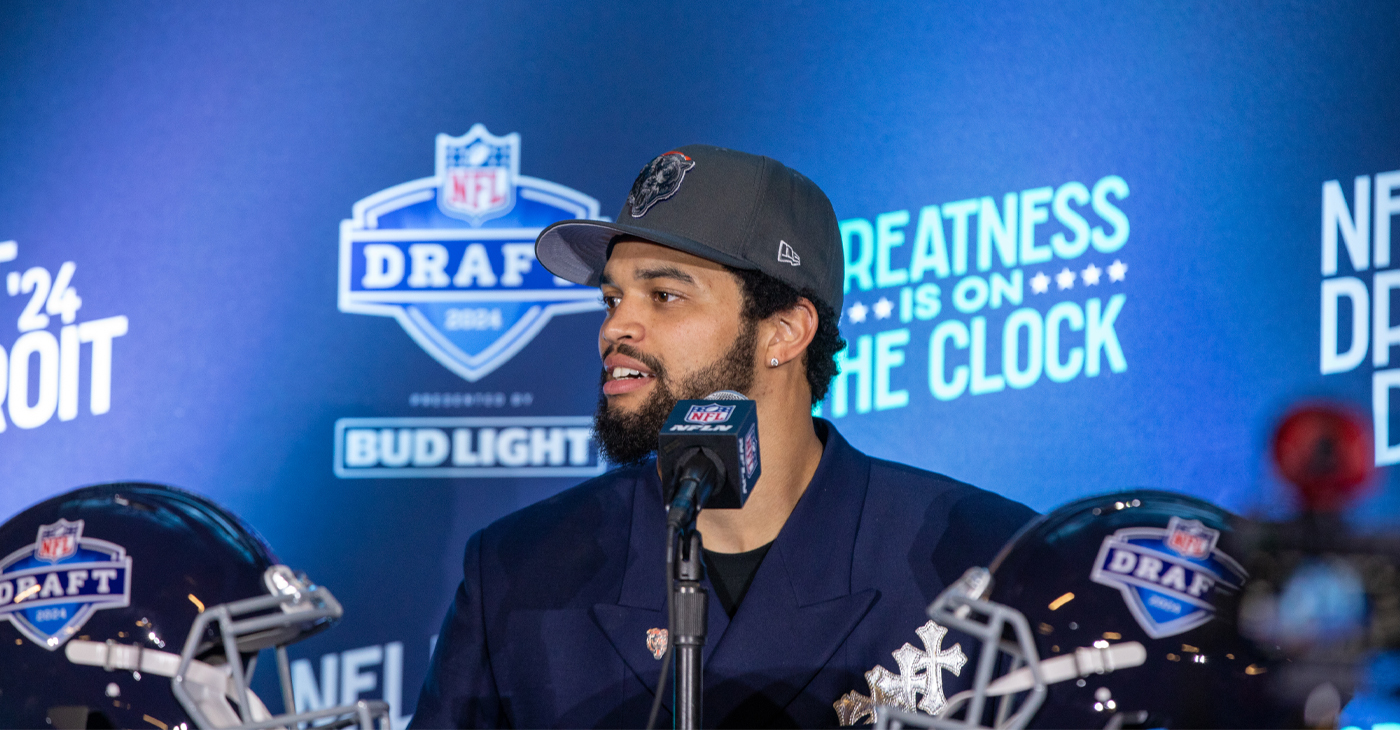
Philadelphia Eagles quarterback Jalen Hurts found Darius Cooper with nine seconds left for the game winning touchdown as his team beat the Tennessee Titans 24-20 in Nashville. Hurts finished the day 26/37 for 264 yards. He threw for two touchdowns and two interceptions.
Prior to the final drive, the Eagles ran 25 plays for 45 yards. During the final drive Hurts went 6-8 with 61 passing yards and the touchdown. Titans defensive tackle — and team captain — Jeffery Simmons said this week that the way to defend Jalen Hurts is to make him “play quarterback.”
Hurts said to Simmons after today’s game: “You started that sh**. I had to finish it.”
Running back Saquon Barkley suffered a stinger in the first half but he ultimately finished the game. He had four carries and nine yards and one catch for eleven yards. He will get an MRI for his injury, but admitted to Cameron Wolfe of the NFL Network he was fine.
Caleb Williams leaves game against Vikings with apparent lower-body injury
Chicago Bears quarterback Caleb Williams was helped off the field with a right leg injury with 7:42 remaining in the fourth quarter. Williams was down, writhing in pain after scrambling to his left. After departing the injury tent, Williams raised his right fist, acknowledging the crowd while expressing his frustration. Testing will commence on Monday to find out more details about his injury.
“We’ll know tomorrow,” Johnson admitted regarding Williams’ injury. “He’s in good spirits. He’s a team player.”
Williams finished the day with 138 passing yards and one interception.
“I’m actually happy it’s nothing with the knee — that was my first inclination,” Johnson said. “But, a hamstring could be pretty damaging as well. So, we’ll see. We’ll see how bad it is tomorrow and we’ll go from there.”
Bryce Young once again dominated the Falcons
Carolina Panthers quarterback Bryce Young is 5-1 against the Atlanta Falcons and is undefeated at Mercedes-Benz Stadium. Today, Young threw for 287 yards and three touchdowns as he led the Panthers to a 34-3 dismembering of the Atlanta Falcons. Georgia Tech alumnus Darren Waller caught two touchdowns and linebacker Devin Lloyd returned one of his two interceptions for a touchdown.
Cooper Rush started his second straight game for the Falcons and it did not go well. The partisan crowd voiced their displeasure after Rush completed 10/17 passes for 86 yards and two interceptions. Jack Strand entered the game for Rush prompting cheers from the Falcons fans. The rookie threw a pick-six on his first career pass attempt. Strand was the first QB to accomplish that feat since Sam Darnold in 2018 and is the first Falcons player to do that since Brett Favre in 1991. Strand finished the day with 59 passing yards and 16 rushing yards.
According to reports, quarterback Michael Penix, Jr. is expected to make his season debut this Thursday at the Green Bay Packers. His return should help the Falcons. They are the first team since the 2008 Rams to not run any plays in the red zone after the first two games to open a season.
The bright spots for the Falcons today were the Spelman College Jaguarettes performing with the Falcons cheerleaders and Florida A&M’s marching band, The Marching 100, also performed during halftime!
Jayden Daniels gets carted off after apparent arm injury
Washington Commanders quarterback Jayden Daniels appeared to injure his left elbow on the final play of the first half in his game against the Dallas Cowboys. During the play, Daniels got stepped on, braced himself for the fall, and his elbow bent the wrong way. Daniels draped a towel over his head as he exited the field on the cart.
He was later ruled out.
Daniels suffered a dislocated elbow to the same arm during week nine of last season against the Washington Commanders, which led to him being shut down for the remainder of the season.
The post NFL: Week Two Recap | Jalen Hurts did not fold; Caleb Williams exits game with injury appeared first on BlackPressUSA.
#NNPA BlackPress
The Complete Negotiation Framework — Every Stage, Every Tactic, Every Win
Master the complete vehicle-purchase negotiation framework with Roosevelt Gist and Roosevelt. Learn every stage, tactic, and win!
The post The Complete Negotiation Framework — Every Stage, Every Tactic, Every Win appeared first on BlackPressUSA.
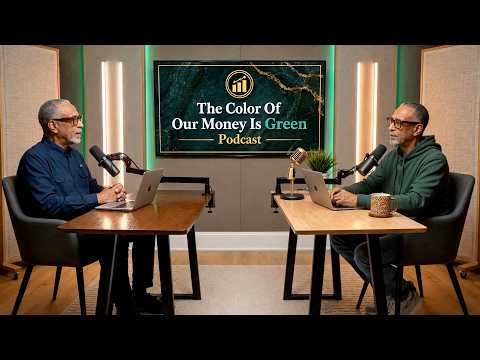

Roosevelt Gist and Roosevelt deliver the complete vehicle-purchase negotiation framework in Episode 8 of The Color of Our Money Is Green. This episode covers the three foundations of every effective negotiation, the full seven-stage negotiation sequence with exact language for every stage, and five of the most common dealership tactics with the specific response each one requires.
What You Learn in This Episode:
The three foundations that make every negotiation tactic work
The complete seven-stage car-buying negotiation sequence
Exact language for every stage of the dealership conversation
Five common dealership tactics — the turnover, the four-square, the packed payment, spot delivery, and forced add-ons — and how to counter each one
Why signing preliminary paperwork isn’t the same as signing the final contract
___________________________________________________________________
“The Color of Our Money Is Green: A Buyer’s Guide to What Cars Actually Cost” — stan.store/RGist
____________________________________________________________________
AutoNetwork helps serious car shoppers inspect any new vehicle online before walking into a dealership. I’m Roosevelt — I’ve been reviewing cars and shaping digital car buying and credit union auto leasing since before YouTube car reviews existed.
You’ll find detailed walkaround reviews, POV test drives, and buyer-focused breakdowns covering comfort, space, features, and real-world value.
How to use the channel:
Watch the walkaround of the car you’re considering
Visit AutoNetwork.com for the full review
Check CouponsOffersAndDeals.com for current dealer specials
Walk in already knowing what you want — and what it should cost
 AutoNetwork.com
 CouponsOffersAndDeals.com
Affiliate disclosure: some links earn a small commission at no cost to you and help support the channel. Insta360 is one of those partners.
The post The Complete Negotiation Framework — Every Stage, Every Tactic, Every Win appeared first on BlackPressUSA.
#NNPA BlackPress
Mazda CX-90 Luxury: Heated Seats & Premium Comfort! #shorts
Stay toasty in the CX-90! Plush Nappa leather, heated/ventilated seats, and a memory-equipped heated steering wheel deliver ultimate luxury.
The post Mazda CX-90 Luxury: Heated Seats & Premium Comfort! #shorts appeared first on BlackPressUSA.
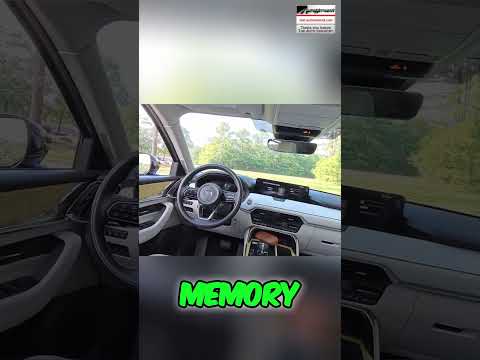
Experience ultimate comfort in the CX-90. Nappa leather, heated/ventilated seats, 8-way power adjustments, and memory settings for both front passengers. The heated steering wheel with memory tilt/telescope adds premium convenience.
 Watch the full video: https://youtu.be/EH5A4eQ4ipY
#AutoNetwork
The post Mazda CX-90 Luxury: Heated Seats & Premium Comfort! #shorts appeared first on BlackPressUSA.


Listening as a Lifeline: A Doula’s Witness to Black Maternal Health

New Protections for Ticket Buyers: Gov. Newsom Signs Assemblymember Isaac Bryan’s Bill

‘We Don’t Talk Trash — We Pick Up Trash!’

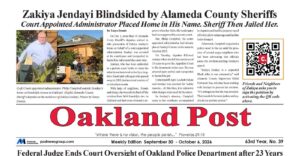
Zakiya Jendayi Arrested, Locked Out of Home by Sheriff’s Deputies

Oakland Post: Week of September 30 – October 6, 2026

Asm. Corey Jackson Announces Launch of 24-Hour Childcare in His District

IN MEMORIAM: The Rev. Leon “Sonny” Clark, Longtime Orange County Pastor and Community Leader, Dies at 72

Poll: Becerra Widens His Lead Over Hilton; Californians Split on Wealth Tax

From Historic Memories to New Possibilities: Oakland Celebrates Coliseum 60

County Office of Education Says OUSD Finances Are Getting Healthier, Materially Stronger

LIVE FREE Sunday Dinner Brings Faith, Fellowship and Civic Conversation to Oakland

Remembering Chauncey Bailey as Student Journalists Face Threats to Truth-Telling

BLACspace Cooperative Invites Bay Area to Experience Oakland’s Black Cultural Ecosystem Through a BLAC Map Tour + Party

In Wake of Death on Doorstep, Williams Chapel Baptist Church Calls for Better Care, Funding for Unhoused

Oakland Centenarian Nuna McKee Honored!

Standoff for Justice: Our Homes Are Worth Fighting For

Oakland Post: Week of August 26 – September 1, 2026

Frontier Airlines’ Return to Oakland Airport Brings Flights, Jobs and Opportunity

Gubernatorial Candidate Steve Hilton Blasts California New Tire Rules; Newsom Hits Back

Chef Sharon Lee Blends Culinary Excellence, Education and Empowerment

Jackie Wright Champions Bay Area Stories, Filmmakers and Cultural Institutions

Misnamed ‘Parent’ PAC Seeks to Influence Oakland School Board Elections

Oakland Coliseum Project Opens Door for Small Businesses to Build Bigger

Big City Mayors Ask for “Yes” Vote on Housing Bond Measure; Conservatives Say “No”

Gov. Newsom’s Latest Appointees Include Sacramento Advocate for Formerly Incarcerated Students; State’s New Tech Chief

Longtime BWOPA Member Brendalyn Goodall Appointed to California Workforce Development Board

Gov. Newsom Signs Law Shielding Immigration Aid Workers From Doxing Threats

Secretary of State Shirley N. Weber Urges Californians to Vote Early as Voter ID Battle Intensifies

Oakland Post: Week of September 2 – 8, 2026

IN MEMORIAM: Dolly Parton Dead at 80 — How She Built a Legacy of Love and Earned Her Place in Black Culture

The Conversation With Al McFarlane 6/23/26

Media Monday 6/22/26

LIVE! ASK ALMA! — TUES. 6.23.26 7PM EST

Car Buying Secrets: 4 Hidden Checks Before You Sign!

Is This 550 HP Charger Worth YOUR Money? AutoNetwork Review

Celebrating Juneteenth – Frederick Douglass on education and resistance

LIVE! — ASK ALMA! — TUES. 6.19.26 7PM EST

Hyundai Ioniq 5 Parking, Safety, and 360 View #shorts

2025 Ioniq 5 New Wiper & Powerful Performance! #shorts

Electric SUV Range: Is 259 Miles Enough? #shorts

EV Charging: How Fast Can You Charge an Electric Vehicle? #shorts

Biometric Cooling… Messaging Seats…Come on! 2025 Infiniti QX80 Autograph 4WD

Charged Up: Witness the Magic of a Fully Electric Car! #shorts

Range Rover Sport PHEV Included…: See What’s Inside This Luxury SUV! #shorts

Invisible Hood View: Perfect Parking with X-Ray Vision! #shorts
-
 Community3 weeks ago
Misnamed ‘Parent’ PAC Seeks to Influence Oakland School Board Elections
-
 Activism4 weeks ago
Oakland Post: Week of September 2 – 8, 2026
-

 Community3 weeks ago
Richmond Tiny House Village Farm & Garden Set to Open Gates on Sept. 26
-

 Activism3 weeks ago
Oakland Post: Week of September 9 – 15, 2026
-

 Black History3 weeks ago
Latest Massacre in Haiti Reveals Cruelty U.S. Deportations
-

 Black History3 weeks ago
OPINION: Nolan Wells’ Death One of Several Signifying Racial Terror Lives on in U.S. South
-

 Business2 weeks ago
Mayor Lee Announces $1 Million Kaiser Permanente Grant for Pilot Program to Address Homelessness, Clean Up Public Spaces throughout Oakland
-

 Community3 weeks ago
Democratic Clubs Interview Candidates for Oakland School Board
