
Books
A champion of the people: Josie Johnson still finds hope in the struggle
MINNESOTA SPOKESMAN-RECORDER — Josie Johnson. The term “living legend” might well understate her stature in the community. She is a beloved lady with a warm hearted smile and serious political clout who has made history, indeed helped shaped it, as chronicled in her book Hope in the Struggle: A Memoir (University of Minnesota Press).

Josie Johnson. The term “living legend” might well understate her stature in the community. She is a beloved lady with a warm hearted smile and serious political clout who has made history, indeed helped shaped it, as chronicled in her book Hope in the Struggle: A Memoir (University of Minnesota Press).
On the dust cover of the memoir, Walter Mondale attests that Johnson “has always been a champion of fairness and decency, and this book shows us that while there is still work to be done, with her help, there will always be hope.”
Her friend and comrade Mahmoud El- Kati, Twin Cities historian, scholar and community griot, told Minnesota Spokesman-Recorder that Hope in the Struggle “is timely and it’s important. Many people are going to find it very, very useful because of the time and context she addresses.”
Just a partial listing of Johnson’s pedigree as a person of the people notes that she has remained active in civil rights since a teenager when she and her father canvassed to gather signatures on an anti-poll tax petition.
In the early 1960s, Johnson professionally lobbied for fair housing and equal opportunity employment. A member of the Minneapolis Urban League, she served as acting director between 1967 and 1968, after which she became a legislative and community liaison as a mayoral aide in Minneapolis during a time of turbulent racial unrest that had swept America. She co-chaired Minnesota’s delegation to the momentous 1971 March on Washington.
She is also a recipient of the Committed to the Vision Award from the Minneapolis Department of Civil Rights, and the University of Minnesota established the Josie Robinson Johnson Human Rights and Social Justice Award in her honor.
In her living room, you can get a glimpse of how her life has spanned African American progress. On a wall there are artifacts from the Jim Crow era — signs reading, “Colored seated in rear” and “We serve colored carry out only.” And not far from an end table sits a framed photo of Josie Johnson and Michelle Obama together, radiantly smiling.
On June 27, Johnson enjoyed a book signing at UROC in North Minneapolis. “I was very happy to have an opportunity to [be] with our community,” she said, “and talk about what my team [Carolyn Holbrook and Arleta Little with whom she crafted the memoir] was trying to do in the book. That was the purpose.”
Asked why, when, and how she came by her lifelong commitment to making a difference, Johnson said, “I grew up in an environment where it made a difference. My dad wanted to be a lawyer, but there were no schools for Black graduate students.
“So, he became employed by the Southern Pacific Railroad and was a dining car waiter. He organized [fellow] waiters. Mother got involved in programs educating Black children, and I grew up with a community that believed in us as a people being engaged in the well-being of all.”
That principle, a strong theme in Hope in the Struggle, is an abiding aspect of what she terms the “transition of values to future generations.” In the chapter “Making Our Way,” Johnson attests, “North Minneapolis was a close-knit community before the problems of the ’60s broke out. Just like the families of my childhood in Houston, North Side families knew and looked out for one another.
“Neighbors knew the names of the children, whether they lived in the projects or in modest or middle-to-upper-class homes.” She goes on to note, “Black-owned barber shops and beauty salons, restaurants, bars and cafes, dry cleaners, grocery stores, and clothing stores thrived. The Givens Ice Cream Bar was also a mainstay in the community, owned by Archie Givens Sr. and his wife Phebe. Archie and Phebe grew up in North Minneapolis and remained there with their children while he grew his career as a real estate developer building new homes for Black families.”
Speaking with MSR, she added, “Our children need that, now. The sense of living in a close-knit community…talking to our kids about their history and who they are. Give them a sense of pride.”
She added, “The society has created an environment now [that has] made Black adults afraid of their own. They don’t stop them in the street anymore to correct them when they’re doing something to misbehave. We have fallen into that trap.”
Johnson continued, “I had an experience that was so rewarding. I was on a department store escalator one time. Three young Black ladies, girls, were talking in [foul] language. Not what this old lady wanted to hear. I said, ‘Young ladies, you are too beautiful to talk like that.’ They turned around, covered their mouths and apologized. Wasn’t that something? I wasn’t afraid of our children.”
Johnson is troubled by the state of things not only for those children but the nation, period, since Barack Obama left office. In the Hope in the Struggle epilogue, she observes that today’s White House is far from a friend of social progress; in fact, it stands counter thereto.
“Since his election, Donald Trump has defined his presidency in his own way. He has borrowed strategies from past presidents — for example, Nixon and Reagan — that fit his definition of his presidency. And in so doing, he has created a world of confusion.”
Asked to expound on that point, she said, “Trump came in and said it was alright to be racist. It’s alright to be sexist and treat women the way he did. Alright to make fun of people that are handicapped, have various disabilities.
“And America told him he was right. It elected him President of the United States. They still allow him to get away with that. That’s the harm he’s done to America. I wonder what that says to children still trying to develop a sense of right and wrong.”
To order purchase your copy of Hope in the Struggle: A Memoir, go to bit.ly/JosieJohnsonHope.
This article originally appeared in the Minnesota Spokesman-Recorder.






Activism
Oakland Post: Week of February 25 – March 3, 2026
The printed Weekly Edition of the Oakland Post: Week of – February 25 – March 3, 2026

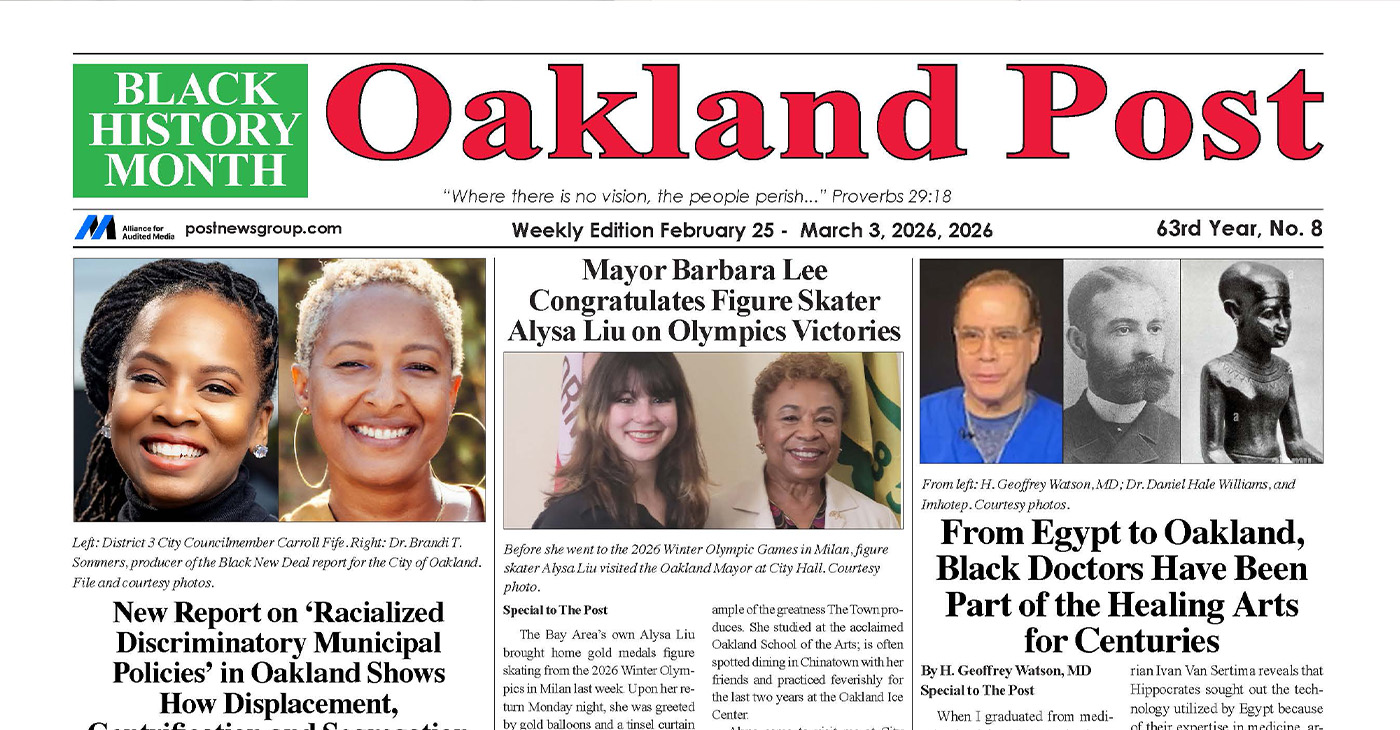
To enlarge your view of this issue, use the slider, magnifying glass icon or full page icon in the lower right corner of the browser window.


Activism
Oakland Post: Week of February 18 – 24, 2026
The printed Weekly Edition of the Oakland Post: Week of – February 18 – 24, 2026
To enlarge your view of this issue, use the slider, magnifying glass icon or full page icon in the lower right corner of the browser window.
Activism
Oakland Post: Week of February 11 – 17, 2026
The printed Weekly Edition of the Oakland Post: Week of – February 11 – 17, 2026

To enlarge your view of this issue, use the slider, magnifying glass icon or full page icon in the lower right corner of the browser window.

WORK FROM HOME
Home-based business with potential monthly income of $10K+ per month. A proven training system and website provided to maximize business effectiveness. Perfect job to earn side and primary income. Contact Lynne for more details: Lynne4npusa@gmail.com 800-334-0540


Poll Shows Support for Policies That Help Families Afford Child Care

Oakland Post: Week of February 25 – March 3, 2026

Trump’s MAGA Allies are Creating Executive Order Plan to Steal the 2026 Midterms

PRESS ROOM: NBA Hall of Fame Nominee Terry Cummings Joins 100 Black Men of DeKalb County to Launch Victory & Values Initiative

Reflecting on Black History Milestones in Birmingham AL

OP-ED: One Hundred Years of Black Workers Telling the Truth

PRESS ROOM: Civil Rights TV Launches in Selma as the World’s First 24/7 Civil Rights Television Network

Advancements in solar technology that are changing the way we power the world

U.S. manufacturing rebounds – how foundry services are adapting to rising demand

Why has blood testing become so popular in today’s world?

Ghana Mourns a Son of the African World

OP-ED: Trump’s Policies Hurt Black America—and Everyone Else

OP-ED: Meta Deleted Me. I Still Don’t Know Why. And neither will you.

More than a Mission: Paying It Forward for the Future of Education

Avoid Eviction This Season: Landlord Checklist for Stable Tenancies

Life Expectancy in Marin City, a Black Community, Is 15-17 Years Less than the Rest of Marin County

Oakland Post: Week of January 28, 2025 – February 3, 2026

Community Celebrates Turner Group Construction Company as Collins Drive Becomes Turner Group Drive

California Launches Study on Mileage Tax to Potentially Replace Gas Tax as Republicans Push Back

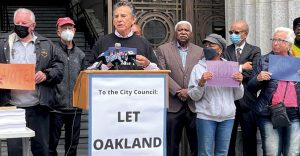
Discrimination in City Contracts

Oakland Post: Week of January 21 – 27, 2026

Book Review: Books on Black History and Black Life for Kids

Medi-Cal Cares for You and Your Baby Every Step of the Way

COMMENTARY: The Biases We Don’t See — Preventing AI-Driven Inequality in Health Care

Post Newspaper Invites NNPA to Join Nationwide Probate Reform Initiative

After Don Lemon’s Arrest, Black Officials Raise Concerns About Independent Black Media

OP-ED: The Dream Cannot be Realized Without Financial Freedom

COMMENTARY: The National Protest Must Be Accompanied with Our Votes

Black History Events in the East Bay

Art of the African Diaspora Celebrates Legacy and Community at Richmond Art Center

Hyundai Ioniq 5 Parking, Safety, and 360 View #shorts

2025 Ioniq 5 New Wiper & Powerful Performance! #shorts

Electric SUV Range: Is 259 Miles Enough? #shorts

EV Charging: How Fast Can You Charge an Electric Vehicle? #shorts

Biometric Cooling… Messaging Seats…Come on! 2025 Infiniti QX80 Autograph 4WD

Charged Up: Witness the Magic of a Fully Electric Car! #shorts

Range Rover Sport PHEV Included…: See What’s Inside This Luxury SUV! #shorts

Invisible Hood View: Perfect Parking with X-Ray Vision! #shorts

AI Is Reshaping Black Healthcare: Promise, Peril, and the Push for Improved Results in California

ESSAY: Technology and Medicine, a Primary Care Point of View

Sanctuary Cities

The RESISTANCE – FREEDOM NOW

STATE OF THE PEOPLE: Freddie

ECONOMIC BOYCOTT DAY!!!!!

I told You So
-
 Activism4 weeks ago
Life Expectancy in Marin City, a Black Community, Is 15-17 Years Less than the Rest of Marin County
-
 Activism4 weeks ago
Oakland Post: Week of January 28, 2025 – February 3, 2026
-
 Activism3 weeks ago
Community Celebrates Turner Group Construction Company as Collins Drive Becomes Turner Group Drive
-
 Business3 weeks ago
California Launches Study on Mileage Tax to Potentially Replace Gas Tax as Republicans Push Back
-
 Activism3 weeks ago
Discrimination in City Contracts
-
 Arts and Culture3 weeks ago
Book Review: Books on Black History and Black Life for Kids
-
 Activism4 weeks ago
Medi-Cal Cares for You and Your Baby Every Step of the Way
-
 Activism3 weeks ago
COMMENTARY: The Biases We Don’t See — Preventing AI-Driven Inequality in Health Care
