
Activism
Bay Area Soda Taxes Don’t Just Affect Sales: They Help Change People’s Minds


UC Berkeley researchers found that taxes on sugar-sweetened beverages, coupled with media attention, coincided with significant changes in social norms around sugary drinks.
By Jason Pohl
UC Berkeley News
It wasn’t that long ago when cigarettes and soda were go-to convenience store vices, glamorized in movies and marketed toward, well, everyone.
Then, lawmakers and voters raised taxes on cigarettes, and millions of dollars went into public education campaigns about smoking’s harms. Decades of news coverage chronicled how addictive and dangerous cigarettes were and the enormous steps companies took to hide the risks and hook more users.
The result: a radical shift in social norms that made it less acceptable to smoke and pushed cigarette use to historic lows, especially among minors.
New UC Berkeley research suggests sugar-sweetened beverages may be on a similar path.
The city of Berkeley’s first-in-the-nation soda tax a decade ago, along with more recent Bay Area tax increases on sugar-sweetened drinks, have not only led to reduced sales. They are also associated with significant changes in social norms and attitudes about the healthfulness of sweet drinks, said Kristine A. Madsen, a professor at UC Berkeley’s School of Public Health and senior author of a paper published Nov. 25 in the journal BMC Public Health.

Over the span of just a few years, taxes coupled with significant media attention significantly affected the public’s overall perceptions of sugar-sweetened beverages, which include sodas, some juices, and sports drinks. Such a shift in the informal rules surrounding how people think and act could have major implications for public health efforts more broadly, Madsen said.
“Social norms are really powerful. The significant shift we saw in how people are thinking about sugary drinks demonstrates what else we could do,” Madsen said. “We could reimagine a healthier food system. It starts with people thinking, ‘Why drink so much soda?’ But what if we also said, ‘Why isn’t most of the food in our grocery stores food that makes us healthy?’”
Madsen and colleagues from UC San Francisco and UC Davis analyzed surveys from 9,128 people living in lower-income neighborhoods in Berkeley, Oakland, San Francisco, and Richmond. Using data from 2016 to 2019 and 2021, they studied year-to-year trends in people’s perception of sugar-sweetened beverages.
They wanted to understand how the four taxes in the Bay Area might have affected social norms surrounding sugary beverages — the unwritten and often unspoken rules that influence the food and drinks we buy, the clothes we wear and our habits at the dinner table.
Although social norms aren’t visible, they are incredibly powerful forces on our actions and behaviors; just ask anyone who has bought something after an influencer promoted it on TikTok or Instagram.
Researchers asked questions about how often people thought their neighbors drank sodas, sports drinks, and fruity beverages. Participants also rated how healthy several drinks were, which conveyed their own attitudes about the beverages.
The researchers found a 28% decline in the social acceptability of drinking sugar-sweetened beverages.
In Oakland, positive perceptions of peers’ consumption of sports drinks declined after the tax increase, relative to other cities. Similarly, in San Francisco, attitudes about the healthfulness of sugar-sweetened fruit drinks also declined.
In other words, people believed their neighbors weren’t drinking as many sugar-sweetened beverages, which affected their own interest in consuming soda, juices, and sports drinks.
“What it means when social norms change is that people say, ‘Gosh, I guess we don’t drink soda. That’s just not what we do. Not as much. Not all the time,’” Madsen said. “And that’s an amazing shift in mindsets.”
The research is the latest from UC Berkeley that examines how consumption patterns have changed in the decade since Berkeley implemented the nation’s first soda tax.
A 2016 study found a decrease in soda consumption and an increase in people turning to water. Research in 2019 documented a sharp decline in people turning to sugar-sweetened drinks. And earlier this year, Berkeley researchers documented that sugar-sweetened beverage purchases declined dramatically and steadily across five major American cities after taxes were put in place.
The penny-per-ounce tax on beverages, which is levied on distributors of sugary drinks — who ultimately pass that cost of doing business on to consumers — is an important means of communicating about health with the public, Madsen said.
Researchers tallied more than 700 media stories about the taxes on sugar-sweetened beverages during the study period. That level of messaging was likely a major force in driving public awareness and norms.
It’s also something Madsen said future public health interventions must consider. It was part of the progress made in cutting cigarette smoking and seems to be working with sugary drinks. And it’s those interventions that can lead to individual action.
“If we change our behaviors, the environment follows,” Madsen said. “While policy really matters and is incredibly important, we as individuals have to advocate for a healthier food system.”













Activism
Oakland Post: Week of August 12 – 18, 2026
The printed Weekly Edition of the Oakland Post: Week of August 12 – 18, 2026
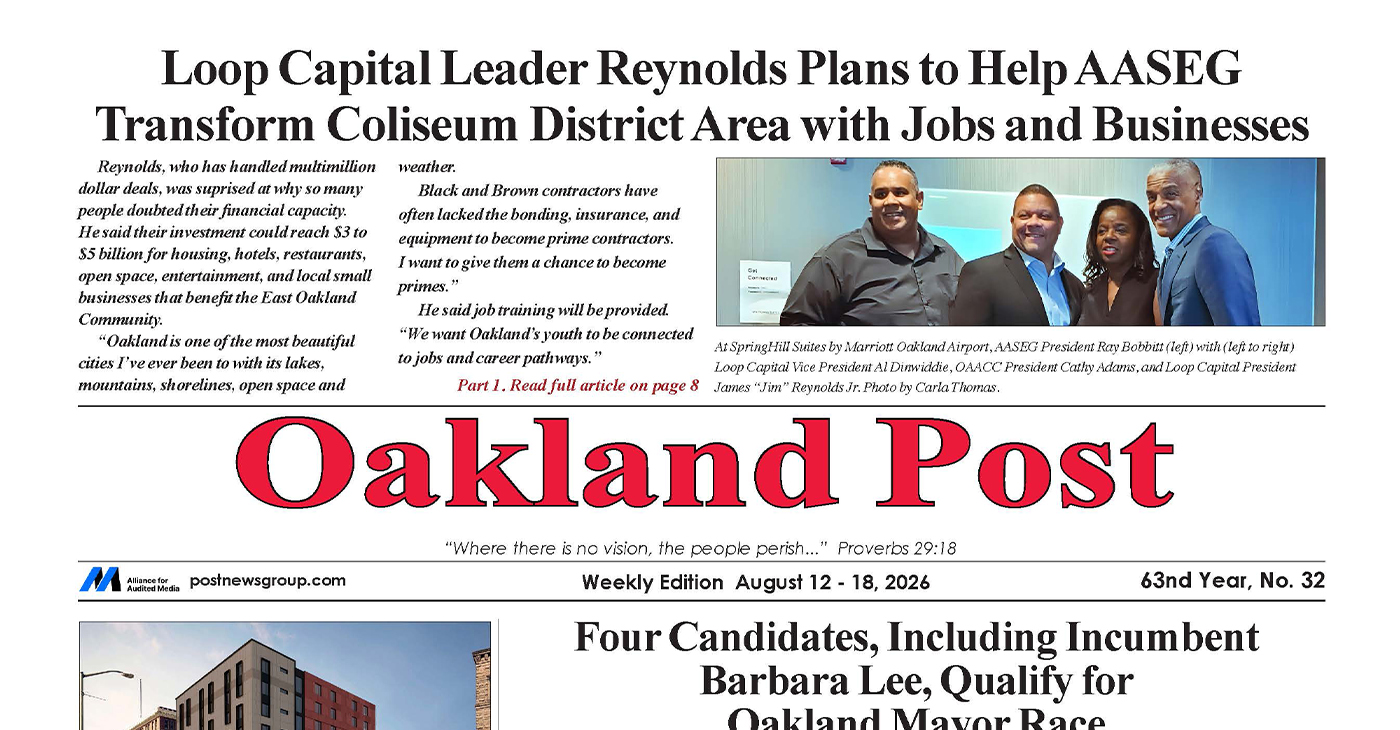
To enlarge your view of this issue, use the slider, magnifying glass icon or full page icon in the lower right corner of the browser window.
Activism
Oakland Post: Week of August 5 – 11, 2026
The printed Weekly Edition of the Oakland Post: Week of August 5 – 11, 2026
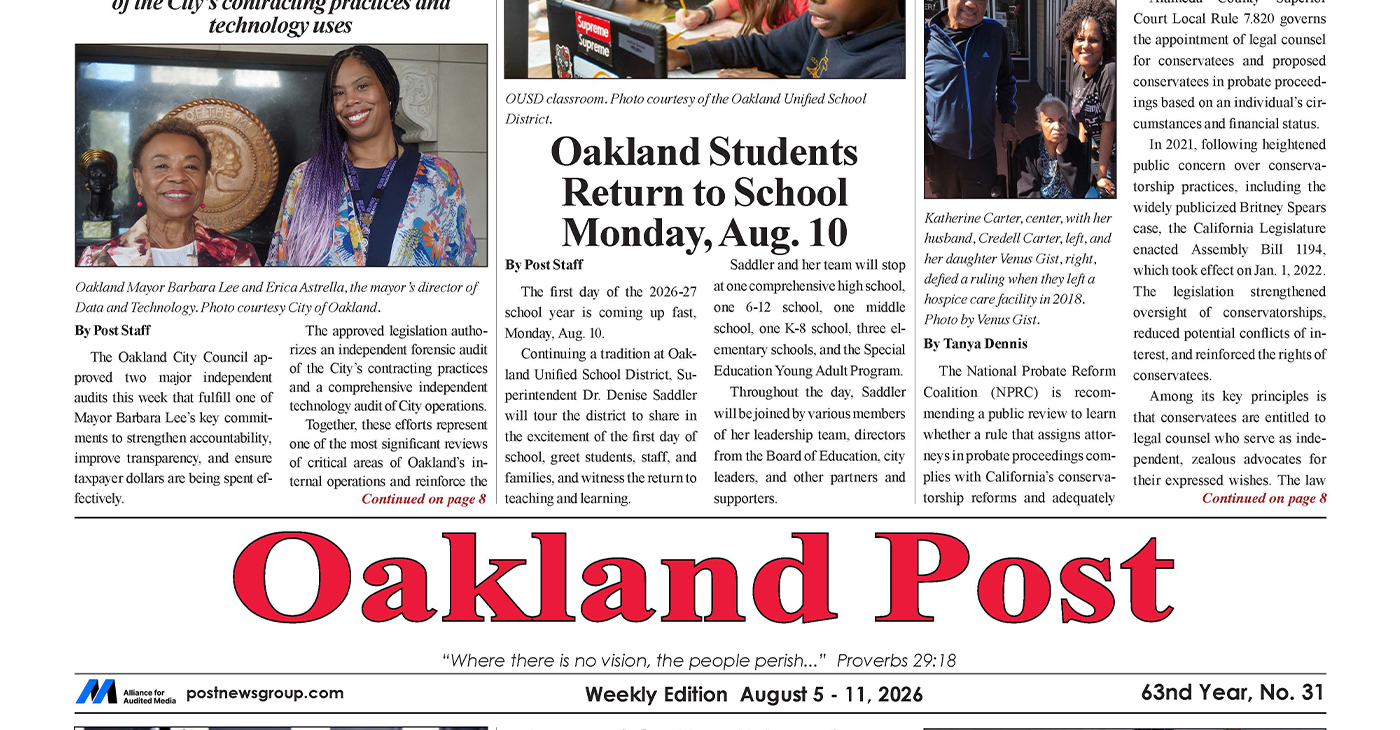
To enlarge your view of this issue, use the slider, magnifying glass icon or full page icon in the lower right corner of the browser window.
Activism
Oakland Post: Week of July 29 – August 4, 2026
The printed Weekly Edition of the Oakland Post: Week of July 29 – August 4, 2026
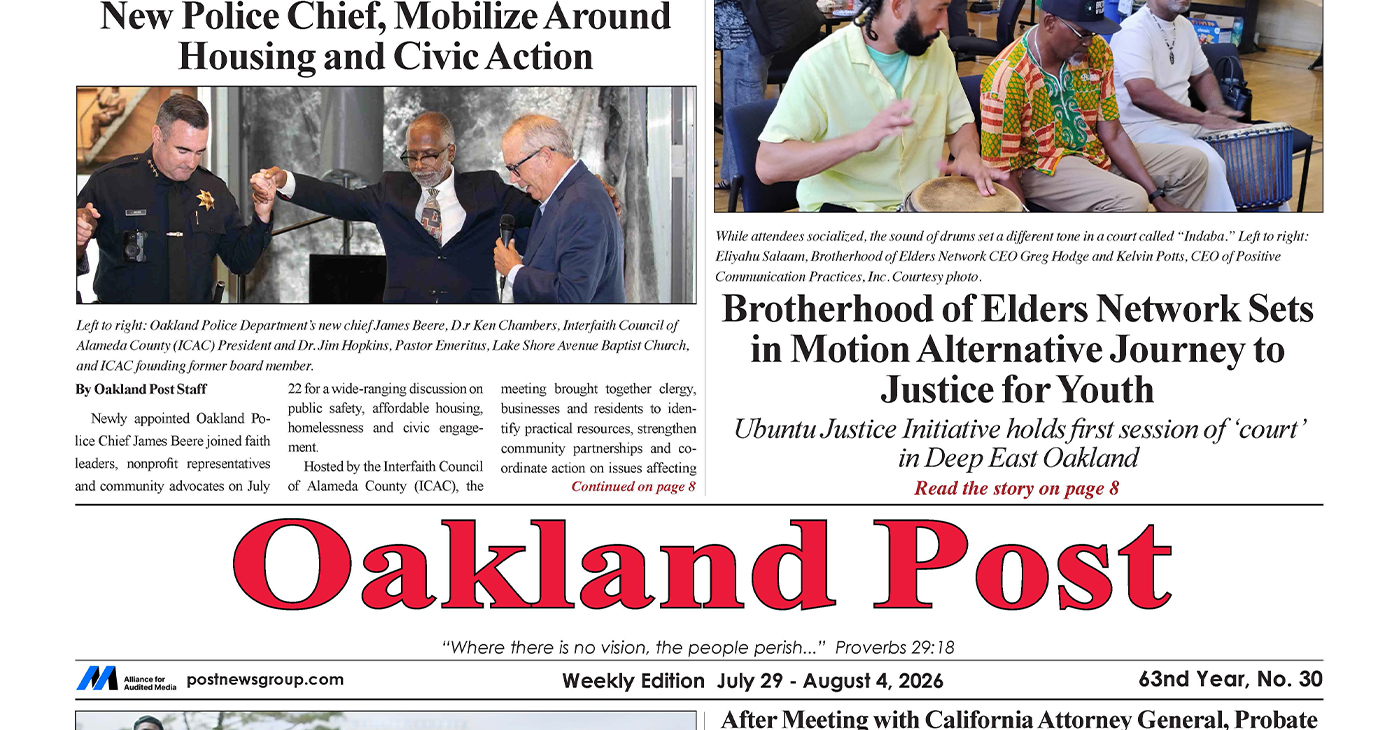
To enlarge your view of this issue, use the slider, magnifying glass icon or full page icon in the lower right corner of the browser window.

WORK FROM HOME
Home-based business with potential monthly income of $10K+ per month. A proven training system and website provided to maximize business effectiveness. Perfect job to earn side and primary income. Contact Lynne for more details: Lynne4npusa@gmail.com 800-334-0540


Four Candidates, Including Incumbent Barbara Lee, Qualify for Oakland Mayor’s Race

Oakland Observes Black August with Block Parties, Film Showings, Workshops

Oakland Post: Week of August 12 – 18, 2026

COMMENTARY: Why Local School Tax Measure G1 Will Not Be on the November Ballot

California Hispanic Chambers of Commerce Unveils: ‘Powering the Future’ Theme for 47th Annual Statewide Convention

Returning to Its Roots, the Oakland Black-Eyed Pea Festival Partners with the Freedom Farmers Market Sept. 12

Less Affluent School Districts, Including Sacramento City, Face Threat of State Takeover

From Blueprint to Breakthrough: Tackling Affordable Housing in Oakland

NPRC Scores First Advocacy Victory: David Shaw Finally Gets His Wish to ‘Go Home’

ESSAY: California Can Close Its Colorectal Cancer Gap

Car Wash Workers Cope with Lingering Impacts of ICE Raids

Misty Copeland Shapes Ballet’s Tomorrow

As Part of Your Back-to- School Checklist, Vaccinate

As Part of Your Back-to- School Checklist, Vaccinate

Congresswoman Simon Demands Investigation into Trump’s Abuse of Emergency Powers for Coal Export Terminal in West Oakland

Department of Homeland Security Demands California Secretary of State Shirley N. Weber Scrub Voter Rolls

Oakland Children’s Hospital Workers and Patients Rally for Pediatric Medical Care

New Judge Could Decide if Karmelo Anthony Gets a New Trial

“The Power to See Threats Sooner”: Gov. Newsom, Safety Officials Showcase California’s Investments in Hi-Tech Wildfire Prevention

Alpha Kappa Alpha Sorority, Inc. Celebrates New North Atlantic Regional Director

Surveillance Pricing Fight: State Senate Debates Bill Banning Retailers from Using AI to Set Prices Based on a Buyer’s Profile

Mount Zion MBC, Church of Jesus Christ of Latter-day Saints Partner to Bring 29,000 Meals to Alameda County

California Sen. Padilla Joins Colleagues to Introduce Bill Imposing Term Limits on Supreme Court Justices

Starting This Summer, California Car Buyers Can Get an Instant $3500 Off the Cost of Electric Vehicles

COMMENTARY: You Are Already Paying for the AI Boom

California Bill Would Let Abuse Victims Use Trauma as Legal Defense for Violent Crime
Less Affluent School Districts, Including Sacramento City, Face Threat of State Takeover
Car Wash Workers Cope with Lingering Impacts of ICE Raids

Fed Court to Decide Landmark First Amendment Case

Gov. Gavin Newsom Signs Law Streamlining Affordable Housing Rules

The Conversation With Al McFarlane 6/23/26

Media Monday 6/22/26

LIVE! ASK ALMA! — TUES. 6.23.26 7PM EST

Car Buying Secrets: 4 Hidden Checks Before You Sign!

Is This 550 HP Charger Worth YOUR Money? AutoNetwork Review

Celebrating Juneteenth – Frederick Douglass on education and resistance

LIVE! — ASK ALMA! — TUES. 6.19.26 7PM EST

Hyundai Ioniq 5 Parking, Safety, and 360 View #shorts

2025 Ioniq 5 New Wiper & Powerful Performance! #shorts

Electric SUV Range: Is 259 Miles Enough? #shorts

EV Charging: How Fast Can You Charge an Electric Vehicle? #shorts

Biometric Cooling… Messaging Seats…Come on! 2025 Infiniti QX80 Autograph 4WD

Charged Up: Witness the Magic of a Fully Electric Car! #shorts

Range Rover Sport PHEV Included…: See What’s Inside This Luxury SUV! #shorts

Invisible Hood View: Perfect Parking with X-Ray Vision! #shorts
-
 Featured1 week ago
Department of Homeland Security Demands California Secretary of State Shirley N. Weber Scrub Voter Rolls
-
 Business3 weeks ago
Oakland Children’s Hospital Workers and Patients Rally for Pediatric Medical Care
-
 #NNPA BlackPress2 weeks ago
New Judge Could Decide if Karmelo Anthony Gets a New Trial
-
 Environment1 week ago
“The Power to See Threats Sooner”: Gov. Newsom, Safety Officials Showcase California’s Investments in Hi-Tech Wildfire Prevention
-
 Black History2 weeks ago
Alpha Kappa Alpha Sorority, Inc. Celebrates New North Atlantic Regional Director
-
 Business3 weeks ago
Surveillance Pricing Fight: State Senate Debates Bill Banning Retailers from Using AI to Set Prices Based on a Buyer’s Profile
-
 Business3 weeks ago
Mount Zion MBC, Church of Jesus Christ of Latter-day Saints Partner to Bring 29,000 Meals to Alameda County
-
 Featured1 week ago
California Sen. Padilla Joins Colleagues to Introduce Bill Imposing Term Limits on Supreme Court Justices
