
Activism
Bay Area Soda Taxes Don’t Just Affect Sales: They Help Change People’s Minds


UC Berkeley researchers found that taxes on sugar-sweetened beverages, coupled with media attention, coincided with significant changes in social norms around sugary drinks.
By Jason Pohl
UC Berkeley News
It wasn’t that long ago when cigarettes and soda were go-to convenience store vices, glamorized in movies and marketed toward, well, everyone.
Then, lawmakers and voters raised taxes on cigarettes, and millions of dollars went into public education campaigns about smoking’s harms. Decades of news coverage chronicled how addictive and dangerous cigarettes were and the enormous steps companies took to hide the risks and hook more users.
The result: a radical shift in social norms that made it less acceptable to smoke and pushed cigarette use to historic lows, especially among minors.
New UC Berkeley research suggests sugar-sweetened beverages may be on a similar path.
The city of Berkeley’s first-in-the-nation soda tax a decade ago, along with more recent Bay Area tax increases on sugar-sweetened drinks, have not only led to reduced sales. They are also associated with significant changes in social norms and attitudes about the healthfulness of sweet drinks, said Kristine A. Madsen, a professor at UC Berkeley’s School of Public Health and senior author of a paper published Nov. 25 in the journal BMC Public Health.
Over the span of just a few years, taxes coupled with significant media attention significantly affected the public’s overall perceptions of sugar-sweetened beverages, which include sodas, some juices, and sports drinks. Such a shift in the informal rules surrounding how people think and act could have major implications for public health efforts more broadly, Madsen said.
“Social norms are really powerful. The significant shift we saw in how people are thinking about sugary drinks demonstrates what else we could do,” Madsen said. “We could reimagine a healthier food system. It starts with people thinking, ‘Why drink so much soda?’ But what if we also said, ‘Why isn’t most of the food in our grocery stores food that makes us healthy?’”
Madsen and colleagues from UC San Francisco and UC Davis analyzed surveys from 9,128 people living in lower-income neighborhoods in Berkeley, Oakland, San Francisco, and Richmond. Using data from 2016 to 2019 and 2021, they studied year-to-year trends in people’s perception of sugar-sweetened beverages.
They wanted to understand how the four taxes in the Bay Area might have affected social norms surrounding sugary beverages — the unwritten and often unspoken rules that influence the food and drinks we buy, the clothes we wear and our habits at the dinner table.
Although social norms aren’t visible, they are incredibly powerful forces on our actions and behaviors; just ask anyone who has bought something after an influencer promoted it on TikTok or Instagram.
Researchers asked questions about how often people thought their neighbors drank sodas, sports drinks, and fruity beverages. Participants also rated how healthy several drinks were, which conveyed their own attitudes about the beverages.
The researchers found a 28% decline in the social acceptability of drinking sugar-sweetened beverages.
In Oakland, positive perceptions of peers’ consumption of sports drinks declined after the tax increase, relative to other cities. Similarly, in San Francisco, attitudes about the healthfulness of sugar-sweetened fruit drinks also declined.
In other words, people believed their neighbors weren’t drinking as many sugar-sweetened beverages, which affected their own interest in consuming soda, juices, and sports drinks.
“What it means when social norms change is that people say, ‘Gosh, I guess we don’t drink soda. That’s just not what we do. Not as much. Not all the time,’” Madsen said. “And that’s an amazing shift in mindsets.”
The research is the latest from UC Berkeley that examines how consumption patterns have changed in the decade since Berkeley implemented the nation’s first soda tax.
A 2016 study found a decrease in soda consumption and an increase in people turning to water. Research in 2019 documented a sharp decline in people turning to sugar-sweetened drinks. And earlier this year, Berkeley researchers documented that sugar-sweetened beverage purchases declined dramatically and steadily across five major American cities after taxes were put in place.
The penny-per-ounce tax on beverages, which is levied on distributors of sugary drinks — who ultimately pass that cost of doing business on to consumers — is an important means of communicating about health with the public, Madsen said.
Researchers tallied more than 700 media stories about the taxes on sugar-sweetened beverages during the study period. That level of messaging was likely a major force in driving public awareness and norms.
It’s also something Madsen said future public health interventions must consider. It was part of the progress made in cutting cigarette smoking and seems to be working with sugary drinks. And it’s those interventions that can lead to individual action.
“If we change our behaviors, the environment follows,” Madsen said. “While policy really matters and is incredibly important, we as individuals have to advocate for a healthier food system.”











Activism
Oakland Post: Week of September 23 – 29, 2026
The printed Weekly Edition of the Oakland Post: Week of September 23 – 29, 2026
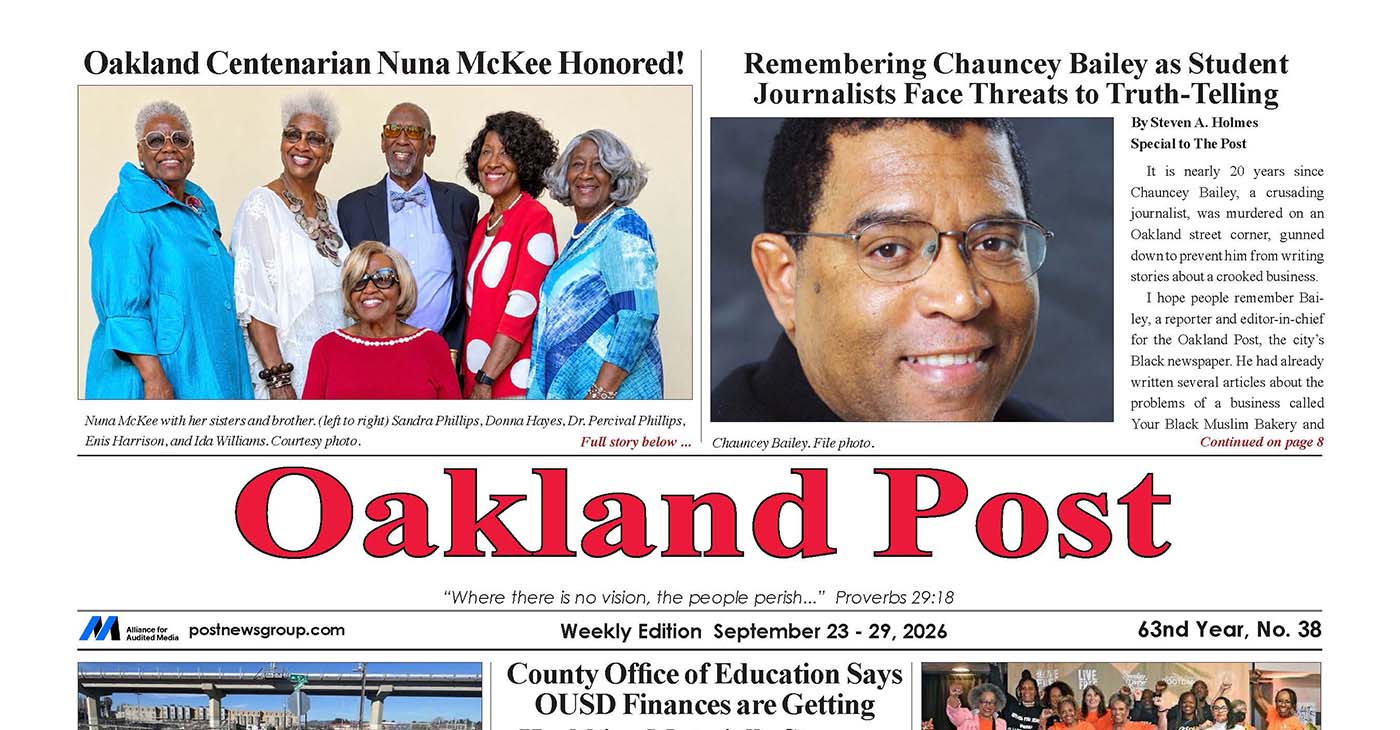
To enlarge your view of this issue, use the slider, magnifying glass icon or full page icon in the lower right corner of the browser window.
Activism
Oakland Post: Week of September 16 – 22, 2026
The printed Weekly Edition of the Oakland Post: Week of September 16 – 22, 2026
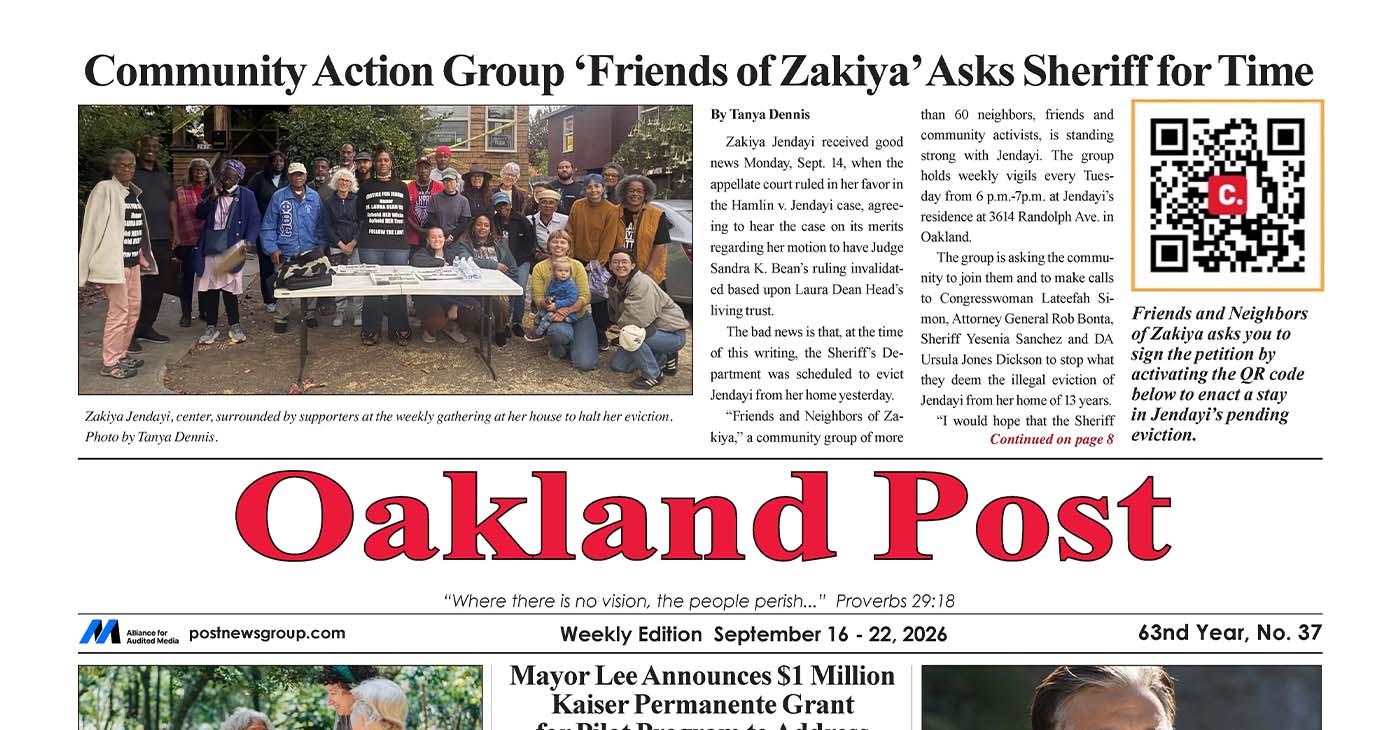
To enlarge your view of this issue, use the slider, magnifying glass icon or full page icon in the lower right corner of the browser window.
Activism
Oakland Post: Week of September 9 – 15, 2026
The printed Weekly Edition of the Oakland Post: Week of September 9 – 15, 2026

To enlarge your view of this issue, use the slider, magnifying glass icon or full page icon in the lower right corner of the browser window.


Asm. Corey Jackson Announces Launch of 24-Hour Childcare in His District

IN MEMORIAM: The Rev. Leon “Sonny” Clark, Longtime Orange County Pastor and Community Leader, Dies at 72

Poll: Becerra Widens His Lead Over Hilton; Californians Split on Wealth Tax

From Historic Memories to New Possibilities: Oakland Celebrates Coliseum 60

County Office of Education Says OUSD Finances Are Getting Healthier, Materially Stronger

LIVE FREE Sunday Dinner Brings Faith, Fellowship and Civic Conversation to Oakland

Remembering Chauncey Bailey as Student Journalists Face Threats to Truth-Telling

BLACspace Cooperative Invites Bay Area to Experience Oakland’s Black Cultural Ecosystem Through a BLAC Map Tour + Party

In Wake of Death on Doorstep, Williams Chapel Baptist Church Calls for Better Care, Funding for Unhoused

Oakland Centenarian Nuna McKee Honored!

Caribbean Nations Produce Action Plan Calling for UK Reparations Over Slavery

Oakland Post: Week of September 23 – 29, 2026

Doulas Are Helping Black California Moms Navigate Pregnancy–Even as High Mortality Rates Persist

Newsom Signs Addictive Social Media Law to Protect Kids

On Your November Ballot: Prop 38 Would Allocate $8.4 Billion to Immunology and Immunotherapy Funding

Standoff for Justice: Our Homes Are Worth Fighting For

Oakland Post: Week of August 26 – September 1, 2026

Frontier Airlines’ Return to Oakland Airport Brings Flights, Jobs and Opportunity

Gubernatorial Candidate Steve Hilton Blasts California New Tire Rules; Newsom Hits Back

Chef Sharon Lee Blends Culinary Excellence, Education and Empowerment

Jackie Wright Champions Bay Area Stories, Filmmakers and Cultural Institutions

Big City Mayors Ask for “Yes” Vote on Housing Bond Measure; Conservatives Say “No”

Oakland Coliseum Project Opens Door for Small Businesses to Build Bigger

Gov. Newsom’s Latest Appointees Include Sacramento Advocate for Formerly Incarcerated Students; State’s New Tech Chief

Misnamed ‘Parent’ PAC Seeks to Influence Oakland School Board Elections

Longtime BWOPA Member Brendalyn Goodall Appointed to California Workforce Development Board

Gov. Newsom Signs Law Shielding Immigration Aid Workers From Doxing Threats

Secretary of State Shirley N. Weber Urges Californians to Vote Early as Voter ID Battle Intensifies

From Palestine to Oakland: Seeds for Liberation Examines Shared Struggles for Freedom

IN MEMORIAM: Dolly Parton Dead at 80 — How She Built a Legacy of Love and Earned Her Place in Black Culture

The Conversation With Al McFarlane 6/23/26

Media Monday 6/22/26

LIVE! ASK ALMA! — TUES. 6.23.26 7PM EST

Car Buying Secrets: 4 Hidden Checks Before You Sign!

Is This 550 HP Charger Worth YOUR Money? AutoNetwork Review

Celebrating Juneteenth – Frederick Douglass on education and resistance

LIVE! — ASK ALMA! — TUES. 6.19.26 7PM EST

Hyundai Ioniq 5 Parking, Safety, and 360 View #shorts

2025 Ioniq 5 New Wiper & Powerful Performance! #shorts

Electric SUV Range: Is 259 Miles Enough? #shorts

EV Charging: How Fast Can You Charge an Electric Vehicle? #shorts

Biometric Cooling… Messaging Seats…Come on! 2025 Infiniti QX80 Autograph 4WD

Charged Up: Witness the Magic of a Fully Electric Car! #shorts

Range Rover Sport PHEV Included…: See What’s Inside This Luxury SUV! #shorts

Invisible Hood View: Perfect Parking with X-Ray Vision! #shorts
-
 Community2 weeks ago
Misnamed ‘Parent’ PAC Seeks to Influence Oakland School Board Elections
-

 Activism3 weeks ago
Oakland Post: Week of September 2 – 8, 2026
-

 Community2 weeks ago
Richmond Tiny House Village Farm & Garden Set to Open Gates on Sept. 26
-

 Black History2 weeks ago
OPINION: Nolan Wells’ Death One of Several Signifying Racial Terror Lives on in U.S. South
-

 Black History2 weeks ago
Latest Massacre in Haiti Reveals Cruelty U.S. Deportations
-

 Activism2 weeks ago
Oakland Post: Week of September 9 – 15, 2026
-

 Community2 weeks ago
Democratic Clubs Interview Candidates for Oakland School Board
-
 Featured2 weeks ago
‘Ready to See These Bills Become Law’: Sen. Weber’s Package of 15 Bills Advance to Gov. Newsom’s Desk
