
Activism
Alameda County In-Home Caretakers Seek $20 Wage, More Accessible Health Care
According to Lupe Martinez, who is SEIU 2015’s chief negotiator, many caretakers work well over 80 hours a month, but don’t receive healthcare, because much of those hours are off the books. As a result, many caretakers are effectively working a full-time job with no healthcare benefits. To help with this problem, SEIU 2015 wants a contract that would lower the minimum hours caretakers would need to work per month to qualify for such benefits.


By Zack Haber
SEIU 2015, the union that represents more than 21,000 caretakers who work for Alameda County’s In-Home Supportive Services (IHSS), will be starting negotiations for a new contract early next year that they hope will ensure a $20-an-hour wage and improved access to health care for its members.
“Alameda is one of the most expensive places to live in the Bay Area,” said Lupe Martinez, who is SEIU 2015’s chief negotiator. “In order to provide their essential services, our members need to be able to have the proper wages to live here.”
SEIU 2015 sees their proposed wage increase as a way of reducing the wage gap across gender and racial lines. Across California, 81% of IHSS caretakers are women and 74% are people of color.
IHSS caretakers support those who are disabled or over 65 years old, and who are also unable to live at home safely without help. Typical duties include cooking, cleaning, giving out medications, helping with grocery shopping and bathing, and taking clients to doctor’s appointments.
“People do in-home care work because they love the people,” said Allen Whitfield, a lifelong Oakland resident who’s now in his 60s and works as a caretaker for two clients. “It’s definitely not for the pay.
Currently, Alameda County IHSS caretakers make an hourly wage of $15.75. Starting next year, their wage will increase to $16.75. The union plans to ask for a contract that allows all its members to make at least $20 an hour by 2024, and they’ve been circulating a petition calling for all California caretakers to get this wage increase.
Whitfield likes his job and says he’s “all for being there for people who need help, especially the underdog.” With the current rate of pay though, he can’t afford to rent his own apartment. Even renting a room in a house with roommates is so expensive that he often has to do odd jobs over the weekend to pay his bills. He regularly gets opportunities for steady work in other places for a higher salary, but he doesn’t take the work for one key reason.
“The only reason I don’t take other work,” Whitfield said. “Is that it would get in the way of taking care of my mom.”
Like many, but not all, IHSS caretakers, Whitfield’s clients are family members. In addition to caring for his mother, one of his distant relatives is also a client. Although on paper Whitfield works a little under 30 hours a week, he says he spends well over 40 hours a week caring for his mother and his distant relative.
According to Lupe Martinez, Whitfield’s experience is common among IHSS workers. She says that many clients’ need for care often far exceeds the number of hours that the county allots them to hire a paid caretaker. As a result, many caretakers, and not just those who work for family members, work extra hours off the books because they want to be there for their clients who often have no one else to turn to.
“If you see someone badly in need of care services,” she said. “You’re going to want to help them.”
“It’s an endless job because most of the time [clients] need more care than the hours provided,” said Whitfield.
The extra, unpaid work sometimes makes the job unsustainable. In the mid-2010s, Whitfield had another client who was blind and needed a lot of extra care. But Whitfield couldn’t get enough on-the-book hours to afford to be able to keep him as a client. The blind man has a new caretaker now, and he keeps in touch with Whitfield as a friend by calling him occasionally. While looking back on the forced separation, Whitfield described it as “kind of heartbreaking.”
Partly due to the reality that caretakers work off-the-book hours, SEIU 2015 wants to change how the county provides them health care. The county currently requires that all IHSS caretakers have at least 80 on-the-book hours per month to qualify for health care benefits.
According to Martinez, many caretakers work well over 80 hours a month, but don’t receive healthcare, because much of those hours are off the books. As a result, many caretakers are effectively working a full-time job with no healthcare benefits. To help with this problem, SEIU 2015 wants a contract that would lower the minimum hours caretakers would need to work per month to qualify for such benefits.
The Oakland Post called the Alameda County’s administration office and e-mailed that office detailed questions about how IHSS hours are allocated to clients and if the county plans to expand health care coverage and/or provide a $20 wage in the new contract but was met with no response.
Although Whitfield is committed to taking care of his clients, he feels the wage he makes from the county as a caretaker as well as the lack of appropriate hours is unfair and that the low pay “keeps people in poverty.”
“We just don’t get paid enough for the job that we do and the care that’s needed,” he said. “I don’t think we’re valued at all.”









Activism
Oakland Post: Week of September 30 – October 6, 2026
The printed Weekly Edition of the Oakland Post: Week of September 30 – October 6, 2026

To enlarge your view of this issue, use the slider, magnifying glass icon or full page icon in the lower right corner of the browser window.
Activism
Oakland Post: Week of September 23 – 29, 2026
The printed Weekly Edition of the Oakland Post: Week of September 23 – 29, 2026

To enlarge your view of this issue, use the slider, magnifying glass icon or full page icon in the lower right corner of the browser window.
Activism
Oakland Post: Week of September 16 – 22, 2026
The printed Weekly Edition of the Oakland Post: Week of September 16 – 22, 2026

To enlarge your view of this issue, use the slider, magnifying glass icon or full page icon in the lower right corner of the browser window.




OP-ED: Proposition 44 Would Put a Price on Trust

OP-ED: Proposition 40: It’s Time to Play Chess, Not Checkers

Listening as a Lifeline: A Doula’s Witness to Black Maternal Health

New Protections for Ticket Buyers: Gov. Newsom Signs Assemblymember Isaac Bryan’s Bill

‘We Don’t Talk Trash — We Pick Up Trash!’

Zakiya Jendayi Arrested, Locked Out of Home by Sheriff’s Deputies

Oakland Post: Week of September 30 – October 6, 2026

Asm. Corey Jackson Announces Launch of 24-Hour Childcare in His District

IN MEMORIAM: The Rev. Leon “Sonny” Clark, Longtime Orange County Pastor and Community Leader, Dies at 72

Poll: Becerra Widens His Lead Over Hilton; Californians Split on Wealth Tax

From Historic Memories to New Possibilities: Oakland Celebrates Coliseum 60

County Office of Education Says OUSD Finances Are Getting Healthier, Materially Stronger

LIVE FREE Sunday Dinner Brings Faith, Fellowship and Civic Conversation to Oakland

Remembering Chauncey Bailey as Student Journalists Face Threats to Truth-Telling

BLACspace Cooperative Invites Bay Area to Experience Oakland’s Black Cultural Ecosystem Through a BLAC Map Tour + Party

Standoff for Justice: Our Homes Are Worth Fighting For

Oakland Post: Week of August 26 – September 1, 2026

Frontier Airlines’ Return to Oakland Airport Brings Flights, Jobs and Opportunity

Gubernatorial Candidate Steve Hilton Blasts California New Tire Rules; Newsom Hits Back

Chef Sharon Lee Blends Culinary Excellence, Education and Empowerment

Jackie Wright Champions Bay Area Stories, Filmmakers and Cultural Institutions

Misnamed ‘Parent’ PAC Seeks to Influence Oakland School Board Elections

Oakland Coliseum Project Opens Door for Small Businesses to Build Bigger

Gov. Newsom’s Latest Appointees Include Sacramento Advocate for Formerly Incarcerated Students; State’s New Tech Chief

Big City Mayors Ask for “Yes” Vote on Housing Bond Measure; Conservatives Say “No”

Longtime BWOPA Member Brendalyn Goodall Appointed to California Workforce Development Board

Oakland Post: Week of September 2 – 8, 2026

Gov. Newsom Signs Law Shielding Immigration Aid Workers From Doxing Threats

Secretary of State Shirley N. Weber Urges Californians to Vote Early as Voter ID Battle Intensifies

IN MEMORIAM: Dolly Parton Dead at 80 — How She Built a Legacy of Love and Earned Her Place in Black Culture

The Conversation With Al McFarlane 6/23/26

Media Monday 6/22/26

LIVE! ASK ALMA! — TUES. 6.23.26 7PM EST

Car Buying Secrets: 4 Hidden Checks Before You Sign!

Is This 550 HP Charger Worth YOUR Money? AutoNetwork Review

Celebrating Juneteenth – Frederick Douglass on education and resistance

LIVE! — ASK ALMA! — TUES. 6.19.26 7PM EST

Hyundai Ioniq 5 Parking, Safety, and 360 View #shorts

2025 Ioniq 5 New Wiper & Powerful Performance! #shorts

Electric SUV Range: Is 259 Miles Enough? #shorts

EV Charging: How Fast Can You Charge an Electric Vehicle? #shorts

Biometric Cooling… Messaging Seats…Come on! 2025 Infiniti QX80 Autograph 4WD

Charged Up: Witness the Magic of a Fully Electric Car! #shorts

Range Rover Sport PHEV Included…: See What’s Inside This Luxury SUV! #shorts

Invisible Hood View: Perfect Parking with X-Ray Vision! #shorts
-
 Community4 weeks ago
Misnamed ‘Parent’ PAC Seeks to Influence Oakland School Board Elections
-

 Activism4 weeks ago
Oakland Post: Week of September 9 – 15, 2026
-

 Community4 weeks ago
Richmond Tiny House Village Farm & Garden Set to Open Gates on Sept. 26
-

 Black History4 weeks ago
Latest Massacre in Haiti Reveals Cruelty U.S. Deportations
-

 Black History4 weeks ago
OPINION: Nolan Wells’ Death One of Several Signifying Racial Terror Lives on in U.S. South
-

 Business2 weeks ago
Mayor Lee Announces $1 Million Kaiser Permanente Grant for Pilot Program to Address Homelessness, Clean Up Public Spaces throughout Oakland
-

 Community4 weeks ago
Democratic Clubs Interview Candidates for Oakland School Board
-
 Uncategorized2 weeks ago
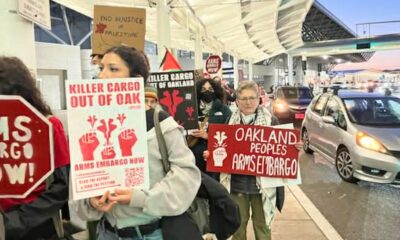
Oakland People’s Arms Embargo Coalition Demands End to Military Shipments Thru Oakland
