
#NNPA BlackPress
Election 2020 – A Cheat Sheet for 12 Propositions to Know About Before Nov. 3

This is a big election year. With all eyes on the presidential race, Californians can’t afford to lose sight of its state and local elections. These decisions need the same amount of consideration being given to the big race. They are the ones with the most — and the most immediate — effects on you and your family’s safety, quality of life and finances.
This year, California as a whole is reckoning with some big changes. The 12 qualified propositions on the ballot cover many issues, including tax codes, voting rights, workers’ rights and affirmative action. The results of these ballot measures will affect every life in California in some shape or form, and it’s important that voters understand them and make informed decisions on how to vote.
Prop. 14 – Authorizes Bonds Continuing Stem Cell Research. Initiative Statute.
Prop 14 considers bonds for stem-cell and other medical research.
If passed, the California Institute of Regenerative Medicine will issue $5.5 billion in state bonds to fund stem cell and other medical research, with $1.5 billion going to research and therapy for Alzheimer’s, Parkinson’s, stroke, epilepsy and other brain and central nervous system diseases. Money would come from the state General Fund.
Proponents of Prop 14 argue that the funding will help accelerate development of treatment and cures for many diseases, including cancer and infectious diseases like COVID-19.

Opponents of the measure say that the state can’t afford the debt from borrowing the $5.5 billion, which would reach $8 billion with interest added. They also point out that the majority of the money from the first stem-cell research measure, Prop. 71 from 2004, went to infrastructure, education, and training, producing few medical breakthroughs.
Prop. 15 – Increases Funding for Public Schools, Community Colleges, and Local Government Services by Changing Tax Assessment of Commercial and Industrial Property. Initiative Constitutional Amendment.
Prop 15 ask voters to weigh in on the biggest change to the state’s property tax code in four decades since 1978’s Proposition 13. Prop 13 placed a 1% cap on the amount of tax that can be charged on commercial properties in the state.
If passed, commercial and industrial property will be taxed based on current market value instead of the purchase price. It would replace the current rule, where property taxes can’t rise more than 2% unless there’s new construction or ownership, with tax reassessments of commercial and industrial properties at least every three years.
The new tax revenue this generates, an estimated $6.5 to 11.5 billion, will fund K-12 public schools, community colleges and local governments. The measure would exempt residential properties and owners of commercial properties with a combined value of $3 million or less, and exempt small businesses from personal property tax.
Proponents of Prop 15 argue that the initiative would close corporate tax loopholes and force wealthy corporations to pay their fair share of taxes. They also argue that money is needed for schools and local communities struggling during the COVID-19 pandemic.
Opponents of Prop 15 argue that wealthy corporations and landlords will probably pass the buck to tenants and small businesses and that any tax raise would ultimately raise the cost of living in the state.
Prop. 16 – Allows Diversity as a Factor in Public Employment, Education and Contracting Decisions. Legislative Constitutional Amendment.
Prop. 16, if passed, would remove California’s ban on affirmative action, which was put in place with Prop. 209 in 1996. Repealing the ban on affirmative action would allow state agencies and institutions, including colleges and universities, to consider race, ethnicity and gender for employment, admissions and contracting decisions.
Proponents of Prop. 16 argue that it would create targeted opportunities for Black and Latino communities and help to correct centuries of economic exclusion and institutional racism. They also argue that the measure is a way to address the racial wealth gap in California, a state where white Californians make up 60% of high earners though they’re only 37% of the state population.
Opponents of Prop. 16 argue that the change would make race more important than merit in college admissions and employment processes, a form of reverse discrimination.
Prop. 17 – Restores Right to Vote After Completion of Prison Term. Legislative Constitutional Amendment.
Prop. 17 concerns voting rights for parolees. If passed, previously incarcerated people will be able to vote while on parole, instead of having to wait until the parole term is over. This would enfranchise over 50,000 parolees, who are disproportionately African American and Latino. California is currently one of three states that require incarcerated persons to finish their prison and parole terms before they can vote. Nineteen states allow parolees to vote.
Those in favor of Prop. 17 argue that parolees have paid their debt to society and contribute to their communities through work and community service, so they should have a say in government. Also, they argue that banning parolees from voting disenfranchises a large portion of the Black and Latino vote.
Opponents of the measure, primarily voter watchdog groups, argue that parole is a transition period and previously incarcerated persons have not paid their debt to society until after their parole is over.
Prop. 18 – Amends California Constitution to Permit 17-Year-Olds to Vote in Primary and Special Elections If They Will Turn 18 by the Next General Election and Be Otherwise Eligible to Vote. Legislative Constitutional Amendment.
Prop. 18 concerns the minimum voting age. If passed, young people who are 17-years-olds at the time of a primary or special election will be able to vote if they will turn 18 by the following general election and are otherwise eligible. This would allow these young adults to exercise their vote across a full election cycle.
Proponents of Prop. 18 argue that 17-year-olds can make informed decisions about voting and should be allowed to participate in the full election cycle. They also argue that young people should have a say in issues that directly affect them and that the change will inspire young people to get more engaged in politics.
Opponents of the measure say that 17-year-olds are still legal minors and can be unduly influenced by parents and teachers.
Prop. 19 – Changes Certain Property Tax Rules. Legislative Constitutional Amendment.
Prop. 19 proposes property tax code changes for older Californians and natural disaster victims. If passed, the proposition would give homeowners who are over 55, disabled, or victims of wildfires and other natural disasters a tax break, allowing them to transfer their primary home’s low property tax base to their new home when they move, up to three times.
It would also change the inheritance tax break to require heirs to use the inherited home as their primary residence within a year, or else the property tax will be reassessed to market value. If passed, local governments and schools could gain tens of millions of dollars in new property tax revenue per year, and the initiative would also establish a fund for fire protection.
Proponents argue that Prop 19 will provide tax relief for seniors who are stuck in houses that they can’t maintain or are too far from family or medical care. They also argue that narrowing the inheritance tax break would generate more revenue for local governments and schools since people who use inherited property as rental units or second homes would be forced to pay more taxes.
Opponents argue that the initiative would increase inequality. They say it would put people who are struggling to buy a home at a disadvantage, giving more purchasing power to existing homeowners. Current law allows Californians move to transfer their low property tax rate to a new home only one time.
Prop. 20 – Restricts Parole for Certain Offenses Currently Considered to Be Non-Violent. Authorizes Felony Sentences for Certain Offenses Currently Treated Only as Misdemeanors. Initiative Statute.
Prop. 20, if passed, would change procedures and standards for the state Board of Parole hearings and community probation programs, and expand the list of offenses that disqualify an inmate from parole. It would change several theft-related crimes from misdemeanors to felonies and create two new crimes, serial theft and organized retail theft. It would also expand DNA testing to require samples from some people convicted of theft and domestic violence.
Those who support Prop. 20 argue that previous prison reforms, specifically propositions 47 in 2014 and 57 in 2016, led to an increase in crime by repeat offenders, and tougher parole standards are needed.
Opponents of Prop. 20 argue that the measure is a prison spending scheme that will increase spending for prisons, money that should go to programs like schools, rehabilitation, mental health and homelessness.
Prop. 21 – Expands Local Governments’ Authority to Enact Rent Control on Residential Property. Initiative Statute.
Prop. 21 is the latest rent control proposition. If passed, it would amend state law to allow local governments to establish rent control for residential properties over 15 years old. Local rent-control limits can differ from the statewide limit, but local governments would be required to allow landlords to increase rents by 15 % after three years. Also, people who own no more than two housing units with separate titles, such as single-family homes and duplexes, are exempt from rent control. Currently, 64% of African Americans in California are renters.
Those in favor of Prop. 21 argue that putting a cap on California’s sky-high rents is a strategic move that will assist renters to stay in their homes and help prevent homelessness. Half of renter households in the state are overburdened and spend more than 30 % of their incomes on rent, according to the U.S. Census Bureau.
Opponents, primarily developers, landlords and business owners, argue that rent control would discourage construction and take affordable units off the market.
Prop. 22 – Exempts App-Based Transportation and Delivery Companies From Providing Employee Benefits to Certain Drivers. Initiative Statute
Prop. 22 is about employment classification for rideshare and delivery drivers, affecting the companies Uber, Lyft and DoorDash, among others. If it passes, these companies will be allowed to continue to classify their drivers as independent contractors with benefits from those app-based companies, including a base wage and healthcare subsidies. Currently, these drivers are legally classified as employees under AB-5.
Proponents of the ballot measure argue it would allow gig drivers, who are majority African American and Latino, to keep their flexibility and continue earning income in a turbulent economy.
Those against Prop. 22 argue that it would allow the companies to underpay their drivers, and exempt gig companies from providing standard benefits that drivers need, like unemployment insurance, paid time off, and workers’ compensation.
Prop 23 – Authorizes State Regulation of Kidney Dialysis Clinics. Establishes Minimum Staffing and Other Requirements. Initiative Statute.
Prop. 23 regards state regulation of dialysis clinics. If Prop 23 passes, all dialysis clinics would require at least one licensed physician on-site during treatment. It would also require clinics to report infection data to state health officials and require state approval for clinics to close or reduce services. State and local health care costs would increase due to increased dialysis treatment costs.
Supporters of Prop. 23 argue that the regulations are necessary to keep large dialysis corporations in line.
Opponents of Prop. 23 argue that many dialysis clinics would have to restrict hours or shut down if they had to pay a licensed physician and that dialysis patients would have trouble affording increased treatment costs. They also note that the proposition does not require that the physicians have any specialized knowledge in dialysis or kidney function.
Prop. 24. Amends Privacy Laws. Initiative Statute.
Prop. 24 concerns consumer data privacy laws, which prevent businesses from sharing personal information gathered digitally, including from websites. If passed, it would strengthen the California Consumer Privacy Act by letting consumers tell businesses to limit the use of their sensitive data, such as an individual’s exact location and race, and prohibiting businesses from keeping consumer data for longer than necessary. It would also establish a new state agency dedicated to enforcing privacy laws and increase financial penalties for violations concerning consumers under age 16.
Those in favor of Prop 24 argue that the current consumer privacy law isn’t strong enough and that the measure would give people more control over their personal data, and make it easier for consumers to sue companies if their e-mail accounts and passwords are stolen or hacked.
Opponents say the measure was written behind closed doors and included the participation of companies that are the targets of regulation.
Prop. 25 – Referendum on Law That Replaced Money Bail with System Based on Public Safety and Flight Risk
Prop. 25 is a veto referendum on SB 10, a 2018 law that would replace cash bail with risk assessments for suspects awaiting trial. If Prop. 25 passes, it would replace the current system, where suspects pay a cash bond to be released from jail with a promise to return for trial, with risk assessment to determine whether a detained suspect is a flight risk or a danger to the public. The state superior courts would establish divisions responsible for conducting risk assessments and making recommendations, and the state Judicial Court would determine which factors are considered for the assessments.
Prop 25 supporters argue that the risk assessment system would be fairer than the current system, which depends on a suspect’s ability to afford bail.
Opponents of Prop. 25 argue that the risk assessments will likely discriminate against Black and Brown people and increase racial profiling. They also point out that it will give judges unchecked power with no accountability, and that setting up the new system would cost taxpayers hundreds of millions of dollars a year.
For more information on the propositions visit the California Secretary of State Website: https://www.sos.ca.gov/elections/ballot-measures/qualified-ballot-measures













#NNPA BlackPress
NFL: Week Two Recap | Jalen Hurts did not fold; Caleb Williams exits game with injury
Philadelphia Eagles quarterback Jalen Hurts found Darius Cooper with nine seconds left for the game winning touchdown as his team beat the Tennessee Titans 24-20 in Nashville. Hurts finished the day 26/37 for 264 yards. He threw for two touchdowns and two interceptions. Prior to the final drive, the Eagles ran 25 plays for 45 […]
The post NFL: Week Two Recap | Jalen Hurts did not fold; Caleb Williams exits game with injury appeared first on BlackPressUSA.

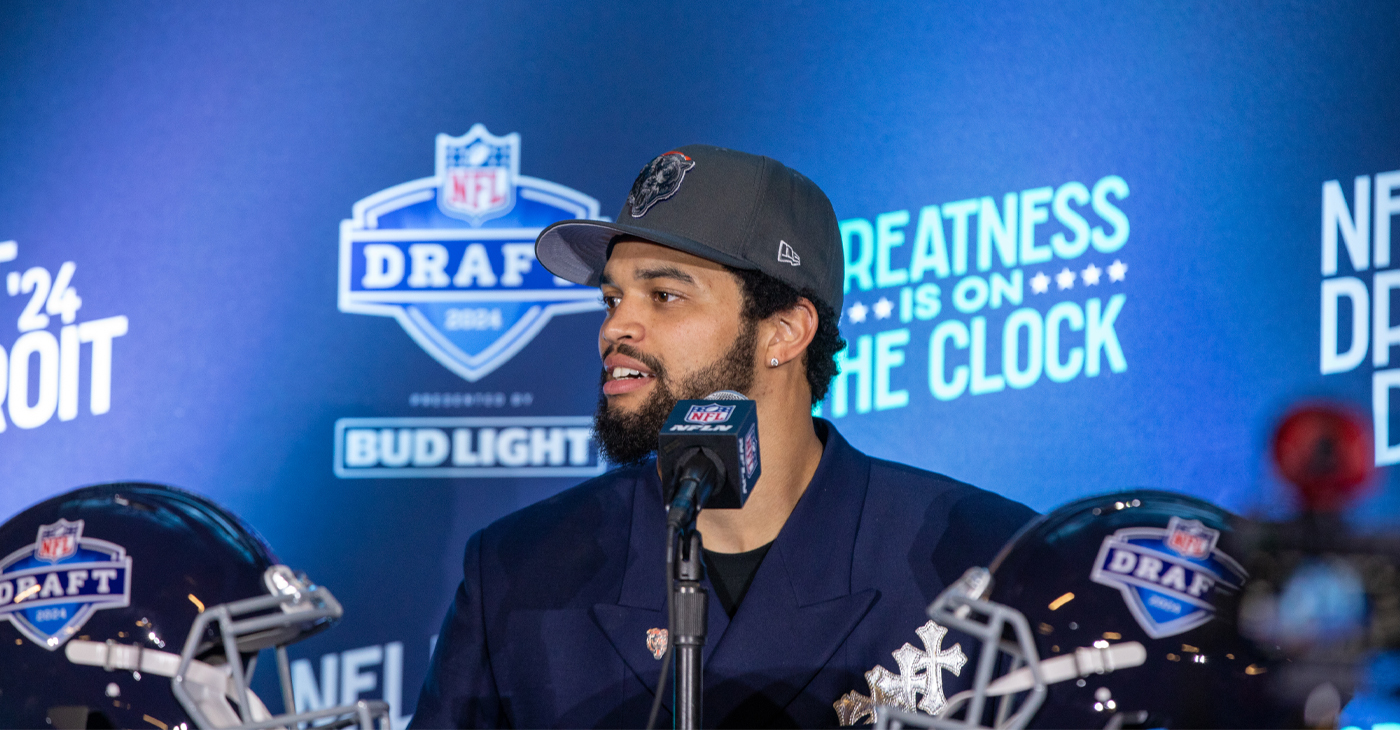
Philadelphia Eagles quarterback Jalen Hurts found Darius Cooper with nine seconds left for the game winning touchdown as his team beat the Tennessee Titans 24-20 in Nashville. Hurts finished the day 26/37 for 264 yards. He threw for two touchdowns and two interceptions.
Prior to the final drive, the Eagles ran 25 plays for 45 yards. During the final drive Hurts went 6-8 with 61 passing yards and the touchdown. Titans defensive tackle — and team captain — Jeffery Simmons said this week that the way to defend Jalen Hurts is to make him “play quarterback.”
Hurts said to Simmons after today’s game: “You started that sh**. I had to finish it.”
Running back Saquon Barkley suffered a stinger in the first half but he ultimately finished the game. He had four carries and nine yards and one catch for eleven yards. He will get an MRI for his injury, but admitted to Cameron Wolfe of the NFL Network he was fine.
Caleb Williams leaves game against Vikings with apparent lower-body injury
Chicago Bears quarterback Caleb Williams was helped off the field with a right leg injury with 7:42 remaining in the fourth quarter. Williams was down, writhing in pain after scrambling to his left. After departing the injury tent, Williams raised his right fist, acknowledging the crowd while expressing his frustration. Testing will commence on Monday to find out more details about his injury.
“We’ll know tomorrow,” Johnson admitted regarding Williams’ injury. “He’s in good spirits. He’s a team player.”
Williams finished the day with 138 passing yards and one interception.
“I’m actually happy it’s nothing with the knee — that was my first inclination,” Johnson said. “But, a hamstring could be pretty damaging as well. So, we’ll see. We’ll see how bad it is tomorrow and we’ll go from there.”
Bryce Young once again dominated the Falcons
Carolina Panthers quarterback Bryce Young is 5-1 against the Atlanta Falcons and is undefeated at Mercedes-Benz Stadium. Today, Young threw for 287 yards and three touchdowns as he led the Panthers to a 34-3 dismembering of the Atlanta Falcons. Georgia Tech alumnus Darren Waller caught two touchdowns and linebacker Devin Lloyd returned one of his two interceptions for a touchdown.
Cooper Rush started his second straight game for the Falcons and it did not go well. The partisan crowd voiced their displeasure after Rush completed 10/17 passes for 86 yards and two interceptions. Jack Strand entered the game for Rush prompting cheers from the Falcons fans. The rookie threw a pick-six on his first career pass attempt. Strand was the first QB to accomplish that feat since Sam Darnold in 2018 and is the first Falcons player to do that since Brett Favre in 1991. Strand finished the day with 59 passing yards and 16 rushing yards.
According to reports, quarterback Michael Penix, Jr. is expected to make his season debut this Thursday at the Green Bay Packers. His return should help the Falcons. They are the first team since the 2008 Rams to not run any plays in the red zone after the first two games to open a season.
The bright spots for the Falcons today were the Spelman College Jaguarettes performing with the Falcons cheerleaders and Florida A&M’s marching band, The Marching 100, also performed during halftime!
Jayden Daniels gets carted off after apparent arm injury
Washington Commanders quarterback Jayden Daniels appeared to injure his left elbow on the final play of the first half in his game against the Dallas Cowboys. During the play, Daniels got stepped on, braced himself for the fall, and his elbow bent the wrong way. Daniels draped a towel over his head as he exited the field on the cart.
He was later ruled out.
Daniels suffered a dislocated elbow to the same arm during week nine of last season against the Washington Commanders, which led to him being shut down for the remainder of the season.
The post NFL: Week Two Recap | Jalen Hurts did not fold; Caleb Williams exits game with injury appeared first on BlackPressUSA.

#NNPA BlackPress
The Complete Negotiation Framework — Every Stage, Every Tactic, Every Win
Master the complete vehicle-purchase negotiation framework with Roosevelt Gist and Roosevelt. Learn every stage, tactic, and win!
The post The Complete Negotiation Framework — Every Stage, Every Tactic, Every Win appeared first on BlackPressUSA.

Roosevelt Gist and Roosevelt deliver the complete vehicle-purchase negotiation framework in Episode 8 of The Color of Our Money Is Green. This episode covers the three foundations of every effective negotiation, the full seven-stage negotiation sequence with exact language for every stage, and five of the most common dealership tactics with the specific response each one requires.
What You Learn in This Episode:
The three foundations that make every negotiation tactic work
The complete seven-stage car-buying negotiation sequence
Exact language for every stage of the dealership conversation
Five common dealership tactics — the turnover, the four-square, the packed payment, spot delivery, and forced add-ons — and how to counter each one
Why signing preliminary paperwork isn’t the same as signing the final contract
___________________________________________________________________
“The Color of Our Money Is Green: A Buyer’s Guide to What Cars Actually Cost” — stan.store/RGist
____________________________________________________________________
AutoNetwork helps serious car shoppers inspect any new vehicle online before walking into a dealership. I’m Roosevelt — I’ve been reviewing cars and shaping digital car buying and credit union auto leasing since before YouTube car reviews existed.
You’ll find detailed walkaround reviews, POV test drives, and buyer-focused breakdowns covering comfort, space, features, and real-world value.

How to use the channel:
Watch the walkaround of the car you’re considering
Visit AutoNetwork.com for the full review
Check CouponsOffersAndDeals.com for current dealer specials
Walk in already knowing what you want — and what it should cost
 AutoNetwork.com
 CouponsOffersAndDeals.com
Affiliate disclosure: some links earn a small commission at no cost to you and help support the channel. Insta360 is one of those partners.
The post The Complete Negotiation Framework — Every Stage, Every Tactic, Every Win appeared first on BlackPressUSA.
#NNPA BlackPress
Mazda CX-90 Luxury: Heated Seats & Premium Comfort! #shorts
Stay toasty in the CX-90! Plush Nappa leather, heated/ventilated seats, and a memory-equipped heated steering wheel deliver ultimate luxury.
The post Mazda CX-90 Luxury: Heated Seats & Premium Comfort! #shorts appeared first on BlackPressUSA.

Experience ultimate comfort in the CX-90. Nappa leather, heated/ventilated seats, 8-way power adjustments, and memory settings for both front passengers. The heated steering wheel with memory tilt/telescope adds premium convenience.
 Watch the full video: https://youtu.be/EH5A4eQ4ipY
#AutoNetwork
The post Mazda CX-90 Luxury: Heated Seats & Premium Comfort! #shorts appeared first on BlackPressUSA.



Asm. Corey Jackson Announces Launch of 24-Hour Childcare in His District

IN MEMORIAM: The Rev. Leon “Sonny” Clark, Longtime Orange County Pastor and Community Leader, Dies at 72

Poll: Becerra Widens His Lead Over Hilton; Californians Split on Wealth Tax

From Historic Memories to New Possibilities: Oakland Celebrates Coliseum 60

County Office of Education Says OUSD Finances Are Getting Healthier, Materially Stronger

LIVE FREE Sunday Dinner Brings Faith, Fellowship and Civic Conversation to Oakland

Remembering Chauncey Bailey as Student Journalists Face Threats to Truth-Telling

BLACspace Cooperative Invites Bay Area to Experience Oakland’s Black Cultural Ecosystem Through a BLAC Map Tour + Party

In Wake of Death on Doorstep, Williams Chapel Baptist Church Calls for Better Care, Funding for Unhoused

Oakland Centenarian Nuna McKee Honored!

Caribbean Nations Produce Action Plan Calling for UK Reparations Over Slavery

Oakland Post: Week of September 23 – 29, 2026

Doulas Are Helping Black California Moms Navigate Pregnancy–Even as High Mortality Rates Persist

Newsom Signs Addictive Social Media Law to Protect Kids

On Your November Ballot: Prop 38 Would Allocate $8.4 Billion to Immunology and Immunotherapy Funding

Less Affluent School Districts, Including Sacramento City, Face Threat of State Takeover

ESSAY: California Can Close Its Colorectal Cancer Gap

California Hispanic Chambers of Commerce Unveils: ‘Powering the Future’ Theme for 47th Annual Statewide Convention

Four Candidates, Including Incumbent Barbara Lee, Qualify for Oakland Mayor’s Race

Oakland Post: Week of August 12 – 18, 2026

From Blueprint to Breakthrough: Tackling Affordable Housing in Oakland

Oakland Observes Black August with Block Parties, Film Showings, Workshops

COMMENTARY: Why Local School Tax Measure G1 Will Not Be on the November Ballot

Standoff for Justice: Our Homes Are Worth Fighting For

Returning to Its Roots, the Oakland Black-Eyed Pea Festival Partners with the Freedom Farmers Market Sept. 12

Oakland Post: Week of August 26 – September 1, 2026

NPRC Scores First Advocacy Victory: David Shaw Finally Gets His Wish to ‘Go Home’

Frontier Airlines’ Return to Oakland Airport Brings Flights, Jobs and Opportunity

Gubernatorial Candidate Steve Hilton Blasts California New Tire Rules; Newsom Hits Back

Chef Sharon Lee Blends Culinary Excellence, Education and Empowerment

The Conversation With Al McFarlane 6/23/26

Media Monday 6/22/26

LIVE! ASK ALMA! — TUES. 6.23.26 7PM EST

Car Buying Secrets: 4 Hidden Checks Before You Sign!

Is This 550 HP Charger Worth YOUR Money? AutoNetwork Review

Celebrating Juneteenth – Frederick Douglass on education and resistance

LIVE! — ASK ALMA! — TUES. 6.19.26 7PM EST

Hyundai Ioniq 5 Parking, Safety, and 360 View #shorts

2025 Ioniq 5 New Wiper & Powerful Performance! #shorts

Electric SUV Range: Is 259 Miles Enough? #shorts

EV Charging: How Fast Can You Charge an Electric Vehicle? #shorts

Biometric Cooling… Messaging Seats…Come on! 2025 Infiniti QX80 Autograph 4WD

Charged Up: Witness the Magic of a Fully Electric Car! #shorts

Range Rover Sport PHEV Included…: See What’s Inside This Luxury SUV! #shorts

Invisible Hood View: Perfect Parking with X-Ray Vision! #shorts
-
 Business4 weeks ago
Frontier Airlines’ Return to Oakland Airport Brings Flights, Jobs and Opportunity
-
 Business4 weeks ago
Gubernatorial Candidate Steve Hilton Blasts California New Tire Rules; Newsom Hits Back
-
 Business4 weeks ago
Chef Sharon Lee Blends Culinary Excellence, Education and Empowerment
-

 Black History4 weeks ago
Jackie Wright Champions Bay Area Stories, Filmmakers and Cultural Institutions
-

 Community4 weeks ago
Big City Mayors Ask for “Yes” Vote on Housing Bond Measure; Conservatives Say “No”
-

 Education4 weeks ago
Gov. Newsom’s Latest Appointees Include Sacramento Advocate for Formerly Incarcerated Students; State’s New Tech Chief
-

 Business4 weeks ago
Oakland Coliseum Project Opens Door for Small Businesses to Build Bigger
-

 Community2 weeks ago
Misnamed ‘Parent’ PAC Seeks to Influence Oakland School Board Elections
