
Crime
Why Trump Valet Walt Nauta Won’t Roll on Ex-President in Secret Documents Case
This week, Trump’s attorneys unveiled their legal strategy — delay at any cost — intended to make sure that the trial in what should be an open-and-shut Mar-a-Lago documents case doesn’t happen until after the 2024 election.

By Emil Guillermo
Serial indictment collector Donald Trump, the disgraced, twice impeached 45th president has an unusual criminal defense: Run for president!
I doubt if any of us can rely on the presidential defense if we should have the misfortune of facing a felony, but this is what the justice system looks like for the privileged.
This week, Trump’s attorneys unveiled their legal strategy — delay at any cost — intended to make sure that the trial in what should be an open-and-shut Mar-a-Lago documents case doesn’t happen until after the 2024 election.
In the autocratic mind of Trump, running for president is the grand excuse. How can a millionaire and his lawyers prepare for trial? And so in lieu of a defense, in the Trumpian fantasy, the indicted one just needs to win the election. Then he sets up a new Justice Department and the case is dropped.
This is how an autocrat thinks in order to assure he stays above the law. It’s Trump’s prime motivator: White House or the Big House?
When literally the emperor has no defense, all delays help, which is why Waltine “Walt” Nauta, the Guam native and Trump co-defendant should be on your radar.
In this tale of the U.S. vs. Trump and Nauta, Nauta has the opportunity to be a hero. He is the former Navy enlisted man who worked his way up the White House mess to become a valet to the commander in chief. From AAPI in the White House, Nauta retired from the Navy and makes a reported $135,000 as Trump’s personal valet and body man.

He knows things. He could flip on Trump.
But he doesn’t. With Nauta, if Trump says delay, Nauta drags his feet and says ‘how long, Boss?’
Witness last week when Nauta showed up to enter a plea a month after Trump. Why? Because relying on his attorney paid for by a Trump Political Action Committee (PAC), Nauta didn’t have a Florida attorney in order to appear in court. Left hung out to dry? Well, Nauta is the help.
So, it was no surprise when Nauta showed up this time with his Trump lawyer, and a former public defender who does divorces and has no national security experience.
It just all adds to the delay.
THE COLONIAL MINDSET
The case involving the mishandling of boxes of classified top-secret documents and plotting with his former boss to hide them at Mar-a-Lago is so serious that both men could be sent to prison for a long, long time.
I just have a feeling when all is said and done, Nauta will be serving more time for this than his boss ever will.
And that would be criminal.
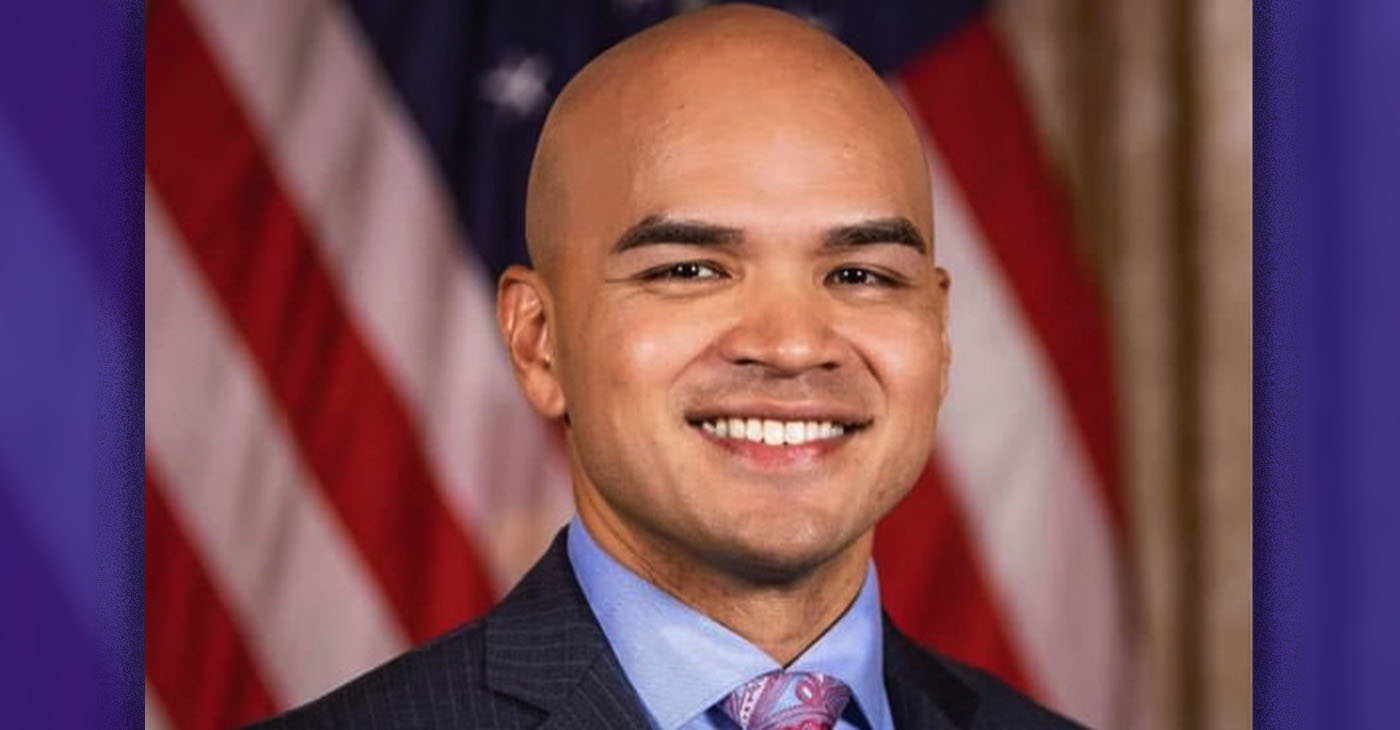
Maybe I feel for Nauta because he looks like me, only without hair.
Or maybe it’s because I’ve lived in 10 different cities and know what it’s like to pack and move boxes. Without the heavy weight of top-secret documents.
But am I the only one asking, “Who is Nauta’s body man?” By that, I mean, who really cares about Walt Nauta?
That he’s Guamanian may be all you really need to know. If you know the history of Guam and the indigenous Chamorro people, this is what always happens. It explains my fear that Walt Nauta is going to get the worst of it.
Unless he wises up. But in many ways, maybe he can’t help it.
You’re from Guam? Losing is in your blood.
GUAM, THE FOREVER COLONY
It’s baked in the system when you’re from Guam, where a colonial mentality has lingered since the 16th century
Spanish rule began when Magellan stumbled onto Guam in 1521. It was just the beginning of bad luck for the explorer who was killed later in the Philippines.
In 1898, the U.S. got Guam after the Spanish American War, almost as an afterthought. But that’s how the island is connected to our nation.
Guam’s role is to exist as the forever American colony, its people official second-class citizens of a great democracy.
As such, Guamanians have a Congressional representative who gets to sit in the People’s House but doesn’t get to vote. On anything. He’s window dressing. In fact, no Guamanian has a vote for president.
Maybe that’s why Donald Trump loves Nauta so much. He’s in that personal safe zone. Undocumented/documented? Nauta’s got all the documents he can get, and he’s still less than whole.
It’s a status that makes him constantly forced to prove his worthiness.
The way out of the colonial mindset has been to trade it for a military mindset, and Guamanians have enlisted in the Navy in great numbers.
Nauta enlisted as a teenager. At age 40, Nauta’s the modern Guamanian success story.
And he’s done it all by constantly proving his worthiness and showing that selfless loyalty to his boss, the former commander in chief.
HOUSE NEGRO VS. FIELD NEGRO
I’m reading Oakland resident Ishmael Reed’s new play “The Conductor” where there’s a passage on the difference between the ‘House Negro’ and the ‘Field Negro.’ That’s where House Negros served the master’s family in the house, and the Field Negroes picked the cotton.
Malcom X, in a speech at Michigan State in 1963, said for the House Negro, the master’s pain was his pain. And it hurt him more for his master to be sick than for him to be sick himself. The Field Negro? When the master got sick, they prayed he’d die.
And perhaps that helps explain Trump’s valet Nauta.
We also know he’s almost as sick as the master.
In the unsealed affidavit this week, Nauta is shown in security camera footage carrying three boxes inside Mar-a-Lago on May 24. Then two days later, when interviewed by the FBI, he is alleged to have denied knowing anything about the boxes.
Four days after the interview, Nauta is seen on the surveillance footage moving 50 boxes out of a storage room.
Then on June 2, footage shows Nauta moved 25-30 boxes back to the storage room. On Trump’s command?
The arithmetic is damning.
But Nauta stays selflessly loyal. He’s doubly cursed: colonial mentality and House Negro all rolled into one.
Emil Guillermo is a journalist and commentator. He does a news-reality talk show on www.amok.com












Community
Assemblymember LaShae Sharp-Collins’s Bill Would Pause Law Enforcement’s Use of Shock Gloves Pending Study
The device at the center of the debate is known as the G.L.O.V.E., an acronym for Generated Low Output Voltage Emitter. U.S. Immigration and Customs Enforcement awarded a $16.7 million contract for 6,000 pairs of the gloves, which are designed to deliver an electric shock through an officer’s hand.

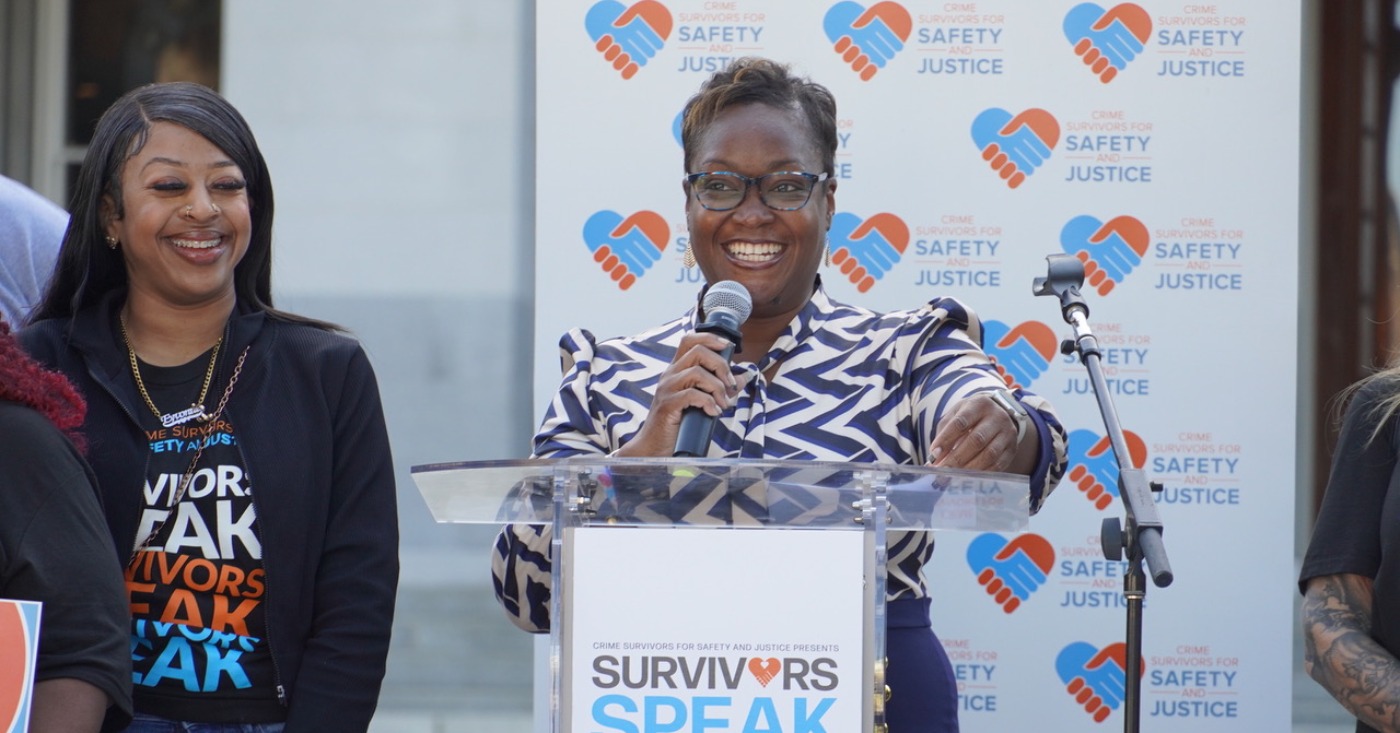
A bill temporarily prohibiting law enforcement agencies from using electric shock gloves in California is awaiting action by Gov. Gavin Newsom.
Assembly Bill (AB) 2760, authored by Assemblymember LaShae Sharp-Collins (D-San Diego), passed the Senate 29-9 on Aug. 31. The Assembly concurred in Senate amendments the same day on a 55-16 vote.
The bill would prohibit state, local and federal law enforcement agencies from using wearable electroshock devices in California until Jan. 1, 2030. It would also bar agencies from using state funds to purchase the devices and require them to update their use-of-force policies accordingly.
Traditional handheld devices, including tasers and stun guns, are exempt.
Newsom has until Sept. 30 to sign or veto the bill. If he takes no action, it will become law without his signature.
Sharp-Collins introduced the measure after reviewing information indicating that the devices could cause serious injury or death if used without adequate safeguards and training.
“AB 2760 draws a line that public safety technology must be proven safe and accountable before it is employed. Not after someone is killed or injured,” said Sharp-Collins, a member of the California Legislative Black Caucus (CLBC).

“Our commitment is to protect our communities, especially the most vulnerable. That is what AB 2760 is about and that is what AB 2760 will do,” Sharp-Collins told her colleagues.
The device at the center of the debate is known as the G.L.O.V.E., an acronym for Generated Low Output Voltage Emitter. U.S. Immigration and Customs Enforcement awarded a $16.7 million contract for 6,000 pairs of the gloves, which are designed to deliver an electric shock through an officer’s hand.
During the Assembly debate, Assemblymember Rhodesia Ransom (D-Stockton), also a CLBC member, thanked law enforcement representatives for helping negotiate amendments to the bill.
“This is something new to us (and) it’s something that absolutely should be studied,” Ransom said. “I appreciate law enforcement for agreeing to work with the legislature to figure out if this is an appropriate tool to be used.”
Neither the Los Angeles County Sheriff’s Department nor the Los Angeles Police Department has reported using electric shock gloves. However, the Santa Monica and El Monte police departments have obtained devices for testing.
The Sacramento County Sheriff’s Office purchased 10 shock gloves as part of a $35,000 acquisition that also included 10 remotely activated shock bands. Sheriff’s officials had been developing training and policies for the devices before AB 2760 advanced.
State Sen. Tony Strickland (R-Huntington Beach) opposed the legislation, arguing that it would unnecessarily force agencies to change their use-of-force policies and could compromise public safety.
“I don’t disagree with the author that the electric shocks are not a great option, but at the end of the day, I think it’s important to understand that we need to give law enforcement the tools they need to keep themselves safe and the community safe,” Strickland said.
Supporters countered that wearable electroshock devices have not been sufficiently studied and could pose particular risks to immigrants, children, older adults and other vulnerable groups.
“People who are Black or Brown could be test subjects for these gloves of torment,” Mark González (D-Los Angeles) said. “I appreciate law enforcement for agreeing to work with the legislature.”

Community
Alameda County DA Ursula Jones Dickson Says Key to Optimal Use of DA’s Office Is Knowledge
Jones Dickson emphasized that each situation is “case-specific,” particularly when determining whether a matter is criminal or civil. She explained that significant documentation of criminal activity is generally necessary before the DA’s Office can intervene.

Part 3
Alameda County District Attorney Ursula Jones Dickson wants the public she serves to know more about what office really does.
The key, she said, is education, helping residents understand how the office operates, what it can and cannot do, and how the public can work with the office to achieve the results they seek.
The DA’s powers and duties regarding the court system are limited, Jones Dickson explained, and that there is a process for determining when the office can become involved.
“When there’s a complaint of criminal abuse or exploitation, the DA’s office will investigate, but to trigger that investigation, a person must file a complaint first with the Police Department,” she said.
Most issues, however, remain within the court system. Within the Probate Court system, for instance, if fraud or neglect occurs, the matter will generally be referred to the appropriate agency.
Jones Dickson emphasized that each situation is “case-specific,” particularly when determining whether a matter is criminal or civil. She explained that significant documentation of criminal activity is generally necessary before the DA’s Office can intervene.
“That is where the jurisdiction starts,” Jones Dickson said. “If it’s exploitation, it begins with a police report. We only proceed when the evidence leans beyond reasonable doubt.”
The District Attorney’s Office has a Real Estate Fraud Unit as well as an Elder Abuse Unit. Jones Dickson acknowledged that the office has been addressing multiple real estate fraud cases since she took office in June.
“Cases receive priority and witness a lot more success when there’s documentation,” she said. “This is the message the DA’s Office is utilizing in their police training and consumer division. When we have the cooperation of the community, that makes us even more effective.”
When asked how the DA’s Office can assist people in probate who feel they have not received justice, Jones Dickson acknowledged that the office’s powers are limited because most conflicts must be resolved through the court system.
She noted that many probate-related referrals involving children come through Child Protective Services (CPS) or Dependency Court. When it comes to adults involved in the probate system, however, Jones Dickson emphasized the need for the public to take greater responsibility through advance planning and family communication.
“The truth is, especially in the Black community, we don’t like to think about death, much less talk about it,” she said. “I can’t stress enough how important that discussion is.
“Get that will and trust, then have that conversation with the family, exactly what your wishes are, and back it up with documentation. Hopefully that will help avoid the Probate Court altogether.”
If an issue involves an attorney, for example, a complaint may be made to the California State Bar. If it involves a judge, the matter may fall under the jurisdiction of the Commission on Judicial Performance.
Petitioning the appellate court is another option in certain circumstances, as the Court of Appeals provides a means of challenging a decision made by a lower court.
Jones Dickson said she wants the community to have a clear understanding of the DA’s role and the importance of communication between the office and the people it serves.
“I need the community to know what our job is,” she said. “Education is what we do, and when we’re supported through civil conversation, it makes communication more effective. We don’t get anywhere with mud-slinging. The DA’s Office focuses on what we are required to do, and that is to protect the community while we do the work.”
Jones Dickson also stressed the importance of recognizing the communities most affected by victimization and approaching those communities with understanding and sensitivity.
“That’s why it is so important that we acknowledge that most victimization occurs in the Black and Brown community and that we have to be especially sensitive as to how we address that community that is so deserving of our protection,” Jones Dickson said.
Activism
Oakland Post: Week of September 16 – 22, 2026
The printed Weekly Edition of the Oakland Post: Week of September 16 – 22, 2026
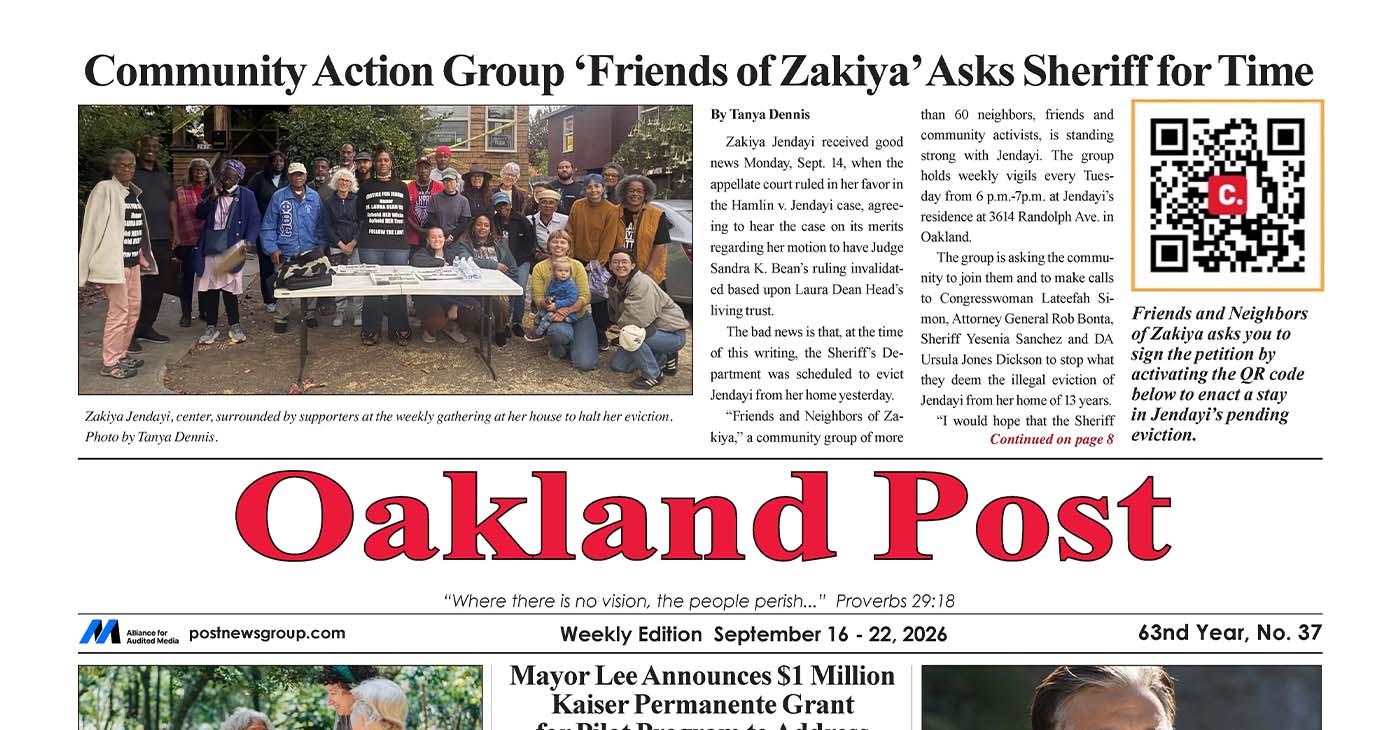
To enlarge your view of this issue, use the slider, magnifying glass icon or full page icon in the lower right corner of the browser window.



Doulas Are Helping Black California Moms Navigate Pregnancy–Even as High Mortality Rates Persist

Newsom Signs Addictive Social Media Law to Protect Kids

On Your November Ballot: Prop 38 Would Allocate $8.4 Billion to Immunology and Immunotherapy Funding

Ask California: Golden State Releases New AI Chatbot

Asm. Isaac Bryan’s Bill Banning California Police From ICE Side Jobs Reaches Newsom’s Desk

Assemblymember LaShae Sharp-Collins’s Bill Would Pause Law Enforcement’s Use of Shock Gloves Pending Study

BOOK REVIEW: ‘Laws of Solomon’ Reveals Tender Heart of Former Child Soldier

OPINION: The New American Fear – From 9-11 to AI

Passing for White, Fighting for Black America: The Courage of Walter White

Oakland People’s Arms Embargo Coalition Demands End to Military Shipments Thru Oakland

Barbara Lee Mourns Gloria Steinem, Remembers a Friendship Rooted in Equality

Event Preview: ‘Fashion v. Fascism’ – A Runway Revolution Is Coming to the Bay Area

Two Looming Threats Every Alameda County Elder Should Know About

Oakland Mayor Reads to Children at Bookout Block Party at Marcus Books Store

Tradition Comes to the Streets in 11th Annual Black-Eyed Pea Festival at the Freedom Farmers Market

Less Affluent School Districts, Including Sacramento City, Face Threat of State Takeover

ESSAY: California Can Close Its Colorectal Cancer Gap

California Hispanic Chambers of Commerce Unveils: ‘Powering the Future’ Theme for 47th Annual Statewide Convention

Four Candidates, Including Incumbent Barbara Lee, Qualify for Oakland Mayor’s Race

Oakland Post: Week of August 12 – 18, 2026

From Blueprint to Breakthrough: Tackling Affordable Housing in Oakland

Oakland Observes Black August with Block Parties, Film Showings, Workshops

COMMENTARY: Why Local School Tax Measure G1 Will Not Be on the November Ballot

Standoff for Justice: Our Homes Are Worth Fighting For

Returning to Its Roots, the Oakland Black-Eyed Pea Festival Partners with the Freedom Farmers Market Sept. 12

NPRC Scores First Advocacy Victory: David Shaw Finally Gets His Wish to ‘Go Home’

Oakland Post: Week of August 26 – September 1, 2026

Frontier Airlines’ Return to Oakland Airport Brings Flights, Jobs and Opportunity

Gubernatorial Candidate Steve Hilton Blasts California New Tire Rules; Newsom Hits Back

Chef Sharon Lee Blends Culinary Excellence, Education and Empowerment

The Conversation With Al McFarlane 6/23/26

Media Monday 6/22/26

LIVE! ASK ALMA! — TUES. 6.23.26 7PM EST

Car Buying Secrets: 4 Hidden Checks Before You Sign!

Is This 550 HP Charger Worth YOUR Money? AutoNetwork Review

Celebrating Juneteenth – Frederick Douglass on education and resistance

LIVE! — ASK ALMA! — TUES. 6.19.26 7PM EST

Hyundai Ioniq 5 Parking, Safety, and 360 View #shorts

2025 Ioniq 5 New Wiper & Powerful Performance! #shorts

Electric SUV Range: Is 259 Miles Enough? #shorts

EV Charging: How Fast Can You Charge an Electric Vehicle? #shorts

Biometric Cooling… Messaging Seats…Come on! 2025 Infiniti QX80 Autograph 4WD

Charged Up: Witness the Magic of a Fully Electric Car! #shorts

Range Rover Sport PHEV Included…: See What’s Inside This Luxury SUV! #shorts

Invisible Hood View: Perfect Parking with X-Ray Vision! #shorts
-
 Commentary4 weeks ago
Standoff for Justice: Our Homes Are Worth Fighting For
-
 Activism4 weeks ago
Oakland Post: Week of August 26 – September 1, 2026
-
 Business4 weeks ago
Frontier Airlines’ Return to Oakland Airport Brings Flights, Jobs and Opportunity
-
 Business4 weeks ago
Gubernatorial Candidate Steve Hilton Blasts California New Tire Rules; Newsom Hits Back
-
 Business4 weeks ago
Chef Sharon Lee Blends Culinary Excellence, Education and Empowerment
-

 Education4 weeks ago
Gov. Newsom’s Latest Appointees Include Sacramento Advocate for Formerly Incarcerated Students; State’s New Tech Chief
-

 Community4 weeks ago
Big City Mayors Ask for “Yes” Vote on Housing Bond Measure; Conservatives Say “No”
-

 Business4 weeks ago
Oakland Coliseum Project Opens Door for Small Businesses to Build Bigger
