
Fashion
These ’90s fashion trends are making a comeback in 2017
Lorem ipsum dolor sit amet, consectetur adipisicing elit, sed do eiusmod tempor incididunt ut labore et dolore magna.


Temporibus autem quibusdam et aut officiis debitis aut rerum necessitatibus saepe eveniet ut et voluptates repudiandae sint et molestiae non recusandae. Itaque earum rerum hic tenetur a sapiente delectus, ut aut reiciendis voluptatibus maiores alias consequatur aut perferendis doloribus asperiores repellat.
Lorem ipsum dolor sit amet, consectetur adipisicing elit, sed do eiusmod tempor incididunt ut labore et dolore magna aliqua. Ut enim ad minim veniam, quis nostrud exercitation ullamco laboris nisi ut aliquip ex ea commodo consequat.
“Duis aute irure dolor in reprehenderit in voluptate velit esse cillum dolore eu fugiat”
Nemo enim ipsam voluptatem quia voluptas sit aspernatur aut odit aut fugit, sed quia consequuntur magni dolores eos qui ratione voluptatem sequi nesciunt.
Et harum quidem rerum facilis est et expedita distinctio. Nam libero tempore, cum soluta nobis est eligendi optio cumque nihil impedit quo minus id quod maxime placeat facere possimus, omnis voluptas assumenda est, omnis dolor repellendus.

Nulla pariatur. Excepteur sint occaecat cupidatat non proident, sunt in culpa qui officia deserunt mollit anim id est laborum.
Sed ut perspiciatis unde omnis iste natus error sit voluptatem accusantium doloremque laudantium, totam rem aperiam, eaque ipsa quae ab illo inventore veritatis et quasi architecto beatae vitae dicta sunt explicabo.
Neque porro quisquam est, qui dolorem ipsum quia dolor sit amet, consectetur, adipisci velit, sed quia non numquam eius modi tempora incidunt ut labore et dolore magnam aliquam quaerat voluptatem. Ut enim ad minima veniam, quis nostrum exercitationem ullam corporis suscipit laboriosam, nisi ut aliquid ex ea commodi consequatur.
At vero eos et accusamus et iusto odio dignissimos ducimus qui blanditiis praesentium voluptatum deleniti atque corrupti quos dolores et quas molestias excepturi sint occaecati cupiditate non provident, similique sunt in culpa qui officia deserunt mollitia animi, id est laborum et dolorum fuga.
Quis autem vel eum iure reprehenderit qui in ea voluptate velit esse quam nihil molestiae consequatur, vel illum qui dolorem eum fugiat quo voluptas nulla pariatur.










Business
Event Preview: ‘Fashion v. Fascism’ – A Runway Revolution Is Coming to the Bay Area
“Fashion v. Fascism” (FVF) is an upcoming visually immersive event combining fashion, music, and political theater to expose the rise of fascism in the U.S. and advocate for resistance. Described as a live “runway revolution,” FVF premieres October 3 at The Rotunda in downtown Oakland. The event will feature five runway collections spotlighting elements of contemporary fascist politics, accompanied by political theater and live music, culminating in a call to action. Organizers state that culture is a potent defense when democracy is under siege. Read more to learn about this unique event.


“Fashion vs. Fascism” (FVF) is a visually immersive evening of fashion, music and political theater exposing the rise of fascism in the U.S. and the need to resist. Democracy is under siege, and culture is one of our most potent defenses, organizers say.
Called a live “runway revolution,” FvF premieres Oct. 3 at The Rotunda, 300 Frank Ogawa Plaza in downtown Oakland.
A play that is part fashion show, part protest, part performance art, FvF stages five runway collections spotlighting the pillars of contemporary fascist politics and the urgent need to resist: the myth of a “glorious past,” the manufactured emergencies used to justify surveillance and crackdowns, and the oligarchs and grifters profiting from it all. Runway fashion shares the stage with political theater and live music, with a closing call to action.
“We need lawsuits, ballots and mass protests, but none of it lands if we’re not also fighting for people’s imagination,” says Linda Burnham, co-producer of the show. “People are exhausted and scared. FvF will expose the absurdities of fascist mythology and ideology in ways a news headline cannot and spark new ideas about how to resist.”
“Fascism doesn’t win by policy alone. It wins by telling a story. A myth about a ‘Golden Age.’ A permanent emergency that makes cruelty seem necessary. That’s not an accident, it’s a strategy, and it works on the same terrain as culture: image, spectacle, emotion,” says Aya De León, the show’s playwright.
“Every piece on this runway translates what is happening under fascism into a feeling,” explains Erica Furlong, the FVF creative director. “One designer’s trench coat is covered in pockets stamped ‘TRUTH,’ ‘MEMORY,’ ‘HOPE,’ ‘VOTE,’ ‘FUTURE,’ because that’s literally what gets seized first, pocket by pocket, under fascist decline. Fashion can hold grief and hope in the same silhouette, and that tension is exactly what this moment needs.”
At its best, fashion is about creativity, diversity, innovation, experimentation and the free exchange of ideas. Fascism, by contrast, demands conformity and control, while suppressing dissent.
FVF was created, organizers say, because democracy should always be in style.
Featured designers include Erica Varize, Rickie Lee, Tianna Charity, Julie Wong, and Maria Flores. The evening features a script by lead playwright Aya De León, musical performances by Mindeullae Project and DJ Emancipation, and other special guests.
FvF is designed to travel. Following the Oakland premiere, FvF will extend its reach through a documentary short, a curriculum on contemporary fascism in the U.S., and a full replication playbook — design templates, script, and curriculum — so organizers in other cities can stage their own version of the show.
Get more details at www.fashionvfascism.org.

Business
How Oakland’s Courtsmith is Scaling its Business and Local Impact
OAKLAND POST — “As Courtsmith grew, scaling wasn’t just about selling more—it was about building the infrastructure to deliver consistently, with a strong supply chain and production process,” said Courtney Smith, founder of Courtsmith. “We needed the right kind of capital and partners to help us expand without losing the Oakland authenticity that made us who we are.”
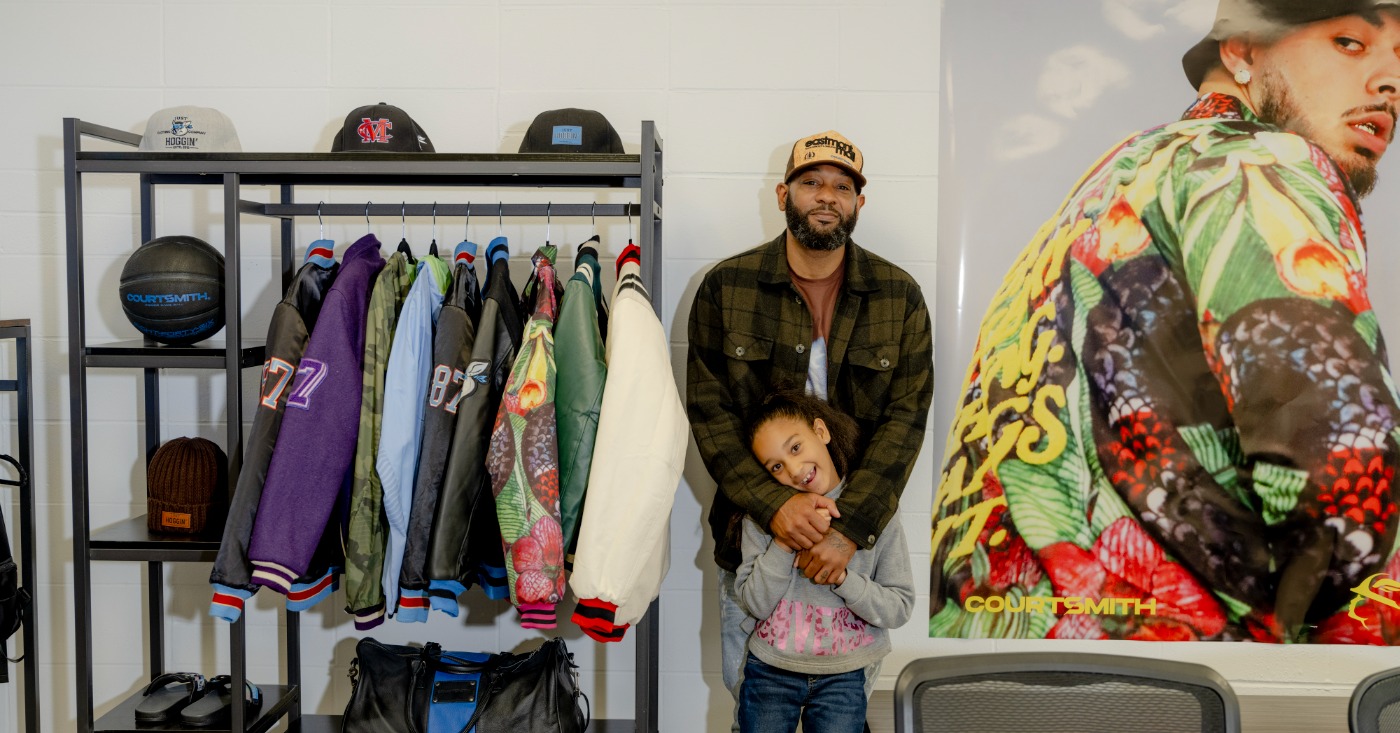
With support from ICA Fund and JPMorganChase, founder Courtney Smith is strengthening his supply chain, creating jobs and expanding local production, and positioning the Oakland-born brand for long-term growth
When Courtney Smith founded Courtsmith in Oakland in 2014, he was building more than an athletic apparel company. A lifelong basketball enthusiast, Smith saw an opportunity to create performance wear that reflected the culture of the game—its style, community and sense of belonging.
From the beginning, Courtsmith was rooted in the idea that basketball is not just a sport, but a lifestyle and a community. The brand set out to make athletes look and feel good on and off the court while building partnerships that give athletes a stake in the products and stories they help shape.
“As Courtsmith grew, scaling wasn’t just about selling more—it was about building the infrastructure to deliver consistently, with a strong supply chain and production process,” said Courtney Smith, founder of Courtsmith. “We needed the right kind of capital and partners to help us expand without losing the Oakland authenticity that made us who we are.”
As the company grew, Smith faced a common challenge for small businesses: maintaining quality, reliability and authenticity of products while scaling—and having the resources to do so. The next move was not simply about expansion; it was about building the infrastructure to last.

That is where ICA Fund—a Bay Area impact investor, small business support organization and long-time partner to Courtsmith—came in. ICA’s relationship with Smith began in 2017 through its Growth Strategies advising program, and over time, the organization paired mentorship, technical assistance and capital to help the company grow with intention. More recently, philanthropic support from JPMorganChase helped ICA expand the range of capital products it can offer entrepreneurs like Smith, including options designed for companies that are ready to scale but may not be a fit for traditional debt products or equity investments.
“Too many great businesses stay stuck small without access to fair and flexible capital— ICA Fund’s role is to change that,” said Allison Kelly, CEO of ICA Fund. “With support from JPMorganChase, we’re able to provide founder-friendly financing alongside long-term partnership, giving entrepreneurs the tools they need to grow stronger businesses that create opportunity in their communities.”
The right kind of capital for a new stage of growth
ICA recently provided Courtsmith with a loan to help it buy a local manufacturing business, a major step toward bringing more of its production process closer to home, strengthening its supply chain, reducing costs, continuing its growth and creating local jobs.
The transaction also marked a milestone for ICA: the first time the organization approved capital for a merger-and-acquisition transaction. It reflects a broader expansion of the financing options it offers, supported by JPMorganChase’s American Dream Initiative, which aims, in part, to help power 10 million small businesses—up from seven million today—over the next several years with the capital, coaching, tools and practical policy support they need to thrive. It’s also an example of the kind of tailored support—delivered through trusted local pathways and the firm’s own relationships—that JPMorganChase provides to small businesses in the Bay Area, including our more than 295,000 small business clients.
“Small businesses are the backbone of our economy, and Courtsmith’s story shows how access to the right capital at the right time can unlock growth,” said Gwyneth Galbraith, Vice President for Global Philanthropy at JPMorganChase. “By supporting organizations like ICA Fund, we’re helping expand access to the kinds of financing and guidance entrepreneurs need to strengthen operations, create jobs and build lasting businesses across the Bay Area.”
Building with staying power
For small businesses, access to financing that fits their stage of growth can determine whether expansion is sustainable. A one-size-fits-all approach does not always work for companies with distinct cash-flow cycles, customer demand and operational needs. In Courtsmith’s case, the ICA loan gave the company a path to invest in its future while preserving the founder’s vision and control—and reflected the kind of flexible financing JPMorganChase is helping expand through its support of local community and mission-driven lenders.
Courtsmith’s trajectory reflects that momentum. The company reports that revenue grew 259% from 2021 to 2025, while its workforce expanded from four employees in 2017 to 13 in 2025, including growth in full-time roles from one to 11.
Behind those numbers is a company deepening its roots in Oakland through local partnerships, community presence and a model built to last.
“Courtsmith is about Oakland, representing the culture that raised us and creating opportunity for the next generation,” said Smith. “With ICA Fund and JPMorganChase in our corner, we can keep turning that mission into something people can see and feel in our community.”
Courtsmith’s next chapter is still being written, but the path is clearer: a founder-led brand with deeper local production capacity, a stronger supply chain, and a larger role in Oakland’s small business economy.
Art
BOOK REVIEW: Never Tell a Black Girl How to Black Girl: Essays
Growing up in North Carolina, she Black Girled her hair her entire life. Her grandma made her sit for box braids when she was small, telling Brown that she was “tenderheaded.” Later, Brown had relaxed hair until she “went broke” and couldn’t afford the process anymore. That was when she got acquainted with her natural hair – although she returned to box braids at least once, and loved them all over again.

Author: Amena Brown, Copyright: c.2026, Publisher: Tiny Rep Books, SRP: $30.00, Page Count: 320 pages
Some things can really make you cross.
People telling you your business, for instance. People asking questions they have no reason to know the answers to. Folks who criticize your hair or clothes or life. These things would set anyone off; they’d be the last straw for anybody. As in the new book, “Never Tell a Black Girl How to Black Girl” by Amena Brown, some folks just cross the line.
In a way, it’s a matter of grammar.
Depending on how you say it, “Black Girl is a noun and a verb,” says Brown. A Black Girl can be a Black Girl… and she can Black Girl. Brown herself has done it “in six countries.”

Growing up in North Carolina, she Black Girled her hair her entire life. Her grandma made her sit for box braids when she was small, telling Brown that she was “tenderheaded.” Later, Brown had relaxed hair until she “went broke” and couldn’t afford the process anymore. That was when she got acquainted with her natural hair – although she returned to box braids at least once, and loved them all over again.
As the child of a strict Pentecostal mother, Brown was a “late bloomer.” She didn’t drink alcohol until she was in her twenties. She was chaste while dating and a better church girl than a party girl. After she left the church, she began experimenting with wine first, then cocktails. She learned to cook, reasoning that the path to finding love started in a kitchen, one that happened to be her grandmother’s. And yes, love did eventually come in the form of a red-headed White man who was her friend before he became her boyfriend — and before he became her mother-sanctioned, grandma-approved husband.
Overall, says Brown, there is no single right method for doing this.
“There are so many ways to Black Girl, which means the way you Black Girl is beautiful, and the way I Black Girl is beautiful too.”
Looking for a collection of addictive, can’t-read-just-one essays that’ll make you laugh but that also feel like author Amena Brown is peeking at your life? Want a book that speaks to every corner of your existence?
Yeah, then you want “Never Tell a Black Girl How to Black Girl.”
You know how it is when you spot something so profound, so right, that you just have to call your friends and read it out loud to them? That’s what you’ll find here: truth told with humor that’s also oozing with warmth. Add honesty that’s smart and bold and practically begging for a “Heck, YES!” and you’ve got your new favorite book.
The essays here are short enough to read in a few minutes, but compelling enough to make you want more, so give yourself room.
This is a book for twenty- and thirty-somethings, but also for their mothers and grandmas who can handle respectful irreverence and surefooted playfulness. Can men enjoy “Never Tell a Black Girl How to Black Girl”? Sure, but it’s more for women, cross your heart.



Mayor Barbara Lee Holds Special State of the City Address in Deep East Oakland

Practitioners of African Traditional Spirituality Offer Ancestral Reverence Ritual Oct. 31

It’s Time to Lose Weight Before the Holidays

Trader Vic’s Returns to Its Oakland Roots

Oakland Coal Terminal Backed by Trump Would Be Bigger, Dirtier Than Promised, Says Report

Opponents Smear Effective African American Transit Director as Election Nears

Oakland Post: Week of October 14 – 20, 2026

OP-ED: The Black Church Writes AI’s Next Chapter

OP-ED: The Black Church Writes AI’s Next Chapter

WCCUSD Joins Statewide Organic School Food Purchasing Cooperative

Democrats, Community Groups Back Measure EE to Change How Oakland Is Governed

Four Tips to Help You Plan a Holiday “Staycation”

Veterans Housing Project Proposed for South Richmond
PRESS ROOM: Transformative Justice Coalition 2026 Voting Rights Champion Awards Reception ‘Yesterday Is Today: The Battle For Voting Rights

Mayor Lee Delivers 2026 State of the City Address: ‘Oakland Continues to Be on the Move’

Misnamed ‘Parent’ PAC Seeks to Influence Oakland School Board Elections

Listening as a Lifeline: A Doula’s Witness to Black Maternal Health

Poll: Becerra Widens His Lead Over Hilton; Californians Split on Wealth Tax

Oakland Post: Week of September 9 – 15, 2026

County Office of Education Says OUSD Finances Are Getting Healthier, Materially Stronger

Richmond Tiny House Village Farm & Garden Set to Open Gates on Sept. 26

Mayor Lee Announces $1 Million Kaiser Permanente Grant for Pilot Program to Address Homelessness, Clean Up Public Spaces throughout Oakland

Latest Massacre in Haiti Reveals Cruelty U.S. Deportations

Zakiya Jendayi Arrested, Locked Out of Home by Sheriff’s Deputies

OPINION: Nolan Wells’ Death One of Several Signifying Racial Terror Lives on in U.S. South

Doulas Are Helping Black California Moms Navigate Pregnancy–Even as High Mortality Rates Persist

BLACspace Cooperative Invites Bay Area to Experience Oakland’s Black Cultural Ecosystem Through a BLAC Map Tour + Party

Oakland Post: Week of September 16 – 22, 2026

Democratic Clubs Interview Candidates for Oakland School Board

Oakland People’s Arms Embargo Coalition Demands End to Military Shipments Thru Oakland

The Conversation With Al McFarlane 6/23/26

Media Monday 6/22/26

LIVE! ASK ALMA! — TUES. 6.23.26 7PM EST

Car Buying Secrets: 4 Hidden Checks Before You Sign!

Is This 550 HP Charger Worth YOUR Money? AutoNetwork Review

Celebrating Juneteenth – Frederick Douglass on education and resistance

LIVE! — ASK ALMA! — TUES. 6.19.26 7PM EST

Hyundai Ioniq 5 Parking, Safety, and 360 View #shorts

2025 Ioniq 5 New Wiper & Powerful Performance! #shorts

Electric SUV Range: Is 259 Miles Enough? #shorts

EV Charging: How Fast Can You Charge an Electric Vehicle? #shorts

Biometric Cooling… Messaging Seats…Come on! 2025 Infiniti QX80 Autograph 4WD

Charged Up: Witness the Magic of a Fully Electric Car! #shorts

Range Rover Sport PHEV Included…: See What’s Inside This Luxury SUV! #shorts

Invisible Hood View: Perfect Parking with X-Ray Vision! #shorts
-
 Black History3 weeks ago
Listening as a Lifeline: A Doula’s Witness to Black Maternal Health
-
 Economy4 weeks ago
Poll: Becerra Widens His Lead Over Hilton; Californians Split on Wealth Tax
-
 Business4 weeks ago
County Office of Education Says OUSD Finances Are Getting Healthier, Materially Stronger
-
 Lead Story3 weeks ago
Zakiya Jendayi Arrested, Locked Out of Home by Sheriff’s Deputies
-
 Black History4 weeks ago
Doulas Are Helping Black California Moms Navigate Pregnancy–Even as High Mortality Rates Persist
-
 Art4 weeks ago
BLACspace Cooperative Invites Bay Area to Experience Oakland’s Black Cultural Ecosystem Through a BLAC Map Tour + Party
-

 Business4 weeks ago
From Historic Memories to New Possibilities: Oakland Celebrates Coliseum 60
-

 Community4 weeks ago
Asm. Corey Jackson Announces Launch of 24-Hour Childcare in His District

0 Comments