
Activism
The St. Augustine Movement (1963–1964)
Hundreds of students from northern colleges recruited by the SCLC participated in demonstrations and sit-ins during Easter week of 1964. Most were jailed. “Some were made to stand in a cramped outdoor overflow pen in the late spring heat, while others were put into a concrete sweatbox overnight.”


By Tamara Shiloh

It was the spring of 1964. Dr. Martin Luther King, Jr., and the Southern Christian Leadership Conference were preparing to launch a campaign to end racial discrimination in St. Augustine, Fla. King hoped that the “demonstrations there would lead to local desegregation and that media attention would garner national support for the Civil Rights Act of 1964, which was then stalled in a congressional filibuster,” according to Stanford University’s King Encyclopedia.
A sit-in protest at a local Woolworth’s lunch counter that ended in the arrest and imprisonment of 16 Black protestors and seven juveniles sparked the pickets. Four of the arrested, JoeAnn Anderson, Audrey Nell Edwards, Willie Carl Singleton, and Samuel White were sent to reform school for six months. No effort was made to release them until their case was publicized by Jackie Robinson, the NAACP, and the Pittsburgh Courier. They were later dubbed “the St. Augustine Four.”
It was Robert B. Hayling, advisor to the Youth Council of the city’s branch of the NAACP, who led these demonstrations. Protesters were met with violence as the Ku Klux Klan responded to their presence. Hayling and three other NAACP members were severely beaten at a 1963 Klan rally. They were arrested and convicted of assaulting their attackers.
The NAACP asked for Hayling’s resignation, but not before reaching out to the SCLC for support.
Hundreds of students from northern colleges recruited by the SCLC participated in demonstrations and sit-ins during Easter week of 1964. Most were jailed. “Some were made to stand in a cramped outdoor overflow pen in the late spring heat, while others were put into a concrete sweatbox overnight.”
When King visited St. Augustine that May, the house the SCLC rented for him was “sprayed by gunfire.” The day after the Senate voted to end the filibuster of the Civil Rights Act, King, Ralph Abernathy, and several others were arrested when they requested service at a segregated restaurant. Meanwhile, despite the violence, the SCLC continued to lead marches.
On June 18, a Grand Jury pressured King and the SCLC to leave St. Augustine for one month. The so-called goal was to “diffuse the situation, claiming that they had disrupted racial harmony in the city.”
King responded that the request was “an immoral one, as it asked the Negro community to give all, and the white community to give nothing . . . St. Augustine never had peaceful race relations.”
As the Senate debated the Civil Rights Act, SCLC lawyers began to win court victories in St. Augustine. The SCLC was encouraged to bring cases against the Klan. On July 2, 1964, President Lyndon Johnson signed the Civil Rights Act, the most sweeping civil rights legislation since Reconstruction, into law.
Blacks in St. Augustine continued to face violence, intimidation, and threats, as healing took its time.
Help young readers understand the struggle for equality and a time when American laws were unfair to Blacks. Share with them Shadae Mallory’s “The History of the Civil Rights Movement: A History Book for New Readers.” Purchase at https://www.multiculturalbookstore.com
Sources: https://www.britannica.com/event/American-civil-rights-movement
https://www.adl.org/resources/backgrounder/civil-rights-movement












To enlarge your view of this issue, use the slider, magnifying glass icon or full page icon in the lower right corner of the browser window.
To enlarge your view of this issue, use the slider, magnifying glass icon or full page icon in the lower right corner of the browser window.
Activism
Oakland Post: Week of September 30 – October 6, 2026
The printed Weekly Edition of the Oakland Post: Week of September 30 – October 6, 2026

To enlarge your view of this issue, use the slider, magnifying glass icon or full page icon in the lower right corner of the browser window.



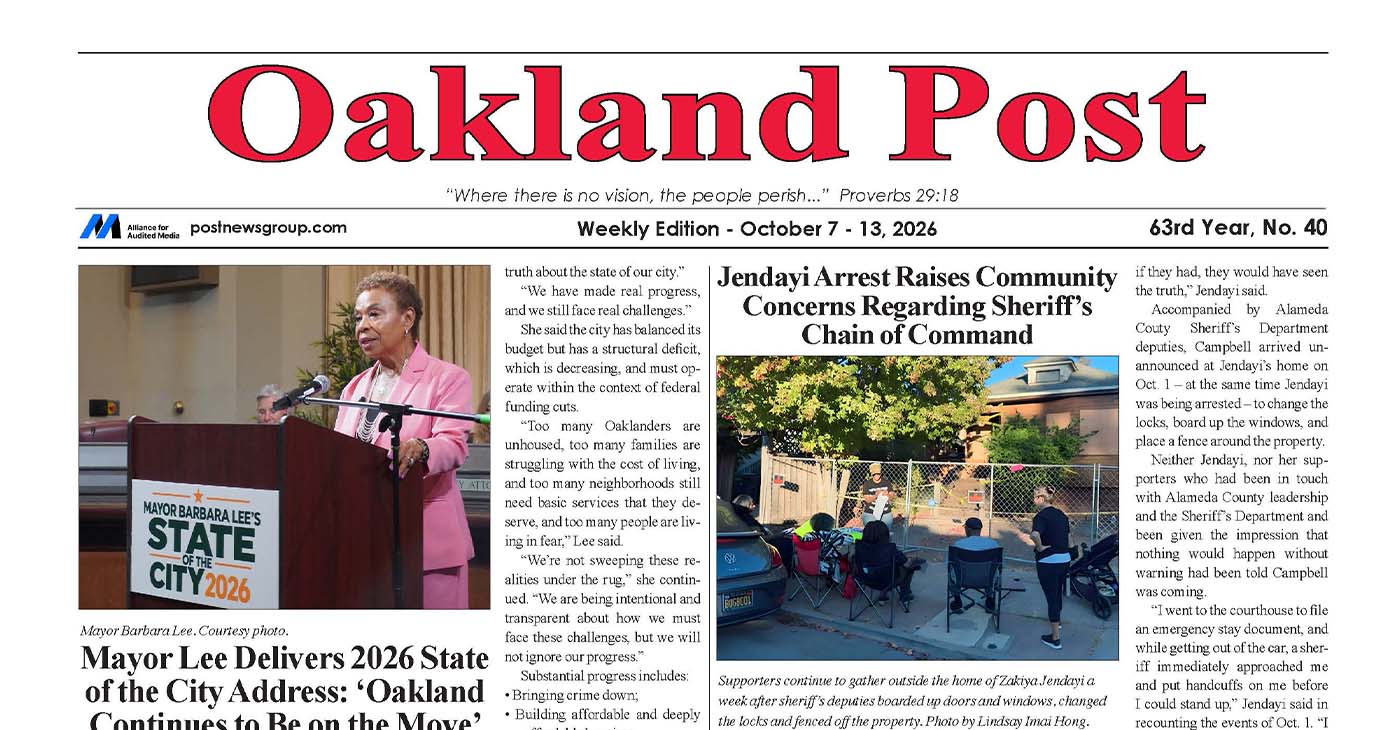
Mayor Barbara Lee Holds Special State of the City Address in Deep East Oakland

Practitioners of African Traditional Spirituality Offer Ancestral Reverence Ritual Oct. 31

It’s Time to Lose Weight Before the Holidays

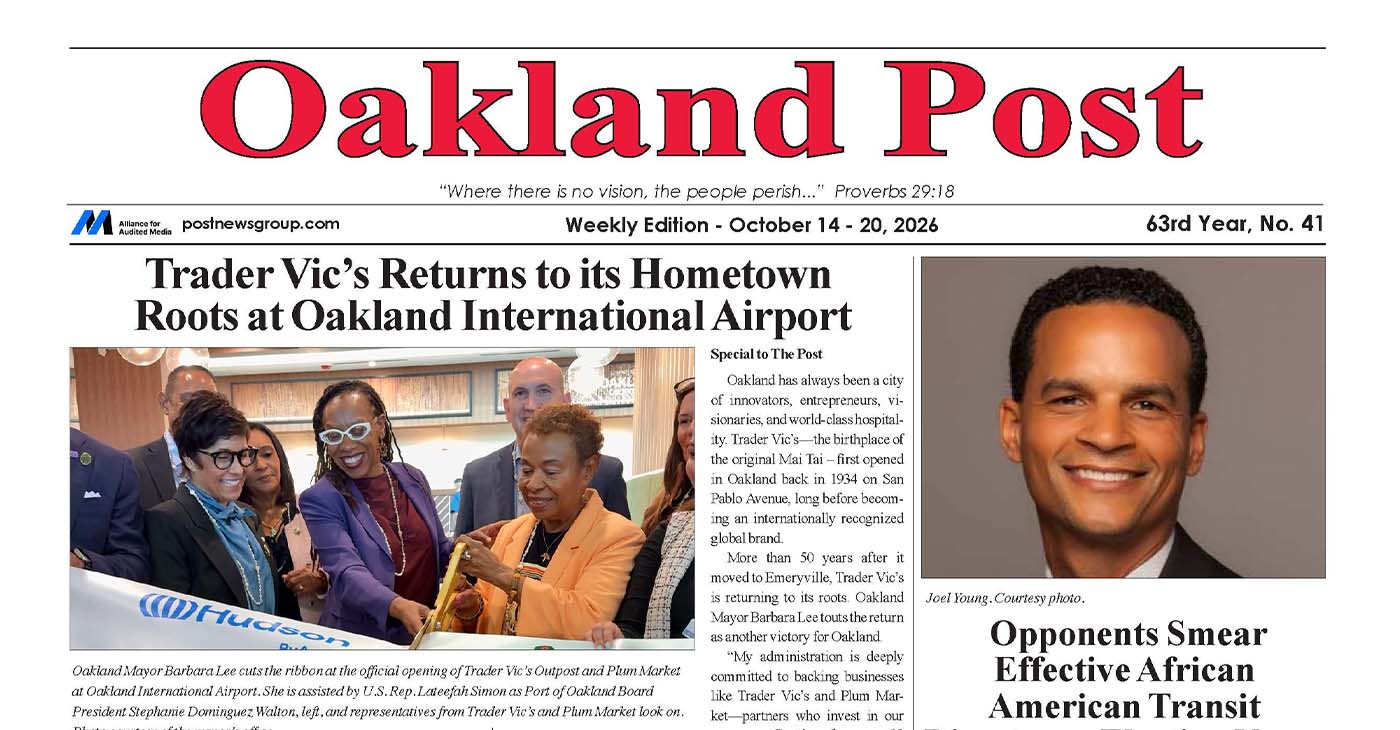
Trader Vic’s Returns to Its Oakland Roots

Oakland Coal Terminal Backed by Trump Would Be Bigger, Dirtier Than Promised, Says Report

Opponents Smear Effective African American Transit Director as Election Nears

Oakland Post: Week of October 14 – 20, 2026

OP-ED: The Black Church Writes AI’s Next Chapter

OP-ED: The Black Church Writes AI’s Next Chapter

WCCUSD Joins Statewide Organic School Food Purchasing Cooperative

Democrats, Community Groups Back Measure EE to Change How Oakland Is Governed

Four Tips to Help You Plan a Holiday “Staycation”

Veterans Housing Project Proposed for South Richmond
PRESS ROOM: Transformative Justice Coalition 2026 Voting Rights Champion Awards Reception ‘Yesterday Is Today: The Battle For Voting Rights

Mayor Lee Delivers 2026 State of the City Address: ‘Oakland Continues to Be on the Move’

Misnamed ‘Parent’ PAC Seeks to Influence Oakland School Board Elections

Listening as a Lifeline: A Doula’s Witness to Black Maternal Health

Poll: Becerra Widens His Lead Over Hilton; Californians Split on Wealth Tax

Oakland Post: Week of September 9 – 15, 2026

County Office of Education Says OUSD Finances Are Getting Healthier, Materially Stronger

Richmond Tiny House Village Farm & Garden Set to Open Gates on Sept. 26

Mayor Lee Announces $1 Million Kaiser Permanente Grant for Pilot Program to Address Homelessness, Clean Up Public Spaces throughout Oakland

Latest Massacre in Haiti Reveals Cruelty U.S. Deportations

Zakiya Jendayi Arrested, Locked Out of Home by Sheriff’s Deputies

OPINION: Nolan Wells’ Death One of Several Signifying Racial Terror Lives on in U.S. South

Doulas Are Helping Black California Moms Navigate Pregnancy–Even as High Mortality Rates Persist

BLACspace Cooperative Invites Bay Area to Experience Oakland’s Black Cultural Ecosystem Through a BLAC Map Tour + Party

Oakland Post: Week of September 16 – 22, 2026

Democratic Clubs Interview Candidates for Oakland School Board

Oakland People’s Arms Embargo Coalition Demands End to Military Shipments Thru Oakland

The Conversation With Al McFarlane 6/23/26

Media Monday 6/22/26

LIVE! ASK ALMA! — TUES. 6.23.26 7PM EST

Car Buying Secrets: 4 Hidden Checks Before You Sign!

Is This 550 HP Charger Worth YOUR Money? AutoNetwork Review

Celebrating Juneteenth – Frederick Douglass on education and resistance

LIVE! — ASK ALMA! — TUES. 6.19.26 7PM EST

Hyundai Ioniq 5 Parking, Safety, and 360 View #shorts

2025 Ioniq 5 New Wiper & Powerful Performance! #shorts

Electric SUV Range: Is 259 Miles Enough? #shorts

EV Charging: How Fast Can You Charge an Electric Vehicle? #shorts

Biometric Cooling… Messaging Seats…Come on! 2025 Infiniti QX80 Autograph 4WD

Charged Up: Witness the Magic of a Fully Electric Car! #shorts

Range Rover Sport PHEV Included…: See What’s Inside This Luxury SUV! #shorts

Invisible Hood View: Perfect Parking with X-Ray Vision! #shorts
-
 Black History3 weeks ago
Listening as a Lifeline: A Doula’s Witness to Black Maternal Health
-
 Economy4 weeks ago
Poll: Becerra Widens His Lead Over Hilton; Californians Split on Wealth Tax
-
 Business4 weeks ago
County Office of Education Says OUSD Finances Are Getting Healthier, Materially Stronger
-
 Lead Story3 weeks ago
Zakiya Jendayi Arrested, Locked Out of Home by Sheriff’s Deputies
-
 Black History4 weeks ago
Doulas Are Helping Black California Moms Navigate Pregnancy–Even as High Mortality Rates Persist
-
 Art4 weeks ago
BLACspace Cooperative Invites Bay Area to Experience Oakland’s Black Cultural Ecosystem Through a BLAC Map Tour + Party
-
 Business4 weeks ago
From Historic Memories to New Possibilities: Oakland Celebrates Coliseum 60
-

 Community4 weeks ago
Asm. Corey Jackson Announces Launch of 24-Hour Childcare in His District
