
Activism
The Lookout: What You Should Know About California’s New Gun Laws
On Oct. 10, Newsom scored another win on gun control. The Ninth U.S. Circuit Court of Appeals ruled that the California state law that bans guns with high-capacity, detachable magazines can remain in effect while California appeals a U.S. Circuit Court of Appeals September ruling that declared that law unconstitutional.

By Tanu Henry and Antonio Ray Harvey, California Black Media
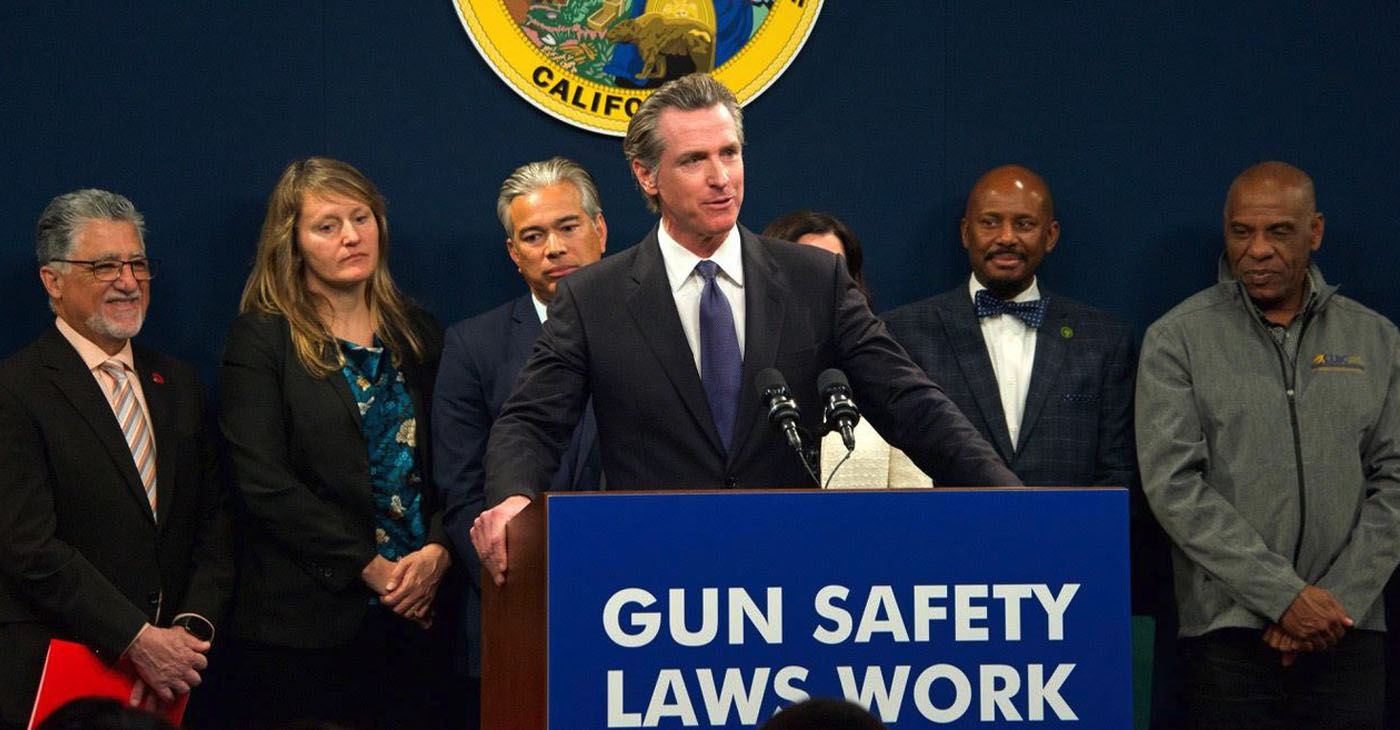
Last month, Gov. Gavin Newsom signed new legislation enhancing gun safety measures, further solidifying California’s position as a national leader in implementing controls on the use and distribution of firearms.
Joined by Attorney General Rob Bonta, lawmakers, gun safety advocates and gun wound survivors, Newsom introduced at a press conference several of the gun laws he signed.
They included Senate Bill (S.B.) 2, authored by Sen. Anthony Portantino (D-Burbank), which reinforces the state’s public carry regulations; and S.B. 452, authored by Sen. Catherine Blakespear (D-Encinitas), which mandates the use of microstamping on handgun cartridges to help trace guns used in crimes.
S.B. 2 imposes new restrictions for obtaining a concealed-carry weapons (CCW) permit. According to Portantino’s office, the law ensures licensees are law-abiding citizens over 21 years of age; establishes an appeal process for denied CCW licenses; introduces gun handling, loading, unloading and storage training requirements; and restricts locations where people can legally carry firearms.

In 2022, California’s gun death rate was 43% lower than the national average, according to the Centers of Disease Control (CDC). The Giffords Law Center also ranked the state number one in the United States for gun safety.
“While radical judges continue to strip away our ability to keep people safe, California will keep fighting — because gun safety laws work,” Newsom said in a Sept. 26 statement.
Newsom also signed bills introduced by California Legislative Black Caucus (CLBC) members Mike Gipson (D-Carson), Kevin McCarty (D-Sacramento) and Reggie Jones-Sawyer (D-Los Angeles).
Assembly Bill (A.B.) 1406 (McCarty) gives the California Department of Justice the authority to postpone firearm delivery if additional time is required to do background checks.
A.B. 1089 (Gipson) adds new regulations and guidelines for the ownership and operation of computer numeric control milling machines, commonly used to manufacture “ghost guns.” Ghost guns are untraceable firearms sold in parts and assembled at home.
A.B. 574 (Jones-Sawyer), which goes into effect in March 2025, requires gun dealers making any sale of a gun — or overseeing the transfer of ownership — to confirm that both the buyer and seller “confirm possession of every firearm they own or possess.”
A.B. 28, which is authored by Assemblymember Jesse Gabriel (D-Encino), was also on the list of gun legislation Newsom approved. The law imposes an 11% excise tax on gun vendors and gun manufacturers across the state. The revenue collected will be used to improve school safety, behavioral health and gun violence intervention.
“How about a little damn accountability,” said Newsom at a press conference. “You’re selling a product, a leading product, a purveyor of death for our kids.”
Gabriel shares the Governor’s perspective. “It’s shameful that gun manufacturers are reaping record profits at the same time that gun violence has become the leading cause of death for kids in the United States,” he said.
The same day Newsom signed the package of gun laws, the Firearms Policy Coalition (FPC), a non-profit focused on advancing gun rights, announced that it filed a complaint challenging some parts of S.B. 2.
“SB2 restricts where persons with licenses to carry a concealed weapon may legally exercise their constitutional right to wear, carry, or transport firearms. And it does so in ways that are fundamentally inconsistent with the Second Amendment and the Supreme Court’s decision in Bruen,” the complaint states.
Three groups — Orange County Gun Owners, San Diego County Gun Owners, and California Gun Rights Foundation — have joined FPC in the lawsuit.
“With Gov. Newsom’s signing of SB2 today, California continues to exhibit its disdain for the rights of Californians, the U.S. Constitution, and the Supreme Court’s Bruen decision,” said Cody J. Wisniewski, FPC Action Foundation’s General Counsel and Vice President of Legal, and FPC’s counsel. “Unfortunately for California, and contrary to Governor Newsom’s misguided statements, the state does not have the power to unilaterally overrule individual rights and constitutional protections.”
Bonta disagrees. “Addressing gun violence is critical to protecting public safety; we cannot pretend that they are distinct problems,” he said. “In California, we won’t settle for inaction when it comes to saving lives.”
On Oct. 10, Newsom scored another win on gun control. The Ninth U.S. Circuit Court of Appeals ruled that the California state law that bans guns with high-capacity, detachable magazines can remain in effect while California appeals a U.S. Circuit Court of Appeals September ruling that declared that law unconstitutional.






To enlarge your view of this issue, use the slider, magnifying glass icon or full page icon in the lower right corner of the browser window.
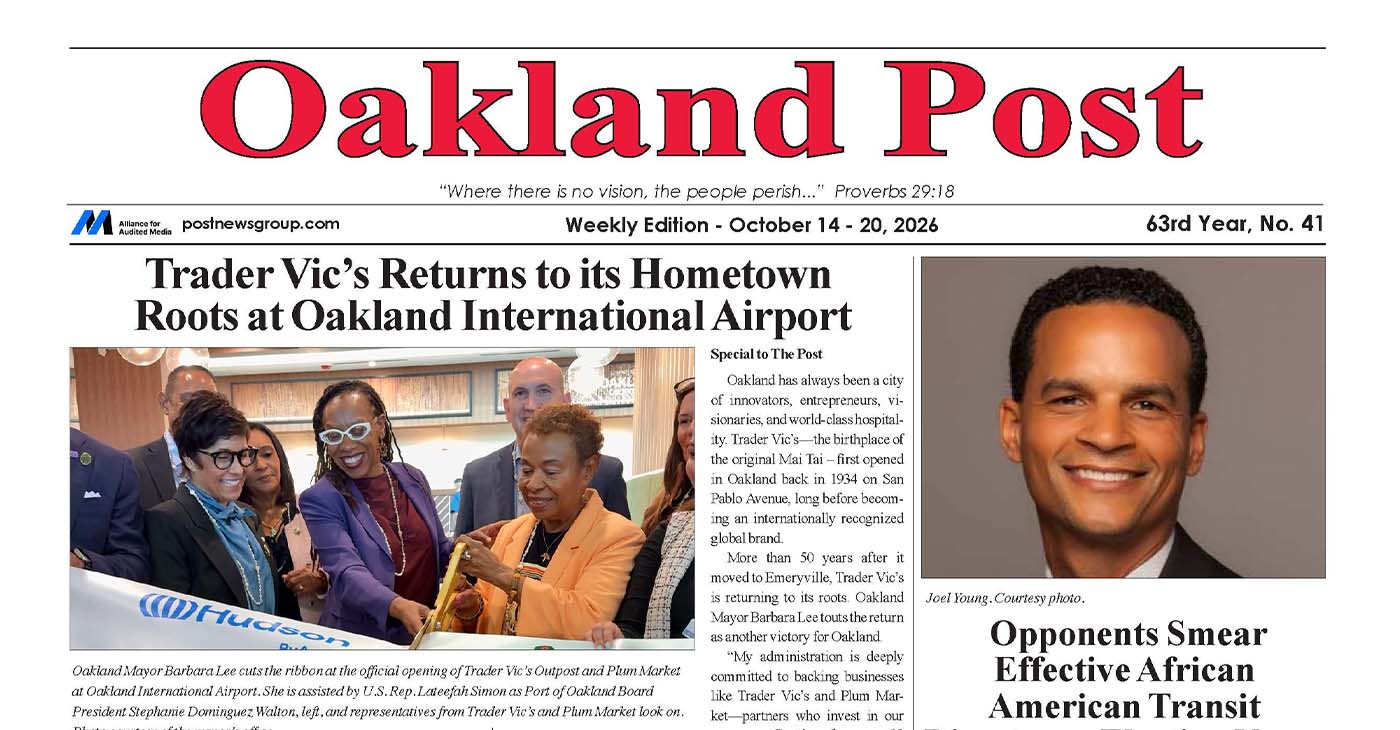
To enlarge your view of this issue, use the slider, magnifying glass icon or full page icon in the lower right corner of the browser window.
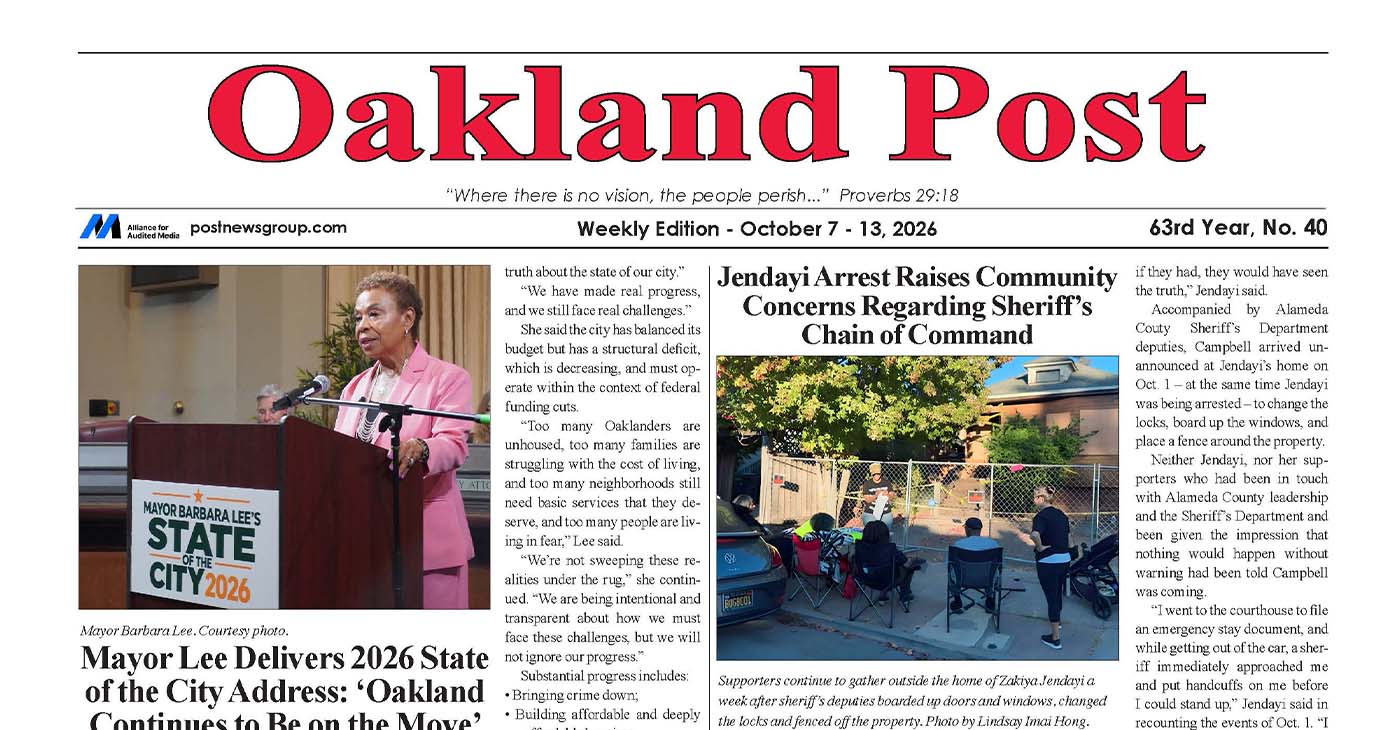
To enlarge your view of this issue, use the slider, magnifying glass icon or full page icon in the lower right corner of the browser window.


Oakland Probate Dispute Raises Questions About Court-Ordered Property Transfer and Missing Notice

‘Raising a Child Shouldn’t Break the Bank’: California Is Helping Families Save on Childcare Costs

Secretary of State Shirley Weber Pushes Back Against DOJ Demands Over California Voter Rolls

Chase Launches Fraud & Scam Prevention Month

U.S. Rep. Simon Secures More Than $1 Million for Public Safety at Mills College at Northeastern University Oakland, Surrounding Neighborhood

COMMENTARY: Valarie Bachelor and Jennfier Brouhard are Excellent School Board Members and Deserve to Be Reelected

Oakland Faith Leaders Gather to Revitalize the Interdenominational Ministerial Alliance of Oakland

Statue of ‘La Catrina,’ a Beloved Symbol of Dia de Los Muertos, Visits Oakland

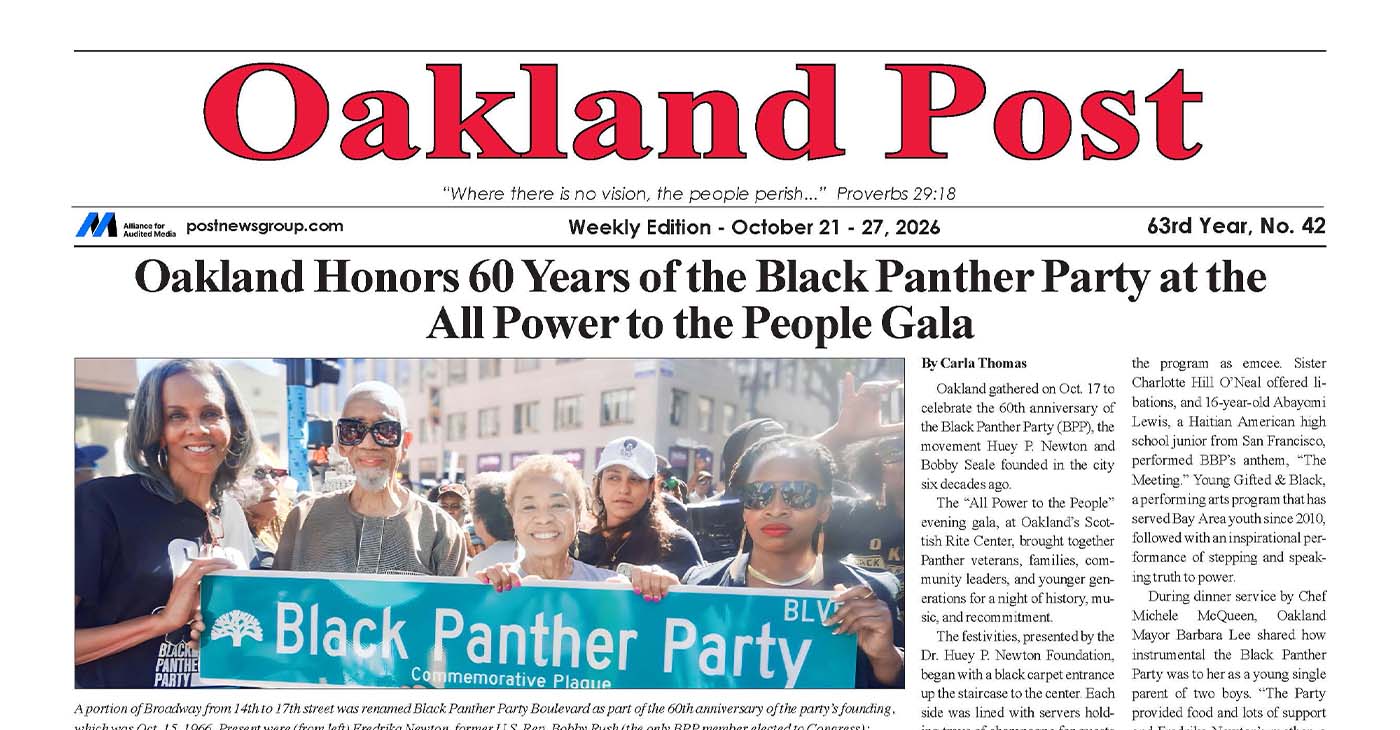
Oakland Honors 60 Years of the Black Panther Party at the All Power to the People Gala

Fate of Bay Area Public Transit Hinges on Regional Transit Measure

Why AC Transit Director Joel Young is My Choice for AC Transit Board Ward 3

Oakland Post: Week of October 21 – 27, 2026

Mayor Barbara Lee Holds Special State of the City Address in Deep East Oakland

Practitioners of African Traditional Spirituality Offer Ancestral Reverence Ritual Oct. 31

It’s Time to Lose Weight Before the Holidays

Misnamed ‘Parent’ PAC Seeks to Influence Oakland School Board Elections

Listening as a Lifeline: A Doula’s Witness to Black Maternal Health

Poll: Becerra Widens His Lead Over Hilton; Californians Split on Wealth Tax

Doulas Are Helping Black California Moms Navigate Pregnancy–Even as High Mortality Rates Persist

County Office of Education Says OUSD Finances Are Getting Healthier, Materially Stronger

Oakland Post: Week of September 9 – 15, 2026

Zakiya Jendayi Arrested, Locked Out of Home by Sheriff’s Deputies

Mayor Lee Announces $1 Million Kaiser Permanente Grant for Pilot Program to Address Homelessness, Clean Up Public Spaces throughout Oakland

Richmond Tiny House Village Farm & Garden Set to Open Gates on Sept. 26

BLACspace Cooperative Invites Bay Area to Experience Oakland’s Black Cultural Ecosystem Through a BLAC Map Tour + Party

OPINION: Nolan Wells’ Death One of Several Signifying Racial Terror Lives on in U.S. South

Latest Massacre in Haiti Reveals Cruelty U.S. Deportations

Oakland People’s Arms Embargo Coalition Demands End to Military Shipments Thru Oakland

Oakland Post: Week of September 16 – 22, 2026

Democratic Clubs Interview Candidates for Oakland School Board

The Conversation With Al McFarlane 6/23/26

Media Monday 6/22/26

LIVE! ASK ALMA! — TUES. 6.23.26 7PM EST

Car Buying Secrets: 4 Hidden Checks Before You Sign!

Is This 550 HP Charger Worth YOUR Money? AutoNetwork Review

Celebrating Juneteenth – Frederick Douglass on education and resistance

LIVE! — ASK ALMA! — TUES. 6.19.26 7PM EST

Hyundai Ioniq 5 Parking, Safety, and 360 View #shorts

2025 Ioniq 5 New Wiper & Powerful Performance! #shorts

Electric SUV Range: Is 259 Miles Enough? #shorts

EV Charging: How Fast Can You Charge an Electric Vehicle? #shorts

Biometric Cooling… Messaging Seats…Come on! 2025 Infiniti QX80 Autograph 4WD

Charged Up: Witness the Magic of a Fully Electric Car! #shorts

Range Rover Sport PHEV Included…: See What’s Inside This Luxury SUV! #shorts

Invisible Hood View: Perfect Parking with X-Ray Vision! #shorts
-
 Black History3 weeks ago
Listening as a Lifeline: A Doula’s Witness to Black Maternal Health
-
 Economy4 weeks ago
Poll: Becerra Widens His Lead Over Hilton; Californians Split on Wealth Tax
-
 Business4 weeks ago
County Office of Education Says OUSD Finances Are Getting Healthier, Materially Stronger
-
 Lead Story3 weeks ago
Zakiya Jendayi Arrested, Locked Out of Home by Sheriff’s Deputies
-
 Art4 weeks ago
BLACspace Cooperative Invites Bay Area to Experience Oakland’s Black Cultural Ecosystem Through a BLAC Map Tour + Party
-
 Business4 weeks ago
From Historic Memories to New Possibilities: Oakland Celebrates Coliseum 60
-
 Community4 weeks ago
Asm. Corey Jackson Announces Launch of 24-Hour Childcare in His District
-
 Black History4 weeks ago
IN MEMORIAM: The Rev. Leon “Sonny” Clark, Longtime Orange County Pastor and Community Leader, Dies at 72
