
National
Rough Ride? Lawyer Says Fatally Injured Arrestee Lacked Belt


A protestor holds a sign outside of Baltimore’s City Hall before a march for Freddie Gray, Thursday, April 23, 2015, in Baltimore. Gray died from spinal injuries about a week after he was arrested and transported in a police van. (AP Photo/Patrick Semansky)
JULIET LINDERMAN, Associated Press
CURT ANDERSON, Associated Press
BALTIMORE (AP) — No video captured what happened to Freddie Gray inside the police van where officers heaved him into a metal compartment after pinning him to a sidewalk. The cause of his fatal spine injury has not been revealed.
But a troubling detail emerged as hundreds of protesters converged on City Hall again Thursday: He was not only handcuffed and put in leg irons, but left without a seat belt during his trip to the station.
Unbelted detainees have been paralyzed and even killed by rough rides in police vans.” It even has a name: “nickel rides,” referring to cheap amusement park thrills.
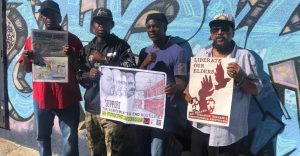
Police brutality against prisoners being transported was addressed just six months ago in a plan released by Baltimore officials to reduce this misconduct. Department rules updated nine days before Gray’s arrest clearly state that all detainees shall be strapped in by seat belts or “other authorized restraining devices” for their own safety after being arrested.
Gray was not belted in, said attorney Michael Davey, who represents at least one of the officers under investigation.
But he took issue with the rules.
“Policy is policy, practice is something else,” particularly if a prisoner is combative, Davey told The Associated Press. “It is not always possible or safe for officers to enter the rear of those transport vans that are very small, and this one was very small.”
Commissioner Anthony Batts said there are no circumstances under which a prisoner should not be wearing a seatbelt during transport.
“He wasn’t wearing a seatbelt and that’s part of our investigation,” Batts told The Associated Press on Thursday. “It’s our responsibility to make sure people are safely transported, especially if their hands are behind their back.”
Batts also said another man who was in the van during the tail end of Gray’s ride told investigators that Gray was “was still moving around, that he was kicking and making noises” up until the van arrived at the station.
But Batts was careful to say that the investigation includes “everything the officers did that day.”
The Gray family’s lawyer, Billy Murphy, said “his spine was 80 percent severed” while in custody. It’s not clear whether he was injured by officers in the street or while being carried alone in the van’s compartment.
But if it happened on the way to the station, it wouldn’t be the first such injury in Baltimore: Dondi Johnson died of a fractured spine in 2005 after he was arrested for urinating in public and transported without a seat belt, with his hands cuffed behind his back.
“We argued they gave him what we call a ‘rough ride,'” at high speed with hard cornering, said Attorney Kerry D. Staton. “He was thrown from one seat into the opposite wall, and that’s how he broke his neck.”
Staton obtained a $7.4 million judgment for the family, later reduced to the legal cap of $200,000.
It also has happened in Philadelphia, where police in 2001 barred transportation of prisoners without padding or belts after The Philadelphia Inquirer reported that the city had paid $2.3 million to settle lawsuits over intentionally rough rides, which permanently paralyzed two people.
Gray fled on foot and was captured on April 12 after an officer “made eye contact” with him outside a public housing complex, police said. Videos show Gray screaming on the ground before being dragged, his legs limp, into a van. Witnesses said he was crying out in pain.
Kevin Moore, a friend of Freddie Gray’s who recorded video of his arrest, told The Baltimore Sun that police had Gray’s legs bent “like he was a crab or a piece of origami.”
Police procedures require officers to get immediate medical help if detainees need it, and to avoid aggravating any injury.
In Gray’s case, he repeatedly asked for help during the trip, but the driver instead diverted to another location to pick up another prisoner.
For the first time, the fire department released a timeline for paramedics’ response. Gray was arrested at 8:42 a.m. Paramedics received a call for an unconscious male at 9:26 a.m., Baltimore City Fire Department spokesman Captain Roman Clark said.
Medics arrived at the police station at 9:33 a.m., but didn’t leave for the hospital until 9:54, arriving roughly an hour and 20 minutes after his arrest. Clark didn’t say why it took more than 20 minutes to leave for the hospital once paramedics arrived.
“How did his injuries occur?” said Robert Stewart, a former chief who consults with police and the Justice Department on use of force. “These guys are picking up someone who is obviously injured.”
The driver also has a responsibility to refuse to take a seriously injured prisoner to the station if he belongs in a hospital, Stewart said.
“If I’m the officer in the wagon, if the guy’s hurt, I’m not taking him,” he explained.
All six officers involved in Gray’s arrest have been suspended with pay while under criminal investigation. Davey, whose firm is on contract with the Baltimore Fraternal Order of Police Lodge 3, said five of the six officers gave voluntary statements the day of Gray’s arrest, and one — he didn’t say who — declined to speak with investigators.
It’s quite common for prisoners to yell and complain, saying they’ve been injured or feel sick or that their handcuffs are too tight.
“You have to make a judgment call: is this a tactic, something to distract me?” said Lt. Luis Fuste of the Miami-Dade Police Department. “You’re taught that these things are often done with an ulterior motive.”
Yet Fuste and other law enforcement experts say rough rides aren’t typical, and aren’t worth the trouble to officers.
“Once he is a prisoner he is absolutely your responsibility,” said Peter Moskos, a former Baltimore officer who teaches law and police science at John Jay College of Criminal Justice in New York. “Even if there was no malign intent, even if there was no assault, he’s your prisoner. He goes into the wagon alive, he can’t come out dead.”
The Department of Justice is investigating whether Gray’s civil rights were violated, and an internal police investigation will be delivered by May 1 to the state’s attorney’s office, which will consider filing any criminal charges.
But some details have already been made public as authorities try to restore trust with a community demanding transparency and justice.
Commissioner Anthony Batts said Monday that officers repeatedly ignored Gray’s requests for medical attention before he was hospitalized in critical condition. “He asked for an inhaler, and at one or two of the stops it was noticed that he was having trouble breathing,” Batts said. “We probably should have asked for paramedics.”
___
Associated Press Writers Dave Dishneau and Jeff Horwitz contributed to this story from Baltimore. Anderson reported from Miami. They can be reached at http://twitter.com/Miamicurt, http://twitter.com/ddishneau and http://twitter.com/JulietLinderman
Copyright 2015 The Associated Press. All rights reserved. This material may not be published, broadcast, rewritten or redistributed.








Business
Port of Oakland, Army Corps Sign Historic Harbor Design Agreement
OAKLAND POST — Oakland Port Commission President Stephanie Dominguez Walton called the agreement a historic milestone that will support thousands of jobs. “Today marks a historic occasion for the Port as we sign the inaugural Design Agreement for the Turning Basin Widening Project, which will keep Oakland competitive,” said Walton.


A $642 million project designed to accommodate larger cargo ships and strengthen the Port of Oakland’s position as a major Pacific trade gateway moved a significant step closer to construction on Aug. 27.
The U.S. Army Corps of Engineers (USACE) San Francisco District and the Port of Oakland commemorated the signing of the inaugural Design Agreement for the Oakland Harbor Turning Basins Widening Project during a ceremony aboard the USS Potomac, the presidential yacht once used by President Franklin D. Roosevelt.
The project will widen the Port’s Inner and Outer Harbor turning basins, allowing today’s increasingly larger and longer vessels more space to safely maneuver and turn around. The current basins are narrow, creating delays and operational inefficiencies.
Oakland Port Commission President Stephanie Dominguez Walton called the agreement a historic milestone that will support thousands of jobs.
“Today marks a historic occasion for the Port as we sign the inaugural Design Agreement for the Turning Basin Widening Project, which will keep Oakland competitive,” said Walton.
The agreement advances the project into its preconstruction engineering and design phase following years of planning and collaboration.

Lt. Col. Virginia Brickner, commander of the USACE San Francisco District, said the signing represented tangible progress toward construction.
“We are moving forward. We are showing progress,” Brickner said.
Major General Jason Kelly, USACE Deputy Commanding General for Civil and Emergency Operations, said dredging is critical for maritime dominance, supply chains, and economic competitiveness.
“Dredging sustains our national economic infrastructure,” he said. “The future demands more, the taxpayer deserves more, and together we’re going to deliver.”
For U.S. Representative Congresswoman Lateefah Simon (D-CA-12), the Port project will support jobs beyond its completion. “This will impact workers and businesses, and every shipping container represents multiple jobs.”
Oakland Mayor Barbara Lee described Oakland as a gateway to international markets and spoke on earlier efforts to deepen Oakland’s shipping channel to 50 feet. While serving in the California Legislature, Lee helped bring together labor, business, environmental advocates and Port officials to resolve disputes surrounding dredging and environmental protections.
“We want the Port to remain competitive economically,” Lee said, excited about both protecting the environment and generating sustainable jobs in the region. “We want to make sure that we create good-paying union jobs, and that the Port continues to not just survive, but thrive.”
Port of Oakland Executive Director Kristi McKenney said economic growth is dependent on investments in the Oakland Harbor’s infrastructure.
“This investment and staying competitive will fuel our economy for years to come,” said McKenney.
The Port of Oakland, with its partners, supports more than 98,000 regional jobs and $174 billion in annual economic activity. The Port oversees the Oakland Seaport, the Oakland San Francisco Bay Airport (OAK), and nearly 20 miles of waterfront, including Jack London Square.

Community
Democratic Clubs Interview Candidates for Oakland School Board
OAKLAND POST — For the first time, the interviews were jointly sponsored by the John George Democratic Club, Wellstone Democratic Renewal Club, Oakland East Bay Democratic Club, Black Women Organized for Political Action (BWOPA), Niagara Democratic Club, Block by Block Organizing Network and Oakland African American Chamber of Commerce.
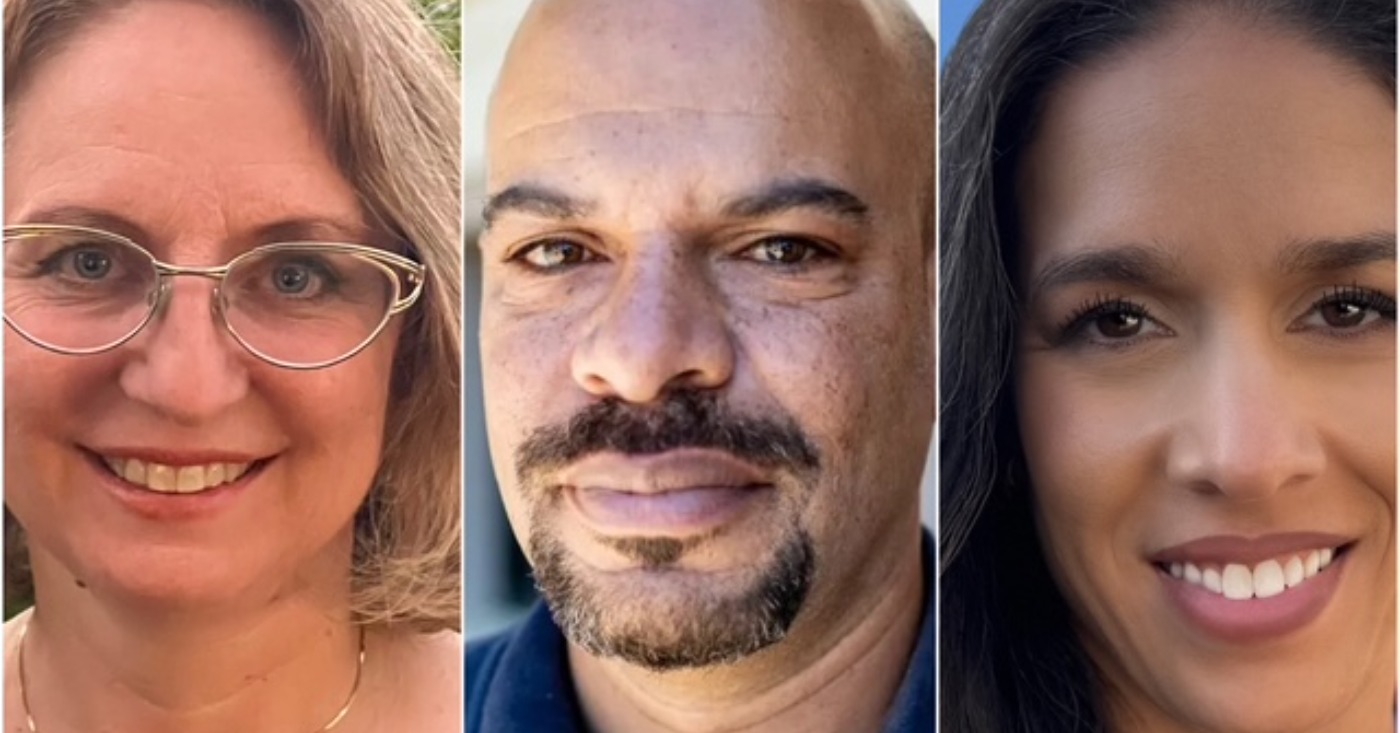
Local Democratic clubs and community organizations interviewed candidates running for Oakland school board in the November elections, including incumbents Jennifer Brouhard in District 2, Mike Hutchinson in District 4 and Valarie Bachelor in District 6.
For the first time, the interviews were jointly sponsored by the John George Democratic Club, Wellstone Democratic Renewal Club, Oakland East Bay Democratic Club, Black Women Organized for Political Action (BWOPA), Niagara Democratic Club, Block by Block Organizing Network and Oakland African American Chamber of Commerce.
The Democratic clubs interviewed only registered Democrats.
John George and Wellstone endorsed Brouhard and Bachelor. Neither endorsed Hutchinson.
In District 4, Wellstone ranked Sylvia Pfeiffer Williams first and Kathryn Camp second. John George ranked Camp first and Williams second.
Hutchinson, an Oakland native and Oakland public schools graduate, highlighted his record.
“I was in board leadership and chaired the Budget and Finance Committee,” he said. “We passed balanced budgets and paid off the state loan early, which allowed us to finally leave state receivership after 22 years.”
Hutchinson said the district faces a financial crisis requiring changes in board leadership and district policies.
“We need a different majority so we can get back on track, end school closures, and manage our resources better,” he said.
Williams taught adult education in Oakland for 18 years.
Williams said her philosophy “comes from the disability justice world, to center the needs of the most vulnerable. When we center the needs of the most vulnerable, we create environments, systems, and learning experiences in which everyone can thrive.”
Williams framed potential school closures as an equity issue.
“Are we thinking about closing schools up in the hills?” she asked. “Or are we thinking about closing schools where communities are in crisis right now?”
Camp, a Bay Area native and Oakland resident of 25 years, has a son in second grade.
“Our kids are only getting one shot at a great education, and I’m running to bring pragmatic, student-centered leadership that restores trust, builds responsibility, and delivers results for every child,” she said.
On her website, Camp pledged accountability and transparency. “As a proud OUSD parent, I know our schools need more than promises – they need fiscal responsibility, equity, and meaningful action guided by long-term strategy,” she said.
“That means protecting classrooms, supporting teachers, using resources wisely, and making decisions that reflect clear priorities and real accountability,” said Camp. “It also means bringing people together and providing the kind of steady leadership that can navigate complex systems, ask hard questions, and stay grounded in what matters most: student outcomes, thriving schools, and a district that works for the communities it serves.”
Wellstone’s Education Committee said it opposed Hutchinson because he frequently challenged the board majority and superintendent.
“He also claims that the teachers’ contract is illegal that a grand jury should be called. He is not endorsed by the teachers’ union; he has been disruptive and non-collaborative at meetings,” and he has been absent 26% of the time, the committee said.
“He claims that the teachers’ contract is illegal and that a grand jury should be called,” the committee said. “He takes individual credit for accomplishments, including paying the state loan, when in fact these changes came from the work of the entire board, or were the result of following through on policy.”
Next week: District 6 school board candidates.
Black History
Nuna Phillips-McKee Celebrates 100 Years: ‘A Century of Faith, Family and God’s Amazing Grace!’
OAKLAND POST — Nuna’s life has been one of Christian service. A longtime member of Wings of Love Maranatha Ministries, now Incredible Church, she serves as director of Community Services and is actively involved in the church’s Food Ministries.

Nuna Phillips-McKee will reach an extraordinary milestone on Sept. 24 —her 100th
birthday, marking a century filled with faith, family, service, laughter and the amazing grace of God.
Born Sept. 14, 1926, in Oakland, Nuna has witnessed a world of change during her lifetime, yet the values that have guided her remain constant: a deep faith in God, devotion to family, a strong work ethic and a heart for serving others.
She enjoyed a distinguished career as a civil servant for more than 40 years, demonstrating the dedication, dependability and strength that have characterized so much of her life.
Nuna’s life has been one of Christian service. A longtime member of Wings of Love Maranatha Ministries, now Incredible Church, she serves as director of Community Services and is actively involved in the church’s Food Ministries.
Through the years, she has continued to help meet the needs of others—not merely with food, but with kindness, compassion and a genuine desire to serve. Her ministry reflects a simple principle by which she lives: when God blesses you, you bless others.
Nuna is the proud mother of one son, whose memory she carries in her heart, and the beloved grandmother of three grandchildren, as well as six great-grandchildren and one great-great-grandchild.
At 100, she has the rare blessing of seeing several generations of her family carrying forward a legacy that began long ago.
She remains the loving, intelligent, witty, and, when the occasion calls for it, delightfully sassy Nuna that her family and friends know so well. Her contagious laugh, quick wit and youthful spirit have endeared her to generations of relatives, church members and friends.
Nuna was born into the large and loving Phillips family of seven sisters and one brother, with bonds that formed in childhood and have remained precious throughout the decades. Their shared love, faith, and family traditions have continued to be a source of joy, strength and countless treasured memories.
As family and friends gather for this special occasion, they will celebrate far more than a number. They will celebrate 100 years of prayers prayed and answered; 100 years of lessons learned and wisdom shared; 100 years of family, faith, laughter and love; 100 years of serving God and serving others.
Most of all, they will celebrate a life that stands as a testimony to God’s faithfulness through every season.
Nuna’s century-long journey can be summed up in the words chosen to commemorate this remarkable occasion: “100 years of God’s amazing grace.”



Port of Oakland, Army Corps Sign Historic Harbor Design Agreement

Democratic Clubs Interview Candidates for Oakland School Board

Nuna Phillips-McKee Celebrates 100 Years: ‘A Century of Faith, Family and God’s Amazing Grace!’

D.A. Ursula Jones Dickson: Terminix to Pay $3.15 Million Over Illegal Disposal of Pesticides, Customer Records

REPORT: Community Level Policy Is Impacting Homelessness and Drug Abuse in California

OPINION: AI Needs to Know Who Is the Boss
Goldi-Locs and Two (or Three) Bears in the Forest in California Hills

Election Watch 2026: 85% of Eligible Voters in California Are Registered

Don’t Let scammers Crash Your School Year

BOOK REVIEW — Curved Air: A Biography of Sickle Cell Anemia and the Quest to Cure the First Molecular Disease

California’s Legal Cannabis Market Hits $8 Billion as State Touts Progress on Fighting Drugs, Crime

Blacks and Latinos Clash Over LA’s Barrio Run; Mayor Karen Bass Calls for Dialogue Across Racial, Neighborhood Lines

Asm. Smallwood-Cuevas’s Bill Repealing ‘Racist’ CalWORKs ‘Man-in-the-House’ Rule Clears Legislature

Asm. Smallwood-Cuevas’s Bill Repealing ‘Racist’ CalWORKs ‘Man-in-the-House’ Rule Clears Legislature

‘Ready to See These Bills Become Law’: Sen. Weber’s Package of 15 Bills Advance to Gov. Newsom’s Desk

Department of Homeland Security Demands California Secretary of State Shirley N. Weber Scrub Voter Rolls

“The Power to See Threats Sooner”: Gov. Newsom, Safety Officials Showcase California’s Investments in Hi-Tech Wildfire Prevention

Alpha Kappa Alpha Sorority, Inc. Celebrates New North Atlantic Regional Director

California Sen. Padilla Joins Colleagues to Introduce Bill Imposing Term Limits on Supreme Court Justices

Less Affluent School Districts, Including Sacramento City, Face Threat of State Takeover

Car Wash Workers Cope with Lingering Impacts of ICE Raids

ESSAY: California Can Close Its Colorectal Cancer Gap

Oakland Post: Week of August 5 – 11, 2026

As Part of Your Back-to- School Checklist, Vaccinate

Oakland ‘Port Serves as a Powerful Engine for Good Jobs and Economic Development

Gov. Newsom Signs New Affordable Housing Legislation

Gov. Newsom Announces $109.6 Million in Funding for 278 Supportive Homes in Bakersfield, Contra Costa, Sacramento and Fresno

California Hispanic Chambers of Commerce Unveils: ‘Powering the Future’ Theme for 47th Annual Statewide Convention

Closing the Gap: What the Data and Frontline Experiences Reveal About Cancer in Black California

Congresswoman Simon Demands Investigation into Trump’s Abuse of Emergency Powers for Coal Export Terminal in West Oakland

The Conversation With Al McFarlane 6/23/26

Media Monday 6/22/26

LIVE! ASK ALMA! — TUES. 6.23.26 7PM EST

Car Buying Secrets: 4 Hidden Checks Before You Sign!

Is This 550 HP Charger Worth YOUR Money? AutoNetwork Review

Celebrating Juneteenth – Frederick Douglass on education and resistance

LIVE! — ASK ALMA! — TUES. 6.19.26 7PM EST

Hyundai Ioniq 5 Parking, Safety, and 360 View #shorts

2025 Ioniq 5 New Wiper & Powerful Performance! #shorts

Electric SUV Range: Is 259 Miles Enough? #shorts

EV Charging: How Fast Can You Charge an Electric Vehicle? #shorts

Biometric Cooling… Messaging Seats…Come on! 2025 Infiniti QX80 Autograph 4WD

Charged Up: Witness the Magic of a Fully Electric Car! #shorts

Range Rover Sport PHEV Included…: See What’s Inside This Luxury SUV! #shorts

Invisible Hood View: Perfect Parking with X-Ray Vision! #shorts
-

 Commentary3 weeks ago
Standoff for Justice: Our Homes Are Worth Fighting For
-

 Business3 weeks ago
Gubernatorial Candidate Steve Hilton Blasts California New Tire Rules; Newsom Hits Back
-

 Activism3 weeks ago
Oakland Post: Week of August 26 – September 1, 2026
-

 Business3 weeks ago
Frontier Airlines’ Return to Oakland Airport Brings Flights, Jobs and Opportunity
-

 Education3 weeks ago
Gov. Newsom’s Latest Appointees Include Sacramento Advocate for Formerly Incarcerated Students; State’s New Tech Chief
-

 Business2 weeks ago
Chef Sharon Lee Blends Culinary Excellence, Education and Empowerment
-

 Community2 weeks ago
Big City Mayors Ask for “Yes” Vote on Housing Bond Measure; Conservatives Say “No”
-

 Business3 weeks ago
Oakland Coliseum Project Opens Door for Small Businesses to Build Bigger
