
Business
Asm. Smallwood-Cuevas’s Bill Repealing ‘Racist’ CalWORKs ‘Man-in-the-House’ Rule Clears Legislature
OAKLAND POST — “This is a law that helped divide our families. This is a rule that separated us from our mothers, fathers, and restricted men’s access to their families mainly because of the discriminatory practices of public housing systems back in the 1960s and 1970s,” said Smallwood-Cuevas, a member of the California Legislative Black Caucus (CLBC).

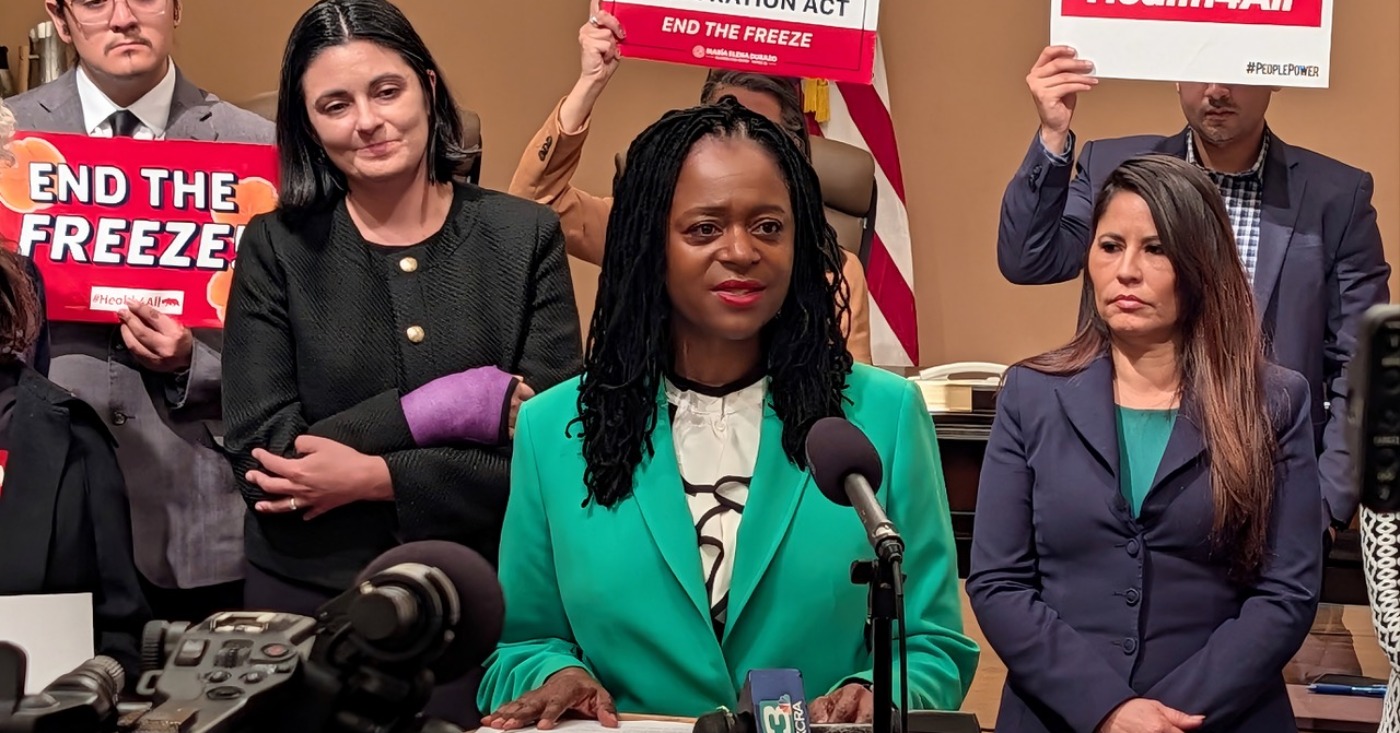
A California rule requiring an unrelated adult man living with a family receiving welfare benefits to contribute financially to the household could be repealed if Gov. Gavin Newsom signs Senate Bill (SB) 1030 into law.
Authored by Sen. Lola Smallwood-Cuevas (D-Los Angeles), SB 1030 would eliminate the California Work Opportunity and Responsibility to Kids (CalWORKs) “Unrelated Adult Male,” or UAM, rule. Smallwood-Cuevas called the policy “outdated” and “harmful,” saying it relies on gender stereotypes and subjects families to intrusive surveillance.
The Assembly approved the bill 77-0 on Aug. 19, followed by a 40-0 Senate concurrence vote five days later. Newsom has until Sept. 30 to sign or veto the measure.
“This is a law that helped divide our families. This is a rule that separated us from our mothers, fathers, and restricted men’s access to their families mainly because of the discriminatory practices of public housing systems back in the 1960s and 1970s,” said Smallwood-Cuevas, a member of the California Legislative Black Caucus (CLBC).
Under Section 11351.5 of the California Welfare and Institutions Code, an unrelated adult man living with a family applying for or receiving CalWORKs must make a financial contribution based on his income and expenses. He and the mother must disclose their household expense-sharing arrangement under penalty of perjury. Benefits may be discontinued if either person knowingly refuses to cooperate.

SB 1030 would repeal those requirements beginning July 1, 2027, or later if the state’s welfare computer system is not ready to implement the change.
Smallwood-Cuevas, a veteran journalist who has written about families relying on public assistance, said the law should be modernized as low-income households confront rising housing and food costs and broader economic uncertainty.
“We wanted to take that law off the books that limited men from being in the home with their families. We recognize Donald Trump is in the White House, and he will use all of the racist tools of the past to discriminate and surveil,” Smallwood-Cuevas told California Black Media (CBM).
Smallwood-Cuevas also told the Assembly Human Services Committee that SB 1030 was a priority of the California Legislative Women’s Caucus.
“Historically, the man in the house rule was disproportionately applied to Black women, women of color, reflecting a broader racialized system of surveillance and negative stereotypes and narratives. We know that was embedded in some of our early welfare policies,” Smallwood-Cuevas said.
“Man-in-the-house” policies emerged from state welfare programs during the early and mid-20th century. They were later applied under Aid to Families with Dependent Children (AFDC), a federal assistance program established by the Social Security Act of 1935.
For decades, some state welfare agencies denied assistance to low-income families if an able-bodied man lived in or regularly visited the home, treating him as a substitute father whether he was legally or financially responsible for the children or not.
Smallwood-Cuevas compared the rule’s effect on Black families to the welfare policies depicted in the 1974 film “Claudine”, starring Diahann Carroll and James Earl Jones.
“In this environment with unemployment rates, shutting down of industries that employ, particularly men in our communities, sometimes men can’t contribute financially, but that doesn’t mean they don’t contribute to our families,” she said. “These laws shouldn’t divide and separate our families, and this is what this rule has done for so many years.”








Business
California’s Legal Cannabis Market Hits $8 Billion as State Touts Progress on Fighting Drugs, Crime
OAKLAND POST — “We are building a legal cannabis market that generates billions for Californians, and going after the illicit operators who undermine it,” said Newsom. “That’s public safety: protect consumers, support the businesses playing by the rules, and put the revenue to work in our communities.”

California’s legal cannabis market has generated nearly $8.4 billion in tax revenue since 2018 as the state ramps up enforcement against illegal drugs and touts declines in crime, Gov. Gavin Newsom announced on Sept. 2.
The cannabis revenue includes nearly $4.5 billion in excise taxes and nearly $3.4 billion in sales taxes. In the second quarter of 2026 alone, cannabis retailers remitted $261.7 million in cannabis excise and sales tax revenue.
The state uses cannabis revenue to support programs including childcare and early childhood development, youth substance abuse prevention, medical research and environmental recovery.
“We are building a legal cannabis market that generates billions for Californians, and going after the illicit operators who undermine it,” said Newsom. “That’s public safety: protect consumers, support the businesses playing by the rules, and put the revenue to work in our communities.”
California is also targeting illegal intoxicating products outside the regulated cannabis market. State officials have removed more than 15,000 illegal hemp, kratom, and 7-hydroxymitragynine, or 7-OH, products from store shelves.

The enforcement effort resulted in the removal of 7,403 illegal hemp products and 7,888 kratom and 7-OH products. Officials reported compliance rates above 97% among Alcoholic Beverage Control licensees inspected for both categories.
The state has warned that kratom and 7-OH products have been linked to addiction, overdose and other serious health risks.
California is also using its law enforcement resources to target violent crime, drug trafficking and other criminal activity. Since 2023, CHP Crime Suppression Teams have made 15,197 arrests, recovered 7,042 stolen vehicles and seized 656 illicit firearms.
Since the teams expanded to six regions statewide in August 2025, they have also confiscated nearly 1.7 million grams of illegal drugs, including about 108 kilograms of fentanyl.
“Over the past few years, our Crime Suppression Teams have demonstrated the value of proactive, intelligence-driven enforcement,” CHP Commissioner Sean Duryee said.
The Newsom administration says the efforts are part of a broader public safety strategy that combines regulation, enforcement, prevention and partnerships with local agencies.
California has also reported declines in major crime categories since 2024, including an 18.6% drop in homicides and a 25.8% decline in motor vehicle theft.
California officials say the combination of a regulated cannabis market, targeted enforcement and state-local law enforcement partnerships is helping protect consumers, disrupt illicit drug activity and improve public safety across the state.
Business
Asm. Smallwood-Cuevas’s Bill Repealing ‘Racist’ CalWORKs ‘Man-in-the-House’ Rule Clears Legislature
OAKLAND POST — “This is a law that helped divide our families. This is a rule that separated us from our mothers, fathers, and restricted men’s access to their families mainly because of the discriminatory practices of public housing systems back in the 1960s and 1970s,” said Smallwood-Cuevas, a member of the California Legislative Black Caucus (CLBC).
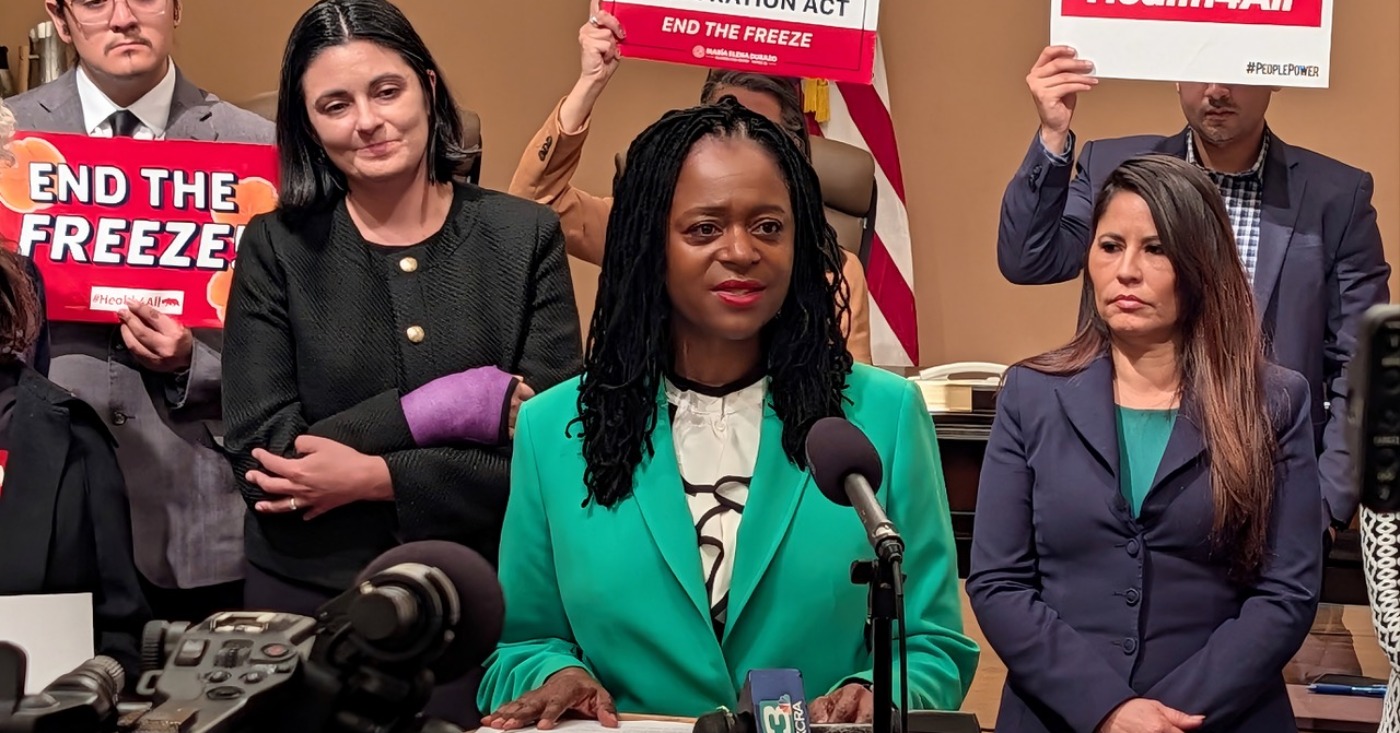
A California rule requiring an unrelated adult man living with a family receiving welfare benefits to contribute financially to the household could be repealed if Gov. Gavin Newsom signs Senate Bill (SB) 1030 into law.
Authored by Sen. Lola Smallwood-Cuevas (D-Los Angeles), SB 1030 would eliminate the California Work Opportunity and Responsibility to Kids (CalWORKs) “Unrelated Adult Male,” or UAM, rule. Smallwood-Cuevas called the policy “outdated” and “harmful,” saying it relies on gender stereotypes and subjects families to intrusive surveillance.
The Assembly approved the bill 77-0 on Aug. 19, followed by a 40-0 Senate concurrence vote five days later. Newsom has until Sept. 30 to sign or veto the measure.
“This is a law that helped divide our families. This is a rule that separated us from our mothers, fathers, and restricted men’s access to their families mainly because of the discriminatory practices of public housing systems back in the 1960s and 1970s,” said Smallwood-Cuevas, a member of the California Legislative Black Caucus (CLBC).
Under Section 11351.5 of the California Welfare and Institutions Code, an unrelated adult man living with a family applying for or receiving CalWORKs must make a financial contribution based on his income and expenses. He and the mother must disclose their household expense-sharing arrangement under penalty of perjury. Benefits may be discontinued if either person knowingly refuses to cooperate.

SB 1030 would repeal those requirements beginning July 1, 2027, or later if the state’s welfare computer system is not ready to implement the change.
Smallwood-Cuevas, a veteran journalist who has written about families relying on public assistance, said the law should be modernized as low-income households confront rising housing and food costs and broader economic uncertainty.
“We wanted to take that law off the books that limited men from being in the home with their families. We recognize Donald Trump is in the White House, and he will use all of the racist tools of the past to discriminate and surveil,” Smallwood-Cuevas told California Black Media (CBM).
Smallwood-Cuevas also told the Assembly Human Services Committee that SB 1030 was a priority of the California Legislative Women’s Caucus.
“Historically, the man in the house rule was disproportionately applied to Black women, women of color, reflecting a broader racialized system of surveillance and negative stereotypes and narratives. We know that was embedded in some of our early welfare policies,” Smallwood-Cuevas said.
“Man-in-the-house” policies emerged from state welfare programs during the early and mid-20th century. They were later applied under Aid to Families with Dependent Children (AFDC), a federal assistance program established by the Social Security Act of 1935.
For decades, some state welfare agencies denied assistance to low-income families if an able-bodied man lived in or regularly visited the home, treating him as a substitute father whether he was legally or financially responsible for the children or not.
Smallwood-Cuevas compared the rule’s effect on Black families to the welfare policies depicted in the 1974 film “Claudine”, starring Diahann Carroll and James Earl Jones.
“In this environment with unemployment rates, shutting down of industries that employ, particularly men in our communities, sometimes men can’t contribute financially, but that doesn’t mean they don’t contribute to our families,” she said. “These laws shouldn’t divide and separate our families, and this is what this rule has done for so many years.”
Black History
Henry O. Flipper: A Trailblazer at West Point and Beyond
OAKLAND POST — Flipper’s promising military career ended abruptly in 1881 when he was accused of embezzling commissary funds. A court-martial acquitted him of embezzlement, but convicted him of conduct unbecoming of an officer. The Army dismissed him in 1882. The circumstances surrounding his punishment would later be widely regarded as unjust and influenced by the racial discrimination of the period.
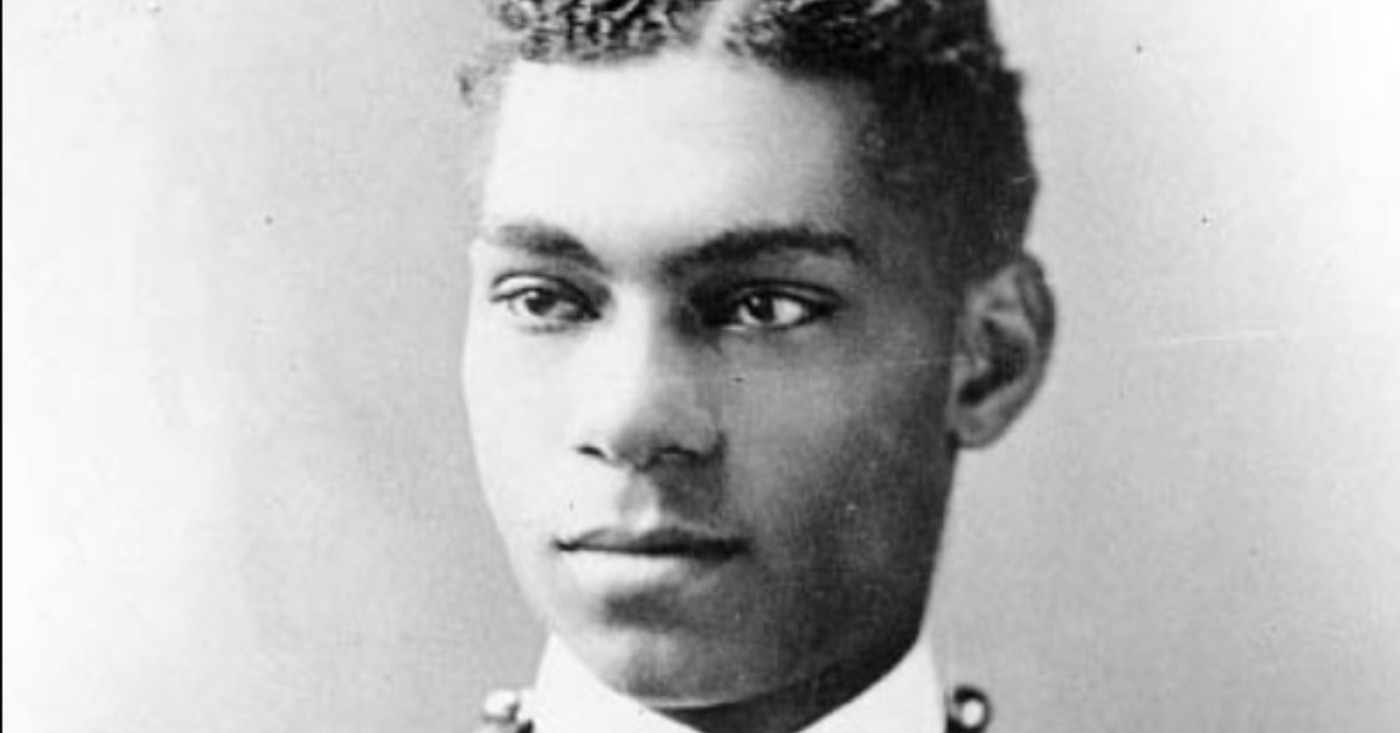
Henry Ossian Flipper’s life is a remarkable story of insistence, achievement, injustice, and ultimately vindication. Born enslaved on March 21, 1856, in Thomasville, Georgia, Flipper rose from the restrictions of slavery to become the first African American to graduate from the United States Military Academy at West Point. His accomplishments extended far beyond military service; he later became a respected engineer, surveyor, author, translator, and government official.
After the Civil War, Flipper’s family settled in Atlanta, where education became central to his future. He attended schools established for African American children by the American Missionary Association and later studied at Atlanta University. In 1873, Congressman James C. Freeman of Georgia nominated Flipper for admission to West Point. He entered the academy that July.
Flipper’s four years at West Point were extremely difficult. Because of racism, he experienced harassment and almost complete social isolation from many of his fellow cadets. Nevertheless, he succeeded academically and graduated on June 14, 1877, ranking 50th in a class of 76. His graduation represented a historic breakthrough for African Americans in the United States military.
Commissioned as a second lieutenant, Flipper was assigned to the 10th U.S. Cavalry, one of the famed African American regiments known as the Buffalo Soldiers. At Fort Sill in Indian Territory, now Oklahoma, Flipper served as an engineer, surveyor, construction supervisor, quartermaster, and commissary officer. One of his most lasting engineering accomplishments was a drainage system that eliminated pools of stagnant water around the fort and helped reduce mosquito-breeding areas. The system became known as “Flipper’s Ditch,” and portions of it remain associated with Fort Sill today.
Flipper’s promising military career ended abruptly in 1881 when he was accused of embezzling commissary funds. A court-martial acquitted him of embezzlement, but convicted him of conduct unbecoming of an officer. The Army dismissed him in 1882. The circumstances surrounding his punishment would later be widely regarded as unjust and influenced by the racial discrimination of the period.
Rather than allowing his dismissal to define his life, Flipper built an extraordinary civilian career. He became a civil and mining engineer and surveyor, working extensively throughout the American Southwest and Mexico. He established an engineering office in Nogales, Arizona, became knowledgeable about Spanish and Mexican land law, and later worked for the federal government, including service connected with the Department of Justice and the Department of the Interior.
Flipper died in Atlanta in 1940, but efforts to restore his reputation continued for decades. In 1976, the Army changed his dismissal to an honorable discharge. Then, on February 19, 1999, President Bill Clinton granted Flipper a posthumous presidential pardon.
Today, Henry Ossian Flipper is remembered because his life helped open doors for generations of African American military officers, engineers, and public servants who followed him.



California’s Legal Cannabis Market Hits $8 Billion as State Touts Progress on Fighting Drugs, Crime

Blacks and Latinos Clash Over LA’s Barrio Run; Mayor Karen Bass Calls for Dialogue Across Racial, Neighborhood Lines

Asm. Smallwood-Cuevas’s Bill Repealing ‘Racist’ CalWORKs ‘Man-in-the-House’ Rule Clears Legislature

Asm. Smallwood-Cuevas’s Bill Repealing ‘Racist’ CalWORKs ‘Man-in-the-House’ Rule Clears Legislature

‘Ready to See These Bills Become Law’: Sen. Weber’s Package of 15 Bills Advance to Gov. Newsom’s Desk

‘Ready to See These Bills Become Law’: Sen. Weber’s Package of 15 Bills Advance to Gov. Newsom’s Desk

Tarsha Jordan’s Bonita the Bumble Bee Brings STEAM Learning to Life

On Your November Ballot: Prop 45 Would Speed Up Environmental and Public Project Reviews

Henry O. Flipper: A Trailblazer at West Point and Beyond

California Legislature Sends Historic Native American Apology Bill to Gov. Newsom’s Desk

NBA All-Star Damian Lillard Returns Home for 15th Annual Backpack Giveaway

Alameda County DA Sees Gun Violence Greatest Threat to Black Community

Richmond Tiny House Village Farm & Garden Set to Open Gates on Sept. 26

Community Feedback at Chevron Richmond Town Halls Drives Changes

Misnamed ‘Parent’ PAC Seeks to Influence Oakland School Board Elections

Department of Homeland Security Demands California Secretary of State Shirley N. Weber Scrub Voter Rolls

New Judge Could Decide if Karmelo Anthony Gets a New Trial

“The Power to See Threats Sooner”: Gov. Newsom, Safety Officials Showcase California’s Investments in Hi-Tech Wildfire Prevention

Alpha Kappa Alpha Sorority, Inc. Celebrates New North Atlantic Regional Director

California Sen. Padilla Joins Colleagues to Introduce Bill Imposing Term Limits on Supreme Court Justices

Less Affluent School Districts, Including Sacramento City, Face Threat of State Takeover

Car Wash Workers Cope with Lingering Impacts of ICE Raids

Oakland Post: Week of July 29 – August 4, 2026

How Oakland’s Courtsmith is Scaling its Business and Local Impact

ESSAY: California Can Close Its Colorectal Cancer Gap

Oakland Post: Week of August 5 – 11, 2026

As Part of Your Back-to- School Checklist, Vaccinate

Oakland ‘Port Serves as a Powerful Engine for Good Jobs and Economic Development

Gov. Newsom Signs New Affordable Housing Legislation

Gov. Newsom Announces $109.6 Million in Funding for 278 Supportive Homes in Bakersfield, Contra Costa, Sacramento and Fresno

The Conversation With Al McFarlane 6/23/26

Media Monday 6/22/26

LIVE! ASK ALMA! — TUES. 6.23.26 7PM EST

Car Buying Secrets: 4 Hidden Checks Before You Sign!

Is This 550 HP Charger Worth YOUR Money? AutoNetwork Review

Celebrating Juneteenth – Frederick Douglass on education and resistance

LIVE! — ASK ALMA! — TUES. 6.19.26 7PM EST

Hyundai Ioniq 5 Parking, Safety, and 360 View #shorts

2025 Ioniq 5 New Wiper & Powerful Performance! #shorts

Electric SUV Range: Is 259 Miles Enough? #shorts

EV Charging: How Fast Can You Charge an Electric Vehicle? #shorts

Biometric Cooling… Messaging Seats…Come on! 2025 Infiniti QX80 Autograph 4WD

Charged Up: Witness the Magic of a Fully Electric Car! #shorts

Range Rover Sport PHEV Included…: See What’s Inside This Luxury SUV! #shorts

Invisible Hood View: Perfect Parking with X-Ray Vision! #shorts
-
 Community4 weeks ago
Less Affluent School Districts, Including Sacramento City, Face Threat of State Takeover
-
 Commentary4 weeks ago
ESSAY: California Can Close Its Colorectal Cancer Gap
-

 Business4 weeks ago
California Hispanic Chambers of Commerce Unveils: ‘Powering the Future’ Theme for 47th Annual Statewide Convention
-

 Community4 weeks ago
Four Candidates, Including Incumbent Barbara Lee, Qualify for Oakland Mayor’s Race
-

 Activism4 weeks ago
Oakland Post: Week of August 12 – 18, 2026
-

 Business4 weeks ago
From Blueprint to Breakthrough: Tackling Affordable Housing in Oakland
-

 Black History4 weeks ago
Oakland Observes Black August with Block Parties, Film Showings, Workshops
-

 Commentary4 weeks ago
COMMENTARY: Why Local School Tax Measure G1 Will Not Be on the November Ballot
