
Activism
Rep. Barbara Lee Joins Competitive Race to Replace Sen. Dianne Feinstein
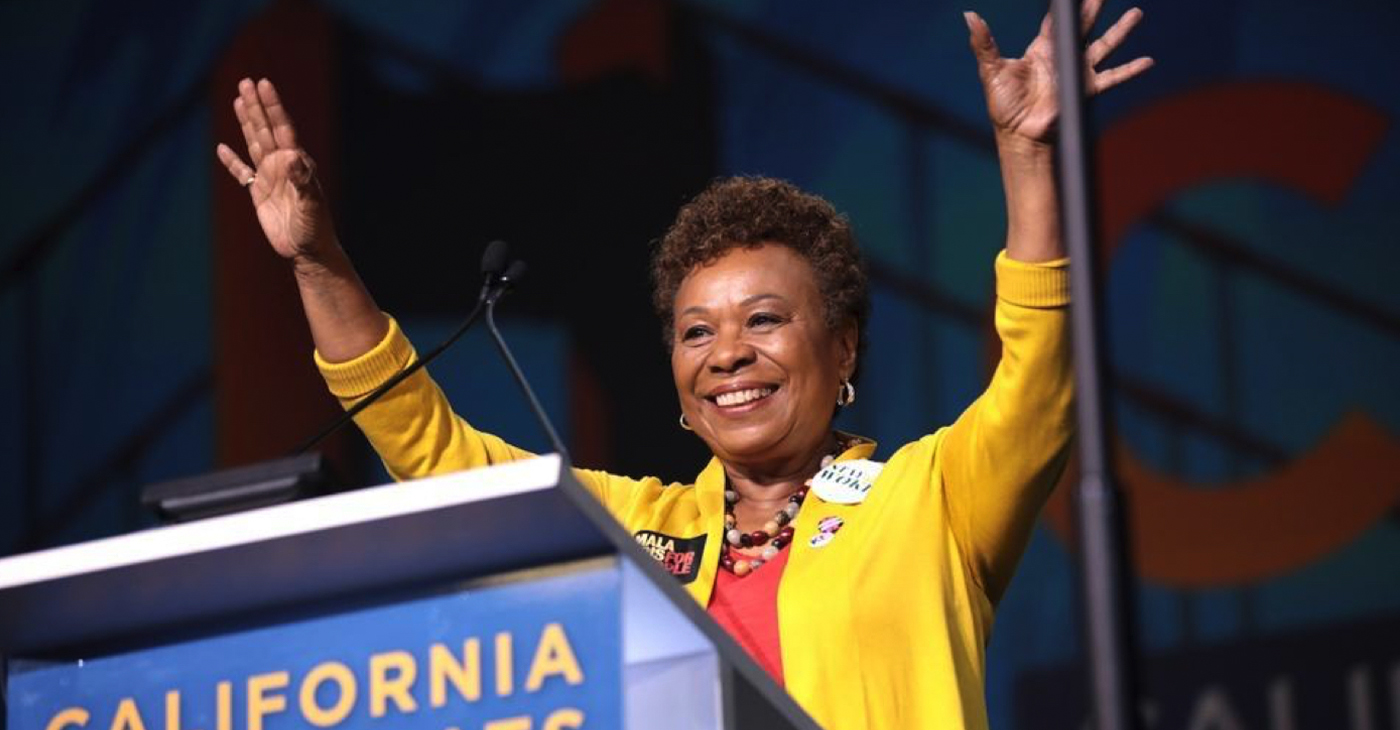
Rep. Barbara Lee (D-CA12), the highest-ranking African American woman serving in the U.S. Congress, announced on February 21, that she will enter the race to replace 89-year-old Dianne Feinstein — California’s senior U.S. Senator who has announced that she will not seek another term.

By Tanu Henry
California Black Media
Rep. Barbara Lee (D-CA12), the highest-ranking African American woman serving in the U.S. Congress, announced on February 21, that she will enter the race to replace 89-year-old Dianne Feinstein — California’s senior U.S. Senator who has announced that she will not seek another term.
“No one is rolling out the welcome mat – especially for someone like me. I am the girl they didn’t allow in, who couldn’t drink from the water fountain, who had an abortion in a back alley when they all were illegal,” Lee said in a video she released announcing her senatorial bid. “I escaped a violent marriage, became a single mom, a homeless mom, a mom who couldn’t afford childcare and brought her kids to class with her.”
“By the grace of God, I didn’t let that stop me,” Lee said over a soundtrack of loudening applause. “And even though there are no African American women in the U.S. Senate, we won’t let that stop us either. Because when you stand on the side of justice, you don’t quit when they give you a seat at the table. You bring a folding chair for everyone, and they’re here to stay.”
A week earlier, Lee, a 12-term member of the U.S. House of Representatives who is known for her progressive politics, filed the required paperwork with the Federal Election Commission to be a candidate in the 2024 race.
“It has been an immense honor to serve alongside Senator Dianne Feinstein, the longest-serving woman senator in our nation’s history,” Lee said in a statement after Feinstein’s announcement. “For over two decades, we’ve worked closely together to represent the best interests of our great state of California; create an economy that works for all; and advance justice and equity.”
“The progress we’ve made in the fight for equity can be seen in the Senator’s tenure itself: when she was elected in ’92, there were just two women senators. Today, there are 25,” Lee said, continuing her homage to Feinstein.
If Lee wins, she will be the only Black woman serving in the U.S. Senate. Just two Black women, Vice President Kamala Harris and former Illinois Senator Carol Moseley Braun, have served in the upper house of the United States Congress in the body’s 230-year history.
“As one of the most liberal states in the nation, we must continue to send an independent voice who will be diverse in their perspective and positions,” said Kellie Todd-Griffin, founding convener of the California Black Women’s Collective, a statewide organization whose membership includes women representing various professional backgrounds.
“That is Congressmember Barbara Lee. She speaks for all of us,” added Griffin.
In 2020, after Kamala Harris became vice president, Black women advocates across California called on Gov. Gavin Newsom to appoint a Black woman to replace her. They made the case that there would be no other Black woman in the Senate after Harris left, and that Black women are the most loyal, most powerful, and most consistent voting bloc in the Democratic Party.
Instead, Newsom appointed Sen. Alex Padilla, the first Latino from California to serve in the U.S. Senate. Although Black political advocates and Black leaders in the California Democratic Party eventually embraced Padilla’s nomination, many felt Newsom’s decision to not appoint a Black woman to replace Harris was a slap in the face.
“That is a terrible loss for America. That is our seat,” said Amelia Ashley Ward, publisher of the San Francisco Sun-Reporter, after Padilla was nominated. “It was won by an African American woman, and she had hundreds of thousands of African American women working hard with her, holding her up, standing behind her to win that seat.”
Lee, 76, will be competing for Feinstein’s Senate seat against two other Democratic members of California’s delegation to the U.S. House of Representatives: Katie Porter (D-CA-47), 49, and Adam Schiff (D-CA-30), 62.
Both Porter and Schiff, like Lee, have progressive voting records. Both Democratic competitors have already amassed tens of millions of dollars, respectively, in campaign donations. Their early fundraising places them in a stronger position than Lee to win the 2024 Democratic primary which will be held about a year from now.
In the U.S. House, Lee serves as co-chair of the Policy and Steering Committee. She is also a member of the Appropriations and Budget committees. She is former chair of the Congressional Black Caucus and chair emeritus of the Congressional Progressive Caucus.
Lee has also been hailed by her Democratic colleagues as the only member of Congress who had the courage to vote against the use of force in Iraq after the Sept. 11, 2001, attacks.
As a young activist, Lee was a volunteer for the 1973 Oakland mayoral campaign of Black founder co-founder Bobby Seale.
Griffin says for Black women particularly, and for African Americans in general, it is important to have representation in the United States Senate.
“Congressmember Lee has been a progressive leader whose record demonstrates she will fight to solve the issues that impact our community.
She has effectively served California by advancing meaningful policy while standing up for the things that matter to everyday citizens,” said Griffin.














Activism
Oakland Post: Week of September 23 – 29, 2026
The printed Weekly Edition of the Oakland Post: Week of September 23 – 29, 2026

To enlarge your view of this issue, use the slider, magnifying glass icon or full page icon in the lower right corner of the browser window.
Activism
Oakland Post: Week of September 16 – 22, 2026
The printed Weekly Edition of the Oakland Post: Week of September 16 – 22, 2026

To enlarge your view of this issue, use the slider, magnifying glass icon or full page icon in the lower right corner of the browser window.
Activism
Oakland Post: Week of September 9 – 15, 2026
The printed Weekly Edition of the Oakland Post: Week of September 9 – 15, 2026

To enlarge your view of this issue, use the slider, magnifying glass icon or full page icon in the lower right corner of the browser window.



Asm. Corey Jackson Announces Launch of 24-Hour Childcare in His District

IN MEMORIAM: The Rev. Leon “Sonny” Clark, Longtime Orange County Pastor and Community Leader, Dies at 72

Poll: Becerra Widens His Lead Over Hilton; Californians Split on Wealth Tax

From Historic Memories to New Possibilities: Oakland Celebrates Coliseum 60

County Office of Education Says OUSD Finances Are Getting Healthier, Materially Stronger

LIVE FREE Sunday Dinner Brings Faith, Fellowship and Civic Conversation to Oakland

Remembering Chauncey Bailey as Student Journalists Face Threats to Truth-Telling

BLACspace Cooperative Invites Bay Area to Experience Oakland’s Black Cultural Ecosystem Through a BLAC Map Tour + Party

In Wake of Death on Doorstep, Williams Chapel Baptist Church Calls for Better Care, Funding for Unhoused

Oakland Centenarian Nuna McKee Honored!

Caribbean Nations Produce Action Plan Calling for UK Reparations Over Slavery

Oakland Post: Week of September 23 – 29, 2026

Doulas Are Helping Black California Moms Navigate Pregnancy–Even as High Mortality Rates Persist

Newsom Signs Addictive Social Media Law to Protect Kids

On Your November Ballot: Prop 38 Would Allocate $8.4 Billion to Immunology and Immunotherapy Funding

Less Affluent School Districts, Including Sacramento City, Face Threat of State Takeover

ESSAY: California Can Close Its Colorectal Cancer Gap

California Hispanic Chambers of Commerce Unveils: ‘Powering the Future’ Theme for 47th Annual Statewide Convention

Four Candidates, Including Incumbent Barbara Lee, Qualify for Oakland Mayor’s Race

Oakland Post: Week of August 12 – 18, 2026

From Blueprint to Breakthrough: Tackling Affordable Housing in Oakland

Oakland Observes Black August with Block Parties, Film Showings, Workshops

COMMENTARY: Why Local School Tax Measure G1 Will Not Be on the November Ballot

Standoff for Justice: Our Homes Are Worth Fighting For

Returning to Its Roots, the Oakland Black-Eyed Pea Festival Partners with the Freedom Farmers Market Sept. 12

Oakland Post: Week of August 26 – September 1, 2026

NPRC Scores First Advocacy Victory: David Shaw Finally Gets His Wish to ‘Go Home’

Frontier Airlines’ Return to Oakland Airport Brings Flights, Jobs and Opportunity

Gubernatorial Candidate Steve Hilton Blasts California New Tire Rules; Newsom Hits Back

Chef Sharon Lee Blends Culinary Excellence, Education and Empowerment

The Conversation With Al McFarlane 6/23/26

Media Monday 6/22/26

LIVE! ASK ALMA! — TUES. 6.23.26 7PM EST

Car Buying Secrets: 4 Hidden Checks Before You Sign!

Is This 550 HP Charger Worth YOUR Money? AutoNetwork Review

Celebrating Juneteenth – Frederick Douglass on education and resistance

LIVE! — ASK ALMA! — TUES. 6.19.26 7PM EST

Hyundai Ioniq 5 Parking, Safety, and 360 View #shorts

2025 Ioniq 5 New Wiper & Powerful Performance! #shorts

Electric SUV Range: Is 259 Miles Enough? #shorts

EV Charging: How Fast Can You Charge an Electric Vehicle? #shorts

Biometric Cooling… Messaging Seats…Come on! 2025 Infiniti QX80 Autograph 4WD

Charged Up: Witness the Magic of a Fully Electric Car! #shorts

Range Rover Sport PHEV Included…: See What’s Inside This Luxury SUV! #shorts

Invisible Hood View: Perfect Parking with X-Ray Vision! #shorts
-
 Commentary4 weeks ago
Standoff for Justice: Our Homes Are Worth Fighting For
-
 Activism4 weeks ago
Oakland Post: Week of August 26 – September 1, 2026
-
 Business4 weeks ago
Frontier Airlines’ Return to Oakland Airport Brings Flights, Jobs and Opportunity
-
 Business4 weeks ago
Gubernatorial Candidate Steve Hilton Blasts California New Tire Rules; Newsom Hits Back
-
 Business4 weeks ago
Chef Sharon Lee Blends Culinary Excellence, Education and Empowerment
-

 Community4 weeks ago
Big City Mayors Ask for “Yes” Vote on Housing Bond Measure; Conservatives Say “No”
-

 Black History4 weeks ago
Jackie Wright Champions Bay Area Stories, Filmmakers and Cultural Institutions
-

 Education4 weeks ago
Gov. Newsom’s Latest Appointees Include Sacramento Advocate for Formerly Incarcerated Students; State’s New Tech Chief
