
Uncategorized
President Obama Speaks at Federal Prison, Calls for Criminal Justice Reform

President Barack Obama visited the El Reno Federal Correctional Institution in El Reno, Oklahoma on Thursday, July 16, becoming the first sitting president to visit a federal prison.
He spoke of the need for criminal justice reform, raising issues that need to be addressed, such as overcrowding, gang activity, and sexual assault inside prisons. The President delivered the following remarks:
“Hello, everybody. So I’m just going to make a very quick statement.
I want to thank the folks who were involved here in helping to arrange this visit at El Reno Federal Penitentiary. And this is part of our effort to highlight both the challenges and opportunities that we face with respect to the criminal justice system.
“Many of you heard me speak on Tuesday in Philadelphia about the fact that the United States accounts for 5 percent of the world’s population, we account for 25 percent of the world’s inmates. And that represents a huge surge since 1980. A primary driver of this mass incarceration phenomenon is our drug laws –our mandatory minimum sentencing around drug laws. And we have to consider whether this is the smartest way for us to both control crime and rehabilitate individuals.
“This is costing taxpayers across America $80 billion a year. And as I said on Tuesday, there are people who need to be in prison, and I don’t have tolerance for violent criminals. Many of them may have made mistakes, but we need to keep our communities safe. On the other hand, when we’re looking at nonviolent offenders, most of them growing up in environments in which the drug traffic is common, where many of their family members may have been involved in the drug trade, we have to reconsider whether 20-year, 30-year, life sentences for nonviolent crimes is the best way for us to solve these problems.
“Here at El Reno, there’s some excellent work that’s being done inside this facility to provide job training, college degrees, drug counseling. The question is not only how do we make sure that we sustain those programs here in the prison, but how do we make sure that those same kind of institutional supports are there for kids and teenagers before they get into the criminal justice system, and are there ways for us to divert young people who make mistakes early on in life so that they don’t get into the system in the first place.
“The good news is, is that we’ve got Democrats and Republicans who I think are starting to work together in Congress, and we’re starting to see bipartisan efforts in state legislatures as well to start to reexamine some of these sentencing laws, to look at what kinds of work we can do in the community to keep kids out of the criminal justice system in the first place, how we can build on the successes for rehabilitation of all individuals who are incarcerated, and then what can we do to improve reentry going forward.
“I just had the chance to meet with six inmates, all of them in for drug offenses. Many of them here for very long sentences. And every single one of them emphasized the fact that they understood they had done something wrong, they were prepared to take responsibility for it. But they also urged us to think about how could society have reached them earlier on in life to keep them out of trouble. They expressed huge appreciation for the educational opportunities and drug counseling that they had here in prison, and they expressed some fear and concern about how difficult the transition was going to be.
“So we’ve got an opportunity to make a difference at a time when, overall, violent crime rates have been dropping at the same time as incarcerations last year dropped for the first time in 40 years. My hope is that if we can keep on looking at the evidence, keep on looking at the facts, figure out what works, then we can start making the change that will save taxpayers money, keep our streets safe, and perhaps most importantly, keep families intact, and break this cycle in which young people — particularly young people of color — are so prone to end up in a criminal justice system that makes it harder for them to ever get a job and ever be effective, full citizens of this country.
“So I want to express appreciation to everybody who helped make this happen. I want to give a special shout-out to our prison guards. They’ve got a really tough job, and most of them are doing it in exemplary fashion. One of the things that we talked about is how we can continue to improve conditions in prisons. This is an outstanding institution within the system, and yet, they’ve got enormous overcrowding issues. I just took a look in a cell where, because of overcrowding, typically we might have three people housed in a cell that looks to be, what, 15 by —
PARTICIPANT: Nine by 10.
THE PRESIDENT: What?
WARDEN SCARANTINO: Nine by 10.
THE PRESIDENT: “Nine by 10 — three, whole-grown men in a 9-by-10 cell. There’s been some improvement — now we have two. But overcrowding like that is something that has to be addressed.
“As I said the other day, gang activity, sexual assault inside of these prisons — those are all things that have to be addressed. And so we’re also going to be consulting with prison guards, wardens and others to see how we can make some critical reforms.
“A lot of this, though, is going to have to happen at the state level. So my goal is that we start seeing some improvements at the federal level, and that we’re then able to see states across the country pick up the baton. And there are already some states that are leading the way on both sentencing reform as well as prison reform. We want to make sure that we’re seeing what works and build off that.
“Thanks, everybody.”
Q: Mr. President, what struck you most about seeing the prison here today?
THE PRESIDENT: What’s that?
Q: What struck you most about seeing this prison here today?
THE PRESIDENT: “Visiting with these six individuals. I’ve said this before — when they describe their youth and their childhood, these are young people who made mistakes that aren’t that different than the mistakes I made and the mistakes that a lot of you guys made. The difference is they did not have the kinds of support structures, the second chances, the resources that would allow them to survive those mistakes.
“And I think we have a tendency sometimes to almost take for granted or think it’s normal that so many young people end up in our criminal justice system. It’s not normal. It’s not what happens in other countries.
“What is normal is teenagers doing stupid things. What is normal is young people making mistakes. And we’ve got to be able to distinguish between dangerous individuals who need to be incapacitated and incarcerated versus young people who, in an environment in which they are adapting but if given different opportunities, a different vision of life, could be thriving the way we are.
“That’s what strikes me — there but for the grace of God. And that I think is something that we all have to think about.
“Thank you.”














Uncategorized
HISTORY MADE: Keisha Lance Bottoms Becomes First Black Woman Elected Governor in American History
ATLANTA DAILY WORLD — History has been made in Georgia. Keisha Lance Bottoms, the former mayor of Atlanta, has been elected governor of Georgia, becoming the first Black woman in American history to win the highest executive office in any state.

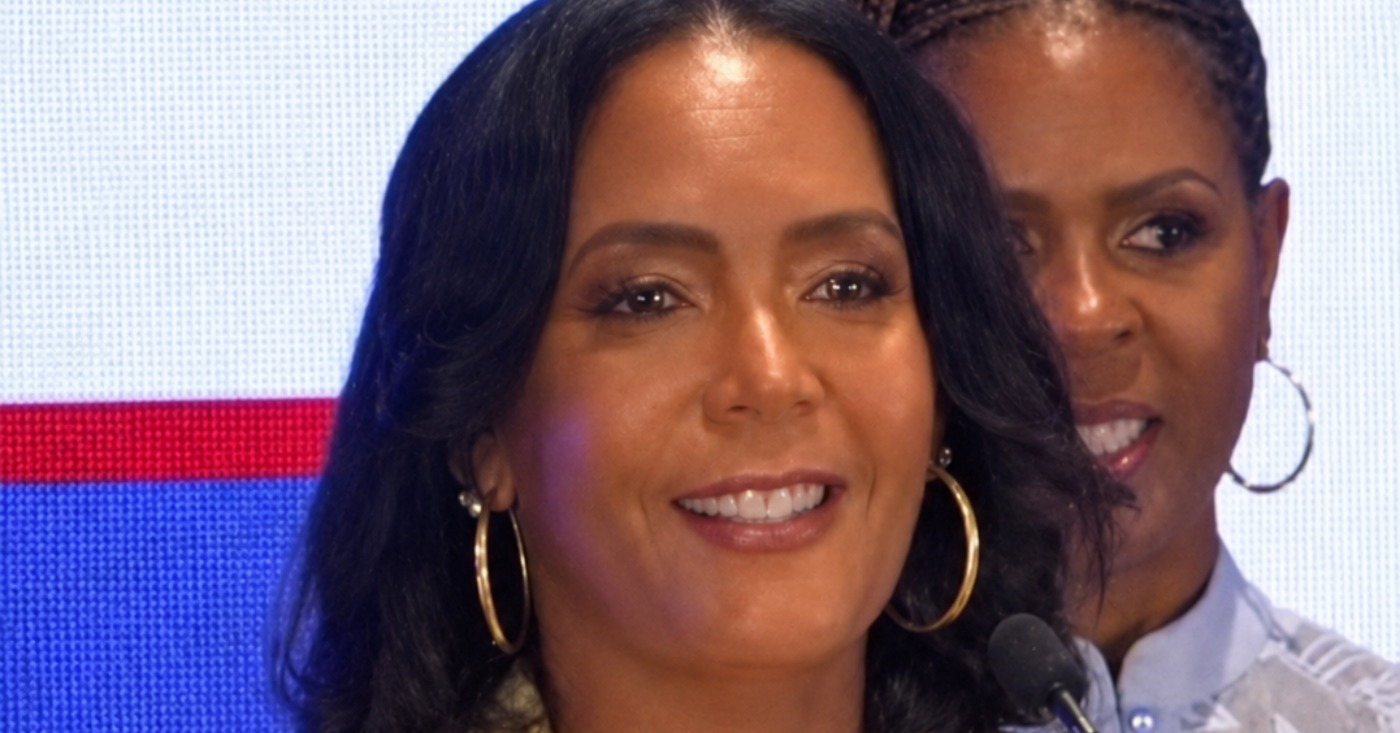
History has been made in Georgia. Keisha Lance Bottoms, the former mayor of Atlanta, has been elected governor of Georgia, becoming the first Black woman in American history to win the highest executive office in any state.
Bottoms’ victory over Republican businessman Rick Jackson represents a defining moment in American politics, breaking a barrier that has stood since the nation’s founding and placing Georgia at the center of a historic political transformation.
For generations, Black women have played a critical role in American democracy, organizing communities, leading movements, mobilizing voters and shaping public policy. Yet despite their contributions, no Black woman had ever been elected governor of a U.S. state.
Until now.
Bottoms’ election also makes her the first woman and first Black person elected governor of Georgia, a state whose political history has been deeply shaped by slavery, segregation, the civil rights movement and the long struggle for equal representation.
Her victory carries particular significance in a state where Black women have been among the most influential forces in voter registration, political organizing and Democratic electoral success.
A fifth-generation Georgian, Bottoms previously served as Atlanta’s 60th mayor from 2018 to 2022. During her administration, she led the city through the COVID-19 pandemic, nationwide protests over racial injustice and a period of significant economic and population growth.

Following her time as mayor, Bottoms served as a senior adviser in President Joe Biden’s administration before returning to Georgia politics to pursue the governorship.
Her campaign focused on expanding access to health care, strengthening public education, increasing wages and addressing the rising cost of living. She also advocated for expanding Medicaid, raising Georgia’s minimum wage to $15 an hour and increasing compensation for teachers and other public employees.
Bottoms faced Jackson, a wealthy health care executive who invested heavily in his campaign and positioned himself as a political outsider. The contest drew national attention as Democrats sought to reclaim the Georgia governor’s office after more than two decades of Republican control.
The historic nature of Bottoms’ victory extends well beyond party politics.
Georgia, once at the center of some of America’s most consequential civil rights battles, has now elected a Black woman to lead its state government. It is a milestone that reflects generations of political participation, organizing and leadership by Black Georgians.
For Atlanta, the moment is especially significant. A former mayor of the city that helped shape the modern civil rights movement will now lead the entire state.
Bottoms’ election opens a new chapter in Georgia’s political history and establishes a milestone that will be remembered far beyond the 2026 election.
For continuing election coverage and results, visit AtlantaDailyWorld.com/election26.

Uncategorized
Oakland NAACP, BWOPA Speak Out Against Alleged Harassment of Black Women Political Leaders
The Oakland NAACP and the Oakland/Berkeley chapter of Black Women Organized for Political Action have issued a joint statement condemning a pattern of harassment, intimidation, and discrimination directed at Black women in politics. Leadership from both organizations noted that these concerns reflect a rise in online hostility and political attacks against public servants. The allegations emerged amid a contentious race for the Oakland Unified School District Board of Education, prompting a public debate over accountability and political conduct. Read more to learn how the involved parties have responded.

The Oakland branch of the NAACP and the Oakland/Berkeley chapter of Black Women Organized for Political Action (BWOPA) have issued a joint statement condemning what they describe as harassment, intimidation and discrimination targeting Black women in politics.
Founded in 1968, BWOPA is a California-based nonprofit advocacy and membership organization that is focused on increasing Black women’s participation and influence in the political process.
Danielle Motley-Lewis, president of BWOPA’s Oakland/Berkeley chapter, told California Black Media (CBM) that the statement reflects growing concerns about online hostility and political attacks directed at Black women candidates, elected officials and public servants.
“These allegations deserve serious attention and should not be dismissed as ordinary political disagreements,” the organizations said in their statement.
The concerns have surfaced amid a contentious race for the Oakland Unified School District (OUSD) Board of Education’s District 6 seat, where candidate LeAna Powell has reported experiencing harassment during her campaign.
Powell is running against Alexandra Williams and incumbent Valarie Bachelor, the school board’s vice president. All three candidates are Black women.

Motley-Lewis said the organizations’ statement addresses concerns extending beyond the school board contest, although Powell’s experiences helped bring the issue into focus.
“I could only speak to what I witnessed on social media. There were various types of harassment online,” Motley-Lewis said of the back-and-forth about the candidates online.
“It was unnerving.”
Powell, a former aide to former Oakland Mayor Sheng Thao, previously filed an informal complaint with the Oakland Public Ethics Commission alleging that Thao, then a City Council member, pressured city employees to work on her mayoral campaign.
Thao was recalled in November 2024 and left office Dec. 17 of that year. She subsequently faced federal charges related to an alleged bribery scheme. The criminal proceedings are separate from the dispute involving Powell’s school board campaign.
Powell also filed a complaint with the NAACP concerning what she described as harassment during her campaign.
Among those publicly criticizing Powell is Brandon Harami, a former Oakland mayoral staffer and LGBTQ+ advocate who said he previously worked with Powell in Thao’s office.
In a Sept. 27 Facebook post, Harami questioned Powell’s qualifications, judgment and political associations.
“District 6 candidate for School Board LeAna Powell does not have the maturity nor spine required to be on the school board,” Harami wrote.
Motley-Lewis said the organizations had documented or witnessed conduct they considered troubling, although she emphasized that their concerns were not limited to Harami or Powell.
Harami has denied the allegations and accused the organizations of misrepresenting his conduct.
In an Oct. 11 Instagram post, he called the joint statement a political smear and demanded that BWOPA and the Oakland NAACP retract it.
He argued that the organizations’ characterization of his actions unfairly portrayed him as having a history of harassment and discrimination. He also contended that the allegations were being used to silence LGBTQ+ voices.
Motley-Lewis said she declined Harami’s request for a retraction because the statement addressed a broader pattern of conduct affecting Black women in politics.
“I was open to brokering that conversation. However, (Harami) was unwilling,” Motley-Lewis said. “He did reach out to BWOP to retract our statement, and I advised him that I would not be doing that. The statement that he was included in (addressed) a broader problem that is experienced by various women.”
Uncategorized
COMMENTARY: Valarie Bachelor and Jennfier Brouhard are Excellent School Board Members and Deserve to Be Reelected
The Oakland Unified School District recently achieved a major milestone by escaping 22 years of state control and opening the school year with a teacher in every classroom. Incumbents Jennifer Brouhard and Valarie Bachelor are seeking reelection to the school board after overseeing balanced budgets, averting labor strikes, and reversing previous decisions to close local elementary schools. While the board now focuses on student-centered programs and school-based health facilities, a new wave of opposition candidates backed by wealthy tech donors has emerged. Read more about the shifting dynamics in this local election.
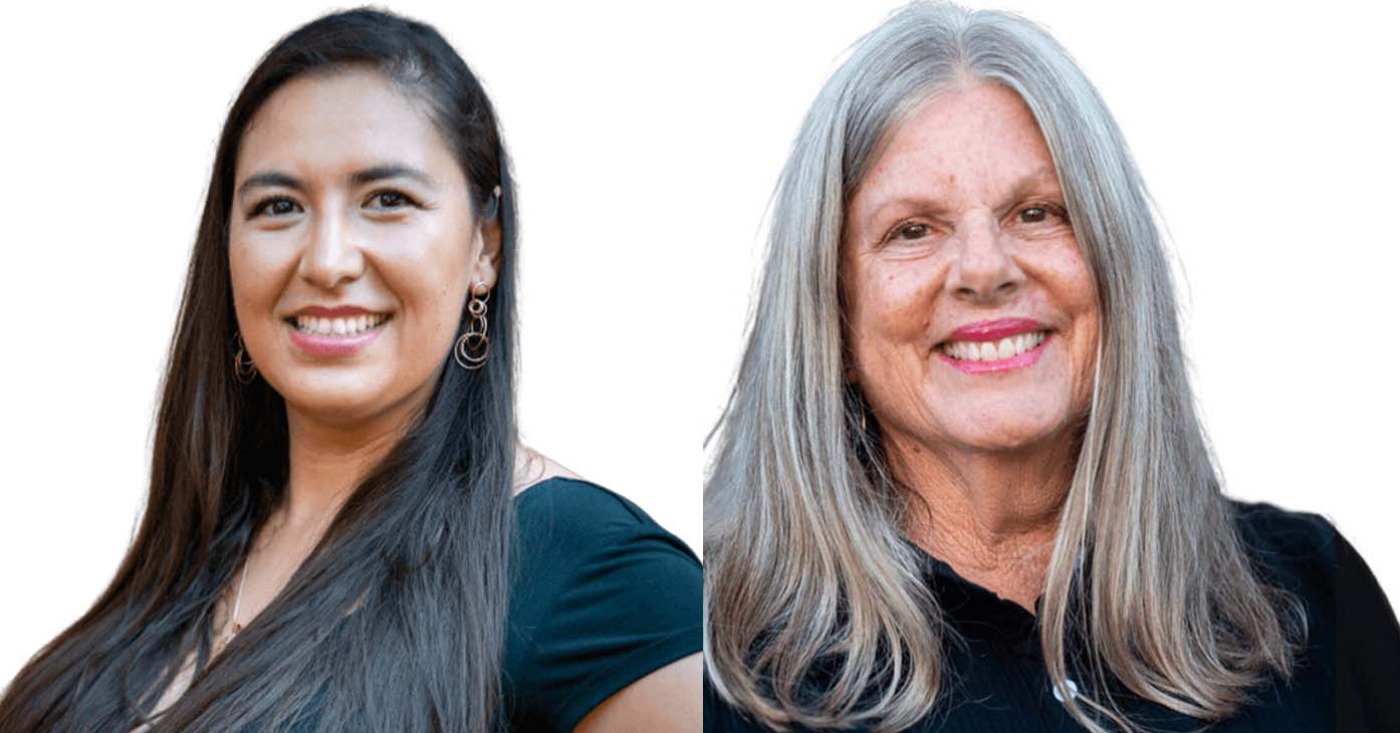
The Oakland schools have excellent leadership right now. I know it’s hard to believe – because there is so much wrong with the national education picture. But sometimes good things do happen locally.
This school year:
- The Oakland Unified School District escaped from state control after 22 years.
- Every classroom had a teacher at the beginning of the year, unlike past years when many classes started the year with day-to-day substitute teachers.
- Dr. Denise Saddler, an African American woman, is leading the district as superintendent now. She was an excellent choice with vast understanding of Oakland, of schools, and of educational systems locally and nationally.
- The school board and teachers managed to avert a teachers’ strike by some strategizing, listening and compromising.
- The school board does not plan to close more schools. For the first time in decades, those in charge of the district were not discussing closures.
The two women leading the school board are excellent educators themselves.
Board President Jennifer Brouhard (District 2) served as an Oakland teacher and was awarded a Fulbright Distinguished Award in Teaching and the U.C. Berkeley Social Science Project Teacher of the Year Award.
When Brouhard joined the board four years ago, she voted to reverse the decision of the previous board which had planned to close Brookfield, Carl B. Munck, Grass Valley, Fred T. Korematsu Discovery Academy and Horace Mann elementary. Half the students at Carl Munck and at least a third of the students at several others were African American.
In refusing to close schools, she pointed out that in Oakland and other districts it has been Black and Brown students who have been most affected and that closing schools does not save money.
Then, she focused funding on classrooms rather than paying outside consultants. For that, she and her colleagues have incurred the wrath of real estate developers and school privatizers who want to get their hands on public property.
Board Vice President Valerie Bachelor (District 6) has worked on important facilities projects. She helped to set up the first school-based dental project at Frick United Academy of Language, an Oakland middle school. She championed the Melrose Leadership Academy groundbreaking and the Skyline dining facilities.
Bachelor facilitated a balanced budget, which was pivotal in helping the district finally end state control. She also worked to direct funding toward student-centered programs like the Black Thriving Community Schools Program, instead of spending money on the never-ending. highly paid outside consultants.
The people financing the opposition candidates are Ryan Graciano, co-founder of Credit Karma, which made $ 2.7 billion last year; and Gagan Biyani, who says he became a millionaire at age 25.
The literature produced on behalf of the opposition supports closing schools, which harms students, and advocates expenditures that would put OUSD back under state control.
To read more, go to Education Week, “The Harm of School Closures Can Last a Lifetime, New Research Shows” (2024), www.edweek.org/leadership/the-harm-of-school-closures-can-last-a-lifetime-new-research-shows/2024/06
Dr. Kitty Kelly is a Professor of Education and Urban Studies. Dr. Kimberly Mayfield is Dean at Kalmanovitz School of Education, Saint Mary’s College of California.



How the Sandwich Generation Can Help Protect Aging Parents’ Finances

As Progressive Democrats Celebrate ‘Blue Tsunami,’ Oakland Counts Victories

Golden State Valkyries Become Bay Area Legends Winning WNBA Championship on Halloween Night

IN MEMORIAM: Marcia Ann Gillespie, Editor of Essence and Ms. Magazines, Dies at 82

U.S. Rep. John Garamendi Honors local ‘Women of the Year’ at Annual Awards Ceremony

Richmond Neighbors Put Pantry Power on the Map

Oakland Latino Chamber of Commerce Hosts Statewide Convention, Generating $3 Million in Economic Impact

HISTORY MADE: Keisha Lance Bottoms Becomes First Black Woman Elected Governor in American History

HISTORY MADE: Keisha Lance Bottoms Becomes First Black Woman Elected Governor in American History

Five Hospitals Said No! Who Will Help Annette Henry Recover?

Oakland NAACP, BWOPA Speak Out Against Alleged Harassment of Black Women Political Leaders

COMMENTARY: Oakland’s Black Students Have Gained Ground: We Shouldn’t Stop Now

From Backyard Grilling to Jack London Square: Jamale Carlyle’s Chicken Wing Success Story

SEIU Local 1000 and State of California Will Continue to Negotiate New Labor Contract

OPINION: We Can Restore Checks and Balances on Trump

COMMENTARY: Valarie Bachelor and Jennifer Brouhard are Excellent School Board Members and Deserve to Be Reelected

Listening as a Lifeline: A Doula’s Witness to Black Maternal Health
HISTORY MADE: Keisha Lance Bottoms Becomes First Black Woman Elected Governor in American History

Zakiya Jendayi Arrested, Locked Out of Home by Sheriff’s Deputies

OUSD Receives State Review of District Finances; Outlines Progress Since January
SEIU Local 1000 and State of California Will Continue to Negotiate New Labor Contract

COMMENTARY: Your California Living Trust Could Be Next: When Evidence Isn’t Enough

It’s Time to Lose Weight Before the Holidays
Golden State Valkyries Become Bay Area Legends Winning WNBA Championship on Halloween Night

Democrats, Community Groups Back Measure EE to Change How Oakland Is Governed

Oakland Post: Week of September 30 – October 6, 2026

Mayor Barbara Lee Holds Special State of the City Address in Deep East Oakland

Fate of Bay Area Public Transit Hinges on Regional Transit Measure

Oakland Awarded More than $14 Million in State Funding

OP-ED: Proposition 44 Would Put a Price on Trust

The Conversation With Al McFarlane 6/23/26

Media Monday 6/22/26

LIVE! ASK ALMA! — TUES. 6.23.26 7PM EST

Car Buying Secrets: 4 Hidden Checks Before You Sign!

Is This 550 HP Charger Worth YOUR Money? AutoNetwork Review

Celebrating Juneteenth – Frederick Douglass on education and resistance

LIVE! — ASK ALMA! — TUES. 6.19.26 7PM EST

Hyundai Ioniq 5 Parking, Safety, and 360 View #shorts

2025 Ioniq 5 New Wiper & Powerful Performance! #shorts

Electric SUV Range: Is 259 Miles Enough? #shorts

EV Charging: How Fast Can You Charge an Electric Vehicle? #shorts

Biometric Cooling… Messaging Seats…Come on! 2025 Infiniti QX80 Autograph 4WD

Charged Up: Witness the Magic of a Fully Electric Car! #shorts

Range Rover Sport PHEV Included…: See What’s Inside This Luxury SUV! #shorts

Invisible Hood View: Perfect Parking with X-Ray Vision! #shorts
-
 Commentary1 week ago
COMMENTARY: Valarie Bachelor and Jennifer Brouhard are Excellent School Board Members and Deserve to Be Reelected
-
 Black History1 week ago
HISTORY MADE: Keisha Lance Bottoms Becomes First Black Woman Elected Governor in American History
-
 Education1 week ago
OUSD Receives State Review of District Finances; Outlines Progress Since January
-
 Business1 week ago
SEIU Local 1000 and State of California Will Continue to Negotiate New Labor Contract
-
 Business1 week ago
COMMENTARY: Your California Living Trust Could Be Next: When Evidence Isn’t Enough
-
 Community3 weeks ago
It’s Time to Lose Weight Before the Holidays
-
 Community6 days ago
Golden State Valkyries Become Bay Area Legends Winning WNBA Championship on Halloween Night
-
 Community4 weeks ago
Democrats, Community Groups Back Measure EE to Change How Oakland Is Governed
