Connect with us

Opinion

Opinion: Charlottesville Injustice Motivated by Hate, Inspired by Politics

Published

on

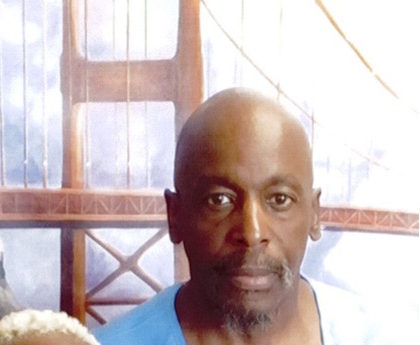
By Richard Wembe Johnson, San Quentin Prison

The recent rally at Charlottesville, Virginia that resulted in the deaths of three people, points out the inability for people to air their differences in a peaceful manner.

It is hard to put a racist label on the heinous act of a senseless driver who plowed into a crowd of people to kill a woman and the resultant deaths of helicopter cops who were monitoring the demonstrators, because the root cause of this event was an expression of “White Supremacy”.

In America, people have the right to protest, but not the right to murder because one disagrees with another’s belief. Everyone is bound by the laws of the government as well as God’s laws.

The atmosphere is so profusely permeated with bigotry, hatred and racism that any semblance of reason or logic is forsaken completely and replaced with personalized and perpetual evil that corrupts any meaningful thinking

It doesn’t matter what’s their race, color or belief — absolutely no one is superior to the next person. We’re all equally precious in God’s sight.

And it is absurd to deny that one’s perplexing political views don’t play a role in these chaotic incidences.

It is clear that a concerted, unified response must be employed to put a stop to these acts of wickedly physical tyranny. To defeat these expressions of hat that were put on display in Charlottesville, Boston, Berkeley and many other places, we must coalesce and join forces around the principles of truth, equality, freedom and justice.
The true answers are with the people, spirited by God, they need only to realize it as one.

You can reach Mr. Johnson by letter: Richard Johnson K-53293, S.Q.S.P. 3 W 2, San Quentin, CA  94974.

Continue Reading
Click to comment

Leave a Reply

Your email address will not be published. Required fields are marked *

Activism

Why Peace on Earth Begins with Birth, a Q&A with Midwife Nikki Helms

In this Q&A with California Black Media, Helms reflects on what it would take to truly improve birthing services in the United States, why midwifery must be fully integrated into the healthcare system, and how trauma, safety and community shape birth experiences across a lifetime. Drawing on her clinical expertise and lived experience, Helms shares insights on building supportive birth environments, paying for care, and what every parent and baby deserves for a healthy start.

Published

on

Nikki Helms is a midwife and full-spectrum birthing care advocate.

By Amanda Kim, California Black Media

Midwife and full-spectrum birthing care advocate Nikki Helms has spent nearly two decades supporting families through pregnancy, birth and the often-overlooked postpartum period in California.

A Certified Professional Midwife, lactation educator, and DONA-and CAPPA-trained labor and postpartum doula, Helms is known for her deeply personalized, in-home education, her community-centered workshops, and her unwavering belief that evidence-based care and informed consent are essential to healthy outcomes for parents and babies. As the founder of the San Diego Birth Center, she has helped create a welcoming, home-like alternative to hospital birth — one rooted in continuity of care, trDAt and deep listening.

In this Q&A with California Black Media, Helms reflects on what it would take to truly improve birthing services in the United States, why midwifery must be fully integrated into the healthcare system, and how trauma, safety and community shape birth experiences across a lifetime. Drawing on her clinical expertise and lived experience, Helms shares insights on building supportive birth environments, paying for care, and what every parent and baby deserves for a healthy start.

What is the one thing we could do to improve birthing services in the U.S.?

We need to integrate well-trained, super-experienced, certified professional midwives fully into the healthcare system. Over the last century, the medical community has excluded, and in some states, banned midwifery, which has impacted Black parents and babies the most and limited safe choices. Today, the U.S. spends more money than any other developed nation on maternity care with some of the worst outcomes — for Black families especially. The integration of professional midwives is long overdue.

What does a midwife do?

There are several types. I’m a certified professional midwife and founder of a birth center. But there are also midwives who come to your home, educators, lactation consultants, doulas who provide support and advocacy, and monitrices, who have clinical training and can support the mother before and after the birth.

How are birth centers and midwifery services different from traditional care?

A lot of people feel more at home in a birth center. They are often colorful, inviting, simple, and calm. People also feel more at home because we’ve supported them from six weeks into their pregnancy to six weeks after the birth. That’s nearly a year, so we’ve gotten to know them and understand their lives. This wonderful continuity can help us identify subtle issues later on, especially postpartum. A team of three midwives will always pick up on cues.

As a midwife, what does this work mean to you?

This work just fills my soul. It empties me out completely and fills me. It’s the look on someone’s face after their baby has been born. They are filled with an amazing clarity and a look that says, “I did it.” And I can say, “Yes, you did, and I’m not surprised at all because I believe in you to the depths of my soul.”

After helping so many parents and babies, how has this work changed you?

I often think that peace on earth begins with birth. There are so many things wrong with the world that we can trace back directly to the birth experience. So, if we take care of mothers and babies and create a community around birth, then we are raising children who will know what it means to be emotionally mature, to have boundaries and to feel safe. People who feel safe don’t start wars or get into a lot of trouble.

How do parents pay for midwifery services?

Midwives and birth centers often accept cash, payment plans, credit cards, and certain insurances, like Medi-Cal. I tell expectant parents to, “Put out a shoebox at your baby shower and ask for $20 a head and use that money to pay for your postpartum doula. Help yourself along the way.”  People can also create online fundraisers.

If you were to give every parent and baby a healthy birth bag, what would be in it?

  1. Education, so you know what to expect physiologically and psychologically. Take out some of the surprises. For example, giving birth is generally bloodless, but not vomit-less.
  2. Support without judgment. That can be a partner, a doula, your mother, a partner’s mother, a best friend, aAnd if you have to pay for it, then do, because it’s worth every dime.
  3. Additional nutrition. We don’t want to take anything away from you, but we want to add the nutrition that will help you, your pregnancy and your baby.
  4. External connection, a place to tell your stories and listen to other stories. That’s how we build community.
  5. Two books: The Red Tent by Anita Diamant, which tells the stories of mothers in the Bible and how babies and the birth experience connect us all and The Happiest Baby on the Block by Dr. Harvey Karp, which combines science and wisdom.
  6. A little bit of “woo,” because I definitely believe that babies are incredibly spiritual beings. And birthing people are a passage for these spiritual beings. So, a lot of education, a lot of support, a lot of nutrition, and just a little bit of woo sprinkled on at the end, should cover it.

Continue Reading

Activism

OP-ED: AB 1349 Puts Corporate Power Over Community

Since Ticketmaster and Live Nation merged in 2010, ticket prices have jumped more than 150 percent. Activities that once fit a family’s budget now take significant disposable income that most working families simply don’t have. The problem is compounded by a system that has tilted access toward the wealthy and white-collar workers. If you have a fancy credit card, you get “presale access,” and if you work in an office instead of a warehouse, you might be able to wait in an online queue to buy a ticket. Access now means privilege.

Published

on

Bishop Joseph Simmons, Senior Pastor, Greater St. Paul Baptist Church, Oakland

By Bishop Joseph Simmons, Senior Pastor, Greater St. Paul Baptist Church, Oakland

As a pastor, I believe in the power that a sense of community can have on improving people’s lives. Live events are one of the few places where people from different backgrounds and ages can share the same space and experience – where construction workers sit next to lawyers at a concert, and teenagers enjoy a basketball game with their grandparents. Yet, over the past decade, I’ve witnessed these experiences – the concerts, games, and cultural events where we gather – become increasingly unaffordable, and it is a shame.

These moments of connection matter as they form part of the fabric that holds communities together. But that fabric is fraying because of Ticketmaster/Live Nation’s unchecked control over access to live events. Unfortunately, AB 1349 would only further entrench their corporate power over our spaces.

Since Ticketmaster and Live Nation merged in 2010, ticket prices have jumped more than 150 percent. Activities that once fit a family’s budget now take significant disposable income that most working families simply don’t have. The problem is compounded by a system that has tilted access toward the wealthy and white-collar workers. If you have a fancy credit card, you get “presale access,” and if you work in an office instead of a warehouse, you might be able to wait in an online queue to buy a ticket. Access now means privilege.

Power over live events is concentrated in a single corporate entity, and this regime operates without transparency or accountability – much like a dictator. Ticketmaster controls 80 percent of first-sale tickets and nearly a third of resale tickets, but they still want more. More power, more control for Ticketmaster means higher prices and less access for consumers. It’s the agenda they are pushing nationally, with the help of former Trump political operatives, who are quietly trying to undo the antitrust lawsuit launched against Ticketmaster/Live Nation under President Biden’s DOJ.

That’s why I’m deeply concerned about AB 1349 in its current form. Rather than reining in Ticketmaster’s power, the bill risks strengthening it, aligning with Trump. AB 1349 gives Ticketmaster the ability to control a consumer’s ticket forever by granting Ticketmaster’s regime new powers in state law to prevent consumers from reselling or giving away their tickets. It also creates new pathways for Ticketmaster to discriminate and retaliate against consumers who choose to shop around for the best service and fees on resale platforms that aren’t yet controlled by Ticketmaster. These provisions are anti-consumer and anti-democratic.

California has an opportunity to stand with consumers, to demand transparency, and to restore genuine competition in this industry. But that requires legislation developed with input from the community and faith leaders, not proposals backed by the very company causing the harm.

Will our laws reflect fairness, inclusion, and accountability? Or will we let corporate interests tighten their grip on spaces that should belong to everyone? I, for one, support the former and encourage the California Legislature to reject AB 1349 outright or amend it to remove any provisions that expand Ticketmaster’s control. I also urge community members to contact their representatives and advocate for accessible, inclusive live events for all Californians. Let’s work together to ensure these gathering spaces remain open and welcoming to everyone, regardless of income or background.

Continue Reading

Activism

Oakland Post: Week of December 31, 2025 – January 6, 2026

The printed Weekly Edition of the Oakland Post: Week of – December 31, 2025 – January 6, 2026

Published

on

To enlarge your view of this issue, use the slider, magnifying glass icon or full page icon in the lower right corner of the browser window.
Continue Reading

Subscribe to receive news and updates from the Oakland Post

* indicates required

CHECK OUT THE LATEST ISSUE OF THE OAKLAND POST

ADVERTISEMENT

WORK FROM HOME

Home-based business with potential monthly income of $10K+ per month. A proven training system and website provided to maximize business effectiveness. Perfect job to earn side and primary income. Contact Lynne for more details: Lynne4npusa@gmail.com 800-334-0540

Facebook

Costco. Courtesy image.
Bay Area1 month ago

Post Salon to Discuss Proposal to Bring Costco to Oakland Community meeting to be held at City Hall, Thursday, Dec. 18

Saying “Oakland is on the move,” Mayor Barbara Lee announces results of Measure U bond sale, Dec. 9, at Oakland City Hall with city councilmembers and city staff among those present. Photo courtesy of the City of Oakland.
Activism1 month ago

Mayor Lee, City Leaders Announce $334 Million Bond Sale for Affordable Housing, Roads, Park Renovations, Libraries and Senior Centers

Activism1 month ago

Oakland Post: Week of December 10 – 16, 2025

OUSD Supt. Denise Saddler. File photo.
Activism1 month ago

Oakland School Board Grapples with Potential $100 Million Shortfall Next Year

Photos courtesy of National Archives.
Activism1 month ago

Ann Lowe: The Quiet Genius of American Couture

The Pride and Joy Band performed at the first annual Kwanzaa celebration sponsored by Fayeth Gardens. Courtesy photo.
Arts and Culture1 month ago

Fayeth Gardens Holds 3rd Annual Kwanzaa Celebration at Hayward City Hall on Dec. 28

Kellie Todd Griffin. CBM file photo.
Activism1 month ago

2025 in Review: Seven Questions for Black Women’s Think Tank Founder Kellie Todd Griffin

The ‘aunties’ playing cards. iStock photo by Andreswd.
Advice1 month ago

COMMENTARY: If You Don’t Want Your ‘Black Card’ Revoked, Watch What You Bring to Holiday Dinners

NCAA football history was made this year when Head Coach from Mississippi Valley State, Terrell Buckley and Head Coach Desmond Gumbs both had starting kickers that were Women. This picture was taken after the game.
Activism1 month ago

Desmond Gumbs — Visionary Founder, Mentor, and Builder of Opportunity

BRIDGE Housing President and CEO Ken Lombard. Courtesy of BRIDGE Housing.
Activism1 month ago

BRIDGE Housing President and CEO Ken Lombard Scores Top Honors for Affordable Housing Leadership

Shutterstock
Advice1 month ago

Support Your Child’s Mental Health: Medi-Cal Covers Therapy, Medication, and More

Affordable housing is the greatest concern for consumers, it’s followed by the cost of groceries. Courtesy photo.
Activism1 month ago

Families Across the U.S. Are Facing an ‘Affordability Crisis,’ Says United Way Bay Area

At the International Association of Chiefs of Police Conference, Flock Safety introduces new public safety technology – Amplified Intelligence, a suite of AI-powered tools designed to improve law enforcement investigations. Courtesy photo.
Alameda County1 month ago

Oakland Council Expands Citywide Security Cameras Despite Major Opposition

Councilmember Carroll Fife celebrates major milestone for Black arts, culture, and economic power in Oakland. Courtesy photo.
Activism1 month ago

Black Arts Movement Business District Named New Cultural District in California

Christmas lights on a house near the writer’s residence in Oakland. Photo by Joseph Shangosola.
Alameda County1 month ago

Bling It On: Holiday Lights Brighten Dark Nights All Around the Bay

Trending

Copyright ©2021 Post News Group, Inc. All Rights Reserved.