
Commentary
On Your November Ballot: Prop 45 Would Speed Up Environmental and Public Project Reviews
OAKLAND POST — The Committee to Build an Affordable California is leading the Yes on Proposition 45campaign. Supporters include Assemblymember Buffy Wicks (D-Oakland); the Agricultural Council of California; American Clean Power California; the California Building Industry Association; the California Chamber of Commerce; the California Council for Affordable Housing; the Housing Action Coalition; and Reform California.

In November, California voters will decide on Proposition (Prop) 45, also known as the “Building an Affordable California Act” or the Expedited Environmental Review Process for Certain Projects Initiative.
If approved, the initiative would change the environmental review process established under the California Environmental Quality Act, or CEQA. Enacted in 1970, CEQA requires state and local agencies to identify and disclose the potential environmental effects of projects they propose to carry out, fund or approve. Agencies must also consider feasible alternatives and measures to avoid or reduce significant environmental harm. The law generally applies to projects that require discretionary government approval and could cause a direct or indirect physical change to the environment.
The Committee to Build an Affordable California is leading the Yes on Proposition 45campaign. Supporters include Assemblymember Buffy Wicks (D-Oakland); the Agricultural Council of California; American Clean Power California; the California Building Industry Association; the California Chamber of Commerce; the California Council for Affordable Housing; the Housing Action Coalition; and Reform California.
“Californians have too long paid the price for bureaucratic red tape and delays, and they’re ready for solutions. Voters are eager to modernize the project approval process so we can build what we need, bring costs down, and make California more affordable. We can protect the environment and good-paying jobs while delivering the essential projects California urgently needs,” said Jennifer Barrera, president and CEO of the California Chamber of Commerce.
Supporters argue that accelerating the review process would reduce costs and help address the state’s housing shortage.
People Over Polluters is leading the No on Proposition 45 campaign. Other opponents include the California Democratic Party, the State Building and Construction Trades Council of California, the California Public Interest Research Group, Clean Water Action, Clean and Healthy California, the National Parks Conservation Association and Sierra Club California.
Opponents argue that the measure would sacrifice environmental protections and public oversight in the interest of speed. They contend that Proposition 45 could make it easier for polluting or environmentally harmful projects to adversely affect communities. They also emphasize the importance of maintaining existing review and public comment periods, as well as the public’s ability to challenge project approvals in court.
“We know that what they are really trying to do is eliminate a lot of the environmental safeguards that have existed for a long time. People have to read long technical documents to get a better understanding of whether a project is right or wrong for their community. It takes time for us to do discovery and have conversations with neighbors. Our input needs to be valued,” Miguel Miguel, director of Sierra Club California, said.
Prop 45 would also establish new tribal consultation requirements. Qualifying projects would first be screened to identify potentially affected federally recognized tribes, followed by formal consultation when required.
According to the nonpartisan Legislative Analyst’s Office (LAO), the measure would tighten deadlines for environmental reviews, permits and court challenges while changing what courts may consider in related lawsuits.
A “yes” vote supports creating new review and court-challenge procedures for certain public and private projects, including tighter environmental review deadlines and limits on the scope of judicial review.
A “no” vote supports retaining the existing project-review and court-challenge procedures.








Commentary
Blacks and Latinos Clash Over LA’s Barrio Run; Mayor Karen Bass Calls for Dialogue Across Racial, Neighborhood Lines
OAKLAND POST — Leimert Park is widely regarded as the cultural heart of Black Los Angeles. Its weekly marketplace, food vendors and drum circle have long provided an economic and cultural gathering place for Black residents. That history, compounded with lingering concerns about gentrification and the city’s declining Black population, intensified sensitivity to the event’s promotion.

Los Angeles Mayor Karen Bass urged Black and Latino Angelenos to resolve their differences constructively after a dispute over a Latino-led running event planned for Leimert Park escalated into racial hostility online.
“Los Angeles is strongest when we listen to one another, treat every community with respect and work through our differences constructively,” Bass said in a statement she shared on Facebook.
Barrio Athletics, a grassroots fitness organization founded by South Central Los Angeles native Henry Gallardo, planned a 5K for Sept. 6. Participants were initially scheduled to meet in Leimert Park before running along Crenshaw Boulevard. In a promotional video,an organizer said the group would “take over the streets of Leimert Park.”
The language drew objections from Black residents and community leaders, who said organizers had not adequately consulted local stakeholders. They were also concerned that the gathering, which included plans for a DJ and vendors, would disrupt the Leimert Park Sunday Marketplace and other scheduled activities.
Leimert Park is widely regarded as the cultural heart of Black Los Angeles. Its weekly marketplace, food vendors and drum circle have long provided an economic and cultural gathering place for Black residents. That history, compounded with lingering concerns about gentrification and the city’s declining Black population, intensified sensitivity to the event’s promotion.

“This is a historic Black district which we fought for and built up, its arts district, its cultural hub,” KBLA radio host Dominique DiPrima told a local L.A. news station.
“You’re saying that you’re going to “take over” is sort of like the last stand for Black LA is problematic.”
In another widely circulated video, a woman warned organizers, “We don’t want you to come into Africa Town,” adding that they would be “met with resistance from the Black community.” A separate Black social media user suggested, “We should call ICE,” drawing condemnation amid federal immigration enforcement concerns affecting Latino communities.
Barrio Athletics said it did not condone “racism, violence or hate.” Black and Latino community organizers later joined the group for what local L.A. radio station KJLH described as a “tough but necessary conversation.”
KJLH posted a video of the discussion.
Following “careful conversation with community leaders,” Barrio Athletics relocated the run to Elysian Park “to respect Leimert Park and the surrounding community.”
Bass denied claims that she had ordered the move, saying she had not known about the dispute before its resolution.
“Bringing people across racial, cultural and neighborhood lines together has been the foundation of my life’s work,” Bass said, “and it continues to guide how I lead this city today.”
Books
Tarsha Jordan’s Bonita the Bumble Bee Brings STEAM Learning to Life
OAKLAND POST — In “Bonita The Bumble Bee and the Quarantine,” Jordan helped young readers process the uncertainty and isolation surrounding the COVID-19 pandemic. In a later book about returning to school, Bonita guided children through changing routines, expectations and emotions. Designed to promote social-emotional development and mental health awareness, the book was made available in English, Spanish, and Mandarin.

For educator, childcare provider and children’s author Tarsha Jordan, Bonita the Bumble Bee is much more than a colorful storybook character. The cheerful bee has become a teaching tool, a comforting friend and a creative way for children to explore their emotions, navigate life changes and discover the world around them.
Jordan’s inspiration for Bonita grew from her lifelong commitment to children and education. With more than 30 years of experience as an educator and administrator, she operates Kindergarten Readiness Academy, a licensed family childcare program in Oakland’s Longfellow neighborhood. The academy prepares young children socially, emotionally and academically for school.
Her firsthand experience has given Jordan a deep understanding of how children communicate, what captures their attention, and how stories can open conversations young readers may not otherwise know how to begin.
Jordan describes her mission as developing lifelong learners who love reading while introducing children to relatable characters. Bonita fulfills that mission by addressing real-life experiences in language children can understand.
In “Bonita The Bumble Bee and the Quarantine,” Jordan helped young readers process the uncertainty and isolation surrounding the COVID-19 pandemic. In a later book about returning to school, Bonita guided children through changing routines, expectations and emotions. Designed to promote social-emotional development and mental health awareness, editions were made available in English, Spanish and Mandarin.

Bonita’s impact becomes even more immediate when children meet the character in person. Jordan recently hosted a Mommy and Me children’s tea party at Bay Street Emeryville, where Bonita buzzed around the event, greeted young guests and brought the literary character to life.
“The children can interact with the character, experience the excitement of seeing a familiar literary friend come to life and develop an even stronger connection with reading,” Jordan said.
For children of color, that connection carries another important dimension: representation. Children benefit from seeing themselves reflected in books, educational environments, imaginative characters and the people creating those stories.
Jordan also believes Bonita expands children’s imaginations and encourages them to envision new possibilities.
“When children of color see authors that look like them creating books, building educational programs and bringing original characters into their communities, they are exposed to the possibilities beyond the story itself,” Jordan said. “They can begin to imagine themselves as writers, educators, entrepreneurs, artists and creators.”
Founded to introduce STEAM, (science, technology, engineering, the arts and mathematics) to children in transitional kindergarten through third grade, Bonita The Bumble Bee also addresses neurodivergent behaviors.
Known to young learners as “Teacher Tarsha,” Jordan combines Bonita’s whimsical personality with hands-on experiments and activities for children ages 3 to 8. The experiences promote early literacy, strengthen problem-solving skills and give children tools for managing their emotional health.
Jordan holds master’s degrees in education and public administration and is pursuing a doctorate in education. Her academic preparation and extensive classroom experience help her create programs that are both engaging and developmentally meaningful.
“We’re hoping to take Bonita to the next level and welcome new partnerships,” Jordan said.
Visit BonitaTheBumbleBee.com
Black History
Henry O. Flipper: A Trailblazer at West Point and Beyond
OAKLAND POST — Flipper’s promising military career ended abruptly in 1881 when he was accused of embezzling commissary funds. A court-martial acquitted him of embezzlement, but convicted him of conduct unbecoming of an officer. The Army dismissed him in 1882. The circumstances surrounding his punishment would later be widely regarded as unjust and influenced by the racial discrimination of the period.
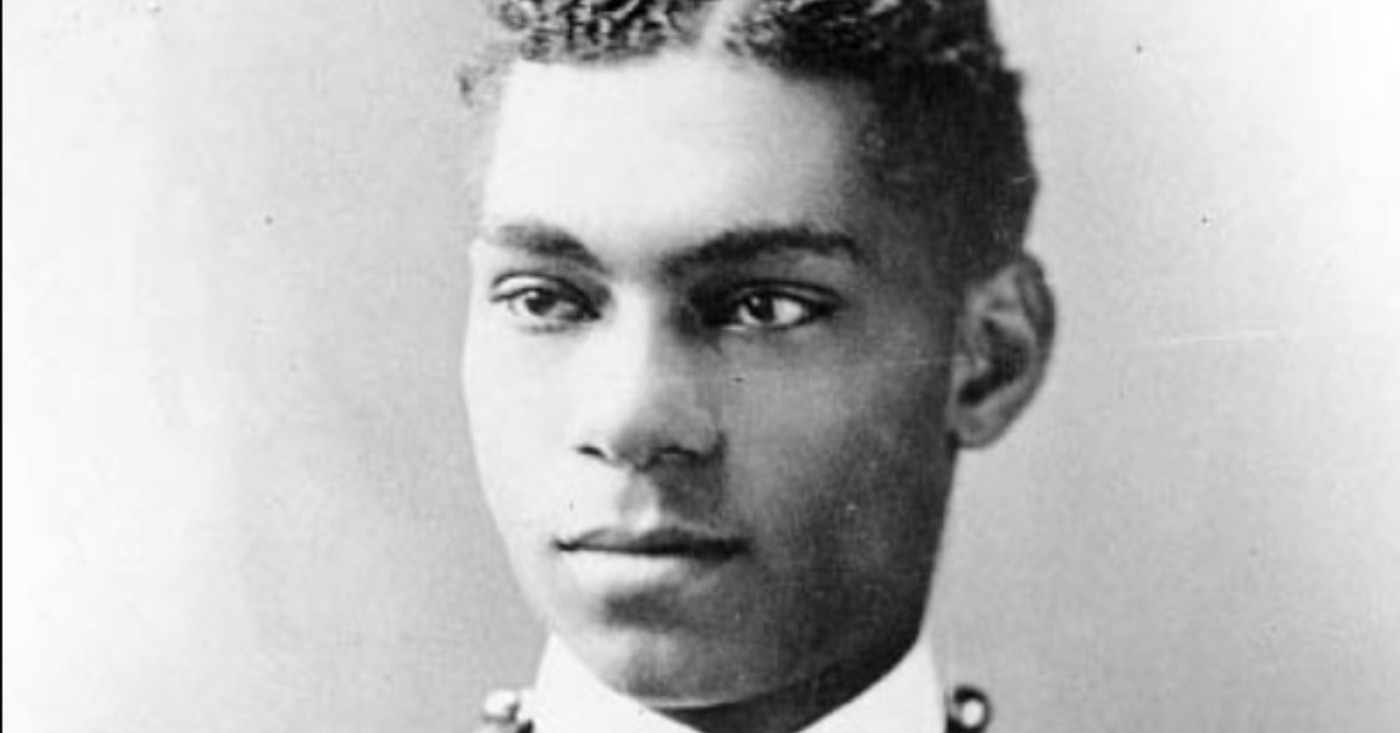
Henry Ossian Flipper’s life is a remarkable story of insistence, achievement, injustice, and ultimately vindication. Born enslaved on March 21, 1856, in Thomasville, Georgia, Flipper rose from the restrictions of slavery to become the first African American to graduate from the United States Military Academy at West Point. His accomplishments extended far beyond military service; he later became a respected engineer, surveyor, author, translator, and government official.
After the Civil War, Flipper’s family settled in Atlanta, where education became central to his future. He attended schools established for African American children by the American Missionary Association and later studied at Atlanta University. In 1873, Congressman James C. Freeman of Georgia nominated Flipper for admission to West Point. He entered the academy that July.
Flipper’s four years at West Point were extremely difficult. Because of racism, he experienced harassment and almost complete social isolation from many of his fellow cadets. Nevertheless, he succeeded academically and graduated on June 14, 1877, ranking 50th in a class of 76. His graduation represented a historic breakthrough for African Americans in the United States military.
Commissioned as a second lieutenant, Flipper was assigned to the 10th U.S. Cavalry, one of the famed African American regiments known as the Buffalo Soldiers. At Fort Sill in Indian Territory, now Oklahoma, Flipper served as an engineer, surveyor, construction supervisor, quartermaster, and commissary officer. One of his most lasting engineering accomplishments was a drainage system that eliminated pools of stagnant water around the fort and helped reduce mosquito-breeding areas. The system became known as “Flipper’s Ditch,” and portions of it remain associated with Fort Sill today.
Flipper’s promising military career ended abruptly in 1881 when he was accused of embezzling commissary funds. A court-martial acquitted him of embezzlement, but convicted him of conduct unbecoming of an officer. The Army dismissed him in 1882. The circumstances surrounding his punishment would later be widely regarded as unjust and influenced by the racial discrimination of the period.
Rather than allowing his dismissal to define his life, Flipper built an extraordinary civilian career. He became a civil and mining engineer and surveyor, working extensively throughout the American Southwest and Mexico. He established an engineering office in Nogales, Arizona, became knowledgeable about Spanish and Mexican land law, and later worked for the federal government, including service connected with the Department of Justice and the Department of the Interior.
Flipper died in Atlanta in 1940, but efforts to restore his reputation continued for decades. In 1976, the Army changed his dismissal to an honorable discharge. Then, on February 19, 1999, President Bill Clinton granted Flipper a posthumous presidential pardon.
Today, Henry Ossian Flipper is remembered because his life helped open doors for generations of African American military officers, engineers, and public servants who followed him.



Blacks and Latinos Clash Over LA’s Barrio Run; Mayor Karen Bass Calls for Dialogue Across Racial, Neighborhood Lines

Asm. Smallwood-Cuevas’s Bill Repealing ‘Racist’ CalWORKs ‘Man-in-the-House’ Rule Clears Legislature

Asm. Smallwood-Cuevas’s Bill Repealing ‘Racist’ CalWORKs ‘Man-in-the-House’ Rule Clears Legislature

‘Ready to See These Bills Become Law’: Sen. Weber’s Package of 15 Bills Advance to Gov. Newsom’s Desk

‘Ready to See These Bills Become Law’: Sen. Weber’s Package of 15 Bills Advance to Gov. Newsom’s Desk

Tarsha Jordan’s Bonita the Bumble Bee Brings STEAM Learning to Life

On Your November Ballot: Prop 45 Would Speed Up Environmental and Public Project Reviews

Henry O. Flipper: A Trailblazer at West Point and Beyond

California Legislature Sends Historic Native American Apology Bill to Gov. Newsom’s Desk

NBA All-Star Damian Lillard Returns Home for 15th Annual Backpack Giveaway

Alameda County DA Sees Gun Violence Greatest Threat to Black Community

Richmond Tiny House Village Farm & Garden Set to Open Gates on Sept. 26

Community Feedback at Chevron Richmond Town Halls Drives Changes

Misnamed ‘Parent’ PAC Seeks to Influence Oakland School Board Elections

Revitalized East Oakland Park Honors the Legacy of Tyrone Carney, Killed in Vietnam War

Department of Homeland Security Demands California Secretary of State Shirley N. Weber Scrub Voter Rolls

New Judge Could Decide if Karmelo Anthony Gets a New Trial

“The Power to See Threats Sooner”: Gov. Newsom, Safety Officials Showcase California’s Investments in Hi-Tech Wildfire Prevention

Alpha Kappa Alpha Sorority, Inc. Celebrates New North Atlantic Regional Director

California Sen. Padilla Joins Colleagues to Introduce Bill Imposing Term Limits on Supreme Court Justices

Less Affluent School Districts, Including Sacramento City, Face Threat of State Takeover

Car Wash Workers Cope with Lingering Impacts of ICE Raids

Oakland Post: Week of July 29 – August 4, 2026

How Oakland’s Courtsmith is Scaling its Business and Local Impact

ESSAY: California Can Close Its Colorectal Cancer Gap

Oakland Post: Week of August 5 – 11, 2026

As Part of Your Back-to- School Checklist, Vaccinate

Oakland ‘Port Serves as a Powerful Engine for Good Jobs and Economic Development

Gov. Newsom Signs New Affordable Housing Legislation

Gov. Newsom Announces $109.6 Million in Funding for 278 Supportive Homes in Bakersfield, Contra Costa, Sacramento and Fresno

The Conversation With Al McFarlane 6/23/26

Media Monday 6/22/26

LIVE! ASK ALMA! — TUES. 6.23.26 7PM EST

Car Buying Secrets: 4 Hidden Checks Before You Sign!

Is This 550 HP Charger Worth YOUR Money? AutoNetwork Review

Celebrating Juneteenth – Frederick Douglass on education and resistance

LIVE! — ASK ALMA! — TUES. 6.19.26 7PM EST

Hyundai Ioniq 5 Parking, Safety, and 360 View #shorts

2025 Ioniq 5 New Wiper & Powerful Performance! #shorts

Electric SUV Range: Is 259 Miles Enough? #shorts

EV Charging: How Fast Can You Charge an Electric Vehicle? #shorts

Biometric Cooling… Messaging Seats…Come on! 2025 Infiniti QX80 Autograph 4WD

Charged Up: Witness the Magic of a Fully Electric Car! #shorts

Range Rover Sport PHEV Included…: See What’s Inside This Luxury SUV! #shorts

Invisible Hood View: Perfect Parking with X-Ray Vision! #shorts
-
 Community4 weeks ago
Less Affluent School Districts, Including Sacramento City, Face Threat of State Takeover
-
 Commentary4 weeks ago
ESSAY: California Can Close Its Colorectal Cancer Gap
-
 Business4 weeks ago
California Hispanic Chambers of Commerce Unveils: ‘Powering the Future’ Theme for 47th Annual Statewide Convention
-

 Community4 weeks ago
Four Candidates, Including Incumbent Barbara Lee, Qualify for Oakland Mayor’s Race
-

 Activism4 weeks ago
Oakland Post: Week of August 12 – 18, 2026
-

 Business4 weeks ago
From Blueprint to Breakthrough: Tackling Affordable Housing in Oakland
-

 Black History4 weeks ago
Oakland Observes Black August with Block Parties, Film Showings, Workshops
-

 Commentary4 weeks ago
COMMENTARY: Why Local School Tax Measure G1 Will Not Be on the November Ballot
