
Black History
Henry O. Flipper: A Trailblazer at West Point and Beyond
OAKLAND POST — Flipper’s promising military career ended abruptly in 1881 when he was accused of embezzling commissary funds. A court-martial acquitted him of embezzlement, but convicted him of conduct unbecoming of an officer. The Army dismissed him in 1882. The circumstances surrounding his punishment would later be widely regarded as unjust and influenced by the racial discrimination of the period.

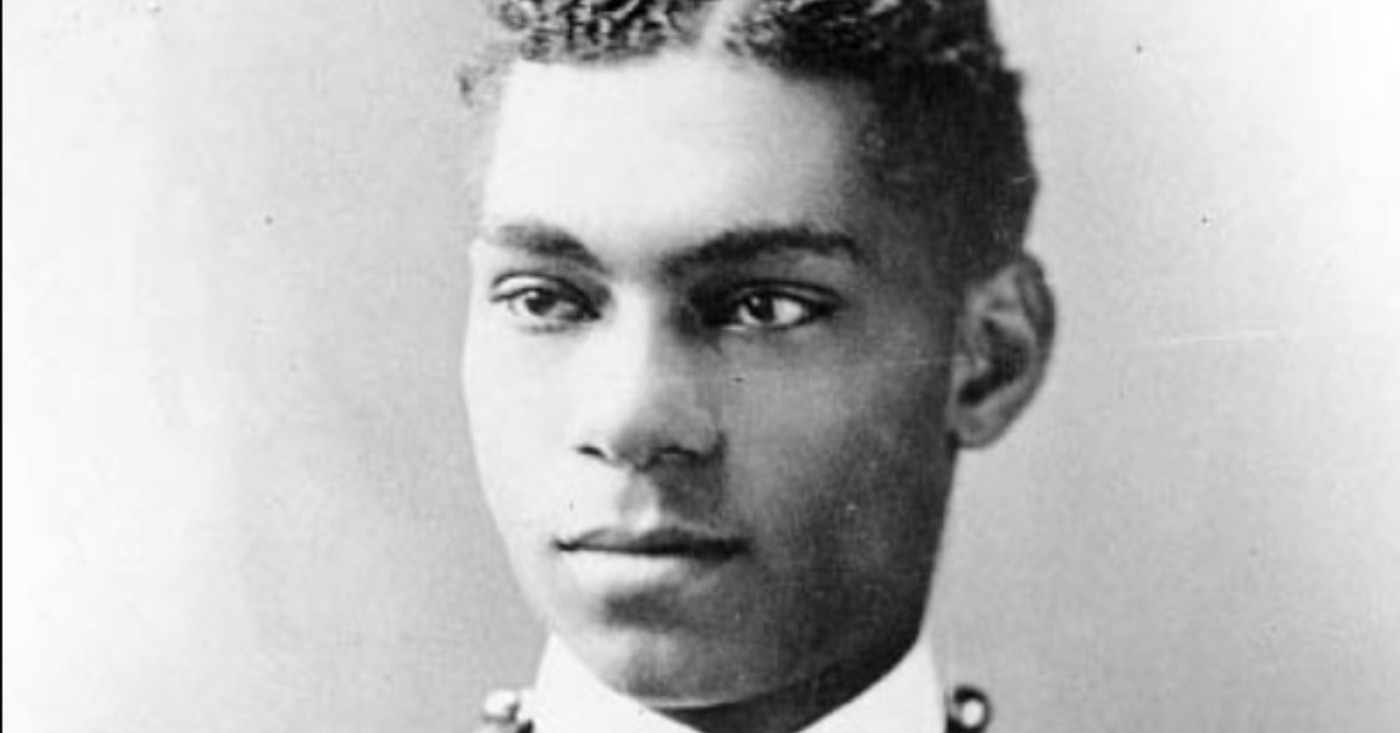
Henry Ossian Flipper’s life is a remarkable story of insistence, achievement, injustice, and ultimately vindication. Born enslaved on March 21, 1856, in Thomasville, Georgia, Flipper rose from the restrictions of slavery to become the first African American to graduate from the United States Military Academy at West Point. His accomplishments extended far beyond military service; he later became a respected engineer, surveyor, author, translator, and government official.
After the Civil War, Flipper’s family settled in Atlanta, where education became central to his future. He attended schools established for African American children by the American Missionary Association and later studied at Atlanta University. In 1873, Congressman James C. Freeman of Georgia nominated Flipper for admission to West Point. He entered the academy that July.
Flipper’s four years at West Point were extremely difficult. Because of racism, he experienced harassment and almost complete social isolation from many of his fellow cadets. Nevertheless, he succeeded academically and graduated on June 14, 1877, ranking 50th in a class of 76. His graduation represented a historic breakthrough for African Americans in the United States military.
Commissioned as a second lieutenant, Flipper was assigned to the 10th U.S. Cavalry, one of the famed African American regiments known as the Buffalo Soldiers. At Fort Sill in Indian Territory, now Oklahoma, Flipper served as an engineer, surveyor, construction supervisor, quartermaster, and commissary officer. One of his most lasting engineering accomplishments was a drainage system that eliminated pools of stagnant water around the fort and helped reduce mosquito-breeding areas. The system became known as “Flipper’s Ditch,” and portions of it remain associated with Fort Sill today.
Flipper’s promising military career ended abruptly in 1881 when he was accused of embezzling commissary funds. A court-martial acquitted him of embezzlement, but convicted him of conduct unbecoming of an officer. The Army dismissed him in 1882. The circumstances surrounding his punishment would later be widely regarded as unjust and influenced by the racial discrimination of the period.
Rather than allowing his dismissal to define his life, Flipper built an extraordinary civilian career. He became a civil and mining engineer and surveyor, working extensively throughout the American Southwest and Mexico. He established an engineering office in Nogales, Arizona, became knowledgeable about Spanish and Mexican land law, and later worked for the federal government, including service connected with the Department of Justice and the Department of the Interior.
Flipper died in Atlanta in 1940, but efforts to restore his reputation continued for decades. In 1976, the Army changed his dismissal to an honorable discharge. Then, on February 19, 1999, President Bill Clinton granted Flipper a posthumous presidential pardon.
Today, Henry Ossian Flipper is remembered because his life helped open doors for generations of African American military officers, engineers, and public servants who followed him.





Black History
Revitalized East Oakland Park Honors the Legacy of Tyrone Carney, Killed in Vietnam War
OAKLAND POST — Tyrone Carney Park in East Oakland recently reopened after two decades, following a $5 million investment in recreation and community space. City leaders, community partners, and residents celebrated the revitalization, which included new play areas, fitness equipment, walking paths, and extensive landscaping. The park, located at 10501 Acalanes Drive, honors Tyrone Carney, an Oakland resident and U.S. Marine Corps private first-class who died in the Vietnam War.
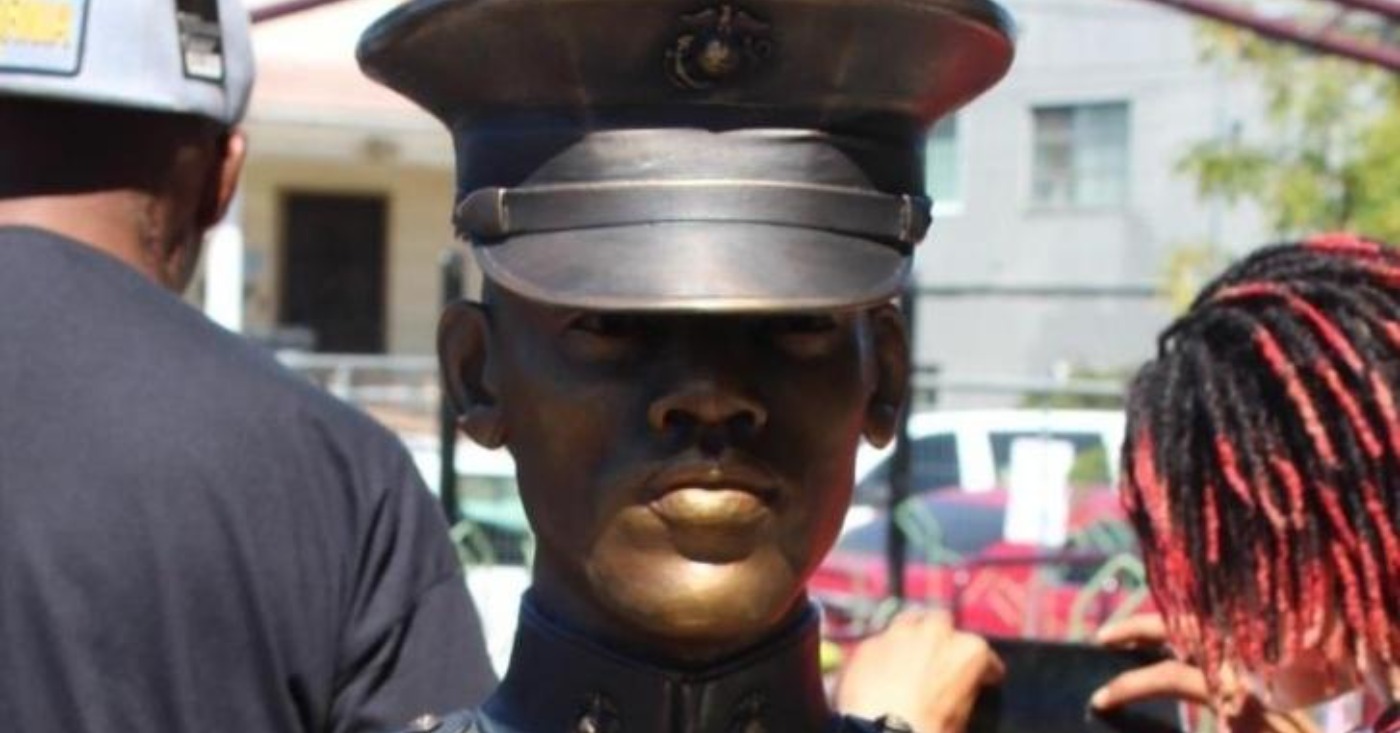
After remaining closed for more than two decades, Tyrone Carney Park reopened Thursday Aug 27, with a ribbon-cutting ceremony celebrating a $5 million investment in recreation, wellness and community space in East Oakland.
Oakland Mayor Barbara Lee, District 7 Councilmember Ken Houston, city leaders, community partners and residents gathered at the half-acre park, located at 10501 Acalanes Drive, to commemorate its long-awaited revitalization.
“Revitalizing and reopening Tyrone Carney Park strengthens the Town by expanding youth programs, supporting job training, and improving public health,” said Lee said. “Oakland is on the move, fulfilling our promise to build a safer and more vibrant East Oakland.”
The mayor said she thought the sculpture designed by Dana King was beautiful and that the event was emotional for her being the daughter of a veteran.
“I know the Carney family, and it was wonderful to see Deborah and the entire Carney family there. It was wonderful to see where seniors, youth, and everybody can enjoy a beautiful safe park in Sobrante Park with Tyrone’s legacy.”
Led by Oakland Public Works, the improvement project added four play areas, two fitness-equipment areas, paved walking paths and a circular central plaza with ornamental paving. Improvements also included a lawn, wrought-iron perimeter fencing, new gates, extensive landscaping and a memorial honoring the park’s namesake.

The city contracted with Beliveau Engineering Contractors for structural improvements and Dillingham Associates for landscaping.
Originally opened in 1968, the park closed in 2002 and remained inaccessible for more than 20 years. Its restoration grew from a multiyear collaboration between the City of Oakland, East Oakland Neighborhoods Initiative (EONI) and Sobrante Park Advisory Council.
Community advocacy by EONI helped secure funding through Proposition 68, California’s 2018 Parks and Water Bond. Additional financial support came from Oakland Capital Improvements Impact Fee funds and a California Strategic Growth Council Transformative Climate Communities grant.
Houston said the reopening represented more than the physical restoration of a neighborhood park.
“It reflects our commitment to investing in East Oakland, honoring one of our hometown heroes, and creating a safe, welcoming place where families can gather, children can play, and community can thrive,” Houston said. “Tyrone Carney’s legacy of service will continue to inspire generations through this park.”
The park was named in honor of Carney, an Oakland resident and U.S. Marine Corps private first-class who died while serving in Vietnam on June 9, 1968. He was 20 years old. Before entering military service, Carney participated in the Boy Scouts of America and Youth for Christ.
His first cousin, Deborah Carney, remembered him as a man committed to service.
“Tyrone Carney was a God-sent man,” she said, recalling his words: “ ‘May the works I have done speak for me, when I am resting in my grave and there is nothing else to be said.’”
Oakland Public Works Director Liam Garland said the department was honored to help realize the community’s vision for a safe and welcoming green space.
Myka Hammock, director of Oakland Parks, Recreation and Youth Development, said the park’s tree canopies, play structures and memorial would inspire community youth while providing opportunities for wellness, recreation and connection.
The Sobrante Park Advisory Council and Oakland Parks and Recreation Foundation, both key stakeholders in the redevelopment, will continue serving as stewards of the reopened park.
Black History
Latest Massacre in Haiti Reveals Cruelty U.S. Deportations
OAKLAND POST — The Haiti Action Committee condemns recent violence in Haiti following a massacre by the Viv Ansanm paramilitary death squad in Kenscoff on August 23. This attack targeted survivors sheltering in a church and homes, with estimates of 40 to over 70 killed and women raped and taken hostage. Police were reportedly aware of threats but failed to intervene. The committee also highlights the death by suicide of a Haitian college student in Ohio after losing legal immigration status.

Haiti Action Committee condemns killings in Haiti and demands the Trump Administration stop deporting Haitians back to Haiti
Heavily armed, paramilitary death squad Viv Ansanm on Sunday, Aug. 23, carried out
another major massacre in the Kenscoff commune in the hills outside of Port-au-Prince. The
death squad attacked survivors of previous violence who were sheltering in a church in one of
the villages.
Many people in the church were killed, along with people in their homes. Women and young
people were targeted in particular. Community sources have provided different estimates of the
number of people killed, but they range from 40 to over 70 people. Women were raped, and
dozens of people were additionally taken hostage; they remain captive with imminent threats to
their lives.
According to local officials, this attack was announced by the paramilitary death squad at least
two weeks before it occurred. The police and government authorities were made aware of the

threat, but once again failed to provide protection, as has been the case in many other
massacres. The population is furious over the obvious collusion between the U.S.
-installed puppet government and the death squads.
Kenscoff has repeatedly been targeted by Viv Ansanm as it seeks to consolidate its control of
the commune and expand control into the adjacent Petionville region of Port-au-Prince.
Other massacres by paramilitaries, armed with weapons from the United States, have likewise
continued across Haiti in recent weeks, notably Gresye south of Port-au-Prince, a village in the
Akaye region north of Port-au-Prince, and Dessalines and other towns in the agricultural center
of the Artibonite region.
In another shocking incident in Ohio, Pierre Damas Bel, a 20-year-old Haitian college student. died by suicide Monday morning after losing his legal immigration status and receiving a GPS ankle monitor from immigration authorities,
It was 8 a.m., and he was sitting inside his car on the side of the interstate highway, struggling with the shame of being forced to wear an ankle monitor by immigration officials.
Bel, a student at Wright State University, said he had been bullied at school and felt “humiliated” by the device.
“I told him to come home so we can talk,” Bel’s father said in a statement. “Around 11 the police showed at my door to report that my son threw himself under a truck.”
Bel stepped into oncoming traffic and died from his injuries, the Ohio State Highway Patrol said. His family blamed the humiliation brought on by the ankle monitor he had been wearing since July.
Meanwhile in Haiti, there are now 1.5 million people internally displaced by violence and more than 5.8 million people on the brink of starvation.
These are the conditions into which the Trump regime is attempting to deport 350,000 Haitians
who have had their TPS (Temporary Protected Status) in the US revoked.
Haiti Action Committee urges people to call or email their senators to demand they
immediately pass Senate Bill S.4814 to extend TPS for Haitians! The House has already passed a version of this bill, H.R. 1689.
Black History
OPINION: Nolan Wells’ Death One of Several Signifying Racial Terror Lives on in U.S. South
The legacy of lynchings and racial terror in the American South continues in 2026 in a spate of suspicious deaths of young African Americans across the region. Local authorities have perpetually underinvestigated and even covered up these cases. The most prominent recent case is

The legacy of lynchings and racial terror in the American South continues in 2026 in a spate of suspicious deaths of young African Americans across the region. Local authorities have perpetually underinvestigated and even covered up these cases.
The most prominent recent case is that of Nolan Wells, an 18-year-old Black man whose body was found on July 6 on Horn Island, off the Mississippi Gulf Coast, after a Fourth of July trip with three white friends.
The NAACP announced its formal involvement in the case on Aug. 17, joining the legal team representing Wells’ family alongside prominent civil rights attorney Ben Crump.
The family has raised questions about discrepancies in accounts of Wells’ final hours, including why his phone was found with one of the friends rather than with his body. An independent autopsy commissioned by the family found that his “manner of death remained undetermined.”
In what was likely a retaliatory act for speaking up about her son’s death, Wells’ mother, Christine Wonsley, faced anonymous attacks on her nursing license.
In a recent vigil commemorating Wells’ 19th birthday, Rev. Dr. Jamal Harrison Bryant said, “To go from Medgar Evers to Emmett Till, to Nolan Wells, the blood stops here. We came tonight to stop a blood cycle. We are tired of all of these innocent Black bodies being killed.”
In the notorious 1955 case of 14-year-old Emmett Till, Roy Bryant and J.W. Milam were acquitted by an all-white jury after torturing and murdering Till for allegedly whistling at a white woman in a Mississippi grocery store. While Till’s death is well-known for having galvanized the Civil Rights movement, thousands of lynchings of African Americans have gone unreported.
According to the Equal Justice Institute (EJI), 4,084 lynchings of African Americans occurred in the 12 Southern states from 1877 to 1950, and not a single white person was convicted of murder during this period.
The Congressional Black Caucus has also thrown its weight behind the Wells family, sending a letter to U.S. Attorney General Todd Blanche and FBI Director Kash Patel, urging the Department of Justice (DOJ) to launch an independent federal review of the case. This request faces the challenge of a hostile environment towards racial justice at the DOJ.
Under the Trump administration’s attacks on Diversity, Equity & Inclusion (DEI), the DOJ has focused primarily on litigating employers for hiring underrepresented minorities.
Though Nolan Wells’ case has reached headlines today, the deaths of other young African Americans across the South remain under-reported and under-investigated. Crump is simultaneously handling a portfolio of other cases involving the deaths of young Black men, namely Daniel Erving and Tyler Smith – 18-year-old Black men who died within three months of each other.
Erving of Sachse, Texas, died on April 14 at Lake Ray Hubbard after jumping from a railroad bridge with friends. His body was recovered four days later, and his death was ruled an accidental drowning—a finding his mother disputes. “The autopsy report shows my son had an unobstructed airway, so my son did not drown,” Tameca Erving said. In July, two individuals were arrested and charged with tampering with physical evidence after allegedly discarding Erving’s clothing and cell phone.
Smith of Lexington, Kentucky, died on July 4 after what police described as an accidental self-inflicted gunshot wound. His family has strongly disputed that account. According to a Lexington Police Department citation, the firearm officers recovered did not match the shell casing found at the scene.
A 20-year-old man has been charged with tampering with physical evidence in connection with the shooting. “For 17 days, my sons and I worked tirelessly investigating everything on our own. The police department gave us nothing, absolutely nothing,” Smith’s grandmother said.
Crump has framed all three cases as part of a troubling pattern requiring national attention.
Earlier this month, Tasia Fortune, a 29-year-old Black woman and mother of four, was found hanging from a tree in the backyard of a vacant home in Jackson, Mississippi, on Aug. 3. Her mother, Christy Spivey, has insisted that her daughter did not take her own life.
The county where Fortune’s body was found was the site of 11 known lynchings between 1895 and 1908, and nearby Hinds County saw 34 lynchings between 1835 and 1934. Unfortunately, this terror cannot be relegated to the history books as Fortune’s case follows two other incidents of African Americans being found hanging from trees in Mississippi within a year.
In September 2025, Demartravion “Trey” Reed was found hanging from a tree at Delta State University in Cleveland, Mississippi. On the same day, Cory Zukatis was found hanging from a tree in Vicksburg, Mississippi. Both deaths were ruled as suicides by local authorities.
As of this publication, Fortune’s case is still under investigation by local authorities, and the DOJ and FBI have remained silent about Wells’ case.
Krista Chan is a civic tech professional and Chinese medicine student in Oakland. She writes and organizes around issues of global peace and racial justice.



Blacks and Latinos Clash Over LA’s Barrio Run; Mayor Karen Bass Calls for Dialogue Across Racial, Neighborhood Lines

Asm. Smallwood-Cuevas’s Bill Repealing ‘Racist’ CalWORKs ‘Man-in-the-House’ Rule Clears Legislature

Asm. Smallwood-Cuevas’s Bill Repealing ‘Racist’ CalWORKs ‘Man-in-the-House’ Rule Clears Legislature

‘Ready to See These Bills Become Law’: Sen. Weber’s Package of 15 Bills Advance to Gov. Newsom’s Desk

‘Ready to See These Bills Become Law’: Sen. Weber’s Package of 15 Bills Advance to Gov. Newsom’s Desk

Tarsha Jordan’s Bonita the Bumble Bee Brings STEAM Learning to Life

On Your November Ballot: Prop 45 Would Speed Up Environmental and Public Project Reviews

Henry O. Flipper: A Trailblazer at West Point and Beyond

California Legislature Sends Historic Native American Apology Bill to Gov. Newsom’s Desk

NBA All-Star Damian Lillard Returns Home for 15th Annual Backpack Giveaway

Alameda County DA Sees Gun Violence Greatest Threat to Black Community

Richmond Tiny House Village Farm & Garden Set to Open Gates on Sept. 26

Community Feedback at Chevron Richmond Town Halls Drives Changes

Misnamed ‘Parent’ PAC Seeks to Influence Oakland School Board Elections

Revitalized East Oakland Park Honors the Legacy of Tyrone Carney, Killed in Vietnam War

Department of Homeland Security Demands California Secretary of State Shirley N. Weber Scrub Voter Rolls

New Judge Could Decide if Karmelo Anthony Gets a New Trial

“The Power to See Threats Sooner”: Gov. Newsom, Safety Officials Showcase California’s Investments in Hi-Tech Wildfire Prevention

Alpha Kappa Alpha Sorority, Inc. Celebrates New North Atlantic Regional Director

California Sen. Padilla Joins Colleagues to Introduce Bill Imposing Term Limits on Supreme Court Justices

Less Affluent School Districts, Including Sacramento City, Face Threat of State Takeover

Car Wash Workers Cope with Lingering Impacts of ICE Raids

Oakland Post: Week of July 29 – August 4, 2026

How Oakland’s Courtsmith is Scaling its Business and Local Impact

ESSAY: California Can Close Its Colorectal Cancer Gap

Oakland Post: Week of August 5 – 11, 2026

As Part of Your Back-to- School Checklist, Vaccinate

Oakland ‘Port Serves as a Powerful Engine for Good Jobs and Economic Development

Gov. Newsom Signs New Affordable Housing Legislation

Gov. Newsom Announces $109.6 Million in Funding for 278 Supportive Homes in Bakersfield, Contra Costa, Sacramento and Fresno

The Conversation With Al McFarlane 6/23/26

Media Monday 6/22/26

LIVE! ASK ALMA! — TUES. 6.23.26 7PM EST

Car Buying Secrets: 4 Hidden Checks Before You Sign!

Is This 550 HP Charger Worth YOUR Money? AutoNetwork Review

Celebrating Juneteenth – Frederick Douglass on education and resistance

LIVE! — ASK ALMA! — TUES. 6.19.26 7PM EST

Hyundai Ioniq 5 Parking, Safety, and 360 View #shorts

2025 Ioniq 5 New Wiper & Powerful Performance! #shorts

Electric SUV Range: Is 259 Miles Enough? #shorts

EV Charging: How Fast Can You Charge an Electric Vehicle? #shorts

Biometric Cooling… Messaging Seats…Come on! 2025 Infiniti QX80 Autograph 4WD

Charged Up: Witness the Magic of a Fully Electric Car! #shorts

Range Rover Sport PHEV Included…: See What’s Inside This Luxury SUV! #shorts

Invisible Hood View: Perfect Parking with X-Ray Vision! #shorts
-
 Community4 weeks ago
Less Affluent School Districts, Including Sacramento City, Face Threat of State Takeover
-
 Commentary4 weeks ago
ESSAY: California Can Close Its Colorectal Cancer Gap
-

 Business4 weeks ago
California Hispanic Chambers of Commerce Unveils: ‘Powering the Future’ Theme for 47th Annual Statewide Convention
-

 Community4 weeks ago
Four Candidates, Including Incumbent Barbara Lee, Qualify for Oakland Mayor’s Race
-

 Activism4 weeks ago
Oakland Post: Week of August 12 – 18, 2026
-

 Business4 weeks ago
From Blueprint to Breakthrough: Tackling Affordable Housing in Oakland
-

 Black History4 weeks ago
Oakland Observes Black August with Block Parties, Film Showings, Workshops
-

 Commentary4 weeks ago
COMMENTARY: Why Local School Tax Measure G1 Will Not Be on the November Ballot
