
Berkeley
O’Malley Assembles Team for Probate Court Reform

By Mario Juarez
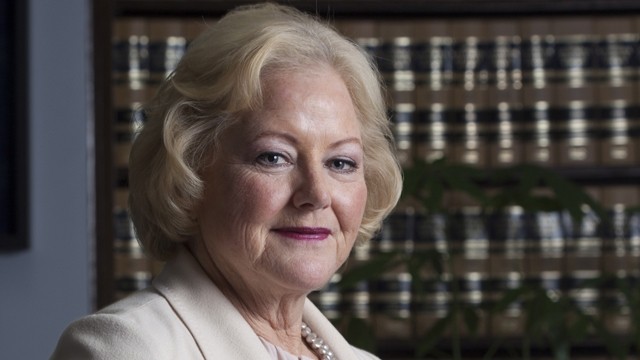
In March, 2018, a group of advocates leading the efforts to reform the Probate Court system met with District Attorney Nancy E. O’Malley. They presented to DA O’Malley a few compelling cases involved seniors who became involved in the Probate Court. The advocates laid out circumstances under which the senior had their financial resources deeply impacted, and in one case, nearly depleted through the processes of Probate Court. O’Malley listened intently and agreed that her office would indeed, investigate the allegations of Elder Financial Abuse in sixteen (16) cases where complaints had been filed.
Since that time, DA O’Malley has assembled an impressive investigative team and has allocated resources to fully and thoroughly investigate each claim to determine if elder financial abuse has occurred and can be proved beyond a reasonable doubt, which is the investigative question the district attorney’s office needs to answer. The team consists of attorneys who specialize in Elder and Dependent Adult Protection and in Real Estate Fraud, since most, if not all of the allegations of abuse involve seniors with property and assets.
The Team also includes two investigators who are working closely with the attorneys and paralegals. Importantly, DA O’Malley has assigned Forensic Accountants from her Office to work with the witnesses, reviewing and analyzing the financial documents and provide insight into these allegations and circumstances surrounding the financial issues. The Teamcontinues to conduct witness interviews, as well as searching, collecting and analyzing documents, many of which are provided by family members of the seniors. The Team is keeping the family members and others informed as they work through the cases. There are several complaints and the Team is working through each of them with precision and detailed attention.

Over her years in the District Attorney’s Office, DA O’Malley handled several cases involving individuals with cognitive and physical disabilities who became victims of crime. DA O’Malley has written several bills that have become law.
Her first bill that was signed into law many years ago brought attention to the unique needs of individuals who have cognitive disabilities. The bill changed the law so now, judges can change the hours and configuration of the courtroom, provide more breaks and make the necessary accommodations for the person with a cognitive disability to testify truthfully and completely.
As part of the comprehensive investigations, DA O’Malley has reached out to her network of advocates and professionals, including Tom Coleman, a Disabilities Rights Attorney in Southern California. He has given great leadership and focus tothe issues of Probate Court Reform. Discussions are occurring to engage Mr. Coleman as a consultant to the DA Team.
District Attorney O’Malley will be part of the larger policy discussions involving efforts to evaluate and reform the current practices and policies of the Probate Court system. She has reached out to the Judicial Council as well. She is hopeful that part of that larger policy discussion will include how these situations and/or issues, often times involving family or friends,can be facilitated through early intervention before matters escalate to litigation. In the end, her overarching goal is to keep seniors safe, stable, protected and respected for the remainder of their lives.
Anyone having any information or to file a complaint, please contact the Alameda County District Attorney’s Office at 510-383-8600.











Arts and Culture
Farwest Region Deltas Celebrate Centennial With “September Breakfast” Honoring Vivian Osborne Marsh
The region was established in 1925 under the leadership of Vivian Osborne Marsh, who became its first Regional Director. Marsh was a pioneering scholar and civic leader, earning recognition as the first Black woman to receive both a bachelor’s and a master’s degree in anthropology from UC Berkeley.

By Antoinette Porter
Hundreds of members of Delta Sigma Theta Sorority, Inc., and their guests gathered at the Martin Luther King Jr. Student Union at the University of California, Berkeley, to mark the 100th anniversary of the sorority’s Farwest Region.
The region was established in 1925 under the leadership of Vivian Osborne Marsh, who became its first Regional Director. Marsh was a pioneering scholar and civic leader, earning recognition as the first Black woman to receive both a bachelor’s and a master’s degree in anthropology from UC Berkeley.
Marsh went on to serve as Delta Sigma Theta’s 7th National President, where she launched the sorority’s National Library Project to expand access to books in underserved Black communities in the South. During her presidency, the organization also became a prominent voice in the civil rights movement, lobbying Congress to pass anti-lynching legislation.
Bak in the Bay Area, Marsh devoted her career to advancing educational opportunities, mentoring young people, and strengthening community life. That commitment continues to shape the region, which supports initiatives in education, social justice, and economic development. Current projects include raising scholarship funds for students at Historically Black Colleges and Universities, voter education campaigns, and health and wellness programs.

A century after its founding, the Farwest Region of Delta Sigma Theta remains active across California and other western states, carrying forward Marsh’s vision of service and advocacy.
Arts and Culture
Cal Performances Presents Angélique Kidjo & Yo-Yo Ma in Sarabande Africaine at UC Berkeley Greek Theatre on Aug. 30
On Saturday, Aug. 30, the pair will debut the Bay Area premiere of Sarabande Africaine, joined by pianist Thierry Vaton, percussionist David Donatien, and special guest Sinkane. The program illuminates centuries of musical interplay between African traditions and Western classical forms, using the Baroque sarabande dance, and its African ancestor, the Congolese spirit dance Zarabanda, as a gateway to exploring the deep, interconnected roots of global music.

By Carla Thomas
On Labor Day weekend two of the world’s most celebrated musicians and cultural ambassadors, Grammy Award–winning vocalist Angélique Kidjo and legendary cellist Yo-Yo Ma join forces for an evening of music, history, and cultural dialogue at UC Berkeley’s historic Hearst Greek Theatre.
On Saturday, Aug. 30, the pair will debut the Bay Area premiere of Sarabande Africaine, joined by pianist Thierry Vaton, percussionist David Donatien, and special guest Sinkane. The program illuminates centuries of musical interplay between African traditions and Western classical forms, using the Baroque sarabande dance, and its African ancestor, the Congolese spirit dance Zarabanda, as a gateway to exploring the deep, interconnected roots of global music.
Both Kidjo and Ma have built careers not only as great performers but as passionate advocates for cultural understanding. Sarabande Africaine is as much a conversation about shared heritage as it is a musical performance, blending genres, geographies, and histories.
“Every day there are moments when all of us can feel we are on the inside of something and also when we feel we are on the outside of something,” said Yo-Yo Ma. “To be able to understand both at the same time and oscillate between the two gives us a larger perspective on the world.”
“If your mind is open, and there is no fear, it’s easier to listen, and to question yourself,” said Kidjo.
The upcoming performance is presented within Cal Performances’ Illuminations: “Exile & Sanctuary” series for the 2025–26 season. The production explores exile as more than just physical displacement, but a disruption in identity and belonging, while sanctuary represents both refuge and the creative space where new connections and communities can take shape.
Cal Performances’ Illuminations bridges performances with UC Berkeley’s academic research, pairing the arts with conversations about urgent global issues.
Kidjo’s continued partnership with Cal Performances includes her 2021–22 artist-in-residence, premiering her music-theater work Yemandja, set in 19th-century West Africa during the transatlantic slave trade.
She also participated in the Bias in Our Algorithms and Society panel alongside campus leaders like Jennifer Chayes, and joined the Black Studies Collaboratory for a dialogue on music, diaspora, and the world.
She has since returned to Berkeley for multiple performances, most recently in 2024 at Zellerbach Hall.
Yo-Yo Ma’s history with Cal Performances spans decades, beginning in 1997. One notable project includes the 2018 performance of Bach’s complete cello suites at the Greek Theatre, a testament to his devotion to creating “transformative concert experiences in iconic spaces.”
For tickets and more information, visit calperformances.org.
Activism
The Case Against Probate: False Ruling Invalidates Black Professor’s Estate Plan, Ignoring 28-Year Relationship
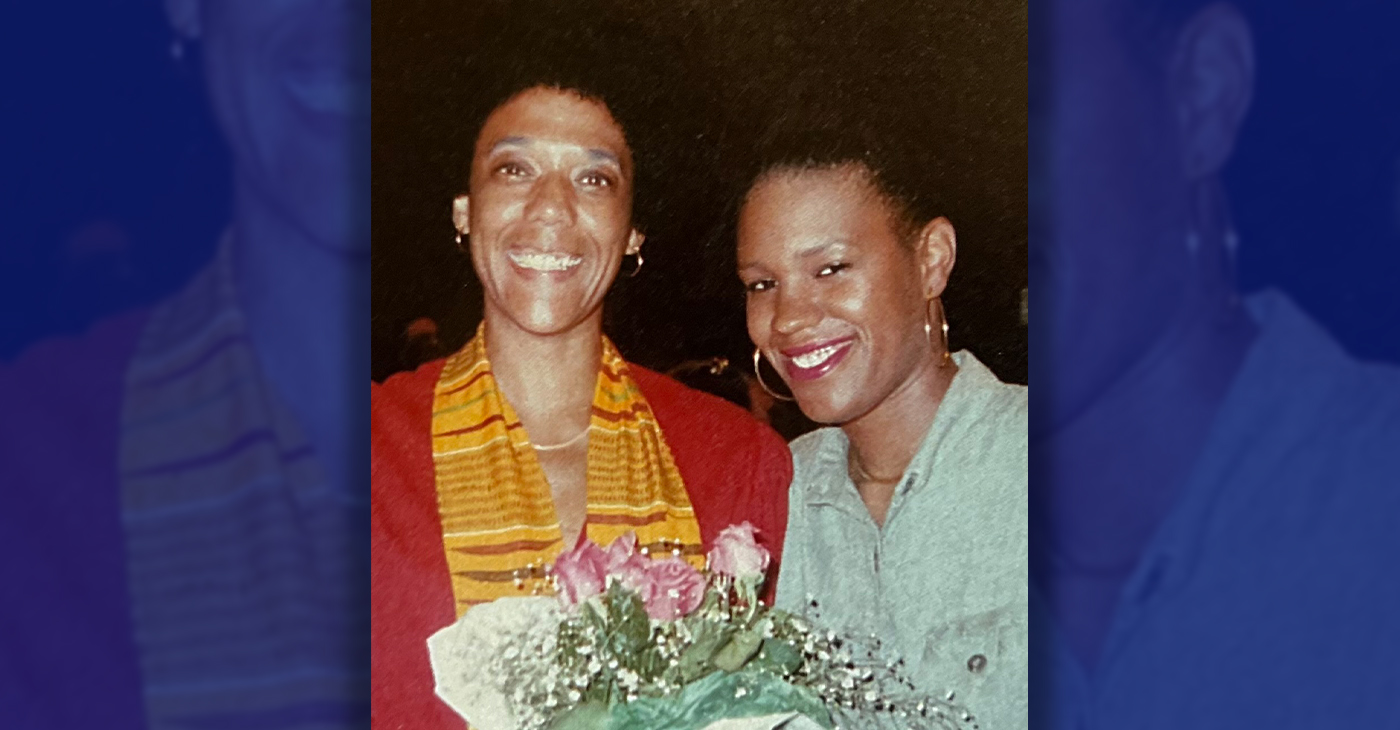
Zakiya Folami Jendayi, beneficiary of Head’s estate, states that “The errors, ranging from misstatements of fact, omissions of critical evidence, and reliance on false arguments and testimony, formed the basis of Judge Sandra K. Bean’s ruling against me, Dr. Head’s previous student, mentee, sorority sister and long-time friend,and despite the fact that I was her chosen, power of attorney, Advanced Healthcare Directive agent, trustee, executor and sole beneficiary.”
By Tanya Dennis
Part 5
In a shocking miscarriage of justice, a California probate judge issued a Statement of Decision on March 28 riddled with numerous documented errors that invalidated the estate plan of esteemed Black Studies professor Dr. Laura Dean Head.
The ruling from the Alameda County Superior Court’s probate division in Berkeley has sparked outrage from advocates for probate reform, community members and civil rights activists, who say the decision reflects deep flaws in the probate system, blatant disregard for due process, and the wishes of the ancestors. Judge Sandra Bean’s ruling reflects a repeated outcome seen in Black and Brown communities.
Zakiya Folami Jendayi, beneficiary of Head’s estate, states that “The errors, ranging from misstatements of fact, omissions of critical evidence, and reliance on false arguments and testimony, formed the basis of Judge Sandra K. Bean’s ruling against me, Dr. Head’s previous student, mentee, sorority sister and long-time friend,and despite the fact that I was her chosen, power of attorney, Advanced Healthcare Directive agent, trustee, executor and sole beneficiary.”
Reading court transcripts, the most egregious violations according to Jendayi reveal a pivotal point in the ruling that rested on a letter from Dr. Stephan Sarafian of Kaiser Permanente, who misidentified Dr. Head as male, misstated the day, month, and year, and asserted Head lacked capacity.
Under cross-examination, he reversed his opinion and admitted under oath that he never conducted a mental evaluation, did not diagnose Dr. Head with incapacity, did not write the letter, and stated he merely signed it “in case it was needed in the future.”
Despite Sarafian’s perjury, on Oct. 17, 2024, the California Court of Appeal upheld the lower court decision that relied on Sarafian’s discredited letter to invalidate Dr. Head’s estate plan, ignored Jendayi’s requests to impeach his testimony and dismiss Sarafian’s testimony and letter that both the Kaiser Grievance Department and the Medical Board of California denounced.
In her ruling, Judge Bean agreed with the false argument by attorney Leahy, which alleged that Jendayi provided the names of the beneficiaries to Head’s estate attorney, Elaine Lee. Bean made this decision despite Lee’s sworn testimony that Dr. Head had met with her alone, behind closed doors, and made the independent decision to leave her estate to Jendayi.
According to court records, Judge Bean reversed the burden of proof in the undue influence claim before any of Jendayi’s witnesses testified, forcing Jendayi to disprove allegations that were never substantiated by witnesses or records.
Bean ruled: “Respondent took Dr. Head to her apartment where she assumed complete control of Dr. Head’s day-to-day care, medical care, and all aspects of her life.” Jendayi proved that statement was false.
Bean also ruled that Respondent controlled Dr. Head’s necessities of life, food, and hospice care, despite zero testimony or documentation supporting any of those claims.
The court reduced Jendayi’s role to “a friend who, at best, cared for Dr. Head during the final two months,” totally ignoring 28 years of friendship, testimony, evidence, letters of recommendation, emails, and medical records.
Exhibits confirming Dr. Head’s intent and capacity, including the discredited medical letter, Exhibit 90, were omitted or misrepresented in the judge’s final decision.
Jendayi says, “The injustice within the probate justice system is devastating, traumatizing and financially depleting. It’s nothing short of legalized crime!”
Jendayi is now appealing to the Supreme Court of the U.S. with a petition citing denial of due process, judicial misconduct, and systemic bias in probate courts.


WORK FROM HOME
Home-based business with potential monthly income of $10K+ per month. A proven training system and website provided to maximize business effectiveness. Perfect job to earn side and primary income. Contact Lynne for more details: Lynne4npusa@gmail.com 800-334-0540


Black Artists in America, Installation Three Wraps at the Dixon Gallery and Gardens

Grief, Advocacy, and Education: A Counselor Reflects on Black Maternal Health

Future of Florida’s Black History Museum in Limbo

New Research Shows the Many Benefits of Early Learning

South Hampton K-8 Students Among Top 10 Finalists for Samsung’s ‘Solve for Tomorrow’ Competition

Cuba: No Negotiation with US on the President or Political System

Brooklyn Academy of Music Names Jamaican-Born Tamara McCaw as President

Trinidad & Tobego – U.S. Launches WhatsApp Channel for American Citizens in the Country

Oakland Post: Week of March 18 – 24, 2026

AI Innovation vs. Ethics and Environmental Impact

AI, Web3, and Digital Reparations

What If You Owned Your AI Agent?

Season 7, Episode 3 – January Reporter’s Roundtable 📱

Season 7, Episode 3 – January Reporter’s Roundtable

AI, Media, and Power | Part 2, Real-World Impacts and Tradeoffs

Oakland Post: Week of February 11 – 17, 2026

Reflecting on Black History Milestones in Birmingham AL

CITY OF SAN LEANDRO STATE OF CALIFORNIA PUBLIC WORKS DEPARTMENT ENGINEERING DIVISION NOTICE TO BIDDERS FOR ANNUAL STREET OVERLAY/REHABILITATION 2019-21 – PHASE III

Oakland Post: Week of February 18 – 24, 2026

PRESS ROOM: NBA Hall of Fame Nominee Terry Cummings Joins 100 Black Men of DeKalb County to Launch Victory & Values Initiative

Oakland Post: Week of February 25 – March 3, 2026

Trump’s MAGA Allies are Creating Executive Order Plan to Steal the 2026 Midterms

U.S. manufacturing rebounds – how foundry services are adapting to rising demand

OP-ED: One Hundred Years of Black Workers Telling the Truth

Chase Oakland Community Center Hosts Alley-Oop Accelerator Building Community and Opportunity for Bay Area Entrepreneurs

Poll Shows Support for Policies That Help Families Afford Child Care

Oakland Post: Week of March 4 – 10, 2026

Advancements in solar technology that are changing the way we power the world

PRESS ROOM: Civil Rights TV Launches in Selma as the World’s First 24/7 Civil Rights Television Network

Woman’s Search for Family’s Roots Leads to Ancestor John T. Ward – A Successful Entrepreneur and Conductor on the Underground Railroad

Hyundai Ioniq 5 Parking, Safety, and 360 View #shorts

2025 Ioniq 5 New Wiper & Powerful Performance! #shorts

Electric SUV Range: Is 259 Miles Enough? #shorts

EV Charging: How Fast Can You Charge an Electric Vehicle? #shorts

Biometric Cooling… Messaging Seats…Come on! 2025 Infiniti QX80 Autograph 4WD

Charged Up: Witness the Magic of a Fully Electric Car! #shorts

Range Rover Sport PHEV Included…: See What’s Inside This Luxury SUV! #shorts

Invisible Hood View: Perfect Parking with X-Ray Vision! #shorts

AI Is Reshaping Black Healthcare: Promise, Peril, and the Push for Improved Results in California

ESSAY: Technology and Medicine, a Primary Care Point of View

Sanctuary Cities

The RESISTANCE – FREEDOM NOW

STATE OF THE PEOPLE: Freddie

ECONOMIC BOYCOTT DAY!!!!!

I told You So
-
 Activism4 weeks ago
Oakland Post: Week of March 4 – 10, 2026
-
 #NNPA BlackPress3 weeks ago
Woman’s Search for Family’s Roots Leads to Ancestor John T. Ward – A Successful Entrepreneur and Conductor on the Underground Railroad
-

 #NNPA BlackPress4 weeks ago
OP-ED: NNPA Launches 2026 “Leadership Matters” Video Series
-

 #NNPA BlackPress3 weeks ago
Advocates Raise Alarm Over ICE Operation, MOU and Detention Risks in Baltimore County
-

 #NNPA BlackPress3 weeks ago
COMMENTARY: Women of Color Shape Our Past and Future
-

 #NNPA BlackPress3 weeks ago
Pete Buttigieg to Join Mayor Randall Woodfin for Community Town Hall in Birmingham
-
 Activism2 weeks ago
Oakland Post: Week of March 11 -17, 2026
-

 #NNPA BlackPress4 weeks ago
PRESS ROOM: PMG and Cranbrook Horizons-Upward Bound Launch Journey Fellowship Cohort 2
