
Health
NFL Players Who Started Young Show More Thinking Problems


NFL Commissioner Roger Goodell speaks at a press conference at the NFL’s spring meeting, Tuesday, May 20, 2014, in Atlanta. (AP Photo/David Goldman)
JIMMY GOLEN, AP Sports Writer
BOSTON (AP) — NFL veterans who started playing tackle football before the age of 12 are more likely to have cognitive difficulties after their careers, according to a study published on Wednesday in the journal Neurology.
Researchers tested 42 former players on their short-term memory, mental flexibility and problem solving and found those who picked up the sport before they were 12 years old functioned about 20 percent worse. Both groups scored below average on many of the tests, according to Robert Stern of the Boston University School of Medicine.
“There is a known period of critical brain development that occurs around puberty. And if the brain is injured during that time, it may have both short-term and long-term consequences,” Stern told The Associated Press. “This study supports that idea that we need to protect the brains of our children while they’re going through this dramatic development period.”
The release of the study during Super Bowl week was a reminder for fans — especially those who are also parents — that the sport has bigger problems than deflated footballs.
For the study, NFL players were divided into two groups: those who played as young children, and those who did not. Those in the former group performed worse on the cognitive tests, such as being asked to recall words from a list they had learned 15 minutes earlier.
“The brain is the most critical organ in our body. It’s responsible for every aspect of thinking, feeling, moving, behaving; it’s responsible for who we are,” Stern said. “So the question is: Do we want to expose our children to anything that may have significant negative consequences for how that brain is going to work later in life?”
The difficulty faced by the former players, who reported an average of nearly 400 concussions each during their lifetimes, is separate from the problem of chronic traumatic encephalopathy, which can only be diagnosed after death.
Stern said the research does not lead to any simple solutions.
Among the limitations of the study, which he conducted with researcher Julie Stamm, were that it only looked at former NFL players; the conclusions cannot be generalized to a broader population. Youth sports also have many health benefits that need to be considered by policymakers, sports organizations and parents, Stern said.
It also looked back at people who played a long time ago; conditions could have gotten better as concussion education improved — or worse, because athletes are getting bigger and faster. “There is a need for so many follow-up studies,” Stern said.
“The issue for me is one of science being balanced with logic,” he said. “It does not make sense to me, as someone who studies the brain and as someone who has four kids, to foster repetitive hits to the kids’ brains at a young age. Does that really make logical sense? Do we want to do that to our children at that age whose brains are rapidly developing?”
Stern, whose research into CTE has helped lead to a greater understanding of the dangers of concussions, said he isn’t ready to write off the sport. Although he said he can no longer watch youth football, he is still a New England Patriots fan who is planning to attend the Super Bowl on Sunday.
“I’m not sure how to deal with this incongruity between what I know and what I like to watch,” he said. “I’m not saying we need to get rid of football. For me to be going to the Super Bowl this year, with the Patriots playing, I’m giddy with excitement. And that, along with watching the game on Sundays, makes for a huge amount of self-questioning.”
Copyright 2015 The Associated Press. All rights reserved. This material may not be published, broadcast, rewritten or redistributed.













Community
Prostate Cancer is Twice as Likely to Kill Black Men. Talking to Your Doctor Could Help Save Your Life
BLACKPRESSUSA NEWSWIRE — The American Cancer Society recommends that African American men speak with their doctor at age 45 about whether prostate cancer screening is right for them. Men at even higher risk should have that discussion at age 40, especially those with one or more close relatives who were diagnosed at an early age.

American Cancer Society board member Dr. Robert Winn discusses risk factors for the disease and why too many Black men still aren’t getting screened
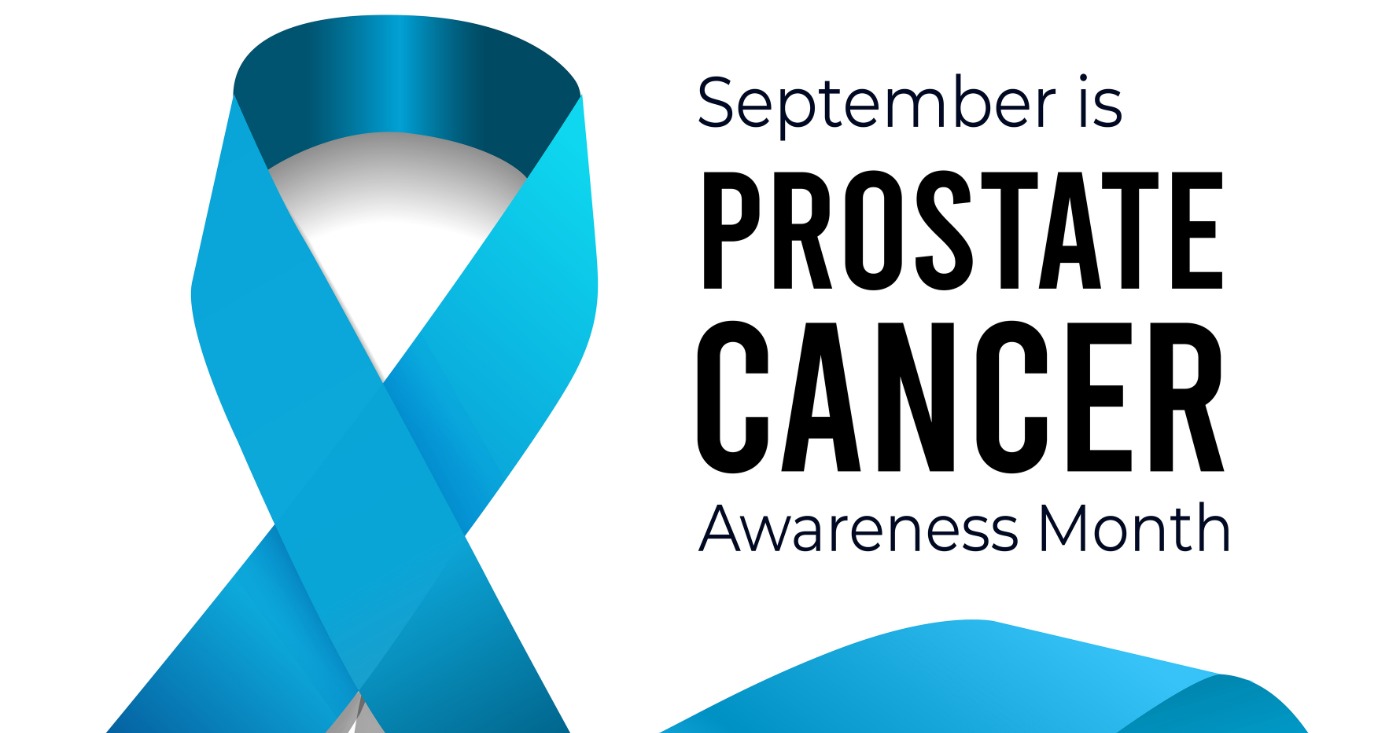
September is Prostate Cancer Awareness Month, and as both a Black man and a cancer center director, I know many men in our community think it’s bad luck to talk about cancer. But I’m here to tell you it’s bad luck not to talk about it.
We, Black men in the U.S., are nearly 70% more likely than White men to be diagnosed with prostate cancer. We’re also twice as likely to die from the disease.
But I’m telling you, if you’re diagnosed early, you can still enjoy a long, happy life doing the things you love, whether that’s playing with grandkids or staying active in your community. That’s because although it can become a serious illness, most men diagnosed with prostate cancer won’t die from it.
In fact, more than 3.5 million U.S. men who’ve been diagnosed with prostate cancer are still alive today. And when it’s diagnosed early, you boost your odds of survival. It’s that simple.
Generally, prostate cancer is most likely to develop after age 50, but when it develops in Black men, they tend to be younger. That means we need to be on the ball about understanding our personal risk. The risk factors include a family history of prostate cancer and certain genetic health risks that come from a parent.
When it comes to family medical history, we need to get a lot better at talking. For me, it turned out I had uncles who’d died from prostate and other cancers, but I didn’t always know that, so I couldn’t use that information to help me make smarter screening choices.
The American Cancer Society recommends that African American men speak with their doctor at age 45 about whether prostate cancer screening is right for them. Men at even higher risk should have that discussion at age 40, especially those with one or more close relatives who were diagnosed at an early age.
Look, I get that no one looks forward to a screening, but it typically starts with just a simple blood test, called a prostate-specific antigen, or PSA.
Even if you end up needing a digital rectal exam, it takes less than a minute and could save your life. So, what I say to people is, what’s the price of your life? Isn’t it worth a minute of being uncomfortable?
Brothers, this is essential for you to know: just because you’re feeling good doesn’t mean you don’t have early-stage prostate cancer. By the time you start to actually experience symptoms, the disease could be at an advanced stage and might be harder to treat.”
Prostate cancer is significantly impacting our fathers, our brothers, and our sons. That’s why the American Cancer Society is working with health systems and professionals in your community to help remove barriers in the fight against the disease.
We can help you find low-cost or free screening locations. And for men who need cancer treatment, the American Cancer Society can reduce the financial burden of traveling to medical appointments by providing free rides and, if you live far away from where you receive treatment, a free place to stay.
When it comes to prostate cancer screening, one size doesn’t fit all. So, it’s important for all men – and especially Black men – to talk to their doctor about what’s best for them based on their age, risk, and health history. Please make that appointment, because we don’t want you to risk missing out on the best years of your life.
For more information, call the American Cancer Society’s 24/7 helpline at 1-800-227-2345 or visit cancer.org.
Dr. Robert Winn is a nationally recognized physician-scientist and researcher. He currently serves as cancer center director at Temple Health’s Fox Chase Cancer Center. Since 2021, he has served on the board of directors for the American Cancer Society, a leading cancer-fighting organization with a vision to end cancer as we know it, for everyone.

Black History
Arnold Perkins: At 85, a Life of Service, Faith and Giving Back
Perkins believes that health is not simply physical. It is emotional, mental, and spiritual. And for much of his life, he says, his faith and philosophy of service have kept him vibrant, happy and connected to the world around him.

The Post’s Healthy Aging Series addresses key components for healthy aging: mind, body and spirit. This article addresses the importance of having a strong spiritual or religious foundation.
As America’s population grows older, conversations about healthy aging often focus on diet, exercise and medical care. But for Dr. Arnold Xavier Cornelius Perkins, who will celebrate his 85th birthday next month, another ingredient has been equally important: a spiritual foundation and a lifelong commitment to serving others.
Perkins believes that health is not simply physical. It is emotional, mental, and spiritual. And for much of his life, he says, his faith and philosophy of service have kept him vibrant, happy and connected to the world around him.
“I am my brothers’ and sisters’ keeper,” Perkins said. “I am a ‘we’ person,” and referenced the South African expression of ‘Ubuntu,’ which means ‘I am because we all are.”
Born in Miami, Florida, Perkins came to California in 1954 with his family to attend a Seventh-day Adventist General Conference. His family ultimately decided to remain in California, unwilling to return to the harsh racism of the segregated South.
He grew up in Berkeley, attending Golden Gate Academy, Willard School, and Berkeley High School before joining the Navy during the Vietnam War era. He later attended Merritt College when the Black Panther Party was emerging in Oakland, where he became involved as a volunteer for the Student Non-Violent Coordinating Committee (SNCC). He graduated from San Francisco State University and completed additional coursework at Cal State East Bay.
His professional career became a remarkable journey through public service. Perkins served as Alameda County’s homeless coordinator, became a program officer with the San Francisco Foundation, headed a drug and alcohol program, and ultimately served as director of the Alameda County Public Health Department for 12 years before retiring in 2006.
But retirement did not mean stepping away from service.
Perkins jokingly describes this stage of his life as being in “preferment,” doing what he pleases. What he pleases, however, is continuing to help people.
He has worked with young people, served on San Quentin Prison’s warden advisory council, previously served on the Oakland Police Department Selection Commission, and completed two terms as chair of the Alameda County Juvenile Justice Delinquency Prevention Commission. He chaired the University of San Francisco’s Helen Diller Stanley Comprehensive Cancer Center for 10 years and is now in his 11th year serving on the California Wellness Foundation board.
Perkins even views a hereditary heart defect through the lens of his spiritual philosophy.
“I have a hole in my heart, so I’m not physically perfect,” he said. “But I look at it as I have a hole because I pour my heart out to people.”
That perspective may be one of his greatest lessons about healthy living. Perkins believes that kindness, compassion and community have a direct impact on a person’s emotional and spiritual well-being.
“If I see an unsheltered relative, I’d give them that $20,” he said. “My responsibility is to take care.”
For Perkins, giving does not deplete a person; it gives life back. “My life’s mission is to give,” he said. “And what I get back is life.”
He knows firsthand that one person can change another person’s destiny. As a young man, Perkins stuttered and often fought in response to the teasing and humiliation he experienced. A teacher, Jeff Tedisco, defended him and changed the direction of his life.
“If it hadn’t been for him,” Perkins said, “I would have been in San Quentin.”
Instead, Perkins now goes to Indaba Court, a restorative justice program, to help young people who have made wrong choices understand that they are part of a larger community.
“When they harm one person, they harm the community,” he said.
His prescription for a vibrant life is simple: be understanding, be kind and remember that life is not all about you.
“When we fold our arms, we can’t receive anything,” Perkins said. “But when we stretch out our arms and serve one another, we build community.”
At nearly 85, Arnold Perkins continues to prove that a life rooted in faith, service and love may be one of the most powerful foundations for healthy aging.
Next Week: Brenda Dennis Harris “The Body Temple.”
Commentary
NPRC Elder Justice Symposium Invites Community to Join Effort to Protect Alameda County Elders
“Two of our most vulnerable populations are elders and the disabled, and many times that combination resides in one individual,” said Tanya Dennis, lead facilitator of NPRC. “At our symposium, NPRC will bring decision makers and elders together in one space for a day to develop strategy and policy to protect and empower.”

The National Probate Reform Coalition (NPRC) will host an Elder Justice Symposium on Friday, Sept. 25, from 9 a.m. to 5 p.m. at Oakland City Hall, bringing elders, families, advocates, policymakers and community leaders together to address elder abuse, financial exploitation and problems within probate and conservatorship systems.
The symposium is designed to inform and empower the community while developing strategies and policies to better protect Alameda County’s vulnerable elders and disabled residents.
“Two of our most vulnerable populations are elders and the disabled, and many times that combination resides in one individual,” said Tanya Dennis, lead facilitator of NPRC. “At our symposium, NPRC will bring decision makers and elders together in one space for a day to develop strategy and policy to protect and empower.”
Dennis said NPRC has drafted proposed legislation intended to make conservatorship a true last resort by adding safeguards before and after a petition is filed. Proposals include mandatory private mediation before entering probate and placement of an ombudsman in probate proceedings to advocate for the rights and interests of prospective or current conservatees.
The coalition also wants stronger protections for elders’ estates and assets, arguing that money accumulated over a lifetime should be preserved for elders, families and intended beneficiaries rather than unnecessarily depleted by court-related expenses.
NPRC meets monthly through Zoom and has expanded into a national coalition because elder abuse, financial exploitation and guardianship and conservatorship concerns extend well beyond Alameda County.
“Members share horror stories of being isolated from their parents and children, many times physically abused and overmedicated; seeing estates drained for court costs, and assets that parents spent decades saving to leave a legacy depleted instead and going to strangers,” said Venus Gist, an NPRC co-facilitator and former victim of the probate system. Gist said she spent more than $80,000 trying to protect her parents’ estate.
“Eighty thousand dollars is nothing compared to the people in our group losing millions and having to sell their businesses and homes to pay court fees,” she said.
The symposium will also examine forms of elder exploitation including telephone scams, bank fraud, identity theft, family financial abuse and exploitation by trusted individuals. Participants will learn to recognize warning signs involving caregivers, financial professionals, health and social service workers, attorneys and guardians.
NPRC is seeking a California lawmaker willing to champion legislation that strengthens elder protections and increases accountability in the conservatorship process.
The symposium follows Supervisor Nate Miley’s 23rd Annual Healthy Living Festival on Thursday, Sept. 24, at the Oakland Zoo. The free event for adults 55 and older will feature health screenings, vaccinations, nearly 100 community resource booths, lunch, entertainment and complimentary zoo admission for eligible attendees.
Dennis said the two events offer a comprehensive two-day focus on elder well-being.
“The health fair will cover the physical care of our elders, and the next day NPRC’s symposium will cover the mental and social health,” Dennis said. “Together, we are offering a comprehensive two days of care for Alameda County elders.”
Both events are free, and advance registration is recommended because space is limited. Community members, elders, families, advocates and public officials are encouraged to participate. Breakfast and lunch will be served at both events.
For registration: Sign-up is required via Supervisor Nate Miley’s Eventbrite page NPRC registration is https://www.eventbrite.com/e/elder-justice-symposium-tickets-1998385423597?aff=oddtdtcreator




Prostate Cancer is Twice as Likely to Kill Black Men. Talking to Your Doctor Could Help Save Your Life

Oakland Post: Week of September 2 – 8, 2026

Longtime BWOPA Member Brendalyn Goodall Appointed to California Workforce Development Board

Jackie Wright Champions Bay Area Stories, Filmmakers and Cultural Institutions

Chef Sharon Lee Blends Culinary Excellence, Education and Empowerment

‘Passing a Law Isn’t The Finish Line’: California Assembly Evaluates Implementation, Results

OPINION: Angie Nixon Will Turn You Into a Democratic Socialist If Donald Trump Hasn’t Already

Gov. Newsom Signs Law Shielding Immigration Aid Workers From Doxing Threats

BOOK REVIEW: Every Inch of a Lady

Big City Mayors Ask for “Yes” Vote on Housing Bond Measure; Conservatives Say “No”

Madeline M. Turner: The Inventor Who Made Juicing Easier

Gubernatorial Candidate Steve Hilton Blasts California New Tire Rules; Newsom Hits Back

Frontier Airlines’ Return to Oakland Airport Brings Flights, Jobs and Opportunity

Secretary of State Shirley N. Weber Urges Californians to Vote Early as Voter ID Battle Intensifies

Gov. Newsom’s Latest Appointees Include Sacramento Advocate for Formerly Incarcerated Students; State’s New Tech Chief

Department of Homeland Security Demands California Secretary of State Shirley N. Weber Scrub Voter Rolls

New Judge Could Decide if Karmelo Anthony Gets a New Trial

“The Power to See Threats Sooner”: Gov. Newsom, Safety Officials Showcase California’s Investments in Hi-Tech Wildfire Prevention

Alpha Kappa Alpha Sorority, Inc. Celebrates New North Atlantic Regional Director

California Sen. Padilla Joins Colleagues to Introduce Bill Imposing Term Limits on Supreme Court Justices

Less Affluent School Districts, Including Sacramento City, Face Threat of State Takeover

Car Wash Workers Cope with Lingering Impacts of ICE Raids

COMMENTARY: You Are Already Paying for the AI Boom

California Bill Would Let Abuse Victims Use Trauma as Legal Defense for Violent Crime

Oakland Post: Week of July 29 – August 4, 2026

OP-ED: ‘The Trusted Messenger’ and the Black Vote

How Oakland’s Courtsmith is Scaling its Business and Local Impact

ESSAY: California Can Close Its Colorectal Cancer Gap

As Part of Your Back-to- School Checklist, Vaccinate

Oakland Post: Week of August 5 – 11, 2026

The Conversation With Al McFarlane 6/23/26

Media Monday 6/22/26

LIVE! ASK ALMA! — TUES. 6.23.26 7PM EST

Car Buying Secrets: 4 Hidden Checks Before You Sign!

Is This 550 HP Charger Worth YOUR Money? AutoNetwork Review

Celebrating Juneteenth – Frederick Douglass on education and resistance

LIVE! — ASK ALMA! — TUES. 6.19.26 7PM EST

Hyundai Ioniq 5 Parking, Safety, and 360 View #shorts

2025 Ioniq 5 New Wiper & Powerful Performance! #shorts

Electric SUV Range: Is 259 Miles Enough? #shorts

EV Charging: How Fast Can You Charge an Electric Vehicle? #shorts

Biometric Cooling… Messaging Seats…Come on! 2025 Infiniti QX80 Autograph 4WD

Charged Up: Witness the Magic of a Fully Electric Car! #shorts

Range Rover Sport PHEV Included…: See What’s Inside This Luxury SUV! #shorts

Invisible Hood View: Perfect Parking with X-Ray Vision! #shorts
-
 Community4 weeks ago
Less Affluent School Districts, Including Sacramento City, Face Threat of State Takeover
-
 Commentary4 weeks ago
ESSAY: California Can Close Its Colorectal Cancer Gap
-
 Business4 weeks ago
California Hispanic Chambers of Commerce Unveils: ‘Powering the Future’ Theme for 47th Annual Statewide Convention
-

 Community4 weeks ago
Four Candidates, Including Incumbent Barbara Lee, Qualify for Oakland Mayor’s Race
-

 Business4 weeks ago
From Blueprint to Breakthrough: Tackling Affordable Housing in Oakland
-

 Black History4 weeks ago
Oakland Observes Black August with Block Parties, Film Showings, Workshops
-

 Activism4 weeks ago
Oakland Post: Week of August 12 – 18, 2026
-

 Commentary4 weeks ago
COMMENTARY: Why Local School Tax Measure G1 Will Not Be on the November Ballot
