
Op-Ed
NAFEO Supports ‘America’s College Promise’ Initiative


By Lezli Baskerville
NNPA Guest Columnist
The National Association for Equal Opportunity in Higher Education (NAFEO), applauds President Obama’s proposal to make community college tuition free, and views it as the commencement of an important dialogue with the states, college and university stakeholders that could help move as many as 9 million “would be” students from the margins to the mainstream of American education and commerce.
The proposal would provide additional federal dollars to states that make key reforms that include strengthening the community college experience to move more students to completion, continuing to invest in community colleges, and making tuition at community colleges free. The federal dollars to the states would cover three quarters of the tuition, and the states would pay one quarter. Students who attend at least halftime, maintain a 2.5 GPA while in college, and demonstrate steady progress toward completing on time, would have the cost of their tuition covered.
Forty percent of American college students are enrolled in community colleges. Fifty-one percent of African Americans in college are in a two-year institution. Students who are eligible for and receiving the maximum Pell Grant award may already be receiving “free community college tuition/fees” because the maximum Pell Award is currently $5,730.
The major costs associated with attending a community college are cost of living expenses: housing, transportation, food, books, extra-learning opportunities, child care, healthcare, etc. If enacted, the plan would move the nation closer to realizing its 2020 goal of 60 percent of Americans having a 2- or 4-year certificate or degree.
This initiative would benefit our nation’s 14 HBCU two-year institutions, many of which are exemplars of retaining and moving students, members of the workforce, entrepreneurs, servicemen and women, including our veterans, to completion of certificate and degree programs in growth, critical-and high-need disciplines.
The initiative also will be a boon to our nation’s nearly 80 Predominantly Black Institutions (PBIs) and their service communities. Roughly 75 percent of PBIs are two-year institutions. PBI student bodies are 40 percent or more African American and 50 percent or more Pell Grant eligible.
The four-year, richly diverse Historically Black Colleges and Universities (HBCUs) could benefit by America’s College Promise as well. HBCUs are great at expanding student access and increasing success in innovative ways, including offering an increasing variety of degree and certificate programs, transfer, online, GED, high school partnership, 2+2, and continuing education options. They are exploring competency-based education options as well.
For the last decade, many HBCUs have been developing and piloting models of 2-4-year collaborations that can be replicated or taken to scale. NAFEO has worked with various partners to position its members as leaders in the new higher education landscape.
In recent years, working with the Links Incorporated, 4 HBCUs and 4 community colleges, NAFEO and its partners have developed promising practices of 2-4-year linkages that should prove useful as the debate advances about how best to shape America’s College Promise.
America’s College Promise has an added benefit for 4-year HBCUs: For more than a decade, NAFEO has urged and encouraged the administration to use the power of the federal purse to prod the states that maintain public HBCUs and public HWCUs to comply with a Supreme Court mandate to invest in HBCUs so that they are quantifiably “comparable to and competitive with” the public HWCUs (Historically White Colleges and Universities).
Despite years of education, legislation, litigation and administrative fiats, the states have not done this. America’s College Promise evidences this administration’s understanding of how to leverage the federal purse to prevent states from disengaging in higher education and to strengthen their public higher education systems.
I am confident that when the debate regarding America’s College Promise is completed, we will not only have a new option for college affordability in which states will have a “free community college” system, but that we will also have a new option for college excellence in which more public HBCUs are funded by the states so that they are “comparable to and competitive with” their HWCU counterparts.
For those concerned that the America’s College Promise Initiative will result in a loss of students to HBCUs, particularly the smaller independent 4-year HBCUs that struggle to provide an excellent, competitive education in smaller, rigorous environments while containing costs, I argue that we must be vigilant and weigh in in the federal and state deliberative processes to ensure that is not the case.
The students who attend 21st Century HBCUs do so for many reasons, including their excellent education and disproportionate affirmative results in graduating diverse students in growth and high need disciplines, in mostly smaller environments. Most students who attend an HBCU go also for what has become known as the “HBCU experience” in which the campus culture is grounded in the best of African American traditions of family, fortitude and faith, independence and interdependence. They want to attend a college in which the values and mores of their parents or guardians are undergirded and where, as in Cheers, “everybody knows your name, and they’re always glad you came.”
A limited pilot initiative in targeted states with public and private HBCUs could test for a loss of students attending HBCUs and other four-year institutions concomitant with increased enrollment of America’s College Promise students in community colleges and ther unintended adverse impacts before the initiative is fully rolled out.
America’s College Promise Initiative is a welcome affirmative step toward making a 2- or 4-year college certificate or degree within the grasp of more who are prepared and desirous of attaining one. It must not, however, be viewed as a substitute for the national efforts to increase the Pell Grant maximum award to cover the average costs of a public 4-year education. The devil, of course, is in the details. NAFEO will be at the table assisting in hammering out the details.
Lezli Baskerville is President and CEO of the National Association for Equal Opportunity in Higher Education (NAFEO).
###













#NNPA BlackPress
COMMENTARY: Jim Crow 2.0 at the Pentagon
BLACKPRESSUSA NEWSWIRE — The American people are expected to believe that one extraordinary officer after another suddenly fails to meet some undefined standard of excellence. We are expected to ignore impeccable service records while accepting that political appointees alone possess the wisdom to determine who is worthy of advancement.


Pete Hegseth insists that he is restoring “merit” to the United States military. But after months of dismissals, blocked promotions, and ideological purges, the evidence tells a different story. His campaign against so-called “diversity, equity, and inclusion” has become something far more dangerous: an assault on equal opportunity that falls with particular force on African Americans, while also targeting women, Latinos, gay Americans, and transgender service members.
The latest example is both troubling and infuriating.
Once again, Defense Secretary Pete Hegseth has reportedly blocked the promotion of an exceptionally qualified woman—Rear Admiral Amy Bauernschmidt. Bauernschmidt is no ordinary officer. She became the Navy’s first woman to command a nuclear-powered aircraft carrier, one of the most demanding leadership assignments in the world. Her career reflects decades of exemplary performance, operational excellence, and leadership under extraordinary pressure.
Yet once again, a distinguished military career appears to have been subordinated to an ideological agenda masquerading as “merit.”
I call BS!
The American people are expected to believe that one extraordinary officer after another suddenly fails to meet some undefined standard of excellence. We are expected to ignore impeccable service records while accepting that political appointees alone possess the wisdom to determine who is worthy of advancement.
The pattern has become impossible to ignore.
General Charles Q. Brown Jr., only the second African American to serve as Chairman of the Joint Chiefs of Staff, was dismissed despite a career that placed him among the most accomplished military leaders of his generation.
Admiral Lisa Franchetti, the first woman ever to serve as Chief of Naval Operations, was removed despite decades of distinguished command experience.
Reports have documented interventions that blocked or delayed the promotions of Black officers and women selected through the military’s rigorous promotion system.
Now Rear Admiral Amy Bauernschmidt joins the growing list of highly accomplished officers whose careers have been derailed for reasons that have never been persuasively explained.
Where is Congress?
Its silence has become deafening.
Congress has an independent constitutional responsibility to oversee the armed forces. Instead, too many lawmakers have watched silently while one of the nation’s most respected institutions is subjected to ideological litmus tests and political interference.
This is not military reform. It is testosterone-fueled performative masculinity disguised as a philosophy of military excellence.
The irony is impossible to miss. Hegseth repeatedly invokes “merit,” yet his rhetoric begins with the assumption that Black officers, women, and other historically excluded Americans must somehow justify their achievements in ways that white male officers are rarely required to do.
That is not meritocracy. It is prejudice wrapped in patriotic language.
No one is asking that anyone be promoted because of race or gender. Americans simply expect that promotions be based on demonstrated competence, leadership, integrity, and service. The officers being targeted have already proven themselves repeatedly under one of the world’s most demanding evaluation systems.
Their records speak for themselves.
The attack on African American military leadership has been especially pernicious.
For generations, Black Americans fought in segregated units, earned decorations while denied equal treatment, and repeatedly demonstrated loyalty to a nation that often failed to extend them full citizenship. They broke barriers not because standards were lowered but because excellence finally overcame institutional discrimination.
Today’s campaign against “diversity” threatens to revive old assumptions under new slogans.
The implication that Black generals and admirals somehow owe their success to affirmative action rather than extraordinary performance echoes some of the ugliest stereotypes of the Jim Crow era. Yesterday’s segregationists claimed Black Americans were inherently less qualified. Today’s culture warriors simply employ more politically acceptable language while inviting the same suspicion about Black achievement.
That is why Hegseth’s campaign increasingly resembles Jim Crow 2.0.
The targets may now wear stars on their shoulders instead of military patches on segregated uniforms, but the underlying message is hauntingly familiar: Black excellence is presumed suspect, while white excellence is presumed earned.
America’s military became the finest fighting force in history because it opened its doors to talent wherever it could be found. It grew stronger after President Truman desegregated the armed forces. It became stronger when women assumed greater command responsibilities. It became stronger when every qualified American was given the opportunity to serve to the fullest extent of their abilities.
Diversity is not a concession. It is a strategic advantage.
The nation’s adversaries do not fear an American military because it is racially homogeneous. They fear it because it draws upon the talents of more than 340 million Americans whose diverse experiences, perspectives, and abilities make our armed forces unmatched anywhere in the world.
Every politically motivated dismissal of a distinguished officer sends a chilling message throughout the ranks: excellence alone may no longer be enough if you belong to the wrong demographic group.
That weakens morale. It weakens recruitment. It weakens retention.
And ultimately, it weakens national security.
Pete Hegseth has every right to pursue military readiness. He has no right to redefine merit in ways that repeatedly cast suspicion upon the accomplishments of Black officers, women, and others who have devoted their lives to defending this nation.
America deserves better. The men and women who wear the uniform deserve better. The Constitution deserves better.
And unless Congress finds the courage to exercise meaningful oversight, history may well remember this period not as a restoration of military excellence, but as the moment political ideology attempted to resurrect, in modern form, the old poison of exclusion.
Jim Crow did not strengthen America. Jim Crow 2.0 will not strengthen America’s military. It will only diminish it
Wade Henderson
Strategic Advisor
Civil and Human Rights
wade@wadejhenderson.com

Activism
Alameda County Makes History: Board of Supervisors Unanimously Adopts Reparations Action Plan
The Final Action Plan addresses disparities in housing, economic opportunity, education, health, environmental justice, public safety, arts and culture, land use, and other areas where historical government policies have contributed to inequitable outcomes for Black residents.
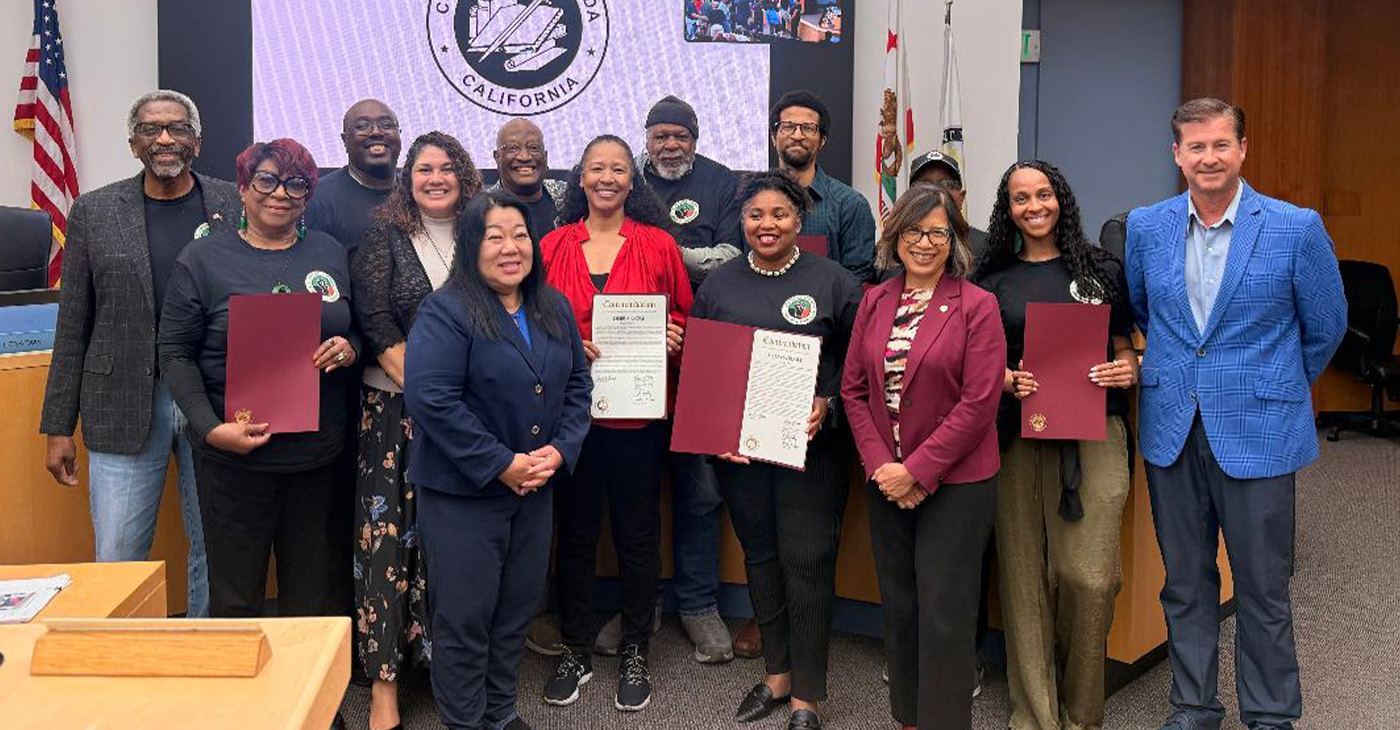
Landmark 5–0 Vote Advances One of the Nation’s Most Comprehensive County-Led Reparative Justice Efforts
Special to The Post
The Alameda County Board of Supervisors unanimously voted 5–0 on Tuesday to adopt the Final Action Plan of the Alameda County Reparations Commission, marking a historic milestone in the County’s commitment to advancing reparative justice for Black residents.
The vote follows nearly three years of work by the Alameda County Reparations Commission, which was seated in July 2023. Through extensive historical research, analysis of County data, public listening sessions, expert testimony, and community engagement, the Commission developed a comprehensive roadmap for addressing documented harms and expanding opportunity for future generations.
The Final Action Plan addresses disparities in housing, economic opportunity, education, health, environmental justice, public safety, arts and culture, land use, and other areas where historical government policies have contributed to inequitable outcomes for Black residents.
“This vote represents more than the adoption of a report,” said Debra Gore, Chair of the Alameda County Reparations Commission. “It is a commitment to truth, accountability, and action. Reparations are not about guilt or charity. They are about government’s responsibility to address documented harms created by its own policies and to build a more just future.”
During the Board meeting, Gore delivered a keynote address entitled “Redress as Constitutional First Principle,” presenting reparations as a constitutional principle rooted in the First Amendment’s guarantee of the right “to petition the Government for a redress of grievances.” Her remarks connected the nation’s founding ideals with Alameda County’s own data documenting continuing racial disparities.

At the conclusion of her address, Gore received a standing ovation from all five members of the Alameda County Board of Supervisors, recognizing both the Commission’s work and the significance of the Board’s action.
Grounded in County data and community testimony, the Commission’s recommendations reflect nearly three years of research and engagement with residents, historians, policy experts, advocates, and County staff. Together, they offer a roadmap for repairing documented harms while strengthening opportunity, accountability, and equity for future generations.
The Board’s action also includes a commitment to establish a standing committee to oversee implementation of the Action Plan, signaling that reparative justice will remain an ongoing County priority.
“History will remember this moment not because Alameda County acknowledged injustice,” Gore said. “History will remember that our County chose action. This vote demonstrates that government can confront difficult truths, listen to its residents, and take meaningful steps toward repair.”
Reached in an interview on July 1, Gore said she felt a sense of “joyfulness and reverence” for the ancestors and survivors of the harms of slavery through Jim Crow. “We might be the first in the country to pass an action plan with the commitment to ‘operationalize’ reparations.”
Gore is grateful to former Alameda County Supervisor Keith Carson, who asked her to serve on the commission, and current Supervisor Nate Miley, who asked her to be the chairperson.
Among the many who helped create and inspire the report, Gore pointed to former Oakland City Councilmember Leo Bazile, who has been calling for reparations since the 1960s, and the late Reparations Committee member Jesse Clyde Burleson, who provided insight on incarceration as an ongoing harm to the Black community. The report was dedicated to the memory of Burleson, who passed away on March 6 and who had been imprisoned from 1987-2018.
Gore also pointed to their avenue of approach on reparations, which was as much about the impact of slavery as it was about constitutional rights that had been systematically denied to Black people.
Members of the committee were: Cathy Adams, president and CEO of the Oakland African American Chamber of Commerce (OAAOCC) issued a statement supporting the reparations milestone.
OAACC “is grateful to former Supervisor Keith Carson, Supervisor Nate Miley, and the entire Alameda County Reparations Commission for their tireless efforts to develop a comprehensive action plan to address and repair the documented harms experienced by our local Black community,” Adams said.
“As an organization deeply committed to advancing workforce development, expanding access to capital, and creating opportunities for Black-owned businesses in Oakland and throughout Alameda County, we look forward to working alongside the steering committee to help deliver meaningful economic justice to those impacted by generations of systemic inequities.”
The Alameda County Reparations Commission extends its gratitude to the hundreds of residents who shared their experiences, the Commissioners who dedicated nearly three years of service, County staff, researchers, historians, and community partners whose work made this milestone possible.
With adoption of the Final Action Plan, Alameda County now begins the next phase of implementation in partnership with County leadership, community organizations, and residents. The commission will be dissolved, Gore says, and she looks forward to the next steps, one of which is the appointment of committee members.
Besides, Burleson, Gore and Bazile, members of the commission included: Natasha Triplett, Shenita Hurskin, Brandon T. Sass, Artavia Berry, Tiega N. Varlack, James Knowles, Vickie Stephens, Dr. Philip S. Gardiner, Dee Johnson, Larry McClendon (vice chair) , Carolyn (CJ) Johnson, Alan E. Dones, Jennifer A. Gayden, Lori Cox (vice chair), and Shadrick A. Small.
About the Alameda County Reparations Commission
Established by the Alameda County Board of Supervisors in July 2023, the Alameda County Reparations Commission was charged with examining the historical and ongoing harms experienced by Black residents resulting from government policies and practices and developing recommendations for repair. The Commission’s Final Action Plan provides a comprehensive framework for advancing equity, accountability, and opportunity throughout Alameda County.
Activism
OPINION: Unfair Media Attacks on OUSD Leadership for Not Closing Schools
Dr. Denise Saddler is a respected educator who leads with integrity, honesty, and decades of experience in service to OUSD. Since stepping into the role of interim superintendent, she has worked tirelessly alongside the Senior Leadership Team and fiscal consultants to address one of the most difficult financial situations our district has faced.
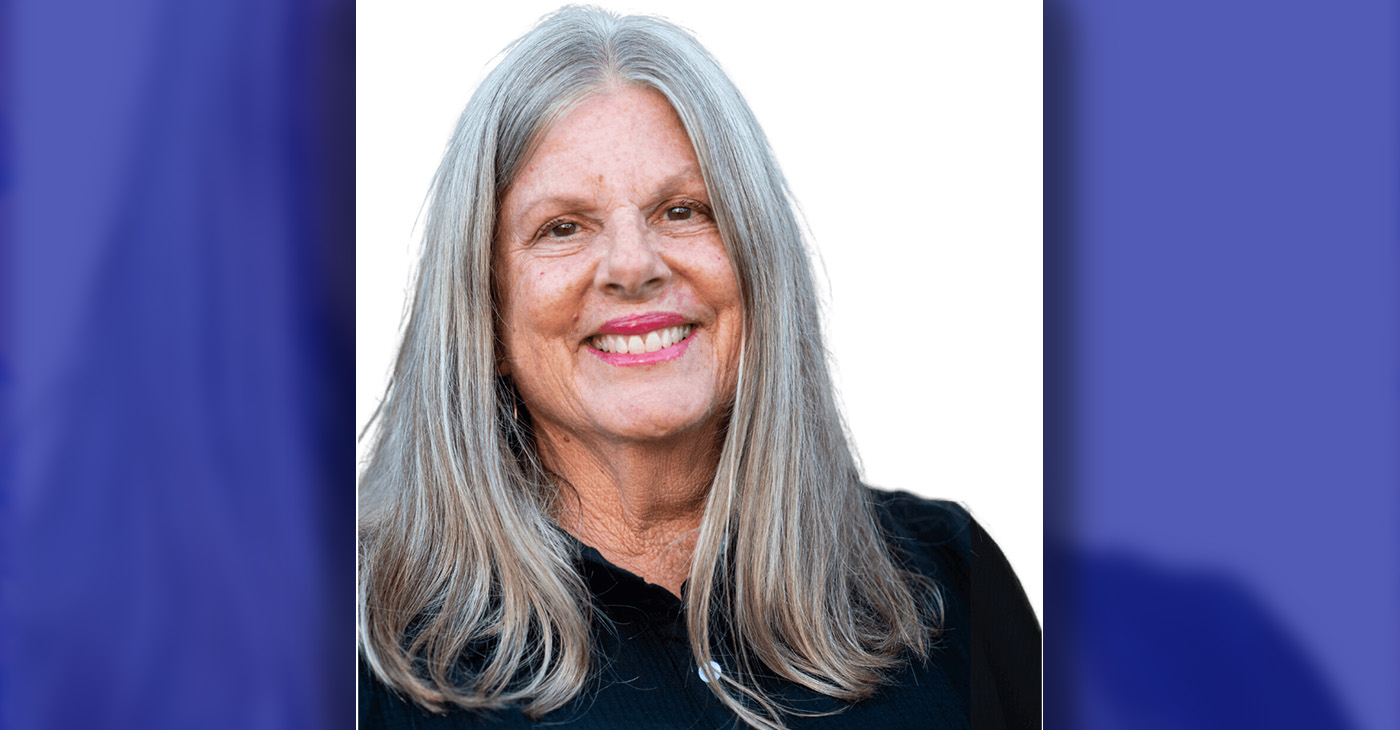
The school district has achieved ‘significant milestones that reflect disciplined leadership and a renewed commitment to fiscal responsibility,’ said Board President Jennifer Brouhard
By Jennifer Brouhard, Special to The Post
I am not going to directly respond to or amplify the personal attacks on the Oakland Unified School District’s dedicated leaders who are working every day on behalf of Oakland’s students.
Dr. Denise Saddler is a respected educator who leads with integrity, honesty, and decades of experience in service to OUSD. Since stepping into the role of interim superintendent, she has worked tirelessly alongside the Senior Leadership Team and fiscal consultants to address one of the most difficult financial situations our district has faced.
In December, the Board gave clear direction: bring forward a budget proposal that did not include a state loan and did not include school closures. Saddler and her team did exactly what the Board asked them to do.
There were differing opinions about how to address the district’s fiscal challenges. The two former employees referenced in a news article supported a different approach that included pursuing a state loan and exploring school closures. Those proposals were presented to the Board alongside Saddler’s proposal.
The Board adopted Saddler’s recommendation because it reflected the direction we had established. Since I joined the Board in 2023, the majority of the Board has consistently opposed school closures and has worked to preserve local control by avoiding a state loan whenever possible.
The public records cited in the article demonstrate the countless hours Saddler, the Senior Leadership Team, and our consultants devoted to developing a responsible financial plan. Difficult decisions were made, ideas were debated, and ultimately the Board selected the proposal that best aligned with our priorities.
As a result of that collaborative work, OUSD has adopted its first balanced budget in 22 years, achieved a qualified Second Interim Certification, and submitted a positive Third Interim Report.
These are significant milestones that reflect disciplined leadership and a renewed commitment to fiscal responsibility.
While there is still important work ahead, I believe the relationship between the Board, Dr. Saddler, and the Senior Leadership Team has become stronger and more collaborative throughout this process. We are moving in the right direction—with honesty, integrity, and a focus on the needs of OUSD’s 34,000 students.
Jennifer Brouhard, a retired OUSD teacher was elected in 2023 to represent District 2 and has been Board president since 2025.



How the Sandwich Generation Can Help Protect Aging Parents’ Finances

As Progressive Democrats Celebrate ‘Blue Tsunami,’ Oakland Counts Victories

Golden State Valkyries Become Bay Area Legends Winning WNBA Championship on Halloween Night

IN MEMORIAM: Marcia Ann Gillespie, Editor of Essence and Ms. Magazines, Dies at 82

U.S. Rep. John Garamendi Honors local ‘Women of the Year’ at Annual Awards Ceremony

Richmond Neighbors Put Pantry Power on the Map

Oakland Latino Chamber of Commerce Hosts Statewide Convention, Generating $3 Million in Economic Impact

HISTORY MADE: Keisha Lance Bottoms Becomes First Black Woman Elected Governor in American History

HISTORY MADE: Keisha Lance Bottoms Becomes First Black Woman Elected Governor in American History

Five Hospitals Said No! Who Will Help Annette Henry Recover?

Oakland NAACP, BWOPA Speak Out Against Alleged Harassment of Black Women Political Leaders

COMMENTARY: Oakland’s Black Students Have Gained Ground: We Shouldn’t Stop Now

From Backyard Grilling to Jack London Square: Jamale Carlyle’s Chicken Wing Success Story

SEIU Local 1000 and State of California Will Continue to Negotiate New Labor Contract

OPINION: We Can Restore Checks and Balances on Trump

COMMENTARY: Valarie Bachelor and Jennifer Brouhard are Excellent School Board Members and Deserve to Be Reelected

Listening as a Lifeline: A Doula’s Witness to Black Maternal Health

Doulas Are Helping Black California Moms Navigate Pregnancy–Even as High Mortality Rates Persist

Poll: Becerra Widens His Lead Over Hilton; Californians Split on Wealth Tax

Zakiya Jendayi Arrested, Locked Out of Home by Sheriff’s Deputies

County Office of Education Says OUSD Finances Are Getting Healthier, Materially Stronger
HISTORY MADE: Keisha Lance Bottoms Becomes First Black Woman Elected Governor in American History

BLACspace Cooperative Invites Bay Area to Experience Oakland’s Black Cultural Ecosystem Through a BLAC Map Tour + Party

From Historic Memories to New Possibilities: Oakland Celebrates Coliseum 60

It’s Time to Lose Weight Before the Holidays

Oakland Post: Week of September 23 – 29, 2026

Mayor Barbara Lee Holds Special State of the City Address in Deep East Oakland

Democrats, Community Groups Back Measure EE to Change How Oakland Is Governed

Oakland Post: Week of September 30 – October 6, 2026

Asm. Corey Jackson Announces Launch of 24-Hour Childcare in His District

The Conversation With Al McFarlane 6/23/26

Media Monday 6/22/26

LIVE! ASK ALMA! — TUES. 6.23.26 7PM EST

Car Buying Secrets: 4 Hidden Checks Before You Sign!

Is This 550 HP Charger Worth YOUR Money? AutoNetwork Review

Celebrating Juneteenth – Frederick Douglass on education and resistance

LIVE! — ASK ALMA! — TUES. 6.19.26 7PM EST

Hyundai Ioniq 5 Parking, Safety, and 360 View #shorts

2025 Ioniq 5 New Wiper & Powerful Performance! #shorts

Electric SUV Range: Is 259 Miles Enough? #shorts

EV Charging: How Fast Can You Charge an Electric Vehicle? #shorts

Biometric Cooling… Messaging Seats…Come on! 2025 Infiniti QX80 Autograph 4WD

Charged Up: Witness the Magic of a Fully Electric Car! #shorts

Range Rover Sport PHEV Included…: See What’s Inside This Luxury SUV! #shorts

Invisible Hood View: Perfect Parking with X-Ray Vision! #shorts
-
 Commentary4 days ago
COMMENTARY: Valarie Bachelor and Jennifer Brouhard are Excellent School Board Members and Deserve to Be Reelected
-
 Black History2 days ago
HISTORY MADE: Keisha Lance Bottoms Becomes First Black Woman Elected Governor in American History
-
 Community3 weeks ago
It’s Time to Lose Weight Before the Holidays
-
 Community3 weeks ago
Mayor Barbara Lee Holds Special State of the City Address in Deep East Oakland
-
 Community3 weeks ago
Democrats, Community Groups Back Measure EE to Change How Oakland Is Governed
-

 Featured3 weeks ago
Oakland Awarded More than $14 Million in State Funding
-

 Education4 days ago
OUSD Receives State Review of District Finances; Outlines Progress Since January
-

 Community3 weeks ago
‘ICE-Free Marin’ Supporters Press Supervisors as County Drafts Enforcement Restrictions
