
Education
Legislature Should Cancel the School District’s $40 Million Debt, Says Senator Skinner


A growing number of Oaklanders—joined by Senator Nancy Skinner—are calling on the State of California to cancel the balance of the $100 million loan that the state forced on the Oakland Unified School District in 2003 and then spent through a state receiver, with no democratic input from the local community.
The district still owes somewhat less than $40 million on the loan, making annual payments of $6 million a year until 2026.
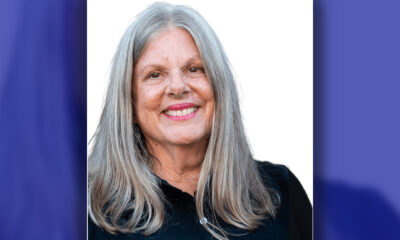
Speaking at a meeting last week of the Wellstone Democratic Club, Senator Nancy Skinner said she would support a measure to forgive the remainder of the district’s state debt. “I support eliminating that debt, especially given that it (was spent) under state receivership (when) there were five different superintendents, all appointed by the state. They racked up a huge debt, and then Oakland was supposed to pay it back at 8 percent (interest)—that’s usury,” said Skinner.
Over 1,500 people have signed a petition calling on Oakland’s local representatives to work to abolish the debt.
“We call on the OUSD administration along with California politicians Gavin Newsom, Rob Bonta, Nancy Skinner, and Tony Thurmond to take immediate steps toward waiving/abolishing OUSD’s debt and fully fund OEA’s reasonable contract proposal,” the petition said, which is available at Change.org at https://bit.ly/2VCKz1W.
Supporting the community demand, Council President Rebecca Kaplan wrote a letter on Feb. 14 to Gov. Gavin Newsom: “In light of an estimated $21.5 billion surplus in the State budget, … relief from the repayment process would afford OUSD the opportunity to truly create a culture of long-term solvency,” wrote Kaplan.
A group of OUSD principals recently sent a delegation to Sacramento asking the legislators to support Oakland’s demand for loan forgiveness.
In interviews with the Oakland Post this week, Assemblymember Bonta said he has supported loan forgiveness for six years and he will continue to do so. However, he has not introduced a bill because it would be unlikely to gain support in the Democrat-controlled Legislature.
“There is no appetite in Sacramento for that, even though we have a new governor,” he said.
Politics is the art of the of the possible, he continued. “We tried numerous times for debt forgiveness, but it was not possible.”
Bonta said the best bet for OUSD to restore its financial wellbeing is through AB 1840 – to take the money authorized law and adopt austerity measures that will stabilize the district’s finances. He said 1840 does not require closing schools and selling school property but allows the district to cut central office overspending and sell school property to build affordable housing, a “win-win for everybody.”
He did not comment on how the law is being applied in real life by the district leadership and state representatives, including the Fiscal Crisis Management and Assistance Team (FCMAT), which are guiding the cuts: closing 24 schools, including closing Roots International Academy and dispersing its students, as well as cutting Restorative Justice and other programs designed to develop student leadership and laying off over 100 non-teaching employees.
Agreeing that debt forgiveness faces serious opposition, School Board President Aimee Eng said, “The board and the district have sought support for loan deferral and relief, on and off for years.
“There has been no indication (as recently as conservations last week with State Supt. Of Instruction Tony Thurmond) that there is any appetite (in the Legislature) for forgiving all outstanding debt by districts statewide.”
By the Oakland Post’s deadline, Supt. Thurmond did not reply to a request for comment.











Education
Gov. Newsom’s Latest Appointees Include Sacramento Advocate for Formerly Incarcerated Students; State’s New Tech Chief
Ayushi Roy, of San Francisco, was appointed state chief technology officer at the California Department of Technology. Roy has taught at Harvard Kennedy School since 2022 and previously held technology and policy roles with New America, the U.S. General Services Administration, and the U.S. Office of Management and Budget

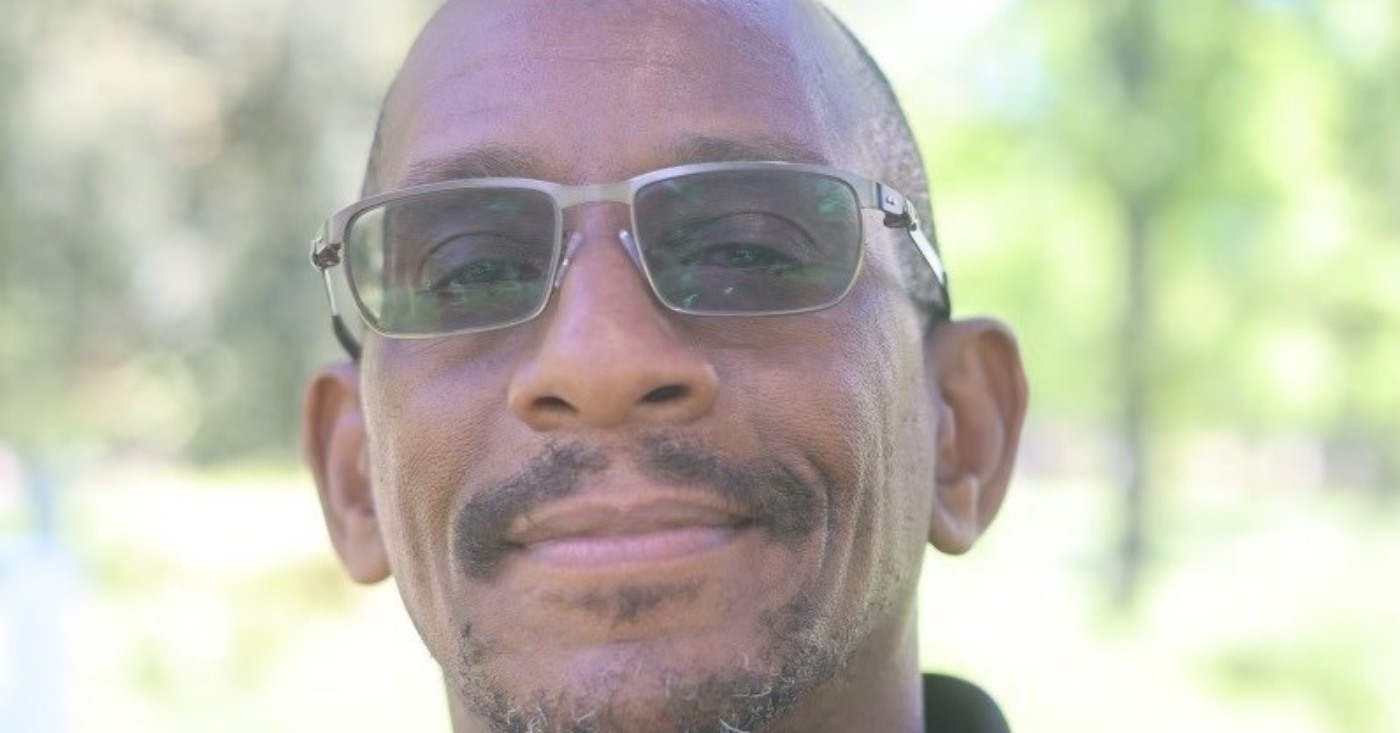
Gov. Gavin Newsom announced eight appointments Aug. 19, including a new state chief technology officer and the reappointment of a Sacramento State outreach coordinator who works with formerly incarcerated students.
Ayushi Roy, of San Francisco, was appointed state chief technology officer at the California Department of Technology. Roy has taught at Harvard Kennedy School since 2022 and previously held technology and policy roles with New America, the U.S. General Services Administration, and the U.S. Office of Management and Budget
Roy’s policy work has focused on the gap between government programs and the people they are intended to serve. In a Harvard course inspired by Beyoncé’s “Cowboy Carter,” she teaches students to examine how administrative and implementation barriers can undermine social safety-net programs.
“I do know as a practitioner, having served in the government for over a dozen years, that the building of technology is the easy part; managing the political feasibility and the implementation is the hard part,” Roy said.
Roy’s appointment requires Senate confirmation and carries compensation of $214,692.
Newsom also reappointed Michael Love, of Sacramento, to the State Rehabilitation Council, where he has served since 2025. Love has been an outreach coordinator at California State University, Sacramento since 2024 and previously held several roles at the university, including administrative services coordinator for Project Rebound and teacher’s associate.
Project Rebound supports formerly incarcerated students as they pursue higher education, making Love’s appointment relevant to the council’s work involving vocational rehabilitation services.
Love earned bachelor’s and master’s degrees in communication studies from Sacramento State. He is a Democrat.
Newsom also appointed Eric De La Cruz of Sacramento as executive director of the Racial Equity Commission. De La Cruz has served as chief of the Office of Civil Rights at the Department of Toxic Substances Control since 2022. The position pays $146,220 and does not require Senate confirmation.
The governor additionally appointed Christine Aurigemma to the State Rehabilitation Council and reappointed Lisa Weiler, Michelle Bello and Matthew Asner. The council positions are unpaid and do not require Senate confirmation.

Black History
IN MEMORIAM: Dolly Parton Dead at 80 — How She Built a Legacy of Love and Earned Her Place in Black Culture
BAYOU BEAT NEWS — For Black audiences, the bridge to Dolly will always run through Whitney Houston. Parton wrote “I Will Always Love You” as she prepared to leave Porter Wagoner’s television show and released it in 1974. The original was tender and restrained, a country goodbye delivered with grace. Then Whitney got hold of it.

Before some of us knew Dolly Parton as the Queen of Country Music, we knew her as the woman behind Whitney Houston’s song. We knew the blonde hair, the rhinestones, and that unmistakable Tennessee voice. But somewhere along the way, Black America came to understand something deeper about Dolly; when she said she loved people, she had the receipts to prove it.
The community is now left to mourn the icon who passed away at the age of 80, on Aug. 25, after dealing with an unknown medical condition. Known for her chart-topping country music hits, Dolly never felt as though she belonged only to one genre, or one kind of person. She showed up with humor, humility and a generosity that did not ask who you voted for before offering a helping hand. She made room for people, and in return, people from every corner of the culture made room for her.
The Song That Brought Dolly and Whitney Together
For Black audiences, the bridge to Dolly will always run through Whitney Houston. Parton wrote “I Will Always Love You” as she prepared to leave Porter Wagoner’s television show and released it in 1974. The original was tender and restrained, a country goodbye delivered with grace. Then Whitney got hold of it.
Houston’s 1992 rendition for “The Bodyguard” did not merely update the record. She took it to church, then carried it around the world. That opening a cappella moment, the controlled stillness and the key change that made everybody reach for a note they had no business trying to hit turned Parton’s country ballad into a global anthem. The single spent 14 consecutive weeks at No. 1 on the Billboard Hot 100, became the best-selling physical single by a woman and earned two Grammy Awards.
And instead of trying to deny contribution or rush to remind everyone who wrote the song, she celebrated the way Houston’s voice transformed it. In an industry with a long history of taking from Black artists while denying them proper credit, Dolly understood that acknowledging Whitney’s greatness did not diminish her own. One woman wrote an extraordinary song. Another woman revealed everything else that song could become.
“This is the house that Whitney built.”
— Dolly Parton
Parton later shared that she used some of the royalties from Houston’s recording to purchase commercial property in a predominantly Black Nashville neighborhood. She called it “the house that Whitney built.” There was something beautiful about that acknowledgment. Whitney’s voice had generated wealth, and Dolly wanted part of that wealth rooted among people she described as Whitney’s people, and her people, too.
Dolly’s relationship with Black America was not built on pretending she did not see color. She saw us. In a 2020 Billboard interview, she made her position plain: “Of course Black lives matter. Do we think our little white asses are the only ones that matter? No!”
It was blunt, funny, and completely on brand. But Dolly also understood that allyship could not stop with a quote. After learning why the word “Dixie” was offensive and painful to many people, she removed it from the name of her Civil War-themed dinner attraction. She called her previous understanding “innocent ignorance.” More important, she fixed it.
That willingness to listen mattered. Dolly did not perform perfection or become defensive when someone pointed out harm. She showed that loving people means caring enough to learn, change and do better. In a time when public figures often double down just to avoid admitting they were wrong, Dolly simply chose not to be cruel.
Dolly’s love also arrived in the mail. Inspired by her father, who could not read or write, she launched the Imagination Library in 1995. The program began in Sevier County, Tennessee, sending one free, age-appropriate book each month to enrolled children from birth to age 5. What started in the rural community that raised her grew into an international literacy movement. By the end of 2025, the program had distributed more than 300 million books and was mailing about 3.4 million books each month.
Those books found their way into homes in big cities as well as small towns. In New York City, the Imagination Library has been promoted through public schools and community organizations in the Bronx. For urban families navigating tight budgets, limited bookstore access or neighborhoods where children’s books are not always easy to find, a brand-new book addressed directly to a child can mean more than one package. It tells that child, “This belongs to you. Your imagination matters.”
That was Dolly’s kind of giving: personal, useful and rooted in dignity. She also funded scholarships, supported hospitals, invested in medical research and helped families recover from disasters. Her $1 million donation to Vanderbilt University Medical Center supported research connected to the Moderna COVID-19 vaccine. She turned the money she made entertaining people into opportunities to help them live, learn and rebuild.
A preschooler opening one of Dolly’s books in the Bronx did not need to know “Jolene.” A parent reading that book at bedtime did not need to be a country music fan. Her generosity crossed racial and economic lines because it met families in real life, at the mailbox, in a hospital room or after the unthinkable happened.
A Legacy That Felt Like Love
Dolly Parton leaves behind thousands of songs, beloved films, major businesses and enough rhinestones to keep heaven sparkling for a while. But her greatest legacy may be the way she made strength feel soft without ever making it weak. She knew exactly who she was, yet she never needed anyone else to become smaller so she could shine.
For Black listeners, her bond will always be part of that story. “I Will Always Love You” was never about choosing between the white woman who wrote it and the Black woman who took it somewhere new. Dolly gave the world the words. Whitney gave those words wings. Together, they created a piece of American music that refuses to stay inside one genre or belong to only one community.
That is why this loss feels personal, even to people who never met her. Dolly reminded us that tenderness can be powerful. She showed us that changing your mind can be a sign of character, that celebrating another woman’s brilliance does not steal your light and that love means very little if it never becomes action.
Country music will forever call Dolly Parton one of its queens. But Black culture recognized something in her, too: a woman who respected our greatness, spoke up for our humanity and invested in our children. She did not simply leave this world loved. In the ways that mattered most, Dolly loved us back.
Commentary
COMMENTARY: Why Local School Tax Measure G1 Will Not Be on the November Ballot
POST NEWS GROUP — Measure G1 is the local tax measure that supports middle school teacher retention and the expansion of arts, music, and world language programs at both OUSD middle schools and charter middle schools. The current measure expires in 2029.

There has been considerable speculation recently about why Measure G1 will not appear on the November ballot and what that means for the Oakland Unified School District’s current budget.
I want to provide some clarity about what happened and, importantly, what did not happen.
Measure G1 is the local tax measure that supports middle school teacher retention and the expansion of arts, music, and world language programs at both OUSD middle schools and charter middle schools. The current measure expires in 2029.
Because these funds are important to our schools and to the continuity of these programs, the district initially intended to place a renewal initiative on the November ballot to provide greater early certainty about funding beyond the expiration of the current measure.
As part of that process, the Board scheduled a special meeting for the required public hearing on the ballot initiative. There has been some suggestion that this meeting was noticed only one day in advance. That is not accurate.
Public hearings of this nature are subject to specific notice requirements, and the meeting must be noticed at least two weeks before the hearing. In practice, the notice may appear even earlier depending on publication schedules. The notice for the Measure G1 public hearing was published in the Tribune on 7/24/2026 and 7/31/2026.
So, why wasn’t the Measure G1 paperwork ultimately filed?
After the Board approved placing the measure on the ballot, the next step required the Alameda County Superintendent of Schools to sign the necessary paperwork before it could be submitted to the Oakland City Clerk.
During that process, Alameda County Superintendent Alysse Castro raised concerns about potential litigation stemming from another court case unrelated to OUSD and about whether proceeding with the measure could expose the district or County to legal challenges. Superintendent Castro’s action is unprecedented and concerning.
It is important to distinguish between the Board’s decision to pursue Measure G1 and the subsequent procedural and legal issues that arose. The Board did approve moving forward with the measure. The measure did not fail because the Board chose not to support it, nor was the public hearing improperly noticed.
The decision not to proceed with the November ballot was made in light of the County’s concerns about potential litigation and the County’s required approval process.
We also need to be clear about what this does, and does not, mean for OUSD’s current budget. The existing Measure G1 funds remain available through the expiration of the current measure in 2029. The immediate issue is the longer-term continuity of funding beyond that date, not the elimination of these resources from the current year’s budget.
Our responsibility as a Board is to protect the educational programs and services our students depend on while ensuring that our decisions comply with the law and protect the district from unnecessary legal and financial risk.
We will continue working to understand the County’s concerns, explore our options, and advocate for the resources our students deserve. Our middle school students, teachers, and school communities deserve stability, and continued investment in arts, music, world languages, and teacher retention—and that work remains a priority for Oakland Unified.
Jennifer Brouhard is a retired OUSD educator and is the current OUSD School Board President representing District 2.




Prostate Cancer is Twice as Likely to Kill Black Men. Talking to Your Doctor Could Help Save Your Life

Oakland Post: Week of September 2 – 8, 2026

Longtime BWOPA Member Brendalyn Goodall Appointed to California Workforce Development Board

Jackie Wright Champions Bay Area Stories, Filmmakers and Cultural Institutions

Chef Sharon Lee Blends Culinary Excellence, Education and Empowerment

‘Passing a Law Isn’t The Finish Line’: California Assembly Evaluates Implementation, Results

OPINION: Angie Nixon Will Turn You Into a Democratic Socialist If Donald Trump Hasn’t Already

Gov. Newsom Signs Law Shielding Immigration Aid Workers From Doxing Threats

BOOK REVIEW: Every Inch of a Lady

Big City Mayors Ask for “Yes” Vote on Housing Bond Measure; Conservatives Say “No”

Madeline M. Turner: The Inventor Who Made Juicing Easier

Gubernatorial Candidate Steve Hilton Blasts California New Tire Rules; Newsom Hits Back

Frontier Airlines’ Return to Oakland Airport Brings Flights, Jobs and Opportunity

Secretary of State Shirley N. Weber Urges Californians to Vote Early as Voter ID Battle Intensifies

Gov. Newsom’s Latest Appointees Include Sacramento Advocate for Formerly Incarcerated Students; State’s New Tech Chief

Department of Homeland Security Demands California Secretary of State Shirley N. Weber Scrub Voter Rolls

New Judge Could Decide if Karmelo Anthony Gets a New Trial

“The Power to See Threats Sooner”: Gov. Newsom, Safety Officials Showcase California’s Investments in Hi-Tech Wildfire Prevention

Alpha Kappa Alpha Sorority, Inc. Celebrates New North Atlantic Regional Director

California Sen. Padilla Joins Colleagues to Introduce Bill Imposing Term Limits on Supreme Court Justices

Less Affluent School Districts, Including Sacramento City, Face Threat of State Takeover

Car Wash Workers Cope with Lingering Impacts of ICE Raids

COMMENTARY: You Are Already Paying for the AI Boom

California Bill Would Let Abuse Victims Use Trauma as Legal Defense for Violent Crime

Oakland Post: Week of July 29 – August 4, 2026

OP-ED: ‘The Trusted Messenger’ and the Black Vote

How Oakland’s Courtsmith is Scaling its Business and Local Impact

ESSAY: California Can Close Its Colorectal Cancer Gap

As Part of Your Back-to- School Checklist, Vaccinate

Oakland Post: Week of August 5 – 11, 2026

The Conversation With Al McFarlane 6/23/26

Media Monday 6/22/26

LIVE! ASK ALMA! — TUES. 6.23.26 7PM EST

Car Buying Secrets: 4 Hidden Checks Before You Sign!

Is This 550 HP Charger Worth YOUR Money? AutoNetwork Review

Celebrating Juneteenth – Frederick Douglass on education and resistance

LIVE! — ASK ALMA! — TUES. 6.19.26 7PM EST

Hyundai Ioniq 5 Parking, Safety, and 360 View #shorts

2025 Ioniq 5 New Wiper & Powerful Performance! #shorts

Electric SUV Range: Is 259 Miles Enough? #shorts

EV Charging: How Fast Can You Charge an Electric Vehicle? #shorts

Biometric Cooling… Messaging Seats…Come on! 2025 Infiniti QX80 Autograph 4WD

Charged Up: Witness the Magic of a Fully Electric Car! #shorts

Range Rover Sport PHEV Included…: See What’s Inside This Luxury SUV! #shorts

Invisible Hood View: Perfect Parking with X-Ray Vision! #shorts
-
 Community4 weeks ago
Less Affluent School Districts, Including Sacramento City, Face Threat of State Takeover
-
 Commentary4 weeks ago
ESSAY: California Can Close Its Colorectal Cancer Gap
-
 Business4 weeks ago
California Hispanic Chambers of Commerce Unveils: ‘Powering the Future’ Theme for 47th Annual Statewide Convention
-

 Community4 weeks ago
Four Candidates, Including Incumbent Barbara Lee, Qualify for Oakland Mayor’s Race
-

 Business4 weeks ago
From Blueprint to Breakthrough: Tackling Affordable Housing in Oakland
-

 Black History4 weeks ago
Oakland Observes Black August with Block Parties, Film Showings, Workshops
-

 Activism4 weeks ago
Oakland Post: Week of August 12 – 18, 2026
-

 Commentary4 weeks ago
COMMENTARY: Why Local School Tax Measure G1 Will Not Be on the November Ballot
