
News
Jed York SF 49ers CEO Fires GM, Head Coach, Lacks Long Term Plan

Jed York, the San Francisco 49ers CEO and team owner, is someone I really like and enjoy talking to whenever and where-ever I see him: Hala Hizaji’s Professionals VIP event of a few years ago, NFL Owners Meetings, The Bay Lights Super Bowl 50 Ceremony last year, The bar at the Waldorf Astoria in New York in 2015 – the list goes on. He’s a gracious, thoughtful, smart, and engaging person to talk with. So, it’s in that sprit that I write this, rather than the attack-dog, insulting style of a certain SF Bay Area columnist. But I digress. Jed York has a problem. (For more on my take on Jed York, see the Zennie Abraham Zennie62 on YouTube video, above.)
If I were to walk into Mr. York’s office, say, next week, and asked to see his five-year to ten-year plan for the San Francisco 49ers, he couldn’t present it to me. Not because he didn’t want me to see it, but because he does not have one. That, even though he started with the 49ers in their office of strategic planning. As one who’s background is in urban planning, and thanks to a number of teachers and authors of great city planning and public administration books, I don’t need to see his office to know what is going on. There is no book. No understanding of football business dynamics. And no plan.
How else to explain this: four head coaches in four years? Working backward, as now former San Francisco 49ers Head Coaches we have whoever Jed’s going to hire next in 2017 (or his new general manager brings in), Chip Kelly in 2016, Jim Tomsula in 2015, and Jim Harbaugh in 2014. How can anyone claim to build anything that resembles organizational security with a track record like that? The Jed York-run SF 49ers organizationally look like The City of Alameda, California before my good friend John Russo was hired as city manager in 2011.
In order to avoid being one more person going out of a yearly revolving door of city managers, Russo asked for, and was given, a five year contract. While he served four years of that five-year contract, he had enough time to solve a number of key organizational problems and in the process install his own policies and approaches. Russo was able to walk away from that job and go down to Riverside as its new city manager in 2015 having left behind a long list of accomplishments and a better ran city. Russo had a plan; Jed York does not have a plan.
To York’s defense, he might defensively say that what he’s doing is called “incremental planning” but as one who is not a fan of that approach, my retort is that one needs a long term plan to know why and how they’re making a particular change in the organization at any given time.
Because Jed York lacks an overall plan, he and his charges will go into a search for a head coach and a general manager without any really good, robust checklist to find and then evaluate potential candidates. Unlike others in the media, I’m going to provide one. Here’s all that Jed York needs to consider not just in hiring a new general manager and a new head coach for the San Francisco 49ers, but for with respect to the future of the place that Bill Walsh built.
For the General Manager role and scored on a scale of 1 to 10:
1. Does the general manager candidate have NFL budget and business operations experience?
2. Does the general manager candidate understand or have experience with the salary cap and capology?
3. Does the general manager candidate have NFL (or managerial) contract negotiation experience?
4. Is the general manager candidate known to NFL players (which helps in drawing free agents and building a roster of players).
5. Is the general manager candidate known to NFL agents (which helps in drawing free agents and building a roster of players).
6. Does the general manager know who’s who in coaching and administration at the pro and college level (which helps in hiring coaches)?
7. Can the general manager actually draw-up and discuss a football play and talk about how football strategy has changed?
8. Can the general manager identify and discuss what innovations in football strategy have developed over the last 20 years?
The person that Jed York hires should be given a free-path to seek out and hire the head coach that fits a criteria which includes player relationships, football strategy innovation, game management experience, and roster movement experience. And one other note should be placed in the folder of the new general manager as that person searches for the 49ers next head coach: ‘doesn’t need to be known by the media or fans.’
That last point is critical if the new GM is expected to really be allowed to go out and get the best person for the job. Jed should also remember that the next GM can just as easily be a woman as a man, and black or Asian or Latino, as well as white – that’s right. Talented female NFL professionals like Amy Trask and Katie Blackburn have established that a woman can do the job of general manager, president, or Jed’s role, CEO, very well.
Jed York has to use the criteria, and be flexible where he thinks that someone has enough of a strength in one area to overcome a weakness in another – and also be aware that the person being considered knows what their own shortcomings are. Then pull the trigger and bring that person in for a five-year contract, and then work with that person, and the organization, to write an overall plan for the organization – and then stick to it. The Dallas Cowboys first owner, the late Clint Murchison, Jr., did just that – ok, something like that.
Clint Murchison, Jr knew that, in the young, innovative, head coach he hired Tom Landry, he had a person who formed a long term plan for the development of the Dallas Cowboys – he just needed time to make it work. So, when the Cowboys first year under Landry ended without a win, and the next five years without a winning season, in 1964, Murchison gave Landry a 10-year contract, then hired Tex Schramm to run the organization, and stepped out the way.
The rest is history. Your move, Jed. Good luck.












Activism
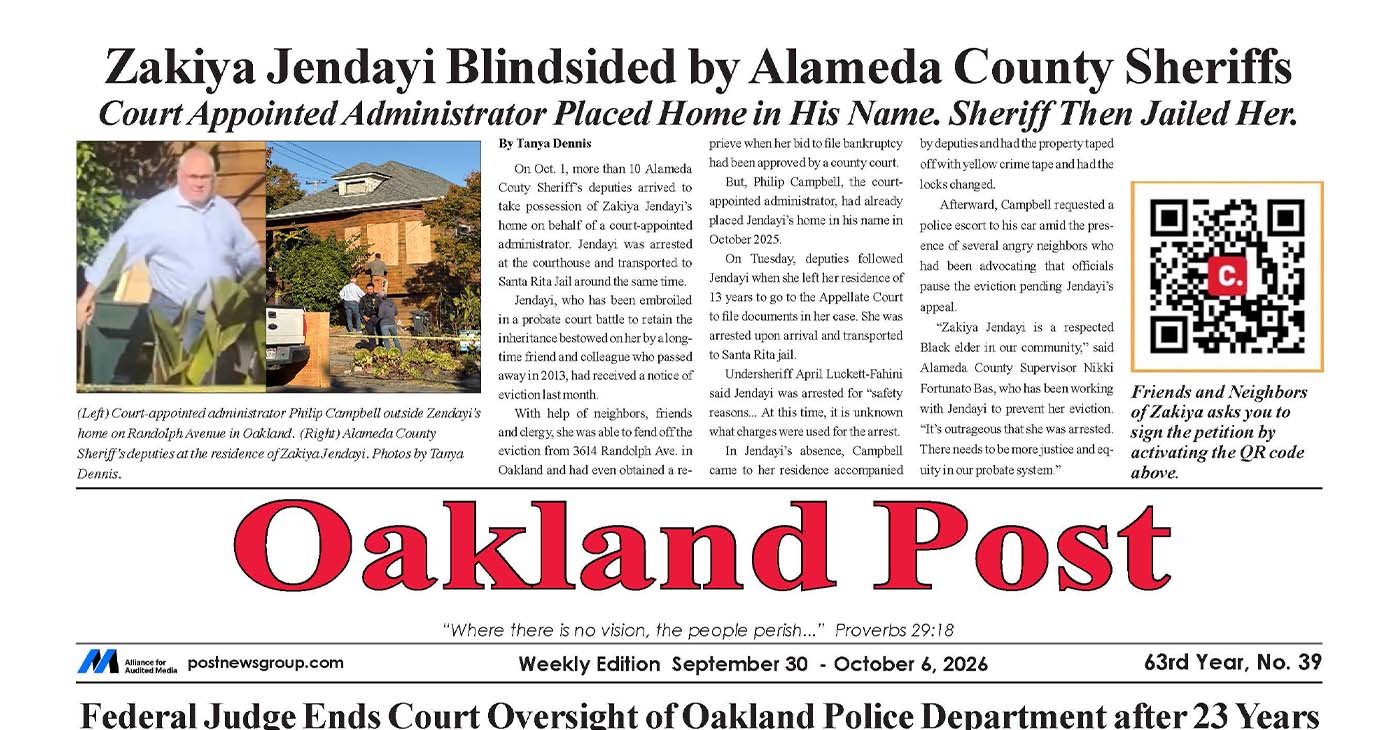
Oakland Post: Week of September 30 – October 6, 2026
The printed Weekly Edition of the Oakland Post: Week of September 30 – October 6, 2026
To enlarge your view of this issue, use the slider, magnifying glass icon or full page icon in the lower right corner of the browser window.

Activism
Oakland Post: Week of September 23 – 29, 2026
The printed Weekly Edition of the Oakland Post: Week of September 23 – 29, 2026

To enlarge your view of this issue, use the slider, magnifying glass icon or full page icon in the lower right corner of the browser window.
Activism
Oakland Post: Week of September 16 – 22, 2026
The printed Weekly Edition of the Oakland Post: Week of September 16 – 22, 2026

To enlarge your view of this issue, use the slider, magnifying glass icon or full page icon in the lower right corner of the browser window.



OP-ED: Proposition 44 Would Put a Price on Trust

OP-ED: Proposition 40: It’s Time to Play Chess, Not Checkers

Listening as a Lifeline: A Doula’s Witness to Black Maternal Health

New Protections for Ticket Buyers: Gov. Newsom Signs Assemblymember Isaac Bryan’s Bill

‘We Don’t Talk Trash — We Pick Up Trash!’

Zakiya Jendayi Arrested, Locked Out of Home by Sheriff’s Deputies

Oakland Post: Week of September 30 – October 6, 2026

Asm. Corey Jackson Announces Launch of 24-Hour Childcare in His District

IN MEMORIAM: The Rev. Leon “Sonny” Clark, Longtime Orange County Pastor and Community Leader, Dies at 72

Poll: Becerra Widens His Lead Over Hilton; Californians Split on Wealth Tax

From Historic Memories to New Possibilities: Oakland Celebrates Coliseum 60

County Office of Education Says OUSD Finances Are Getting Healthier, Materially Stronger

LIVE FREE Sunday Dinner Brings Faith, Fellowship and Civic Conversation to Oakland

Remembering Chauncey Bailey as Student Journalists Face Threats to Truth-Telling

BLACspace Cooperative Invites Bay Area to Experience Oakland’s Black Cultural Ecosystem Through a BLAC Map Tour + Party

Standoff for Justice: Our Homes Are Worth Fighting For

Oakland Post: Week of August 26 – September 1, 2026

Frontier Airlines’ Return to Oakland Airport Brings Flights, Jobs and Opportunity

Gubernatorial Candidate Steve Hilton Blasts California New Tire Rules; Newsom Hits Back

Chef Sharon Lee Blends Culinary Excellence, Education and Empowerment

Jackie Wright Champions Bay Area Stories, Filmmakers and Cultural Institutions

Misnamed ‘Parent’ PAC Seeks to Influence Oakland School Board Elections

Oakland Coliseum Project Opens Door for Small Businesses to Build Bigger

Big City Mayors Ask for “Yes” Vote on Housing Bond Measure; Conservatives Say “No”

Gov. Newsom’s Latest Appointees Include Sacramento Advocate for Formerly Incarcerated Students; State’s New Tech Chief

Longtime BWOPA Member Brendalyn Goodall Appointed to California Workforce Development Board

Gov. Newsom Signs Law Shielding Immigration Aid Workers From Doxing Threats

Oakland Post: Week of September 2 – 8, 2026

Secretary of State Shirley N. Weber Urges Californians to Vote Early as Voter ID Battle Intensifies

IN MEMORIAM: Dolly Parton Dead at 80 — How She Built a Legacy of Love and Earned Her Place in Black Culture

The Conversation With Al McFarlane 6/23/26

Media Monday 6/22/26

LIVE! ASK ALMA! — TUES. 6.23.26 7PM EST

Car Buying Secrets: 4 Hidden Checks Before You Sign!

Is This 550 HP Charger Worth YOUR Money? AutoNetwork Review

Celebrating Juneteenth – Frederick Douglass on education and resistance

LIVE! — ASK ALMA! — TUES. 6.19.26 7PM EST

Hyundai Ioniq 5 Parking, Safety, and 360 View #shorts

2025 Ioniq 5 New Wiper & Powerful Performance! #shorts

Electric SUV Range: Is 259 Miles Enough? #shorts

EV Charging: How Fast Can You Charge an Electric Vehicle? #shorts

Biometric Cooling… Messaging Seats…Come on! 2025 Infiniti QX80 Autograph 4WD

Charged Up: Witness the Magic of a Fully Electric Car! #shorts

Range Rover Sport PHEV Included…: See What’s Inside This Luxury SUV! #shorts

Invisible Hood View: Perfect Parking with X-Ray Vision! #shorts
-
 Community3 weeks ago
Misnamed ‘Parent’ PAC Seeks to Influence Oakland School Board Elections
-

 Activism3 weeks ago
Oakland Post: Week of September 9 – 15, 2026
-

 Community3 weeks ago
Richmond Tiny House Village Farm & Garden Set to Open Gates on Sept. 26
-

 Black History3 weeks ago
Latest Massacre in Haiti Reveals Cruelty U.S. Deportations
-

 Black History3 weeks ago
OPINION: Nolan Wells’ Death One of Several Signifying Racial Terror Lives on in U.S. South
-

 Business2 weeks ago
Mayor Lee Announces $1 Million Kaiser Permanente Grant for Pilot Program to Address Homelessness, Clean Up Public Spaces throughout Oakland
-

 Community3 weeks ago
Democratic Clubs Interview Candidates for Oakland School Board
-
 Uncategorized3 weeks ago
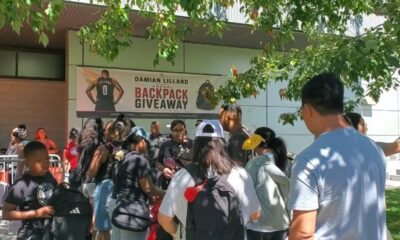
NBA All-Star Damian Lillard Returns Home for 15th Annual Backpack Giveaway
