
Activism
IN MEMORIAM: First Annual Oscar Grant Day Celebrated with Inspirational Speeches, Powerful Performances
“Riding the BART shouldn’t be a death sentence,” said Elaine Brown, former Black Panther Party chairwoman. “Oscar tried to defuse a fight on the train and his good deed became a death sentence. The only person trying to deescalate anything that day was Oscar – and he was killed for it.”

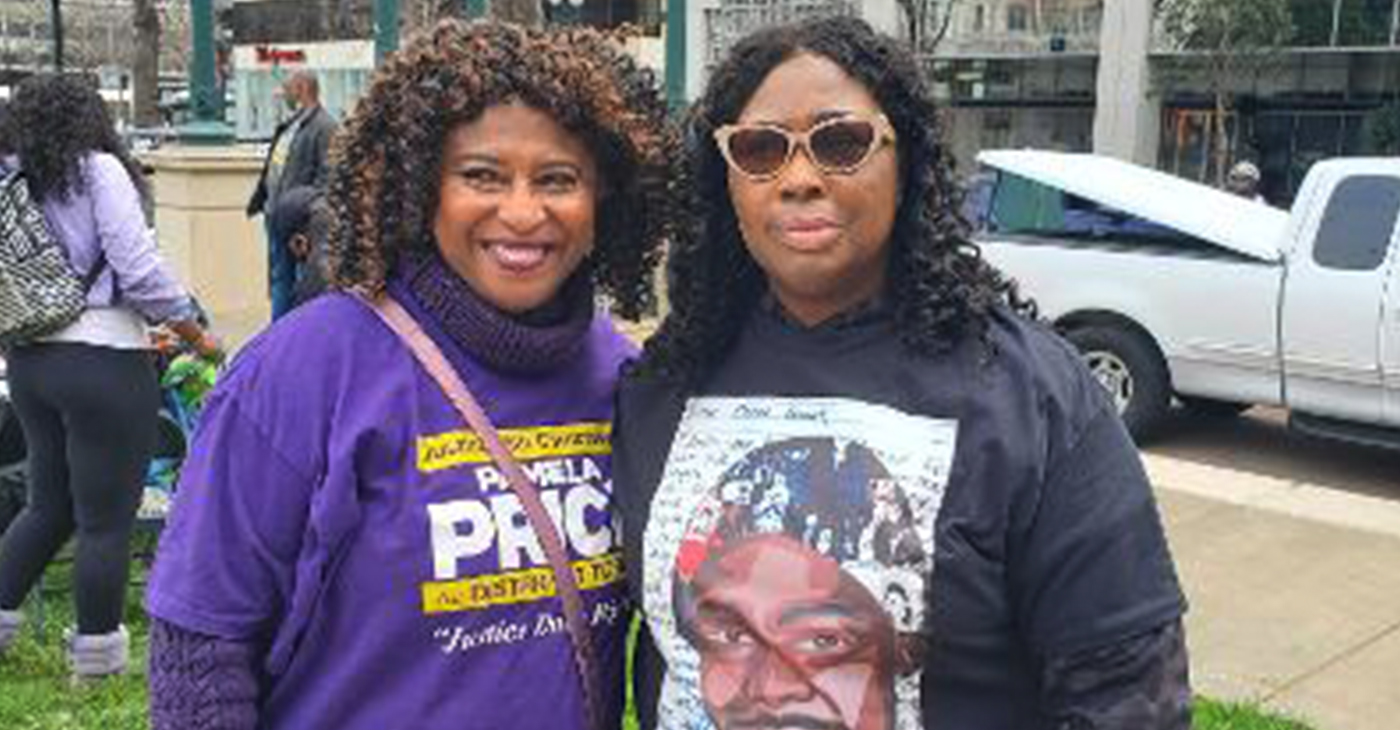
By Post Staff
On an overcast day with moments of sunlight, family members and supporters of the late Oscar Grant III gathered in front of Oakland City Hall on Saturday, February 26 to celebrate his life and legacy.
Grant was shot at the Fruitvale Station platform on Jan. 1, 2009, by BART officer Johannes Mehserle, while being held down by BART Officer Anthony Pirone.
Grant, who had been on his way home from a New Year’s Eve celebration in San Francisco, was pronounced dead several hours later at Highland Hospital.
After Community outcry, Mehserle was charged with second-degree murder but was only convicted of involuntary manslaughter. He is the only officer ever to be convicted by Alameda County District Attorney Nancy O’Malley.
O’Malley, who was a common reference of the speakers at the rally, has only charged one police officer in an officer-involved death. Currently, the 2021 death of Mario Gonzalez in the City of Alameda and the recent police killing of Cody Chavez after a standoff in Pleasanton on February 18 are still being considered for charges.
Mehserle served less about a year in a private cell in a Los Angeles County prison.
As dozens spoke at the rally, they pointed out that Grant’s death has been the catalyst for many police reforms in Alameda County. Grant’s “Uncle Bobby” Cephus Johnson said that his nephew’s death led to such changes in policing as body cameras and police oversight commissions.
“All roads lead to one justice,” said Johnson. “We have been seeking justice for 13 years and we haven’t gotten there yet.”
Oakland City Councilmember Treva Reid, who represents District 7, sent staff to read the City Council proclamation calling Sunday, the 27 of February – Oscar Grant Day – the same day he would have turned 36 this year.
The rally, sponsored by the Oscar Grant Foundation, had food give-away stations and school supplies in backpacks for children. Dancers and singers brought cheers from the crowd on the Frank H. Ogawa Plaza, which is sometimes referred to as Oscar Grant Plaza.
A bouncy house in the grassy area vibrated with children jumping while speaker after speaker before City Hall called for reform and real justice for Grant’s family. Local religious leaders, community organizers and people seeking elected offices spoke about Grant’s legacy.
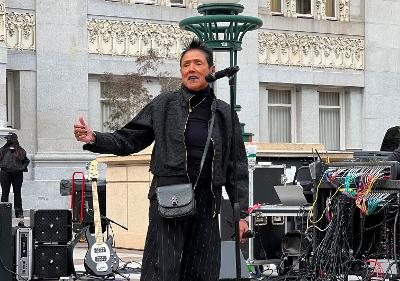
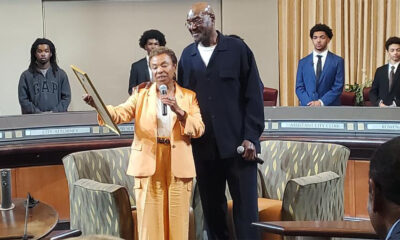
Former Black Panther Party Chairwoman Elaine Brown urged the audience to remember that justice has still not been found for Oscar Grant’s family. Brown focused her passionate speech on how the second officer involved in Grant’s death has never been charged.
Elaine Brown, former Black Panther Party chairwoman, gave an impassioned speech at the top of the rally about justice still being denied. She urged the audience to remember that Anthony Pirone was never charged or convicted in Grant’s death.
“Riding the BART shouldn’t be a death sentence,” said Brown. “Oscar tried to defuse a fight on the train and his good deed became a death sentence. The only person trying to deescalate anything that day was Oscar – and he was killed for it.”
The stage was also filled with some of the candidates vying to replace Nancy O’Malley as the next district attorney of Alameda County in the June 7 primary election.
Councilmember Dan Kalb’s chief of staff, Seth Seward, was seen in the audience while current Deputy D.A. Jimmie Wilson and civil rights attorney Pamela Price took the stage to talk about justice reform. O’Malley’s endorsed candidate Assistant D.A. Terry Wiley was not present.
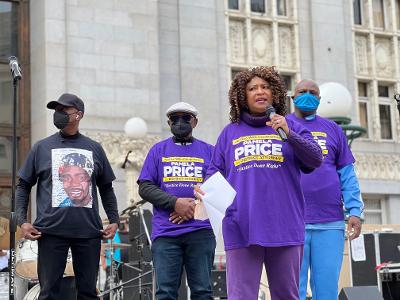
Civil rights attorney Pamela Price led the crowd cheering as she talked about the changes needed in the justice system. Price is also a candidate to replace the current Alameda County district attorney in the June 7 primary election.
Price gave a fiery speech on the needed reforms of the D.A.’s office. Price called out how the D.A.’s office has been toying with the Grant family’s emotions as they seek justice when O’Malley announced an investigation into charging Pirone last year, only to announce months later that no charges would be filed.
Price noted that the original prosecution of the case was “flawed because the D.A.’s heart was not in it,” just as the prosecution of the Oakland ‘Riders’ failed “because the D.A.’s heart was not in it.”
Other speakers included District 6 City Councilmember Loren Taylor who is currently running for Oakland Mayor, rapper and community organizer Mistah F.A.B. and Anti-Police Terror Project Executive Director Cat Brooks.
Rev. Wanda Johnson, Grant’s mother, thanked everyone for coming to this first annual day to celebrate her son’s life and the positive reforms because of this unjust death. She stated that this fight will continue as a “legacy of love, a legacy of hope and a legacy of peace.”










Activism
Oakland Post: Week of September 23 – 29, 2026
The printed Weekly Edition of the Oakland Post: Week of September 23 – 29, 2026

To enlarge your view of this issue, use the slider, magnifying glass icon or full page icon in the lower right corner of the browser window.
Activism
Oakland Post: Week of September 16 – 22, 2026
The printed Weekly Edition of the Oakland Post: Week of September 16 – 22, 2026

To enlarge your view of this issue, use the slider, magnifying glass icon or full page icon in the lower right corner of the browser window.
Activism
Oakland Post: Week of September 9 – 15, 2026
The printed Weekly Edition of the Oakland Post: Week of September 9 – 15, 2026

To enlarge your view of this issue, use the slider, magnifying glass icon or full page icon in the lower right corner of the browser window.



Asm. Corey Jackson Announces Launch of 24-Hour Childcare in His District

IN MEMORIAM: The Rev. Leon “Sonny” Clark, Longtime Orange County Pastor and Community Leader, Dies at 72

Poll: Becerra Widens His Lead Over Hilton; Californians Split on Wealth Tax

From Historic Memories to New Possibilities: Oakland Celebrates Coliseum 60

County Office of Education Says OUSD Finances Are Getting Healthier, Materially Stronger

LIVE FREE Sunday Dinner Brings Faith, Fellowship and Civic Conversation to Oakland

Remembering Chauncey Bailey as Student Journalists Face Threats to Truth-Telling

BLACspace Cooperative Invites Bay Area to Experience Oakland’s Black Cultural Ecosystem Through a BLAC Map Tour + Party

In Wake of Death on Doorstep, Williams Chapel Baptist Church Calls for Better Care, Funding for Unhoused

Oakland Centenarian Nuna McKee Honored!

Caribbean Nations Produce Action Plan Calling for UK Reparations Over Slavery

Oakland Post: Week of September 23 – 29, 2026

Doulas Are Helping Black California Moms Navigate Pregnancy–Even as High Mortality Rates Persist

Newsom Signs Addictive Social Media Law to Protect Kids

On Your November Ballot: Prop 38 Would Allocate $8.4 Billion to Immunology and Immunotherapy Funding

Less Affluent School Districts, Including Sacramento City, Face Threat of State Takeover

ESSAY: California Can Close Its Colorectal Cancer Gap

California Hispanic Chambers of Commerce Unveils: ‘Powering the Future’ Theme for 47th Annual Statewide Convention

Four Candidates, Including Incumbent Barbara Lee, Qualify for Oakland Mayor’s Race

Oakland Post: Week of August 12 – 18, 2026

From Blueprint to Breakthrough: Tackling Affordable Housing in Oakland

Oakland Observes Black August with Block Parties, Film Showings, Workshops

COMMENTARY: Why Local School Tax Measure G1 Will Not Be on the November Ballot

Standoff for Justice: Our Homes Are Worth Fighting For

Returning to Its Roots, the Oakland Black-Eyed Pea Festival Partners with the Freedom Farmers Market Sept. 12

Oakland Post: Week of August 26 – September 1, 2026

NPRC Scores First Advocacy Victory: David Shaw Finally Gets His Wish to ‘Go Home’

Frontier Airlines’ Return to Oakland Airport Brings Flights, Jobs and Opportunity

Gubernatorial Candidate Steve Hilton Blasts California New Tire Rules; Newsom Hits Back

Chef Sharon Lee Blends Culinary Excellence, Education and Empowerment

The Conversation With Al McFarlane 6/23/26

Media Monday 6/22/26

LIVE! ASK ALMA! — TUES. 6.23.26 7PM EST

Car Buying Secrets: 4 Hidden Checks Before You Sign!

Is This 550 HP Charger Worth YOUR Money? AutoNetwork Review

Celebrating Juneteenth – Frederick Douglass on education and resistance

LIVE! — ASK ALMA! — TUES. 6.19.26 7PM EST

Hyundai Ioniq 5 Parking, Safety, and 360 View #shorts

2025 Ioniq 5 New Wiper & Powerful Performance! #shorts

Electric SUV Range: Is 259 Miles Enough? #shorts

EV Charging: How Fast Can You Charge an Electric Vehicle? #shorts

Biometric Cooling… Messaging Seats…Come on! 2025 Infiniti QX80 Autograph 4WD

Charged Up: Witness the Magic of a Fully Electric Car! #shorts

Range Rover Sport PHEV Included…: See What’s Inside This Luxury SUV! #shorts

Invisible Hood View: Perfect Parking with X-Ray Vision! #shorts
-
 Business4 weeks ago
Frontier Airlines’ Return to Oakland Airport Brings Flights, Jobs and Opportunity
-
 Business4 weeks ago
Gubernatorial Candidate Steve Hilton Blasts California New Tire Rules; Newsom Hits Back
-
 Business4 weeks ago
Chef Sharon Lee Blends Culinary Excellence, Education and Empowerment
-

 Black History4 weeks ago
Jackie Wright Champions Bay Area Stories, Filmmakers and Cultural Institutions
-

 Community4 weeks ago
Big City Mayors Ask for “Yes” Vote on Housing Bond Measure; Conservatives Say “No”
-

 Education4 weeks ago
Gov. Newsom’s Latest Appointees Include Sacramento Advocate for Formerly Incarcerated Students; State’s New Tech Chief
-

 Business4 weeks ago
Oakland Coliseum Project Opens Door for Small Businesses to Build Bigger
-

 Community2 weeks ago
Misnamed ‘Parent’ PAC Seeks to Influence Oakland School Board Elections
