
Technology
Google, Microsoft Fight Means Price Drop for PCs, Tablets


This product image provided by Microsoft shows the company’s new Surface 3 tablet. Microsoft is making the cheaper version of its Surface Pro 3 tablet computer in an effort to reach more people. (AP Photo/Microsoft)
SAN FRANCISCO (AP) — Google is releasing its cheapest Chromebook laptops yet, two versions priced at $149 aimed at undercutting Microsoft’s Windows franchise and gaining ground in even more classrooms.
Various PC manufacturers have been working with Google to design lightweight laptops running on the Chrome operating system since 2011. The newest versions are made by Hisense and Haier. Hisense’s Chromebook can be ordered beginning Tuesday at Walmart.com and Haier’s version can be bought at Amazon.com.
Their arrival coincides with Microsoft’s rollout of a lower-priced Surface tablet in an effort to reach students and budget-conscious families. Pre-orders for that device began Tuesday, too.
As the prices for tablets and smartphones have been declining, it has forced on PC makers to lower their prices, said International Data Corp. analyst Jay Chou. The success of the Chromebook line is intensifying the PC pricing pressure.
“It has been good news for consumers, but not so good for vendors,” Chou said.
The cheaper version of the Surface Pro 3 sells for $499, compared with $799 to $1,949 for the higher-end models. The discounted version has a slightly smaller screen — 10.8 inches rather than 12 — a slower processor, and less flexible kickstand — just three angles rather than unlimited positions.
The Chromebook has served a dual purpose for Google. Like the company’s Android software for mobile devices, the Chrome system is set up so users will automatically begin using Google’s search engine and other services, such as Gmail and YouTube. Google has used the Chromebooks as a prod to bring down the prices of all PCs, something the company wanted to do because it has more opportunities to show the digital ads that bring in most of its revenue when more people can afford to buy an Internet-connected device.
“We cannot be happier that Microsoft is helping drive down the prices of PCs,” said Caesar Sengupta, Google’s vice president of product management for Chromebooks. “If Microsoft is reacting to (Chromebook’s low prices), that’s fantastic. We love it.”
Unlike most computers, Chromebooks don’t have a hard drive. Instead, they function as terminals dependent on an Internet connection to get most work done.
Despite those limitations, Chromebooks have been steadily gaining in popularity, particularly in schools, as more applications and services made available over Internet connections — a phenomenon known as “cloud computing” that has reduced the need for hard drives.
About 6 million Chromebooks were sold worldwide last year, more than doubling from 2.7 million in 2013, according to IDC. In contrast, sales in the overall PC market slipped 2 percent last year, marking the third consecutive annual decline. IDC is projecting 8 million Chromebooks will be sold this year.
Besides the $149 laptops, Google also is attacking Microsoft on other fronts. Later this spring, Google and Asus are releasing a hybrid Chromebook that can use used as either a laptop or tablet with a 10-inch screen. Called the Chromebook Flip, it will sell for $249.
In the summer, Asus and Google will start selling a new Chrome device that will provide people a cheaper way to upgrade an old PC. The device, called the Chromebit, is a stick loaded with an entire operating system that can be plugged into any HDMI port. The Chromebit’s price hasn’t been set, Google says it will cost less than $100.
Here’s what you need to know about the cheaper Surface Pro 3 and new Chromebooks:
PROS AND CONS OF THE SURFACE
Graphic artists, engineers and finance professionals needing to run complex software might still want the company’s higher-end Pro 3, said Dennis Meinhardt, director of program management for Surface. But the Surface 3 should be good for everyday tasks, he said, and brings the Pro 3’s premium feel to a device that will be affordable to more people.
The new Surface model is thinner and lighter, partly because it gets rid of the fan — similar to Apple’s new MacBook laptop. At 214 pixels per inch, the screen resolution is comparable to the Pro 3’s.
Battery life is promised at 10 hours for video playback. The Surface 3 runs the regular version of Windows 8.1, just like the Pro 3. In the past, Microsoft has used a lightweight version called RT in its cheaper tablets. The Surface 3 also has a USB port, a feature that distinguishes the Surface line from most rival tablets.
SIZING UP THE CHROMEBOOKS
Both the Hisense and Haier models have 11.6 inch screens, 2 gigabits of memory and run on Rockchip processors. The Hisense machine promises up to 8.5 hours of battery power per charge while Haier is touting up to 10 hours of power per charge on a battery that can be removed for easier replacement.








Black History
George Cook: The Inventor Who Made Fishing Smarter
George Cook was a Black American inventor from Louisville, Kentucky. He was born in 1863, during a time when Black Americans faced unfair laws, limited opportunities, and many barriers to education, jobs, and recognition. Even with these challenges, he became known for his intell

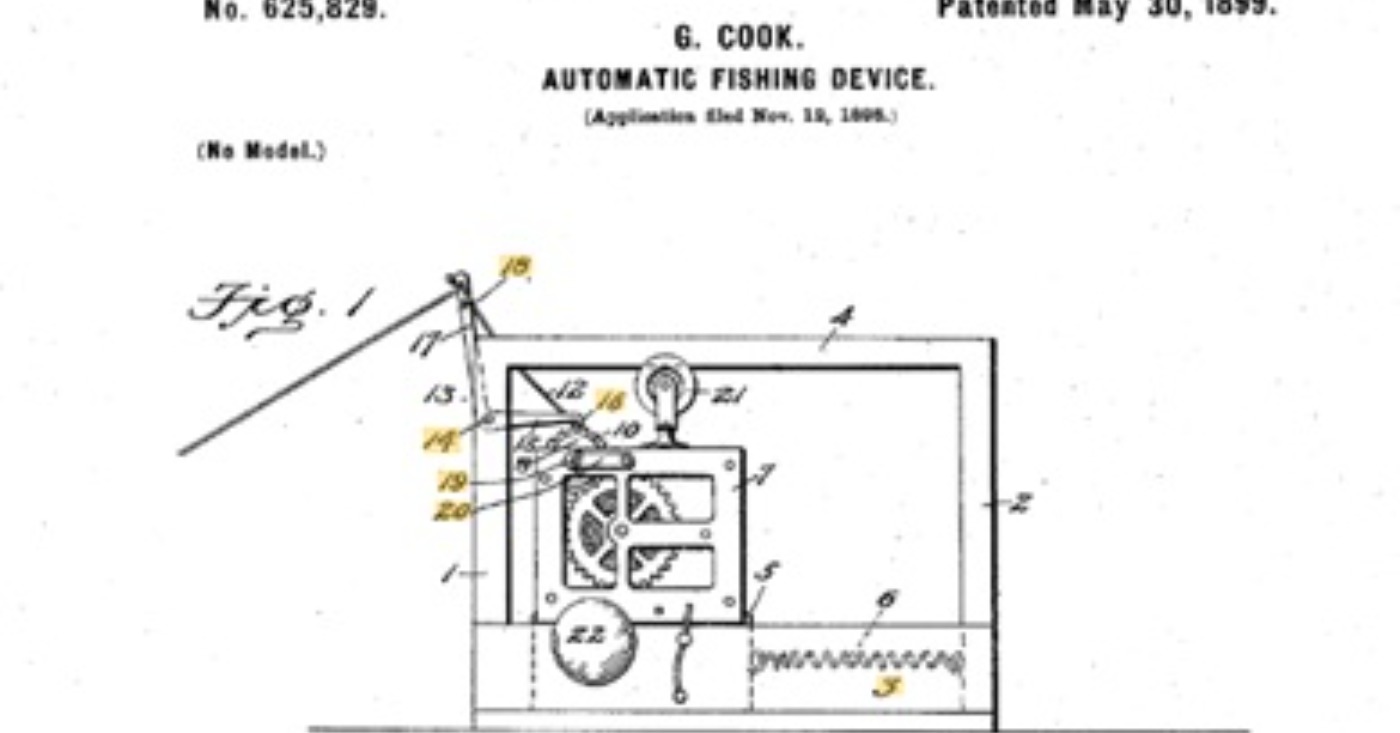
George Cook was a Black American inventor from Louisville, Kentucky. He was born in 1863, during a time when Black Americans faced unfair laws, limited opportunities, and many barriers to education, jobs, and recognition. Even with these challenges, he became known for his intelligence, honesty, and ability to think in practical ways. Some records say he worked as a cook for Buffalo Bill Cody and later as a chef on a private dining car for the Louisville and Nashville Railroad. He was even known by the nickname “Honest Mister Cook.”
As with many Black American inventors and scientists of that era, there is little biographical information about Mr. Cook.
Cook’s most famous invention was the Automatic Fishing Device. He received U.S. Patent No. 625,829 for it on May 30, 1899. His patent shows that he was not just someone with an idea, but someone who made it happen.
So, what did the Automatic Fishing Device do? Imagine fishing with a line in the water. Usually, you have to watch carefully and pull the line at just the right moment when a fish bites. Cook wanted to make that process easier. His device was designed to react when a fish pulled on the line. The tension from the fish would trigger a lever. That lever would release a spring-loaded part of the device, causing it to move quickly and help pull in the line. The device also had an alarm gong that would ring to let the fisher know something was happening.
This invention was important because it used simple mechanical ideas in a clever way. Springs, levers, rails, and alarms were not new by themselves, but Cook combined them to solve a real problem. His device showed how inventors often take familiar parts and arrange them in a new way to make life easier.
Cook looked at fishing and asked, “How can this be improved?” Then, he created a device that could respond automatically when a fish tugged on the line. His invention let fishermen relax instead of watching the line for hours, trusting the alarm to alert them.
Cook may not be as famous as some inventors, but his Automatic Fishing Device shows that creativity and innovation can be applied anywhere. His legacy lives on as part of the larger story of Black innovation in America.

Environment
“The Power to See Threats Sooner”: Gov. Newsom, Safety Officials Showcase California’s Investments in Hi-Tech Wildfire Prevention
On July 21, Gov. Gavin Newsom held a presentation in Sacramento, alongside state emergency officials, to showcase California’s major investments in cutting-edge firefighting technology and wildfire prevention. The media event took place at McClellan Airport in Sacramento County,

On July 21, Gov. Gavin Newsom held a presentation in Sacramento, alongside state emergency officials, to showcase California’s major investments in cutting-edge firefighting technology and wildfire prevention.
The media event took place at McClellan Airport in Sacramento County, a primary hub for state aerial firefighting operations. Newsom used the presentation to highlight the state’s modern, tech-driven strategy to combat increasingly severe wildfires.
“California leads with science, innovation, and grit. We are meeting this moment with urgency and building 21st-century solutions for a 21st-century crisis,” Newsom stated. “And through it all, our extraordinary firefighters continue to step up, stand in harm’s way, and protect our communities.”
California Natural Resources Agency Secretary Wade Crowfoot, CAL FIRE Chief Joe Tyler, and California Governor’s Office of Emergency Services Director Caroline Thomas Jacobs appeared with Newsom and provided updates about their respective agencies.
Under the Newsom administration, California’s fire protection budget has nearly doubled since 2019 — from $2 billion to $3.8 billion, including more than $2.5 billion in wildfire resilience and forest health projects.

Newsom detailed the expansion of artificial intelligence (AI) programs, predictive analytics, and sophisticated software used to detect fires at their earliest stages. He also highlighted the launch of FireSat satellites, a dedicated space network designed to dramatically improve early wildfire detection and tracking.
“Every innovation we adopt supports our people on the front lines who work tirelessly to protect our communities when wildfire strikes,” Tyler stated. “Technology and innovation help us do our jobs more quickly and safely; however, we still need all Californians to stay vigilant, support our firefighters, and work together to build a safer, more resilient California.”
In addition, CAL Fire showcased a fleet of more than 100 AI-guided firefighting drones positioned strategically across California to provide real-time mapping and aerial monitoring.
The presentation stated that California operates the nation’s largest state-owned aerial firefighting fleet, including the impending addition of two more C-130 aircraft by the end of the year, alongside a workforce of over 11,000 personnel.
“Technology is transforming how California prepares for wildfire, giving us the power to see threats sooner, position resources before fires start and move mutual aid faster when every second counts,” Thomas Jacobs said. “Governor Newsom’s investments are helping us turn real-time intelligence into action, so firefighters and local communities have the people, equipment and information needed to save lives and keep fires from becoming major disasters.”
Black History
Closing the Gap: What the Data and Frontline Experiences Reveal About Cancer in Black California
OAKLAND POST — According to a UC Davis study, “The Burden of Cancer Among Black/African Americans in California,” Black cancer patients were more likely than White patients to be diagnosed at a later stage and to have multiple health conditions, making treatment more difficult. They were also far more likely to live in low-income communities and rely on public insurance—evidence that economic inequality and barriers to care are helping drive disparities in the state’s cancer crisis.
Photo
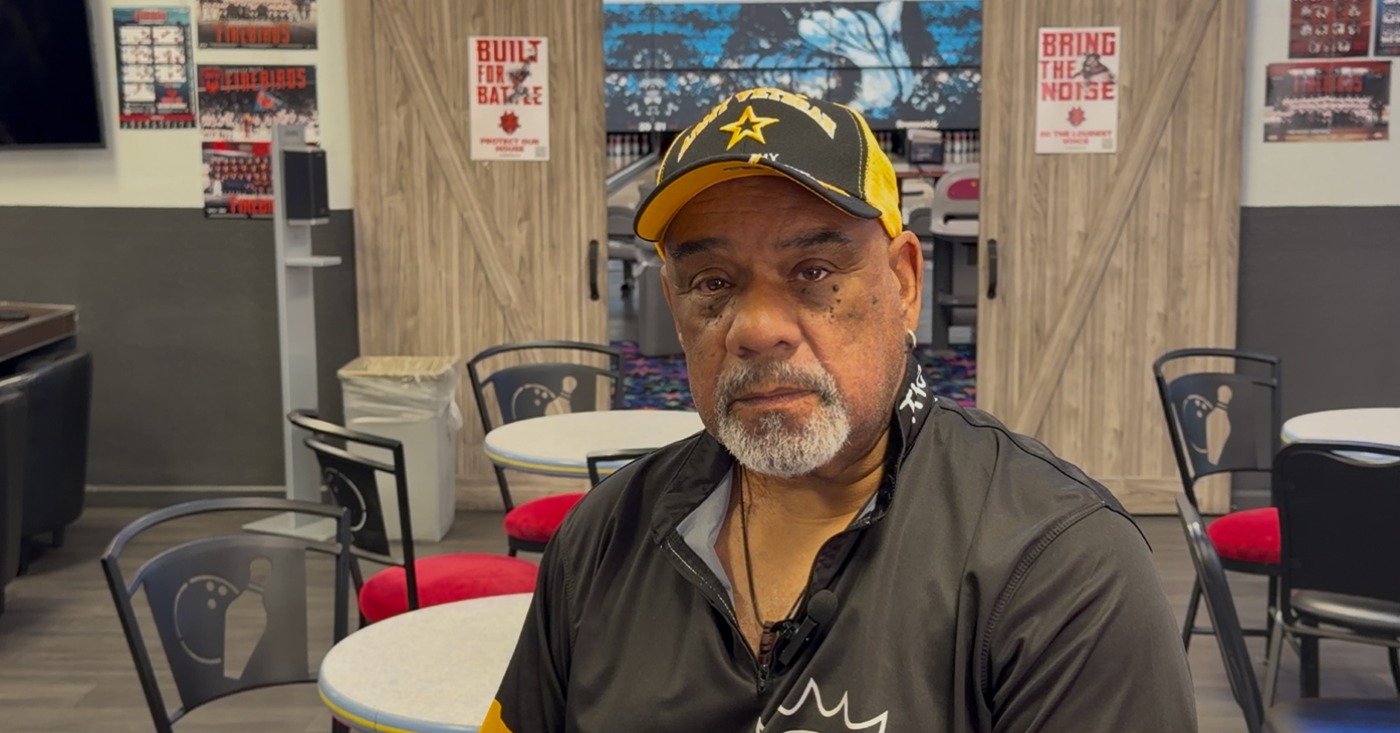
Kris Benz, a disabled Black veteran, is no stranger to cancer. In 2012, he was diagnosed with salivary duct carcinoma, a cancer so rare it strikes only about 1 in a million people each year.” But he beat it after six weeks of radiation and removal of his right salivary gland.
“I was cancer-free after six months,” he said.
Now, a new concerning mass has appeared in his neck despite months of scans. His doctor suspects it is cancerous, but Benz, who lives near Palm Springs, will not know for certain until a biopsy.
Compounding that uncertainty is a gap in his coverage. Benz is two work credits short of qualifying for Medicare, but returning to work could jeopardize his Department of Veterans Affairs (VA) disability status and funding. Buying Medicare Part A would cost $568 a month, leaving him “winging it.”
Benz is also frustrated that the VA will not schedule his scan and biopsy before his consultation, which will require another round of appointments afterward.
“It’s about money,” he said. “Doctor’s appointments, they get the money. There’s no preventive medicine here anymore.”
Although he calls the VA “a great organization,” he believes it is hampered by bureaucracy. For now, he remains “in limbo” waiting to complete his appointments.
His experience reflects one of the most persistent health equity challenges facing Black communities: access to care.
According to a UC Davis study, “The Burden of Cancer Among Black/African Americans in California,” Black cancer patients were more likely than White patients to be diagnosed at a later stage and to have multiple health conditions, making treatment more difficult. They were also far more likely to live in low-income communities and rely on public insurance—evidence that economic inequality and barriers to care are helping drive disparities in the state’s cancer crisis.
That same study reports that between 2014 and 2018, the ten cancers most frequently diagnosed among Black/African American women in California were, from one to ten, breast, lung, colorectal, uterine, pancreatic, kidney, non-Hodgkin lymphoma, thyroid, myeloma, and ovarian cancers. During the same period, the ten most commonly occurring cancers among Black/African American men in California were, from one to ten, prostate, lung, colorectal, kidney, bladder, liver, non-Hodgkin lymphoma, pancreatic, myeloma, and oropharyngeal cancers.
Researchers attribute the gaps not to biology but to social and economic inequality connected to structural racism. An American Cancer Society analysis found educational attainment was a stronger predictor of the mortality gap than race alone.
“These disparities are not because Black people are inherently less healthy,” said Rhonda Smith, executive director of the California Black Health Network. “They are the result of decades of inequitable policies, structural racism, unequal access to quality care, and chronic underinvestment in our communities.”
Dr. Flojaune Cofer, an epidemiologist and public health policy expert, said health outcomes are shaped as much by circumstances as by biology. She traced her understanding of disparities to her father’s death from heart disease at age 47. He began smoking as a child when tobacco companies marketed cigarettes aggressively and disproportionately to Black communities.
“My father’s story is not about individual choices,” Cofer said. “My father’s story speaks to institutional and systemic harm.”
“Health is not just what happens in the doctor’s office,” she added. Social determinants include neighborhood conditions, housing stability, nutritious food, transportation, and the ability to take time off work for care.
At federally qualified health centers, tight appointment schedules can make it difficult for medical providers to detect cancer early and earn the trust patients need to discuss troubling symptoms.
“We have only 15 minutes when you are working in a federally qualified health center — you have 15 minutes to assess, diagnose, treat, and write your note per patient,” said Jamie Garcia, a registered nurse who has been certified in oncology nursing for more than a decade and works at AdventHealth White Memorial in East Los Angeles.
Garcia said the rushed pace, driven partly by billing requirements tied to federal funding, leaves little time for providers to build relationships with patients. It can also allow health care professionals’ implicit biases to go unrecognized and unchallenged.
For Garcia’s patients, who are predominantly Black and Latino residents of surrounding communities, the consequences can be immediate and alarming. Many arrive with visibly advanced tumors after going without insurance, adequate coverage, a primary care physician or routine screenings.
Garcia recalled treating one patient whose tumor had grown large enough to be visible through the skin.
“The fact that I even got to see that is a failure and an atrocity,” she said.
Assemblymember Lori D. Wilson (D-Suisun City) sought to reduce another barrier through Assembly Bill 1570, which would have eliminated out-of-pocket costs for medically necessary diagnostic and supplemental breast imaging. It passed the Assembly Health Committee 16-0 but died in the Appropriations Committee. Wilson plans to reintroduce it during the next legislative session without biopsy coverage.
Wilson announced her breast cancer diagnosis in April 2023. She received timely, quality care but “saw others with similar diagnoses face different outcomes.”
“Some people who got diagnosed at the same time as me — their timing of their surgeries and treatment was delayed in comparison to my own,” she said. “Watching people go through and suffering unnecessarily was heartbreaking to me.”
Her follow-up imaging required only a $10 copay. “I’ve had friends have to pay $1,000 to get that secondary screening,” Wilson said.
Smith warned that policy changes could further erode access. California’s Every Woman Counts screening program is losing funding and being scaled back, she said. About one in three Black Californians relies on Medi-Cal, according to the state.
Smith also cited federal Medi-Cal work requirements projected to cause 1.1 million Californians to lose coverage by 2029-30. “Health equity is no longer simply about improving outcomes,” she said. “It’s about protecting access.”
Californians seeking low-cost cancer screening can contact a local federally qualified health center or the California Department of Public Health’s Every Woman Counts program. The California Black Health Network also offers referrals and advocacy resources.

WORK FROM HOME
Home-based business with potential monthly income of $10K+ per month. A proven training system and website provided to maximize business effectiveness. Perfect job to earn side and primary income. Contact Lynne for more details: Lynne4npusa@gmail.com 800-334-0540


Misty Copeland Shapes Ballet’s Tomorrow

As Part of Your Back-to- School Checklist, Vaccinate

As Part of Your Back-to- School Checklist, Vaccinate

Congresswoman Simon Demands Investigation into Trump’s Abuse of Emergency Powers for Coal Export Terminal in West Oakland

OPINION: The Philippines Isn’t Foreign When Your Family Still Lives There

Asm. McKinnor’s Bill Banning Drones Above Outdoor Entertainment Events Awaits Senate Decision

California Sen. Padilla Joins Colleagues to Introduce Bill Imposing Term Limits on Supreme Court Justices

Department of Homeland Security Demands California Secretary of State Shirley N. Weber Scrub Voter Rolls

George Cook: The Inventor Who Made Fishing Smarter

Gov. Newsom Announces $109.6 Million in Funding for 278 Supportive Homes in Bakersfield, Contra Costa, Sacramento and Fresno

Rep. Kamlager Dove Demands Care, Justice for Man Shot by ICE

“The Power to See Threats Sooner”: Gov. Newsom, Safety Officials Showcase California’s Investments in Hi-Tech Wildfire Prevention

100 Black Wings’ Team Oakland Youth Athletes Heading to Taiwan for 2026 International Children’s Games

Oakland ‘Port Serves as a Powerful Engine for Good Jobs and Economic Development

Oakland Faith Leaders Welcome New Police Chief, Mobilize Around Housing and Civic Action
Department of Homeland Security Demands California Secretary of State Shirley N. Weber Scrub Voter Rolls

Oakland Children’s Hospital Workers and Patients Rally for Pediatric Medical Care
“The Power to See Threats Sooner”: Gov. Newsom, Safety Officials Showcase California’s Investments in Hi-Tech Wildfire Prevention

New Judge Could Decide if Karmelo Anthony Gets a New Trial

Surveillance Pricing Fight: State Senate Debates Bill Banning Retailers from Using AI to Set Prices Based on a Buyer’s Profile

Mount Zion MBC, Church of Jesus Christ of Latter-day Saints Partner to Bring 29,000 Meals to Alameda County

Alpha Kappa Alpha Sorority, Inc. Celebrates New North Atlantic Regional Director
California Sen. Padilla Joins Colleagues to Introduce Bill Imposing Term Limits on Supreme Court Justices

Starting This Summer, California Car Buyers Can Get an Instant $3500 Off the Cost of Electric Vehicles

COMMENTARY: You Are Already Paying for the AI Boom

California Bill Would Let Abuse Victims Use Trauma as Legal Defense for Violent Crime

Fed Court to Decide Landmark First Amendment Case

Gov. Gavin Newsom Signs Law Streamlining Affordable Housing Rules

Oakland Celebrates $125 Million Coliseum Sale

Saving Black Mothers Starts Outside the Hospital

The Conversation With Al McFarlane 6/23/26

Media Monday 6/22/26

LIVE! ASK ALMA! — TUES. 6.23.26 7PM EST

Car Buying Secrets: 4 Hidden Checks Before You Sign!

Is This 550 HP Charger Worth YOUR Money? AutoNetwork Review

Celebrating Juneteenth – Frederick Douglass on education and resistance

LIVE! — ASK ALMA! — TUES. 6.19.26 7PM EST

Hyundai Ioniq 5 Parking, Safety, and 360 View #shorts

2025 Ioniq 5 New Wiper & Powerful Performance! #shorts

Electric SUV Range: Is 259 Miles Enough? #shorts

EV Charging: How Fast Can You Charge an Electric Vehicle? #shorts

Biometric Cooling… Messaging Seats…Come on! 2025 Infiniti QX80 Autograph 4WD

Charged Up: Witness the Magic of a Fully Electric Car! #shorts

Range Rover Sport PHEV Included…: See What’s Inside This Luxury SUV! #shorts

Invisible Hood View: Perfect Parking with X-Ray Vision! #shorts
-
 Featured3 days ago
Department of Homeland Security Demands California Secretary of State Shirley N. Weber Scrub Voter Rolls
-
 Business2 weeks ago
Oakland Children’s Hospital Workers and Patients Rally for Pediatric Medical Care
-
 Environment3 days ago
“The Power to See Threats Sooner”: Gov. Newsom, Safety Officials Showcase California’s Investments in Hi-Tech Wildfire Prevention
-
 #NNPA BlackPress2 weeks ago
New Judge Could Decide if Karmelo Anthony Gets a New Trial
-
 Business2 weeks ago
Surveillance Pricing Fight: State Senate Debates Bill Banning Retailers from Using AI to Set Prices Based on a Buyer’s Profile
-
 Business2 weeks ago
Mount Zion MBC, Church of Jesus Christ of Latter-day Saints Partner to Bring 29,000 Meals to Alameda County
-
 Black History1 week ago
Alpha Kappa Alpha Sorority, Inc. Celebrates New North Atlantic Regional Director
-
 Featured3 days ago
California Sen. Padilla Joins Colleagues to Introduce Bill Imposing Term Limits on Supreme Court Justices
